The day of returning light. After the many long dark nights going deeper and darker it’s always uplifting to know that we’ll start seeing a little more light each day now. From times in the far distant past people have celebrated this day, finding hope and expectation in the light’s return.
Newgrange passage tomb, Ireland
I’ve mentioned before the ancient passage tomb of Newgrange in Ireland, a few miles north of Dublin. Some 5,000 years ago the people built this tomb with little more than stone tools, constructing it with such precision that on Solstice morning rays from the rising sun flash through a high doorway and stream down the narrow, 62-foot-long passage into an interior chamber, filling it with light. For what purpose? We do not know. They did not leave written word to tell us. But we can imagine.
In my new upcoming book set in ancient Ireland I describe the moment and offer the beliefs of my characters. It’s a major locale for multiple scenes. And when you read the story you will experience Solstice morning with them.
The etched kerbstone at Newgrange showing the doors to the passage
The above photo shows the upper door for the light and part of the lower door for people to enter. The carved lines on the threshold stone inspire the protagonist of my story in her artistic creations.
This is the book my new literary agent, Joëlle Delbourgo, has offered to represent. So I look forward with hope that it will soon see the light.
I’m delighted to announce that I just signed with an agent to represent me on my newest historical novel set in ancient Ireland. Her name is Joëlle Delbourgo, her agency a boutique literary agency based in the greater New York City area.
JoëlleDelbourgo
Only three days after my return from the Seattle conference I got a surprise email from Joëlle, President and Founder of Joëlle Delbourgo Associates, who I had queried a couple of months before. I had sent her ten pages of my book as she requests for all submissions. Now she wanted a full manuscript.
She has a stellar background. She founded her agency in 1999. For more than twenty years before that she was a senior editorial executive at HarperCollins and Ballantine Books, a division of Random House, so she knows both sides of the publishing world. Her list of sales is impressive.
With considerable excitement I sent her my manuscript. In less than two weeks she wrote to tell me she loved my book. She wanted to talk.
We had a wonderful conversation by phone. She knew my characters. She knew my story so well she pinpointed several specific issues that can make it stronger. And she offered to represent me. I was thrilled.
It just so happened that she had traveled to Ireland last summer for the first time so she knows the land of my characters too. I’m convinced there’s a bit of magic in those green hills.
Just back from a great writers conference in Seattle put on by the Pacific Northwest Writers Association (PNWA). Here I am on the last day with Pam Binder, PNWA President and program director of this annual event. Every year she puts together another fabulous conference with her excellent team.
Pam Binder, PNWA President, conference program director, on the left, me on the right.
When I went downstairs looking for an I-was-there photo to add to my comments on the 2025 conference I was hoping I might find Pam to get her picture, and there she was at the registration desk, happy to oblige. I also wanted to thank her one more time for coming to my rescue in the pitch session.
These conferences offer a chance for authors to meet agents and editors face to face and pitch their projects to them. It’s always upbeat at these PNWA conferences, everybody encouraging each other to do their best. I think that atmosphere starts at the top. An award-winning New York Times bestselling author, Pam knows the business, and she’s always ready to help an author reach the next level.
Bohonagh Stone Circle, West Cork, Ireland
I pitched my newest novel set in ancient Ireland featuring the People of the Stones, those mysterious stone circles and other megaliths scattered across Ireland and Britain’s west coast and on down the Atlantic seaboard.
In my story it’s 750 B.C. and the Celts wouldn’t have been in Ireland yet, but we know where they were–in Hallstatt, Austria, so my protagonist has to go there.
The goal for the author pitching an agent or editor is to get a request for material, a few chapters maybe, or 50 pages, or, best of all, the full manuscript. I’m happy to say I got a positive response from every pitch. But it wasn’t entirely simple.
Imagine the setup. All of the authors who’ve signed up for a particular block of time are led into a room where the agents and editors are sitting behind a very long table. The authors get in line for a person they want to pitch to, and each gets four minutes to describe their project and convince that person to ask for part or all of it. At the end of your four minutes a bell rings and you have to skedaddle because you don’t want to crimp the time for the person in line behind you.
So I was pitching one person and we were having an extended conversation when the bell rang. She handed me her business card and said I could stay a bit to finish the conversation because no one was behind me. But then someone did come up behind and I hurried to leave. I went out into the hall and realized I had no idea what the person I just pitched wanted from me. Maybe she told me but in the confusion I didn’t hear it. Did she want to see any of my work? I didn’t know. So in somewhat of a daze I wandered down the hall to the registration desk, where a man asked if he could help me. I saw Pam Binder looking through some papers and said, “I think I need Pam.”
I told her what had happened. She thought about it a minute, then said, “You need to go back in and get in her line again and ask her.”
Pam didn’t send me. She led me. And with her as my escort I did exactly as she said. The person greeted me and answered with enthusiasm, “I want to see the full manuscript. I want to read this.”
Yay! Now, I’m not giving away names. That’s for later, if it works out in the long run. But pitching is a challenge. Encapsulating your book into a few words that pique a desire to read it. And these positive moments are bits of gold. Thank you, Pam.
With hugs to send me off, Pam took this goodbye picture of me in my signature hat.
Happy. Optimistic. Glad for a few more bits of gold.
I’ve been thinking quite a lot about the People of the Stones who walk through my stories of ancient Ireland and its neighboring lands. I’m working on a new novel, a sequel to the one I hope to have published next. Always a time for the stirring of the mind.
This past weekend was the annual Fort Umpqua Days celebration in nearby Elkton, Oregon, so I was there with my booth selling my pioneer stories. I had a notebook on display with photos of pioneers as well as ancient settings and my new business cards illustrating my work “From Pioneers to People of the Stones.”
A boy stopped by and saw a picture of the stone circle at the center of my ancient stories, the Bohonagh Stone Circle in Ireland.
“Stonehenge,” he said, then shook his head when he realized it didn’t look quite like Stonehenge.
I turned the page to show him I did have this picture of the circle he knew. We had quite a conversation, maybe a half hour or so.
He had some imaginative ideas about how the ancient people stood those big stones up there. He knew quite a bit about the site.
He’s ten. I told him he should think about being a writer someday. He smiled. “I write comic strips already.” A budding author. And a delight.
So that night when I was looking for an hour’s entertainment before going to bed I searched my recordings on the DVR and saw OPB’s NOVA presentation on Stonehenge. I’d seen it, but I watched again with keen interest. They showed how the first stones of Stonehenge were the smaller bluestones, not the giant Sarsens. A single ring. Dated at about 3000 B.C. Then the giants went up in 2500 B.C., with their lintels on the top, and the bluestones were moved into the interior. I wanted to argue against those bluestones coming all the way from Wales, some 150 miles away, but the guide I talked to at the site convinced me. Archaeologists had found quarries in the Preseli Hills of Wales with the same kind of stone, and there were no such stones around Stonehenge. They had to have come from Wales.
The smaller bluestones show clearly in this photo, lined up inside the taller sarsens.
Then last night I again wanted an hour’s entertainment. And what should I find but another, newer show about Stonehenge. This one showed the same archaeologist who finally found the exact quarry in Wales these bluestones came out of. Problem was, dating on the site indicated that the quarrying for the bluestones happened in 3300 B.C. The stones went up on the Salisbury plain in 3000 B.C. There was a 300-year gap. Where were these stones during those 300 years?
It wasn’t an easy question to answer, but the archaeologist came to believe the stones had been used for a circle near the quarry, then removed to the location on the Salisbury plain where Stonehenge stands today. Many megaliths stand yet today in the vicinity of the quarry. But how to find where this circle of bluestones stood in that interim? This was a needle-in-a-haystack effort for sure. How do you find something that isn’t there anymore? They had to look for the holes left behind, long since covered over by new soil. With many disappointing tries and the use of overhead imagery they finally found where the stones once stood. They could even see the odd shape of one impression that matched a bluestone now at Stonehenge.
For confirmation they used a dating method I’d never heard of where they dig down to see when the sediment last saw the sun, keeping carefully under cover to avoid any current light. The test showed a date of 3300 B.C. as the construction date on the abandoned site. So the stones went directly from the quarry to this site in Wales and 300 years later were moved to the current site.
Why would they move them? And how? Each stone weighs more than a ton. To show how it was possible they built sledges and had 30 children, 13 years old, try to pull the loaded sledge with ropes. The children managed with apparent ease, drawing the heavy stone uphill. Surely ancient adults could do it. As for the why, we can’t really know. There was no sign of battle to suggest they were escaping attack.
Stonehenge looking southward.
One thought was that the site on the Salisbury plain at that time lay on a swath of glacial channels that aligned with the sun on winter solstice. To these ancient People of the Stones this may have appeared to be an auspicious site.
Moving into the minds of ancients who left no writing behind? Well, that’s the kind of thing we fiction writers do.
My friend Kristine Jensen from my writing group just launched her first novel. It’s a delightful story called Wednesday Club about a city girl whose life changes forever when her mother dumps her at her grandparents’ remote South Dakota farm against her wishes.
Kris with that incredible first box of her own books. There’s nothing quite like the thrill of opening a box full of the books you wrote.
Kris was inspired to write this novel when she discovered a box of old handwritten minutes from her own grandmother’s club, the Wednesday Club, a group of South Dakota farm women who kept written records of their meetings from 1927 to 1987, carefully following parliamentary procedure. Kris was born and raised in South Dakota herself, so she has a deep understanding of the land and the folks who have lived on it. Kris now resides in Eugene, Oregon.
With vivid description of place and people she takes the reader into the world of rural South Dakota from the summer of 1963 to 1964, seen not only through the eyes of the fictional seventeen-year-old Ivy, who does not want to be there, but also through the eyes of some of the farm women who have their own crises. These women of course have their Wednesday Club, patterned on the group Kris’s grandmother was a part of. As noted on the back cover of Kris’s book, Ivy’s “grandmother ropes her into the Wednesday Club, a group of six women who gather to swap gossip and try to make sense of the turbulent world of 1963.”
Kris skillfully weaves their stories together with humor that sometimes made me laugh out loud, and with touching moments that evoked tears, and gripping moments that kept me turning pages. Ivy’s experience affects her in ways she never dreamed.
And here in the photo below is our own group at my house at one of our regular meetings. We don’t have a Wednesday Club but we writers do meet on the occasional Saturday to share our progress and frustrations and hopes and plans for whatever writing project we’re working on.
Members left to right: Lynn Ash, Jennifer Newcomb-Marine, Kris, Carol Brownson, and Susan Wyatt. Elizabeth King wasn’t there that day, and I’m not in the picture because I took it.
We do chat a bit about the turbulent world today, but mostly we try to encourage and support each other in what can often be a lonely business–writing books.
Congratulations to Kris on getting her book out there. That’s a major accomplishment. Wishing her the best on her launch.
For more information you can check out Kris’s website at http://www.wednesday-club.com. There you can learn about the real Wednesday Club, the setting on that South Dakota prairie, about Kris herself, and more. The book is available at the usual places. Just look for Kristine Jensen, Wednesday Club. And enjoy!
Imagine yourself in a deep forest of magnificent timber, and then you step into this.
Sun and cloud shadows sweep across row after row of roses in every color imaginable. I can’t resist taking pictures. Close-ups. Wide angles to show the scope of it.
Does this one have a scent? Mm-m.
And this?
I’m just back from a visit with my family in Portland, Oregon. They live in walking distance from Portland’s renowned rose garden in Washington Park, and my daughter promised we could walk there every day if we liked.
So here I am, ready to share with you some of the splendors of that place.
What a treat to be able to take all the time we want to enjoy this and know we can come back day after day. We took this walk several times, strolling through the woods and then immersing ourselves in the garden.
When I’m between writing projects and it’s time to breathe in, what better place than in the midst of roses.
On a clear day you can even see Mount Hood through an opening in the trees. No doubt they kept that gap on purpose.
The park itself is a wonder of natural beauty with the tall timbers and various features.
The nearby Japanese gardens are exquisite. The zoo is a short distance away.
But on this visit we focused on the rose garden because the roses are in their prime now.
My daughter and dog Ani led the way onto the “Queen’s Walk.”
And to the fountain.
It’s the oldest and largest public rose garden in the United States with more than 10,000 rose bushes. New rose varieties are tested at this International Rose Test Garden where some 650 varieties are displayed. Entry is free and dogs are welcome on leash.
So many roses. So many pictures to take. And to choose from for sharing. Here without comment are a few of my favorites. I can’t tell you the varieties. I only observed and photographed what caught my eye.
And so we depart. Back into the woods. Down the hill. Ready to return another day.
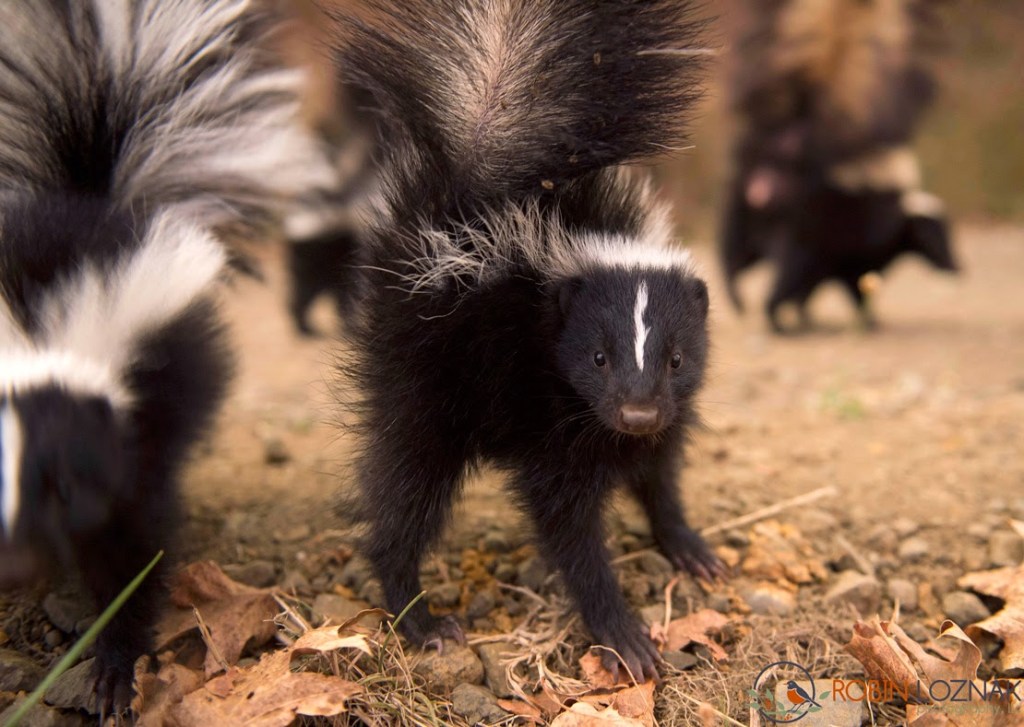
It’s May! Yes! The prettiest time of year on the farm. So said my father when I told him one April day that April must be the prettiest with all its green and flowers. “No,” he said. “May is.” Not something I expected to hear from this reserved man. Well, now it’s May and I’m sure he was right. In honor of May I’d like to present a rollout of pictures of critters that share this farm with us, all these selected photos thanks to my son-in-law Robin Loznak, award-winning photographer, whose work can be seen in publications around the world. And here.
Robin specializes in wildlife photography. Here he is getting a close-up of a very tiny critter, a picture I took a few years ago for another post. That’s a part of his wildlife specialty–bees, elegant praying mantises, dragonflies, and more. They all shine in his photos.
He and my daughter Carisa live on the farm too so they’re able to enjoy the place founded by my great-great-grandmother Martha Maupin in 1868 and maintained by my father, Gene Fisher, for many years. Robin kindly lets me use his photos on my blog, whatever I need to illustrate a story.
Here are some of my favorite photos he’s taken of wildlife on the farm. Some are old favorites you may have seen before. Some were new to me.
You know what I heard? . . . Mm-m? I’m listening. Baby barn owlets perch in the old barn in a prune box placed there by Robin for a safe nest. Sharing stories? Maybe.Acorn woodpecker leaving its home in the gate post. Going out for dinner?Probably.Female Northern Harrier (Marsh Hawk) like one that swept over my shoulder one day and hovered in front of me before making a sharp turn to fly away.See the story here.Male Northern Harrier in aerobic flight like one that appeared while I was writing Martha’s story. A hawk like him is pictured in the book.Hummingbird on a wire watching lunch.Acrobatic kestrel coming in for a soft landing.Honeybee ready to sip from a blossom and spread pollen around.What did you say? See a poetic description of a mantis in “Portraits of a Century Farm” here. The Century Farm is a Sesquicentennial Farm now, but the collection was done before it was.Exquisite detail of beauty on the wing of this dragonfly.This bobcat may be the one we called Scamp when he became such a frequent visitor. Scampered right up to the house one day.You can’t see me, can you? My mama hid me and told me to stay right here.Better go now. Which way? Which way? Roosevelt elk making quick decisions.See another elk photo with poetry among the “Portraits” collection here.What is that looking at me, Mama? See another of the “Portraits” here for a poetic description of the encounter, “Making Scents.”Robin said he used an extreme telephoto lens to take this shot. I’m happy to report that no one, man or animal, was harmed in this photo shoot.Peeking out at you. Did you ever see a salamander so cute?
And with that, my friends, I close out our ode to May with some of my favorite Robin Loznak photos of wildlife on our farm. I hope you enjoyed it as much as I enjoyed putting it together.
Thank you, Robin, for sharing your beautiful work.
Photo I took April 14 in 2018. I love the little white heart on the face of the nearest one.
April is usually the beginning month for calving here, although many farmers choose to calve earlier. The cows on our farm are gentle. They let you walk right through the herd, even when a cow is calving, although I keep an eye out for a nervous mama. They aren’t my cows. Ed and Mary Cooley rent pasture on the farm as they did when my dad was still here. But I get to enjoy the babies. I think these cows are gentle because Ed spends time with them, moving them from pasture to pasture, often daily. And in winter and early spring he adds hay to their pasture for feed.
The above picture by my son-in-law Robin appeared in my book A Place of Her Own, the story of my great-great-grandmother Martha Maupin who founded this farm in 1868, now a sesquicentennial farm. The picture illustrated a moment described in one of the Interludes in the book that told of my search for Martha’s story. My dad, Gene Fisher, farmed the place for 75 of those 150 years, more than any other owner in the family’s history. The fourth and last Interlude closes with the morning after he died.
The morning broke, bright and sunny. . . . We looked out the kitchen window to the apple tree across the nearby creek.A new black calf stood on wobbly legs beneath the tree, his mother gently licking his back. The first calf of the season had been born in the night. . . . I wished I could share with Martha the hope I found in this place and in the wonderful creatures who lived here with us. After the long dark night, there would be a bright new morning.
And new calves.
(The Globe Pequot Publishing Group, pp. 202-203)
The same little one as pictured at the top . . . with Mama watching. Or coming my way? Here’s looking at you.
A new story on the farm’s sesquicentennial status came out in the April edition of the Douglas Electric Company monthly magazine. April was the month my great-great-grandmother Martha Maupin purchased the family farm in 1868.
The story with photos: the book, me with the hills behind, me at five, and Martha’s house she had built for herself and her many children.
Craig Reed, local writer, visited the farm and talked with my daughter Carisa Cegavske and me before writing the cover story which got a nice spread, shown above. The farm would have qualified in 2018 but I didn’t put in the application until 2024.
Martha was the subject of my first published book, pictured in Craig’s story, A Place of Her Own: The Legacy of Oregon Pioneer Martha Poindexter Maupin, published by Globe Pequot Press. I didn’t have to write a book to qualify the farm for sesquicentennial status, but my research for the book certainly helped me put together the extensive information required for the application.
I grew up on this farm. The little girl curtseying in her overalls is me enjoying the freedom I experienced there. When my dad died in 2007 Carisa and her husband Robin Loznak decided to join me in keeping the farm. I had been away all my adult years so it was quite a change from city life I experienced in the interim. Their son Alex Loznak moved there with us, as well as my other daughter, Christiane Cegavske, and her child, Aspen Boutilier. Carisa, Robin and I still live there.
I love the farm’s hills for walking, and the quiet, where I find inspiration to write my books. My whole family loves the beauty of the land, the rich history, the wildlife. Christiane, Aspen and Alex visit as often as they can. That’s easier now for Christiane and Aspen, who lived in Kansas for ten years and now live in Portland, Oregon. Alex took a stint in New York City, then Eugene, Oregon, but he’s in Portland now too.
We all take pride that Martha was the founder of this farm, a woman who dared take on this treasure when it wasn’t all that easy for a woman to do.
Today marks the spring equinox when days and nights are equal. And the earth’s axis lines up so both hemispheres get the same sunlight. We give passing thought to this moment nowadays, though some of us cling to the hope that spring has come. But in the far distant past when most folks depended on these markers for scheduling the vital business of producing crops and other significant events in their lives it was important to observe this phenomenon. Perhaps even more central was the spiritual meaning. It must have represented for many a time of rebirth.
Knowth Passage Tomb, River Boyne Valley, Ireland
Many people know about the solstice alignment of the Newgrange passage tomb in Ireland where the rising sun on winter solstice shines right up the long passageway to the inner chamber, but a few miles up the River Boyne Valley another passage tomb has an east-west alignment which may suggest that its passageways were designed to receive the sun’s light at equinox. This is the large central tomb of Knowth. Alterations of the passages during reconstruction may have affected the course of the light, whether sun or moon, but many of the kerbstones are carved with images of the sun and moon.
Kerbstone at Knowth Passage Tomb
The people who constructed these great monuments surely honored the signs in the skies that affected their lives. I had the privilege of visiting Knowth and Newgrange just last April when I was doing site research for my book set in Ireland and snapped the above photos. You can see part of the large tomb in the upper photo with several of the distinctive satellite tombs around it. Some of the kerbstones can also be seen at the base in that upper photo, and one more clearly in the closeup.
At home this year I think we’re clinging to the hope of spring more than usual as multiple days of heavy rains caused flooding of rivers and streams, while also saturating soils that sent mudslides down the slopes to block roads.
The road up the hill on my farm. Robin Loznak photo.
There’s that old saying about March coming in like a lion and going out like a lamb. Well, we were enjoying day after day of warm spring weather early in March.
The photo below was taken on March 10. Much more lambish than lionish, I’d say.
Early daffodil bloom on a Marchmorning on the farm.
You never know about March. But I think we’re ready for spring and more of those sunny, lamb-like days.