Spring Celebration of the Arts

Artists and Authors celebrated the beginning of spring last weekend at a gala in historic Oakland, Oregon, at the wonderful 1905 Oakland Ice House, hosted by Conni Westford Riley. I so enjoyed being a part of this event and sharing my books there.

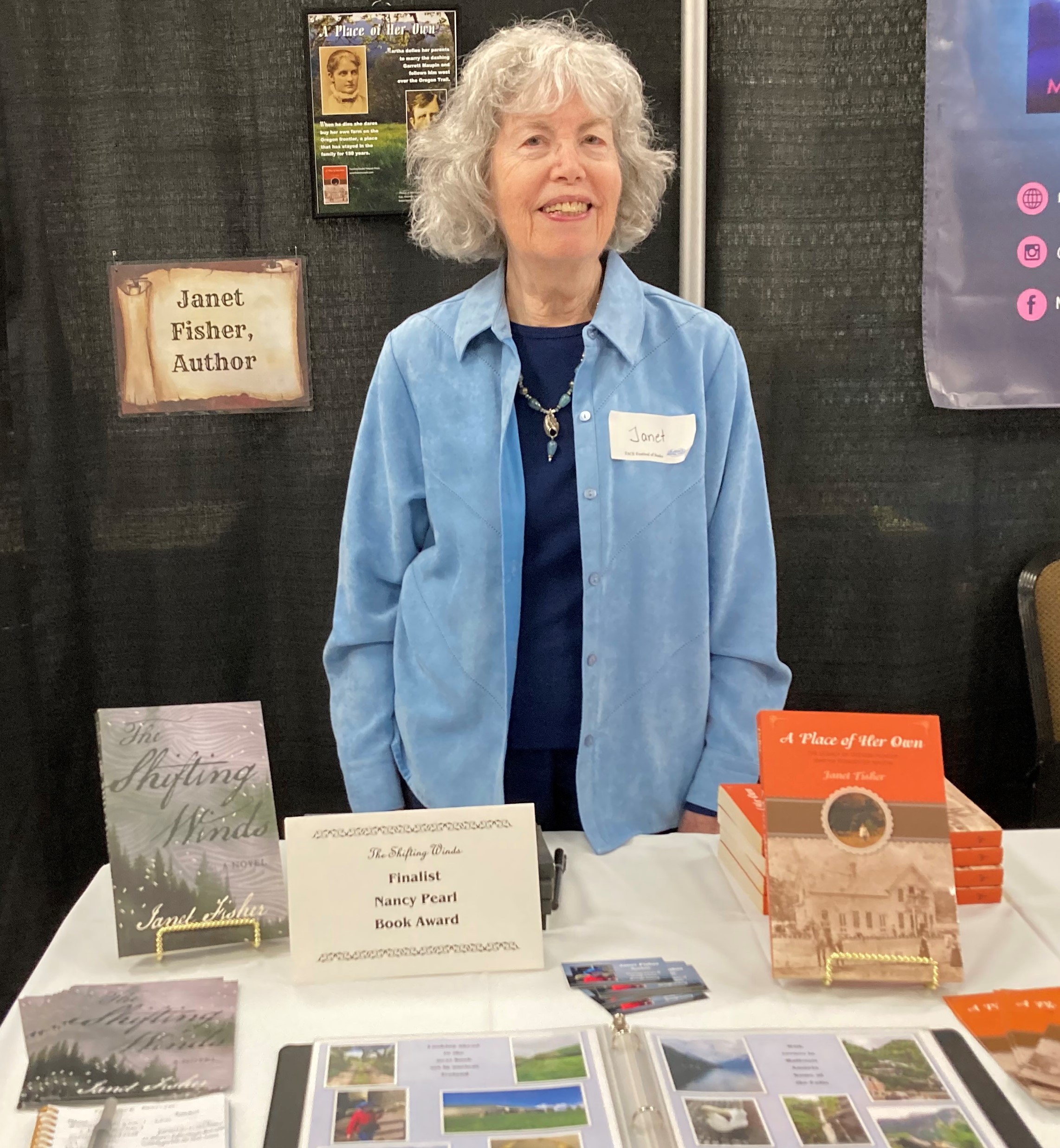
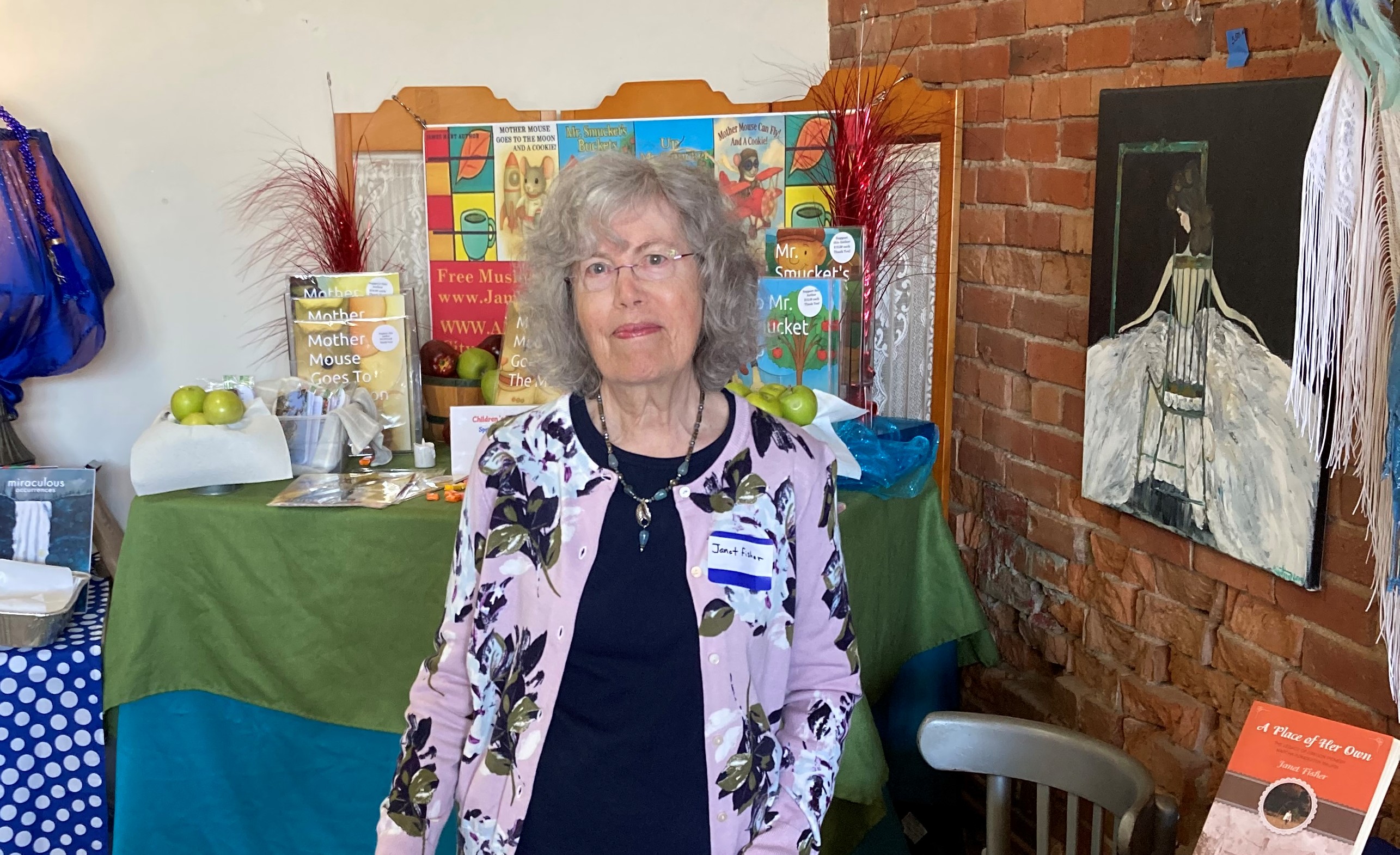
Me at my table next door to Jim Hart’s display of his delightful children’s books. I believe he was in the next room with his guitar offering music at that moment.

The room with its old brick walls and antique furnishings offered a lovely setting for the event and our host Conni Riley added many special touches.

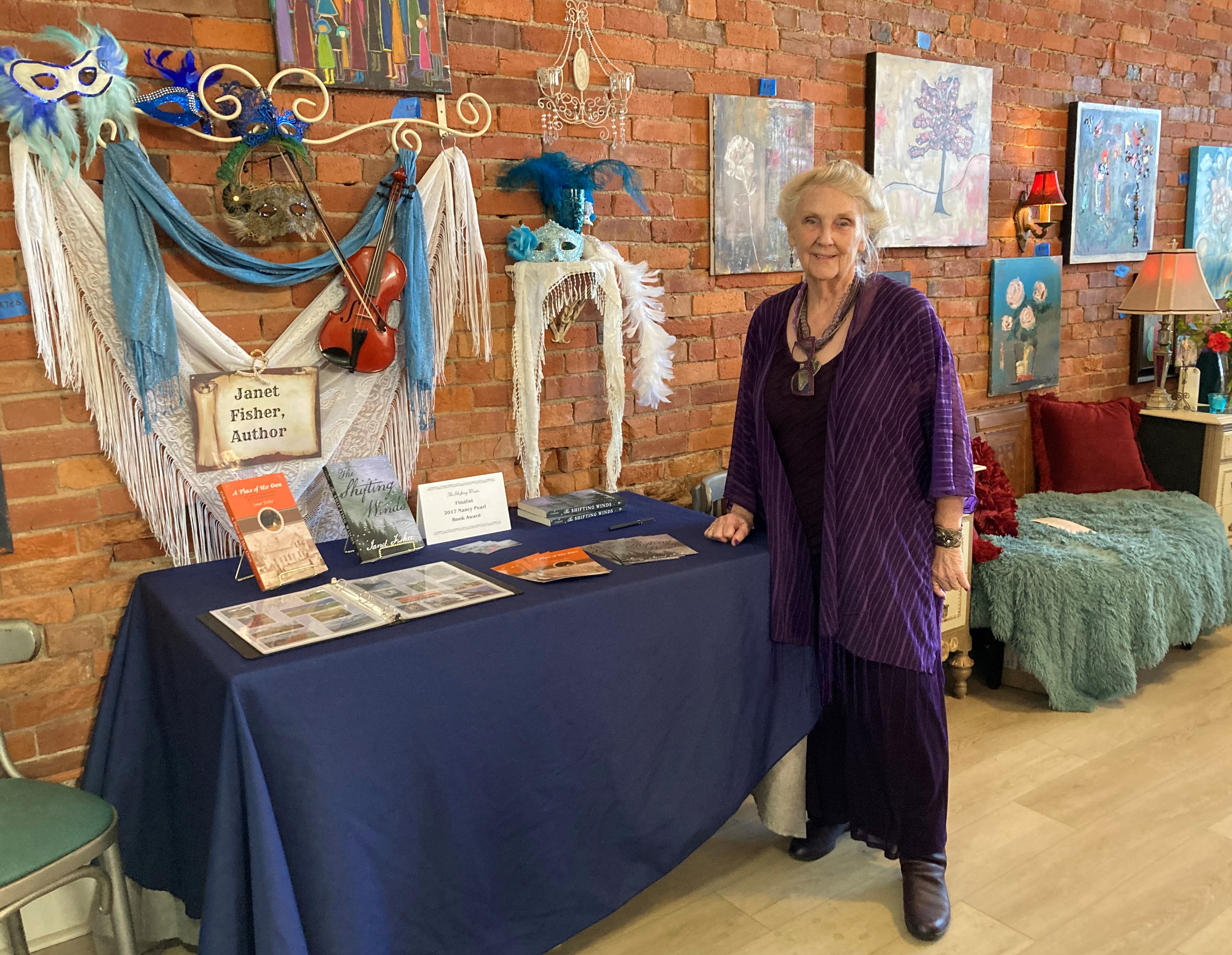
Here’s Conni in the photo below next to my table where I sold and signed books, A Place of Her Own and The Shifting Winds, my Oregon pioneer stories. Also on the table is a book of photos, including pictures of Ireland, setting for my next book. Conni did the beautiful display above the table, adding my “Author” sign to her decor, a sign I have used since I received it from the Oaklanders who made it for me at an event they sponsored some years ago. I especially loved the violin. Nice touch.

Conni Westford Riley at my table.

Conni offers this space at the old Oakland Ice House for fundraisers for non-profits, community dinners, movies, including chick flicks, and other group shows. This was the first spring event for artists and authors and hopefully she’ll do it again next year.

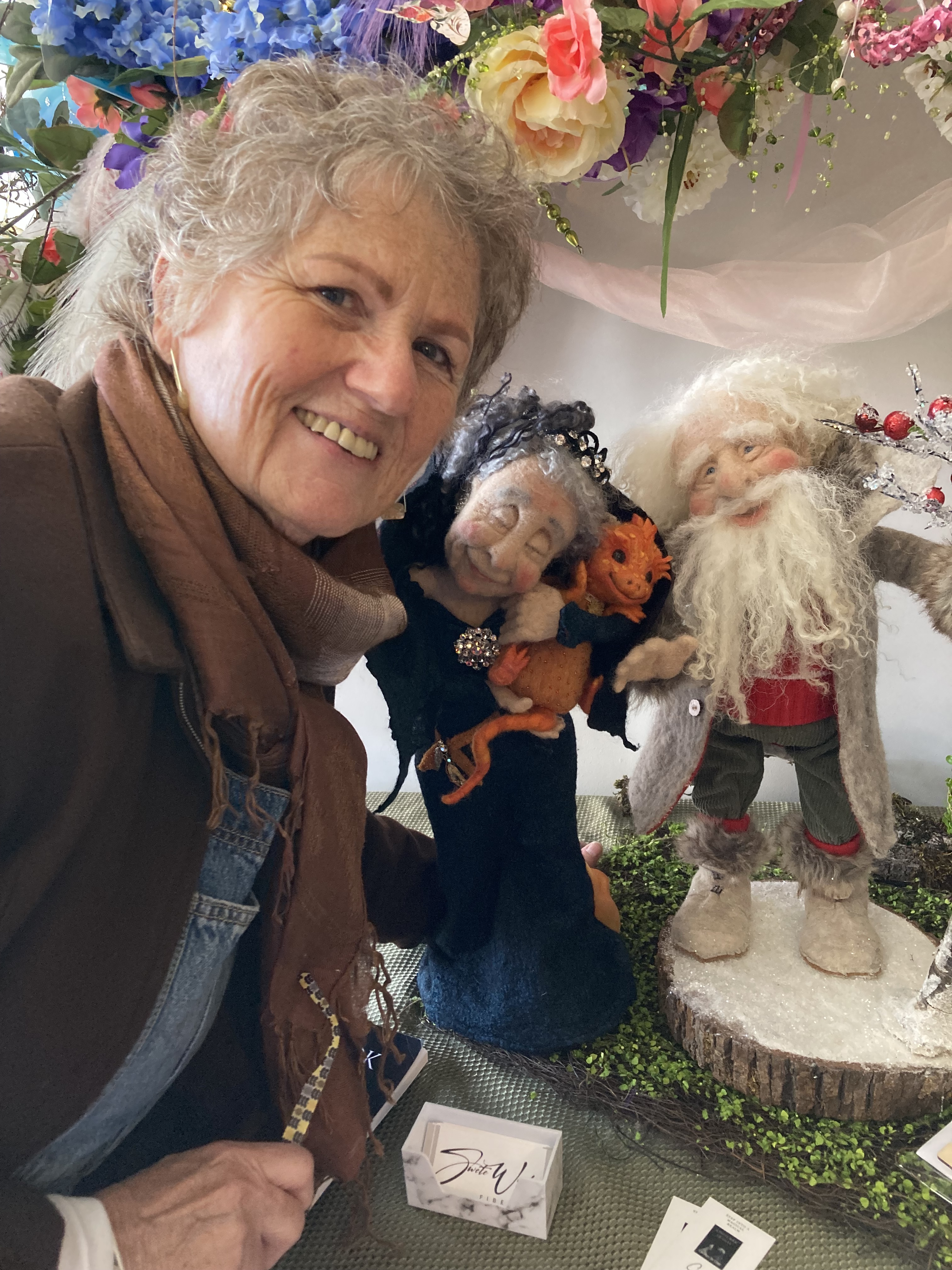
Carolyn St. Clair and two of her adorable friends.

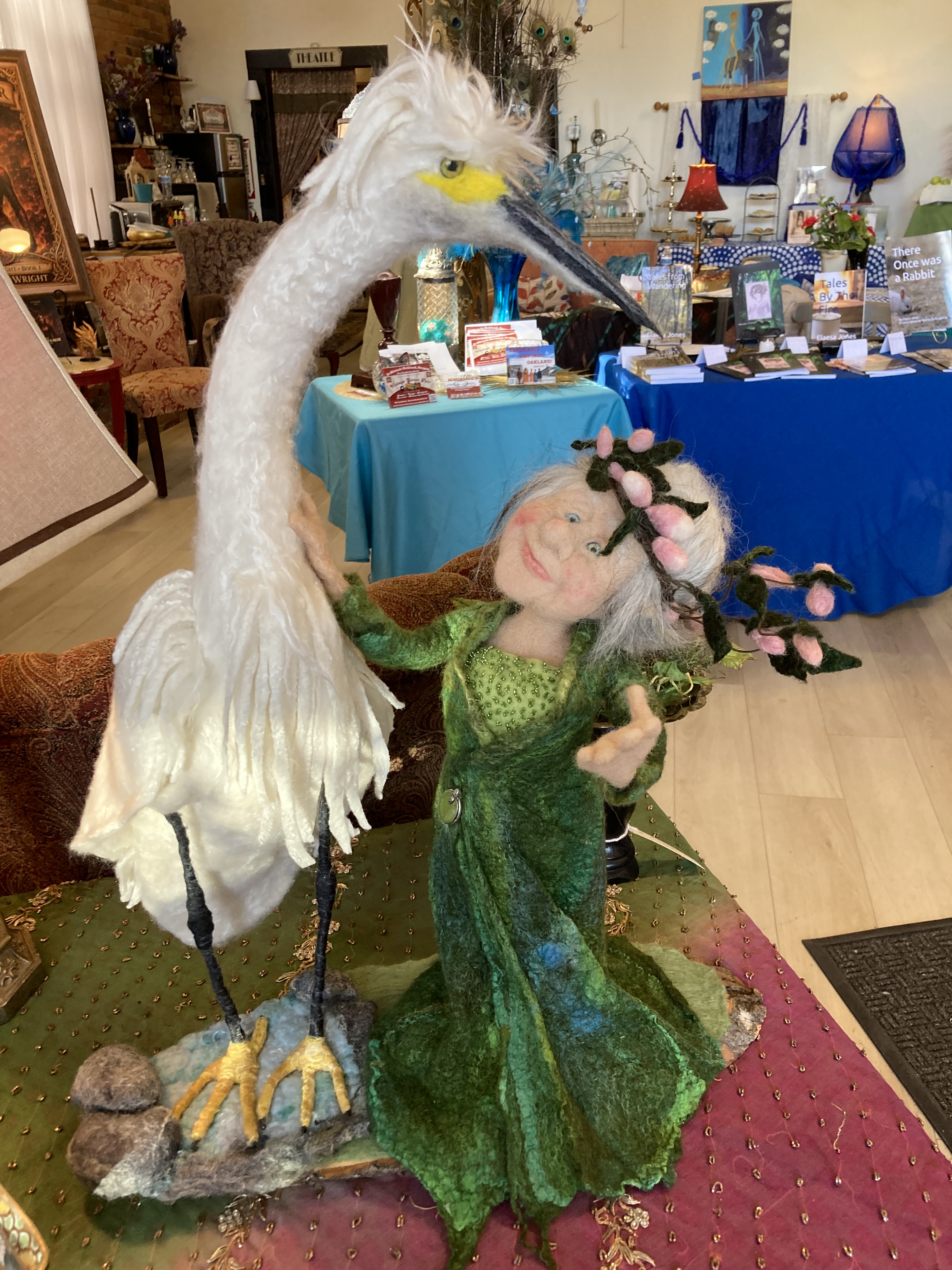
One of the authors/artists, Carolyn St. Clair, brought some of her wonderful woolie characters along with her book entitled A Swete Book of Tales. The “Swete” comes from her grandmother’s middle name. This third character represents spring.

Carolyn’s book displays 50 of these characters in full color with enchanting stories for each one. She has made each character by hand (in fact she was working some wool during the event to show the process). I’m not good at estimating sizes but I would guess they’re about two feet tall. The books are available on Amazon.

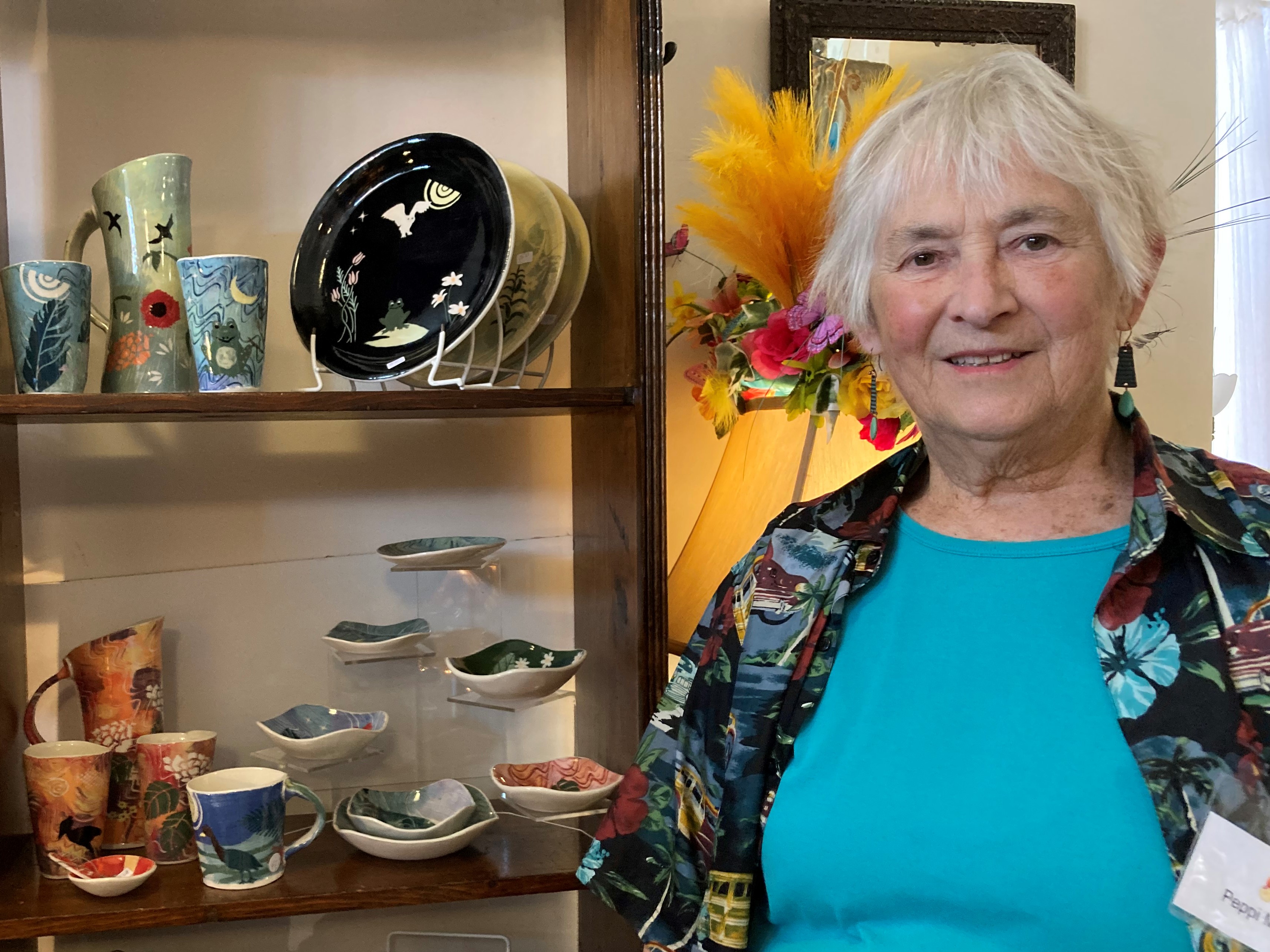
Another skilled artisan at the event was Peppi Melick of Peppi’s Pottery.

Her sales gallery is in Roseburg, Oregon, on Cleveland Rapids Road.

Here she is with some of her beautiful work.

Peppi Melick

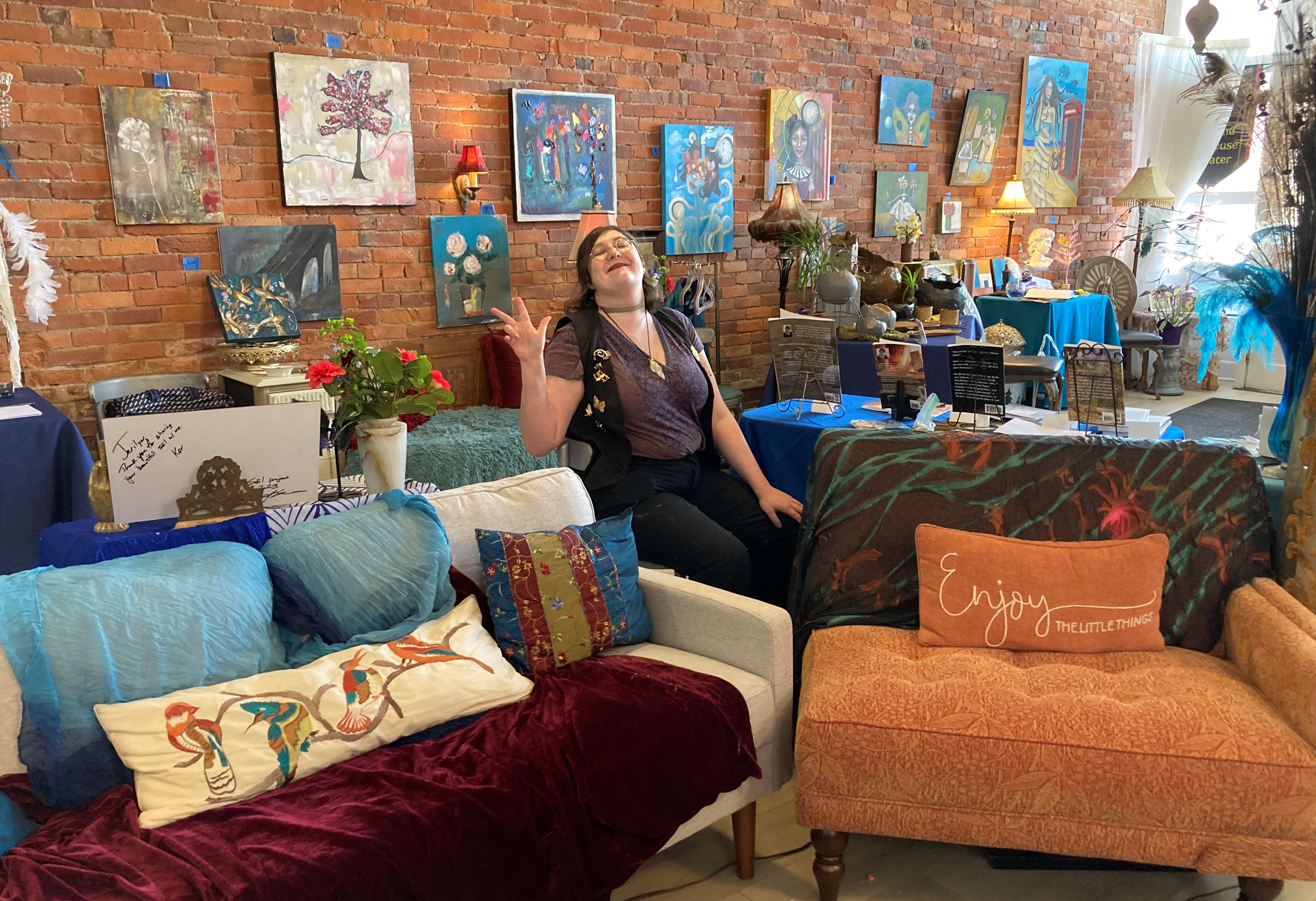
And for a wide look at the room here’s Elaesa Jones, below, a young author with unbounded energy and enthusiasm, with a collection of her books, There Once Was a Rabbit, Tales by the Fire, and many more. She loves magic and delving into fantastical realms for her stories. I found her online by going directly to “elaesa jones books.”

Elaesa Jones

This is just a sample of the artists and authors. Visitors included longtime friends and new folks I thoroughly enjoyed chatting with as well. An excellent event all around.

Spring Event at Historic Oakland

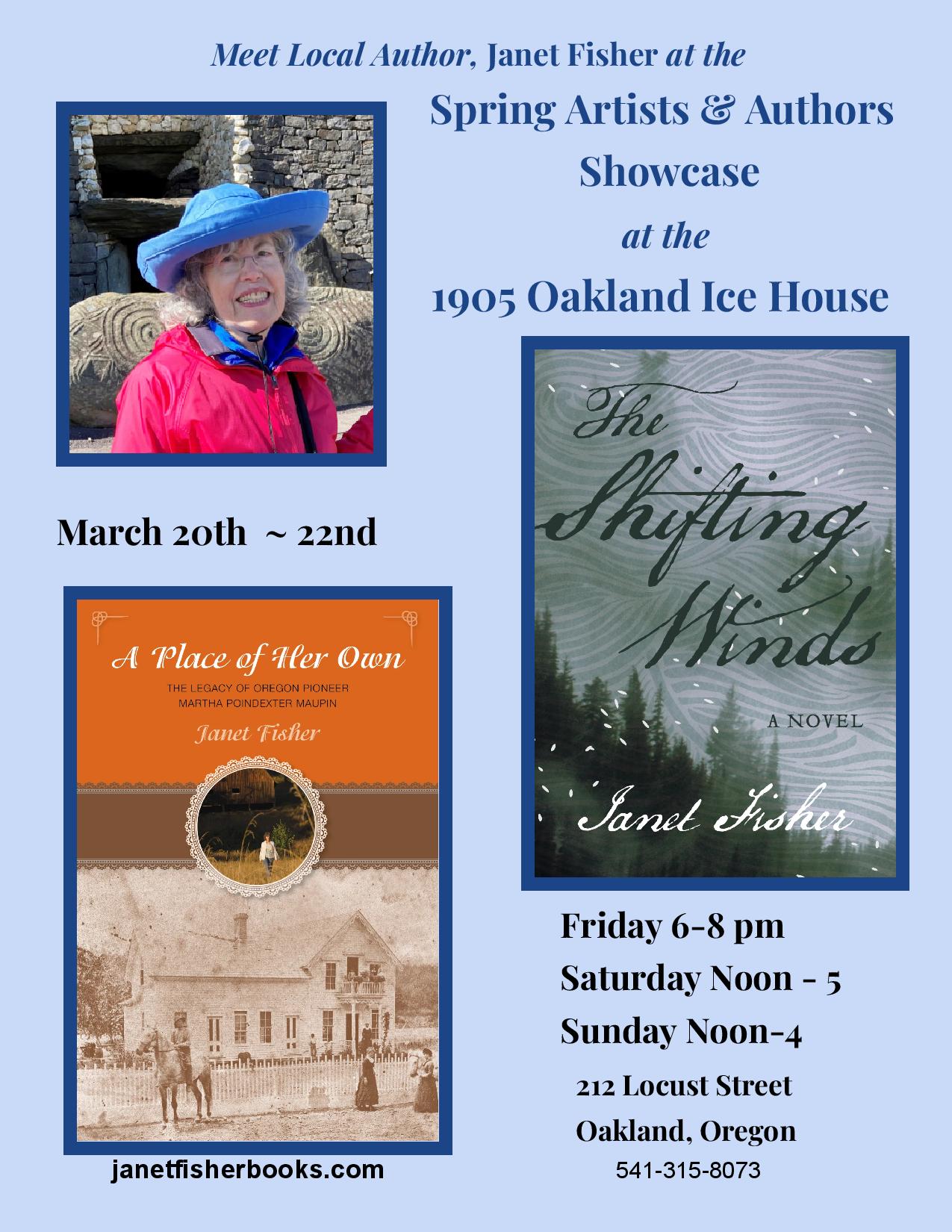
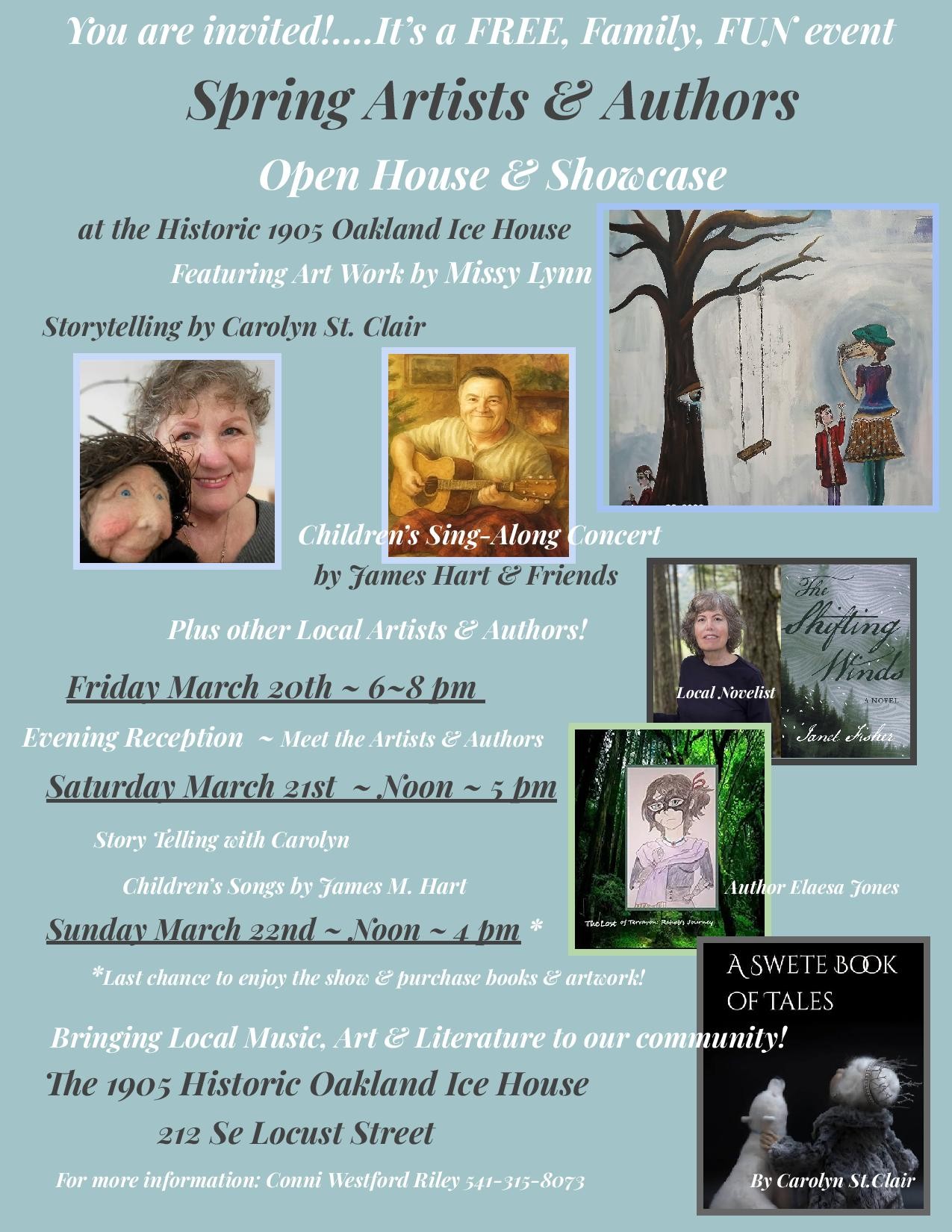
Spring is springing this Friday, March 20, and I’m happy to announce I’ll be signing books at a springtime event starting that Friday evening at 6 o’clock in the historic town of Oakland, Oregon, and running through Saturday, and Sunday afternoons, March 21, and 22. It’s the Spring Artists & Authors Open House and Showcase for the whole family with music and storytelling and sparkling cider with some sweet bits to eat. And the event is free.

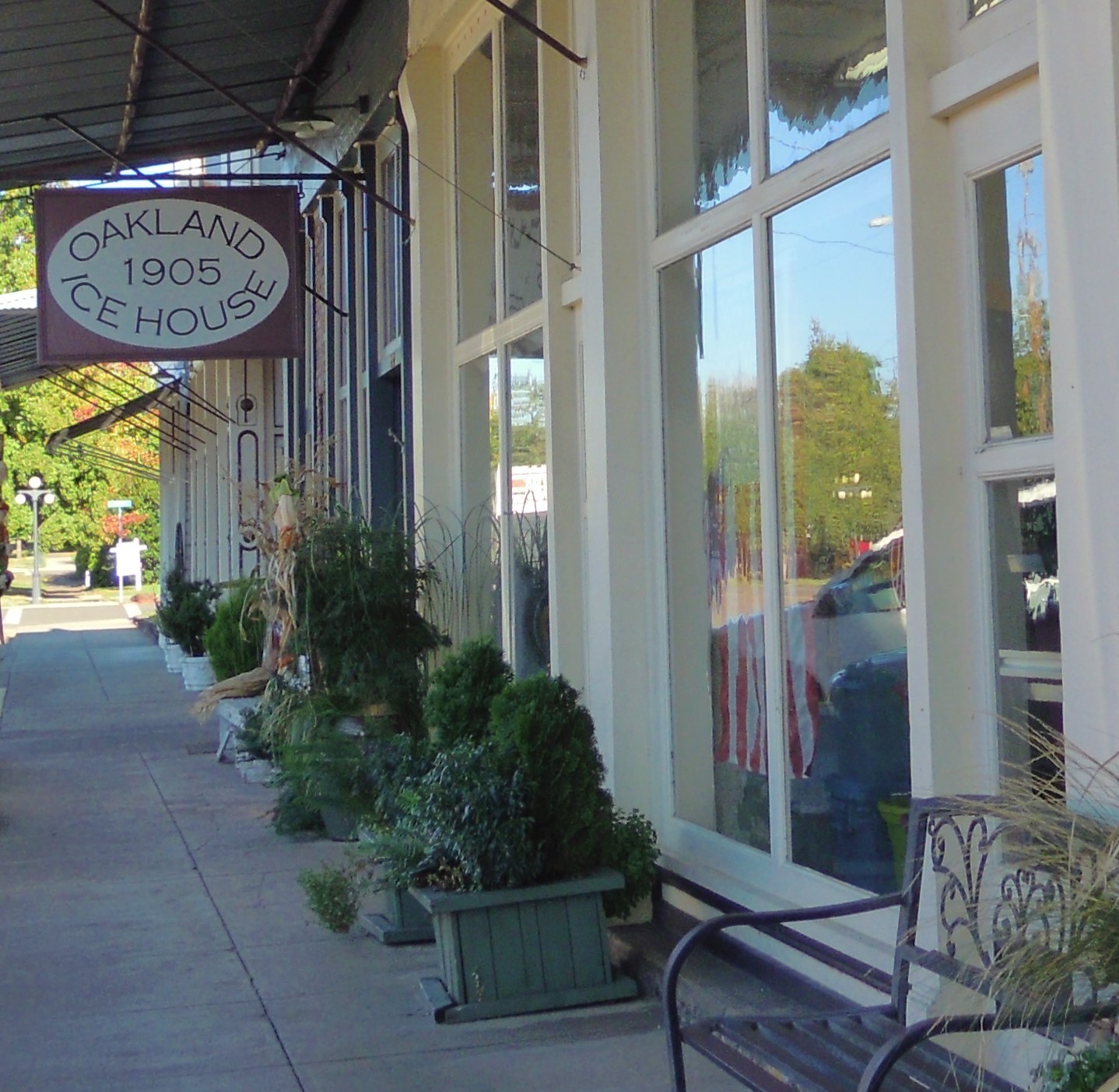
In my previous experiences at Oakland events I’ve found that these Oaklanders hold delightful parties that can take you right into the past. This one will be held indoors at the 1905 Oakland Ice House, 212 SE Locust Street, a setting brimming with true history.

A personal aside: I’m also celebrating the completion of the rough draft for a new novel set in ancient Ireland, a sequel to the one my new literary agent is pitching to editors. I’ll have pictures of the Irish settings on display in Oakland.

I took this photo outside the Ice House a few years ago for another historic event.

For more information on Oakland’s springtime event check out the two posters below–one made specifically for me by program coordinator Conni Riley …

… and one for the full program.

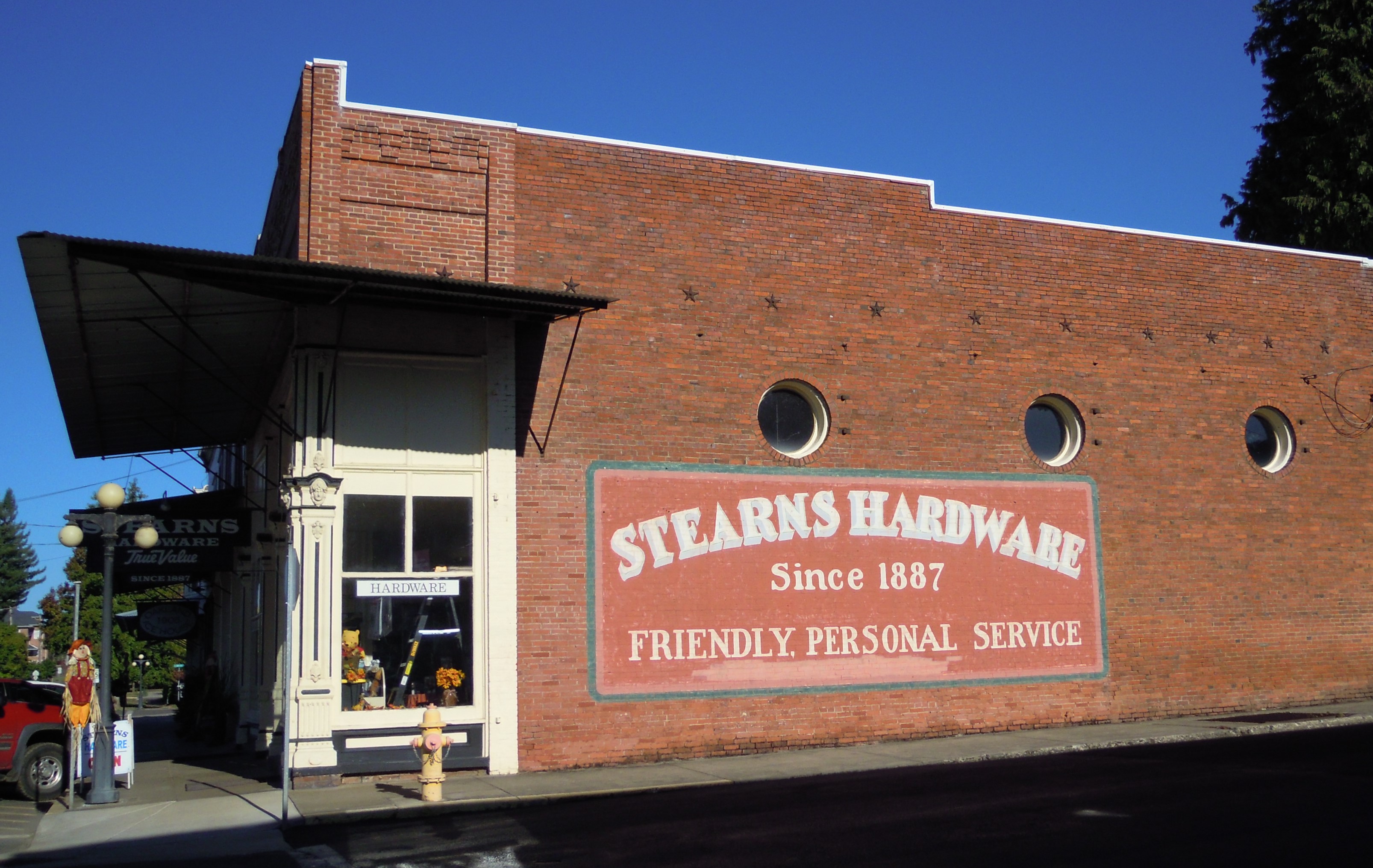
The 1905 Oakland Ice House is just up the street from the old Stearns Hardware on the corner of Locust Street and SE 2nd Street pictured below, which as the sign says goes all the way back to the year 1887.

Another photo I took a few years ago for another historic event in Oakland.

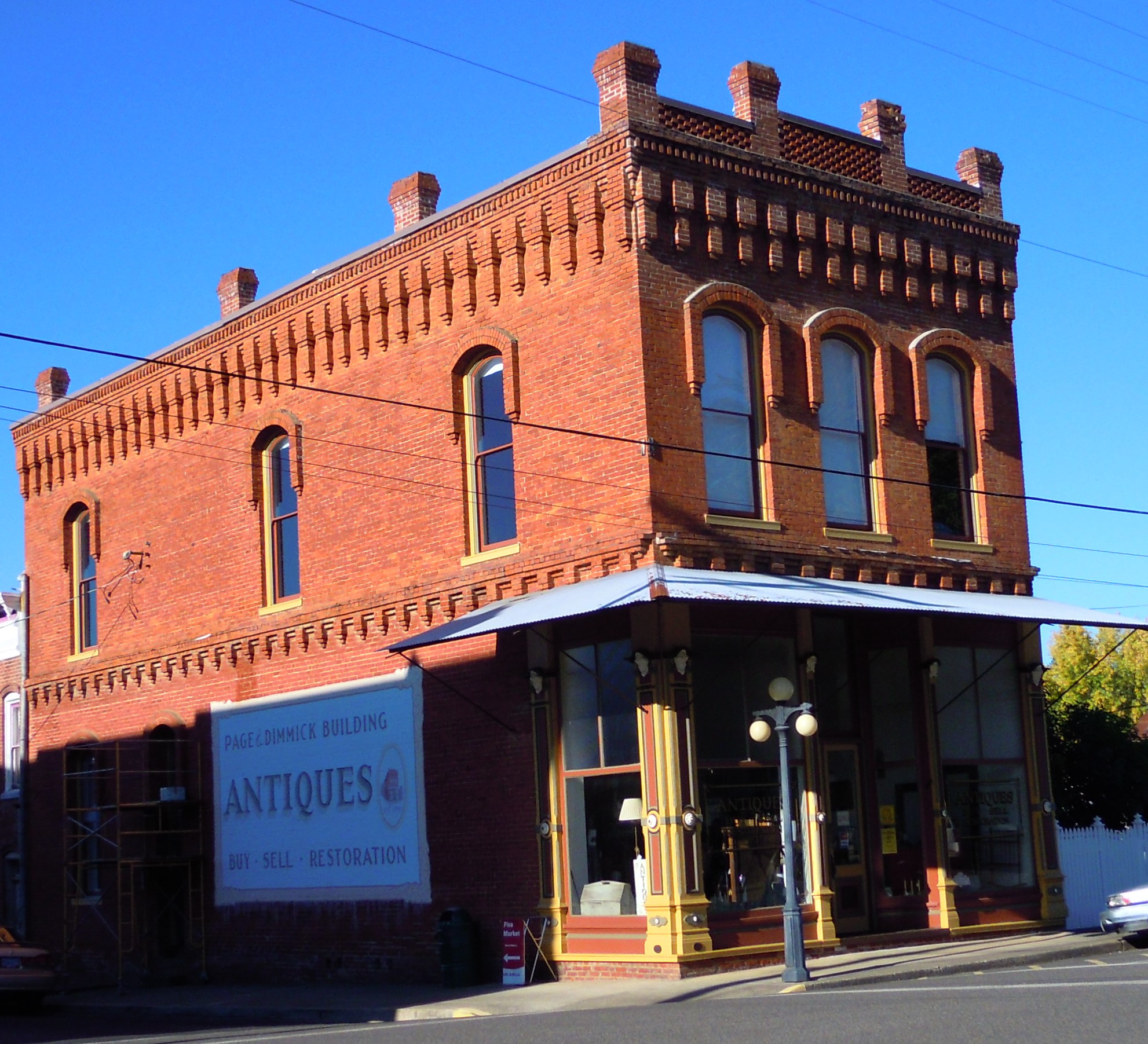
And there’s the beautiful old building across the street, pictured below, the Page & Dimmick Building that also takes a person into the past when strolling down Oakland’s center.

Another photo from the same shoot.

Calving Time at Martha’s Farm

Photo I took April 14 in 2018. I love the little white heart on the face of the nearest one.

April is usually the beginning month for calving here, although many farmers choose to calve earlier. The cows on our farm are gentle. They let you walk right through the herd, even when a cow is calving, although I keep an eye out for a nervous mama. They aren’t my cows. Ed and Mary Cooley rent pasture on the farm as they did when my dad was still here. But I get to enjoy the babies. I think these cows are gentle because Ed spends time with them, moving them from pasture to pasture, often daily. And in winter and early spring he adds hay to their pasture for feed.

An hours-old calf gets a lick from its mother on Friday, April 15, 2011. (Credit Image: © Robin Loznak)

The above picture by my son-in-law Robin appeared in my book A Place of Her Own, the story of my great-great-grandmother Martha Maupin who founded this farm in 1868, now a sesquicentennial farm. The picture illustrated a moment described in one of the Interludes in the book that told of my search for Martha’s story. My dad, Gene Fisher, farmed the place for 75 of those 150 years, more than any other owner in the family’s history. The fourth and last Interlude closes with the morning after he died.

The morning broke, bright and sunny. . . . We looked out the kitchen window to the apple tree across the nearby creek. A new black calf stood on wobbly legs beneath the tree, his mother gently licking his back. The first calf of the season had been born in the night. . . . I wished I could share with Martha the hope I found in this place and in the wonderful creatures who lived here with us. After the long dark night, there would be a bright new morning.

And new calves.

(The Globe Pequot Publishing Group, pp. 202-203)

The same little one as pictured at the top . . . with Mama watching. Or coming my way? Here’s looking at you.

Martha’s Farm Featured Again

A new story on the farm’s sesquicentennial status came out in the April edition of the Douglas Electric Company monthly magazine. April was the month my great-great-grandmother Martha Maupin purchased the family farm in 1868.

The story with photos: the book, me with the hills behind, me at five, and Martha’s house she had built for herself and her many children.

Craig Reed, local writer, visited the farm and talked with my daughter Carisa Cegavske and me before writing the cover story which got a nice spread, shown above. The farm would have qualified in 2018 but I didn’t put in the application until 2024.

Martha was the subject of my first published book, pictured in Craig’s story, A Place of Her Own: The Legacy of Oregon Pioneer Martha Poindexter Maupin, published by Globe Pequot Press. I didn’t have to write a book to qualify the farm for sesquicentennial status, but my research for the book certainly helped me put together the extensive information required for the application.

I grew up on this farm. The little girl curtseying in her overalls is me enjoying the freedom I experienced there. When my dad died in 2007 Carisa and her husband Robin Loznak decided to join me in keeping the farm. I had been away all my adult years so it was quite a change from city life I experienced in the interim. Their son Alex Loznak moved there with us, as well as my other daughter, Christiane Cegavske, and her child, Aspen Boutilier. Carisa, Robin and I still live there.

I love the farm’s hills for walking, and the quiet, where I find inspiration to write my books. My whole family loves the beauty of the land, the rich history, the wildlife. Christiane, Aspen and Alex visit as often as they can. That’s easier now for Christiane and Aspen, who lived in Kansas for ten years and now live in Portland, Oregon. Alex took a stint in New York City, then Eugene, Oregon, but he’s in Portland now too.

We all take pride that Martha was the founder of this farm, a woman who dared take on this treasure when it wasn’t all that easy for a woman to do.

Carisa in the purple and me in navy on the cover.

Martha’s Farm Makes the News

With Martha’s Farm gaining Sesquicentennial status it’s making the front page news.

Drew Winkelmaier, reporter for The News-Review in Roseburg, Oregon, came out to the farm in Kellogg last week and put together a nice story for the Sunday edition.

That’s me on the porch, photo by Drew. We talked awhile then went down to the old barn that has stood on the property since the 1930s when my father bought the place from his great-uncle and had the barn built.

From there we visited the hazelnut orchards, our newest crop on the farm, which had been a prune farm since 1895 when Martha’s son Cap planted the first prune orchard.

With the prune market turning iffy and a burgeoning hazelnut market we began making the switch in 2011 when we planted our first hazelnut trees.

Drew’s story delves into the history from our discussion as well as information I had put together for the Oregon Century Farm and Ranch Program, much of it based on my research for the book I wrote about Martha, A Place of Her Own. When I took over the farm in 2008 I became another woman in the family to own the place and thought there might be a story in that. And yes, Martha had far more story than I ever imagined.

My family got together at the Oregon State Fair last Saturday, August 24, when fourteen farms were honored for Century status and two, including ours, for Sesquicentennial status. We received lovely certificates at the presentation when short narratives were read about each of the farms with photos on a screen above the stage.

After that we did what everybody does at the state fair. We visited the animals, including a competition among elegant horses in the historic horse barn. And the poultry and pigs and sheep and goats and cattle. Oh, and the beautiful family of huge black draft horses. Such magnificent creatures! And we saw exhibits of photography and artwork and ate too much fair food.

And on the way out we enjoyed strolling through the rides as the skies darkened and the lights came up.

Exciting times for Martha’s farm.

Martha’s Farm Approved for Sesquicentennial Status

The Martha A. Maupin Farm which I now own has been approved as a Sesquicentennial Farm, having been in the family for 150 years. In fact it reached the 150-year mark in 2018. Martha purchased the farm in 1868. But this year I finally went through the process of applying for the Sesquicentennial status through the Oregon Century Farm & Ranch Program.

The families approved this year will be honored at a ceremony at the Oregon State Fair this month on Saturday, August 24 at 11 am in the Columbia Hall on the staged area. Fourteen families have been approved for Century status and two for Sesquicentennial status for 2024. Photo highlights for each award winner will be presented at the ceremony with a desert reception afterward.

The photo above shows Martha and her family in their early years on the farm in front of the house she had built soon after her 1868 purchase. That’s Martha standing on the front porch, her eldest son Cap on the horse. Cap became part owner with his brother Tom when their mother sold it to them in 1886. Then Cap became sole owner when he bought his brother’s share in 1894. From Cap it went to my father Eugene Fisher, Cap’s great-nephew, and my mother Marian in 1934, then to my sister Nancy and I, and finally to me when I bought my sister’s share in 2008.

Part of the application involved finding the documents to verify all those transitions, which can be a challenge. I had obtained some documents, like Martha’s original purchase, when I researched my book about her, A Place of Her Own.

But I was missing some of the documents, which took me back to the Douglas County, Oregon, County Clerk’s office to find the missing links.

The application also required a two- or three-page narrative of family history, including the transfers from one generation to another. My research for the book helped on the early part of that history. Memory served on later events, but I had to scour some local histories and the newfound documents to bring in the middle. The local histories had also helped with my book research.

Martha’s place has been a Century Farm since the 1960s, and I have been pleased to know that this was one of the few Century Farms in Oregon named for a woman, which seemed especially sweet since I’m the second woman to be its sole owner. Now it’s an Oregon Sesquicentennial Farm named for a woman.

I do love history, so it was an intriguing process, and I have a clearer view now of the farm’s history.

The sample of Martha’s purchase document shows the flowery writing one has to pore through in order to glean what you want to know.

In addition to the legal documents and narrative, the application required maps, and requested photos. I also sent a copy of my book about Martha, which the Program Coordinator said they would be very happy to have.

I’m excited to honor my great-great-grandmother Martha for her historic achievement of founding this treasure when it wasn’t easy for a woman to do such a thing.

Below are a couple of photos from the farm, our new hazelnut orchard and the old 1930s barn that still stands on the hillside, looking down to the river bottom. For more on those hazelnuts, see the story here.

Robin Loznak photo

A Close Hawk Encounter

Yesterday I had a close encounter with a hawk like this female Northern Harrier.

Female Northern Harrier – Robin Loznak photo

I was taking my daily walk on a beautiful sunny afternoon, trekking uphill past the farm’s upper barn to the broad field above. As I occasionally do on the uphill climb I stopped for a breath and turned around to observe the panorama below me and to enjoy the glorious perspective that widens with each step in elevation–the forested mountain range in ranks from dark-green to blue, the verdant middle plain, the nearer skeletal oaks.

With startling suddenness the huge hawk came up behind me and swooped over my left shoulder and down the road in front, maybe three or four feet off the ground, shimmery rich-brown wings spread. Soundless. Hovered not six feet away. No sign of fear, though she had to know I was there. The moment felt long, time suspended. As I watched in awe, she made a sharp right turn and flew out over the green slope beside me, the bright-white clump of feathers on her rump clearly identifying her as a Northern Harrier. The brown wings and back suggest she was probably a female. She seemed to float above the grass, tilting this way and that, then turned again and soared downhill out of sight.

I caught my breath in wonder.

I later checked online, curious about the size of it, and learned that a Northern Harrier has a wingspan between 38 and 48 inches. And they range from 16 to 20 inches long. That’s one big bird! Not as big as an eagle, true, which may have a 6- to 8-foot wingspan, but you seldom see these grand creatures hovering right in front of you offering the full impact of their presence. Harriers are distinctive in the way they hunt low to the ground with upswept wings and are known for their aerial dances in the sky.

The place

Readers who have followed my work may recall my intrigue with the white hawks that seemed to be harbingers of good news from time to time, beginning about ten years ago with the one that swept in front of my office window, then flew low above the road as if leading my grandchild and me up the hill. Leading where, we didn’t know, but it felt quite magical. A hawk like him would appear one day when my son-in-law Robin had his camera handy, just in time to be added to pictures in my book A Place of Her Own.

Some of the Northern Harrier males that visit our property are white on the underside with the black wing tips and pale ashen backs, like the one below that Robin photographed more recently. When they fly they appear quite white. The females can be mistaken for juveniles, which are also brown on backs and wings, but females have whitish undersides with brown streaks like the one in the top photo, while juveniles have buffy undersides without the streaks. These birds were formerly called Marsh Hawks. My thanks to Robin for all these hawk photos.

Male Northern Harrier – Robin Loznak photo

The hawk that arrived in time for the book, shown below, also has the white coloring that led me to call them white hawks.

Male Northern Harrier, picture from the book – Robin Loznak photo

I hope the lovely one that came yesterday promises good news. Her presence certainly lifted me up.

Hazelnut Time

Remember these little guys? Remember their story, how they were started on Martha and Garrett Maupin’s Donation Land Claim in Lane County to be planted here on Martha’s farm in Douglas County? The story is here. I was working on my great-great-grandmother Martha’s story, A Place of Her Own*, at the time and was sure surprised to find that link.

Well, look at us now (below). These trees are producing nuts that are headed to market.

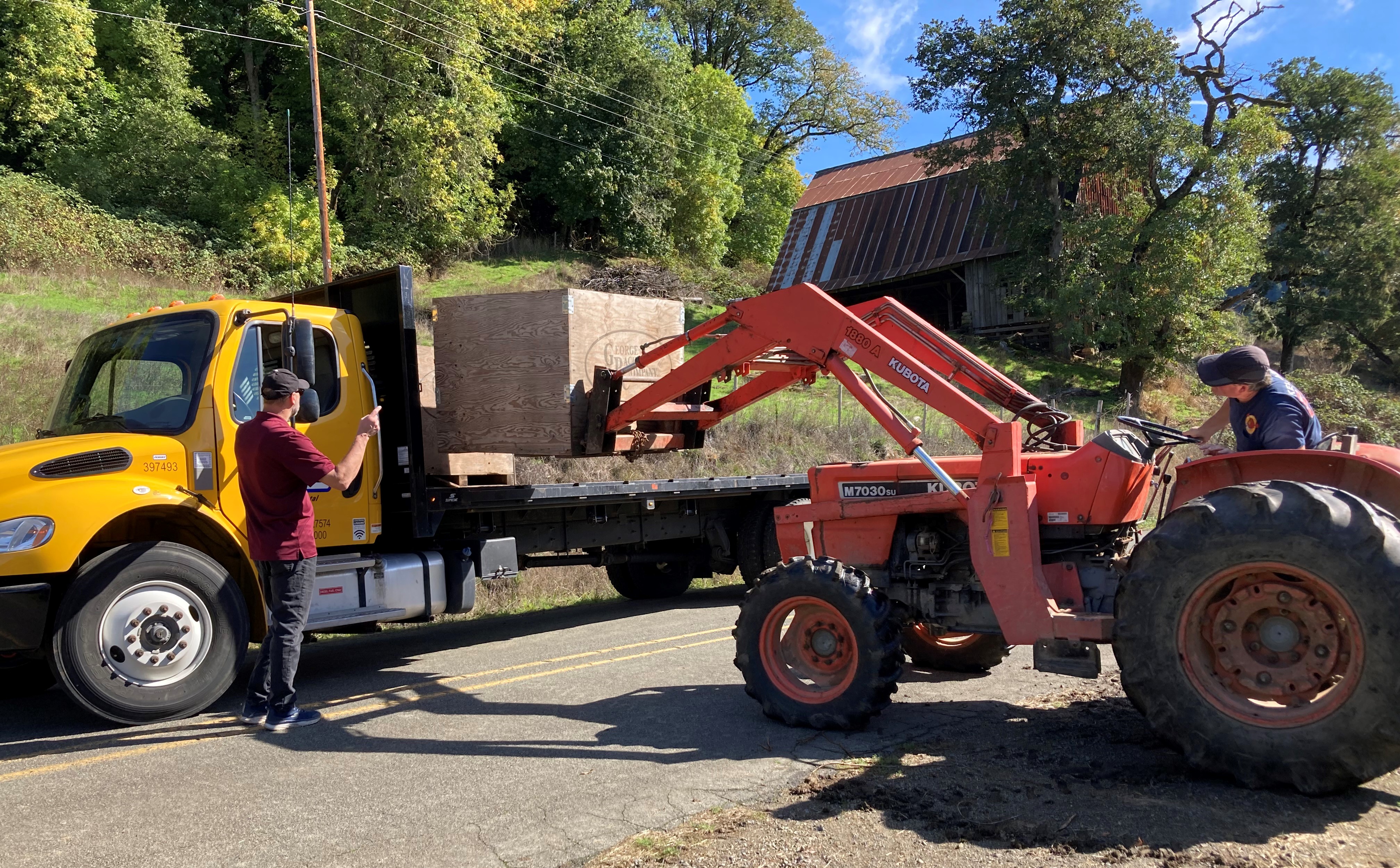
We have a nice coop in our area, the Northwest Hazelnut Company/George Packing Company, Inc. They bring us bins, we fill them, they take them away for processing.

Here my son-in-law Robin Loznak checks out our first bin as we wait for the truck to come pick up our bins. He and my daughter Carisa partner with me on this project. He does most of the work now–mowing and harvesting–although on this first seven acres I spent several summers watering those babies by hand with multiple hoses. I almost knew them by name. I did that until they got too big for me to reach over them and drag the hoses across to the next row. At that point Robin took over the watering with a big water tank drawn by the tractor. He put in the next orchard, 15 acres, and installed a water system for that. This first orchard has dug deep roots by now.

Robin carefully eyes the bin while Troy Mueller from the Northwest Hazelnut /George Packing Company guides him in. The farm’s old 1933 vintage barn can be seen in the background of this photo and the one above it.

A few tidbits for the curious: Oregon grows 99 percent of all the hazelnuts produced in America. Turkey and Italy are the only countries that grow more than we do. Turkey grows by far the most at about 70 percent worldwide. This may be one reason hazelnut farmers are so welcome in the state. Every Oregon hazelnut farmer adds to the state’s market share. Besides just being helpful, friendly people.

Oh, and for people who are wondering. A filbert is just a hazelnut by a different name.

*A Place of Her Own: The Legacy of Oregon Pioneer Martha Poindexter Maupin portrays the story of my remarkable great-great-grandmother who came west over the Oregon Trail. I grew up on this farm Martha bought more than 150 years ago. I’m now the second woman to own and operate this family treasure. I would never have done it without the help of my kids.

Fine Fort Umpqua Days Despite Weather Surprise

Fog and a little smoke from nearby fires cleared early on Saturday morning, the first day of the two-day annual Fort Umpqua Days event in Elkton, Oregon. Lovely weather. Sunny. Soft fluffy clouds. Gentle breezes. And the people came out. My, they did come out! I kept busy up in the vendor area on the hill above the reconstructed fort. So busy I didn’t even get down to the fort itself on the flat below.

In midafternoon I checked my phone for the air quality report, as I’d been doing daily since fires started in the area after a lightning storm several nights before. My phone indicated something to the effect that rain would start in thirty minutes or so. I stared at my phone, glanced up at the blue sky with the white, fluffy clouds.

“That’s ridiculous! It’s a perfect day.”

About twenty minutes or so later a cloud shadowed the ground. Lots of clouds. Gray ones. Enough to cover the sun.

I’m in my booth, with a canopy overhead, but I’m selling books. Rain and books don’t go together. And I had pictures, photographs, on display. Winds picked up. No overhead canopy would protect from blowing raindrops. My son-in-law checked his phone. It’s not just warning about rain. It’s warning about lightning.

All right. That convinced me.

The sprinkles came. About 3 o’clock we started packing up.

That said, even with a short day (vendors usually close at 4), it was an enjoyable time. So many people. So many stories shared. And a little weather excitement to boot. Didn’t see lightning but heard thunder by the time I got home.

Sunday remained clear all day, but quieter–well, except for those booms down at the fort. All in all, a delightful weekend.

Robin Loznak’s photo again from a former Fort Umpqua Days event

Back to Fort Umpqua Days

Here’s the poster shared by the Elkton Community Education Center (also known as the butterfly place), whose staff puts on this excellent annual event in Elkton, Oregon, the small town where I went to school in the somewhat distant past. Just a few miles up the road from my great-great-grandmother Martha’s farm.

I’ll be at the event as usual with a booth, selling my two books, A Place of Her Own, a creative nonfiction account of Martha’s story, coming west over the Oregon Trail in 1850 and eventually purchasing that farm on her own, and The Shifting Winds, a novel about a young woman whose father brings their family west to Oregon in the 1840s, much to her displeasure. Both women face huge challenges on this formidable frontier.

The Fort Umpqua Days gathering offers folks a glimpse of what life was like for these pioneers and the American mountain men and British fur traders who came before them. Today’s fort was built as a replica of the original with considerable research for accuracy. Volunteers will be on hand to answer questions, and there will be plenty of fun activities for the kids, closing off each evening with a pageant that adds a bit of historical accuracy with a strong touch of humor.

Cannon at Fort Umpqua. Photo by Robin Loznak.