Next Stop Newport

For my next book event I’ll be heading up the north coast again to speak to the Coast Chapter of Willamette Writers in Newport, Oregon. It’s always nice to visit one of the most beautiful areas in the world.

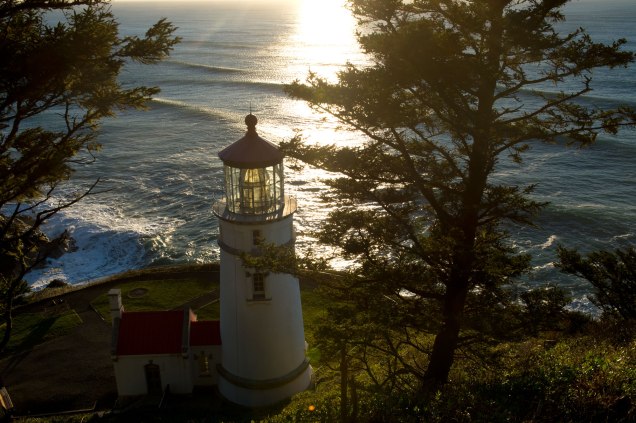
Photo by Robin Loznak

The above photo was taken a little bit south of Newport as the lowering sun sheens the water below one of Oregon’s historic lighthouses.

My speaking engagement with the Coast Chapter was originally scheduled for last February. In fact, I packed up and headed out that Sunday morning, excited about the trip. I hadn’t gotten far when a spit of snow began to spatter my windshield. I wasn’t too concerned. We don’t get much snow in February and the coast is even less likely to have snow.

That day proved to be an exception. It kept snowing harder. I told myself it wasn’t sticking and I’d get into the temperate coastal zone soon. But it got worse the farther west I drove. Snow did begin sticking. It was not getting better toward the west. I wasn’t set up for snow and finally decided I’d better turn around while I still had hopes of returning home safely.

Happily, we rescheduled. I’ll be there for their September meeting this coming Sunday, the 17th, from 2 to 4 pm at the Newport Public Library, 35 NW Nye Street. And we don’t expect snow.

I’m going to talk about my long road to publication of my two Oregon Trail stories, 2017 Nancy Pearl Book Award Finalist The Shifting Winds, and the one that started it all, A Place of Her Own, with a few words on what’s waiting in the wings. A slideshow will offer a backdrop of photos related to the two books. After some Q&A I’ll have books available to sell and sign. Because I’ll be talking to fellow writers I hope I can offer some ideas and encouragement that might help others on their writing journeys.

I’m also a member of Willamette Writers, which has branches throughout Oregon. When I lived in Portland I met with the Portland chapter and now meet with the Mid-Valley chapter in Eugene.

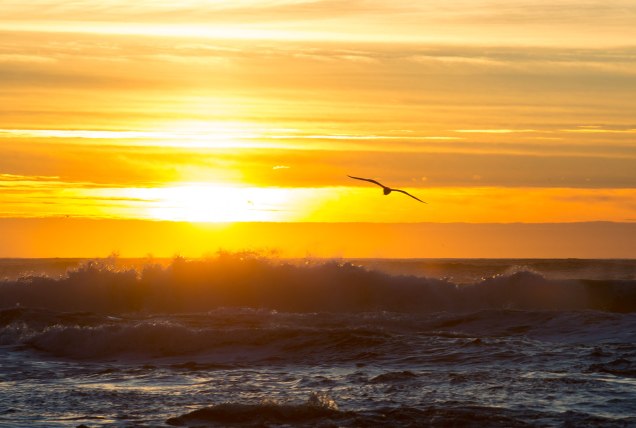
Thanks to Robin, I have one more photo to share, another of those glorious sunsets on the Oregon coast. Looking forward to my upcoming visit. If you’re in the area, please think about stopping by the Newport library for some book talk in a beautiful place.

Photo by Robin Loznak

COMMENT

Save

Save

Save

Panel at 2017 Historical Novel Society Conference Portland, Oregon

Four authors of historical fiction with Pacific Northwest settings got together to offer a panel at the 2017 Historical Novel Society Conference held this year in Portland, Oregon. From left to right: me, Kirby Larson, Libbie Hawker, and Janet Oakley. We called it “Historical Fiction through a Pacific Northwest Lens,” which seemed appropriate since the UK-based Historical Novel Society was coming to Portland. They meet in the UK every other year with North American sites in the opposite years.

The idea for our panel started with Janet Oakley and her writer friend in Washington State Carole Dagg. I had met Janet at a couple of PNWA conferences in Seattle, and she invited me to be part of a panel. The three of us put together a proposal which was accepted. We cheered our good fortune. Then Carole learned she’d be unable to attend so Janet found not one replacement but two. And Kirby Larson and Libbie Hawker joined us Janets.

For our session we had a lively discussion about what led us to write about this region and some of the challenges, like writing realistic history without offending 21st-century readers. We also discussed the pleasures of researching and the thrill of discovering actual documents from the times of our stories, about finding the untold stories, about the people who populated this land before the Europeans, and about other facets of history on America’s far northwestern frontier.

As we said in our proposal, “The region holds a unique position as the continent’s last frontier. When nearly every coastline in the world had been mapped, America’s northwest remained a mystery to explorers, a blank wilderness. That untamed edge resonates in the land’s character.”

Libbie served as moderator, and she kept us on our toes with some unexpected questions among the ones planned. We had a good Q & A afterward with an enthusiastic audience. A fun time.

Thanks to Stephanie West Allen for taking the picture.

COMMENT

NEWS!! Shifting Winds a Finalist in PNWA Nancy Pearl Book Awards

Yay! My historical novel The Shifting Winds has just been named as a finalist in the 2017 Nancy Pearl Book Awards, sponsored by the Pacific Northwest Writers Association.

This award is offered by PNWA for books published in the last year.

Winners will be announced at the July conference in Seattle. Finalists will enjoy excellent visibility throughout that conference.

I’m thrilled to receive such recognition for my book in this highly contested award.

Oregon’s turbulent past comes alive in the story through the eyes of protagonist Jennie Haviland and two men, one British, one American, who vie for Jennie as their nations vie for the rich disputed land of the Oregon country.

COMMENT

Poster for Eugene Library Gig

The Eugene Public Library provided a poster for my upcoming book talk and slide show there this Sunday, June 10, at 2 pm as part of their summer reading program.

Looking forward to this event at the beautiful library facility at 100 West 10th Avenue in downtown Eugene, Oregon. For more information you can check out my June 2nd post here.

COMMENT

My Talk at Eugene Library Coming Up June 10th

I’m delighted to be speaking about my books at the Eugene Public Library Saturday, June 10, at 2 pm. For folks in the neighborhood I hope you’ll jot it on your calendar and stop by.

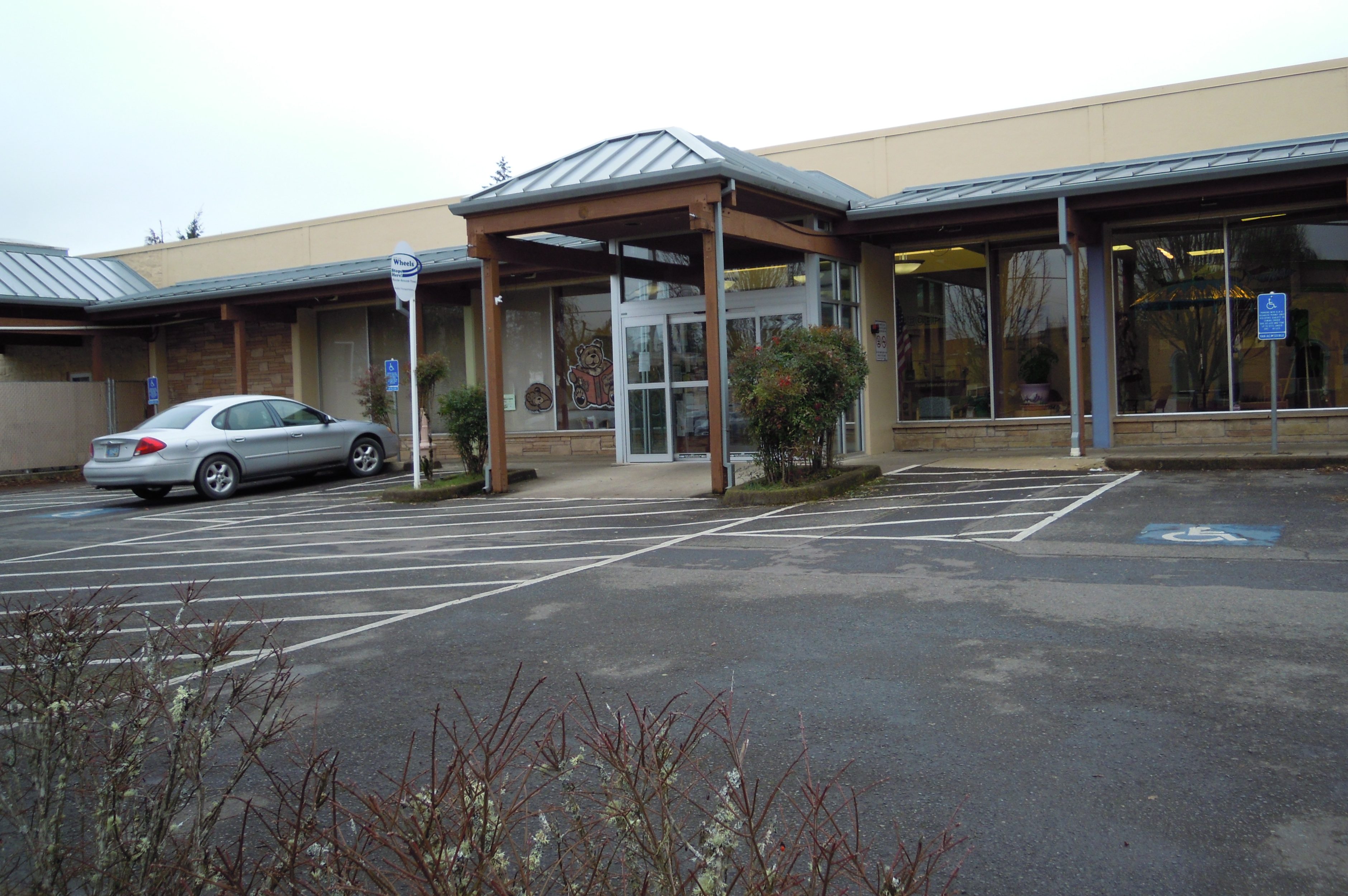
It’s a beautiful facility, as shown above, located at 100 West 10th Avenue in downtown Eugene.

During my talk I’ll present a slide show with photos related to my books, illustrating events and scenes to help bring the stories to life. I’ll delve into some of my personal history that led to publication of my first book, A Place of Her Own, and the door that milestone opened to a second book, The Shifting Winds. Both are Oregon Trail stories. A Place of Her Own is the true story of my great-great-grandmother Martha who came west over the trail and dared purchase a farm on her own after she lost her husband.

Not an easy matter for a woman in those days. I grew up on that farm, the Martha A. Maupin Century Farm, and have now returned, so her story touches me on a deep personal level. The book reads like a novel, with interludes describing my search for her, and I’ll talk a little about that search.

The slide show will include old photos like the one of Martha’s daughter who I imagine looks like Martha.

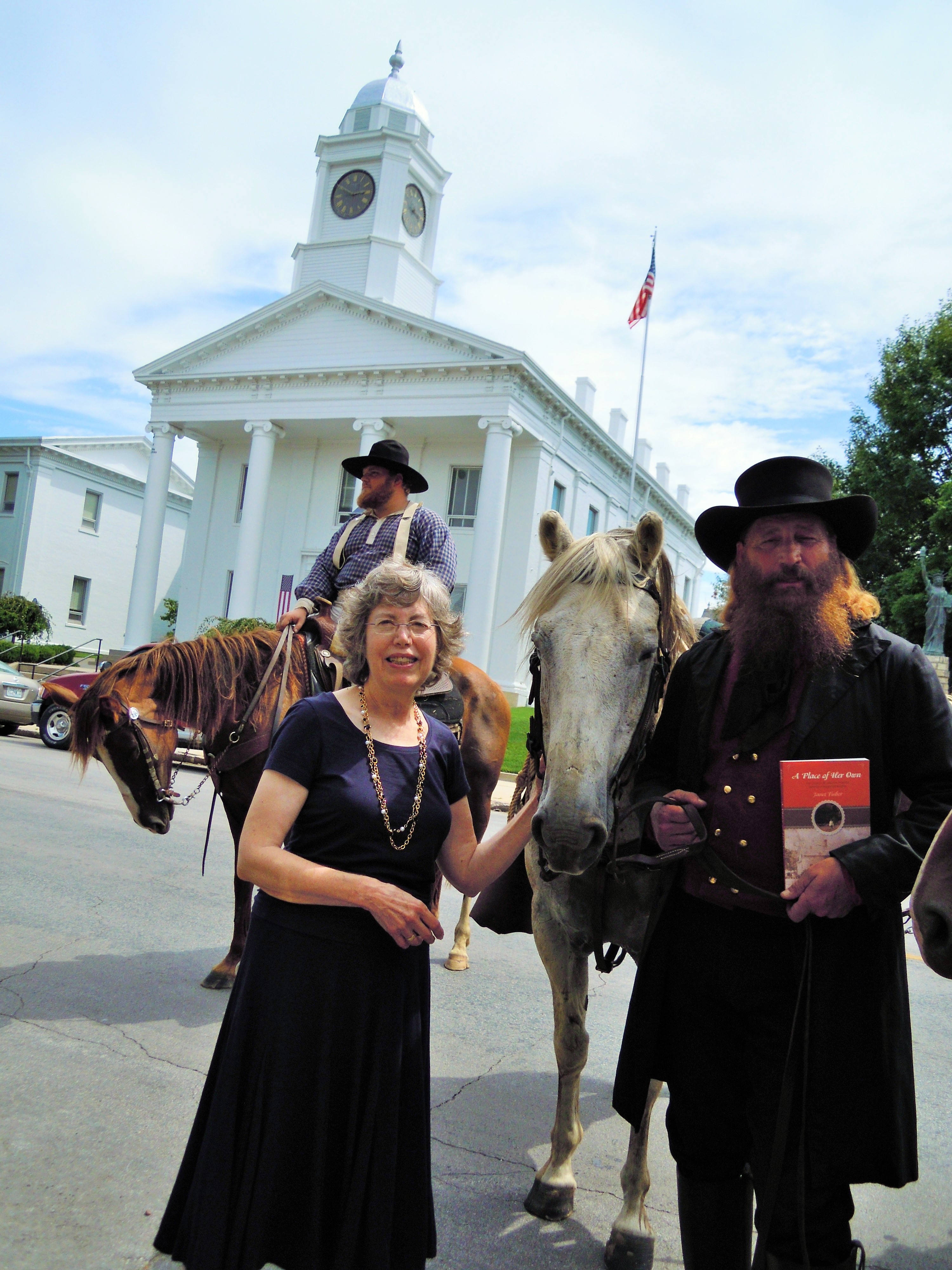
And photos like the one of my book reading in Missouri when my daughter and granddaughter and I backtracked Martha’s footsteps over the Oregon Trail and received a surprising Missouri welcome at the other end.

Publication of Martha’s story led to The Shifting Winds, which I wrote some years before about the same era, a novel with fictional characters who walk through a lot of true history of those early American settlers in the Oregon country.

I’ll discuss how the research for that book helped inform Martha’s story and how research has changed dramatically with the advent of the internet–and how it hasn’t.

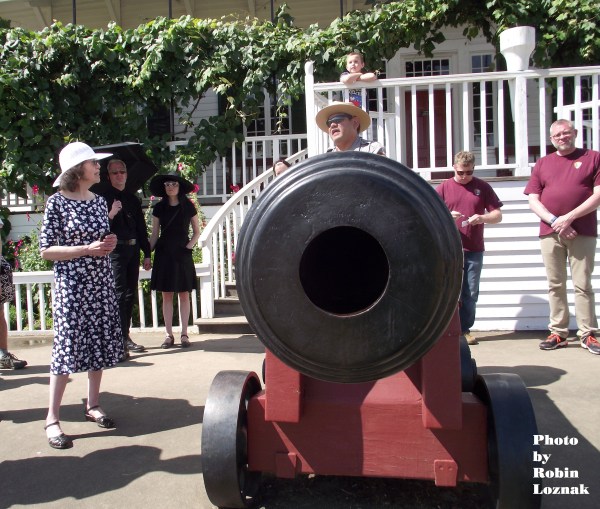
Photos related to Shifting Winds include one taken on the reconstructed site of the British Hudson’s Bay Company Fort Vancouver, where a number of scenes take place. During my reading and signing event at the fort, photographer Robin Loznak looks down the barrel of an HBC big gun in front of the commander’s house, while I stand by in the white hat listening to our tour guide, Dr. Robert Cromwell, Chief Ranger and Archeologist.

Not to worry. The guns were spiked, like the originals.

I’ll do some short readings from both books to provide a bit of flavor. After my presentation the session will be open to Q & A so people can ask what they really want to know about the stories or about the writing process or whatever else comes to mind. I always love the interaction of Q & A so really look forward to that. Afterward books will be available to sell and sign.

COMMENT

Back to the Coast ~ To Newport

Update: My speaking engagement at Newport is cancelled due to a sudden snowstorm in my path. We hope to reschedule at a later date.

I’m headed for Newport tomorrow on Oregon’s beautiful coast to speak at a meeting of the Willamette Writers Coast Branch. The location has moved. We’ll be at the Newport Recreation Center at 225 SE Avery Street in Room 105, Sunday the 16th from 2 to 4 pm.

sunset-at-heceta-headPhoto by Robin Loznak

My son-in-law Robin snapped the above photo one spectacular evening on the Oregon coast a ways south of Newport.

I plan to talk to this group of writers and friends about my rocky road to publication with particular focus on the research that brought my work to life so readers would have a sense of the times I wrote about for both The Shifting Winds and A Place of Her Own.

These two books serve as bookends in my long quest to get published. Although Shifting Winds is my most recent book published it was one of the first serious books I wrote, many years ago.

Both books are set in the days of America’s great westward migration to the Oregon country, with pioneers and mountain men and fur traders from the British Hudson’s Bay Company. When I started the first one I had a lot to learn about the era. I wrote Shifting Winds before we had the internet. No Google. And I didn’t write it on a computer. I used an old Selectric typewriter. Anyone remember those?

I went to the library to find books on my subject, not just the local library, but the Multnomah County Library in Portland and the Oregon Historical Society Library in Portland. I visited museums, talked to local museum director George Abdill, who offered a wealth of material. I developed my own library on the history of the period.

Years later when I wrote A Place of Her Own I already had a sense of the era, but still I had research to do on the people, on my great-great-grandmother, the subject of my story. When a question entered my head I had the internet at my fingertips. Such a change. I still read many more books, buying some, using the library for others. I visited courthouses, dug through records, contacted experts. Through the internet I found cousins who had done genealogical research–especially Linda Noel on the coast in Reedsport, who generously shared reams of material with me.

I visited the sites for a sense of the places, not just how they looked, but how they felt, and the kinds of echoes that may have been left by those who walked these places before me.

A Place of Her Own was sold as nonfiction, although it reads like a novel. After it was published I heard that my editor was buying a little fiction and told my agent about this historical novel I had done some years ago, set in the same period as Place of Her Own. She encouraged me to bring it out. I did, but it wasn’t easy. I had learned a lot about writing in the intervening years. I thoroughly rewrote it, and the editor liked it. This old favorite became another published book, The Shifting Winds.

I look forward to sharing my story with the people of Newport–and to my visit in that beautiful setting.

COMMENT

Speaking at Cottage Grove Library

With the holidays behind us, a new year of book events begins. First stop in 2017 takes me to the public library at my previous hometown, Cottage Grove, Oregon, a small historic town about twenty miles south of Eugene. I’ll be giving a presentation about my books The Shifting Winds and A Place of Her Own in the library’s Shepherd Room on Monday evening, January 23, from 6 to 7:30.

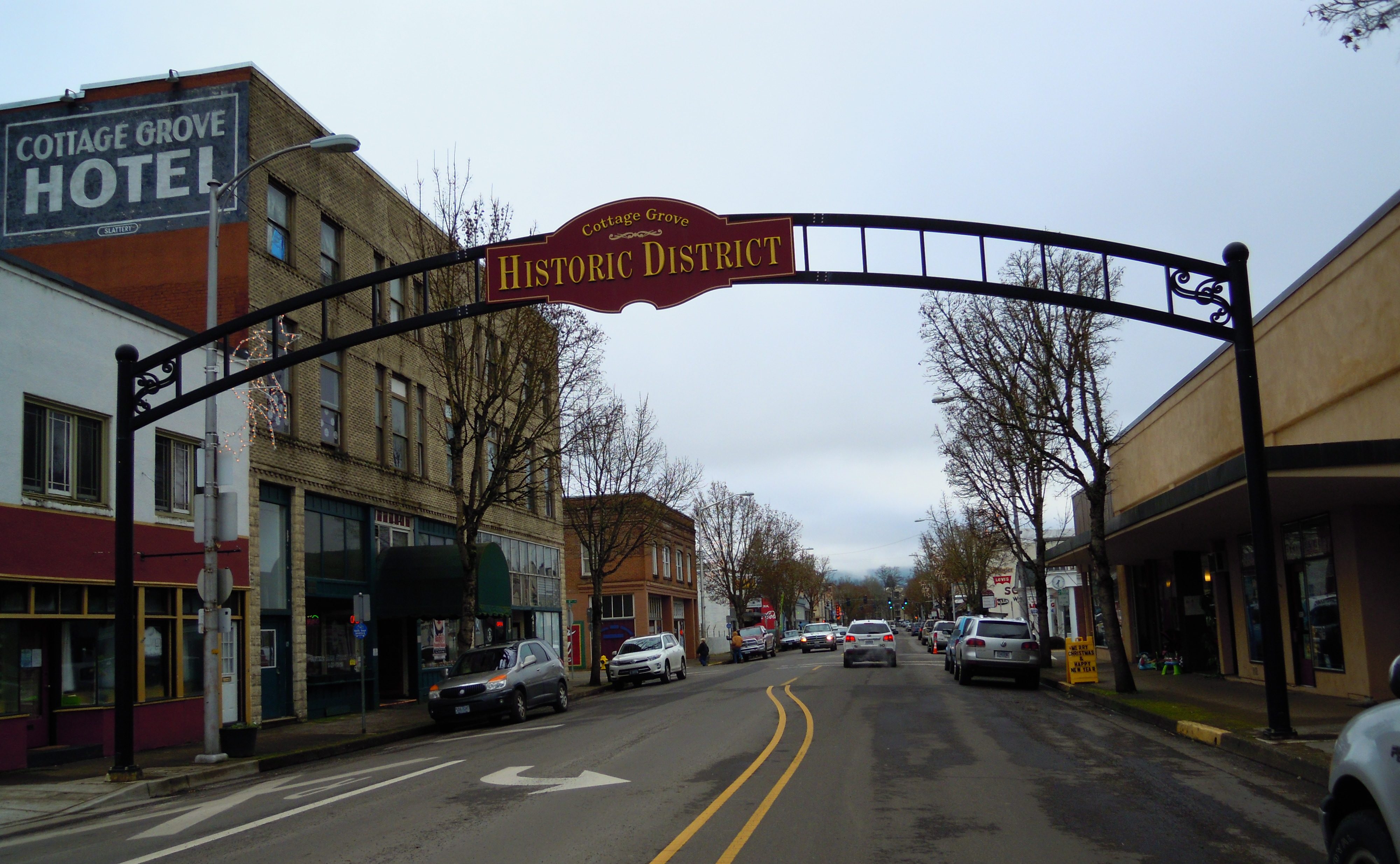
1280-historic-cgThe above photo shows the entrance into Cottage Grove’s historic Main Street, where the community has three bookstores–The Bookmine, Kalapuya Books, and Books on Main–impressive for a town of about 9,800 people. Just two blocks away at 700 E. Gibbs Avenue, on the corner of Gibbs and N. 8th Street, you’ll find the thriving Cottage Grove Public Library, shown below. A very literary community.

1277-cg-libraryFor my presentation I will talk about both of my published books set in the days of Oregon’s early pioneers, while showing a collection of slides related to the stories. I’ll give some background on the history behind the stories, how those books came to be, and about other projects in the works. After a short reading from the latest, Shifting Winds, I’ll open up to Q&A, then sell and sign copies of both books.

This event brings me to a familiar setting. I lived about a block up from the library, on 8th, so it became an easy place to visit and a particularly vital destination during the year my daughter and granddaughter lived with me in Cottage Grove. The librarians all knew my granddaughter Calliope, an active preschooler and lover of books.

So it’s a pleasure to be offering a presentation there. I look forward to it. Thanks to Pete Barrell, City of Cottage Grove Community Services Director, for arranging the event.

COMMENT

Coos Bay Library Presentation

I head back to the beautiful Oregon coast tomorrow, October 6, this time south to Coos Bay for an appearance at the Coos Bay Public Library. The event, open to the public, starts at 7 pm.

coos-bay-boardwalkPhoto Courtesy of the City of Coos Bay

The above photo captures the reflected beauty of a sunrise over Coos Bay’s boardwalk. I hope to explore a little while I’m there.

My presentation will include a short talk, a reading, some Q&A, and book signing, along with a slide show of photos related to my two books, The Shifting Winds and A Place of Her Own. Both are stories delving into Oregon’s pioneer history with a focus on strong women who made the formidable trek over the Oregon Trail to a wilderness across the continent.

If you’re in the Coos Bay vicinity, please join us. The library is located at 525 Anderson Avenue. Here are a few highlights from the slide show:

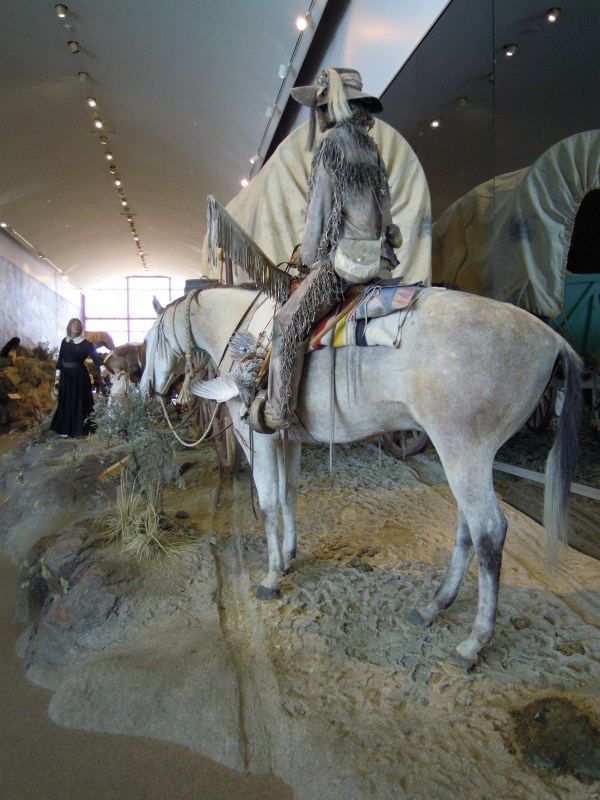
478-ft-hall466-diorama-horse

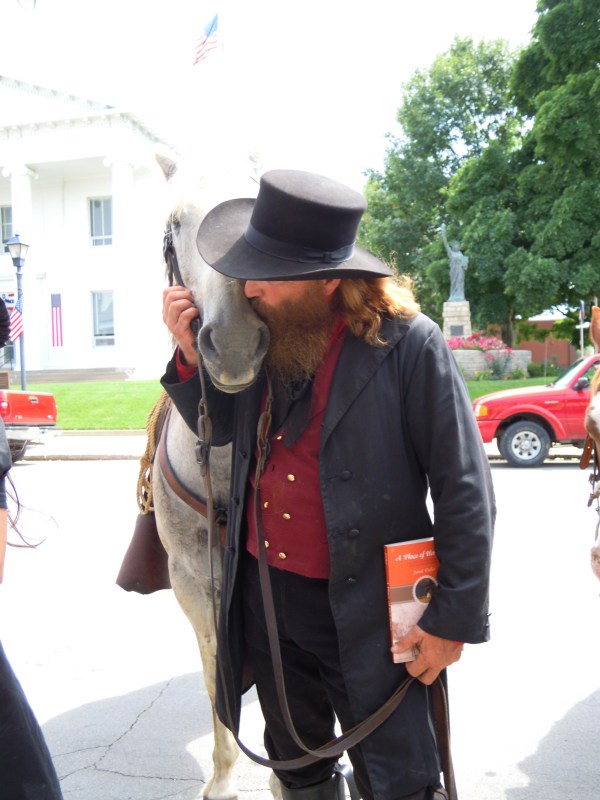
502-painted-wagon-oxen-scotts-bluff-2560-robbie-kissing-toby

600-c-fort-big-gun-signed

COMMENT

Black Powder Men

A popular event at Fort Umpqua Days in Elkton, Oregon, is the gathering of black powder men, reenactors who come out with their muzzleloaders to exhibit their prowess at shooting these early weapons and to share stories of historic Fort Umpqua times. That’s Saturday and Sunday, September 3 and 4, and I’ll be there with my own books where you’ll find old-time black powder men, especially in The Shifting Winds. Update: See also a story in the The News-Review about a brigade of reenactors of 19th century trappers who camped at Fort Umpqua last weekend on their way to California as the Hudson’s Bay Company trapping brigades might have done back in the day.

First Mountain Man jpgSome of today’s black powder folks call themselves mountain men, and there may have been a few mountain men who passed by Fort Umpqua in its prime, like this man painted by Andy Thomas, artist, who dubbed him “The First Mountain Man.”

However, the term mountain man generally refers to the American trappers who did in fact work in the mountains, over in the Rockies.

Jed Smith was an early American mountain man who passed through the Umpqua region years before the fort’s construction, when he led an exploratory expedition of fellow trappers from the Rockies west by way of California. Jed didn’t fare well in the Umpqua. The Umpqua Indians attacked him and his men, killing many of them, and stole all their furs. Jed ultimately made his way north to Fort Vancouver, where Dr. McLoughlin treated him hospitably.

Hudson’s Bay Company men recovered Jed’s furs and McLoughlin paid him a fair price for them. Jed so appreciated McLoughlin’s decency he swore he wouldn’t trap in the Oregon Country, leaving beaver there to the British. Although British and America trappers collided occasionally along the Continental Divide that marked the west edge of the undisputed U.S. territory of the Louisiana Purchase, the British for the most part were left alone in the Oregon Country, which was supposed to be jointly occupied by Britain and the United States.

Only when the trade died in the Rockies did American mountain men push on west. That’s when Joe Meek and my fictional Jake Johnston of The Shifting Winds headed to the Willamette to become settlers.

Mt. ManMountain men typically wore buckskins as many black powder reenactors do. So did British trappers who went out with the trapping brigades. Ken Putnam of Drain, Oregon, poses with me in his mountain man garb at the 2015 Fort Umpqua Days.

Frontiersmen who hunted in the wilds found the buckskin, or deerskin, to be sturdy and protective in the rugged brush where they sought game. In the Rockies it had the added advantage of availability. American trappers worked and lived with Native American tribes who wore buckskin themselves, often beautifully crafted by the Indian women who also became wives of many mountain men.

The weapons changed over time. In the early years the muzzleloader would have been a flintlock rifle, perhaps a Kentucky long rifle, but the long barrel proved awkward for the mounted trappers. They soon opted for a shorter barreled half-stock with bigger bore. About the same time this “mountain rifle” became popular the flintlock was being replaced by the percussion rifle, which was easier to load quickly–important when you had only one shot per loading.

Then gunsmiths Jacob and Samuel Hawken came up with the clean-lined plains rifle known as the Hawken rifle, and that became the mountain man’s rifle of choice. My character Jake Johnston takes great pride in his sleek Hawken rifle he brought out of the Rockies with him.

During Fort Umpqua Days you can expect to hear the deep harrumpf of muzzleloading rifles echoing across the hills as modern-day black powder men slip into a past where expertise with those weapons could be a matter of life and death.

COMMENT

Book Event Explores a Living Past

Story and tangible history came together when the Friends of Fort Vancouver and the National Park Service hosted me for a book event at the remarkable re-creation of the historic Hudson’s Bay Company trading post, Fort Vancouver.

Fort Event Big GunThe event highlighted the actual reconstructed fort with a tour led by Dr. Robert Cromwell, Chief Ranger and Archaeologist, speaking behind the big gun here. Two large cannons stand in front of the elegant Big House, home of the fort’s commander in the days of my book, The Shifting Winds. During the tour I offered a few words on certain scenes from the book which took place at the fort in 1842 and 1843. I’m in the white hat. Photo by Robin Loznak.

The tour brought us into the fort’s living history, and Dr. Cromwell was great. I love this place that makes the past live. I feel a deep connection because my first visit here years ago inspired me to write The Shifting Winds, and making the past live is what I try to do with my historical novels.

Fort Event FlowersDr. Cromwell talked about the impression the house would have made on its 19th century visitors, such a grand structure with its expensive white paint and the big guns facing the front gate, although he noted the guns were spiked so couldn’t fire.

Nevertheless, the effect was no doubt intended to show the power of this British fur trading company that essentially ruled over Oregon at the time of my story.

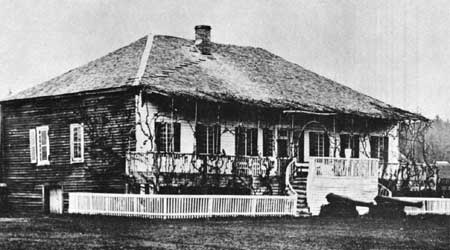
On this July day the lush grapevines draped over the Big House veranda and bright flowers bloomed in front. On my previous visit in March the canes were bare, and there was no sign of flowers. Now huge clusters of grapes hang from these vines.You can also see part of the arbor in the top photo.

Photos taken of the original Big House in 1860 let researchers know that grapevines twined around metal trellises on the veranda that extends across the entire front of the house.

Fort Vancouver Big House (2)The thumbnail shows the house during my March visit before the greenery leafed out. Quite a change, and probably effective for the south-facing house. In winter when they needed more light the leafless vines let the sun come in, but in summer the leaves provided cooling shade.

Our tour proceeded inside the house so the group could see additional settings of the story and learn more about the fort. Then we moved on to the Indian Trade Store and the Fur Store warehouse to get an idea of the real purpose of this fort. The Hudson’s Bay Company officers and employees may have appreciated the protection of the picketed stockade, but the fort never served as a military post for them. The Company came for the furs, particularly beaver, purely a business venture. But it could be a cutthroat business as they competed against the Americans, who also held an interest in the territory.

Fort Event Ranger & meThe tour ended up at the New Office, above, the closest thing to the setting where my character Alan Radford would have worked. The clerk Alan lived and worked in the Old Office, which hasn’t been reconstructed yet. While Dr. Cromwell looked on, I talked about the scene where Alan invites protagonist Jennie to see his workplace during the Christmas Ball at the fort. Through a bit of byplay between these characters, I slip a little information into the story that gives the reader an idea how the fort functioned and how very isolated they were in this wilderness. Photo by Robin Loznak.

Fort Event Lecture 5 (2)My lecture at the Visitor Center featured photos related to the story, this one showing Fort Hall, another reconstructed fort that became a landmark on the Oregon Trail. My thanks to Ranger and Guide Emily Orvis for setting up the AV tech equipment so it all rolled smoothly, and thanks to my son-in-law Robin Loznak for handling the individual photos while I talked. This shot of me was taken by Benjamin Capps with my camera.
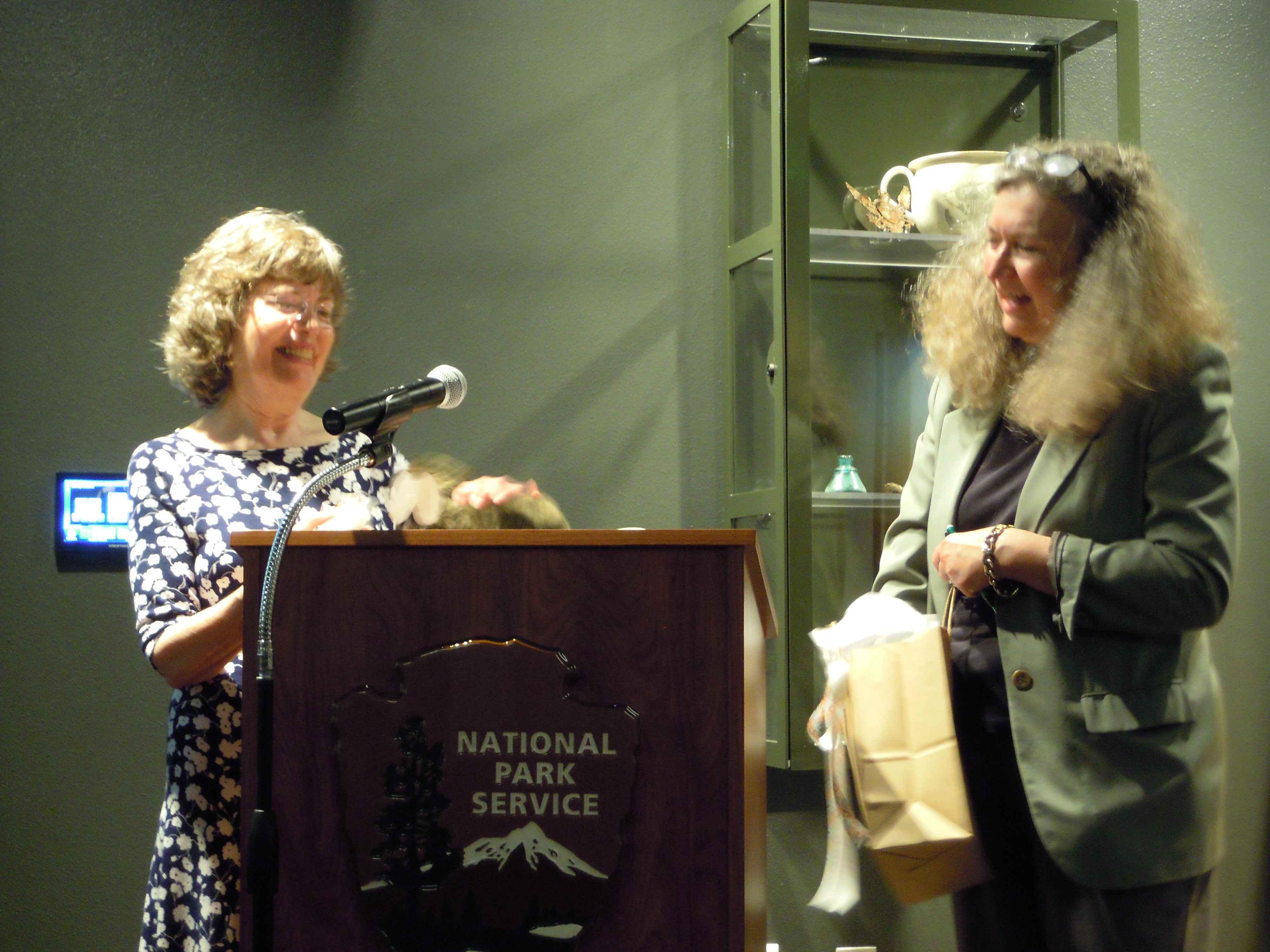
Fort Event Mary & meAfter my talk, Mary Rose, Executive Director of the Friends of Fort Vancouver, surprised me with a bag of thoughtful gifts, from a lovely turtle pin that memorializes the Native American label for the fort area as the “place of the mud turtles,” to Jacobsen sea salt from Oregon’s cold waters at Netarts Bay, to a Russian nesting doll acknowledging Vancouver’s many Russian immigrants, a little stuffed beaver representing the target of the 19th century fur traders, and a 100th anniversary pin commemorating the 100-year birthday of the National Park Service that maintains the site. What a delightful gesture! Photo by Benjamin Capps.

Fort Event Signing 4I arrived early, well before planned activities, which worked out. Tourists were stopping by and several bought my books, even some that hadn’t come for the event, and they were pleased to get personalized signed copies. My thanks to Sales Assistant Madya Panfilio for her enthusiasm in recommending my work. Official signing came after the lecture. Photo at left by Robin Loznak.

Mary Rose also asked me to sign additional books, which are available in the Visitor Center Bookstore.

Mary was the one who arranged my presentation at Fort Vancouver. When she learned about my book The Shifting Winds, she immediately became interested. She read the book, appreciated the accuracy and the story, and discussions led to Saturday’s presentation.

Many thanks to Mary for organizing such a wonderful event. She and the staff at the Visitor Center and the fort did a terrific job. Thanks to them all.

As my grandson Alex said, “They rolled out the red carpet for you, Grandma.” Yes, they did.

Everyone made it a wonderful day and I am most grateful.

COMMENT