Reviving Fort Umpqua

Tomorrow the people of Elkton will bring the old Fort Umpqua back to life with a flourish in their annual Fort Umpqua Days celebration. Folks from around the state and beyond will join in the fun, whether history buffs, reenactors, the simply curious, or those just looking for a good time or a good buy. Welcome to the party.

Ft.Ump.Inside 69Activities in the palisade walls will run from 10 in the morning until 5 in the afternoon on both Saturday and Sunday, September 3 and 4. While things are happening down at the fort, a lively market behind the ECEC library will offer crafts, books, and other items for sale. I’ll be there both days with my books set in the fur trade and pioneer era, and my friend Lynn Ash will join me with her books Saturday.

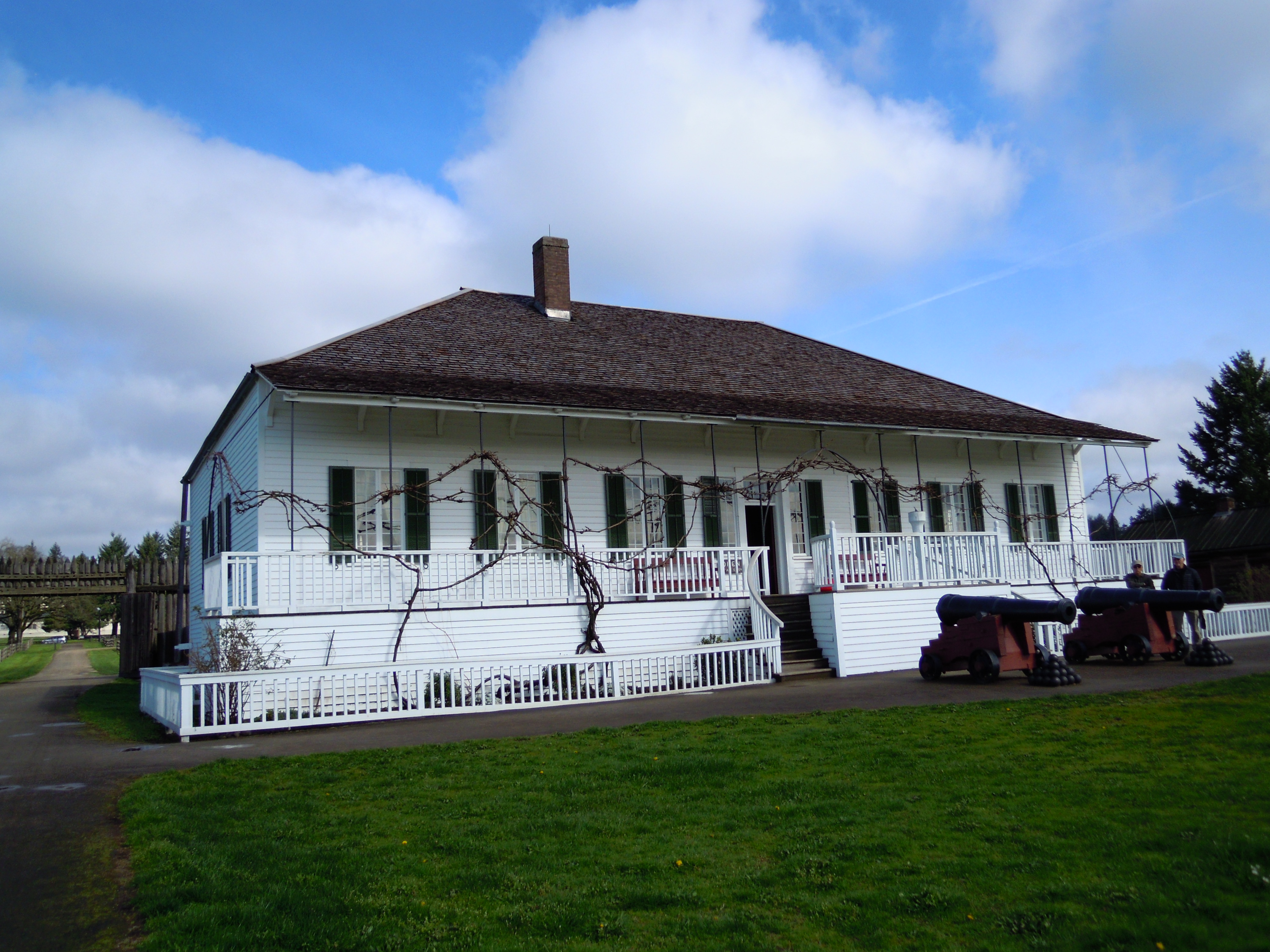
Ft.Ump.Inside 63Something new this year: The second building reconstructed at the fort, shown above, now has furnishings displaying living quarters where the Hudson’s Bay Company men lived. The rustic but comfy interior gives an idea of the kinds of gear they had–the typical Hudson’s Bay Company blanket, animal-skin rug, moccasins.

Ft.Ump.Inside 67The simple table setting illustrates the difference between the simplicity of life here in the southernmost outpost of the Company and the finery back at headquarters.

Ft.Ump.Inside 66No Spode china here, like that enjoyed by the senior officers at Fort Vancouver.

This project in Elkton has been a work in progress for several years, and as I mentioned in a previous post or two the reconstructed fort found its home a little downriver from the original.

When history buffs, modern mountain men, academics, and reenactors began contemplating the project, they discovered that the original site was not available. So this location down the hill from the Elkton Community Education Center was offered as an alternative.

If you drive south from Elkton on Highway 138 you’ll see a historical marker on your right which points out the original location of the fort across the river. The setting has many similarities, and the new site was selected.
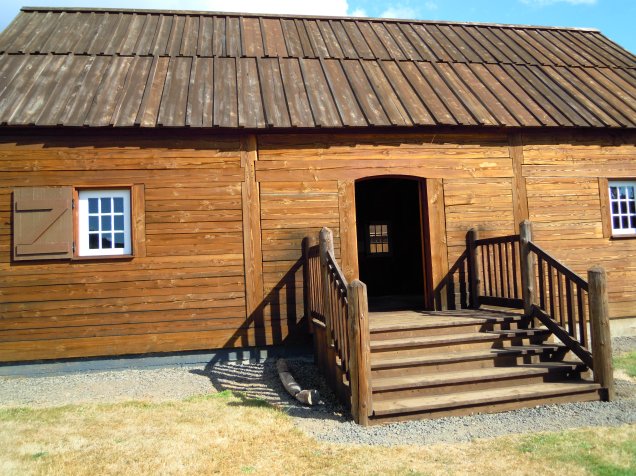
Ft.Ump.Inside 77After the palisade walls went up, volunteers constructed the first building, the Company store and storehouse. Come inside and you’ll find the treasure that brought the British Hudson’s Bay Company into the region.

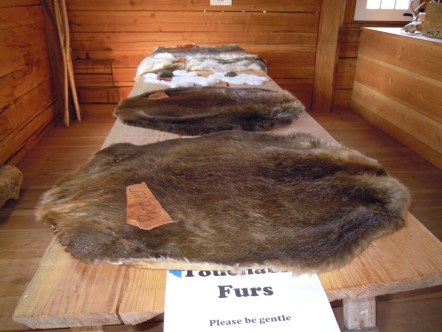
Ft.Ump.Inside 73The beaver pelt.

Ft.Ump.Inside 71There’s a touching table where you can stroke your fingers over the furs and feel how soft they are.

The sad news for the beaver was that his soft inner fur could be made into exquisite felt for the popular hats of the day.

That made the pelts extremely valuable and trappers combed the creeks of the wilderness to find them. Competition grew fierce between the British traders and the American mountain men, and rumors of war stirred as Britain and the United States shared the Oregon Country while London and Washington tried to come to terms on a boundary.

Ft.Ump.Inside 75Trappers, both white and Native American, could trade their furs for goods here in the Company store. Or today you can ask a knowledgeable young helper your questions about the history of the fort and the fur trade. Tomorrow and Sunday they’ll be dressed for the part in period costume, adding to your sense of stepping back in time.

Following the activities at the fort and market each day, the traditional historic pageant will be performed at the amphitheater, both nights. That’s always fun too as we play with history. I have the pleasure of serving on the writing team for that. Others did the lion’s share this time, but I had fun doing my little bit.

For more information on daily activities see the Fort Umpqua Days website.

COMMENT

Fort Umpqua Farming

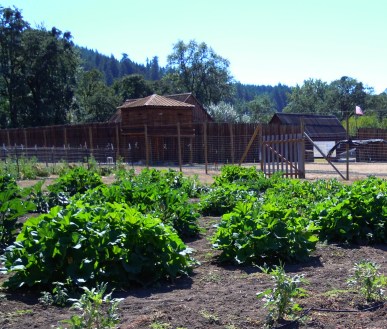
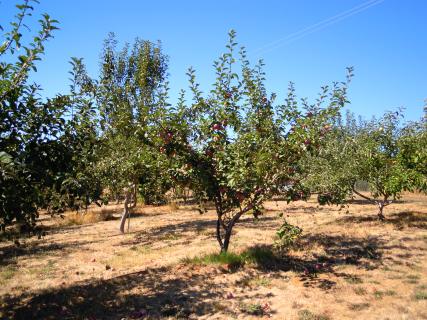
Visitors to the fort during Fort Umpqua Days this coming weekend will be drawn back in history through several activities for children that commemorate the fort’s importance as a historic agricultural site. These children will water the garden, make cornhusk dolls, grind corn, and sort beans from the fort’s gardens of heritage vegetables. And they’ll make apple cider from fruit out of the fort’s heritage orchard.

Ft.Ump.orchard signAs usual they’ll have plenty of 1800s games to play. And after they try samples of tasty food that workers at the original fort might have eaten, they can lead their parents out to take a look at the large gardens and orchards surrounding the reconstructed fort.

My books, The Shifting Winds and A Place of Her Own, tap into this same era, so the celebration has special meaning for me. I won’t get down to the fort during the day between 10 am and 5 pm because I’ll be up near the butterfly pavilion selling books in my booth, offering my own look at these intriguing times. On Saturday my writer friend Lynn Ash will join me to sell her travel memoirs, The Route from Cultus Lake and Vagabonda, describing her own pioneer spirit as she goes camping solo around the country.

Ft.Ump.gardens-1 (2)Like the Fort Vancouver headquarters for the Hudson’s Bay Company fur trade operation in the West, Fort Umpqua was a trading post, not a military fort, although both forts had tall picketed walls for protection. And the people who worked there had to sustain themselves in this wilderness.

The Oregon Country in the 1800s lay far from suppliers in eastern North America and Britain, so the Hudson’s Bay Company’s Dr. John McLoughlin, Chief Factor of this western region, placed self sufficiency high in the order of business. He chose a broad plain north of the Columbia River for the Company headquarters site of Fort Vancouver because he needed a fertile place to grow food to feed employees.

So it’s not strange that when he proposed a site for an outpost in the Umpqua region he wanted a place that could grow orchards and gardens for food.

Ft.Ump.gardens-2 (2)Company trappers in the Umpqua had been using a couple of temporary sites, and in 1832 McLoughlin assigned the French Canadian Jean Baptiste Gagnier to supply those. But McLoughlin sought a more permanent outpost. Gagnier selected a site, but McLoughlin, wanting a second opinion, sent his son-in-law William Glen Rae down to be sure the place had enough suitable land for growing vegetables.

Gagnier had in fact found a lovely open meadow with the fine treelined Umpqua River on one side and scattered oaks and swaths of fir forest crowning the hills on the other. The rich bottomland soil would grow fine vegetables and fruits from orchards and possibly vineyards.

Ft.Ump.orchardRae proceeded with the fort, dubbed Fort Umpqua, and the Company maintained this post for fifteen years, from its construction in 1836 until 1854, their southernmost outpost in the entire Oregon Country.

Once the United States acquired the area after the 1846 boundary settlement with Britain, the British cut back on business south of the new border, but they kept a trader at the site until 1854. The fort burned in 1851, but they stayed on, working out of some kind of structure for three more years. By that time the meadow thrived as an agricultural center.

Of course, all this happened a short distance upriver from the Fort Umpqua structures and plantings you see today. More on that in my next blog post. But that small factoid does nothing to dampen the enthusiasm of the annual Fort Umpqua Days at ECEC, happening this next Saturday and Sunday, September 3 and 4.

Beckham, Stephen Dow. Land of the Umpqua: A History of Douglas County, Oregon. Roseburg, OR: Douglas County Commissioners, 1986.

COMMENT

Black Powder Men

A popular event at Fort Umpqua Days in Elkton, Oregon, is the gathering of black powder men, reenactors who come out with their muzzleloaders to exhibit their prowess at shooting these early weapons and to share stories of historic Fort Umpqua times. That’s Saturday and Sunday, September 3 and 4, and I’ll be there with my own books where you’ll find old-time black powder men, especially in The Shifting Winds. Update: See also a story in the The News-Review about a brigade of reenactors of 19th century trappers who camped at Fort Umpqua last weekend on their way to California as the Hudson’s Bay Company trapping brigades might have done back in the day.

First Mountain Man jpgSome of today’s black powder folks call themselves mountain men, and there may have been a few mountain men who passed by Fort Umpqua in its prime, like this man painted by Andy Thomas, artist, who dubbed him “The First Mountain Man.”

However, the term mountain man generally refers to the American trappers who did in fact work in the mountains, over in the Rockies.

Jed Smith was an early American mountain man who passed through the Umpqua region years before the fort’s construction, when he led an exploratory expedition of fellow trappers from the Rockies west by way of California. Jed didn’t fare well in the Umpqua. The Umpqua Indians attacked him and his men, killing many of them, and stole all their furs. Jed ultimately made his way north to Fort Vancouver, where Dr. McLoughlin treated him hospitably.

Hudson’s Bay Company men recovered Jed’s furs and McLoughlin paid him a fair price for them. Jed so appreciated McLoughlin’s decency he swore he wouldn’t trap in the Oregon Country, leaving beaver there to the British. Although British and America trappers collided occasionally along the Continental Divide that marked the west edge of the undisputed U.S. territory of the Louisiana Purchase, the British for the most part were left alone in the Oregon Country, which was supposed to be jointly occupied by Britain and the United States.

Only when the trade died in the Rockies did American mountain men push on west. That’s when Joe Meek and my fictional Jake Johnston of The Shifting Winds headed to the Willamette to become settlers.

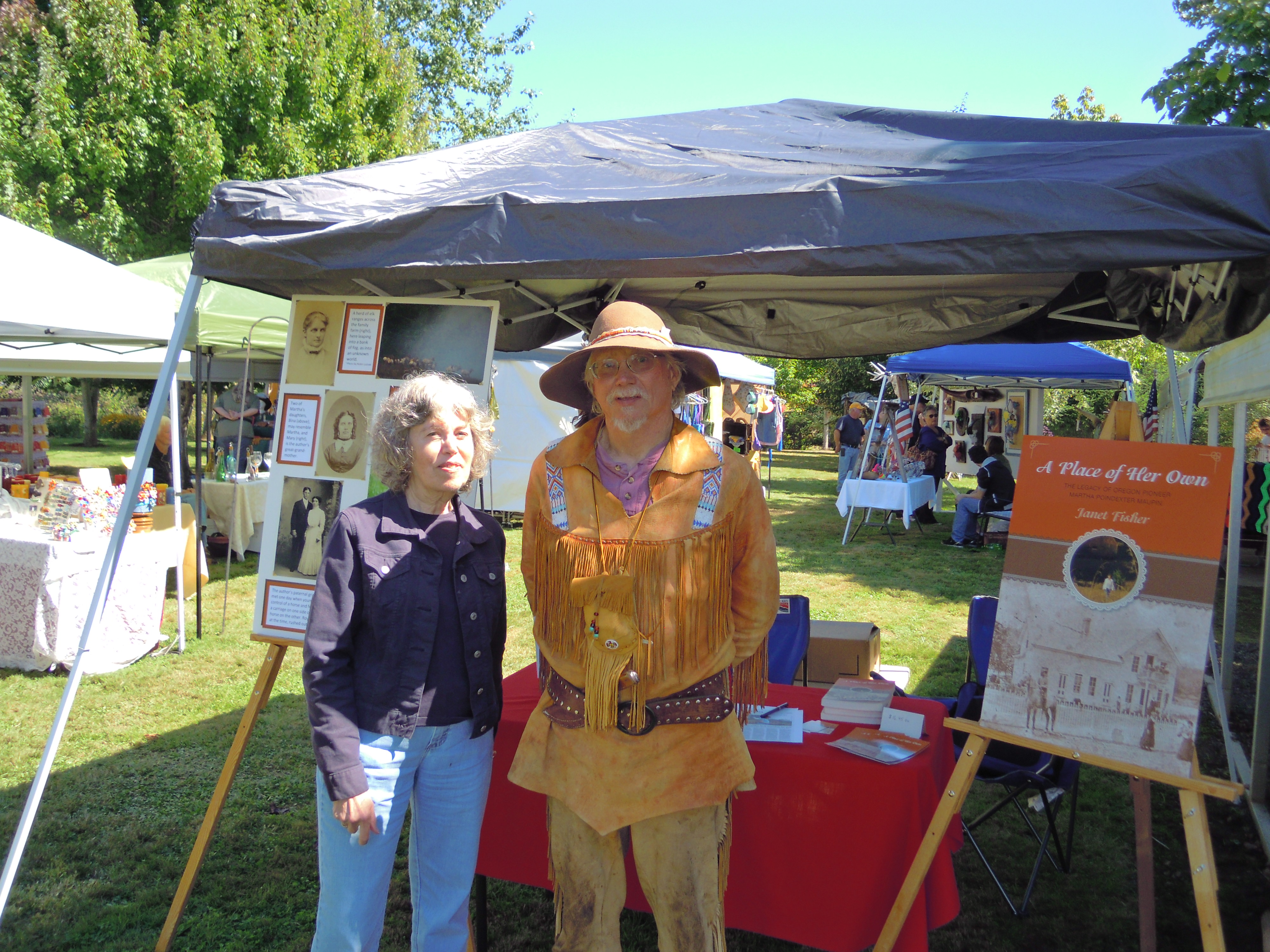
Mt. ManMountain men typically wore buckskins as many black powder reenactors do. So did British trappers who went out with the trapping brigades. Ken Putnam of Drain, Oregon, poses with me in his mountain man garb at the 2015 Fort Umpqua Days.

Frontiersmen who hunted in the wilds found the buckskin, or deerskin, to be sturdy and protective in the rugged brush where they sought game. In the Rockies it had the added advantage of availability. American trappers worked and lived with Native American tribes who wore buckskin themselves, often beautifully crafted by the Indian women who also became wives of many mountain men.

The weapons changed over time. In the early years the muzzleloader would have been a flintlock rifle, perhaps a Kentucky long rifle, but the long barrel proved awkward for the mounted trappers. They soon opted for a shorter barreled half-stock with bigger bore. About the same time this “mountain rifle” became popular the flintlock was being replaced by the percussion rifle, which was easier to load quickly–important when you had only one shot per loading.

Then gunsmiths Jacob and Samuel Hawken came up with the clean-lined plains rifle known as the Hawken rifle, and that became the mountain man’s rifle of choice. My character Jake Johnston takes great pride in his sleek Hawken rifle he brought out of the Rockies with him.

During Fort Umpqua Days you can expect to hear the deep harrumpf of muzzleloading rifles echoing across the hills as modern-day black powder men slip into a past where expertise with those weapons could be a matter of life and death.

COMMENT

HBC Outpost Ready for Celebration

the fort 2 (2)

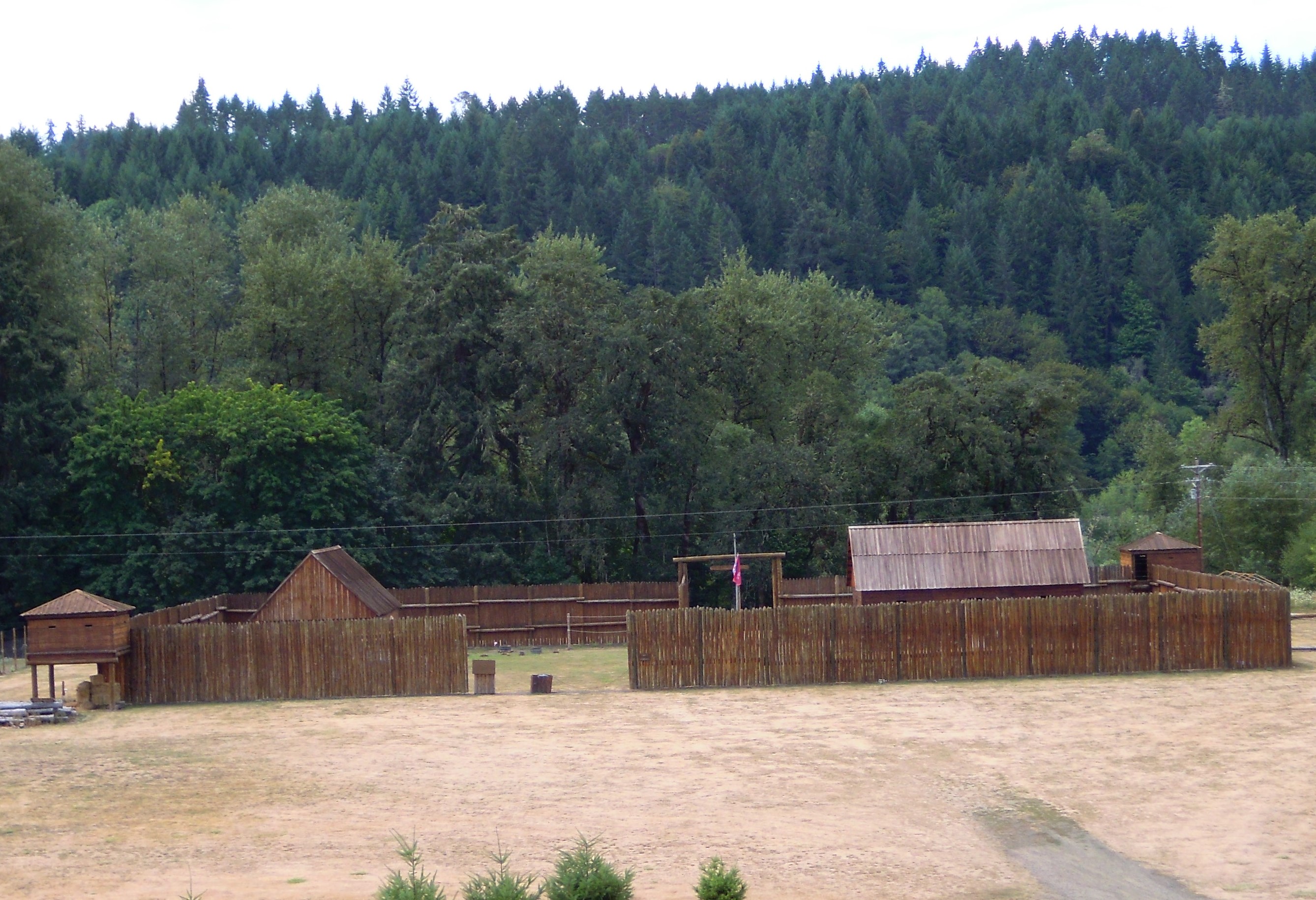
Nestled on the bank of Oregon’s Umpqua River, this replica of the British Hudson’s Bay Company’s Fort Umpqua will come to life in a couple of weeks for the annual Fort Umpqua Days celebration at Elkton. The event will run all day Saturday and Sunday, September 3 and 4, and I’ll have a booth there to sell my books.

Just last month I stepped into the historic past of the Hudson’s Bay Company’s western headquarters at Fort Vancouver on the Columbia River, touring the commander’s house, among other structures there. So I see this Umpqua outpost with new perspective.

I’ve attended Fort Umpqua Days celebrations every year since I returned to the family farm near Elkton in 2009, joined the writing team for the event’s pageants, and had a booth the last two years there to sell my first book A Place of Her Own. Still, I feel a difference this year after my event at Fort Vancouver in July where I presented my new book The Shifting Winds, which has many scenes at that HBC headquarters.

Before the Fort Vancouver event I wrote a series of posts for this blog called “The TRUE Shifting Winds,” giving an overview of history leading to the days of my book and the fort’s part in it. Fort Umpqua doesn’t appear in the story, but for me the enhanced sense of Hudson’s Bay Company history wraps Fort Umpqua into the fold.

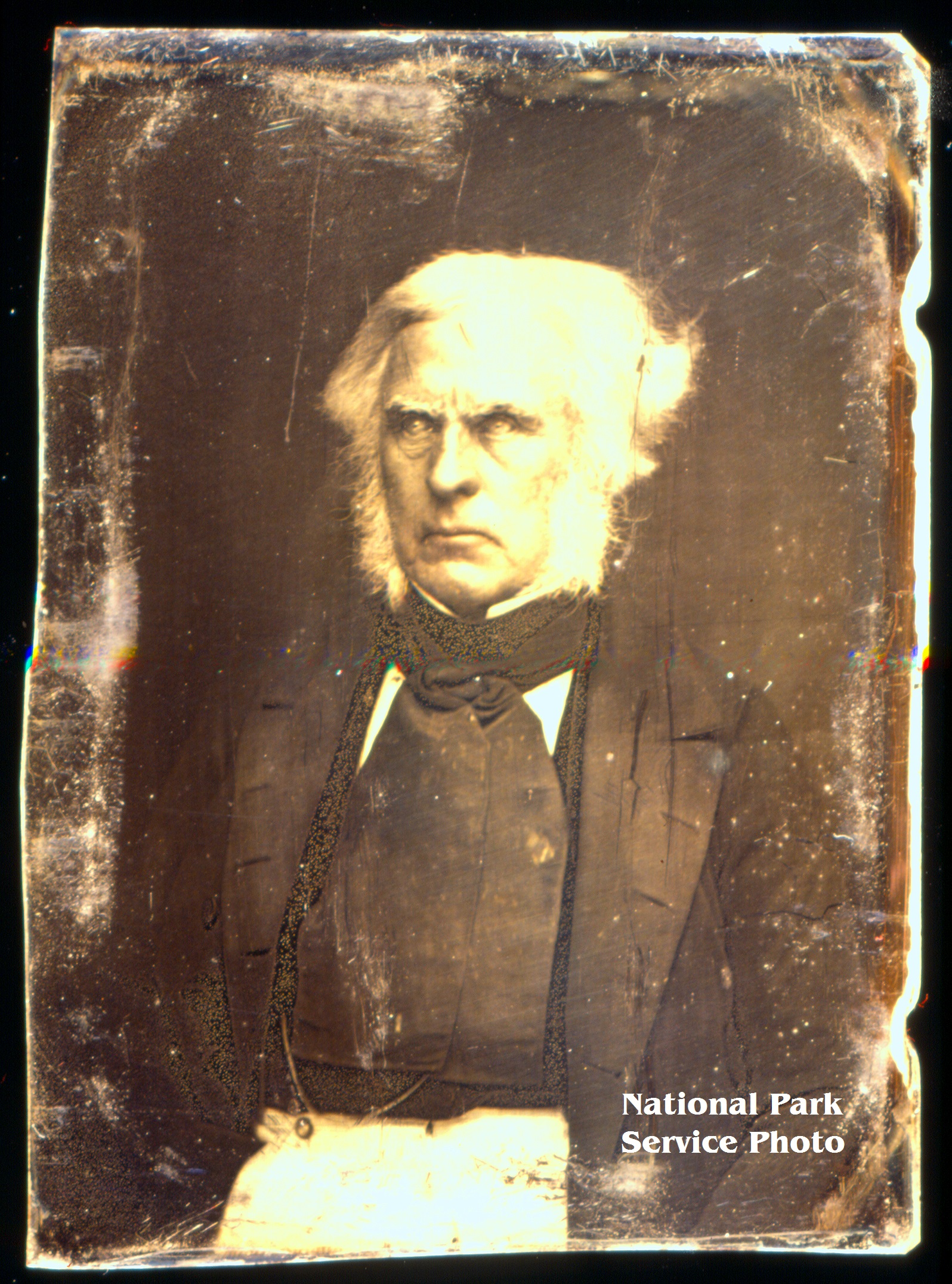
Dr. John McLoughlin, shown in this daguerreotype, commanded the efforts of the British HBC fur trading empire in the Oregon Country. Photo courtesy of National Park Service.

McLoughlin had been at Fort Vancouver only a year or so when he decided to push south through the Umpqua basin with brigades of trappers. Those expeditions into the southern region became annual events–and rather colorful.

Author John A. Hussey quotes Editor Alice Bay Maloney in describing them:

At the head of the brigade rode the leader, a chief trader [or clerk] of the Hudson’s Bay Company, astride a strong limbed Nez Perce horse and armed to the teeth with the best weapons of the day. Directly behind him rode his Indian wife gaily attired in the finest London broadcloth, with a wide-brimmed, feather-trimmed hat atop her wealth of long, shining black hair…. All the men were clad in deerskin….

Hussey adds a description of the brigade by an unnamed priest who wasn’t quite as impressed: “‘The brigade,’ he wrote, ‘is a hideous assemblage of persons of both sexes, devoid of principles and morals,’ and possessed of ‘revolting exteriors.'”

In any case it was during one of these expeditions that members of the brigade selected a site on the Umpqua River they thought would be a good outpost for trade with the local tribes. McLoughlin, concerned about competition from American trappers, wanted to clear the area of beaver and establish a strong foothold.

The Hudson’s Bay Company built Fort Umpqua in 1836, and it served the Company well for more than a decade, even after the boundary settlement between Britain and the United States gave the land to the U.S. in 1846. The photo below shows the interior of the reconstructed Fort Umpqua with the HBC flag flying again.

In the next two weeks I’ll write a few more posts about the Hudson’s Bay Company trade in the Oregon Country and about the reconstruction of their southern outpost as the Fort Umpqua Days celebration nears.

Hussey, John A. Champoeg: Place of Transition. Portland, OR: Oregon Historical Society, 1967.
Maloney, Alice Bay (ed.). Fur Brigade to the Bonaventura, John Works California Expedition, 1832-1833 … San Francisco, CA, 1945.

COMMENT

Fort Umpqua Finale

Fort Umpqua Days in my hometown closed out last night with the second and final presentation of this year’s pageant, Echoes of the Umpqua 2015: History Comes Alive.

2015 pageantDon’t look now, but those characters on the stage are from dioramas at the reconstructed Fort Umpqua, and they have apparently come to life, unbeknownst to the students in front who are trying to put on a homecoming dance. Or so the story goes. The audience got into the act, and we all had a great time. I have the distinct privilege of serving on the writing committee for the pageant, and it’s always fun to see what the actors do with the scenes you write. They had me laughing.

2015 pageant 2And the dioramas were pretty lively–with local tribeswomen, a pioneer woman, animal pelts, Hudson’s Bay Company men, including the historic yarn spinner Tom McKay telling a tale in the above shot–as well as a bust of President Polk and a portrait of Queen Victoria, who all had their say. You can see Queen Victoria a little better in the upper photo, to the far right.

A great weekend! I truly enjoyed my time in the booth too. Sold some books. It’s a great venue for me. Also talked to many friendly people and enjoyed hearing a lot of their stories too. Fun!

COMMENT

Stepping into History

Mt. ManI was selling books outside Fort Umpqua today when a mountain man appeared. He’s one of our local mountain men from nearby Drain, Oregon, Ken Putnam. I had to admire his fancy fringed buckskins, and he agreed to have his picture taken by my booth.

Meanwhile, a few shots rang out from the black powder rifles other mountain men were shooting next to the fort.

It’s quite an event, giving locals a chance to step back into history for a couple of days to imagine what life must have been like in the days of the fort, back in the mid-1800s. And some like Ken get right into the spirit of it.

I especially find all this interesting, given the settings of my books. In Shifting Winds, which comes out in April, a couple of mountain men play significant roles, including one real-life character, the legendary Joe Meek. I do have fun portraying Joe with his storytelling and bravado.

Today was a fine day with perfect weather, the world nicely washed after yesterday’s rain, and we’ll be back at the fort again tomorrow, Sunday the 6th, looking into our wild and woolly past.

COMMENT

Tasting Local History

DSCN0429It’s time for Fort Umpqua Days again, an annual event in my hometown of Elkton, Oregon, when we honor our past and have some fun doing it. It’s Labor Day weekend, Saturday and Sunday, September 5 and 6, pretty much all day, at the Elkton Community Education Center just west of town.

The photo above shows the massive gates for the reconstructed Fort Umpqua, which was the southernmost fort of the British Hudson’s Bay Company in the 19th century. Thanks to the dedication of local people this fort was reconstructed with an eye to authenticity so folks can get a glimpse of life back then.

I’m particularly interested in the period because I write about it. In my first book, A Place of Her Own, my great-great-grandmother comes to Elkton near where the fort stood. The fort has fallen by the time she gets there and the British have left the area following the 1846 settlement of a boundary at the 49th parallel. However, conditions haven’t changed dramatically. It’s a part of her immediate history. And in my next book, a novel called The Shifting Winds, the story opens in 1842 when Oregon was still contested territory between the British and the Americans, and tensions stirred rumors of war. In my story a triangle romance parallels the conflict, when two young men, a Hudson’s Bay Company clerk and an American mountain man, vie for the protagonist, a young pioneer woman who never wanted to leave her New York home in the first place.

So I revel in events like this that help bring history alive. Also, I serve on the writing committee for the annual pageant that’s performed both nights of the event, where we bring out a little history with a bit of humor and music and dance and a whole lot of fun. During the day there are games for the kids down at the fort, crafts for sale, food, black powder demonstrations by our own mountain men, and more.

I’ll have a booth both days where I’ll be selling and signing copies of A Place of Her Own, from 10 a.m. to 5 p.m. If you’re in the neighborhood, welcome to a dip into our past.

COMMENT

Fun at Fort Umpqua Days

Elkton history enjoyed a dash of fun at the annual Fort Umpqua Days celebration Saturday and Sunday. From the parade Saturday morning until the final show of the pageant in the ECEC Amphitheater in the Park, history echoed through the festivities with this year’s theme, “Woods to Wine.”

605.fort umpqua boothIn my booth there I enjoyed presenting my own bit of local history with my book, A Place of Her Own: The Legacy of Oregon Pioneer Martha Poindexter Maupin. Robin Loznak took this picture of me.

Right next door to me was Leta Lovelace Neiderheiser with her history of her famous pioneer ancestor, Jesse Applegate: A Dialogue With Destiny. Nice meeting her.

606.cousins at fort umpqua

I was also pleased to meet another cousin, Cheryl Miller, a third cousin whose line runs through Martha’s son Cap and Cap’s daughter Lois. Cheryl and her husband live in Cottage Grove, where she works in Safeway. During my years in Cottage Grove I had no idea I lived near cousins. I’ve met so many since this book came out, it’s one of the pleasures I hadn’t expected.

435.campfireWhile people in the booths kept busy on the hill, down at the old Fort Umpqua replica near the river, kids were delighting in getting a taste of history, pumping water to wash clothes, cooking in a Dutch oven over an open fire, and other activities.

Then each evening we gathered at the amphitheater for the pageant “Echoes of the Umpqua 2014: Woods to Wine.” The theme recognized the shift in the local economy from one based on timber and logging to one highlighted by the winery business. Just last year the federal government designated Elkton an American Viticulture Area (AVA) in recognition of the high quality cool climate wine grapes produced by local wineries and vineyards. As usual, the pageant presentation had some fun with the history. I enjoyed being on the writing committee for the play–although we’re sworn to secrecy on who wrote which part. 🙂

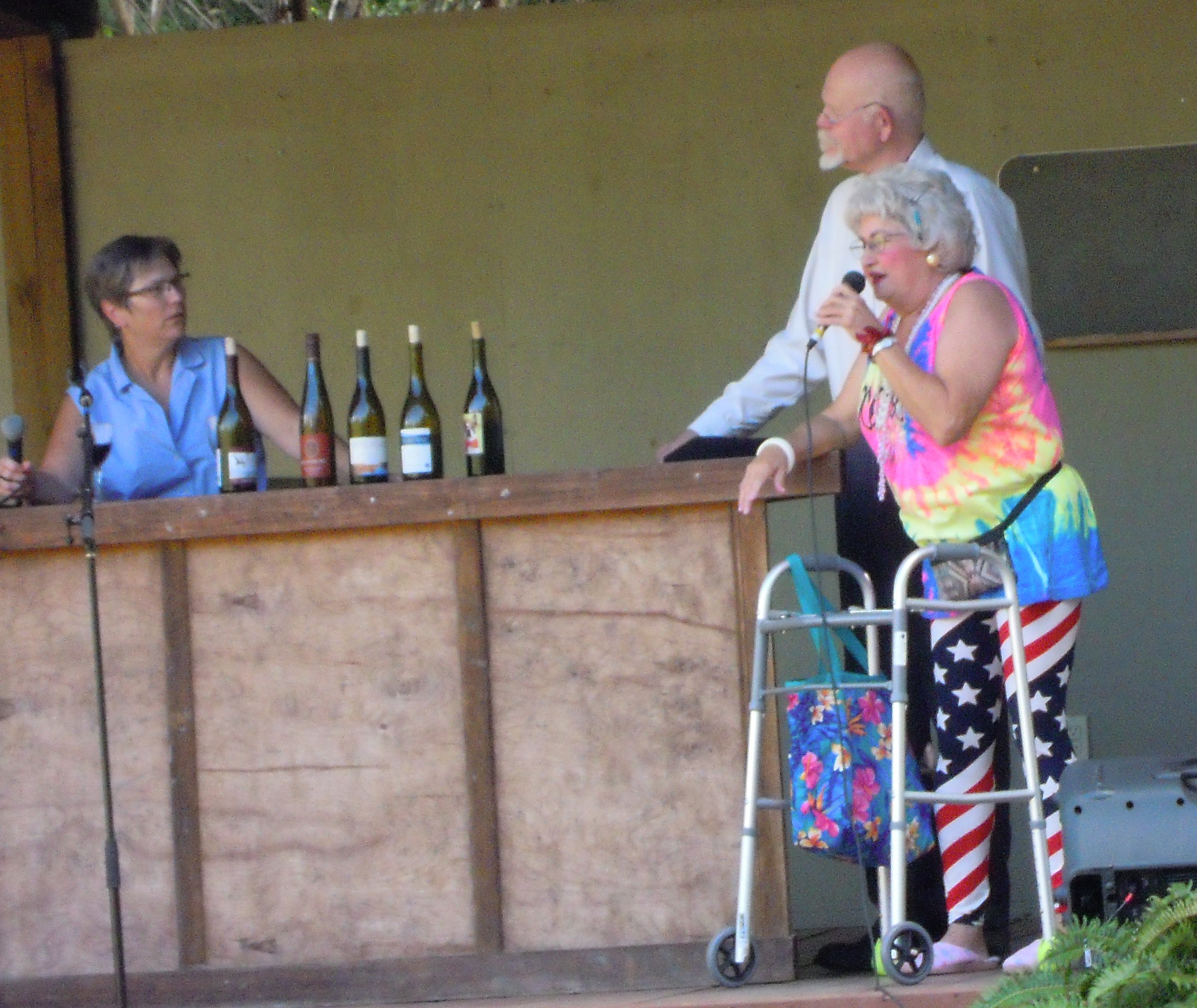
607.gram & gramps pageantA right sassy granny enjoys a taste of the local wine and reminisces about the good old days when loggers ruled. Did somebody mention lady loggers?

We flash back to those early days when a new teacher comes to town and struggles with an unfamiliar culture of loggers and farmers who expect their kids to skip school while helping out with the harvests. How can she possibly teach them?

608.pageant square dance


But a square dance is fun. And she can’t help noticing the charming young logger who enjoys a bit of Shakespeare.


611.pageant musicians


The band offers some good old-time music. And as the saying goes, a good time was had by all. 🙂


COMMENT


Â