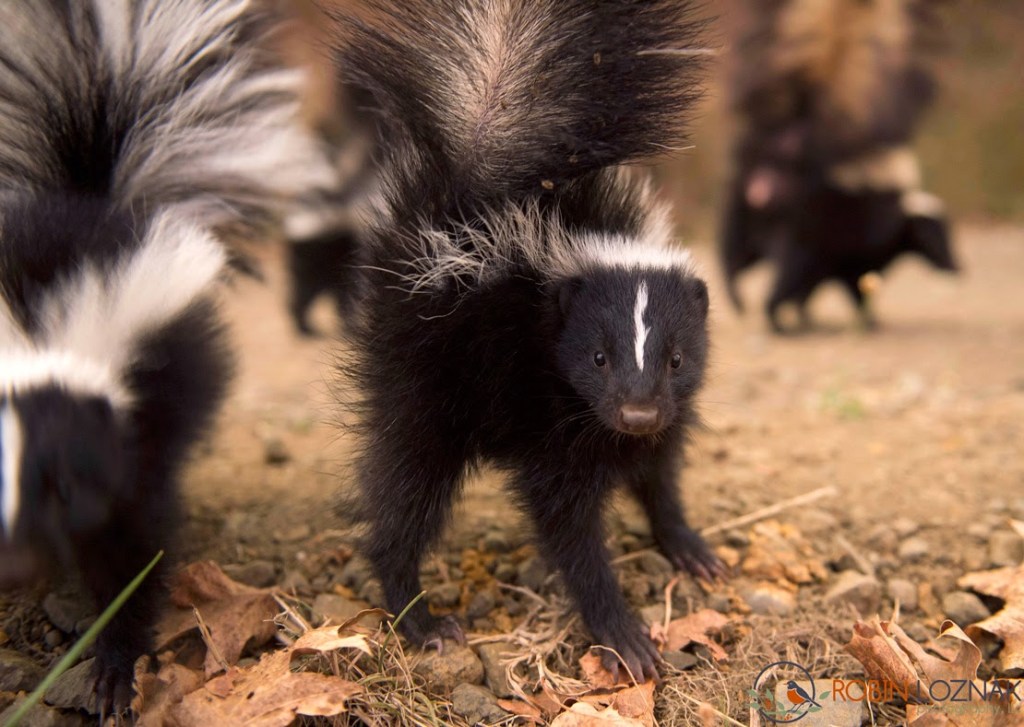
It’s May! Yes! The prettiest time of year on the farm. So said my father when I told him one April day that April must be the prettiest with all its green and flowers. “No,” he said. “May is.” Not something I expected to hear from this reserved man. Well, now it’s May and I’m sure he was right. In honor of May I’d like to present a rollout of pictures of critters that share this farm with us, all these selected photos thanks to my son-in-law Robin Loznak, award-winning photographer, whose work can be seen in publications around the world. And here.
Robin specializes in wildlife photography. Here he is getting a close-up of a very tiny critter, a picture I took a few years ago for another post. That’s a part of his wildlife specialty–bees, elegant praying mantises, dragonflies, and more. They all shine in his photos.
He and my daughter Carisa live on the farm too so they’re able to enjoy the place founded by my great-great-grandmother Martha Maupin in 1868 and maintained by my father, Gene Fisher, for many years. Robin kindly lets me use his photos on my blog, whatever I need to illustrate a story.
Here are some of my favorite photos he’s taken of wildlife on the farm. Some are old favorites you may have seen before. Some were new to me.
You know what I heard? . . . Mm-m? I’m listening. Baby barn owlets perch in the old barn in a prune box placed there by Robin for a safe nest. Sharing stories? Maybe.Acorn woodpecker leaving its home in the gate post. Going out for dinner?Probably.Female Northern Harrier (Marsh Hawk) like one that swept over my shoulder one day and hovered in front of me before making a sharp turn to fly away.See the story here.Male Northern Harrier in aerobic flight like one that appeared while I was writing Martha’s story. A hawk like him is pictured in the book.Hummingbird on a wire watching lunch.Acrobatic kestrel coming in for a soft landing.Honeybee ready to sip from a blossom and spread pollen around.What did you say? See a poetic description of a mantis in “Portraits of a Century Farm” here. The Century Farm is a Sesquicentennial Farm now, but the collection was done before it was.Exquisite detail of beauty on the wing of this dragonfly.This bobcat may be the one we called Scamp when he became such a frequent visitor. Scampered right up to the house one day.You can’t see me, can you? My mama hid me and told me to stay right here.Better go now. Which way? Which way? Roosevelt elk making quick decisions.See another elk photo with poetry among the “Portraits” collection here.What is that looking at me, Mama? See another of the “Portraits” here for a poetic description of the encounter, “Making Scents.”Robin said he used an extreme telephoto lens to take this shot. I’m happy to report that no one, man or animal, was harmed in this photo shoot.Peeking out at you. Did you ever see a salamander so cute?
And with that, my friends, I close out our ode to May with some of my favorite Robin Loznak photos of wildlife on our farm. I hope you enjoyed it as much as I enjoyed putting it together.
Thank you, Robin, for sharing your beautiful work.
I was taking my daily walk on a beautiful sunny afternoon, trekking uphill past the farm’s upper barn to the broad field above. As I occasionally do on the uphill climb I stopped for a breath and turned around to observe the panorama below me and to enjoy the glorious perspective that widens with each step in elevation–the forested mountain range in ranks from dark-green to blue, the verdant middle plain, the nearer skeletal oaks.
With startling suddenness the huge hawk came up behind me and swooped over my left shoulder and down the road in front, maybe three or four feet off the ground, shimmery rich-brown wings spread. Soundless. Hovered not six feet away. No sign of fear, though she had to know I was there. The moment felt long, time suspended. As I watched in awe, she made a sharp right turn and flew out over the green slope beside me, the bright-white clump of feathers on her rump clearly identifying her as a Northern Harrier. The brown wings and back suggest she was probably a female. She seemed to float above the grass, tilting this way and that, then turned again and soared downhill out of sight.
I caught my breath in wonder.
I later checked online, curious about the size of it, and learned that a Northern Harrier has a wingspan between 38 and 48 inches. And they range from 16 to 20 inches long. That’s one big bird! Not as big as an eagle, true, which may have a 6- to 8-foot wingspan, but you seldom see these grand creatures hovering right in front of you offering the full impact of their presence. Harriers are distinctive in the way they hunt low to the ground with upswept wings and are known for their aerial dances in the sky.
The place
Readers who have followed my work may recall my intrigue with the white hawks that seemed to be harbingers of good news from time to time, beginning about ten years ago with the one that swept in front of my office window, then flew low above the road as if leading my grandchild and me up the hill. Leading where, we didn’t know, but it felt quite magical. A hawk like him would appear one day when my son-in-law Robin had his camera handy, just in time to be added to pictures in my book A Place of Her Own.
Some of the Northern Harrier males that visit our property are white on the underside with the black wing tips and pale ashen backs, like the one below that Robin photographed more recently. When they fly they appear quite white. The females can be mistaken for juveniles, which are also brown on backs and wings, but females have whitish undersides with brown streaks like the one in the top photo, while juveniles have buffy undersides without the streaks. These birds were formerly called Marsh Hawks. My thanks to Robin for all these hawk photos.