Outtakes #2 – A Place of Her Own

Originally I interspersed every one of Martha’s chapters with a short chapter from my own viewpoint, showing my return to the farm as well as my search for Martha. The editor liked my search, but not the return. This is part of an early scene of mine showing my family’s own struggles as we prepared to move to Martha’s farm. In general, I will try to post only the parts of scenes not included in the published version, although sometimes there may be a slight overlap. Thus, the posts may sometimes feel as if they’ve picked up in the middle of a conversation. Clip…..

Outtakes No. 2


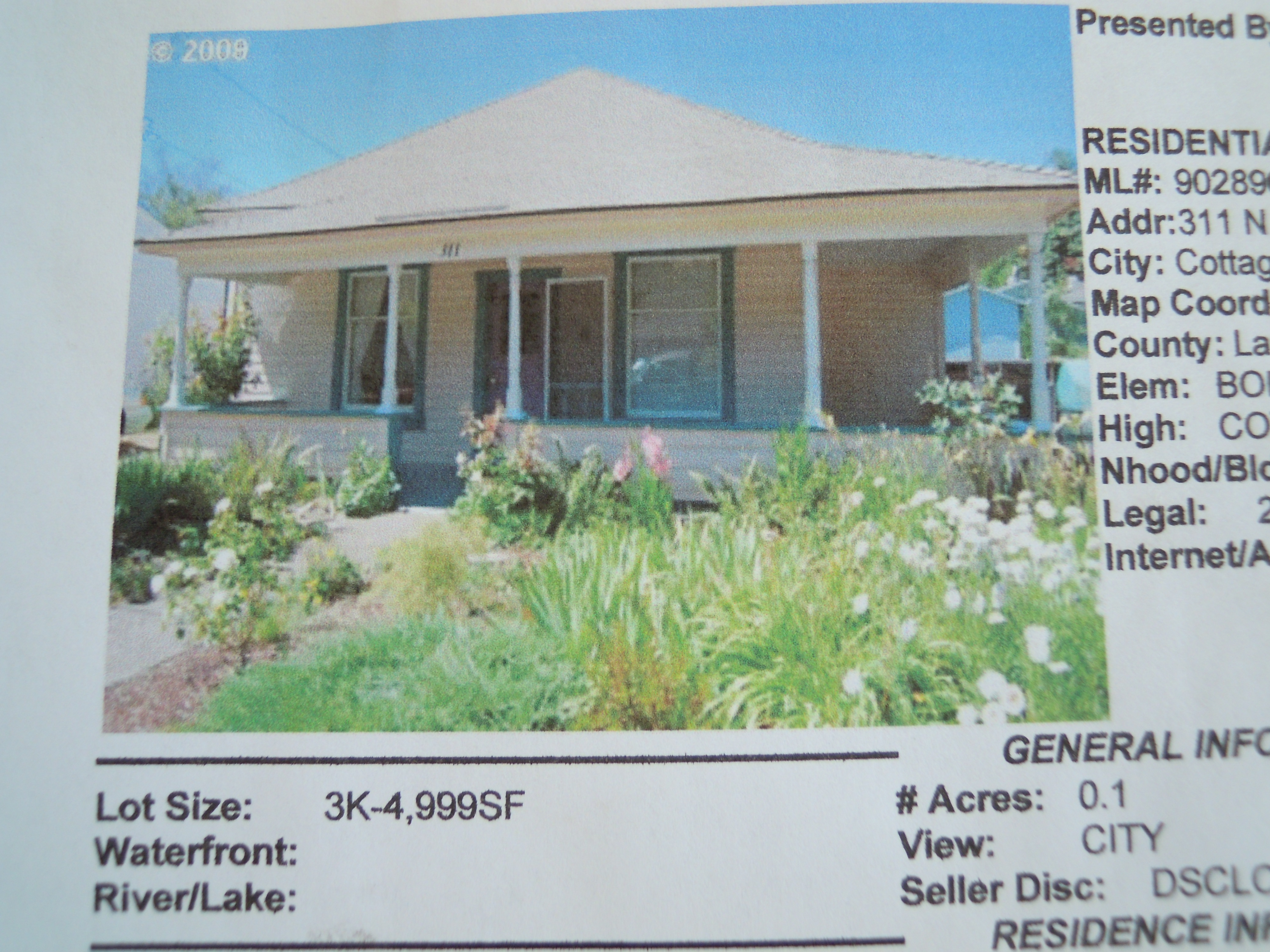
Here’s the Cottage Grove house going on the market.


Before any of us could move here [to the farm] . . . we needed houses to live in. Had I known it would take so long I might have bought a bigger house in Cottage Grove when I moved there a few years ago after it became clear my dad needed me closer. At that time I lived alone and the twelve hundred square feet of my Victorian cottage there seemed perfect for me. After my dad died and we reached a decision that I would keep the farm and Carisa and her family would move here from Montana, we knew we would need a second house and some restoration on the old farmhouse.

Soon after the decision Carisa’s husband, Robin, got a job in Roseburg, a town in somewhat the opposite direction as Cottage Grove. Photojournalism jobs being rare, he felt he should take the job, even though the farmhouse wasn’t ready for them. The builder thought it would take a couple of months to have it done. We decided Carisa’s family could move in with me–the three of them, their two dogs, one cat and one fish. I had already acquired my other daughter’s dog. Robin would commute between Cottage Grove and Roseburg. Surely we could manage for two months.

But the two months stretched longer. I was anxious to get my own house started. Though relatively close, Cottage Grove was still forty miles from the farm, and it wasn’t easy to manage a farm from that distance. Fortunately, someone was close by to look out for things. Ed Cooley, the man who had worked with my dad since the 70s, was still renting cattle pasture from me and helping with the harvests and other tasks. From all those years working beside my dad, he knew more than I ever would about how things worked on this farm. Ed was one good reason my dad was able to stay on the farm into his late years, and one good reason I dared take it on when my dad died.

Anyway, two months in my little cottage became three, four, five. The cottage felt even smaller. Tempers flared. The fish couldn’t take it. He died. I could scarcely think, let alone manage. Having lived alone for almost twenty years I was used to my own space. And my daughter was used to running her own household. She was homeschooling Alex in the large country kitchen, the buffet in there given over to the paraphernalia necessary for that.

For a while we ate dinners in the dining room, which had become their bedroom, but that required folding up their futon every morning. We ended up eating at my little table in the corner of the kitchen, a perfect 30-inch-square table for me, but the four of us had trouble fitting around it.

Alex, at eleven, missed his friends and railed against Grandma’s stricter house rules. Articulate and dramatic, he would explode from time to time. “I can’t live like this anymore.”

Their big golden lab slunk off the couch whenever he saw me, head low, eyes guilty, knowing he wasn’t allowed there. The other little dog never understood. I had to put away all my breakable treasures to protect them from the lively cat that easily jumped to any height indoors.

While we struggled in our cramped space, I also needed to get this Cottage Grove house sold so I could afford to build my new house at the farm. This was summer 2008. House prices were trembling. I felt growing desperation to get mine on the market soon, but knew it wouldn’t show well with our menagerie in it. Finally after seven months, we told the builder my kids were moving into the farmhouse, ready or not. It was time to start the other house. That caused some consternation for the builder, as he contemplated having to work around the family and their menagerie to finish the job, but they made the move. Work soon began on the new house.

I had about three months of quiet in Cottage Grove–if you can count having a house on the market quiet, and running back and forth to a forty-mile-distant farm. Then my other daughter and granddaughter came to live with me. My small cottage became cramped again. We had to scurry every time our real estate agent wanted to show the house, with toys to pick up, the accumulations of too many people stuffed into too-small closets.

Time stretched while the new house on the hill took form. . . . After a year, during the near collapse of the housing market, the Cottage Grove house finally sold. Again I explained to the contractor we were moving in, ready or not. The move happened, and finally, with all my family around me in a lot more space, I was here to enjoy what Martha bought over one hundred forty years ago.

Note: My son-in-law Robin shared the magic of his photography in A Place of Her Own with pictures of the family farm. If you missed the tribute to Robin on my blog, or want to see the post again, click Spotlight on the Photographer to find it.

COMMENT

Outtakes #1 – A Place of Her Own

Outtakes is a new category for my blog, as explained in my most recent post. In the next few weeks I will be posting scenes which were cut from my book A Place of Her Own. I’ll present the cut scenes in order, some from Martha’s chapters, some from mine. This first scene comes right after the ferry crossing of a flooding Missouri River at the end of Chapter One. I cut this scene to keep the story moving quickly toward the meeting of Martha and Garrett. It was an action scene following an action scene. We just had the exciting crossing, which I thought was stronger, and let this one go. It reduced the word count by 752 words. Clip….

outtakes longshot


Scene gets the red-line treatment here in my office.


Martha fought back panic as they raced against the river to load up household goods to take them to higher ground. She and her brothers had been with William and his wife, Eliza, and their family for several days and hadn’t seen a clear day yet. This morning, with the river right at bank full, William’s family had started moving out. They’d taken several loads so far. William’s smaller children and their two dogs were already with friends in town in Carrollton, Carroll County’s foremost town and county seat, which stretched above a soft-edged bluff overlooking the bottoms.

Martha held onto one side of a canvas tarp Eliza was trying to draw over their wagon load, while their nine-year-old son, Will Jr., worked to tie the tarp down. Rain-borne wind grabbed at the billowing canvass and whipped it out of Martha’s grasp. Little Will threw his small weight over it and helped her take hold of her edge again. She could scarcely see for the water dripping down her face.

“That’s good,” Eliza said. “I think we have it.”

Doc and Simpson pulled up their own small cart, and William rushed inside, returning quickly with an armload of blankets and pans.

Distant cries sounded. “Water coming across the bottoms . . . need to get out . . . now!”

William straightened and stared toward the river. “We have to go.”

The animals strained to make their way across the spongy soil. Wheels bogged down, and the men worked to pry them out, while Martha, Eliza and Will tugged at the teams to encourage them forward. Martha glanced back. She could see a thin line of water this side of the trees that had bordered the river. Now the river knew no borders. She took a sudden intake of breath. “How fast will it rise?”

Eliza shook her head. “I don’t know. I’ve never seen it like this.”

They could only progress in stops and starts. Their refuge of soft low hills looked so far. But the river kept closing in. Martha’s heart beat a jolting rhythm. How would they ever outrun the river?

Through driving rain they staggered on, until Martha saw little but the next muddy pool, and the next. Then she realized they were climbing. They had reached the bluffs. Looking up, she saw the growing city of tents being laid out beside Carrollton. She headed straight for their own tent perched near the outer edge. Hope swelled in her and gave her the energy to climb. Daring a glance back, she saw that the river had risen as much as halfway across the bottoms, maybe more. A latent burst of urgency drove her, and she scrambled on up the slope to the tent.

She wanted to crumple onto the ground, but they had work to do. Wagons had to be unpacked, animals tended. But before she put her hand to any of it, clusters of men appeared. Many hands reached out, lifted, carried, tidied. William and her brothers staked out the animals, and William excused himself, ready to walk with Eliza to the home of the friends taking care of their children. Eliza would stay with those friends until this was all over.

Before leaving she grasped Martha’s hand. “Are you sure you won’t go with me and stay in a nice snug house?”

Martha smiled, glancing at the tent, then out at the surging river. “We have a good view from here. Thank you, but I’ll stay.”

Will and his father appeared to be in deep conversation. Then the boy leaped into the air with a shout of joy. “Thanks, Pa!” He ran to the tent, stopped abruptly, and with shoulders high marched inside as if he owned it. Apparently Will Jr. was staying in the tent as well.

Giving Eliza a quick hug, Martha walked back to the tent and sat, just inside the open flap where she could look out and watch the river but still have cover from the rain. Such a spectacle. Logs and debris floated along the surging tide. A house. Some kind of shed. Another house with a rooster and two chickens clutching the top. A barn with a pig waddling back and forth on its flattish roof.

Above the pelting rain she heard the faint sound of the pig’s squeals, punctuated with a rooster’s crow. All the while, the water rose higher until it touched the edge of the bluffs. Would it come even here? Where would she run then?

COMMENT
Outtakes ~ A New Category

Book cover - A Place of Her OwnOuttakes, the clipped segments of film and video sometimes included on DVDs, often provide a laugh, or maybe just a sense of curiosity about a scene that looks pretty good but for some reason got cut. The film was too long. Something had to go. Or it was somehow lacking.

I think I’ve written about the clipping I had to do on my book A Place of Her Own before it could see print. But to recap, my agent was initially concerned about the length of my manuscript, which ran 112,000 words. She told me this type of book should ideally be between 80,000 and 90,000 words. She asked if I could cut it some. I cut it down to 106,000 and was fairly pleased with that. It’s no small task to cut 6,000 words. She politely looked at it, then asked me to go ahead and get it down to 90,000 so we had that as a given before we submitted it to a publisher. Whoa! She was serious about 90,000. That meant a total of 22,000 words. You don’t get 22,000 words out of a document by snipping a word or phrase here and there. That meant some whole scenes had to go. And I had toiled lovingly over every scene.

Well, I did it. I slashed many of my beauties and got it down to 90,000. Then my agent submitted it to an editor. The editor liked it, said it fit her list, but she wouldn’t make an offer the way it was. I had entitled the book Two Women Across Time and had wound my story of returning to our family farm together with Martha’s story of her long road to obtaining that farm. And in my chapters I also described my search for Martha. My chapters were short because I knew my story paled in comparison with Martha’s. But the editor wanted even less of mine. She liked my search for Martha and said if I could come up with a device to show that and not the other, she would be happy to take another look at it.

I told my agent I didn’t think we should walk away from this kind of interest. I wasn’t that wedded to my part. I would cut all the superfluous parts of my chapters and include the description of my search for Martha in several “Interludes.” So I did that. And then–what would you know?–I didn’t have enough words. Sheesh! I was able to bring back some of Martha’s scenes, but not all.

When I chat with people in book club meetings or Q&A sessions after readings, we occasionally talk about the cuts. And sometimes folks wonder if they haven’t missed something. “Do you regret cutting those scenes?” some ask.

Well, no, I don’t.

Painful as it was at the time, I believe my agent and editor were right. I think it’s a much stronger book the way it came out. For every cut there was a reason. Still, some of those scenes were pretty good, and for folks who feel they missed something, I suggested the possibility of putting the slashed scenes on my blog, and I received some strong encouragement to do just that. So in the next several weeks I’m going to share several of those “outtakes” to let you see what you missed. I’ll post the first in a couple of days.

I hope you enjoy these added glimpses into the story and the process.

COMMENT

New Book Cover

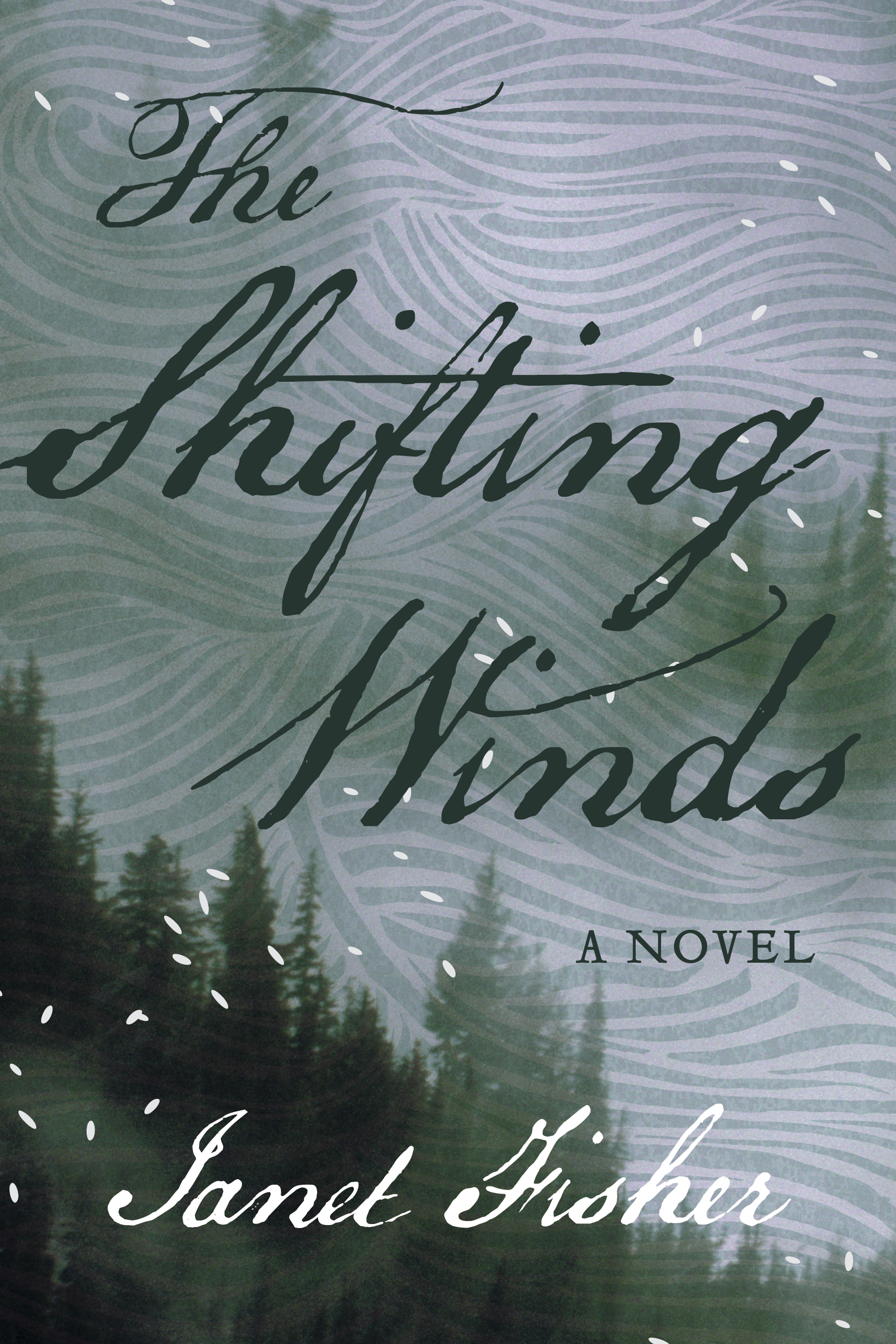
ShiftingWinds_EcoverMy editor at Globe Pequot Press just sent the cover art for my new novel which is coming out next April, and here it is. Very evocative, as she said. I like it. Looks like a typical Oregon timbered mountain, appropriate for the story of a young Oregon pioneer woman caught in the changing winds of her time.

ShiftingWinds_EcoverHere’s a smaller view for the overall effect. It’s exciting to see the book’s face. Makes it feel more real, like something I’ll be able to hold in my hands one day soon.

I also love those words “A NOVEL,” because I’ve been writing novels for a while, and I’m so happy to see this favorite leading the way for me in fiction. It feels as if the winds are shifting in the right direction. Cheers!!! 🙂

COMMENT

NEW BOOK DEAL!!

Society208-Photo courtesy of Clackamas County Historical Society, All Rights Reserved

Woo-hoo!! Another book!

I’m thrilled to announce I sold my second book, this one a historical novel of early Oregon. My agent Rita Rosenkranz just closed the deal with the editor of my previous book, Erin Turner of Globe Pequot Press. It will come out in April 2016 under the TwoDot imprint, the same as A Place of Her Own. The photo above is a lithograph by J. H. Richardson showing Oregon City in the 1840s, the primary setting of the new book, tentatively entitled The Shifting Winds.

It’s the story of reluctant Oregon pioneer Jennie Haviland whose father decides, against her wishes, to take the family west to the wilderness of 1842 Oregon. Two men there vie for Jennie, one British, one American, as their two countries vie for the contested Oregon land. But Jennie wants choices of her own.

The Oregon City shown in the lithograph is the hometown Jennie would have known soon after her family arrived at the end of the long Oregon Trail.

I wrote this book some years ago when my focus first turned to stories of Oregon pioneers. After succeeding in selling the story of my pioneer great-great-grandmother, released in 2014, I brought this one out and gave it a polish, hoping my editor would like it too. And yay! She did! It has always been one of my favorites. I had such fun reworking it and look forward to sharing it now with readers.

Although A Place of Her Own reads like fiction it was sold as non-fiction. This new one brings me over to the world of fiction, in this case, fiction set in the midst of historic events with some real people, like legendary mountain man Joe Meek and Hudson’s Bay Company Chief Factor John McLoughlin. It falls solidly into the category of historical fiction.

Please join me in a cheer for book number two!! 🙂 🙂 🙂

COMMENT

Holiday Cheer at OHS

Holiday Cheer 4The Oregon Historical Society in Portland brought in many authors from the local area for their annual Holiday Cheer party last Sunday, a 50-year tradition.

Rachel Randles, OHS Communi-cations and Marketing Manager, who organized this year’s event, said early estimates indicate more than 700 people came to buy books and join in the day’s festivities.

I was delighted to be included among the authors this year to present my recently published history, A Place of Her Own: The Legacy of Oregon Pioneer Martha Poindexter Maupin. It seemed like an excellent venue for my story.Holiday Cheer Display

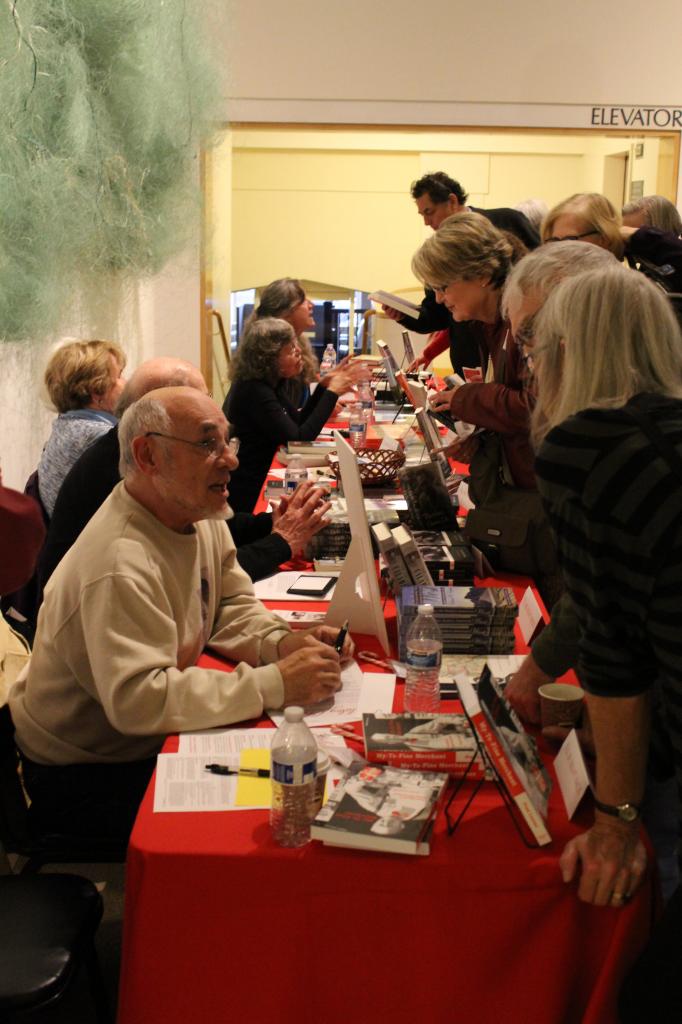
Here I am with other authors at a nonfiction table displaying our books for sale. At the left is Portland author Barbara J. Scot, author of The Nude Beach Notebook, and at right is Elizabeth Enslin from Wallowa County, author of While the Gods Were Sleeping.

My thanks to Portland publisher and author Laura Stanfill, who stopped by and took the above picture with my camera.  I met Laura in Tacoma in September at the Pacific Northwest Booksellers Trade Show. It was great seeing her again.

Holiday Cheer 5 - LauraHere’s Laura (at left) in the plaid coat talking with some other authors at the OHS event.

Besides book selling and signing, we had refreshments and entertainment. Before the event started authors were treated to a lovely lunch downstairs, with tasty cookies, muffins, and other treats offered throughout the afternoon.

Holiday Cheer CarolersTo add to the festive air, The Dickens Carolers came by and sang a few carols for us. Here they are at our table.

It was a great crowd. I even met some relatives–from the Poindexter side. A delightful Poindexter couple came by to talk about our ancestors going back to George Poingdestre who immigrated to Virginia in 1657 from the Isle of Jersey in the English Channel. The Poindexters were pleased to buy a book. They knew their history, and we had a wonderful visit.

Holiday Cheer 2 I heard many stories from others who stopped by. I’m having a vigorous discussion (at left). When people learn I’ve written a story about a pioneer ancestor, they often want to tell about their own pioneer ancestors, and I enjoy hearing their stories. I hope many of them will get those stories written down while they still have time to talk with the elders who know the history.

All in all, it was a lovely day, and I found considerable enthusiasm for Martha’s story.

Except for the picture Laura took and the one of the carolers, which I took, all others on this post are compliments of the Oregon Historical Society. Rachel sent out a large collection of photos from the event with her thank-you email, offering these glimpses of the day so we authors might use and share them. Many thanks to Rachel and OHS.

Holiday Cheer 3COMMENT

Holiday Time

705.christmas book It’s that time of year, and I’m happy to be joining other authors to celebrate this holiday season with signings of our books.

I’ll be at the Christmas Craft Fair at the Douglas County Fairgrounds on Friday, December 5, from 1 to 5 pm. You’ll find me at the booth for the local Roseburg writers group, An Association of Writers. We’ll be selling an anthology put together by members of the group, as well as books written by individual members. The fair runs for three days, the 5th through the 7th, from 10 am to 8 pm Friday and Saturday and 10 to 4 on Sunday. My book will be on sale all through the craft fair that weekend, but I will only be there the four or so hours on Friday.

On that Sunday, December 7, I’ll be in Portland with my book at the Oregon Historical Society for their 2014 Holiday Cheer signing party, a big event OHS puts on every year. It’s an honor to be included in that party of selected authors. A good venue for my book, a history of an Oregon pioneer.

So whichever event is handier, I hope I’ll see many of you at one place or the other. Books make great gifts. Spread the word and pass the cheer.

Happy Holidays! 🙂

COMMENT

Backtracking the Oregon Trail

Afterword

462.one lg wagonI hope you’ve enjoyed our journey retracing Martha’s footsteps as we backtracked the Oregon Trail. As noted in the beginning it took us five days to cover the miles that took them five months. We streaked across modern highways in an air-conditioned car. Martha walked all the way, one step at a time. She trudged through fantastic mountain scenery and wide lonely prairies and deserts. I’m sure she embraced nature’s wonders while despairing of the next climb, the uncertainty of water and sustenance, the heat and cold.

It was a thrill to see the places again, some for the first time. Certainly I saw landmarks on this trip with new appreciation.

Returning home by air, I happened to notice the Columbia River below me, somewhere near The Dalles where we met Martha coming the other way.

598.columbia river from airYou can see the blue line cutting through the middle of the photo. The highway—and the Oregon Trail—follow it for some distance on the east side of the Cascades.

Years after her long trek Martha marveled at news of the newly built railroad crossing the country. Could she even imagine flying through the sky? About five hours in the air to go the distance that took her five months? I was happy to get home in less than a full day, rather than five long days on the road.

If you missed any post in this series and would like to find it, go to the right-hand side of the page and scroll down to “Categories.” Click on “Backtracking the Oregon Trail” to find them all listed. (Or just scroll down the main page. There aren’t very many intervening posts.)

Thank you for joining us.

COMMENT

Backtracking the Oregon Trail #9

Day Five ~ Back to the Beginning

464.two wagonsThe land was mostly dry and dusty. . . . The Platte River making its lazy way between sandy bluffs, curving along a wide swath of bottomland. The shallow stream could sometimes be as much as two miles wide and a few inches deep. . . . Islands and sandbars, quicksand. Muddy, warm.
They were finally on their way. . . . The weight of troubles slipped from her shoulders as she looked west toward a new land and new possibilities. . . .
A Place of Her Own: The Legacy of Oregon Pioneer Martha Poindexter Maupin, Janet Fisher. (Guilford, CT, Helena, MT: TwoDot/Globe Pequot Press, 2014), pp. 109-110, 104.

Saturday, May 25. Still traveling up the Platte. The road is a little monotonous. The scenery does not change much. The river has a winding course and contains many islands. Some are little more than sand bars, others are covered with low willows. The road is at times along the river bank, and again near the bluffs on our left.
—The diary of Margaret A. Frink, in Covered Wagon Women: Diaries and Letters from the Western Trails, 1840-1890. Vol. 2, 1850, Kenneth L. Holmes, ed. (Glendale, CA: The Arthur H. Clark Co., 1990), p. 89.

Took up camp after dinner & started up the Platte. . . . The road is level being between the bluffs & the river. The Bluffs are very high & picturesque. The river ranks among the first class as to width but is very shallow as indicated by the many islands with which it is filled.
—The diary of Celinda Hines, in Covered Wagon Women: Diaries and Letters from the Western Trails, 1840-1890. Vol. 6, 1853-1854, Kenneth L. Holmes, ed. (Glendale, CA: The Arthur H. Clark Co., 1986), p. 89.

June 17th Traveled near the Platte all day and encamped near it at night. This is a turbid river, no trees of any size to be seen. We make out to use the water by sprinkling in a little corn meal This makes it a little cleaner.
—The diary of Rachel Taylor, in Covered Wagon Women: Diaries and Letters from the Western Trails, 1840-1890. Vol. 6, 1853-1854, Kenneth L. Holmes, ed. (Glendale, CA: The Arthur H. Clark Co., 1986), p. 164.

May 10th [at St. Joseph] Crossed the [Missouri] river without any difficulty . . . The surrounding scenery is delightful The soil is fertile and lacks nothing but improvement to make it one of the first places in the world in agriculture;; My sister and I ascended to the summit of a hill and with the aid of a spy-glass took a farewell view of St. Joe. and the United States.:
—The diary of Abigail Jane Scott, in Covered Wagon Women: Diaries and Letters from the Western Trails, 1840-1890. Vol. 5, 1852, The Oregon Trail, Kenneth L. Holmes and David C. Duniway, eds. (Glendale, CA: The Arthur H. Clark Co., 1986), p. 49.

I could not begin to tell you how many their [are] in St Joseph that are going to Oregon and California but thousands of them it is a sight to se the tents and wagons on the banks of the river and through the country
—The diary of Mary M. Colby, in Covered Wagon Women: Diaries and Letters from the Western Trails, 1840-1890. Vol. 2, 1850, Kenneth L. Holmes, ed. (Glendale, CA: The Arthur H. Clark Co., 1990), p. 48.

462.one lg wagonBy Day Five we had to push forward without delay. We followed the trail a ways, along the main fork of the Platte River, lush and green now with farming, bluffs on either side. You can tell where the river is by the line of trees that marks it.

Martha wouldn’t recognize this any more than she could have recognized the land along the North Platte. She would have remembered a much drier place with fewer trees, and those often limited to the islands of the wide, meandering waterway.

Pushing eastward into the tall grass country, we saw more farms where Martha would recall prairie grasses that could grow six feet tall, and flowers in swashes of color reaching into an arc of blue sky.

509.chimney rock & sunflowersThe native North American prairies west of Missouri changed gradually going westerly—from tall grass to mixed grass to the short grass of the high desert. From the diaries it sounded as if the tall grass had pretty well played out by Fort Kearney, soon after they reached the Platte. Somewhere in there you begin reading about lack of wood and the need for that substitute fuel offered by the buffalo that ranged across the region—buffalo chips. Different companies of wagons spread out so their livestock wouldn’t overgraze along a single track, here where the land stretched wide enough so they could.

I didn’t take any pictures on Day Five, maybe because the landscape seemed monotonous, mostly flat, green, looking nothing like the place described in the diaries. A monotony of a different kind. As we continued eastward the flat land spread farther to the horizon so the bluffs on each side sometimes disappeared in the distance. And a gradual greening occurred the farther east we drove—probably as that earlier vegetation once changed from shorter mixed grasses to the tall prairie grass, going the opposite direction the emigrants were.

The Weston plow, invented in the late 1850s, changed this landscape. Before the Weston, no plow could cut through the tough root system of the tall grasses. But this new plow had the power to turn the turf over. Farming was born in the tall grass prairie. A few industrious souls today are trying to return portions of this land back to its native state, but they have strong competition from agribusiness.

We left the trail around Kearney for the shortest route to our destination, finally reaching the Missouri River and St. Joseph, one of the popular jumping-off places for emigrants embarking upon the Oregon Trail.

463.wagons high plainsFolks couldn’t just march west when they had a mind to. They faced a small window of time when it was advisable to go—to jump off into the wilderness and one of the most profound adventures of their lives. They had to wait until the prairies greened up in the spring to offer feed for their livestock, and they had to cross the last mountain before the winter snows. Towns like St. Joe, Independence, and Westport (which became Kansas City) grew up where people waited, and businessmen set up shops to offer supplies in case folks still needed goods. Business could be brisk while folks waited and shored up the wagons.

Reading the diaries you feel the gradual shift as the bright hope at the outset begins to fade. Exclamations of “beautiful scenery” and “good roads” turn to words like “tedious” and “monotonous.” The good roads turn dusty. The lush grass becomes scanty. The way ahead feels longer, less certain. I am reminded of Joseph Campbell’s heroic journey. Isn’t that the way of every major endeavor? We leave the familiar because something compels us. And if we knew in the beginning how hard the road would be, we might never have the courage to go. Hope compels us, and though things get rough in the middle, we come out on the other side, having triumphed or at least having learned something.

502.painted wagon & oxen scotts bluffNearing the end of our journey we decided to stop in St. Joe for dinner. We were so ready for a decent meal. Our own struggles paled in comparison to those of the intrepid pioneers, but we were anxious for a few of the comforts.

Christiane had hoped to arrive at her house before dark, having rented the place sight unseen, except for pictures.

Maybe with a quick meal we could have made it, but our desire for something better outweighed her plan. We enjoyed a delicious sit-down dinner and reached Kansas City in the dark.

The map of freeways and streets looked as if a drunken spider had gone on a spree and built a crazy web. It took careful watching for signs, but our directions led us right to the house, and we were pleased to see the canopy of large trees in the neighborhood. When we stopped in the driveway and opened the car doors, a strange sound reverberated around us. It seemed almost like an electronic buzz and I wanted whoever was doing it to turn off the music or machine or whatever was making that noise. We were so exhausted we just wanted to go in and make our beds on the floor—to sleep and await the moving pod and real beds the next day. But what was that sound?

We learned there were huge cicadas, and maybe some tree frogs adding to the chorus, and over time we began to get used to them. We could barely hear them inside the house with doors and windows closed. So they didn’t keep us awake. They did make our chirpy critters back home seem like soft crooners.

So our journey ended near where Martha’s started. She began with hopes high, marching out onto the wild prairie. We entered the city—one of those jumping-off places—tracking a wild network of freeways in the dark. But we shared her sense of hope for new adventures and possibilities.

Scotts Bluff National Monument: Landmark on the Overland Trails, A History and Guide, Dean Knudsen, Historian, National Park Service, pp. 34-36.

Women’s Voices from the Oregon Trail, Susan G. Butruille. (Boise, ID: Tamarack Books, 1993), pp. 21-22.

NEXT: Afterword

COMMENT

Backtracking the Oregon Trail #7

Day Four ~ Chimney Rock

508.chimney rockHer left boot was getting a hole in it, letting the gritty dust in to nestle between sole and foot and bite in worse than the grit outside the sole. . . . Step after step . . . past natural wonders . . . Chimney Rock . . . Scotts Bluff. . . . She couldn’t get her breath. She was three months pregnant.
A Place of Her Own: The Legacy of Oregon Pioneer Martha Poindexter Maupin, Janet Fisher. (Guilford, CT, Helena, MT: TwoDot/Globe Pequot Press, 2014), p. 116.

Wednesday, June 5. The weather to-day was quite hot and oppressive. We had to cross a long stretch without water. The road we took led us close to the base of Chimney Rock, where we stopped for some time to satisfy our curiosity. The base is shaped like a large cone, from the top of which rises a tall tower or chimney, resembling the chimney of a manufacturing establishment. . . . It is composed of marl and soft sandstone, which is easily worn away. Mr. Frink carved our names upon the chimney, where are hundreds of others.
—The diary of Margaret A. Frink, in Covered Wagon Women: Diaries and Letters from the Western Trails, 1840-1890. Vol. 2, 1850, Kenneth L. Holmes, ed. (Glendale, CA: The Arthur H. Clark Co., 1990), p. 95.

Came opposite Chimney Rock which has been sight since yesterday. It has been seen 30 miles off on a clear day. Three of us went to it. I was struck with amazement at the grandeur of the scene.
—The diary of Lucena Parsons, in Covered Wagon Women: Diaries and Letters from the Western Trails, 1840-1890. Vol. 2, 1850, Kenneth L. Holmes, ed. (Glendale, CA: The Arthur H. Clark Co., 1990), p. 253.

June 14th Traveled twenty four miles:. We have seen very romantic scenery all day; The Chimney rock has been in full view all day:; It is represented as being three hundred feet high but from the road we are traveling it does not appear to be more than one hundred feet.;. Palmer in speaking of this rock very truly says that it has the unpoetical appearance of a hay stack with a pole extending far above its top
—The diary of Abigail Jane Scott, in Covered Wagon Women: Diaries and Letters from the Western Trails, 1840-1890. Vol. 5, 1852, The Oregon Trail, Kenneth L. Holmes and David C. Duniway, eds. (Glendale, CA: The Arthur H. Clark Co., 1986), pp. 65-66.

To day we come to the river opposite Chimney Rock which has been visible most of the way for the last 35 miles It is said to be 3 miles from the opposite side of the river but on these level prairies we cannot judge much of distances by the eye It does not appear more than half a mile It consists of a large square column of clay and sand mixed together with a base of conical form apperantly composed of sand, round base cone. and appears as if the column had been set up and the sand heaped around it to sustain it It is said to be 500 feet high but doubt it some
—The diary of Cecelia Adams & Parthenia Blank, in Covered Wagon Women: Diaries and Letters from the Western Trails, 1840-1890. Vol. 5, 1852, The Oregon Trail, Kenneth L. Holmes and David C. Duniway, eds. (Glendale, CA: The Arthur H. Clark Co., 1986), p. 271.

At night we came to Chimney rock which had been visible to us for 15 miles. . . . We camped near the river about two miles from the rock. After tea uncles, Mr Long, Julia Martha & I went to see it by moonlight The sight was awfully sublime The sides of the base on which the pillar rests are so steep that it was with the utmost difficulty we could climb up it at all. We however succeeded in climbing up some distance. We found it covered with names We got back to the camp about 10 O’clock
—The diary of Celinda Hines, in Covered Wagon Women: Diaries and Letters from the Western Trails, 1840-1890. Vol. 6, 1853-1854, Kenneth L. Holmes, ed. (Glendale, CA: The Arthur H. Clark Co., 1986), pp. 92-93.

502.painted wagon & oxen scotts bluffDownriver from Scotts Bluff my family and I finally came upon another of the famous landmarks along the Oregon Trail, Chimney Rock. Traveling eastward, we didn’t see it right away. But perhaps even more than Scotts Bluff, this one cannot be mistaken once seen. Many a pioneer commented on this remarkable feature that points a jagged finger to the rich blue skies.

The pinnacle rose before us, one of the more amazing sights on our journey from Oregon to Kansas City, as we retraced the footsteps of our pioneer ancestors who took this trail westward. My daughter Christiane and I had seen it years ago when our family took a camping trailer over this route. And having traveled the trail again in my mind as I wrote Martha’s story, A Place of Her Own, I thrilled to see it firsthand once more and show my granddaughter as well.

By the time we reached the visitor center for this geological marvel, the thermometer was inching up to 100. And at this site we didn’t see a speck of shade. We dismissed any notion of trekking to the monument’s edge, but I hurried into the visitor center while my daughter and granddaughter stayed with the dog in the air-conditioned car, the motor running. I had previously sent a copy of my book to be reviewed for their gift shop and stopped in to introduce myself.

Thinking about our pioneers ancestors, I could only imagine how miserable it would have been for these people and their animals to trudge across the barren land here on days such as this. The photo above of a painted wagon and oxen from the Scotts Bluff site helps bring the image to life.

As with Scotts Bluff, the sediments on the unusual Chimney Rock landmark show the many layers set down by nature over time. Travelers along the Oregon Trail must have wondered how these imposing features happened to be here. The formations appear to hold the strength of the ages, but they’re gradually disintegrating, much as they’ve been doing for thousands of years.

Scientists say it all started with a major geological uplift along North America’s west coast 70 million years ago. A huge inland sea once covered this central part of North America, but that land rise on the coast created the Rocky Mountains, displacing the inland sea. Water on the east side began to wash into the Mississippi River Basin. Wind and water carried huge amounts of sediment from the Rockies and deposited it here in layers of sand and silt, the accumulated weight compressing the deposits into sandstone and siltstone. Periodic volcanic activity added layers of ash.

Then about 10 million years ago the uplift increased, and streams moved faster, carving deep into the deposits. Here and there, denser stone held firm, where hard capstones of limestone at the top held down the layers so they still show like a layer cake of varied flavors.

509.chimney rock & sunflowersWe saw lots of wild sunflowers along the way. They looked pretty next to these unidentified white flowers near Chimney Rock (directly above). We saw many bunnies and a magpie or two, but none of the prairie rattlesnakes that signs warned us about.

Life forms no longer seen in this area walked these lands 30 million years ago. Their fossils have been preserved in the sand and silt layers—animals like rhinos, camels, giant hogs, and a few stranger creatures, as well as huge turtles.

Humans began appearing around 10,000 years ago, or possibly earlier. People developed agriculture along the North Platte River, then abandoned the area around 1400 AD, probably due to drought. Later, eastern tribes were pressed into the area by European settlement. When the Spanish reintroduced the horse to this continent in the 16th century, that animal changed the lives of the tribes then living on the plains, providing mobility and prowess in battle. These were the people American emigrants met on their way west over the Oregon Trail.

Scotts Bluff National Monument: Landmark on the Overland Trails, A History and Guide, Dean Knudsen, Historian, National Park Service, pp. 2-7.

NEXT: The North Platte and Ash Hollow

COMMENT