My Talk at Eugene Library Coming Up June 10th

I’m delighted to be speaking about my books at the Eugene Public Library Saturday, June 10, at 2 pm. For folks in the neighborhood I hope you’ll jot it on your calendar and stop by.

It’s a beautiful facility, as shown above, located at 100 West 10th Avenue in downtown Eugene.

During my talk I’ll present a slide show with photos related to my books, illustrating events and scenes to help bring the stories to life. I’ll delve into some of my personal history that led to publication of my first book, A Place of Her Own, and the door that milestone opened to a second book, The Shifting Winds. Both are Oregon Trail stories. A Place of Her Own is the true story of my great-great-grandmother Martha who came west over the trail and dared purchase a farm on her own after she lost her husband.

Not an easy matter for a woman in those days. I grew up on that farm, the Martha A. Maupin Century Farm, and have now returned, so her story touches me on a deep personal level. The book reads like a novel, with interludes describing my search for her, and I’ll talk a little about that search.

The slide show will include old photos like the one of Martha’s daughter who I imagine looks like Martha.

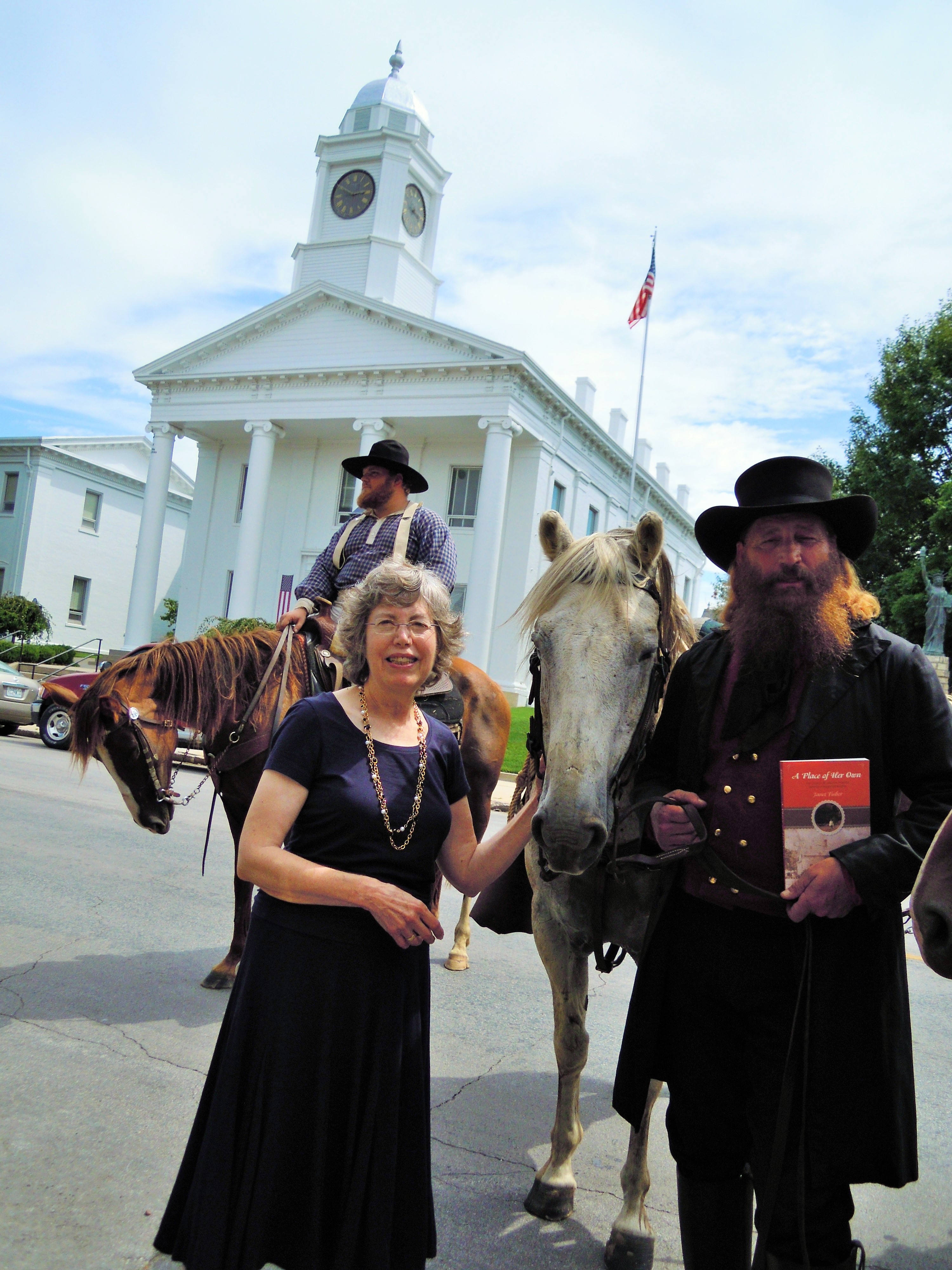
And photos like the one of my book reading in Missouri when my daughter and granddaughter and I backtracked Martha’s footsteps over the Oregon Trail and received a surprising Missouri welcome at the other end.

Publication of Martha’s story led to The Shifting Winds, which I wrote some years before about the same era, a novel with fictional characters who walk through a lot of true history of those early American settlers in the Oregon country.

I’ll discuss how the research for that book helped inform Martha’s story and how research has changed dramatically with the advent of the internet–and how it hasn’t.

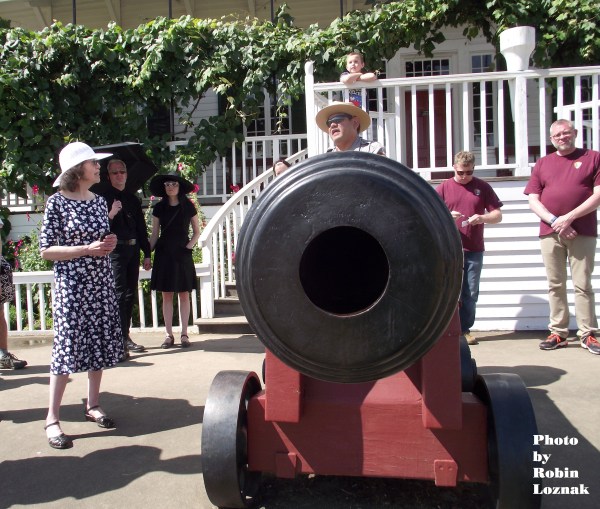
Photos related to Shifting Winds include one taken on the reconstructed site of the British Hudson’s Bay Company Fort Vancouver, where a number of scenes take place. During my reading and signing event at the fort, photographer Robin Loznak looks down the barrel of an HBC big gun in front of the commander’s house, while I stand by in the white hat listening to our tour guide, Dr. Robert Cromwell, Chief Ranger and Archeologist.

Not to worry. The guns were spiked, like the originals.

I’ll do some short readings from both books to provide a bit of flavor. After my presentation the session will be open to Q & A so people can ask what they really want to know about the stories or about the writing process or whatever else comes to mind. I always love the interaction of Q & A so really look forward to that. Afterward books will be available to sell and sign.

COMMENT

Talking Genealogy

I’m happy to be giving a talk about my books this Wednesday, May 10, at the Cottage Grove Genealogical Society meeting at the Cottage Grove Community Center, which shares the Library building at 700 E. Gibbs Avenue. The program starts at 11:30 a.m. in the Shepherd Room with a salad bar lunch, and is open to the public.

This is the same room where I had a speaking engagement with the library in January.

My talk will focus on the search for my great-great-grandmother Martha, the subject of my first book, A Place of Her Own: The Legacy of Oregon Pioneer Martha Poindexter Maupin. The book offers a creative nonfiction account of Martha’s life. Interwoven in this portrayal are four Interludes, which describe my search for her story.

Like many people who begin looking for their ancestors, I knew very little about Martha at the start. As a historical novelist I’m used to the need for research to learn about the settings of my stories, but the research into a real person’s life added another dimension. I want my fictional people to be realistic, but I can create the situations that drive them. With a real person I needed to ferret out the actual events.

I had the advantage of discovering cousins who’d done much of the genealogical work ahead of me, particularly a third cousin on the Maupin side, Linda Maupin Noel. Linda generously copied me on all the information she had gleaned. Then I did some digging on my own.

Wednesday I’ll share some of these efforts, the frustrations and the triumphs.

Along with Martha’s story, I’ll talk a little about my other book, The Shifting Winds, a historical novel set in the same time period, which was written before Martha’s and published after. The research for that one provided a good background for understanding the world in which Martha lived.

COMMENT

Oh, Ashland!

A soft October sun brightened the colors as I rolled into Ashland yesterday afternoon for my reading and signing at Bloomsbury Books. After dropping some books off at the store I had time to take a walk and let the festive Ashland charm wrap around me. I strolled down Main Street and over to Lithia Park, stopping by a pond to breathe in the calming beauty.

ashland-parkBack up Main Street I began to read menus at the many restaurants along the way, confident that any one of them would offer exquisite fare. Even a quick, light dinner had a gourmet touch. Along the street the flags never let you forget the town’s Shakespearean reputation, and music from stringed instruments drifted on the air. It’s no wonder the place drew me a couple of decades ago to live there for a while. So I returned with some sense of a homecoming for this second book signing at Bloomsbury’s. I went there a couple of years ago to present my pioneer ancestor’s story A Place of Her Own.

ashland-book-displayThe staff at Bloomsbury set up a nice display with both books this time. They hold readings upstairs in the store loft, a pleasant spot–the author’s garret, I guess. A good group came up. I read from the opening pages of historical novel The Shifting Winds, my featured book at this event, and the audience clearly appreciated the reading. We had an excellent discussion. So rewarding to find such enthusiasm. And several bought both books.

Afterward I had a long drive home in the dark, but a feeling of satisfaction went with me.

COMMENT

Coos Bay Library Presentation

I head back to the beautiful Oregon coast tomorrow, October 6, this time south to Coos Bay for an appearance at the Coos Bay Public Library. The event, open to the public, starts at 7 pm.

coos-bay-boardwalkPhoto Courtesy of the City of Coos Bay

The above photo captures the reflected beauty of a sunrise over Coos Bay’s boardwalk. I hope to explore a little while I’m there.

My presentation will include a short talk, a reading, some Q&A, and book signing, along with a slide show of photos related to my two books, The Shifting Winds and A Place of Her Own. Both are stories delving into Oregon’s pioneer history with a focus on strong women who made the formidable trek over the Oregon Trail to a wilderness across the continent.

If you’re in the Coos Bay vicinity, please join us. The library is located at 525 Anderson Avenue. Here are a few highlights from the slide show:

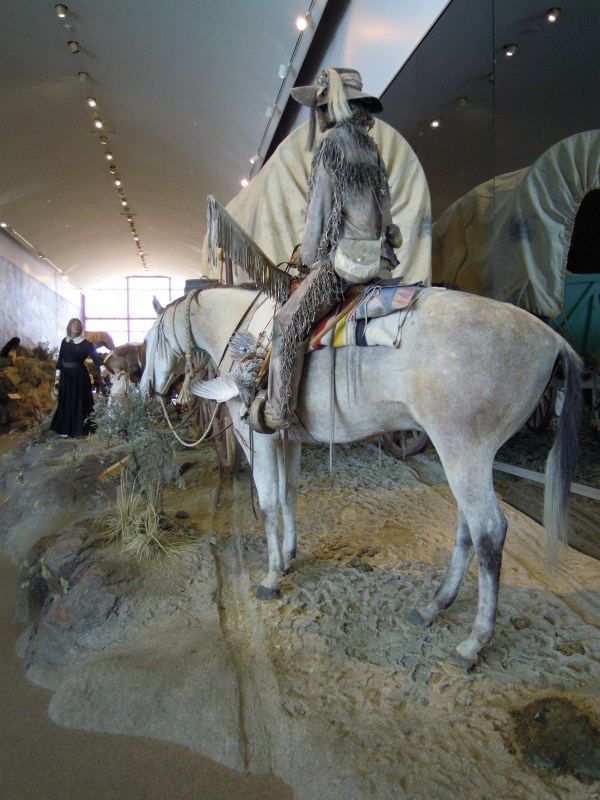
478-ft-hall466-diorama-horse

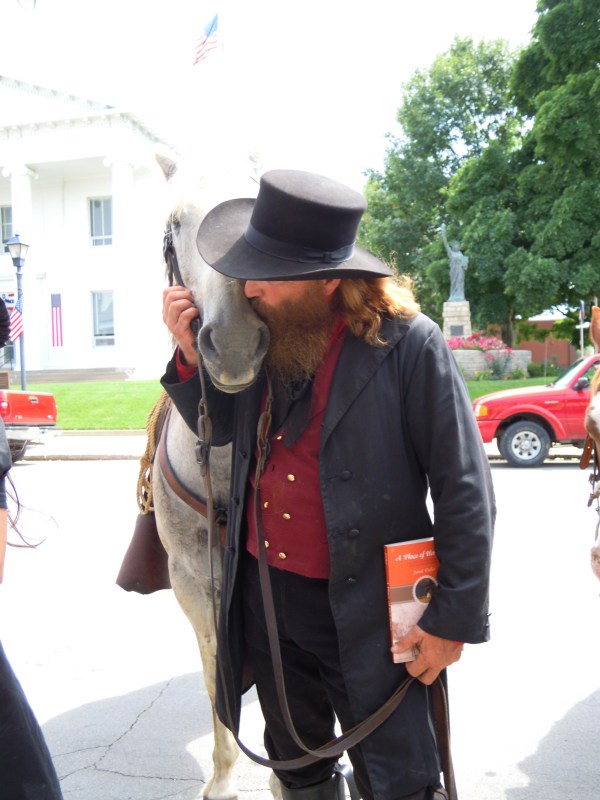
502-painted-wagon-oxen-scotts-bluff-2560-robbie-kissing-toby

600-c-fort-big-gun-signed

COMMENT

Foray Into Florence

So I got on my dusty steed yesterday morning and made for Florence on the Oregon coast for the Florence Festival of Books.

I won’t talk about the accumulation of events that got in the way of an early start, or describe my grumbling over that slow car on the winding coast highway that loomed as the last impediment to my much-desired progress. Could I make it in time to set up before the 10 o’clock opening?

Happily I made it with minutes to spare, although a determined attendee bought both my books before I had entirely arranged my display. She didn’t quibble. Nor did I.

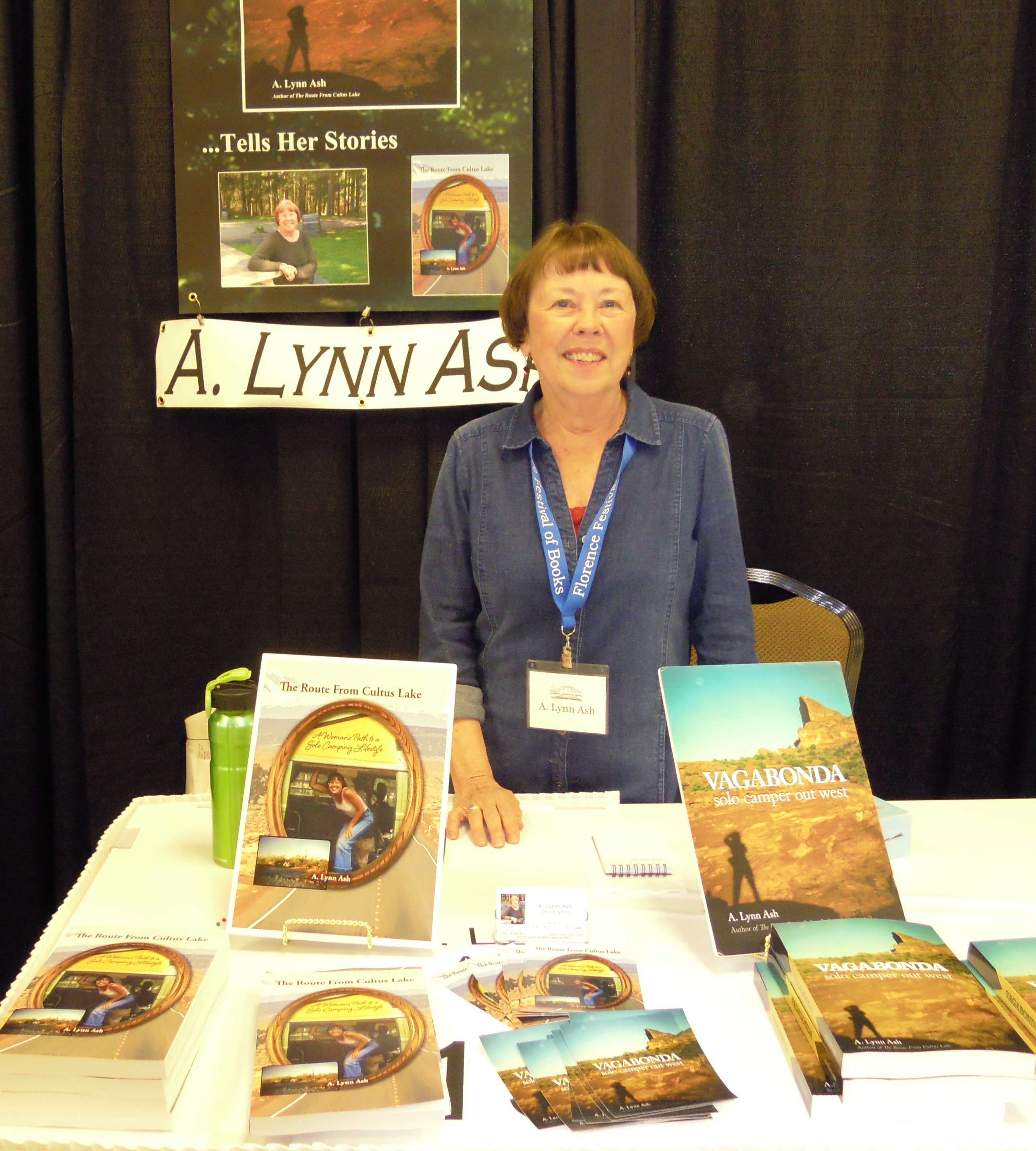
Here we are, my friend Lynn Ash and I, showing our books. We shared a table.

She presented her two memoirs describing her experiences as a solo camper, The Route from Cultus Lake and Vagabonda. I presented my two Oregon Trail stories, A Place of Her Own and The Shifting Winds.

The organizers do a nice job with this event. About 50 individual authors participated, as well as several writers groups and publishers. From 10 o’clock in the morning until 4 in the afternoon we pitched our stories and heard many intriguing tales from people who came by our table, and we signed books for our buyers.

After it was all done, our table cleared, and things packed up, we were ready to kick back.

And I got my clam chowder while watching seals and waterbirds play in the bright-blue Siuslaw estuary as the sun lowered and gilded the Florence bridge. A calming moment before I took my dusty steed on the long, beautiful drive home.

COMMENT

History Lived in Old Oakland

Oakland’s first Living History Day echoed with laughter and story as folks stepped back more than a century for a little taste of the good old days. That’s the historic town of Oakland, Oregon, where the echoes never quite stop. Today as we vendors and exhibitors set up our booths the stage rolled in.

oak-15Oh-oh! Shotgun just had to check his cell phone.

oak-8He did what?

He’s checking his cell. Doesn’t he know? We’re in the 19th century now.

Snort. He’s not quite in uniform yet. Like us.

oak-10


Ah! And like Mr. Tim Mitchell who showed up in an authentic frock coat with genuine beaver hat. Quite dapper.

But wait! Something’s going on down at the Hokey Pokey Jail. There’s a distinguished-looking couple. Why, it’s Mr. and Mrs. Forbes, Lynn and Gordon.

But the sheriff looks downright nervous. Watch out, Deputy. Something might be amiss.

oak-9No. Don’t worry. Everything will be all right. The President and First Lady are here. I did promise, didn’t I? Abe and Mary. Welcome, Mr. and Mrs. Lincoln. What a handsome pair.

oak-12Don’t look now, but the can-can ladies have just sashayed over to the Hokey Pokey Jail and they might have to dance the hokey pokey and turn themselves in–around, that is.

oak-13My daughter Carisa Cegavske snapped this photo of me when she stopped by my booth while covering this rollicking event for The News-Review. I’m happily displaying my books The Shifting Winds and A Place of Her Own.

oak-11oak-18Next to me, in the Pavilion, spinners spun. That’s Chris Gorecki at left and Jana Cunningham below.

Note the old treadle sewing machine behind Jana.

My booth was in the Oakland City Park, so that narrowed my view to only those activities in the park.

Beyond the park, booths lined the streets around town with fur bedecked teepees and a feed grinder at work, a blacksmith, and much much more. The DAR rang their bells and mountain men made loud noises with their muzzleloaders, although given the fire danger they weren’t allowed to create the necessary spark to oak-19fire the rifles.

After hours of clip-clopping around the streets of Oakland, the black-and-white team grew weary. The hostlers made a quick change of horses and the new team brought the stagecoach back around for more riders to take a spin.

Shotgun has long since donned his uniform and not a cell phone in sight.

oak-14All in all, a fun day, and I sold quite a few books. Other vendors had a good day too. I think the Oaklanders may be onto something here.

COMMENT

Living in the Past

Oakland, Oregon, will take a bow to its vibrant past tomorrow, Saturday, September 17, from 9 am to 5 pm when the historic town celebrates Living History Day with a focus on the 19th century.

I’ll be there with a table selling my books The Shifting Winds and A Place of Her Own, both set in the 19th-century West. People will get into the spirit of things by donning the typical garb of the day, as shown in these pictures I use to illustrate my characters from Shifting Winds.

25-jennie-brushed-2-titleThat’s m15-ft-vanc-alan-titley protagonist Jennie at right, whose face you can imagine yourself. The young woman’s father brought the family west over the Oregon Trail in 1842, much against her wishes.

The dapper fellow in frock coat and top hat represents the British Hudson’s Bay Company clerk who asks to court her despite rumors of war between their countries.

RawScan.tif, Mon Aug 24, 2015, 9:41:36 AM, 8C, 9000x12000, (0+0), 150%, Repro 2.2 v2, 1/20 s, R60.8, G31.1, B45.6The mountain man, a painting used by permission from artist Andy Thomas, represents the American who aims to shatter Alan’s plans for Jennie and British plans for Oregon.

Their clothing would be typical for the period Oakland plans to celebrate tomorrow.

Oakland history as a town goes back to 1846 when Rev. J. A. Cornwall came west and with another family took refuge from a fierce storm. They built a cabin on Cabin Creek near where Oakland grew up, then left in the spring to continue to their destination in the Willamette Valley.

The town of Oakland was laid out in 1849, first surveyed town in the Umpqua. When the railroad bypassed the old town in 1872, Oakland moved closer to the rail line and the new town became a commercial center.

When my great-great-grandparents, Garrett and Martha Maupin, moved to Douglas County he became a hauler, carrying goods by wagon from Oakland to Scottsburg, where things could be shipped out by boat. Garrett had just left Oakland on one of these treks when a load of wool turned over on him and smothered him. The details of that fateful day are told in my book, A Place of Her Own.

Morning Dresses Sept. 1803Somehow the small town of Oakland always kept one foot in the historic past, even before the reviving of historic structures across the country became popular. So it seems fitting for Oakland to celebrate its colorful past with a Living History Day. Oakland has been living its history for as long as I can remember. I have an Oakland address, although I confess I don’t often visit the town. It’s a little out of the way to get there.

Bypassed yet again, the second time by the Interstate Freeway, Oakland was left to dream of bygone days. The old buildings were maintained, perhaps for lack of need to create bigger and plainer and infinitely uglier new ones. You can walk down the street and feel the past all around you as the charming structures of an earlier time smile back at you.

So pull out the best representation in your closet of something folks might have worn in the 19th century. Ladies might choose something from the slimmer skirts of the early years to the simple calicos of pioneer times to the wide hoops of Civil War and later days.

1800s-wide-skirtsGentlemen, you could choose anything from frock coat and tall hat to buckskins, to jeans and shirts–and yes, they did wear jeans, sometimes called “janes,” even before Mr. Levi came on stage.

Come live in the past with us. I do that often when I walk into my stories. Such an intriguing place to explore, the past. Oakland will have spinning and weaving, blacksmiths, a trapper encampment, Fort Umpqua muzzle loaders, butter making, chuckwagon cooking, children’s activities, and more.

Abe Lincoln will be there. Who’d have guessed? And what’s that? Can-can dancing? Oh my.

Minter, Harold A. Umpqua Valley Oregon and Its Pioneers. Portland, OR: Binfords & Mort, 1967.
Except for Andy Thomas’s painting of the mountain man, all photos on this post are from antique fashion plates.

COMMENT

Preserving Martha’s Farm

kellogg-fire-robin-photoRobin Loznak Photo

A fierce hot August led to brittle dry hills where my great-great-grandmother Martha Maupin bought her own farm almost 150 years ago. On a neighboring hill an unknown spark lit the tinder yesterday, and flames soon swept across 60 acres less than a mile from the edge of the property–about a mile and a half from my house on this family farm.

My kids and I happened to be in Eugene, Oregon, where my grandson Alex Loznak is one of 21 plaintiffs who are suing the government to demand effective action to combat climate change. In his speech on the federal courthouse steps after the hearing Alex said, in part:

Today my great-great-great-great grandmother’s legacy is threatened by the changing climate, by droughts and fires and heatwaves that threaten to undo all of the work my family has put into our land. So I’m standing here to demand that our federal government act with the same courage and vision that my ancestor Martha employed, and preserve our planet just as my family has preserved our farm. [My bold]

alex-at-sept-hearing-robinRobin Loznak Photo

Later in the afternoon we were sitting outside a restaurant near the courthouse with other supporters of this case when my son-in-law Robin, who took these pictures, noticed a story on his cell that there was a fire on Highway 138 close to the family farm. He and my daughter Carisa had to take Alex to the airport to go back to New York where he’s a student at Columbia University, and I headed for home, not knowing what I would find.

On the long drive from Eugene I easily imagined many scenarios and contemplated what I would retrieve from my house if I was able to reach it. What was important? My computer which has all my work on it. My daughter’s films and puppets. Not much else. Our work.

As many of you know, Martha’s story was the subject of my book A Place of Her Own. This is the ancestor Alex is talking about, and it’s her farm, now mine, that stands so close to the reported wildfire. She purchased this in 1868 after her husband was killed and she needed a way to care for her family. It’s the Martha A. Maupin Century Farm, one of the few Century Farms in Oregon named for a woman. If I can hang on another year and a half it will be a Sesquicentennial Farm. But what if flames ravaged its resources?

kellogg-fire-robin-2Robin Loznak Photo

As I approached the roadblock at the Kellogg bridge, my breath nearly stopped. Lines of flame rose on the peaks straight ahead and far to my left. I learned firefighters had put out the fire on my side of the highway, and it had spread westerly. They let me head for home. I watched the scene from my kids’ house and then my own as the sky grew dark. A stunning view. Helicopters poured water from the Umpqua River and air tankers dumped fire retardant. Late that night the billowing flames had been reduced to twinkling embers, like golden stars dropped from the sky. I went to bed and slept.

Thanks to the fine work of the brave firefighters of the Douglas Forest Protective Association and other local responders the fire has been contained. I woke to quiet. Thin smoke drifted above a darker swath on the hillside.

My grandson’s words echoed. “Droughts and fires and heatwaves . . .”

Now, in the afternoon, a helicopter flies by on its way to the site. Smoke still rises. The throb of helicopters continues. I remain watchful.

COMMENT

Fort Umpqua Post Script

So, what if history got it wrong?

After last week’s rollicking Fort Umpqua Days celebration, I take a long look at our sturdy reconstructed fort on the Umpqua River in Elkton, Oregon, and I recall a question from one of the customers who came by my book-selling booth during the event.

“Is Fort Umpqua in your books?”

I had to say no, but it might have been–if I could have reconciled sources.

Fort Umpqua Gate

Muddied waters

My issue arose from the date Fort Umpqua fell. History has an answer, but it seems a little murky to me.

For starters I’d like to quote Stephen Dow Beckham in his Land of the Umpqua, a fine presentation of local history published in 1986. On this subject of Fort Umpqua’s demise he writes on page 58:

The fort burned on November 15, 1851, while the commander or chief trader, Johnson E. King was at Fort Vancouver. King had just brought in his annual load of furs and was ready to leave with fresh supplies for the Umpqua when word of the disaster came by letter. The company kept up three more years of trade in southwestern Oregon, presumably working out of an outbuilding at the site; then it terminated operations. [My bold.]

Beckham sources his statement with a letter in the HBC archives written December 20, 1851, by a John Ballenden to Archibald Barclay. Ballenden was an HBC officer briefly posted at Fort Vancouver to help wrap up Company affairs there after the boundary settlement that gave the United States the land. Barclay was an HBC Secretary in London.

But what if history got this wrong?

Ft.Ump.gardens-2 (2)My experience in researching these early periods has shown me that history can be difficult to pin down. Even contemporary accounts don’t always agree.

That word presumably in the above quote gives me pause. Did assumptions lead to wrong conclusions?

A couple of things have come together to make me question this.

What did Martha know?

I have access to an account that disagrees with accepted history. It comes from Florence McNabb, the granddaughter of Martha Maupin, whose story I tell in A Place of Her Own. Florence wrote a 75-page manuscript of Maupin family history which I used extensively in writing Martha’s story. But I didn’t use one of Florence’s vignettes because it disagreed with history. To give a timeframe for this, Martha and Garrett moved from Lane County to Douglas County in December 1864 and rented a cabin on the Henderer place near Elkton until sometime after Garrett’s death in 1866, well after the supposed demise of Fort Umpqua.

Yet Florence writes:

It was while they were still on the Henderer place that there was an Indian scare and all of the families were told to come to the Umpqua Fort. The fort was built on the banks of the river in the summer of 1836 and was the early trading post of the Hudson Bay Co. It was well built with logs standing on end to form a stockade with several log cabins inside. 434-fort-umpqua-interiorOriginally the land owned by the Hudson Bay Co. comprised 640 acres and several dozens of stock. . . .

On this occasion the families remained in the stockade and the well-armed men went to their respective homes to tend to their livestock. The Indians never did attack but they could be seen early in the mornings and again in the evenings. . . .

After about a week, shut up with children and short tempered mothers, they decided to return to their own homes, coming back to the fort to spend the night. . . . One lady remarked that she would rather fight Indians than to spend another night with that bunch.

“This was told to me by my mother,” Florence wrote, “who had heard it from Martha Maupin.” Yes, Martha.

Now, that could have made an interesting scene in my book, but I didn’t want to go against history.

British habits

ShiftingWinds_EcoverA new thought began to stir, arising out of my own recent research into the history of Fort Vancouver, the British Hudson’s Bay Company headquarters of the Fort Umpqua outpost. Prior to my presentation at Fort Vancouver this summer of my new book The Shifting Winds I went back into the two huge volumes that describe research the preservation team did in order to reconstruct an authentic replica of this British headquarters.

Ft.Vanc.Report (2)I was amazed at the continual construction going on during the years the British maintained Fort Vancouver. The first Fort Vancouver was built in 1824-1825 on the hill above the Columbia river bottom. When the British changed their minds about that location in 1829, they just picked it up and moved it a few miles closer to the river. When that new fortress proved to be too small they just moved the walls over, added to them, and doubled the size.

When the first home of the commander began to crumble due to decaying roof and walls, they tore it down and built a new one in a better spot within the walls.

Fort Vancouver Big HouseThis is the commander’s house, the Big House—no small cabin to be thrown up in a few afternoons.

613.Ft.Vanc.McLoughlin Sitting RoomAnd the interior was exquisite.

Ft.Vanc.stockadeOther buildings were routinely torn down and replaced. And those picket walls kept moving—a little bit here, a little bit there.

alan-cropIt seems the British Hudson’s Bay Company men would rebuild at the drop of a tall beaver hat.

Why not Fort Umpqua?

So if tiny Fort Umpqua burned down and the Hudson’s Bay Company still had business to conduct on the site, why wouldn’t they follow custom and rebuild that? Ballenden’s letter to Barclay, the author Beckham’s source above, was written a month after the fire and would not reflect Company decisions afterward. My family’s story (told by Martha herself, no less, although received secondhand) suggests a fort still stood when they sought refuge sometime between 1864 and 1866.

Accepted history also tells us that the historic 1861 flood took away the burnt remains of Fort Umpqua, leaving nothing. Is this fact or conjecture? Is it possible that a more substantial fort stood against those flood waters, one that the Hudson’s Bay Company had rebuilt and maintained after the 1851 fire? Up north, when the British finally left their Fort Vancouver headquarters to the Americans, the walls and buildings disintegrated in this wet, rainy land without continual maintenance. We have photos and reports to substantiate that. Was this the more likely end to Fort Umpqua also, as new American owners no longer needed this former British outpost?

Unraveling the story threads

Book cover - A Place of Her OwnSmall tidbits of information—notes in letters and journals—often guided the team that reconstructed the elaborate Fort Vancouver headquarters. If I had believed in Florence’s tidbit, I could have brought the Fort Umpqua outpost into my story and had one more tense scene for Martha. And I could have smiled and told my customer, “Yes, yes, it’s in this one.”

Just saying.

Beckham, Stephen Dow. Land of the Umpqua: A History of Douglas County, Oregon. Roseburg, OR: Douglas County Commissioners, 1986.
McNabb, Florence Maupin. The Maupin Family. Undated, unpublished manuscript.

COMMENT

Book Event Explores a Living Past

Story and tangible history came together when the Friends of Fort Vancouver and the National Park Service hosted me for a book event at the remarkable re-creation of the historic Hudson’s Bay Company trading post, Fort Vancouver.

Fort Event Big GunThe event highlighted the actual reconstructed fort with a tour led by Dr. Robert Cromwell, Chief Ranger and Archaeologist, speaking behind the big gun here. Two large cannons stand in front of the elegant Big House, home of the fort’s commander in the days of my book, The Shifting Winds. During the tour I offered a few words on certain scenes from the book which took place at the fort in 1842 and 1843. I’m in the white hat. Photo by Robin Loznak.

The tour brought us into the fort’s living history, and Dr. Cromwell was great. I love this place that makes the past live. I feel a deep connection because my first visit here years ago inspired me to write The Shifting Winds, and making the past live is what I try to do with my historical novels.

Fort Event FlowersDr. Cromwell talked about the impression the house would have made on its 19th century visitors, such a grand structure with its expensive white paint and the big guns facing the front gate, although he noted the guns were spiked so couldn’t fire.

Nevertheless, the effect was no doubt intended to show the power of this British fur trading company that essentially ruled over Oregon at the time of my story.

On this July day the lush grapevines draped over the Big House veranda and bright flowers bloomed in front. On my previous visit in March the canes were bare, and there was no sign of flowers. Now huge clusters of grapes hang from these vines.You can also see part of the arbor in the top photo.

Photos taken of the original Big House in 1860 let researchers know that grapevines twined around metal trellises on the veranda that extends across the entire front of the house.

Fort Vancouver Big House (2)The thumbnail shows the house during my March visit before the greenery leafed out. Quite a change, and probably effective for the south-facing house. In winter when they needed more light the leafless vines let the sun come in, but in summer the leaves provided cooling shade.

Our tour proceeded inside the house so the group could see additional settings of the story and learn more about the fort. Then we moved on to the Indian Trade Store and the Fur Store warehouse to get an idea of the real purpose of this fort. The Hudson’s Bay Company officers and employees may have appreciated the protection of the picketed stockade, but the fort never served as a military post for them. The Company came for the furs, particularly beaver, purely a business venture. But it could be a cutthroat business as they competed against the Americans, who also held an interest in the territory.

Fort Event Ranger & meThe tour ended up at the New Office, above, the closest thing to the setting where my character Alan Radford would have worked. The clerk Alan lived and worked in the Old Office, which hasn’t been reconstructed yet. While Dr. Cromwell looked on, I talked about the scene where Alan invites protagonist Jennie to see his workplace during the Christmas Ball at the fort. Through a bit of byplay between these characters, I slip a little information into the story that gives the reader an idea how the fort functioned and how very isolated they were in this wilderness. Photo by Robin Loznak.

Fort Event Lecture 5 (2)My lecture at the Visitor Center featured photos related to the story, this one showing Fort Hall, another reconstructed fort that became a landmark on the Oregon Trail. My thanks to Ranger and Guide Emily Orvis for setting up the AV tech equipment so it all rolled smoothly, and thanks to my son-in-law Robin Loznak for handling the individual photos while I talked. This shot of me was taken by Benjamin Capps with my camera.

Fort Event Mary & meAfter my talk, Mary Rose, Executive Director of the Friends of Fort Vancouver, surprised me with a bag of thoughtful gifts, from a lovely turtle pin that memorializes the Native American label for the fort area as the “place of the mud turtles,” to Jacobsen sea salt from Oregon’s cold waters at Netarts Bay, to a Russian nesting doll acknowledging Vancouver’s many Russian immigrants, a little stuffed beaver representing the target of the 19th century fur traders, and a 100th anniversary pin commemorating the 100-year birthday of the National Park Service that maintains the site. What a delightful gesture! Photo by Benjamin Capps.

Fort Event Signing 4I arrived early, well before planned activities, which worked out. Tourists were stopping by and several bought my books, even some that hadn’t come for the event, and they were pleased to get personalized signed copies. My thanks to Sales Assistant Madya Panfilio for her enthusiasm in recommending my work. Official signing came after the lecture. Photo at left by Robin Loznak.

Mary Rose also asked me to sign additional books, which are available in the Visitor Center Bookstore.

Mary was the one who arranged my presentation at Fort Vancouver. When she learned about my book The Shifting Winds, she immediately became interested. She read the book, appreciated the accuracy and the story, and discussions led to Saturday’s presentation.

Many thanks to Mary for organizing such a wonderful event. She and the staff at the Visitor Center and the fort did a terrific job. Thanks to them all.

As my grandson Alex said, “They rolled out the red carpet for you, Grandma.” Yes, they did.

Everyone made it a wonderful day and I am most grateful.

COMMENT