Another Fine Conference

Just back from a great writers conference in Seattle put on by the Pacific Northwest Writers Association (PNWA). Here I am on the last day with Pam Binder, PNWA President and program director of this annual event. Every year she puts together another fabulous conference with her excellent team.

Pam Binder, PNWA President, conference program director, on the left, me on the right.

When I went downstairs looking for an I-was-there photo to add to my comments on the 2025 conference I was hoping I might find Pam to get her picture, and there she was at the registration desk, happy to oblige. I also wanted to thank her one more time for coming to my rescue in the pitch session.

These conferences offer a chance for authors to meet agents and editors face to face and pitch their projects to them. It’s always upbeat at these PNWA conferences, everybody encouraging each other to do their best. I think that atmosphere starts at the top. An award-winning New York Times bestselling author, Pam knows the business, and she’s always ready to help an author reach the next level.

Bohonagh Stone Circle, West Cork, Ireland

I pitched my newest novel set in ancient Ireland featuring the People of the Stones, those mysterious stone circles and other megaliths scattered across Ireland and Britain’s west coast and on down the Atlantic seaboard.

In my story it’s 750 B.C. and the Celts wouldn’t have been in Ireland yet, but we know where they were–in Hallstatt, Austria, so my protagonist has to go there.

The goal for the author pitching an agent or editor is to get a request for material, a few chapters maybe, or 50 pages, or, best of all, the full manuscript. I’m happy to say I got a positive response from every pitch. But it wasn’t entirely simple.

Imagine the setup. All of the authors who’ve signed up for a particular block of time are led into a room where the agents and editors are sitting behind a very long table. The authors get in line for a person they want to pitch to, and each gets four minutes to describe their project and convince that person to ask for part or all of it. At the end of your four minutes a bell rings and you have to skedaddle because you don’t want to crimp the time for the person in line behind you.

So I was pitching one person and we were having an extended conversation when the bell rang. She handed me her business card and said I could stay a bit to finish the conversation because no one was behind me. But then someone did come up behind and I hurried to leave. I went out into the hall and realized I had no idea what the person I just pitched wanted from me. Maybe she told me but in the confusion I didn’t hear it. Did she want to see any of my work? I didn’t know. So in somewhat of a daze I wandered down the hall to the registration desk, where a man asked if he could help me. I saw Pam Binder looking through some papers and said, “I think I need Pam.”

I told her what had happened. She thought about it a minute, then said, “You need to go back in and get in her line again and ask her.”

Pam didn’t send me. She led me. And with her as my escort I did exactly as she said. The person greeted me and answered with enthusiasm, “I want to see the full manuscript. I want to read this.”

Yay! Now, I’m not giving away names. That’s for later, if it works out in the long run. But pitching is a challenge. Encapsulating your book into a few words that pique a desire to read it. And these positive moments are bits of gold. Thank you, Pam.

With hugs to send me off, Pam took this goodbye picture of me in my signature hat.

Happy. Optimistic. Glad for a few more bits of gold.

On my way home

Seattle Writing Conference 2024

Here I am in one of the hotel’s pleasant courtyards near the end of this whirlwind event, feeling happy about all the wonderful connections I made this time.

Great writing conference in Seattle a little over a week ago. I decided last minute to fly up and attend so I could pitch my new historical novel set in ancient Ireland. I was delighted by the responses from agents I pitched and have now sent off the queries with material they asked for. Fingers crossed. It’s all in the words of course. Hope they love it.

I so enjoy the people at these conferences. Everybody has a story. They are, after all, storytellers. When you meet someone they often ask what you write and you tell the story about that and of course you ask them and hear their story. Attendees also encourage each other. After the pitching begins you share with each other how your pitches went and maybe glean a little information on someone you hope to pitch next. A very upbeat, mutually encouraging atmosphere.

I stopped over in Portland to see family on the way home. One of my daughters just got a new job in Portland and I hadn’t seen the new place yet. Now all my kids are in Oregon for the first time in ten years. I’m so glad. A couple of photos below show views from our walks on a hill overlooking downtown Portland. That’s Mount Hood on the hazy skyline in the second photo.

Looking down to the Portland city center from the heights near Washington Park.

A city building seems to echo the sharp peak of Mount Hood behind it.

PNWA Writing Conference Seattle

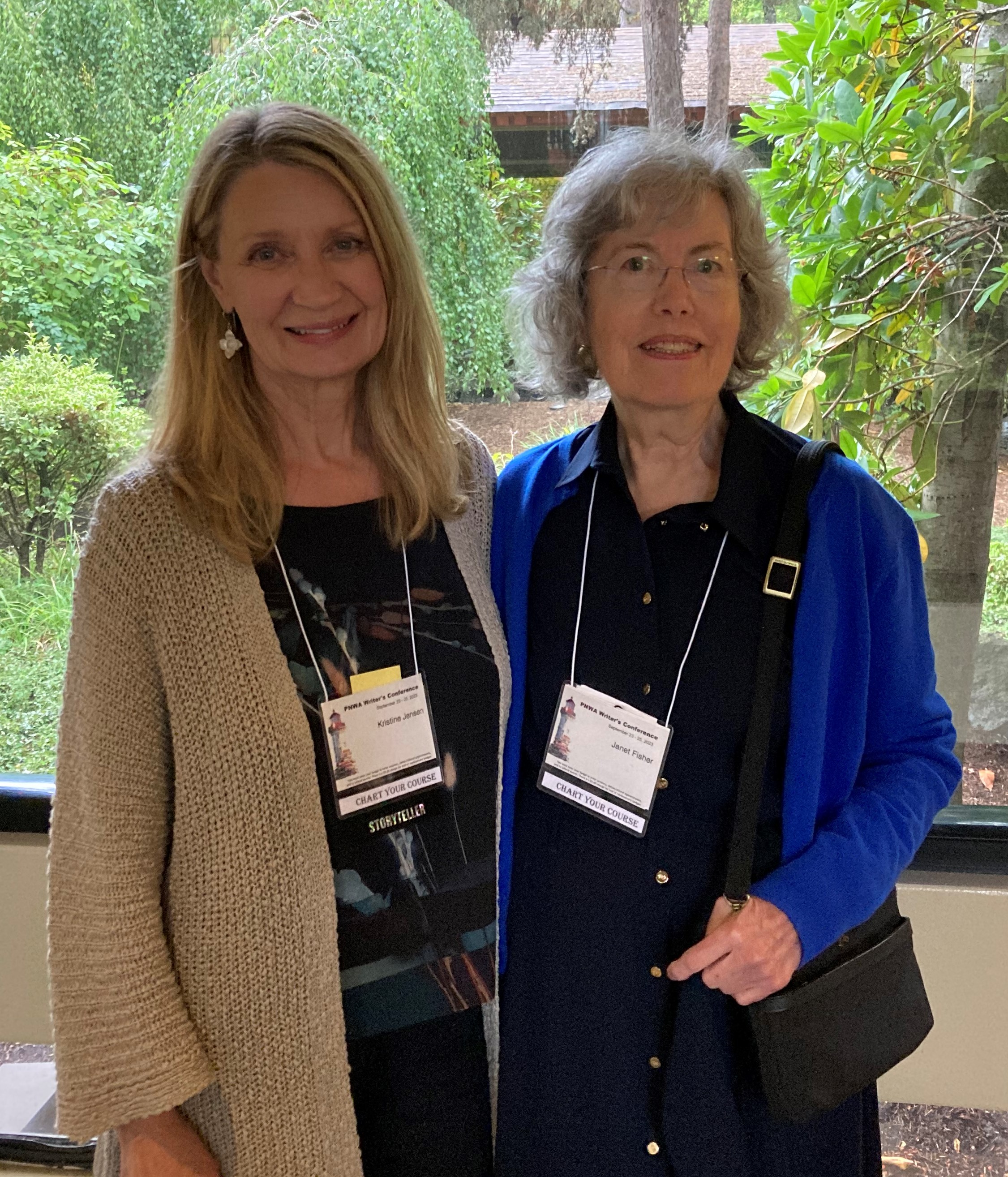
I’m just back from an excellent conference in Seattle where I went primarily for the purpose of pitching agents for my new historical novel set in ancient Ireland. I was happy that my friend from my Eugene writers group, Kristine Jensen, attended also.

Here we are in one of the many halls at the DoubleTree by Hilton hotel with a lovely interior garden behind us.

PNWA (Pacific Northwest Writers Association) always offers a good conference. People are friendly and mutually supportive, but it’s especially nice to have someone there that I know. Kris was also pitching agents for her new novel.

It’s an intense program because stakes are high. We both scheduled two pitch blocks.

These are 90-minute sessions where everyone who has reserved a certain block pours into a large room where agents and editors wait behind a long table. You get in line before an agent or editor you’ve chosen and when it’s your turn you sit across from that person and pitch your work. You have four minutes. Then the buzzer goes off and you hurry to the line of another agent or editor on your list.

I had four agents I particularly wanted to pitch, and I was glad I had reserved two blocks. The first day I only had time for two. Fortunately the second day I was able to pitch the other two. And that’s when magic happened.

This is my oh-my-goodness-she-loved-my-Ireland-setting-and-my-storyline face. I was so happy.

All four agents and one editor asked me for material. That’s the goal. Whether you get everything said or not, you want that invitation to send pages, chapters, or even a full manuscript, as requested. Whatever you forgot to say or decided not to say because of the strict time limit, you can say in a cover letter.

On one of my pitches I had taken the end of a very long line of people waiting to pitch to this particular agent. I was afraid the 90 minutes would end before I got to her. But I eventually saw that I would make it. I stepped up to the blue line where the next author to pitch had to wait. A lady who was a volunteer helping things run smoothly stepped close to me and asked what I was pitching. I said it was a historical novel set in ancient Ireland. She spoke softly because we needed to be quiet, but she let me know how much she loved Ireland and the special places there. By the time the buzzer went off and it was time for me to pitch she had me in a zone of delight over my story.

I sat down in front of the agent and with the confidence just instilled in me told her I had a historical novel set in ancient Ireland. Her eyes lit up. Her whole face. She loves Ireland. She’s part Irish. And when I relayed my story points, my protagonist’s dilemma, the conflict, the tension, she responded with such enthusiasm I was thrilled.

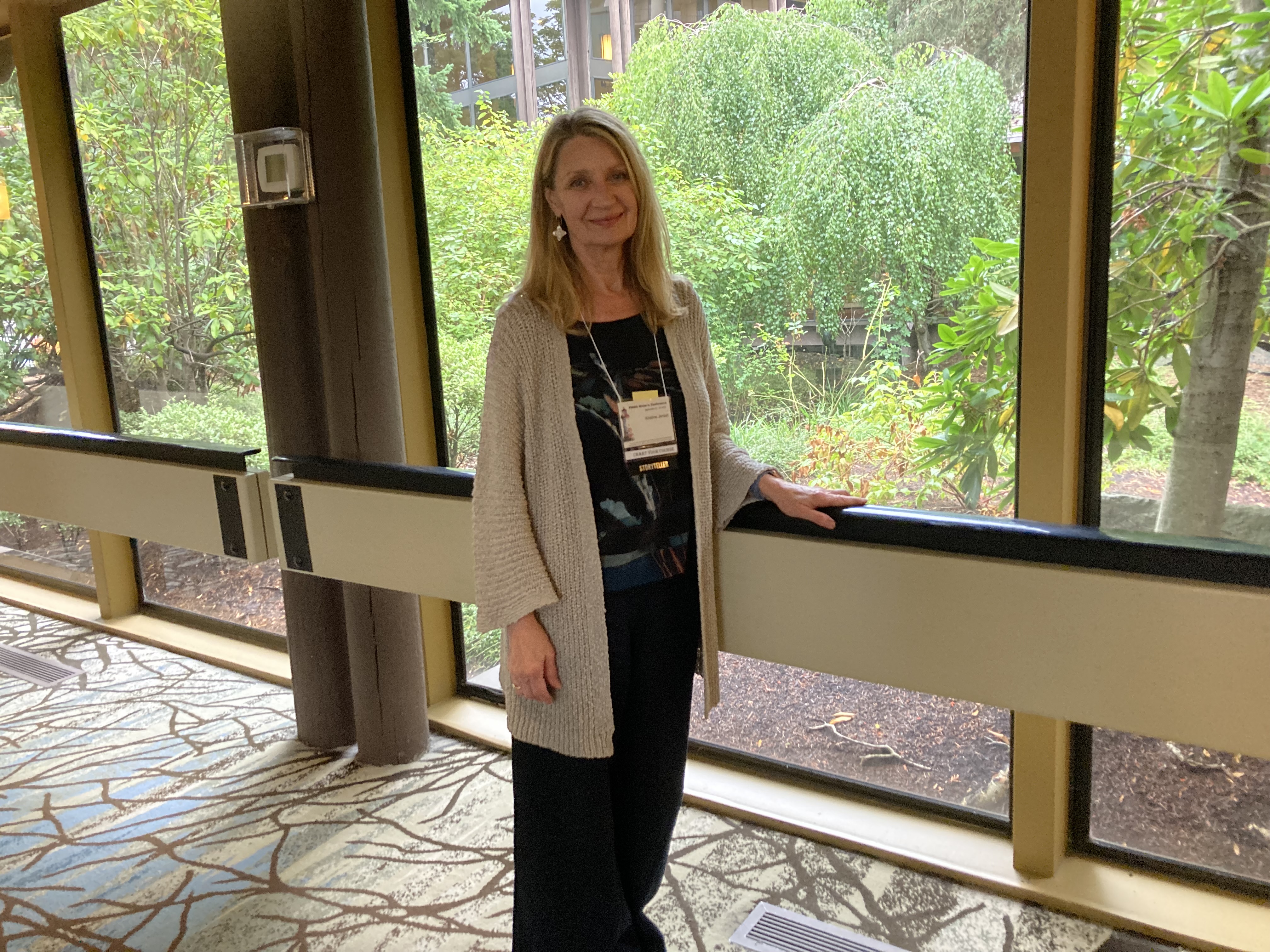
Here’s Kris after the pitching was over, serene in the knowledge that she had made some good contacts for her wonderful story set in 60s South Dakota. She got requests for all her pitches too. We went to a couple of workshops afterward, feeling good and somewhat drained. One of the things I like about this conference is that you meet many authors who are seeking that positive response, and you’re plugging for them as they’re plugging for you. So there’s a lot of “How did you do?” “How did it go?”

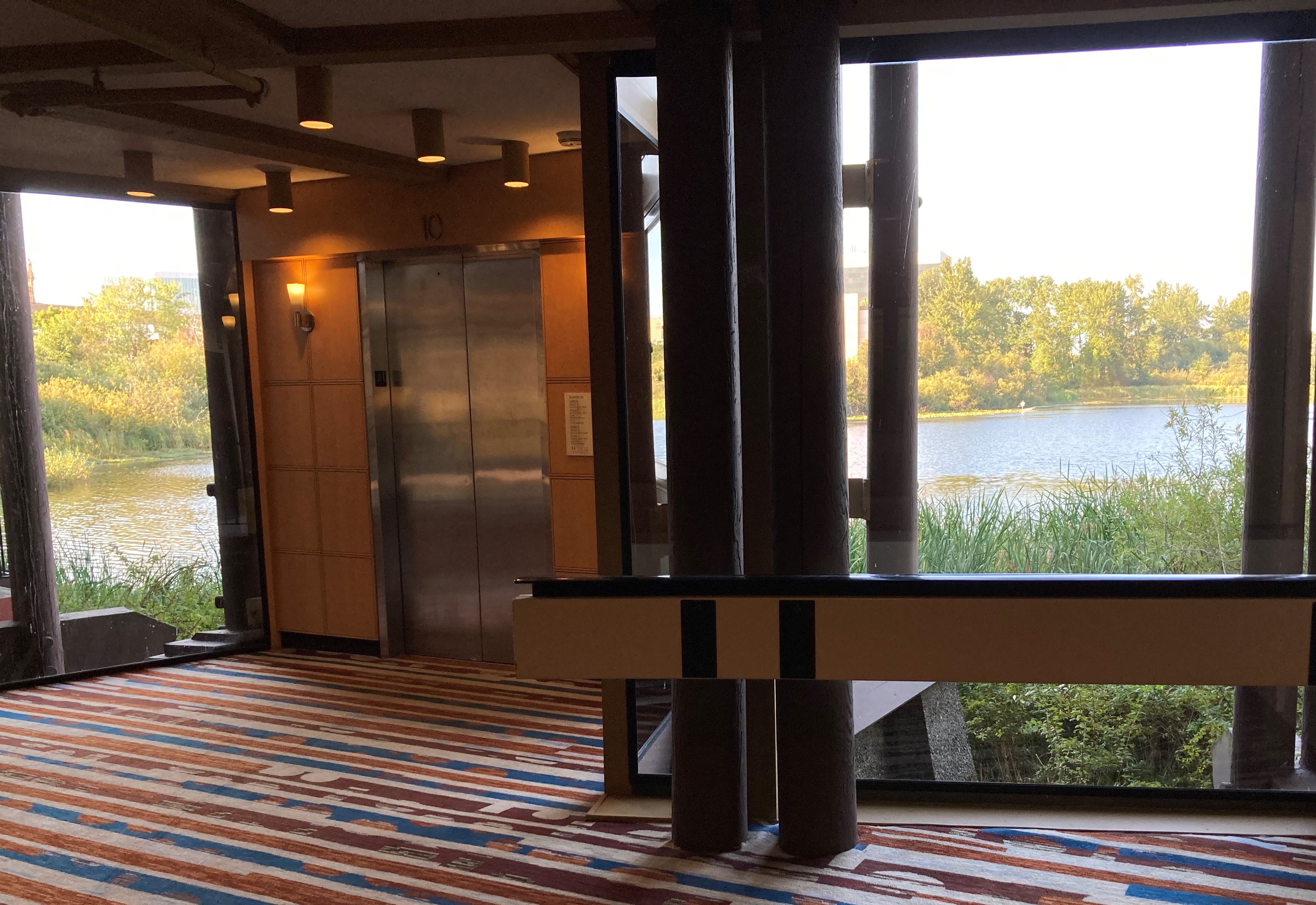
So it’s nice to rest up a bit. My room was about a mile from the lobby, or almost that, but it was a room with a view. The blue peeking through the trees below that building in the distance is a lake.

Here’s the nearest elevator on my trek to the room, which better shows the lake.

And from inside the elevator.

Later that evening I happened to see the volunteer who had encouraged me so much before that pitch. She smiled. “It went well, didn’t it?”

“Yes, it did.”

“I saw her face,” she said. “I knew.”

You never know when you’re going to meet an angel, just when you need one.

Writing a Series

As my followers know, I’ve been writing a series—epic historical novels set primarily in ancient Minoan Crete. The series started as one standalone, now called Beyond the Waning Moon. But I couldn’t leave my people so I just kept going. It became an intergenerational family saga. While each story has its own protagonist and story arc, the overall series also has an arc. A quest. A purpose. The haunting fear of a final destruction. The desperate fight to hold on. The glimmer of hope.

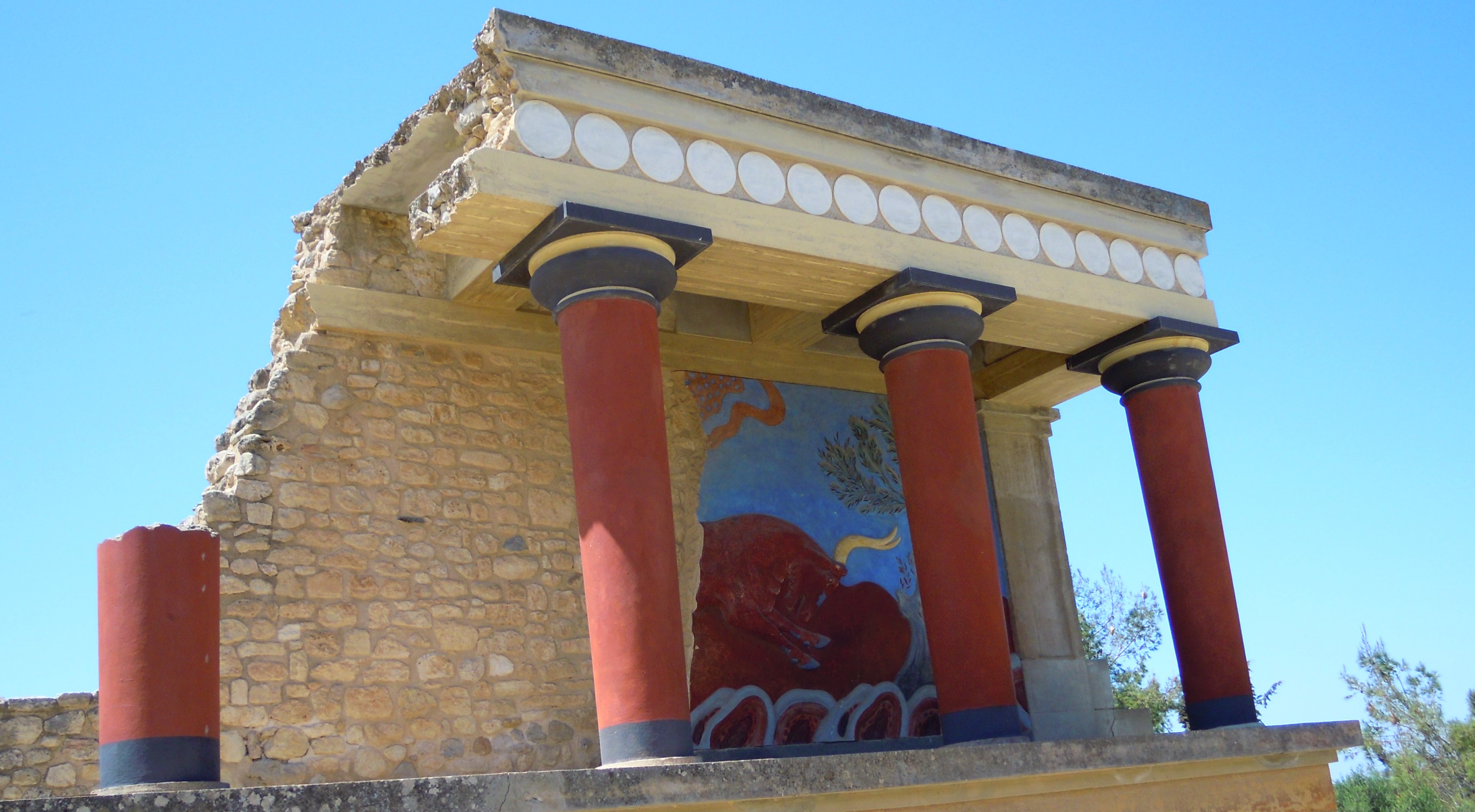
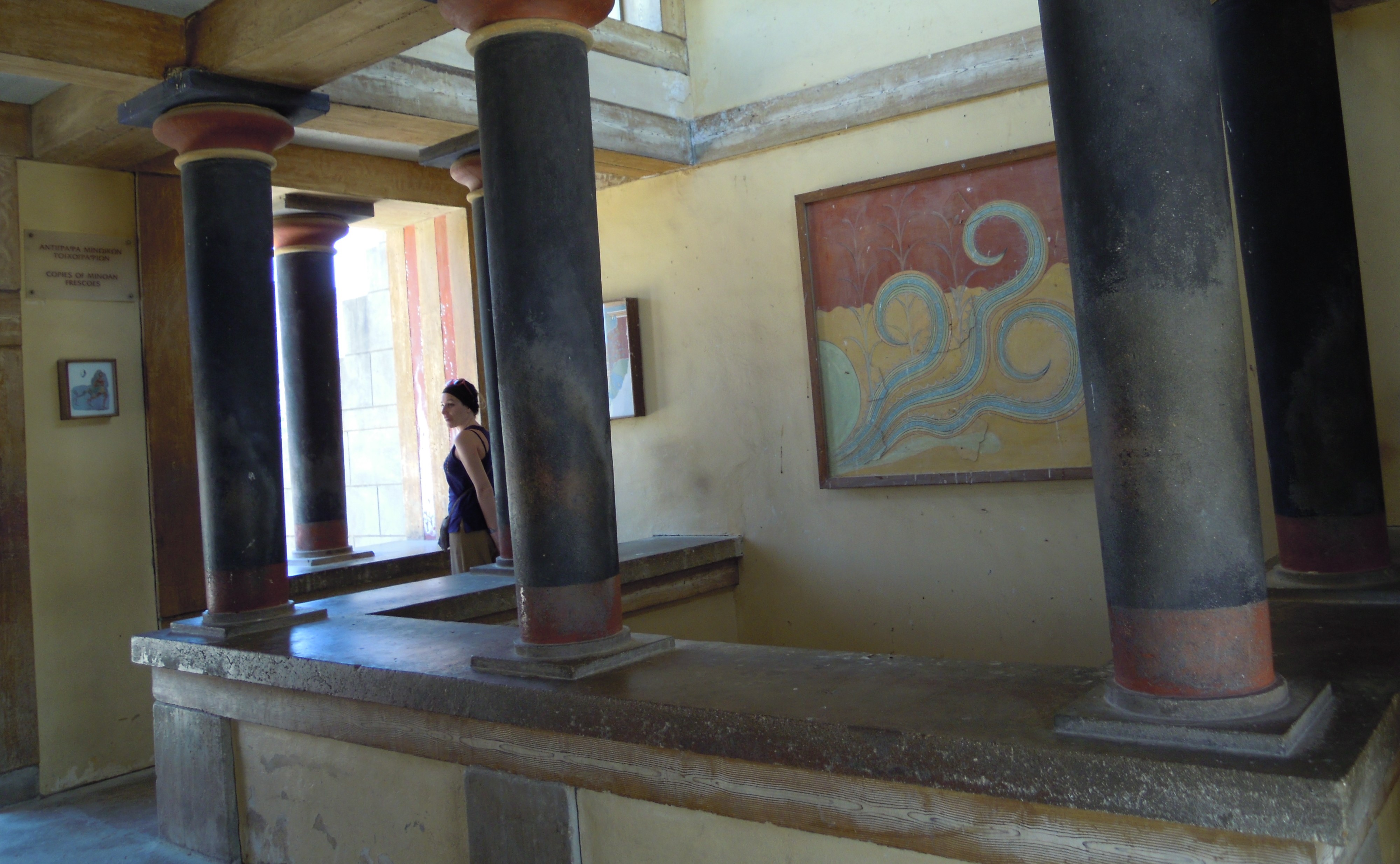
The photos here show the reconstructed hub of Crete, the temple (or palace) of Knossos which was dug out of the earth a hundred years ago after being buried for some 3,000 years. After seeing it and learning of the strong women depicted there, I wanted to immerse myself in that world. And so it began.

The fresco of the charging bull, part of the reconstructed ruins of Knossos, replicates some of the amazing art left by the Minoans of ancient Crete, one of many images that inspired me to write about the people who once lived on this remarkable Mediterranean island, now one of the beautiful Greek Isles.

I named the overall saga the Distant Glimmer Series to reflect the distant light shining into our own times. The stories take place long ago, but they speak to our own lives today.

I’m putting finishing touches on Book Seven.

Up until now I had the impression that in marketing the work, all emphasis should go on the first book. Maybe mention that there are more to come, but don’t stress it. So I haven’t stressed the series aspect.

The columns of the temple of Knossos line corridors and staircases and, as here, one of the many stairwells. The most common columns were a bold red and extended from floor to ceiling, but some like these stood shorter above low walls and were painted black with red capitals at the top and a red band at the bottom.

This September I attended a virtual writers conference, the annual conference of the Pacific Northwest Writers Association headquartered in Seattle. During workshops I kept hearing about the power of a series.

I attended a pitch fest because I planned to pitch the opening book of my saga. Gerri Russell, award-winning, bestselling author of stacks of books, led the session, and when we broke out into smaller groups I felt fortunate to have her as coach for my group. We all gave our pitches for the agents, publishers, or producers we hoped to convince to take a look at our work. I hoped to lead the listener into the world pictured on this post and to bring the Cretan characters alive who walk through my thoughts and dreams in these fabulous places.

Gerri immediately got what I was doing with the book from the pitch I gave. But from that she began to question me to ferret out ways to better present it. Who are my characters? What are their goals, their conflicts? Could I be more personal about their dilemmas? I don’t remember all her specific questions but I quickly saw I needed to dig much deeper if I was to reveal the book’s strengths to the listener.

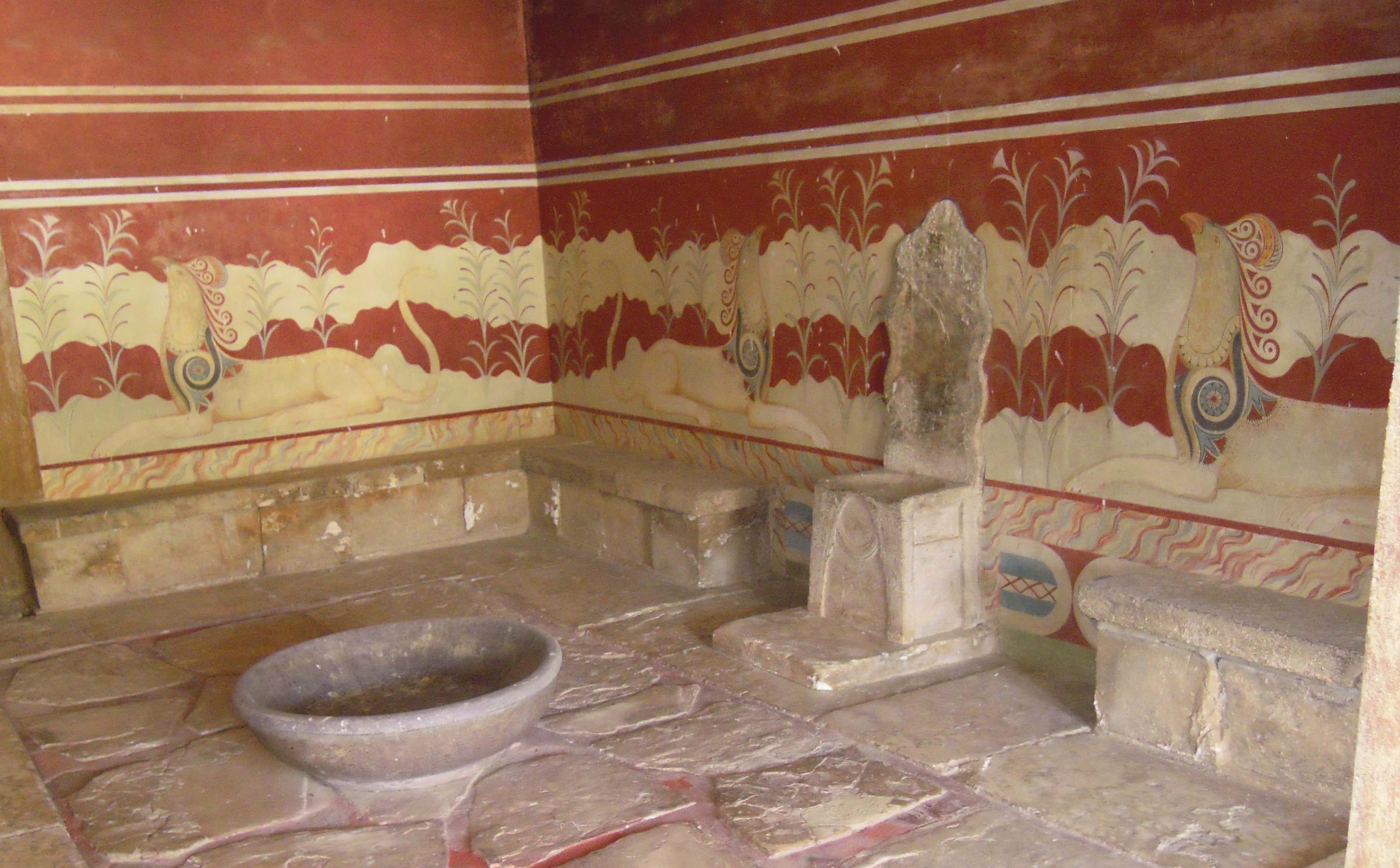
The throne room has been reconstructed with its frescoed griffins and small alabaster throne. It appears the throne would more likely fit a woman than a man, which led some to believe the leader of the people was a woman, a choice I made when I portrayed the leader as the high priestess. However, in my story she does accept a king, a warrior to help protect her people from threatening invaders.

The group members had a chance to try once more, and I bumbled through mine as I tried to rethink it in the moment. Gerri kept going back and forth with me, quizzing me, plucking out salient points. Those salient points gave the pitch new life. Then I hesitantly asked if I should say I have seven in the series written. She burst out with surprise. Yes! Of course! Yes!

So there it was. Emphasize the series. Each book has to stand alone, true. But its place in a series gives it much greater impact. Perhaps the market has changed. Maybe readers are wanting a series more than they did before. Something they can really get their teeth into. In any case that’s what I have. That’s what I’ll promote to those who hold the keys to entry into publication.