Mountain Men to Swordsmen ~ or Swordswomen

As many of my followers know, my writing focus has turned from PIONEERS TO PEOPLE OF THE STONES. My first published book portrays the story of my great-great-grandmother who came west over the Oregon Trail and ultimately settled on the farm I now own. Entitled A Place of Her Own that book opened the door for another pioneer story, this time a novel about a young woman who’s a reluctant pioneer in Oregon. Her first day at their destination she meets two mountain men, the historic Joe Meek and the fictional Jake Johnston. These two mountain men play a pivotal role in the story, The Shifting Winds.

I’ve been writing posts for this blog since 2012, and the most viewed of all my many posts is The TRUE Shifting Winds ~ 3: Mountain Men.
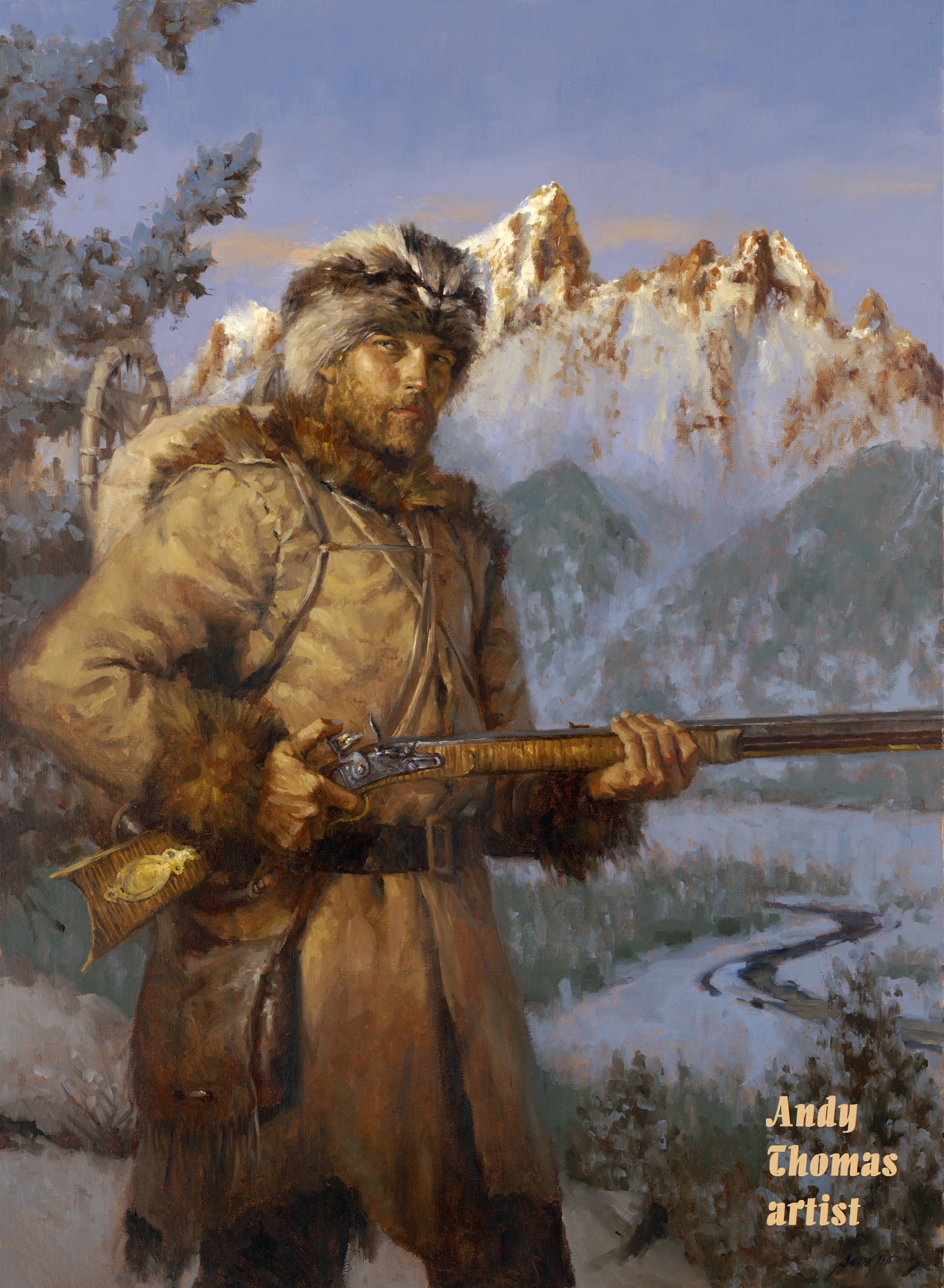
The painting here was done by artist Andy Thomas, used by the artist’s permission to portray mountain men in my promotion of The Shifting Winds. Dubbed by Thomas the “first mountain man,” the work portrays one of the notable American fur trappers John Colter, whose story can be found on the popular above-mentioned post.

What is it about these mountain men that still fascinates folks today? Reenactors and enthusiasts called “black powder men” gather regularly to dress up and shoot their historic black-powder weapons.

The original mountain men came out of the fur trade era of the mid-1800s when Britain and US were vying for the Oregon Territory. The British had a firm grip on the fur trade in the west with their Hudson’s Bay Company headquartered in what is now Vancouver, Washington. The Americans focused their attention on the Rocky Mountains, east of the contested area, and they developed a system where the trappers could stay in the mountains year round and gather at a rendezvous every summer to trade their furs.
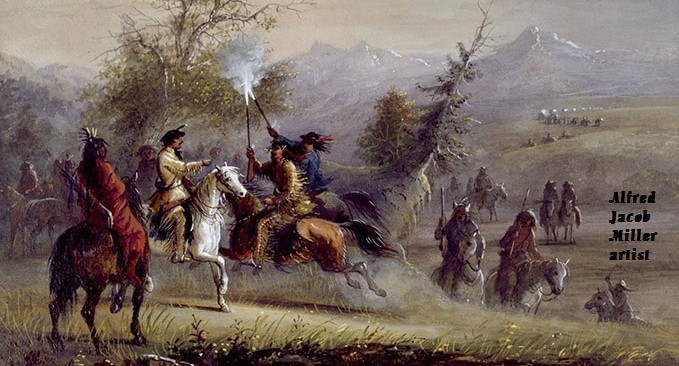
The above painting shows the arrival of the caravan bringing supplies to the mountain rendezvous, painted by Alfred Jacob Miller who went west to document the event. The rendezvous became a raucous time for the trappers who became known as mountain men. A colorful group, they were tough. They had to be to survive. And they enjoyed certain freedoms to live as they chose, as long as they honored the limits of the wilderness and the people who lived there. They made friends with some Native Americans, fought with others. Always on the lookout for ever-present danger.

Since the release of my two pioneer stories my focus has turned to the more ancient people of Ireland, who call themselves People of the Stones for the sacred stone circles and other megaliths they honor.
And in those ancient settings enemies were met not with guns but with swords. And the brilliant sword fighter might be a woman rather than a man.

Shown below is one of the famous Hallstatt bronze swords, the chosen weapon of the Proto-Celts who in 750 BC flourished in their high mountain home above today’s picturesque modern village of Hallstatt, Austria. This sword crafted by one of the smiths in those long-ago days is on display at the wonderful Hallstatt museum.
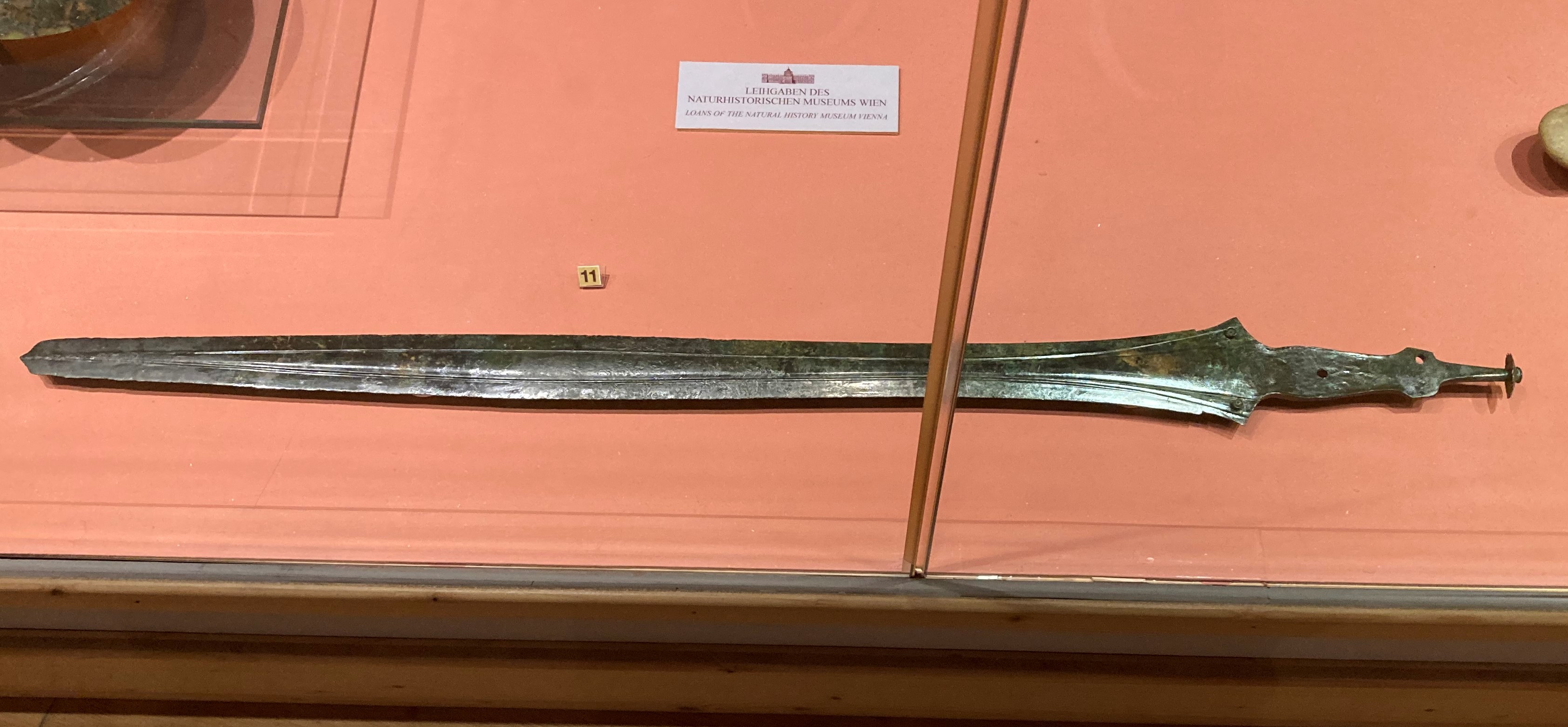
The Irish do love their Celts, but my story opens in Ireland in 750 BC before the Celts could have arrived in Ireland in any numbers, and they probably didn’t call themselves Celts that early. My female protagonist, caught in a dilemma in her Irish homeland, will travel far to seek help and learn the craft not only of making such a sword but of fighting with it too. However, she has to pose as a man there, because her trainer wouldn’t teach her if he knew she was a woman.

Welcome also to my site at Instagram.
Summer Solstice Character Walks In

A year ago I was wondering about the date of Summer Solstice, since it varies from year to year. I checked online and as often happens other related sites popped up. One was the story of an Irish goddess named Áine associated with midsummer and the sun. And as if I had called for her a child by the name of Ainne just walked onto my screen. I tweaked the spelling to give it the sound I heard.

Ainne of Éire has now become the protagonist in the third book of my trilogy set in the eighth century B.C. On this Summer Solstice I celebrate her because I’m now in the process of writing her story. An exciting time when inspiration flowers and a story takes life.

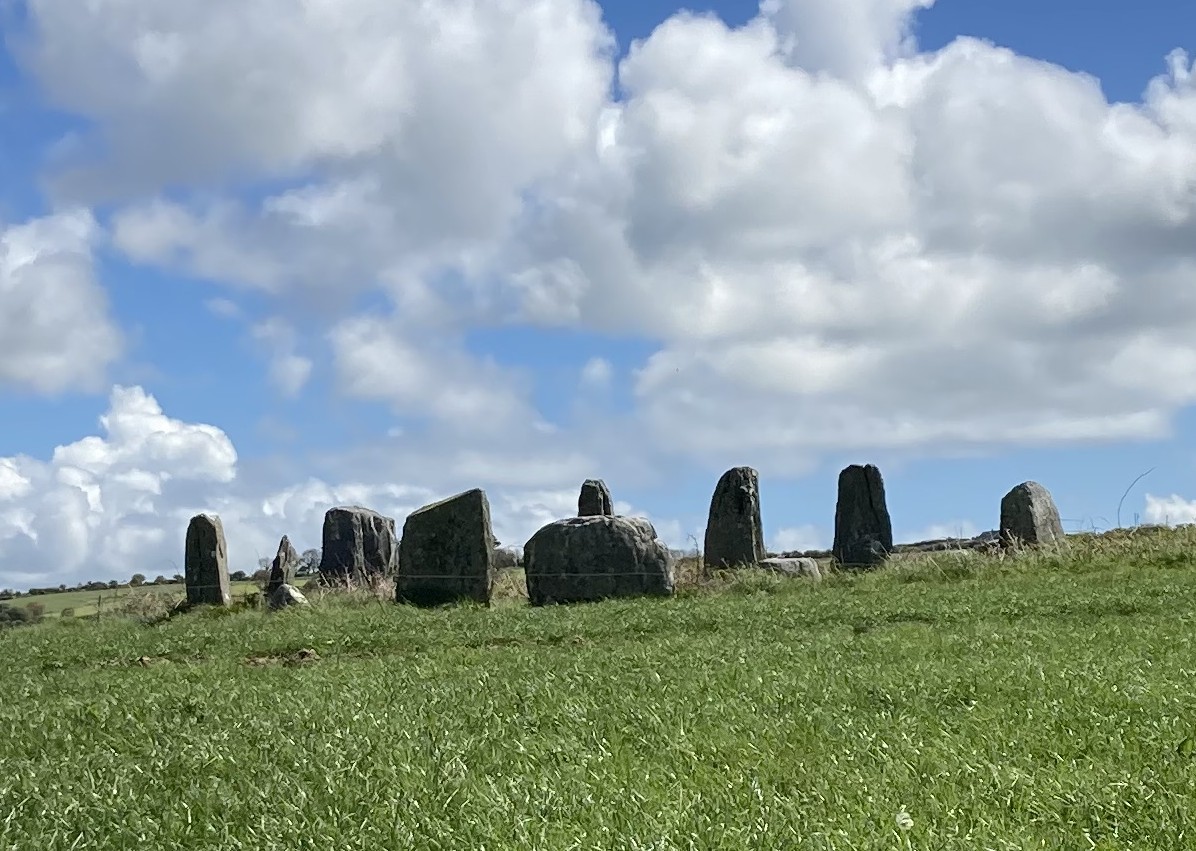
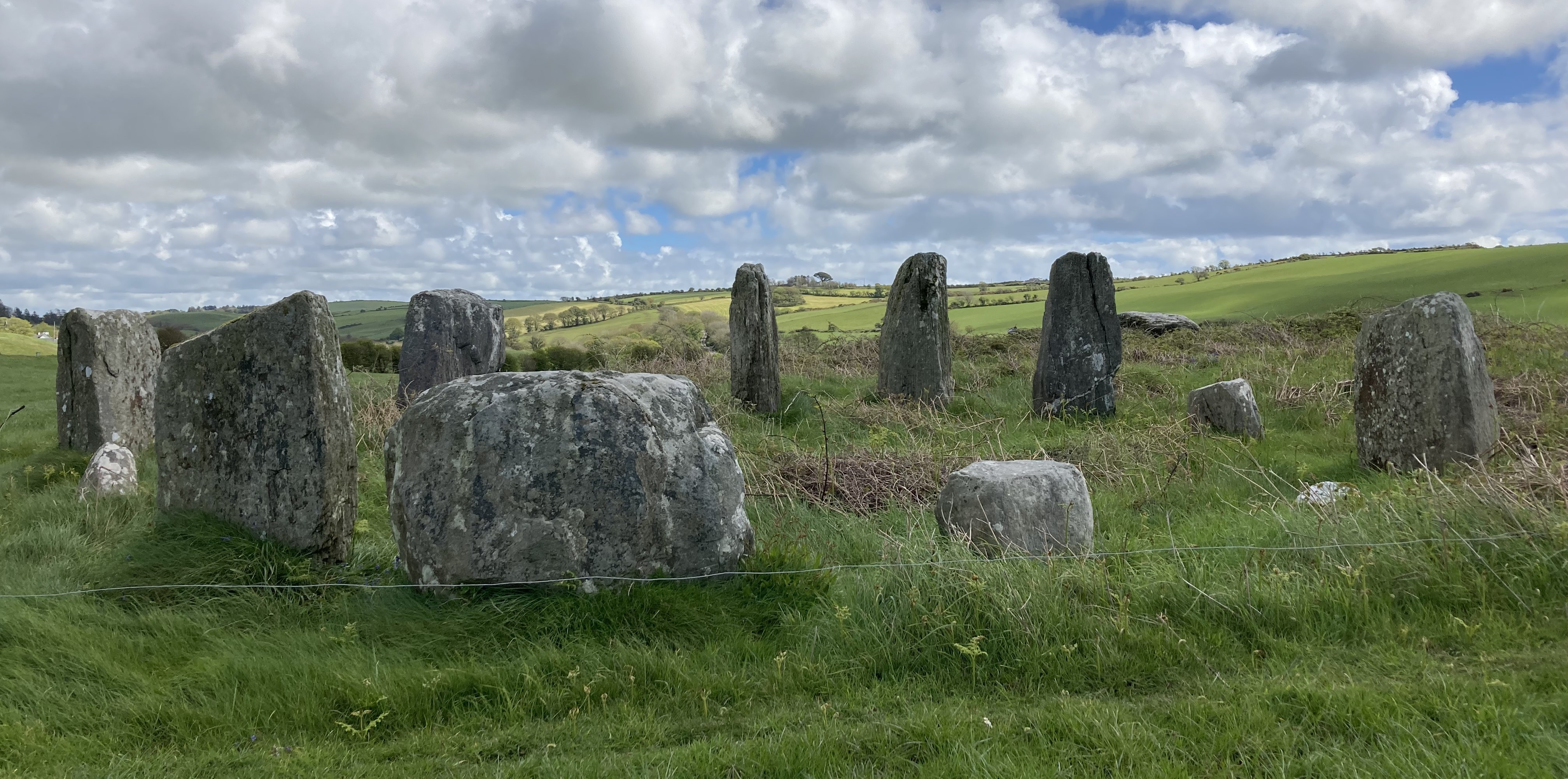
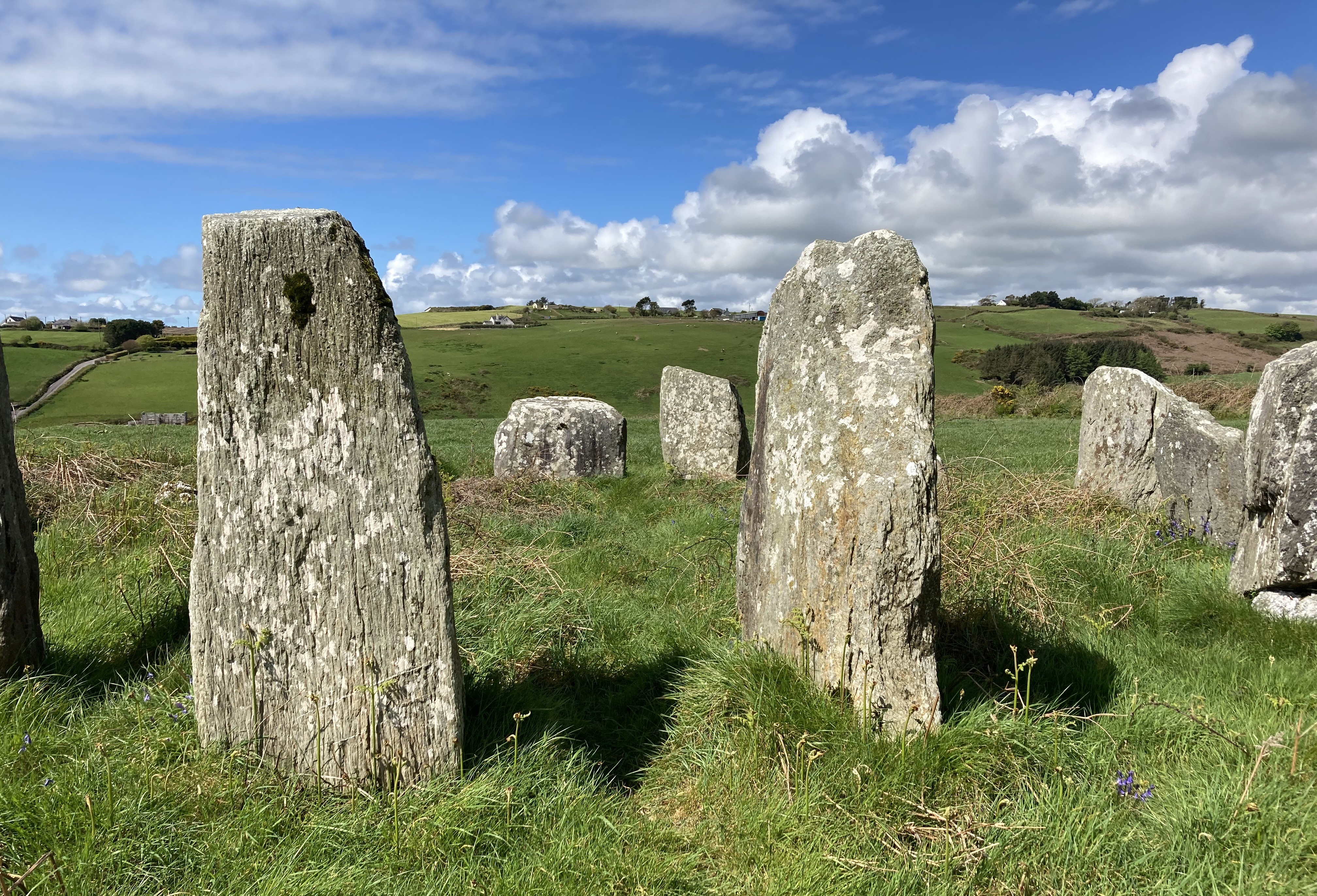
The many stone circles along the Atlantic seaboard, including Ireland and Britain, appear to be situated to mark the passage of the seasons, including the solstices and the equinoxes. Above is the sacred stone circle of Ainne’s clan in the south of Éire, the Golden Eagle Clan, the circle called today the Bohonagh Stone Circle. It’s set on a rise in ground in the middle of a cow pasture. Looking westward you can see through the two portal stones to the aligning recumbent stone opposite.

Ainne’s clan circle in its entirety, shown above as I approached it from the other direction, climbing up the hill, looking eastward, the recumbent stone in the foreground, the portals on the far side.

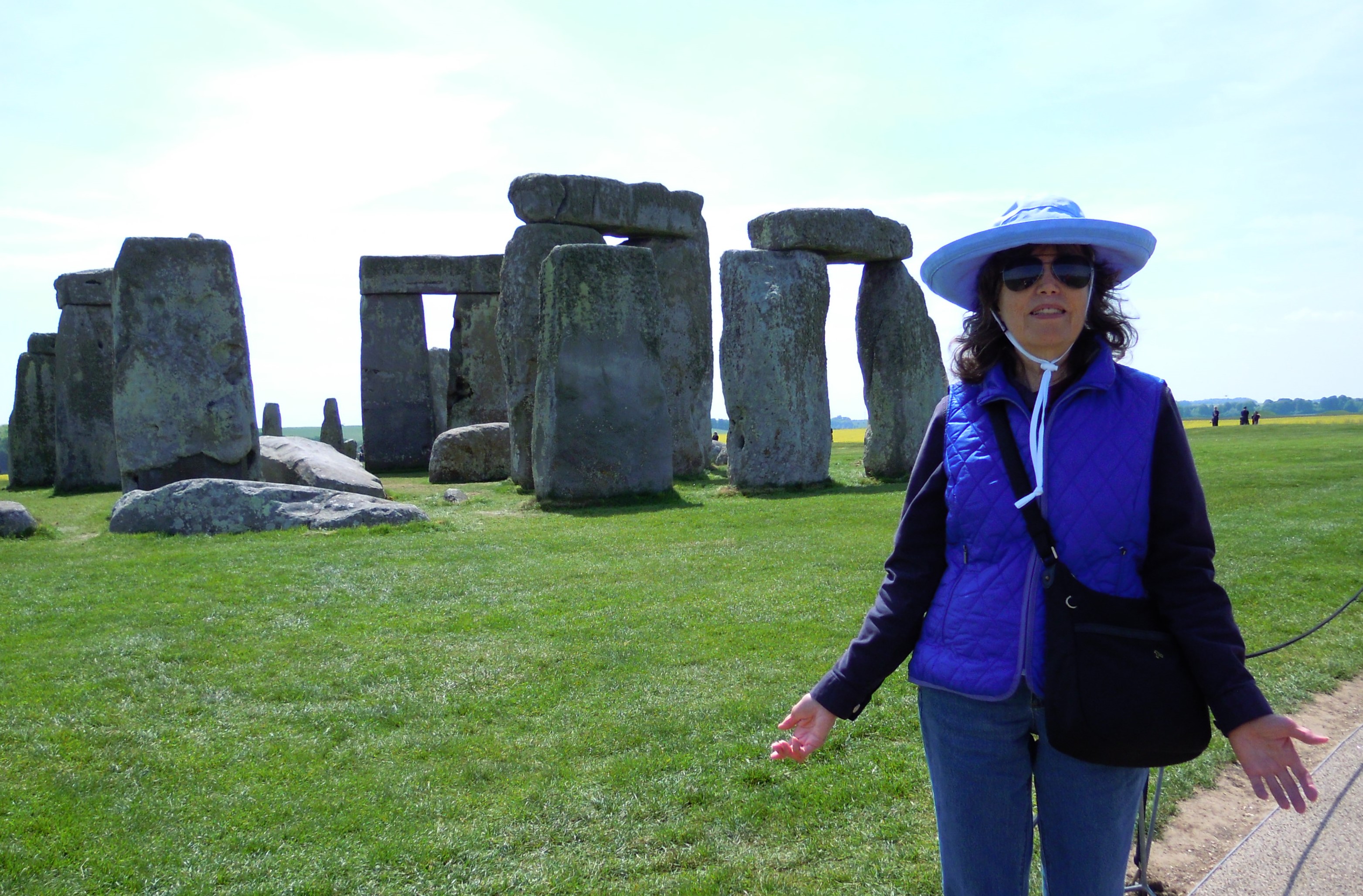
And here I am at the better known Stonehenge on Britain’s Salisbury Plain, shown above. Stonehenge also aligns to mark the solstices. This famous stone circle plays a part in a related series that will follow my trilogy.

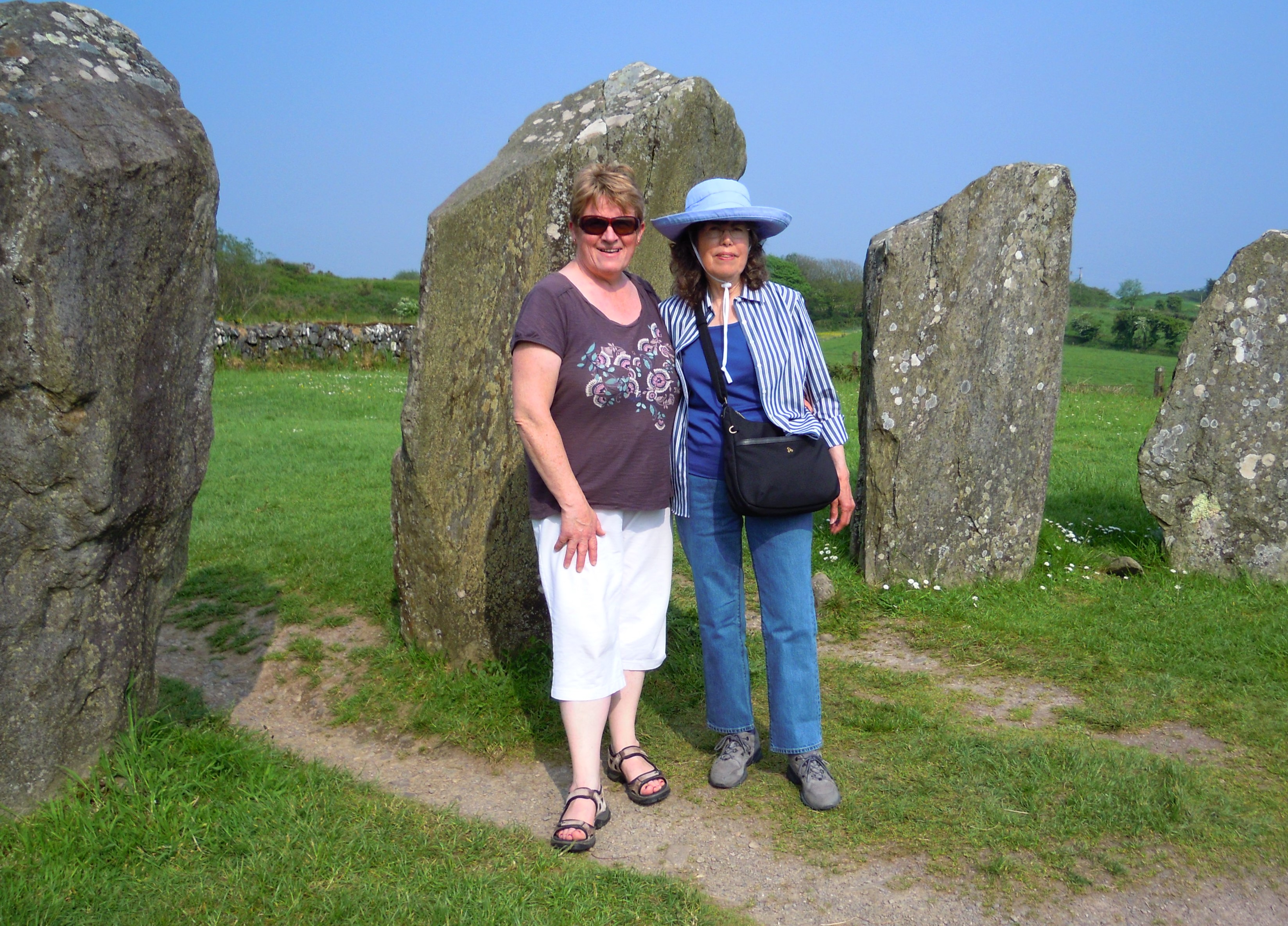
And these, above, in the fine stone circle near Ainne’s, home of the neighboring Red Deer Clan, known today as the Drombeg Stone Circle. I’m here with the wonderful host of the nearby Rosalithir B&B, Catherine O’Sullivan, who drove my friend and I there. This circle is protected under Ireland’s National Monument Act. Near the highway R 597 it is easily accessed and well maintained.

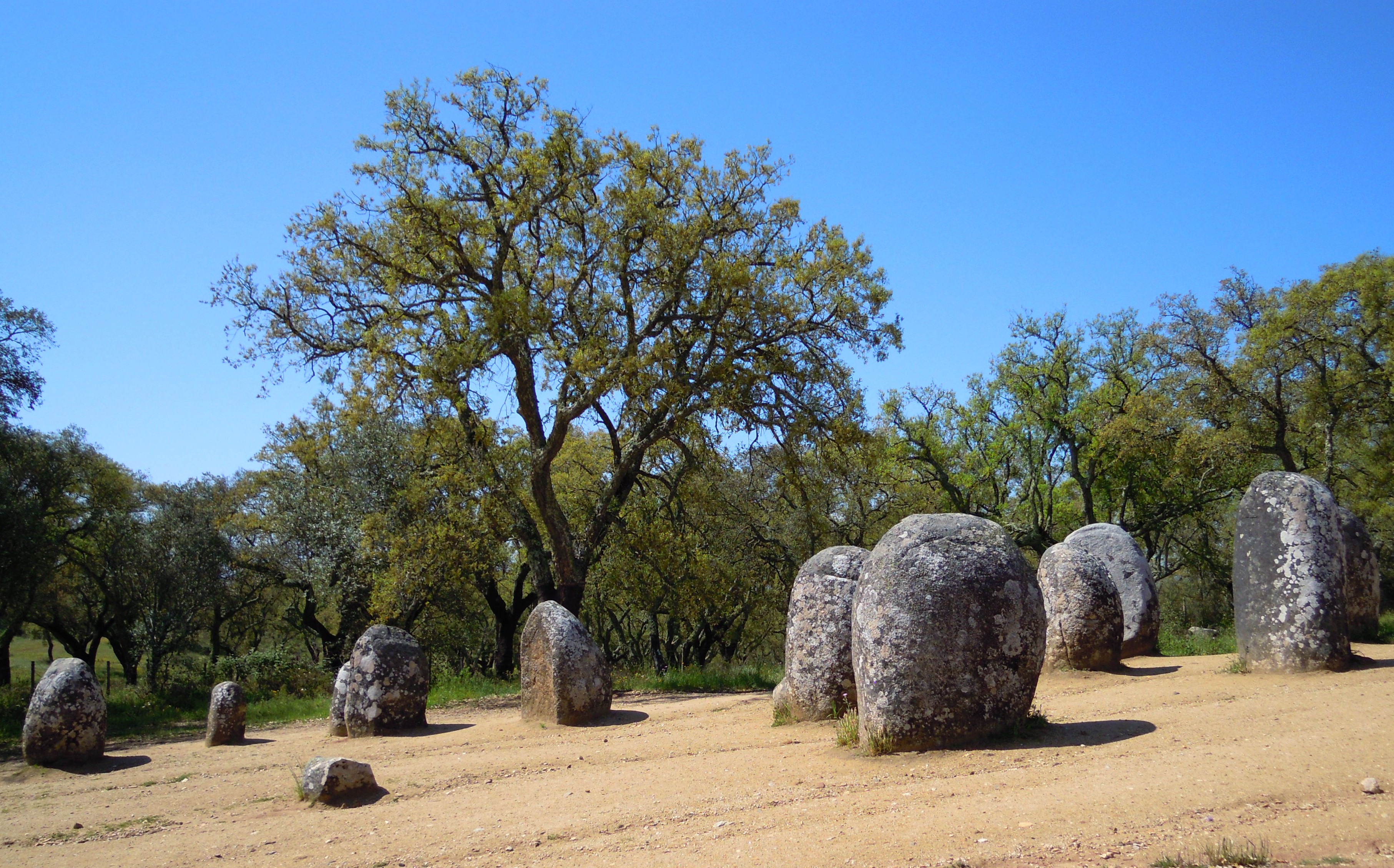
And probably the oldest I’ve seen, above, the Cromlech Almendres in Portugal, perhaps as much as 7,000 years old. This fine circle in a cork oak forest also appears in one of my stories.

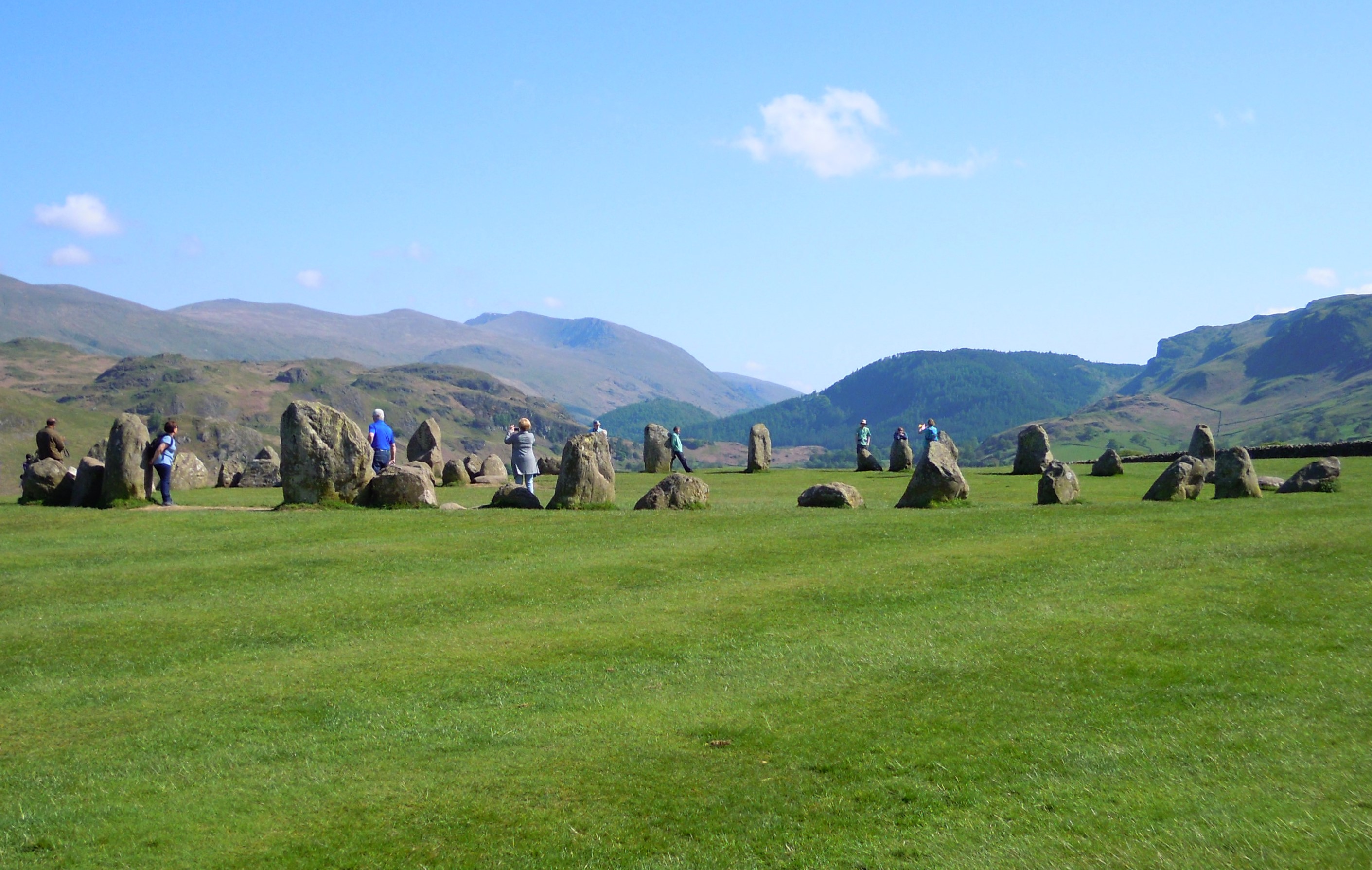
And, above, the Castlerigg Stone Circle, my Red Fox Clan circle, beautifully set in a wider ring of mountains in England’s Lake District, probably the oldest in Britain, roughly 5,000 years old, though recent discoveries at Stonehenge suggest activity around that site that may go back as much as 5,000 years.

One might think the past would be static, but no. Archaeologists keep digging, and the stories change.

Happy solstice! Enjoy the extended light on this longest day of the year. Cheers!

Another Fine Conference

Just back from a great writers conference in Seattle put on by the Pacific Northwest Writers Association (PNWA). Here I am on the last day with Pam Binder, PNWA President and program director of this annual event. Every year she puts together another fabulous conference with her excellent team.

Pam Binder, PNWA President, conference program director, on the left, me on the right.

When I went downstairs looking for an I-was-there photo to add to my comments on the 2025 conference I was hoping I might find Pam to get her picture, and there she was at the registration desk, happy to oblige. I also wanted to thank her one more time for coming to my rescue in the pitch session.

These conferences offer a chance for authors to meet agents and editors face to face and pitch their projects to them. It’s always upbeat at these PNWA conferences, everybody encouraging each other to do their best. I think that atmosphere starts at the top. An award-winning New York Times bestselling author, Pam knows the business, and she’s always ready to help an author reach the next level.

Bohonagh Stone Circle, West Cork, Ireland

I pitched my newest novel set in ancient Ireland featuring the People of the Stones, those mysterious stone circles and other megaliths scattered across Ireland and Britain’s west coast and on down the Atlantic seaboard.

In my story it’s 750 B.C. and the Celts wouldn’t have been in Ireland yet, but we know where they were–in Hallstatt, Austria, so my protagonist has to go there.

The goal for the author pitching an agent or editor is to get a request for material, a few chapters maybe, or 50 pages, or, best of all, the full manuscript. I’m happy to say I got a positive response from every pitch. But it wasn’t entirely simple.

Imagine the setup. All of the authors who’ve signed up for a particular block of time are led into a room where the agents and editors are sitting behind a very long table. The authors get in line for a person they want to pitch to, and each gets four minutes to describe their project and convince that person to ask for part or all of it. At the end of your four minutes a bell rings and you have to skedaddle because you don’t want to crimp the time for the person in line behind you.

So I was pitching one person and we were having an extended conversation when the bell rang. She handed me her business card and said I could stay a bit to finish the conversation because no one was behind me. But then someone did come up behind and I hurried to leave. I went out into the hall and realized I had no idea what the person I just pitched wanted from me. Maybe she told me but in the confusion I didn’t hear it. Did she want to see any of my work? I didn’t know. So in somewhat of a daze I wandered down the hall to the registration desk, where a man asked if he could help me. I saw Pam Binder looking through some papers and said, “I think I need Pam.”

I told her what had happened. She thought about it a minute, then said, “You need to go back in and get in her line again and ask her.”

Pam didn’t send me. She led me. And with her as my escort I did exactly as she said. The person greeted me and answered with enthusiasm, “I want to see the full manuscript. I want to read this.”

Yay! Now, I’m not giving away names. That’s for later, if it works out in the long run. But pitching is a challenge. Encapsulating your book into a few words that pique a desire to read it. And these positive moments are bits of gold. Thank you, Pam.

With hugs to send me off, Pam took this goodbye picture of me in my signature hat.

Happy. Optimistic. Glad for a few more bits of gold.

On my way home