A year ago I was wondering about the date of Summer Solstice, since it varies from year to year. I checked online and as often happens other related sites popped up. One was the story of an Irish goddess named Áine associated with midsummer and the sun. And as if I had called for her a child by the name of Ainne just walked onto my screen. I tweaked the spelling to give it the sound I heard.
Ainne of Éire has now become the protagonist in the third book of my trilogy set in the eighth century B.C. On this Summer Solstice I celebrate her because I’m now in the process of developing her story. An exciting time when inspiration flowers and a story takes life.
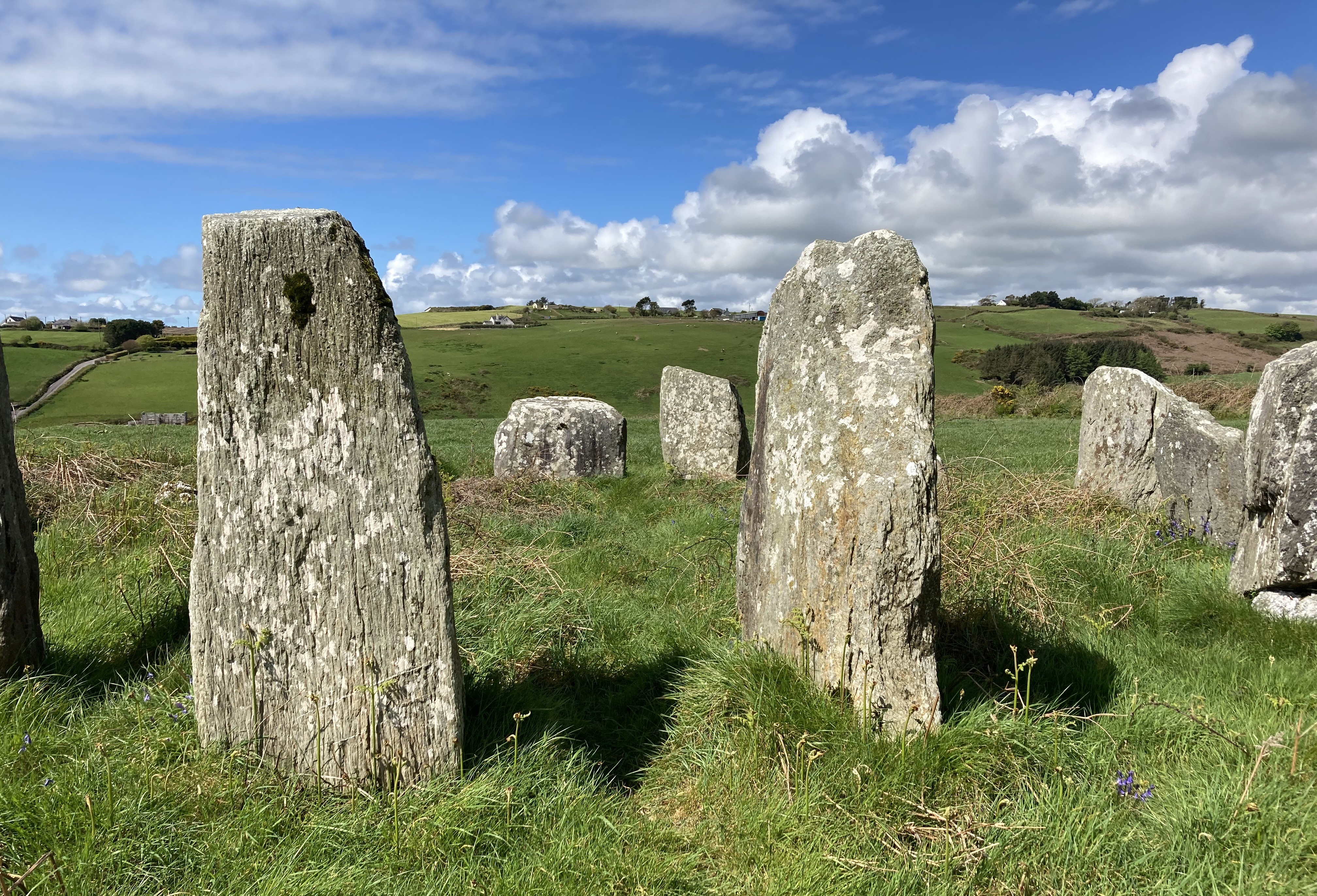
The many stone circles along the Atlantic seaboard, including Ireland and Britain, appear to be situated to mark the passage of the seasons, including the solstices and the equinoxes. Above is the sacred stone circle of Ainne’s clan in the south of Éire, the Golden Eagle Clan, the circle called today the Bohonagh Stone Circle. It’s set on a rise in ground in the middle of a cow pasture. Looking westward you can see through the two portal stones to the aligning recumbent stone opposite.
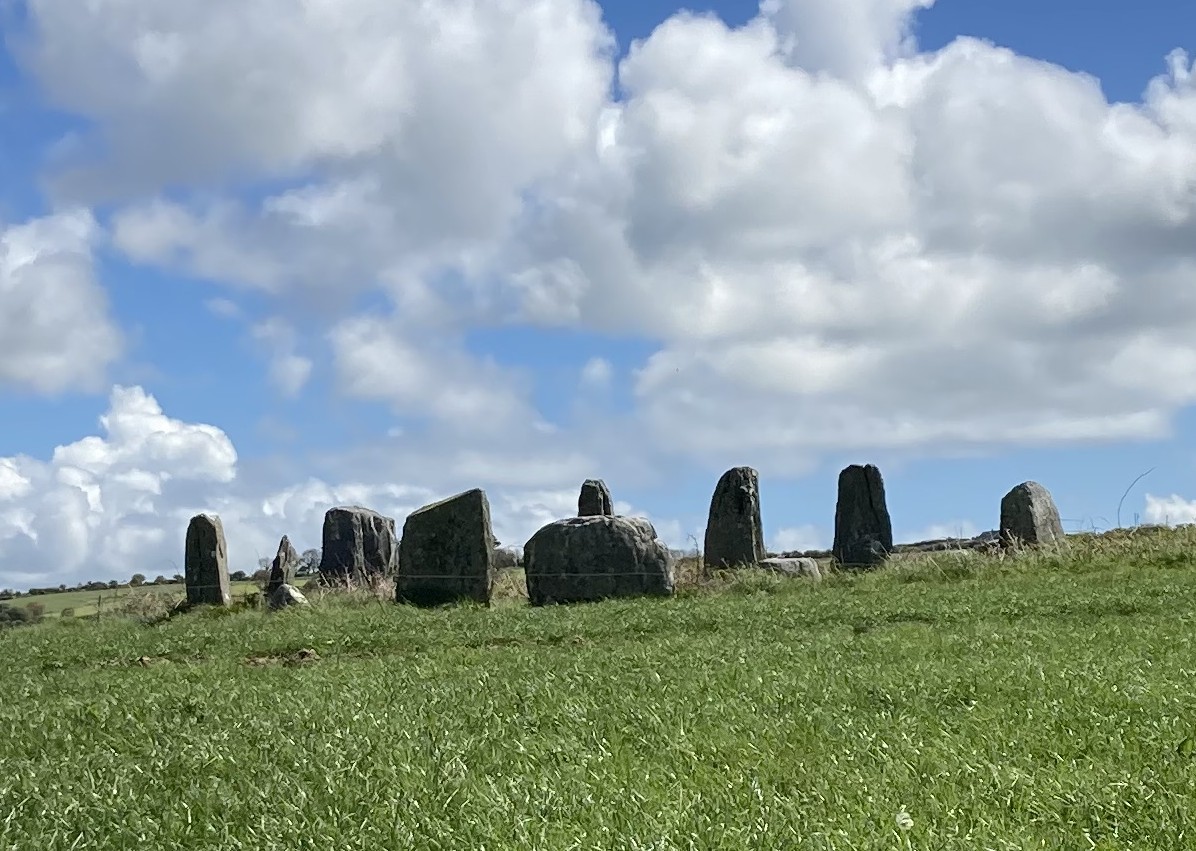
Ainne’s clan circle in its entirety, shown above as I approached it from the other direction, climbing up the hill, looking eastward, the recumbent stone in the foreground, the portals on the far side.
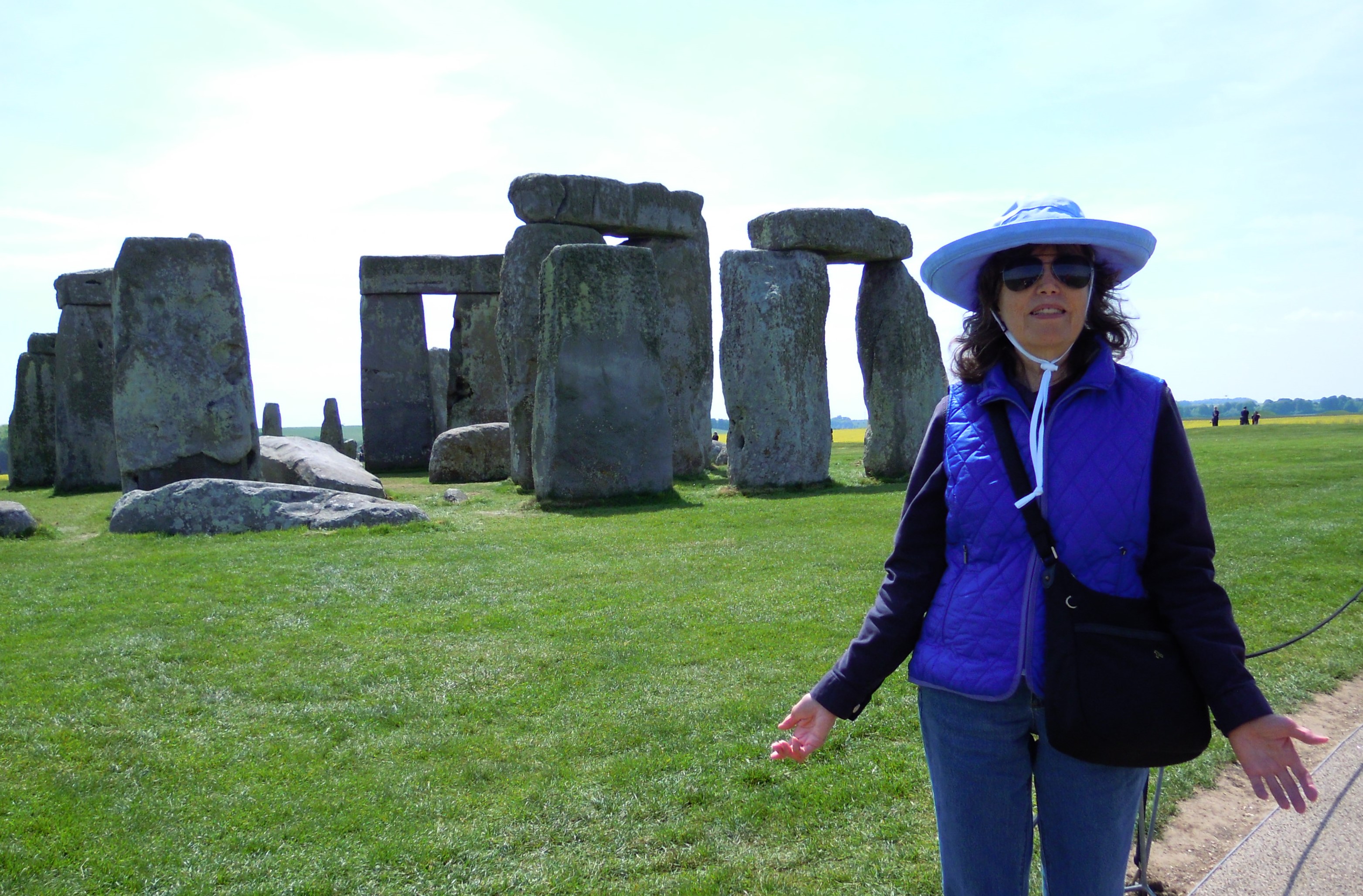
And here I am at the better known Stonehenge on Britain’s Salisbury Plain, shown above. Stonehenge also aligns to mark the solstices. This famous stone circle plays a part in a related series that will follow my trilogy.
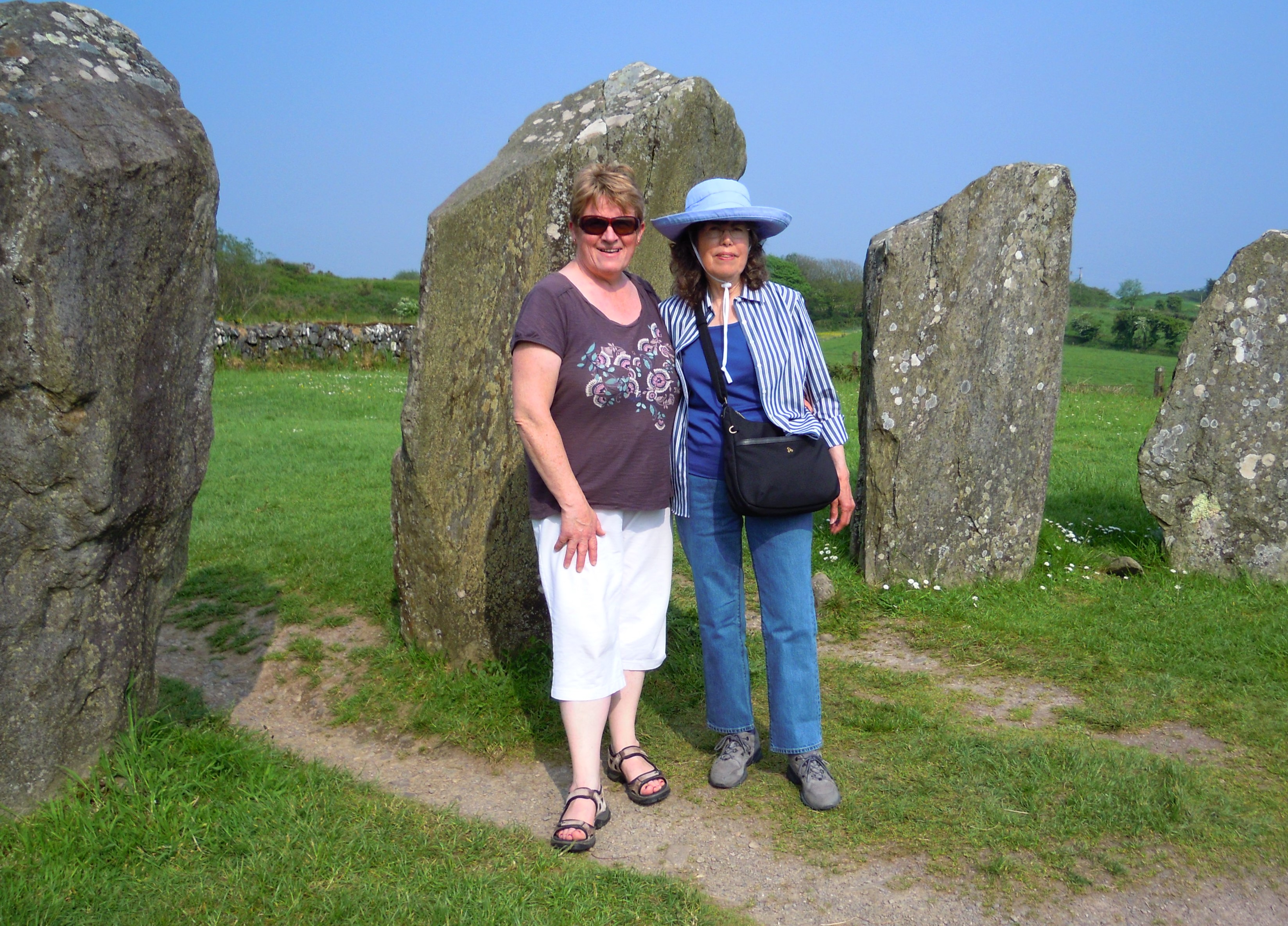
And these, above, in the fine stone circle near Ainne’s, home of the neighboring Red Deer Clan, known today as the Drombeg Stone Circle. I’m here with the wonderful host of the nearby Rosalithir B&B, Catherine O’Sullivan, who drove my friend and I there. This circle is protected under Ireland’s National Monument Act. Near the highway R 597 it is easily accessed and well maintained.
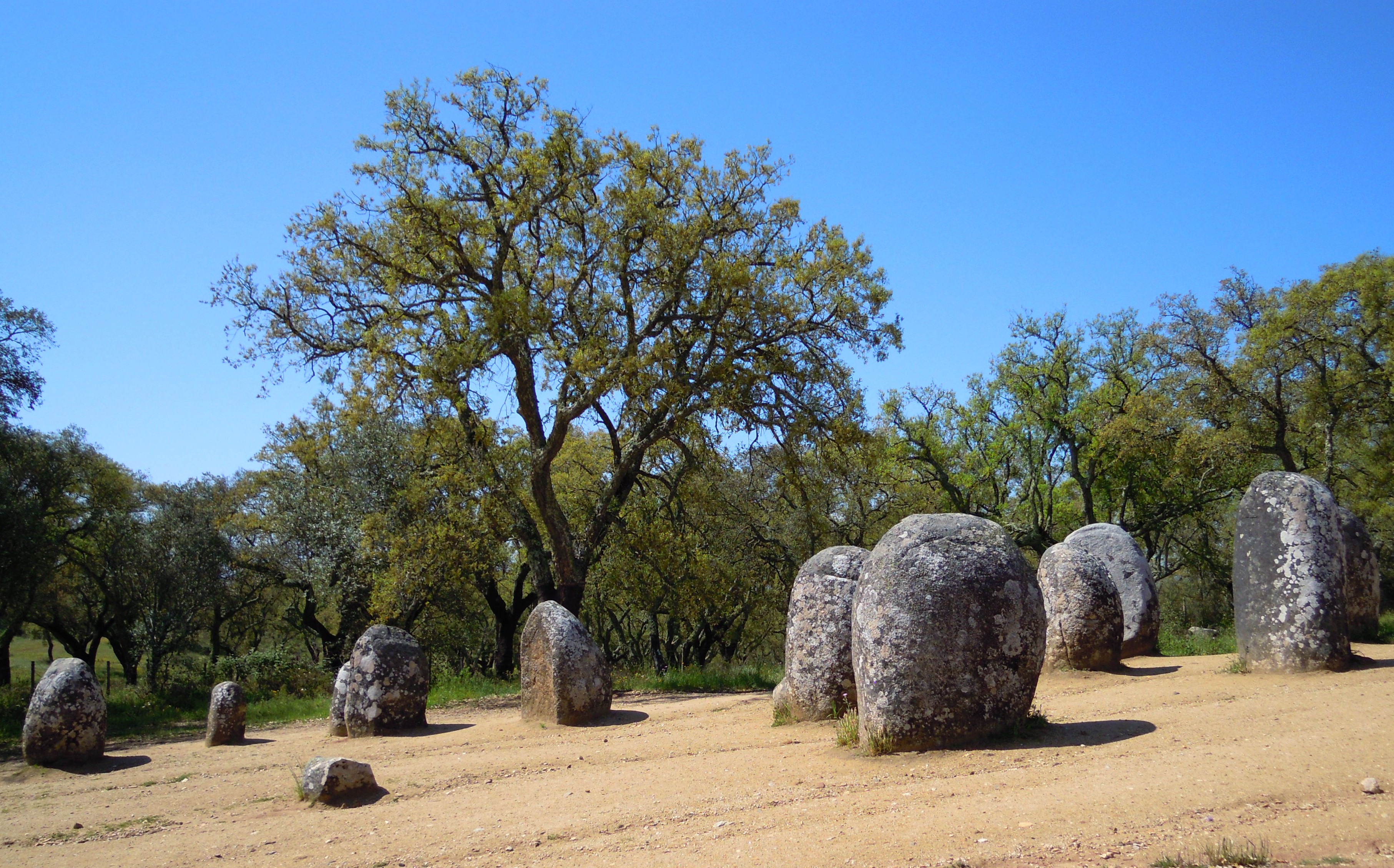
And probably the oldest I’ve seen, above, the Cromlech Almendres in Portugal, perhaps as much as 7,000 years old. This fine circle in a cork oak forest also appears in one of my stories.
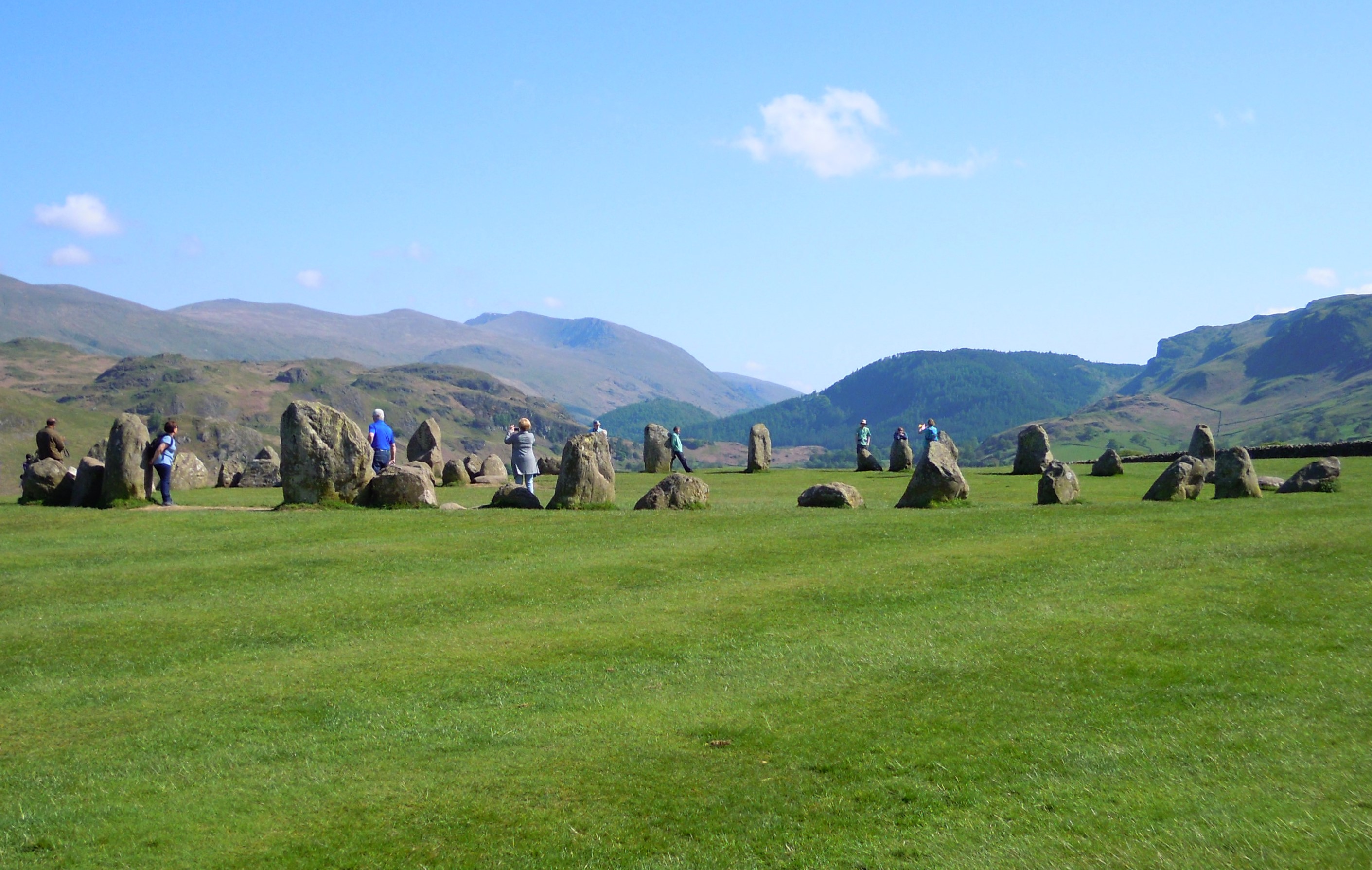
And, above, the Castlerigg Stone Circle, my Red Fox Clan circle, beautifully set in a wider ring of mountains in England’s Lake District, probably the oldest in Britain, roughly 5,000 years old, though recent discoveries at Stonehenge suggest activity around that site that may go back as much as 5,000 years.
One might think the past would be static, but no. Archaeologists keep digging, and the stories change.
Happy solstice! Enjoy the extended light on this longest day of the year. Cheers!