A year ago I was wondering about the date of Summer Solstice, since it varies from year to year. I checked online and as often happens other related sites popped up. One was the story of an Irish goddess named Áine associated with midsummer and the sun. And as if I had called for her a child by the name of Ainne just walked onto my screen. I tweaked the spelling to give it the sound I heard.
Ainne of Éire has now become the protagonist in the third book of my trilogy set in the eighth century B.C. On this Summer Solstice I celebrate her because I’m now in the process of developing her story. An exciting time when inspiration flowers and a story takes life.
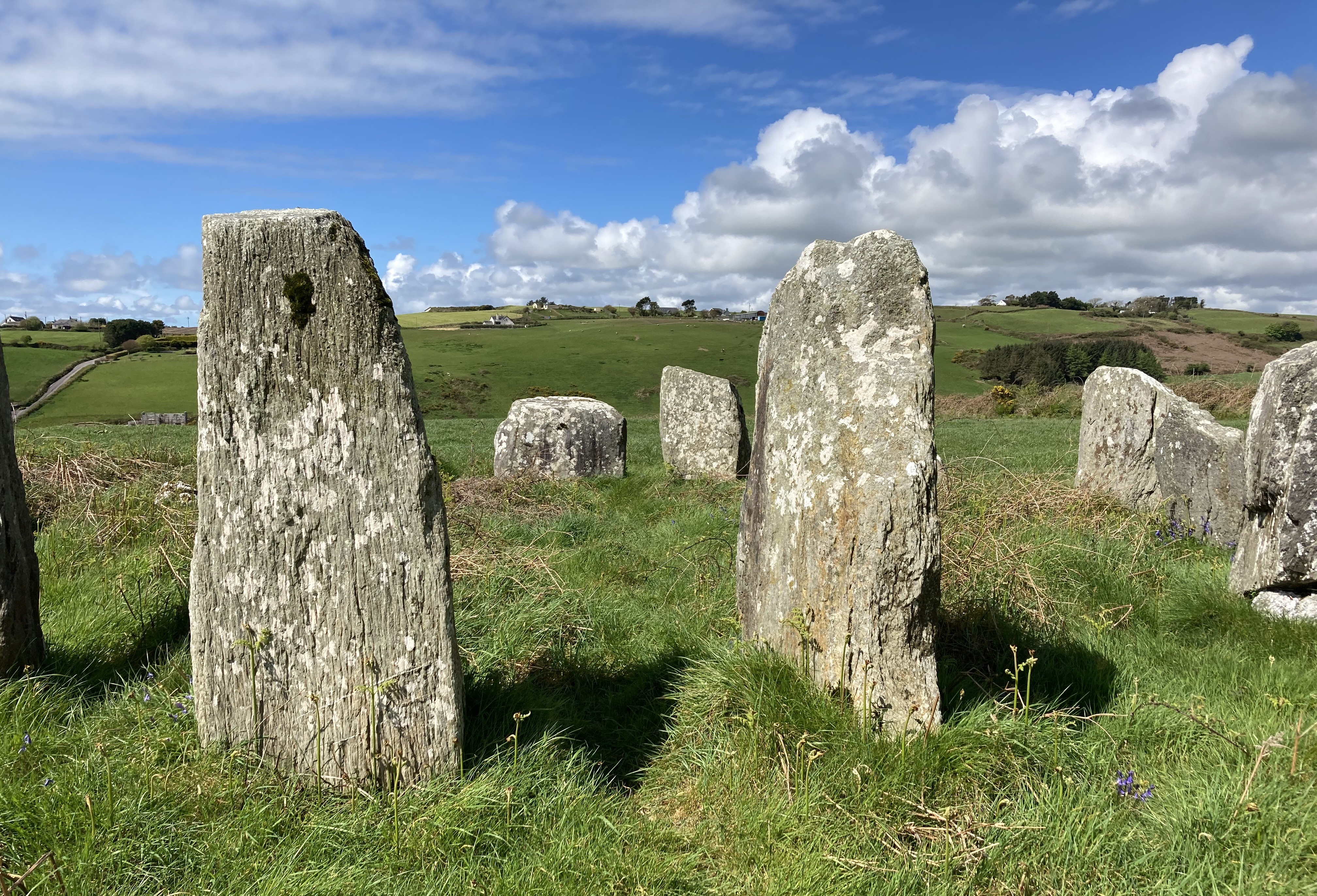
The many stone circles along the Atlantic seaboard, including Ireland and Britain, appear to be situated to mark the passage of the seasons, including the solstices and the equinoxes. Above is the sacred stone circle of Ainne’s clan in the south of Éire, the Golden Eagle Clan, the circle called today the Bohonagh Stone Circle. It’s set on a rise in ground in the middle of a cow pasture. Looking westward you can see through the two portal stones to the aligning recumbent stone opposite.
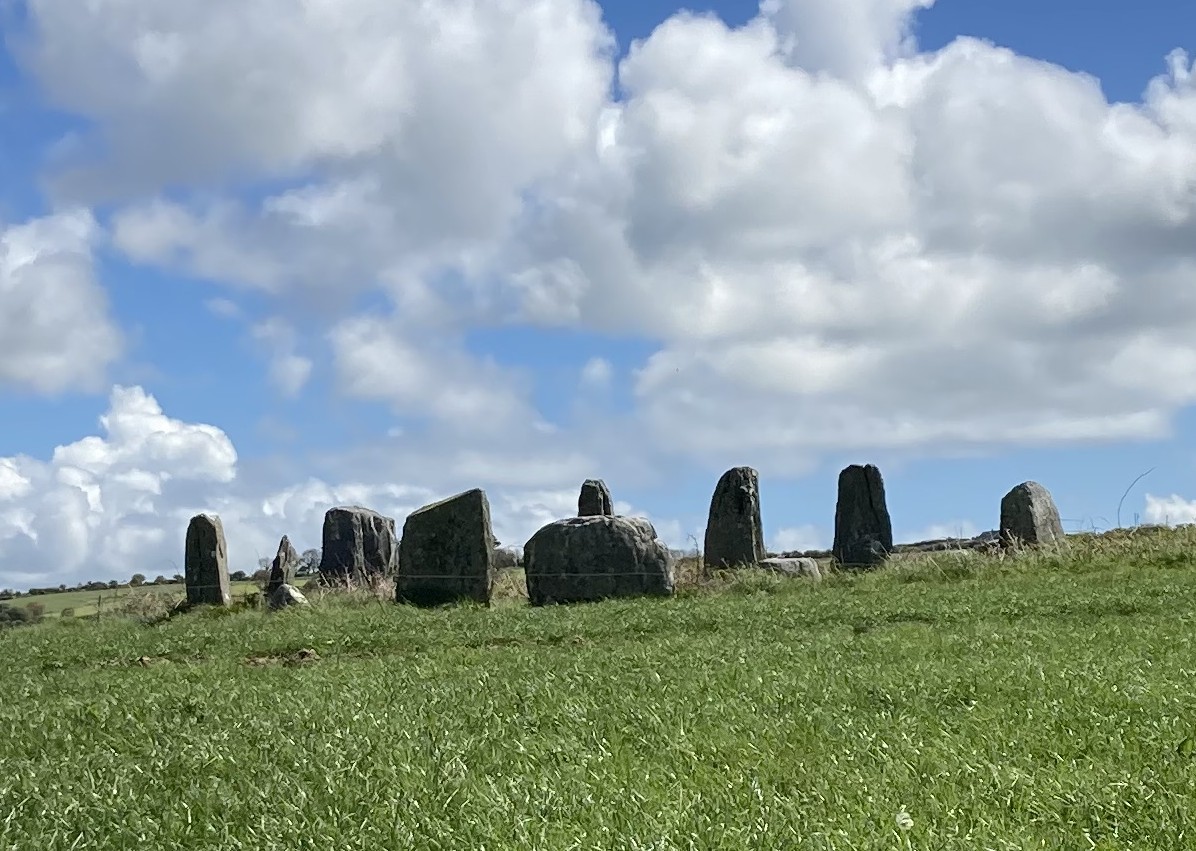
Ainne’s clan circle in its entirety, shown above as I approached it from the other direction, climbing up the hill, looking eastward, the recumbent stone in the foreground, the portals on the far side.
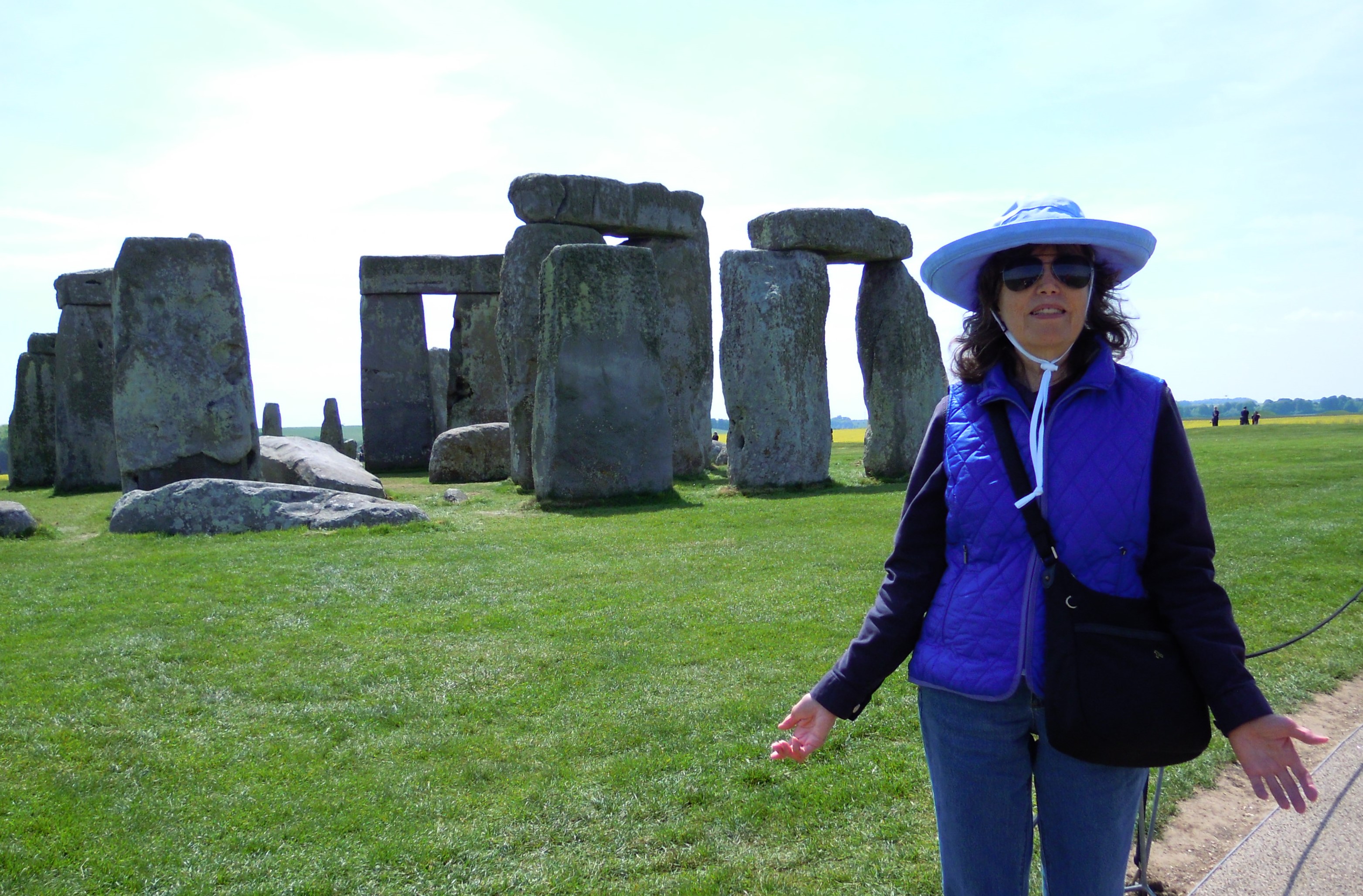
And here I am at the better known Stonehenge on Britain’s Salisbury Plain, shown above. Stonehenge also aligns to mark the solstices. This famous stone circle plays a part in a related series that will follow my trilogy.
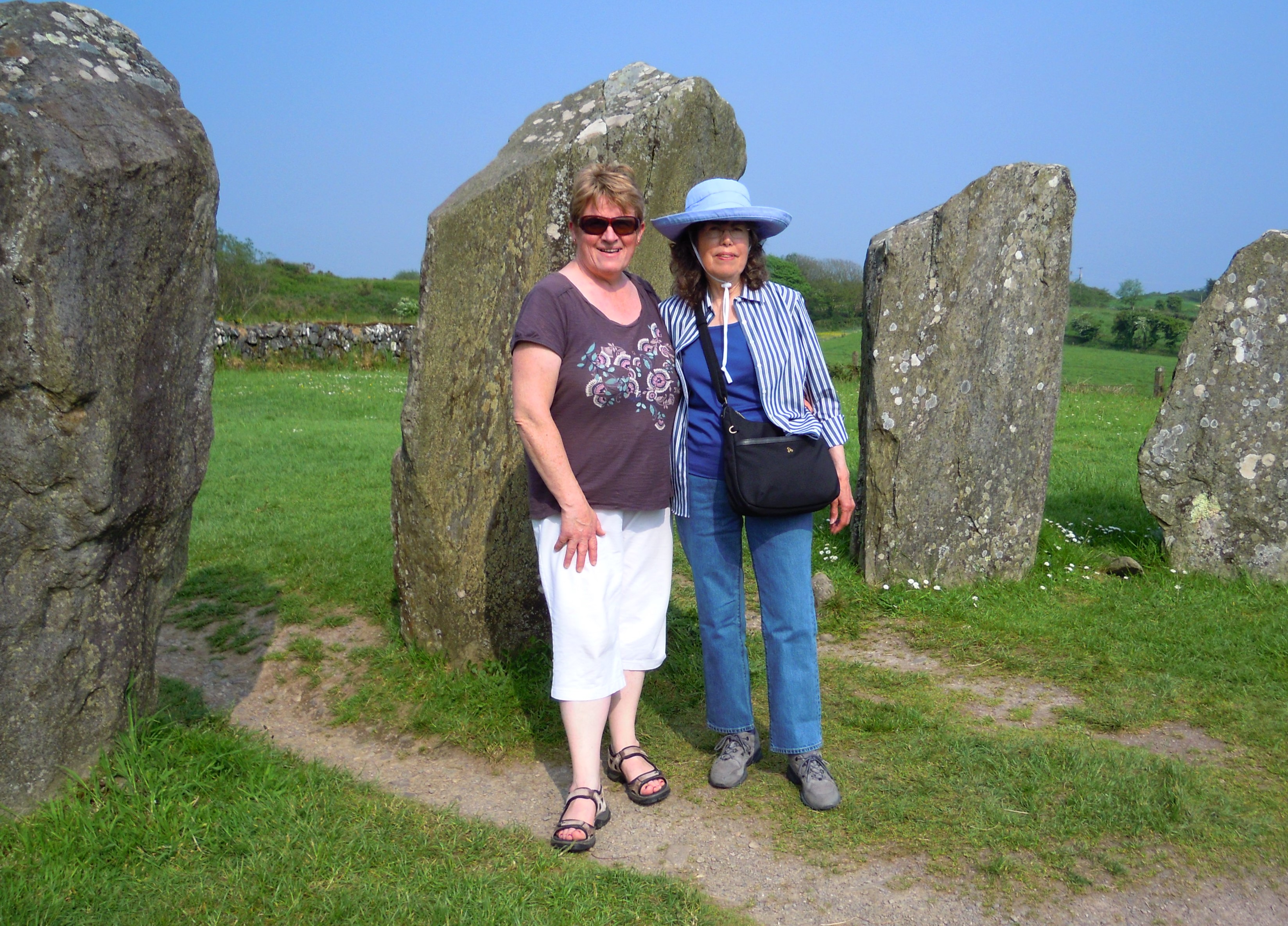
And these, above, in the fine stone circle near Ainne’s, home of the neighboring Red Deer Clan, known today as the Drombeg Stone Circle. I’m here with the wonderful host of the nearby Rosalithir B&B, Catherine O’Sullivan, who drove my friend and I there. This circle is protected under Ireland’s National Monument Act. Near the highway R 597 it is easily accessed and well maintained.
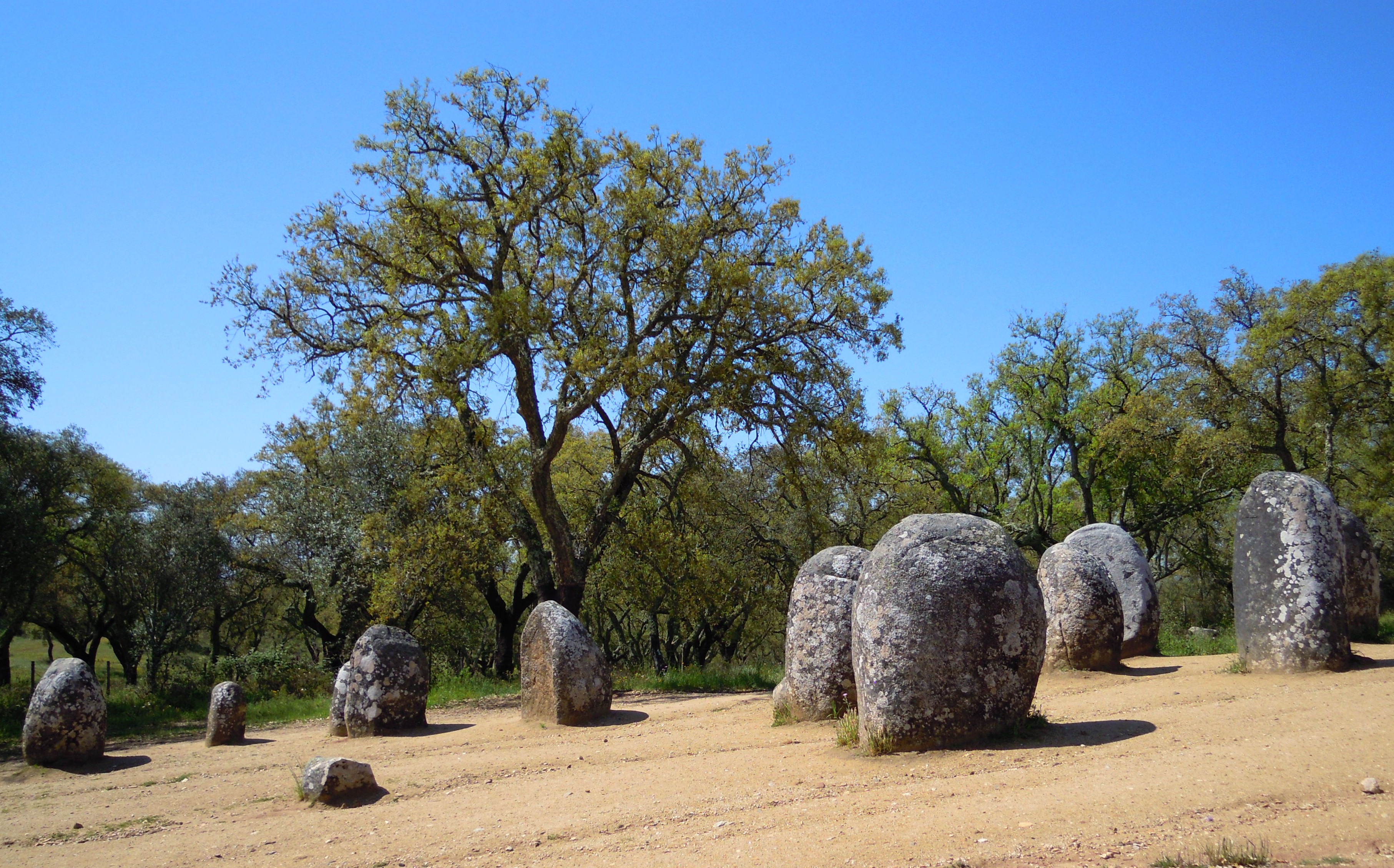
And probably the oldest I’ve seen, above, the Cromlech Almendres in Portugal, perhaps as much as 7,000 years old. This fine circle in a cork oak forest also appears in one of my stories.
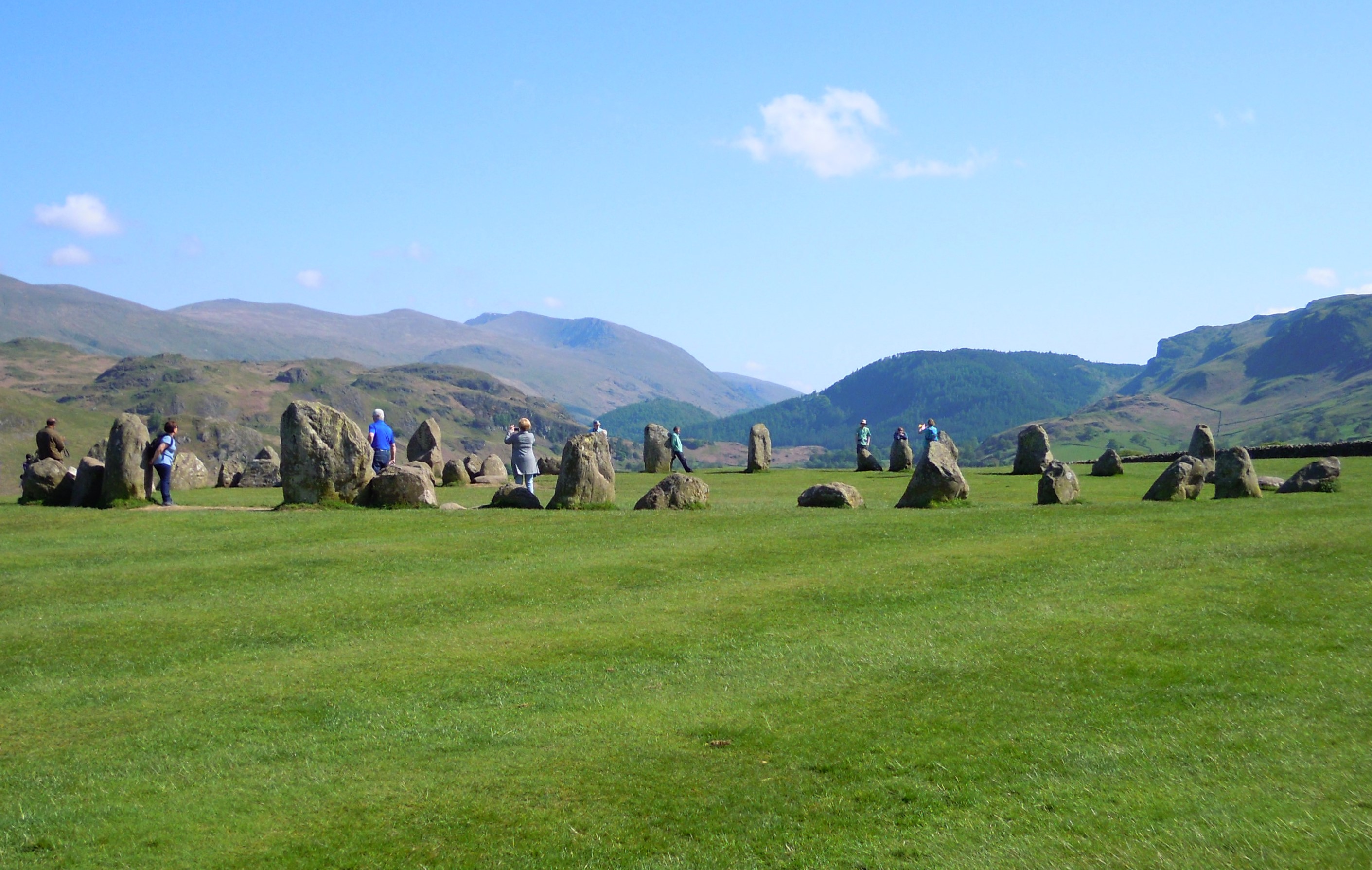
And, above, the Castlerigg Stone Circle, my Red Fox Clan circle, beautifully set in a wider ring of mountains in England’s Lake District, probably the oldest in Britain, roughly 5,000 years old, though recent discoveries at Stonehenge suggest activity around that site that may go back as much as 5,000 years.
One might think the past would be static, but no. Archaeologists keep digging, and the stories change.
Happy solstice! Enjoy the extended light on this longest day of the year. Cheers!
Here on a lonely hill, where silence echoes and all is near forgotten, a memory whispers. Here the center of my Éireann world lives.
~ ~ ~
If Ireland holds the place as the heart of my stories, and it does, then Rosscarbery on Ireland’s south coast must be the heart of the heart. Just up the hill above that charming town lies this ancient circle of stones, sacred center of the clan of my protagonist. I have named her people the Clan of the Golden Eagle, and this land has been their ancestral home for generations.
These mysterious circles of stone dating back thousands of years can be found up and down the Atlantic seaboard–across Ireland, Britain, France, Portugal, and Africa. The most famous would be Stonehenge in England. To my knowledge no others bear the horizontal lintels like Stonehenge. The circles range in size. I visited one in Portugal, the Cromlech of Almendres, with almost 100 stones, dating from about 4000 to 6000 B.C. Another, the Castlerigg Circle in northern England set among a ring of mountains, dates from about 3000 B.C.
But this circle of stone caught my heart in ways I can’t explain. It has stood on this hill overlooking the south coast of Ireland since about 1500 B.C., now called Bohonagh Circle. Why these rings of raw stone stand where they do no one today really knows. Scholars believe they marked the passing seasons of the sun. Others suggest they were places of celebration, for dancing and connecting with the gods and goddesses the people revered, perhaps places that drew together the powers of earth and sky.
Catherine and Finbarr O’Sullivan, my wonderful hosts at the Rosalithir B&B in Rosscarbery, wished me well when I set off to see the circle on my first day this trip. A bright sunny morning. Catherine made sure I took a snack of her delicious soda bread and some fruit, which would tide me over until dinner. This was my third visit with Catherine and Finbarr. They weren’t just hosts. They were friends now.
It’s a fair walk over pleasant back roads. Then the familiar track up the hill, the stones beyond my sight until at last I began to see the tops like fingers lifted to the sky. Remembrance flooded me. Not only my own former visits. But the many scenes in my stories as my characters approached this sacred place. I left the track for the green field as the stones came into full view. They seemed to draw me. I barely felt the grass beneath my feet. Once there, I honored the tall portals, both higher than my reach, and stepped inside.
Turning, I looked out through the portal stones and felt a sense that I had come home again. A little breathless still, I was looking for better pictures than I’d taken on earlier visits and nature gave me that. The clouds on this day! Oh my! The clouds!
I stayed and wandered in and out, soaking in the feel of the circle, the surroundings. I especially like the way one stone sits in line with a slope of the vee that opens to the blue sea in the distance. I don’t think that was by accident. Clouds kept boiling in, adding to a sense of awe. After touching each stone with the reverence such a place evokes, I finally walked away, my heart full. On the way downhill I stopped to look back, wondering if I would ever see them again.
The sight of them beneath the towering clouds nearly took my breath.
~ ~ ~
Another day I went down to the bay below the circle, called by my protagonist’s clan their Golden Eagle Bay. Today’s Rosscarbery Bay. I still had questions about the beach. And what’s more, this visit revealed answers to questions I didn’t even know to ask. That made my return particularly important. On my first trip I had traipsed around the shoreline but memory and tiny photos didn’t offer a good sense of the lay of the land there. The few minutes I had on that beach last visit only confused me further. This time I spent a full day exploring the shore.
I had a fairly good sense of the western headland, but I was unsure of the east side of the bay. When I stepped out on a rocky point at the east side of a strand where I thought the bay ended, the point felt way too small for some of the scenes I had written.
There were some good rocky outlying islands to crack up a ship, but there was no room for a battle scene. It wasn’t until I climbed partway up the newly improved Cliff Walk over the western headland that I could look back and see it clearly.
The photo above shows it. That little rocky point jutting into the bay wasn’t big enough to call a headland at all. It did break up two strands, which have separate names today, Owenahincha Strand on the near side from where I took the picture and Little Island Strand on the other. But the photo also shows the only point that could reasonably be called a headland on the east side, a long and bold promontory reaching deep into the bay–beyond the second strand. It’s called today Cloghna Head. Together with the headland where I stood, these are the arms that embrace the full bay.
I continued my stroll over the Cliff Walk to the next beach, mulling all this over. It’s a beautiful walk, with nice new wooden railing and some paving, overlooking broad stretches of water and a small woodland full of bluebells.
I had planned to call Finbarr to pick me up on that next beach when I was done with the Cliff Walk, as he’d suggested. He and Catherine insisted they drive me to and from the beach because they didn’t want me to walk across the dangerous highway that separated it from the B&B. But now I knew I had to go back to where I started and check out the bold promontory of Cloghna Head, which I now saw was the eastern headland of the full bay.
As I trekked over the grass above the bayshore toward that eastern headland I became aware of something quite unfamiliar. I had walked along sandy trails cut through the grass but I happened to step onto the grass itself. My foot didn’t sink deep into the thick grass as expected but teetered on a thick spongy mass of interlaced grasses. I had never experienced anything quite like it. Because I couldn’t maintain a solid stride I quickly moved back onto one of the sand trails people had cut into that thick mass.
I later mentioned this to Finbarr and he said that’s the way beach grass grows there. It helps prevent erosion along the beaches. I told him on the Oregon coast we had tall grasses along the sandy shore. He said that those tall grasses perform the same function. And I, knowing tall grasses, had written such shores into my Irish beaches. I would need to take out that tall grass in my stories in many places. You need to get it right for the locals. And I almost didn’t.
I walked close to Cloghna Head to get a better sense of it but didn’t walk onto the top. I was particularly interested in those sheer cliffs down to the jagged rocks below and how they might work into a dramatic scene. I didn’t think about the grass on that promontory until later. But Finbarr assured me that the broad grassy top there also has the thick spongy beach grass. Other grass, away from the shore, he called pasture grass. As a farmer, raising cattle, he knew these things. I was so glad he cleared that up for me.
~ ~ ~
I would take more walks during my visit, got lost once on a rainy walk, then came upon the B&B quite by surprise. Irish luck again. And I explored several back roads, meeting horses and dogs and friendly people, including Tara and her beautiful Irish Cob mare with the distinctive feathering above the hooves–named Sootie for her black coat, Tara said.
With each walk, each day, I got a better sense of the place that I knew would show up in my descriptions. And my memories. Helping my Éireann world live. A wondrous visit to a wonderful place.