Summer Solstice Character Walks In

A year ago I was wondering about the date of Summer Solstice, since it varies from year to year. I checked online and as often happens other related sites popped up. One was the story of an Irish goddess named Áine associated with midsummer and the sun. And as if I had called for her a child by the name of Ainne just walked onto my screen. I tweaked the spelling to give it the sound I heard.

Ainne of Éire has now become the protagonist in the third book of my trilogy set in the eighth century B.C. On this Summer Solstice I celebrate her because I’m now in the process of writing her story. An exciting time when inspiration flowers and a story takes life.
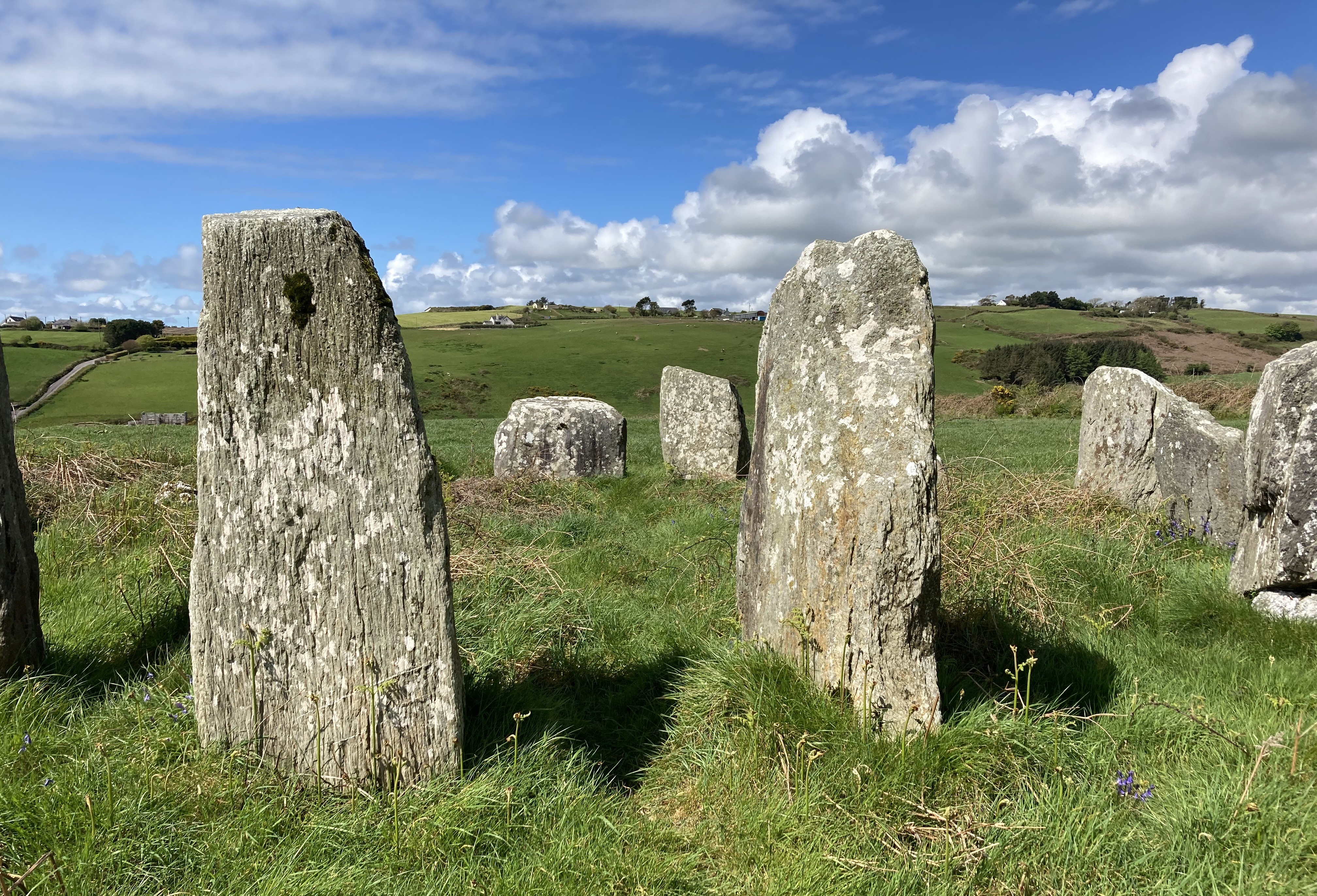
The many stone circles along the Atlantic seaboard, including Ireland and Britain, appear to be situated to mark the passage of the seasons, including the solstices and the equinoxes. Above is the sacred stone circle of Ainne’s clan in the south of Éire, the Golden Eagle Clan, the circle called today the Bohonagh Stone Circle. It’s set on a rise in ground in the middle of a cow pasture. Looking westward you can see through the two portal stones to the aligning recumbent stone opposite.
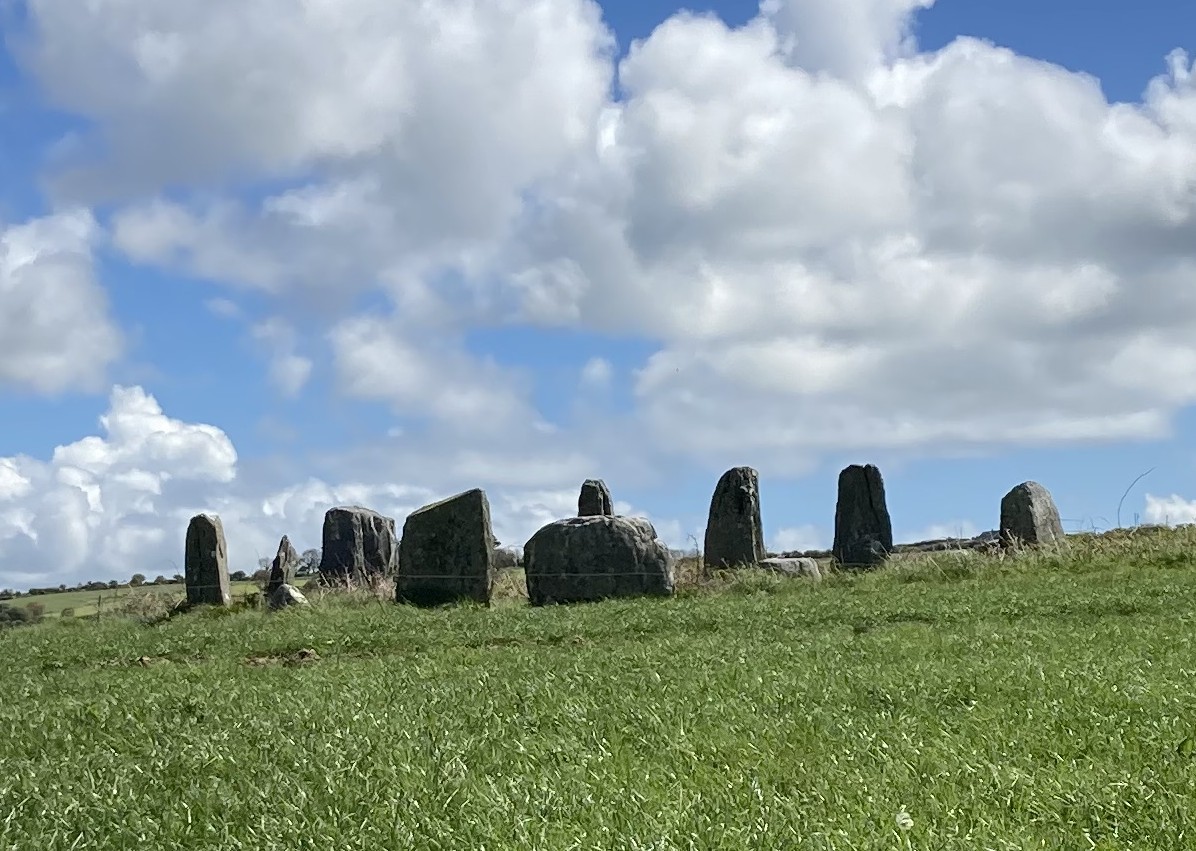
Ainne’s clan circle in its entirety, shown above as I approached it from the other direction, climbing up the hill, looking eastward, the recumbent stone in the foreground, the portals on the far side.
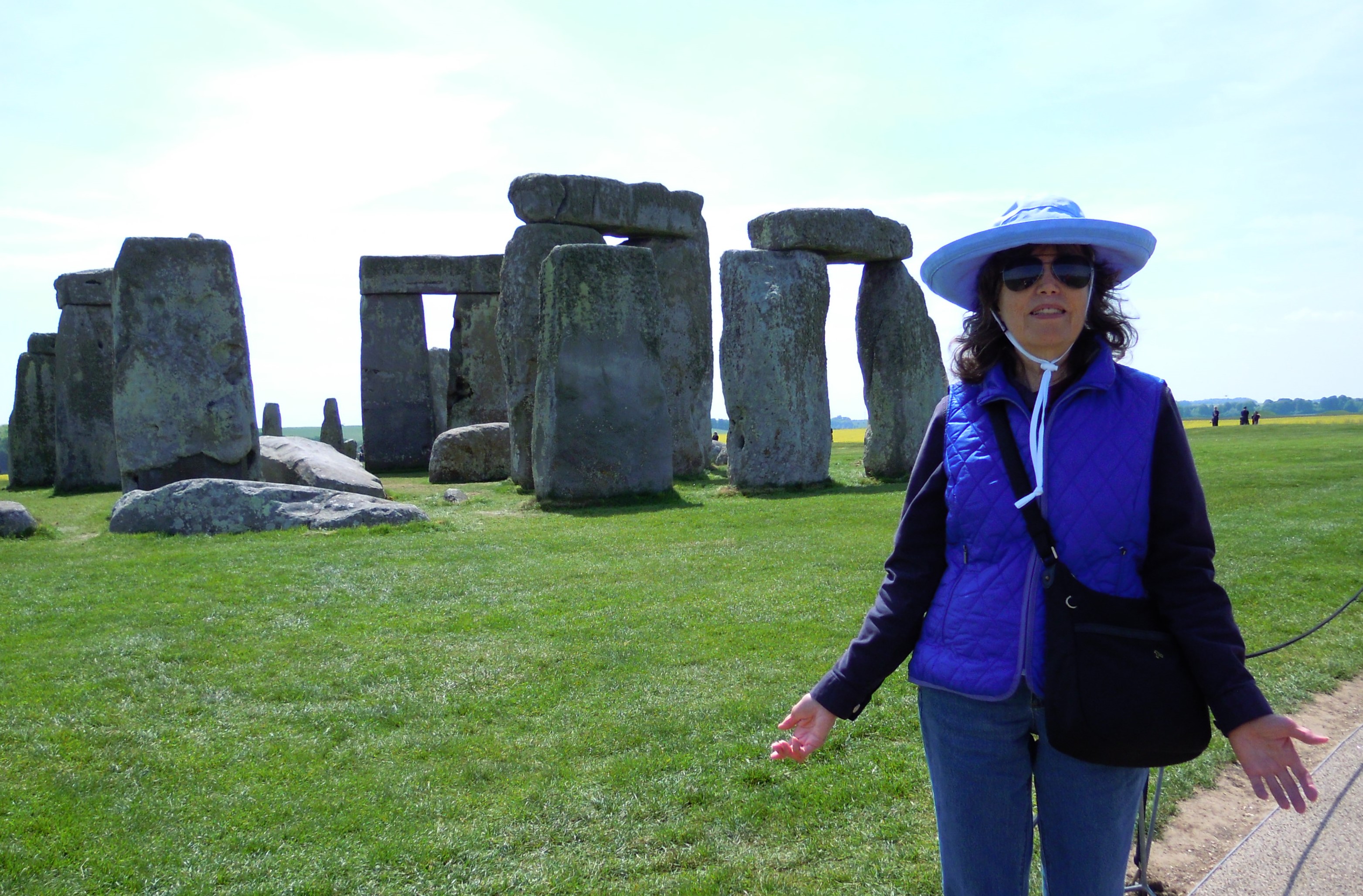
And here I am at the better known Stonehenge on Britain’s Salisbury Plain, shown above. Stonehenge also aligns to mark the solstices. This famous stone circle plays a part in a related series that will follow my trilogy.
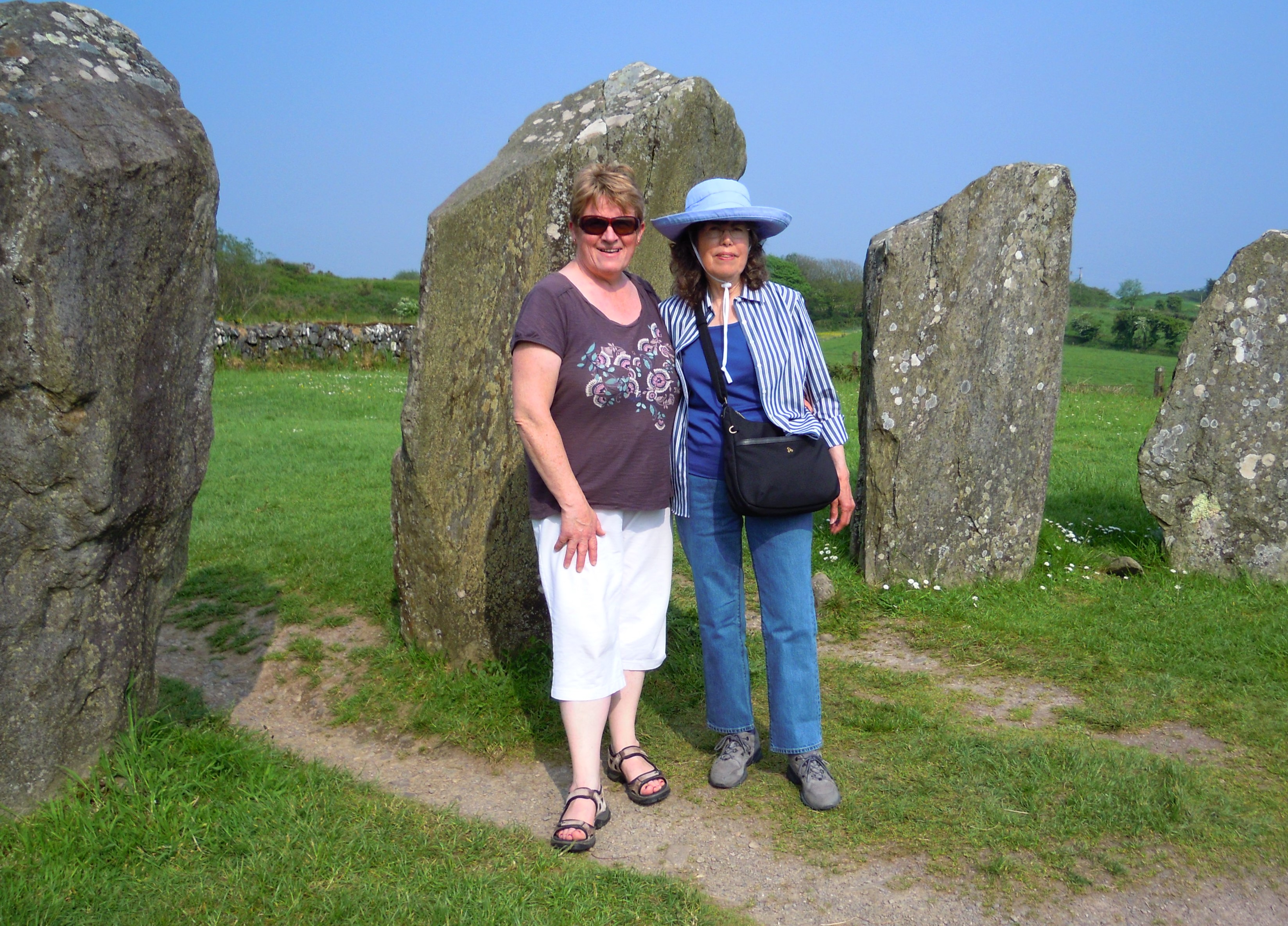
And these, above, in the fine stone circle near Ainne’s, home of the neighboring Red Deer Clan, known today as the Drombeg Stone Circle. I’m here with the wonderful host of the nearby Rosalithir B&B, Catherine O’Sullivan, who drove my friend and I there. This circle is protected under Ireland’s National Monument Act. Near the highway R 597 it is easily accessed and well maintained.
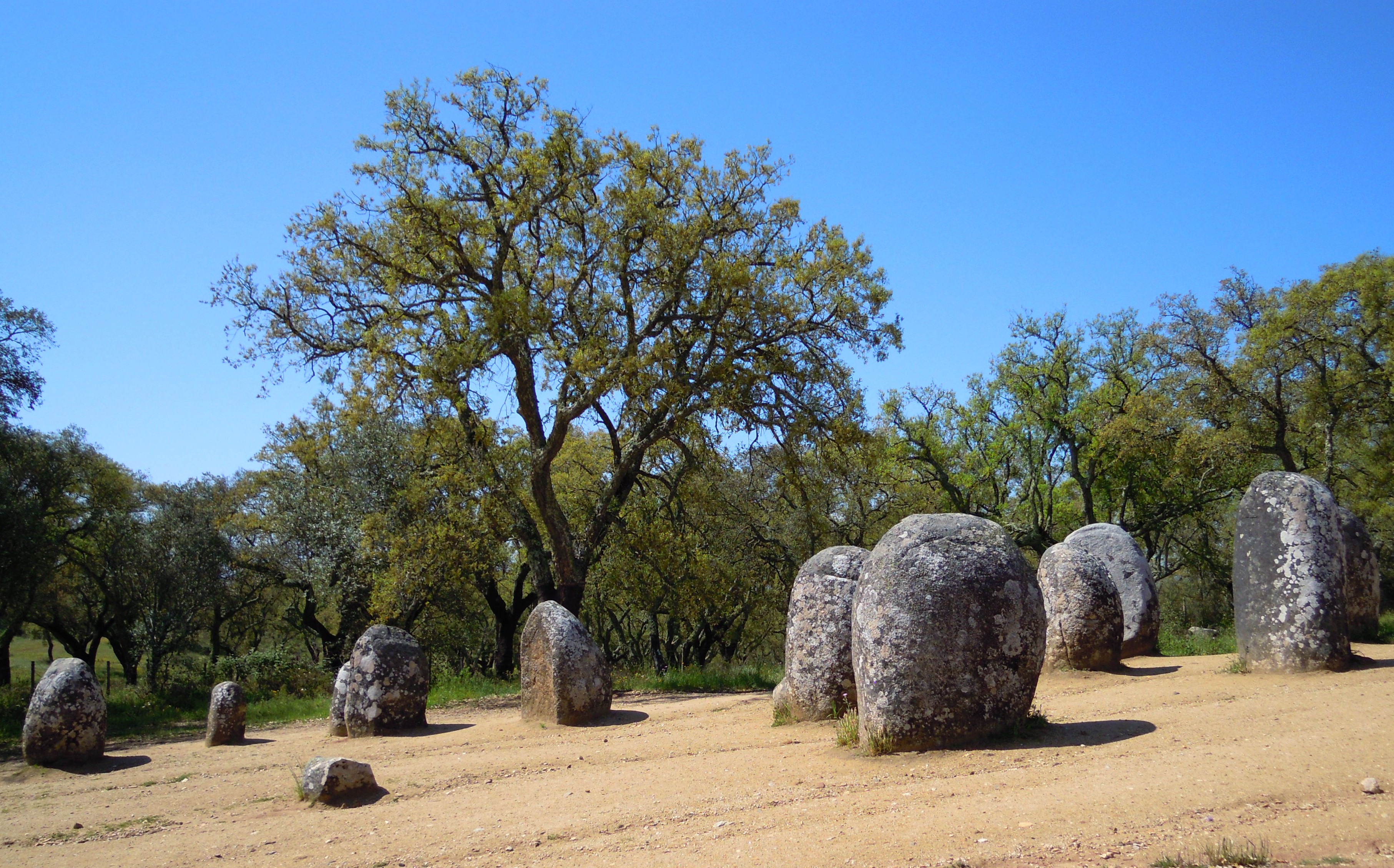
And probably the oldest I’ve seen, above, the Cromlech Almendres in Portugal, perhaps as much as 7,000 years old. This fine circle in a cork oak forest also appears in one of my stories.
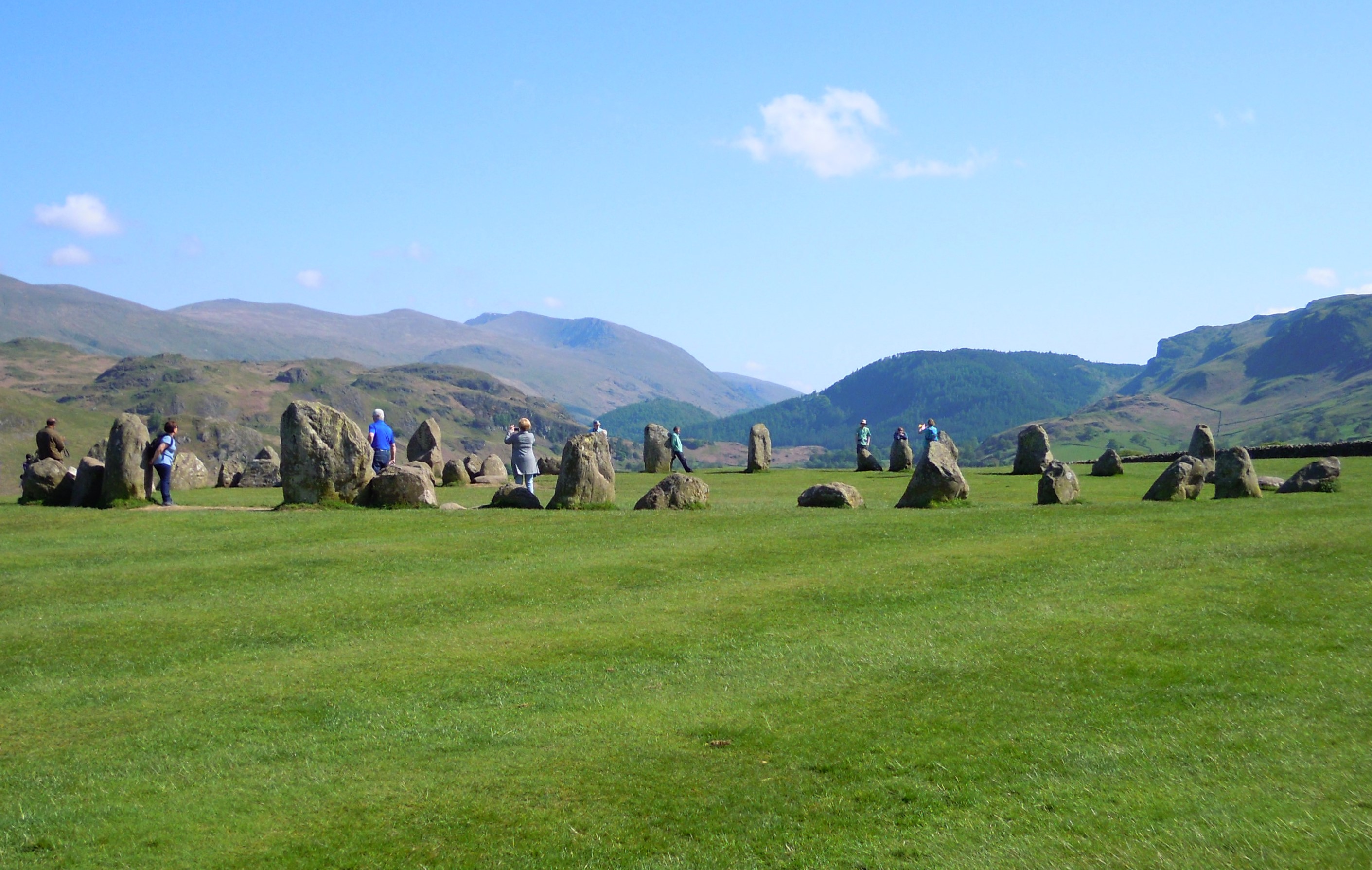
And, above, the Castlerigg Stone Circle, my Red Fox Clan circle, beautifully set in a wider ring of mountains in England’s Lake District, probably the oldest in Britain, roughly 5,000 years old, though recent discoveries at Stonehenge suggest activity around that site that may go back as much as 5,000 years.

One might think the past would be static, but no. Archaeologists keep digging, and the stories change.

Happy solstice! Enjoy the extended light on this longest day of the year. Cheers!

Stonehenge on My Mind

I’ve been thinking quite a lot about the People of the Stones who walk through my stories of ancient Ireland and its neighboring lands. I’m working on a new novel, a sequel to the one I hope to have published next. Always a time for the stirring of the mind.

This past weekend was the annual Fort Umpqua Days celebration in nearby Elkton, Oregon, so I was there with my booth selling my pioneer stories. I had a notebook on display with photos of pioneers as well as ancient settings and my new business cards illustrating my work “From Pioneers to People of the Stones.”

A boy stopped by and saw a picture of the stone circle at the center of my ancient stories, the Bohonagh Stone Circle in Ireland.

“Stonehenge,” he said, then shook his head when he realized it didn’t look quite like Stonehenge.

I turned the page to show him I did have this picture of the circle he knew. We had quite a conversation, maybe a half hour or so.

He had some imaginative ideas about how the ancient people stood those big stones up there. He knew quite a bit about the site.

He’s ten. I told him he should think about being a writer someday. He smiled. “I write comic strips already.” A budding author. And a delight.

So that night when I was looking for an hour’s entertainment before going to bed I searched my recordings on the DVR and saw OPB’s NOVA presentation on Stonehenge. I’d seen it, but I watched again with keen interest. They showed how the first stones of Stonehenge were the smaller bluestones, not the giant Sarsens. A single ring. Dated at about 3000 B.C. Then the giants went up in 2500 B.C., with their lintels on the top, and the bluestones were moved into the interior. I wanted to argue against those bluestones coming all the way from Wales, some 150 miles away, but the guide I talked to at the site convinced me. Archaeologists had found quarries in the Preseli Hills of Wales with the same kind of stone, and there were no such stones around Stonehenge. They had to have come from Wales.

The smaller bluestones show clearly in this photo, lined up inside the taller sarsens.

Then last night I again wanted an hour’s entertainment. And what should I find but another, newer show about Stonehenge. This one showed the same archaeologist who finally found the exact quarry in Wales these bluestones came out of. Problem was, dating on the site indicated that the quarrying for the bluestones happened in 3300 B.C. The stones went up on the Salisbury plain in 3000 B.C. There was a 300-year gap. Where were these stones during those 300 years?

It wasn’t an easy question to answer, but the archaeologist came to believe the stones had been used for a circle near the quarry, then removed to the location on the Salisbury plain where Stonehenge stands today. Many megaliths stand yet today in the vicinity of the quarry. But how to find where this circle of bluestones stood in that interim? This was a needle-in-a-haystack effort for sure. How do you find something that isn’t there anymore? They had to look for the holes left behind, long since covered over by new soil. With many disappointing tries and the use of overhead imagery they finally found where the stones once stood. They could even see the odd shape of one impression that matched a bluestone now at Stonehenge.

For confirmation they used a dating method I’d never heard of where they dig down to see when the sediment last saw the sun, keeping carefully under cover to avoid any current light. The test showed a date of 3300 B.C. as the construction date on the abandoned site. So the stones went directly from the quarry to this site in Wales and 300 years later were moved to the current site.

Why would they move them? And how? Each stone weighs more than a ton. To show how it was possible they built sledges and had 30 children, 13 years old, try to pull the loaded sledge with ropes. The children managed with apparent ease, drawing the heavy stone uphill. Surely ancient adults could do it. As for the why, we can’t really know. There was no sign of battle to suggest they were escaping attack.

Stonehenge looking southward.

One thought was that the site on the Salisbury plain at that time lay on a swath of glacial channels that aligned with the sun on winter solstice. To these ancient People of the Stones this may have appeared to be an auspicious site.

Moving into the minds of ancients who left no writing behind? Well, that’s the kind of thing we fiction writers do.