As many of my followers know, my writing focus has turned from PIONEERS TO PEOPLE OF THE STONES. My first published book portrays the story of my great-great-grandmother who came west over the Oregon Trail and ultimately settled on the farm I now own. Entitled A Place of Her Own that book opened the door for another pioneer story, this time a novel about a young woman who’s a reluctant pioneer in Oregon. Her first day at their destination she meets two mountain men, the historic Joe Meek and the fictional Jake Johnston. These two mountain men play a pivotal role in the story, The Shifting Winds.
I’ve been writing posts for this blog since 2012, and the most viewed of all my many posts is The TRUE Shifting Winds ~ 3: Mountain Men.
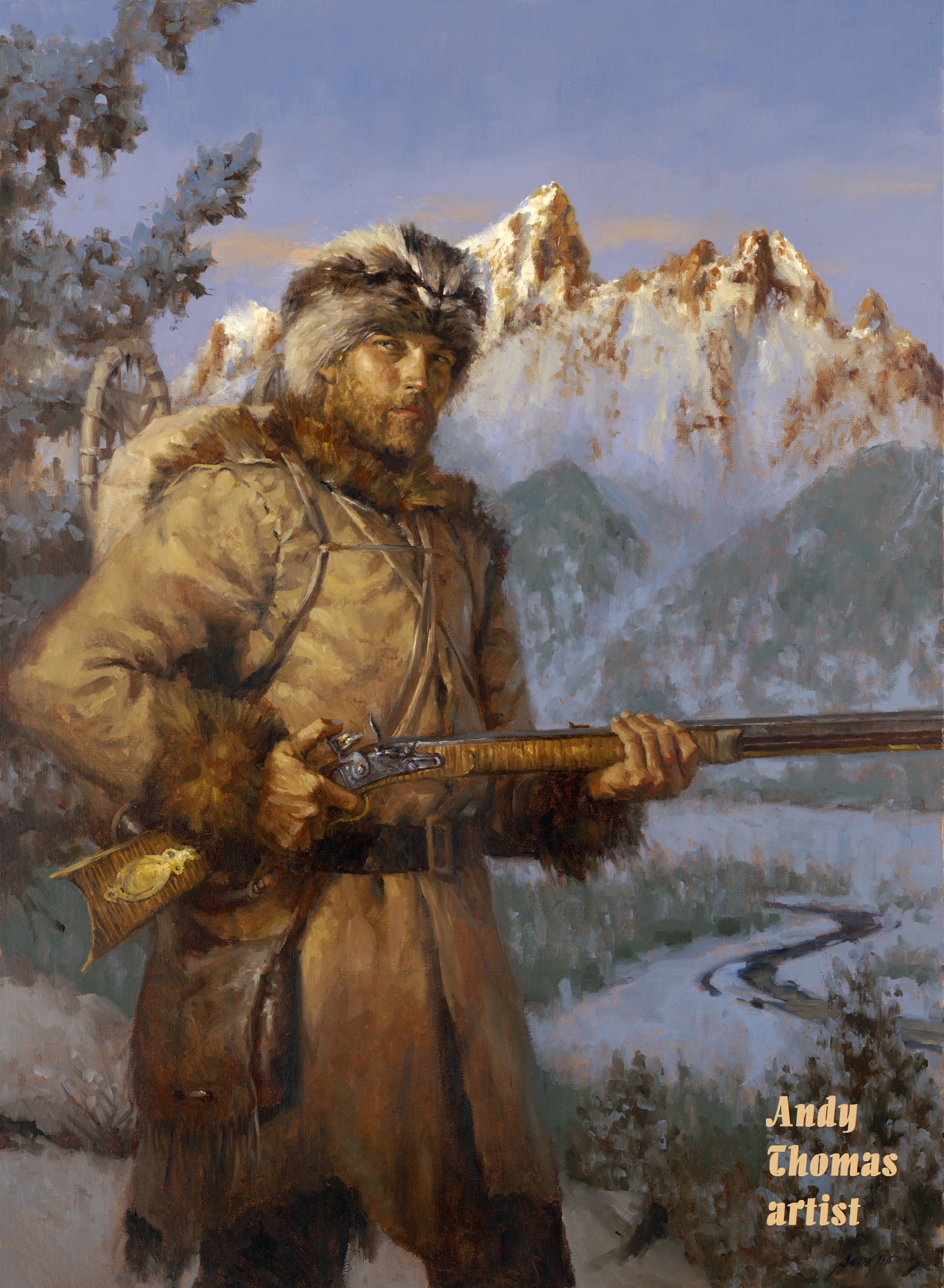
The painting here was done by artist Andy Thomas, used by the artist’s permission to portray mountain men in my promotion of The Shifting Winds. Dubbed by Thomas the “first mountain man,” the work portrays one of the notable American fur trappers John Colter, whose story can be found on the popular above-mentioned post.
What is it about these mountain men that still fascinates folks today? Reenactors and enthusiasts called “black powder men” gather regularly to dress up and shoot their historic black-powder weapons.
The original mountain men came out of the fur trade era of the mid-1800s when Britain and US were vying for the Oregon Territory. The British had a firm grip on the fur trade in the west with their Hudson’s Bay Company headquartered in what is now Vancouver, Washington. The Americans focused their attention on the Rocky Mountains, east of the contested area, and they developed a system where the trappers could stay in the mountains year round and gather at a rendezvous every summer to trade their furs.
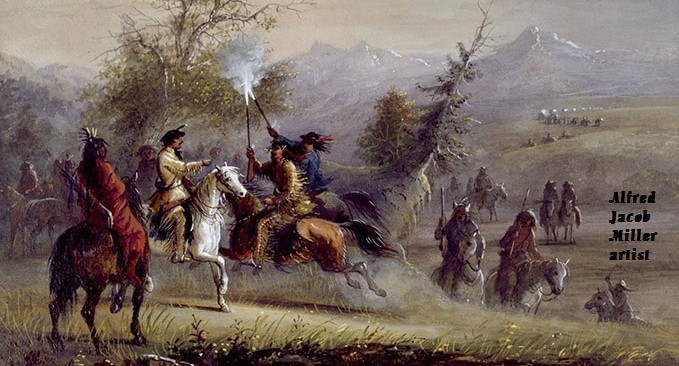
The above painting shows the arrival of the caravan bringing supplies to the mountain rendezvous, painted by Alfred Jacob Miller who went west to document the event. The rendezvous became a raucous time for the trappers who became known as mountain men. A colorful group, they were tough. They had to be to survive. And they enjoyed certain freedoms to live as they chose, as long as they honored the limits of the wilderness and the people who lived there. They made friends with some Native Americans, fought with others. Always on the lookout for ever-present danger.
Since the release of my two pioneer stories my focus has turned to the more ancient people of Ireland, who call themselves People of the Stones for the sacred stone circles and other megaliths they honor.
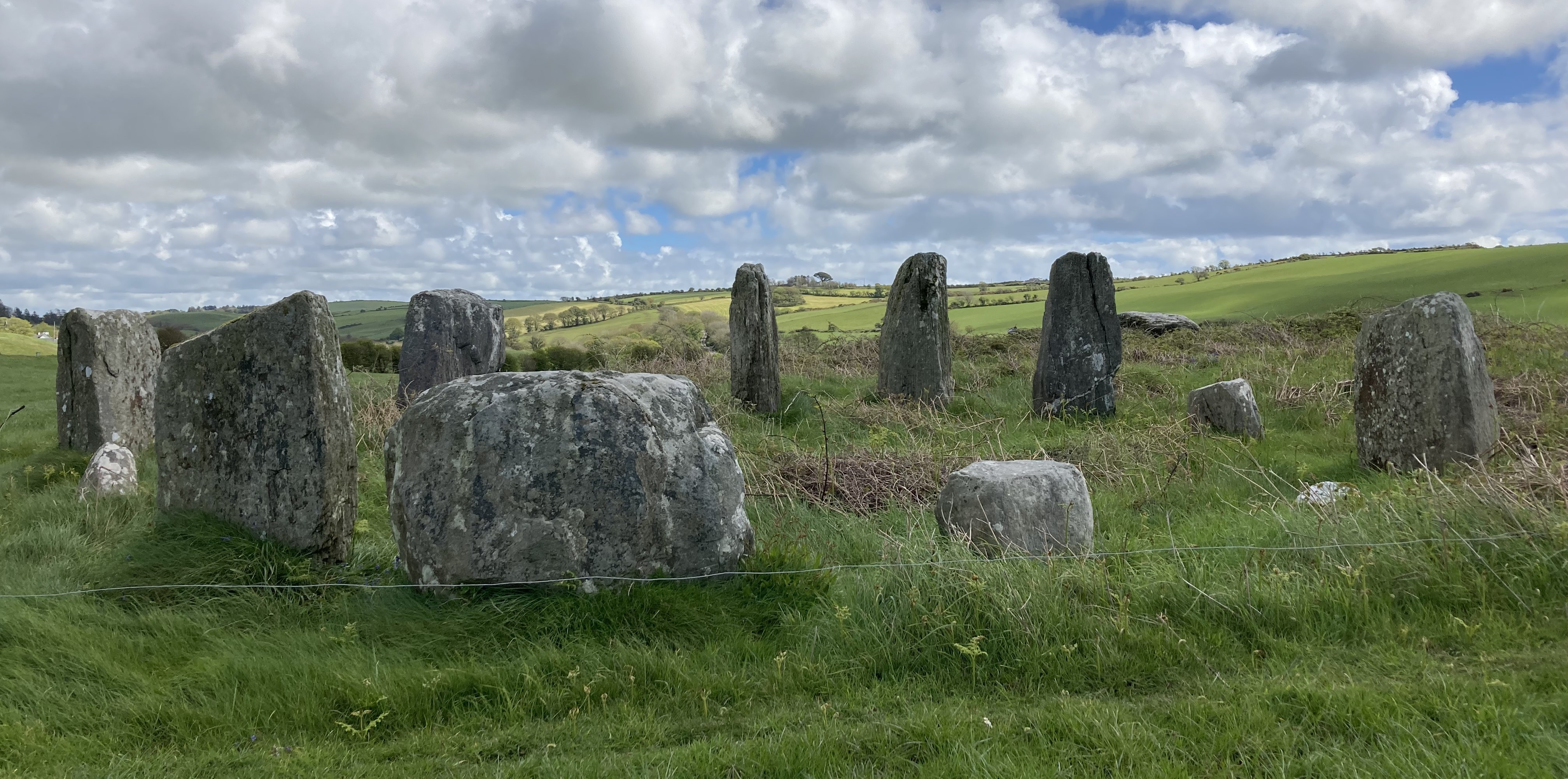
And in those ancient settings enemies were met not with guns but with swords. And the brilliant sword fighter might be a woman rather than a man.
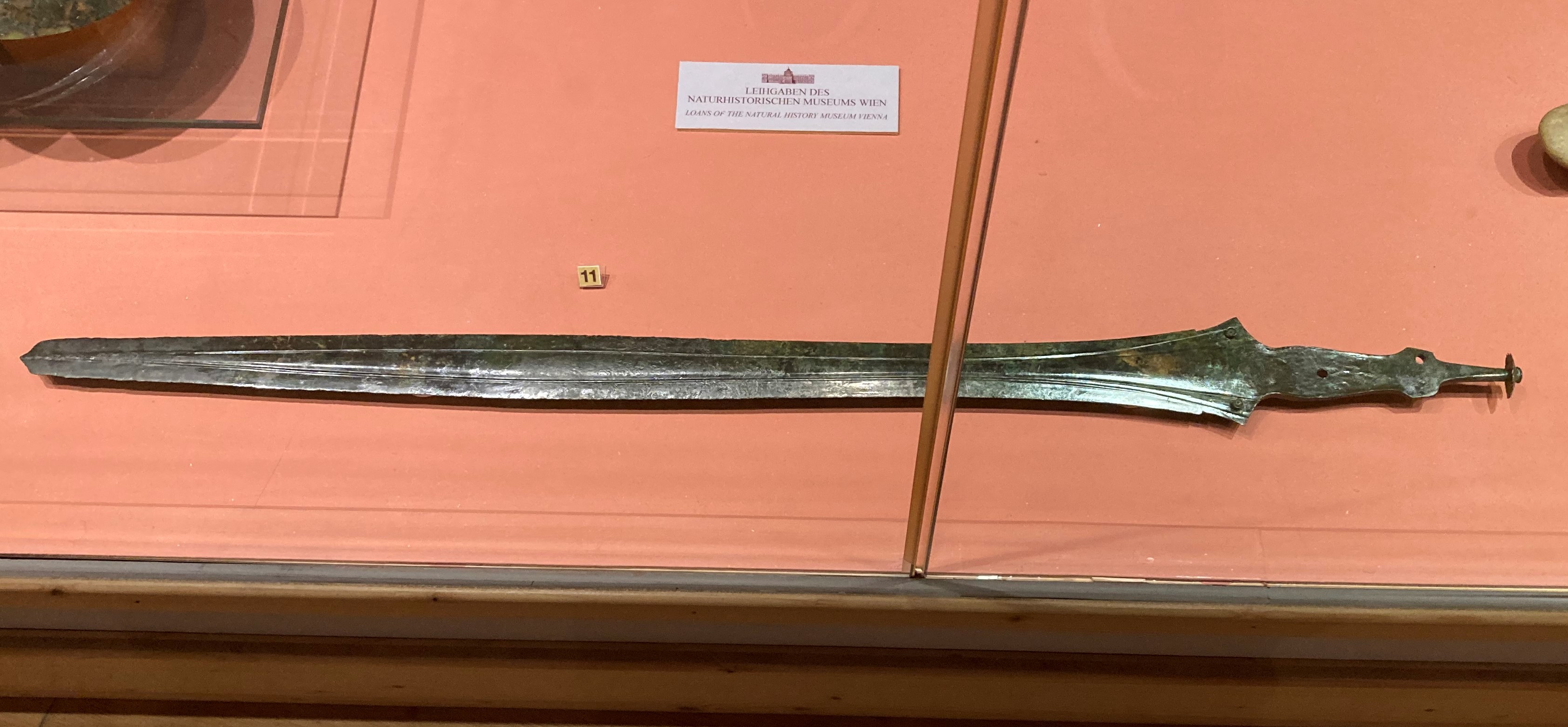
Shown below is one of the famous Hallstatt bronze swords, the chosen weapon of the Proto-Celts who in 750 BC flourished in their high mountain home above today’s picturesque modern village of Hallstatt, Austria. This sword crafted by one of the smiths in those long-ago days is on display at the wonderful Hallstatt museum.
The Irish do love their Celts, but my story opens in Ireland in 750 BC before the Celts could have arrived in Ireland in any numbers, and they probably didn’t call themselves Celts that early. My female protagonist, caught in a dilemma in her Irish homeland, will travel far to seek help and learn the craft not only of making such a sword but of fighting with it too. However, she has to pose as a man there, because her trainer wouldn’t teach her if he knew she was a woman.
Welcome also to my site at Instagram.


