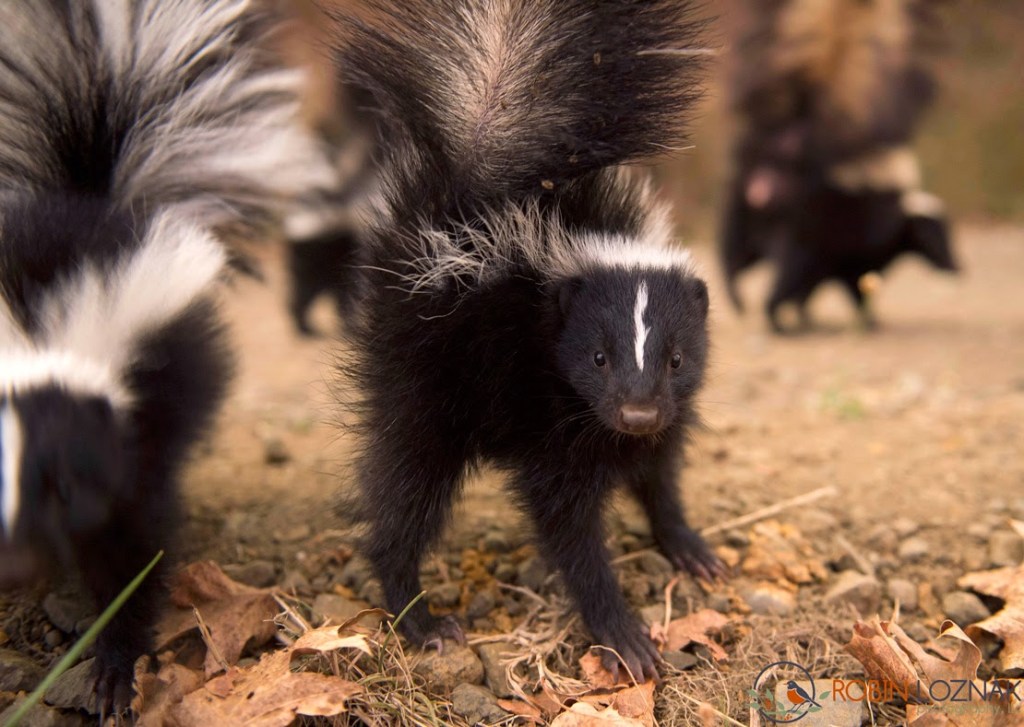
It’s May! Yes! The prettiest time of year on the farm. So said my father when I told him one April day that April must be the prettiest with all its green and flowers. “No,” he said. “May is.” Not something I expected to hear from this reserved man. Well, now it’s May and I’m sure he was right. In honor of May I’d like to present a rollout of pictures of critters that share this farm with us, all these selected photos thanks to my son-in-law Robin Loznak, award-winning photographer, whose work can be seen in publications around the world. And here.
Robin specializes in wildlife photography. Here he is getting a close-up of a very tiny critter, a picture I took a few years ago for another post. That’s a part of his wildlife specialty–bees, elegant praying mantises, dragonflies, and more. They all shine in his photos.
He and my daughter Carisa live on the farm too so they’re able to enjoy the place founded by my great-great-grandmother Martha Maupin in 1868 and maintained by my father, Gene Fisher, for many years. Robin kindly lets me use his photos on my blog, whatever I need to illustrate a story.
Here are some of my favorite photos he’s taken of wildlife on the farm. Some are old favorites you may have seen before. Some were new to me.
You know what I heard? . . . Mm-m? I’m listening. Baby barn owlets perch in the old barn in a prune box placed there by Robin for a safe nest. Sharing stories? Maybe.Acorn woodpecker leaving its home in the gate post. Going out for dinner?Probably.Female Northern Harrier (Marsh Hawk) like one that swept over my shoulder one day and hovered in front of me before making a sharp turn to fly away.See the story here.Male Northern Harrier in aerobic flight like one that appeared while I was writing Martha’s story. A hawk like him is pictured in the book.Hummingbird on a wire watching lunch.Acrobatic kestrel coming in for a soft landing.Honeybee ready to sip from a blossom and spread pollen around.What did you say? See a poetic description of a mantis in “Portraits of a Century Farm” here. The Century Farm is a Sesquicentennial Farm now, but the collection was done before it was.Exquisite detail of beauty on the wing of this dragonfly.This bobcat may be the one we called Scamp when he became such a frequent visitor. Scampered right up to the house one day.You can’t see me, can you? My mama hid me and told me to stay right here.Better go now. Which way? Which way? Roosevelt elk making quick decisions.See another elk photo with poetry among the “Portraits” collection here.What is that looking at me, Mama? See another of the “Portraits” here for a poetic description of the encounter, “Making Scents.”Robin said he used an extreme telephoto lens to take this shot. I’m happy to report that no one, man or animal, was harmed in this photo shoot.Peeking out at you. Did you ever see a salamander so cute?
And with that, my friends, I close out our ode to May with some of my favorite Robin Loznak photos of wildlife on our farm. I hope you enjoyed it as much as I enjoyed putting it together.
Thank you, Robin, for sharing your beautiful work.
Photo I took April 14 in 2018. I love the little white heart on the face of the nearest one.
April is usually the beginning month for calving here, although many farmers choose to calve earlier. The cows on our farm are gentle. They let you walk right through the herd, even when a cow is calving, although I keep an eye out for a nervous mama. They aren’t my cows. Ed and Mary Cooley rent pasture on the farm as they did when my dad was still here. But I get to enjoy the babies. I think these cows are gentle because Ed spends time with them, moving them from pasture to pasture, often daily. And in winter and early spring he adds hay to their pasture for feed.
The above picture by my son-in-law Robin appeared in my book A Place of Her Own, the story of my great-great-grandmother Martha Maupin who founded this farm in 1868, now a sesquicentennial farm. The picture illustrated a moment described in one of the Interludes in the book that told of my search for Martha’s story. My dad, Gene Fisher, farmed the place for 75 of those 150 years, more than any other owner in the family’s history. The fourth and last Interlude closes with the morning after he died.
The morning broke, bright and sunny. . . . We looked out the kitchen window to the apple tree across the nearby creek.A new black calf stood on wobbly legs beneath the tree, his mother gently licking his back. The first calf of the season had been born in the night. . . . I wished I could share with Martha the hope I found in this place and in the wonderful creatures who lived here with us. After the long dark night, there would be a bright new morning.
And new calves.
(The Globe Pequot Publishing Group, pp. 202-203)
The same little one as pictured at the top . . . with Mama watching. Or coming my way? Here’s looking at you.
A new story on the farm’s sesquicentennial status came out in the April edition of the Douglas Electric Company monthly magazine. April was the month my great-great-grandmother Martha Maupin purchased the family farm in 1868.
The story with photos: the book, me with the hills behind, me at five, and Martha’s house she had built for herself and her many children.
Craig Reed, local writer, visited the farm and talked with my daughter Carisa Cegavske and me before writing the cover story which got a nice spread, shown above. The farm would have qualified in 2018 but I didn’t put in the application until 2024.
Martha was the subject of my first published book, pictured in Craig’s story, A Place of Her Own: The Legacy of Oregon Pioneer Martha Poindexter Maupin, published by Globe Pequot Press. I didn’t have to write a book to qualify the farm for sesquicentennial status, but my research for the book certainly helped me put together the extensive information required for the application.
I grew up on this farm. The little girl curtseying in her overalls is me enjoying the freedom I experienced there. When my dad died in 2007 Carisa and her husband Robin Loznak decided to join me in keeping the farm. I had been away all my adult years so it was quite a change from city life I experienced in the interim. Their son Alex Loznak moved there with us, as well as my other daughter, Christiane Cegavske, and her child, Aspen Boutilier. Carisa, Robin and I still live there.
I love the farm’s hills for walking, and the quiet, where I find inspiration to write my books. My whole family loves the beauty of the land, the rich history, the wildlife. Christiane, Aspen and Alex visit as often as they can. That’s easier now for Christiane and Aspen, who lived in Kansas for ten years and now live in Portland, Oregon. Alex took a stint in New York City, then Eugene, Oregon, but he’s in Portland now too.
We all take pride that Martha was the founder of this farm, a woman who dared take on this treasure when it wasn’t all that easy for a woman to do.
Today marks the spring equinox when days and nights are equal. And the earth’s axis lines up so both hemispheres get the same sunlight. We give passing thought to this moment nowadays, though some of us cling to the hope that spring has come. But in the far distant past when most folks depended on these markers for scheduling the vital business of producing crops and other significant events in their lives it was important to observe this phenomenon. Perhaps even more central was the spiritual meaning. It must have represented for many a time of rebirth.
Knowth Passage Tomb, River Boyne Valley, Ireland
Many people know about the solstice alignment of the Newgrange passage tomb in Ireland where the rising sun on winter solstice shines right up the long passageway to the inner chamber, but a few miles up the River Boyne Valley another passage tomb has an east-west alignment which may suggest that its passageways were designed to receive the sun’s light at equinox. This is the large central tomb of Knowth. Alterations of the passages during reconstruction may have affected the course of the light, whether sun or moon, but many of the kerbstones are carved with images of the sun and moon.
Kerbstone at Knowth Passage Tomb
The people who constructed these great monuments surely honored the signs in the skies that affected their lives. I had the privilege of visiting Knowth and Newgrange just last April when I was doing site research for my book set in Ireland and snapped the above photos. You can see part of the large tomb in the upper photo with several of the distinctive satellite tombs around it. Some of the kerbstones can also be seen at the base in that upper photo, and one more clearly in the closeup.
At home this year I think we’re clinging to the hope of spring more than usual as multiple days of heavy rains caused flooding of rivers and streams, while also saturating soils that sent mudslides down the slopes to block roads.
The road up the hill on my farm. Robin Loznak photo.
There’s that old saying about March coming in like a lion and going out like a lamb. Well, we were enjoying day after day of warm spring weather early in March.
The photo below was taken on March 10. Much more lambish than lionish, I’d say.
Early daffodil bloom on a Marchmorning on the farm.
You never know about March. But I think we’re ready for spring and more of those sunny, lamb-like days.
Hey! The daffies are out and the sun is shining. It’s even warm. I had to take my coat off on my walk this afternoon. Everything brimmed with the hope of new life.
The mighty Oregon Oak stands tall against the blue sky, its many clusters of mistletoe clear to see on the branches still bare of leaves.
One of my favorite trees, it’s just up the hill from my house. I pass it often on my daily walks when I do the uphill first.
Grass seems brighter. Sure does feel like spring. Of course nothing is certain about western Oregon weather in late February or even March. Yesterday the wind was hurling rain against my windows. But I’ll happily cling to whatever snippets of spring we get.
I walked on up the hill, feeling good. This morning I finished a long book project–reading through the entire series I had revised, making sure everything flowed together.
I paused to look up into the tree’s branches overhead, tangled as the stories, but every gnarled limb knew its place and carried the tree’s essence to the buds that would one day open and breathe out life. I had felt each of my stories, as if those glimpses into history breathed with life too.
Yesterday was Winter Solstice and I went outside to try to capture a moment of the new morning light. Clouds covered much of the sky but left a few thinner spots where a bit more light promised to shine through. I kept thinking I had the most light I was going to get for a picture of this gnarly oak above my house who’s seen many a solstice morning in its long life. And I took one picture after another that wasn’t quite there.
I almost gave up on a full sun until this happened.
A sudden full spray of sunlight brightened the green moss on the sunny side of the leaning trunk, the two larger branches seeming to reach for the warmth. I let out a cry of joy and snapped this photo. Even in the distance you can see firs and plains caught in the broadening light.
Earlier that morning people at Newgrange in Ireland had waited with great hope as the sun hid behind a low bank of clouds. From my researches I knew what an important day Winter Solstice was for them. Some 5,200 years ago Neolithic people with little more than stone tools had built the stone passage tomb of Newgrange with such precision that on Winter Solstice morning the sun would enter through a small doorway and shine all the way down a narrow passage to an inner chamber and touch waiting ashes and bones of the dead.
You can see the square hole for the sun’s entry just above the people’s heads in my photo of the great tomb. And it still works!
On this solstice morning I watched Irish Central’s livestream of the event at Newgrange. It was a replay of course. They’re eight hours ahead of us, but I still felt the excitement of the moment. Great crowds had arrived for the occasion this year, and a few lucky people were finally allowed to enter the passage, winners of a raffle that had drawn hundreds of thousands of hopefuls. Each winner was allowed to choose one person to experience this phenomenon with them.
Like Oregon where I live, Ireland has its share of rainy mornings so the sun doesn’t enter that passage every year. Would it break through this time? I felt the excitement and optimism shared by the commentators. Then, with sudden splendor, the sun lifted above that dark bank of cloud and shone down the passageway to the inner chamber.
With a thrill I recalled that I had been in that very chamber myself just this year. Back in April. That’s the sun’s doorway into Newgrange behind me in my profile photo. I traipsed past the great carved kerbstone with its mysterious designs cut deep in the surface. I drew in my shoulders to walk through the long, narrow passage where more designs were carved in the stone uprights that hemmed us in. Once in the chamber I gazed up at the corbelled roof to the capstone on top, so meticulously constructed it still doesn’t leak after 5,200 years. We didn’t see the sun come down the passage, but the event was simulated. Our guides struck all the interior lights, leaving us in darkness, and then sent a stream of artificial light down the narrow way to fill the inner chamber.
What amazing symbolism! How important it must have been to the builders to create such a monument. We cannot know the minds of these builders. Yet I think it was the commentators who said, “Nothing ends with darkness and death. New light always follows.” This must have been a powerful belief in the people all those years ago.
Today, in our own way, we can take comfort in longer days and in the light that must follow the darkness. After I got my picture of bright sun on the old oak, I turned and strode down the hill into the sunshine.
One December morning last year I woke to this and snapped a picture which I posted on Facebook with a short comment, “Sunrise! New day. New hope. New promise.”
On this morning’s gray, rainy morning I looked back with some yearning for such a day.
The year in between has had its ups and downs. I took a wonderful trip to Ireland and Hallstatt, Austria, to check on scenes for my latest book–Ireland because it’s the center of the story, Hallstatt because that’s where the Celts were at the time of this dip into the ancient world of the setting. Another highlight came when my daughter Christiane got a job in Portland, Oregon, and she and Aspen moved back west after ten years in Kansas. One more highlight was an excellent writers conference in Seattle where I pitched that latest book, and those pitches went well.
I’ve always been a glass-half-full kind of person. And I need to move forward embracing hope. Without a new novel in the works right now I’m working on a companion book for the series which is related to my newest Irish story. I had already drafted parts of this companion book, but it shifts as my focus shifts. In the last few days I’ve been going back through old travel journals of my first trip to Ireland, reliving some experiences there.
The beauty of the land in its cloak of many greens. The wonder of great stone monuments with their intriguing mysteries, like the passage tomb of Newgrange, below. [The photos below are all from my 2024 trip; I didn’t have a digital camera on the first Irish visit.]
The magic of an exquisite woodland where wind spoke between great oaks. My traipses across green fields with my ready umbrella as boiling clouds opened and let streams of sunshine through to create one of those many Irish rainbows. Stunning cliffs descending into surging waters at the Cliffs of Moher.
And the birds. Oh, the birds! Were they ravens? Or rooks? Or jackdaws? All cousins of the common crow. The latter two weren’t familiar to me. We don’t have those where I live. But whatever the bird we saw great flocks of them sweeping across the historic Hill of Tara and others hovering around the haunting Rock of Cashel where they nested in those stone niches. My daughters joined me on part of that trip and marveled with me. [This morning I spent hours online trying to determine what birds we saw, listening to sample bird calls, reading about the different behaviors, watching videos of onsite tours, and my guess is that the bird shown below outside the Rock of Cashel tower is a jackdaw. And I’m guessing the birds at Tara were rooks.]
In this companion book I want to share the journey, the joys, and the challenges of my research to offer background for the novels.
So in these gray days some streams of sun shine through and I find purpose. May the promise of yesteryear sustain me. I wish such hope and promise for you, my good readers.
The dark days of November have come upon us. A darkness that can bring us down.
Today the forecast looked like rain all day. Then I glanced up from my morning tea and saw that the sun had come out. Better get my walk in fast. But by the time I got bundled up skies had already darkened again. I grabbed my umbrella and went out anyway.
As I tromped down the road through the drizzle remembering October’s warm sunshine my thoughts turned to the stages of writing–the light and the dark. The spark of inspiration. The thrill of creation. You put so much of yourself into the project. It’s a bit like breathing a long breath out. And it’s such a bright, light feeling. So when that’s done what to do next? Well, I guess you have to take some breaths in. Read. Watch movies. Restore.
After I got back to the house from my drizzly walk I thought I would take a picture of the dreary day–just to reinforce and share my gloom. That’s when I snapped the photo at the top and what do you know. The light just had to shine through those heavy clouds and create a sweeping bright spot. Not for long, though.
Still feeling a keen sense of the dark I wrote a draft for this post and when I thought I was finished I looked up and saw that I would have to take another picture. This is what happened.
So there we are. You never know. Out of the dark comes the light. Blue skies. Hope. Inspiration will come again. We’ll find a way through the darkness. Time to breathe in and find peace.
Here I am in one of the hotel’s pleasant courtyards near the end of this whirlwind event, feeling happy about all the wonderful connections I made this time.
Great writing conference in Seattle a little over a week ago. I decided last minute to fly up and attend so I could pitch my new historical novel set in ancient Ireland. I was delighted by the responses from agents I pitched and have now sent off the queries with material they asked for. Fingers crossed. It’s all in the words of course. Hope they love it.
I so enjoy the people at these conferences. Everybody has a story. They are, after all, storytellers. When you meet someone they often ask what you write and you tell the story about that and of course you ask them and hear their story. Attendees also encourage each other. After the pitching begins you share with each other how your pitches went and maybe glean a little information on someone you hope to pitch next. A very upbeat, mutually encouraging atmosphere.
I stopped over in Portland to see family on the way home. One of my daughters just got a new job in Portland and I hadn’t seen the new place yet. Now all my kids are in Oregon for the first time in ten years. I’m so glad. A couple of photos below show views from our walks on a hill overlooking downtown Portland. That’s Mount Hood on the hazy skyline in the second photo.
Looking down to the Portland city center from the heights near Washington Park.A city building seems to echo the sharp peak of Mount Hood behind it.
With Martha’s Farm gaining Sesquicentennial status it’s making the front page news.
Drew Winkelmaier, reporter for The News-Review in Roseburg, Oregon, came out to the farm in Kellogg last week and put together a nice story for the Sunday edition.
That’s me on the porch, photo by Drew. We talked awhile then went down to the old barn that has stood on the property since the 1930s when my father bought the place from his great-uncle and had the barn built.
From there we visited the hazelnut orchards, our newest crop on the farm, which had been a prune farm since 1895 when Martha’s son Cap planted the first prune orchard.
With the prune market turning iffy and a burgeoning hazelnut market we began making the switch in 2011 when we planted our first hazelnut trees.
Drew’s story delves into the history from our discussion as well as information I had put together for the Oregon Century Farm and Ranch Program, much of it based on my research for the book I wrote about Martha, A Place of Her Own. When I took over the farm in 2008 I became another woman in the family to own the place and thought there might be a story in that. And yes, Martha had far more story than I ever imagined.
My family got together at the Oregon State Fair last Saturday, August 24, when fourteen farms were honored for Century status and two, including ours, for Sesquicentennial status. We received lovely certificates at the presentation when short narratives were read about each of the farms with photos on a screen above the stage.
After that we did what everybody does at the state fair. We visited the animals, including a competition among elegant horses in the historic horse barn. And the poultry and pigs and sheep and goats and cattle. Oh, and the beautiful family of huge black draft horses. Such magnificent creatures! And we saw exhibits of photography and artwork and ate too much fair food.
And on the way out we enjoyed strolling through the rides as the skies darkened and the lights came up.