A Visit of White Hawks

white hawk

Photo by Robin Loznak

If you’ve read A Place of Her Own you know what the white hawk means to me. So I want to share today’s thrill. I am sitting in my office, laptop on my lap, composing another blog post when I look up and see white hawks soaring above the field below me. Two white hawks! They must both be males, because the female marsh hawk would be gray. What are they? Nest mates? Sons of the white hawk who visited me when I was writing Martha’s story? The one that seemed always to be a harbinger of good news?

I watch them for a while, lifting together in synchronous flight, parting, sweeping high, darting low to the ground, together again, rising as one, until they fly out of my sight. Then I sit down to write this.

I’ve seen them more than once in the last week or so. A couple of days ago I saw three. Three! Whatever it means to see them visiting again, they do lift my spirits, as if letting me rise on their wings.

The photo above, taken by my son-in-law Robin Loznak, appears in the book, A Place of Her Own. It almost failed to make the cut. He’d been trying for some time to capture this one on camera so it could go in the book, but it kept eluding him. Deadline came and no hawk picture. Then a few days after the deadline it appeared when he had his camera in hand. Thankfully my editor agreed to add the picture, deadline or no.

This morning I feel lightened by the hawks’ return.

COMMENT


Outtakes #2 – A Place of Her Own

Originally I interspersed every one of Martha’s chapters with a short chapter from my own viewpoint, showing my return to the farm as well as my search for Martha. The editor liked my search, but not the return. This is part of an early scene of mine showing my family’s own struggles as we prepared to move to Martha’s farm. In general, I will try to post only the parts of scenes not included in the published version, although sometimes there may be a slight overlap. Thus, the posts may sometimes feel as if they’ve picked up in the middle of a conversation. Clip…..

Outtakes No. 2


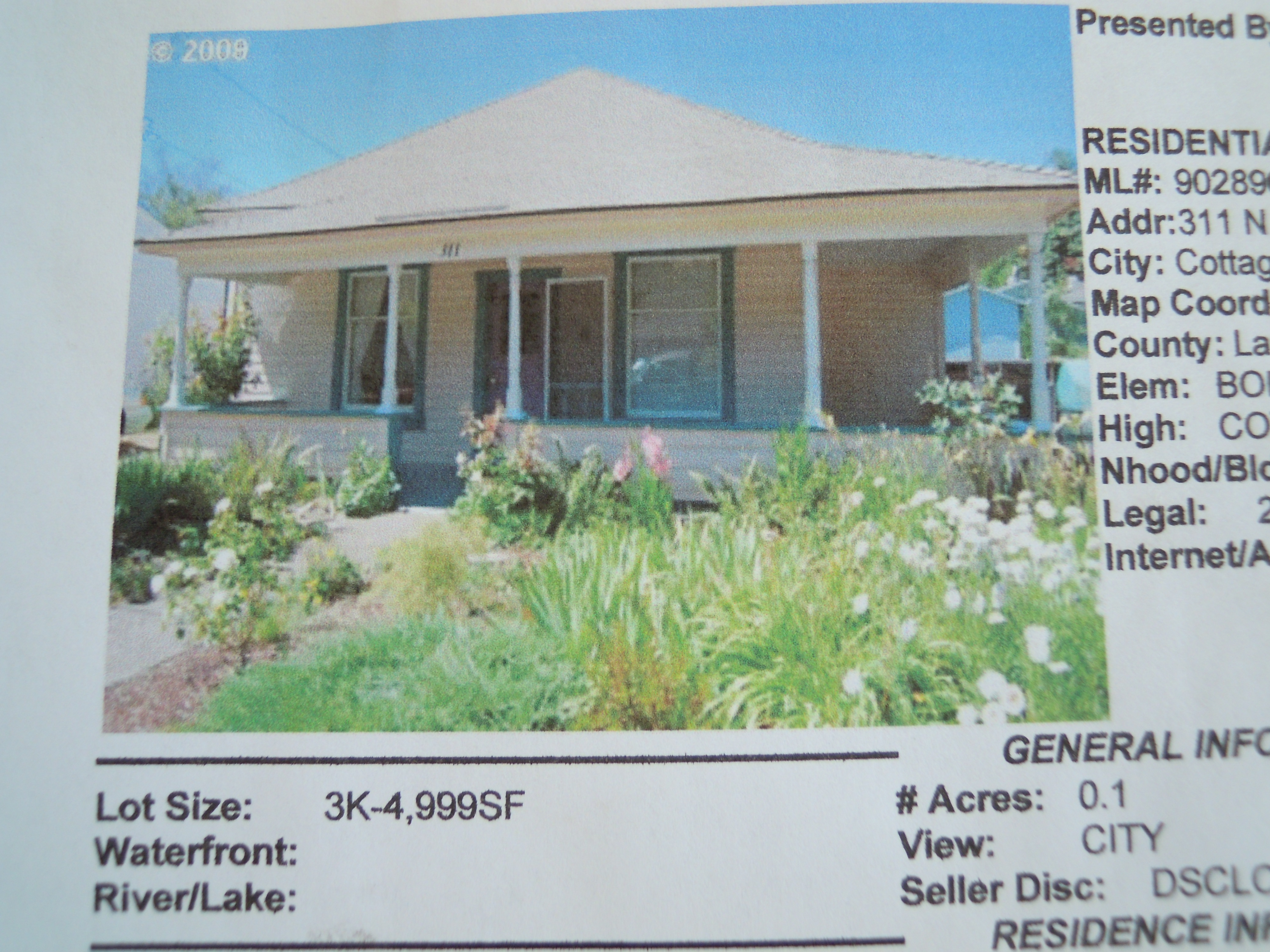
Here’s the Cottage Grove house going on the market.


Before any of us could move here [to the farm] . . . we needed houses to live in. Had I known it would take so long I might have bought a bigger house in Cottage Grove when I moved there a few years ago after it became clear my dad needed me closer. At that time I lived alone and the twelve hundred square feet of my Victorian cottage there seemed perfect for me. After my dad died and we reached a decision that I would keep the farm and Carisa and her family would move here from Montana, we knew we would need a second house and some restoration on the old farmhouse.

Soon after the decision Carisa’s husband, Robin, got a job in Roseburg, a town in somewhat the opposite direction as Cottage Grove. Photojournalism jobs being rare, he felt he should take the job, even though the farmhouse wasn’t ready for them. The builder thought it would take a couple of months to have it done. We decided Carisa’s family could move in with me–the three of them, their two dogs, one cat and one fish. I had already acquired my other daughter’s dog. Robin would commute between Cottage Grove and Roseburg. Surely we could manage for two months.

But the two months stretched longer. I was anxious to get my own house started. Though relatively close, Cottage Grove was still forty miles from the farm, and it wasn’t easy to manage a farm from that distance. Fortunately, someone was close by to look out for things. Ed Cooley, the man who had worked with my dad since the 70s, was still renting cattle pasture from me and helping with the harvests and other tasks. From all those years working beside my dad, he knew more than I ever would about how things worked on this farm. Ed was one good reason my dad was able to stay on the farm into his late years, and one good reason I dared take it on when my dad died.

Anyway, two months in my little cottage became three, four, five. The cottage felt even smaller. Tempers flared. The fish couldn’t take it. He died. I could scarcely think, let alone manage. Having lived alone for almost twenty years I was used to my own space. And my daughter was used to running her own household. She was homeschooling Alex in the large country kitchen, the buffet in there given over to the paraphernalia necessary for that.

For a while we ate dinners in the dining room, which had become their bedroom, but that required folding up their futon every morning. We ended up eating at my little table in the corner of the kitchen, a perfect 30-inch-square table for me, but the four of us had trouble fitting around it.

Alex, at eleven, missed his friends and railed against Grandma’s stricter house rules. Articulate and dramatic, he would explode from time to time. “I can’t live like this anymore.”

Their big golden lab slunk off the couch whenever he saw me, head low, eyes guilty, knowing he wasn’t allowed there. The other little dog never understood. I had to put away all my breakable treasures to protect them from the lively cat that easily jumped to any height indoors.

While we struggled in our cramped space, I also needed to get this Cottage Grove house sold so I could afford to build my new house at the farm. This was summer 2008. House prices were trembling. I felt growing desperation to get mine on the market soon, but knew it wouldn’t show well with our menagerie in it. Finally after seven months, we told the builder my kids were moving into the farmhouse, ready or not. It was time to start the other house. That caused some consternation for the builder, as he contemplated having to work around the family and their menagerie to finish the job, but they made the move. Work soon began on the new house.

I had about three months of quiet in Cottage Grove–if you can count having a house on the market quiet, and running back and forth to a forty-mile-distant farm. Then my other daughter and granddaughter came to live with me. My small cottage became cramped again. We had to scurry every time our real estate agent wanted to show the house, with toys to pick up, the accumulations of too many people stuffed into too-small closets.

Time stretched while the new house on the hill took form. . . . After a year, during the near collapse of the housing market, the Cottage Grove house finally sold. Again I explained to the contractor we were moving in, ready or not. The move happened, and finally, with all my family around me in a lot more space, I was here to enjoy what Martha bought over one hundred forty years ago.

Note: My son-in-law Robin shared the magic of his photography in A Place of Her Own with pictures of the family farm. If you missed the tribute to Robin on my blog, or want to see the post again, click Spotlight on the Photographer to find it.

COMMENT

Outtakes #1 – A Place of Her Own

Outtakes is a new category for my blog, as explained in my most recent post. In the next few weeks I will be posting scenes which were cut from my book A Place of Her Own. I’ll present the cut scenes in order, some from Martha’s chapters, some from mine. This first scene comes right after the ferry crossing of a flooding Missouri River at the end of Chapter One. I cut this scene to keep the story moving quickly toward the meeting of Martha and Garrett. It was an action scene following an action scene. We just had the exciting crossing, which I thought was stronger, and let this one go. It reduced the word count by 752 words. Clip….

outtakes longshot


Scene gets the red-line treatment here in my office.


Martha fought back panic as they raced against the river to load up household goods to take them to higher ground. She and her brothers had been with William and his wife, Eliza, and their family for several days and hadn’t seen a clear day yet. This morning, with the river right at bank full, William’s family had started moving out. They’d taken several loads so far. William’s smaller children and their two dogs were already with friends in town in Carrollton, Carroll County’s foremost town and county seat, which stretched above a soft-edged bluff overlooking the bottoms.

Martha held onto one side of a canvas tarp Eliza was trying to draw over their wagon load, while their nine-year-old son, Will Jr., worked to tie the tarp down. Rain-borne wind grabbed at the billowing canvass and whipped it out of Martha’s grasp. Little Will threw his small weight over it and helped her take hold of her edge again. She could scarcely see for the water dripping down her face.

“That’s good,” Eliza said. “I think we have it.”

Doc and Simpson pulled up their own small cart, and William rushed inside, returning quickly with an armload of blankets and pans.

Distant cries sounded. “Water coming across the bottoms . . . need to get out . . . now!”

William straightened and stared toward the river. “We have to go.”

The animals strained to make their way across the spongy soil. Wheels bogged down, and the men worked to pry them out, while Martha, Eliza and Will tugged at the teams to encourage them forward. Martha glanced back. She could see a thin line of water this side of the trees that had bordered the river. Now the river knew no borders. She took a sudden intake of breath. “How fast will it rise?”

Eliza shook her head. “I don’t know. I’ve never seen it like this.”

They could only progress in stops and starts. Their refuge of soft low hills looked so far. But the river kept closing in. Martha’s heart beat a jolting rhythm. How would they ever outrun the river?

Through driving rain they staggered on, until Martha saw little but the next muddy pool, and the next. Then she realized they were climbing. They had reached the bluffs. Looking up, she saw the growing city of tents being laid out beside Carrollton. She headed straight for their own tent perched near the outer edge. Hope swelled in her and gave her the energy to climb. Daring a glance back, she saw that the river had risen as much as halfway across the bottoms, maybe more. A latent burst of urgency drove her, and she scrambled on up the slope to the tent.

She wanted to crumple onto the ground, but they had work to do. Wagons had to be unpacked, animals tended. But before she put her hand to any of it, clusters of men appeared. Many hands reached out, lifted, carried, tidied. William and her brothers staked out the animals, and William excused himself, ready to walk with Eliza to the home of the friends taking care of their children. Eliza would stay with those friends until this was all over.

Before leaving she grasped Martha’s hand. “Are you sure you won’t go with me and stay in a nice snug house?”

Martha smiled, glancing at the tent, then out at the surging river. “We have a good view from here. Thank you, but I’ll stay.”

Will and his father appeared to be in deep conversation. Then the boy leaped into the air with a shout of joy. “Thanks, Pa!” He ran to the tent, stopped abruptly, and with shoulders high marched inside as if he owned it. Apparently Will Jr. was staying in the tent as well.

Giving Eliza a quick hug, Martha walked back to the tent and sat, just inside the open flap where she could look out and watch the river but still have cover from the rain. Such a spectacle. Logs and debris floated along the surging tide. A house. Some kind of shed. Another house with a rooster and two chickens clutching the top. A barn with a pig waddling back and forth on its flattish roof.

Above the pelting rain she heard the faint sound of the pig’s squeals, punctuated with a rooster’s crow. All the while, the water rose higher until it touched the edge of the bluffs. Would it come even here? Where would she run then?

COMMENT

Outtakes ~ A New Category

Book cover - A Place of Her OwnOuttakes, the clipped segments of film and video sometimes included on DVDs, often provide a laugh, or maybe just a sense of curiosity about a scene that looks pretty good but for some reason got cut. The film was too long. Something had to go. Or it was somehow lacking.

I think I’ve written about the clipping I had to do on my book A Place of Her Own before it could see print. But to recap, my agent was initially concerned about the length of my manuscript, which ran 112,000 words. She told me this type of book should ideally be between 80,000 and 90,000 words. She asked if I could cut it some. I cut it down to 106,000 and was fairly pleased with that. It’s no small task to cut 6,000 words. She politely looked at it, then asked me to go ahead and get it down to 90,000 so we had that as a given before we submitted it to a publisher. Whoa! She was serious about 90,000. That meant a total of 22,000 words. You don’t get 22,000 words out of a document by snipping a word or phrase here and there. That meant some whole scenes had to go. And I had toiled lovingly over every scene.

Well, I did it. I slashed many of my beauties and got it down to 90,000. Then my agent submitted it to an editor. The editor liked it, said it fit her list, but she wouldn’t make an offer the way it was. I had entitled the book Two Women Across Time and had wound my story of returning to our family farm together with Martha’s story of her long road to obtaining that farm. And in my chapters I also described my search for Martha. My chapters were short because I knew my story paled in comparison with Martha’s. But the editor wanted even less of mine. She liked my search for Martha and said if I could come up with a device to show that and not the other, she would be happy to take another look at it.

I told my agent I didn’t think we should walk away from this kind of interest. I wasn’t that wedded to my part. I would cut all the superfluous parts of my chapters and include the description of my search for Martha in several “Interludes.” So I did that. And then–what would you know?–I didn’t have enough words. Sheesh! I was able to bring back some of Martha’s scenes, but not all.

When I chat with people in book club meetings or Q&A sessions after readings, we occasionally talk about the cuts. And sometimes folks wonder if they haven’t missed something. “Do you regret cutting those scenes?” some ask.

Well, no, I don’t.

Painful as it was at the time, I believe my agent and editor were right. I think it’s a much stronger book the way it came out. For every cut there was a reason. Still, some of those scenes were pretty good, and for folks who feel they missed something, I suggested the possibility of putting the slashed scenes on my blog, and I received some strong encouragement to do just that. So in the next several weeks I’m going to share several of those “outtakes” to let you see what you missed. I’ll post the first in a couple of days.

I hope you enjoy these added glimpses into the story and the process.

COMMENT

New Book Cover

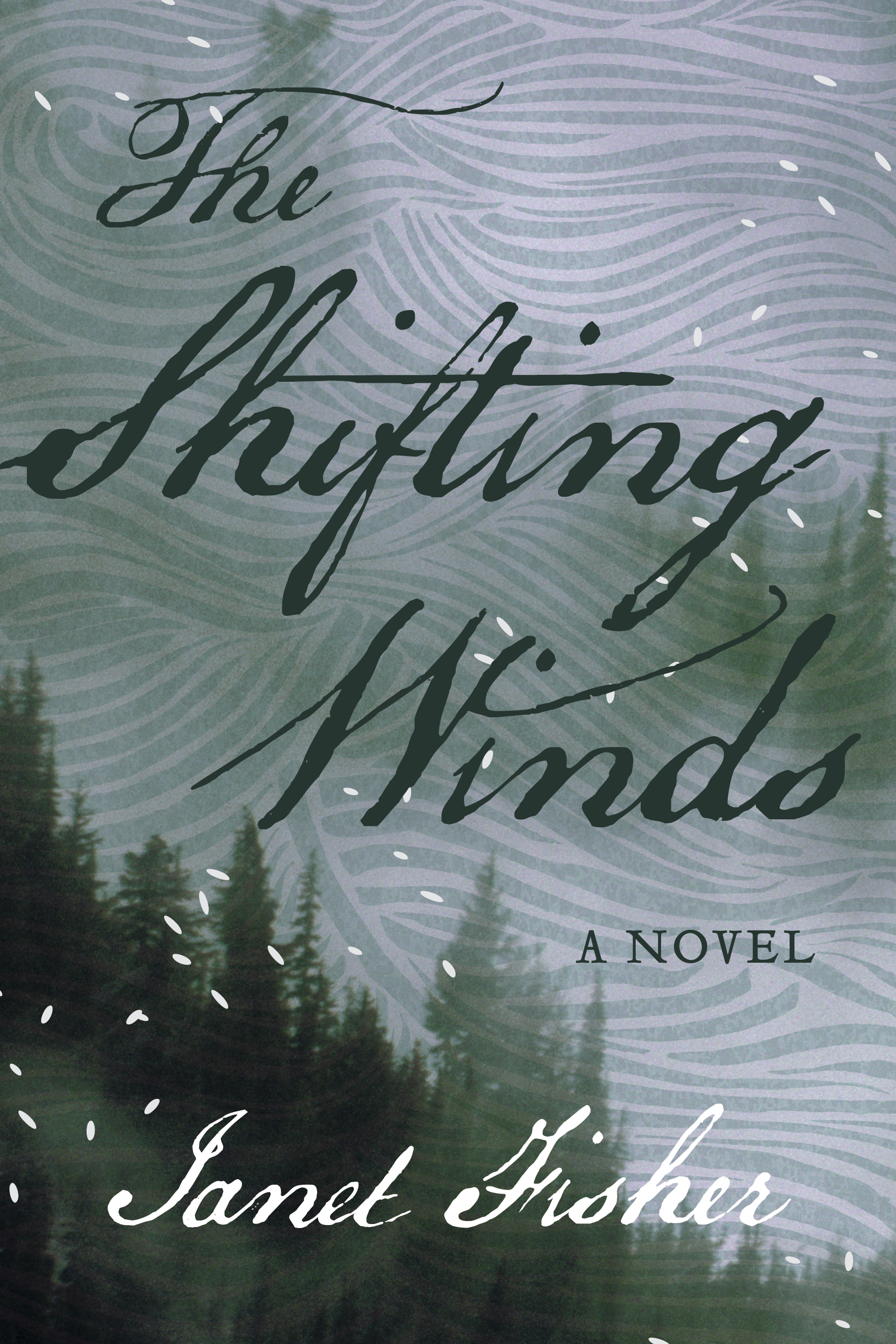
ShiftingWinds_EcoverMy editor at Globe Pequot Press just sent the cover art for my new novel which is coming out next April, and here it is. Very evocative, as she said. I like it. Looks like a typical Oregon timbered mountain, appropriate for the story of a young Oregon pioneer woman caught in the changing winds of her time.

ShiftingWinds_EcoverHere’s a smaller view for the overall effect. It’s exciting to see the book’s face. Makes it feel more real, like something I’ll be able to hold in my hands one day soon.

I also love those words “A NOVEL,” because I’ve been writing novels for a while, and I’m so happy to see this favorite leading the way for me in fiction. It feels as if the winds are shifting in the right direction. Cheers!!! 🙂

COMMENT

Calf Time

2015 CalvesOne of the delights of living on the farm is to step out on your porch and say hello to friendly ones like these. They think they’re grazing. I see it more as mowing. In any case there’s a lot of soft munching. Sit quietly a moment and you hear the constant crunch, crunch. Some gentle breathing. The occasional lowing. Happy cows are such pleasant animals to have around. Calm. Alert. Curious.

Ed Cooley, who pastures these cows on my farm, moves them regularly from one cordoned off piece of pasture to the next. They’ve been in a distant field for a while, so we’ve missed seeing the babies. Now that the grass is turning dry he has moved them to the pasture around the house for fire control. So we will not only feel safer,we’ll have the pleasure of getting up close and personal with these cute critters for a time.

COMMENT

NEW BOOK DEAL!!

Society208-Photo courtesy of Clackamas County Historical Society, All Rights Reserved

Woo-hoo!! Another book!

I’m thrilled to announce I sold my second book, this one a historical novel of early Oregon. My agent Rita Rosenkranz just closed the deal with the editor of my previous book, Erin Turner of Globe Pequot Press. It will come out in April 2016 under the TwoDot imprint, the same as A Place of Her Own. The photo above is a lithograph by J. H. Richardson showing Oregon City in the 1840s, the primary setting of the new book, tentatively entitled The Shifting Winds.

It’s the story of reluctant Oregon pioneer Jennie Haviland whose father decides, against her wishes, to take the family west to the wilderness of 1842 Oregon. Two men there vie for Jennie, one British, one American, as their two countries vie for the contested Oregon land. But Jennie wants choices of her own.

The Oregon City shown in the lithograph is the hometown Jennie would have known soon after her family arrived at the end of the long Oregon Trail.

I wrote this book some years ago when my focus first turned to stories of Oregon pioneers. After succeeding in selling the story of my pioneer great-great-grandmother, released in 2014, I brought this one out and gave it a polish, hoping my editor would like it too. And yay! She did! It has always been one of my favorites. I had such fun reworking it and look forward to sharing it now with readers.

Although A Place of Her Own reads like fiction it was sold as non-fiction. This new one brings me over to the world of fiction, in this case, fiction set in the midst of historic events with some real people, like legendary mountain man Joe Meek and Hudson’s Bay Company Chief Factor John McLoughlin. It falls solidly into the category of historical fiction.

Please join me in a cheer for book number two!! 🙂 🙂 🙂

COMMENT

My Muse’s First Draft

Rough Draft - 4.5.15My muse just took me on a wild ride, and here’s the first draft. Done.

I’ve been writing books for many years. None ever caught me quite like this. And I must apologize to my followers for being absent awhile from this blog. I know. I know. You’re supposed to balance things out. Divide your time between writing and blogging and Facebook and marketing and all the rest. People sometimes remark about my discipline as a writer that helps me put out a lot of pages in a short amount of time. It’s not discipline, folks. It’s obsession. And this time, maybe more.

I blogged earlier about the visit of my muse, who began flooding me with ideas for this one in mid-December. I never really got away from it. I piled up notes and finally got them organized, ready to start the first draft in mid-February. I finished this draft March 22. In the last few days I gave it the first readings, one on the computer, one on paper. The photo above shows the first cleaned-up version on paper–not the final draft by any means. But it’s finally something I can hold in my hands.

Did I tell you the story of her name? My muse? I believe I alluded to it. In one post I had talked about changing the name of my character and how that ignited the inspiration for this historical novel of the Greek isle of Crete. I call the character Talia, and when I looked online for the meaning of that name I came up with several meanings like to blossom or bloom. Ah! Did she bloom! But, as I mentioned in my most recent post, one day I checked again for the name’s meaning, a different website. On this new website I learned that Thalia (an alternate spelling) is one of the nine Greek muses. Okay! That did set me back in my chair.

Is she sending me all this? It feels as if the story has come from a source outside myself. And the experience has been intense. I’ve been in this world, caught up in the joys and traumas and fiery conflicts and triumphs and pains, since the middle of December. A fantastic ride.

This is a book in my series from the Minoan world. One reason I could write an epic historical novel so quickly is that most of the research was already done for the earlier books, my scenario already developed. I just had to keep track of the generations and remain consistent–not always easy, but easier than the years of research that went into the first.

And Thalia isn’t done. Even before I finished this book, she started sending scenes for a new one. I’ll get the notes down, but I’m asking her for a brief rest.

COMMENT

First Daffodil ~ First Scenes

DSCN0731It appears to be a time for beginnings. My first daffodil of the season opened up. And I began writing my first scenes for the new novel. I love daffodils because they give me hope of life emerging again in the spring. Now my new book is taking life.

After receiving input from my muse for many weeks, I finally put it all into some semblance of order with an outline. From that I write.

By the way, I found an interesting tidbit of information a short time ago. As mentioned in my last post, all this recent input from my muse started when I changed the name of the protagonist for this new book, which is set in ancient times on the Greek isle of Crete. I usually like to know what the names of my characters mean. It affects my feelings about them. There are many sites you can google for your baby names and some of those offer meanings. I had clicked a few sites already on the new name for the protagonist, but went back to check again and came up with a new site.

This new site told me the name I had chosen, with a slight spelling variation, was the name of one of the nine Greek muses. I did sit back in my seat suddenly, reading that. Who knew? No wonder she’s been sending me material. 🙂

Anyway, I’ve enjoyed the whole process, except for some short nights of sleep. Now I’m thrilled to be writing.

I know some writers claim you have to write every day. It doesn’t really work that way for me. I see each book as a project with different phases, several of which involve writing in some sense–from note taking to revisions. But the most intense phase, the part where I step into the world of my characters and live it through them, is the first rough draft. That’s the real writing part to me. It’s where I am now. And loving it.

Cheers!

COMMENT

A Muse and the Power of Names

721.fog on mountain

My muse has been visiting me for the past three weeks, breathing words and ideas into my mind like fog drifting into the timbered mountains with refreshing beads of vapor. I have experienced creative fever before, but never for this length of time or with this power.

I had the premise for a story in my series set in the days of ancient Minoan Crete. I had written three already and I wondered what I would do this winter—with time to write and no story compelling me. For this one I had a few names brought over from the earlier books, but I didn’t really know most of the characters. The two I knew best had carried another story in the series, and while I’d become so attached to these two that I had trouble leaving them, I knew the next book had to be focused on the new people.

The trigger for my muse came when I was doing a final reading of Book One in the series and came across a family name connected with my new protagonist. It would have been the name of her great-grandmother, and was only mentioned once in the first book. That name touched me, as the name I’d previously given the new character did not.

I decided to rename my protagonist. Logical, I thought, for her mother to name her after an ancestress. And with that change, she went from being a sweet girl, the delight of her mother and her people, to being a young woman who could break men’s hearts—and her own in the process—never intending harm but rushing headlong into life with all its joys and perils. Then, while I was still caught in the excitement of getting acquainted with this intriguing person, I considered another character. I had a minor role for him, although a key role. When I named him he moved into the story with stunning force that changed their world. My muse put the rest together—I think with sheer pleasure.

I’m not ready to reveal those names, but in three weeks’ time I have drawn up an entire storyline. I have over 80 single-spaced pages of notes, a preliminary outline of scenes, and am ready to put together my working outline from which I’ll write the first draft. I expect my muse to continue whispering small thoughts, and the story may shift here and there. They always do.

But I will never doubt the power of names to inspire a story.

COMMENT