Shifting Winds Recommended

I’m excited to announce that my new book, The Shifting Winds, has been recommended by the Oregon Quarterly, the University of Oregon alumni magazine. I just opened my Autumn 2016 edition and here it is in their “Bookmarks” section of new books by U of O alumni authors.

oregon-quarterly-bookmarks

What a delightful surprise!

My first book, A Place of Her Own, received the same recognition after its publication in 2014. I told about that in a post back then.

The Oregon Stater alum magazine recognized A Place of Her Own too, shown in another post.

I got a master’s degree in journalism from the U of O and a bachelor’s from Oregon State, making me a platypus, I guess, a cross between a duck and a beaver.

I need to keep an eye on these magazines. I’m so glad they appreciate the work.

Here’s the magazine cover of the above announcement.

COMMENT

Foray Into Florence

So I got on my dusty steed yesterday morning and made for Florence on the Oregon coast for the Florence Festival of Books.

I won’t talk about the accumulation of events that got in the way of an early start, or describe my grumbling over that slow car on the winding coast highway that loomed as the last impediment to my much-desired progress. Could I make it in time to set up before the 10 o’clock opening?

Happily I made it with minutes to spare, although a determined attendee bought both my books before I had entirely arranged my display. She didn’t quibble. Nor did I.

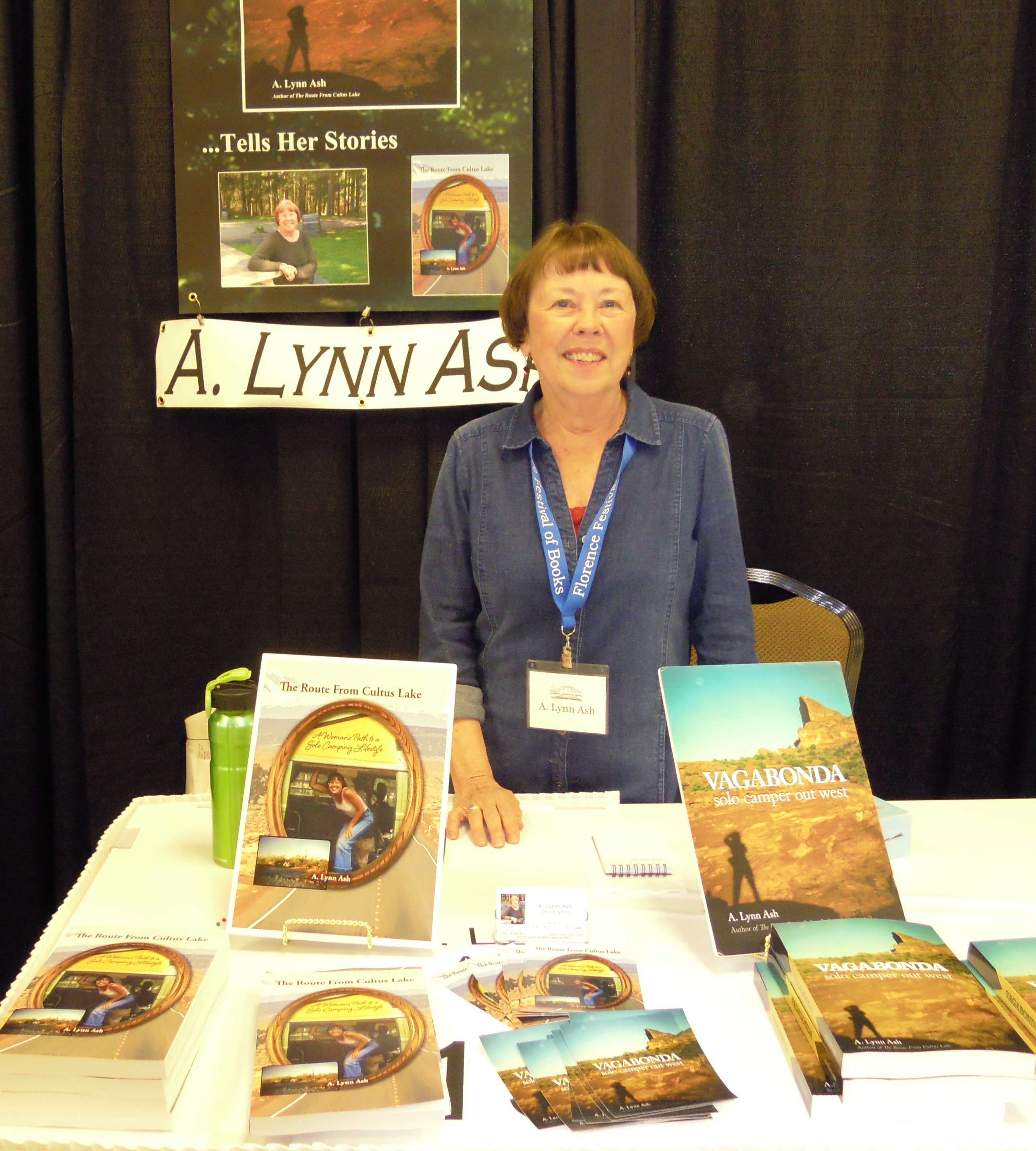
Here we are, my friend Lynn Ash and I, showing our books. We shared a table.

She presented her two memoirs describing her experiences as a solo camper, The Route from Cultus Lake and Vagabonda. I presented my two Oregon Trail stories, A Place of Her Own and The Shifting Winds.

The organizers do a nice job with this event. About 50 individual authors participated, as well as several writers groups and publishers. From 10 o’clock in the morning until 4 in the afternoon we pitched our stories and heard many intriguing tales from people who came by our table, and we signed books for our buyers.

After it was all done, our table cleared, and things packed up, we were ready to kick back.

And I got my clam chowder while watching seals and waterbirds play in the bright-blue Siuslaw estuary as the sun lowered and gilded the Florence bridge. A calming moment before I took my dusty steed on the long, beautiful drive home.

COMMENT

To the Coast and Beyond

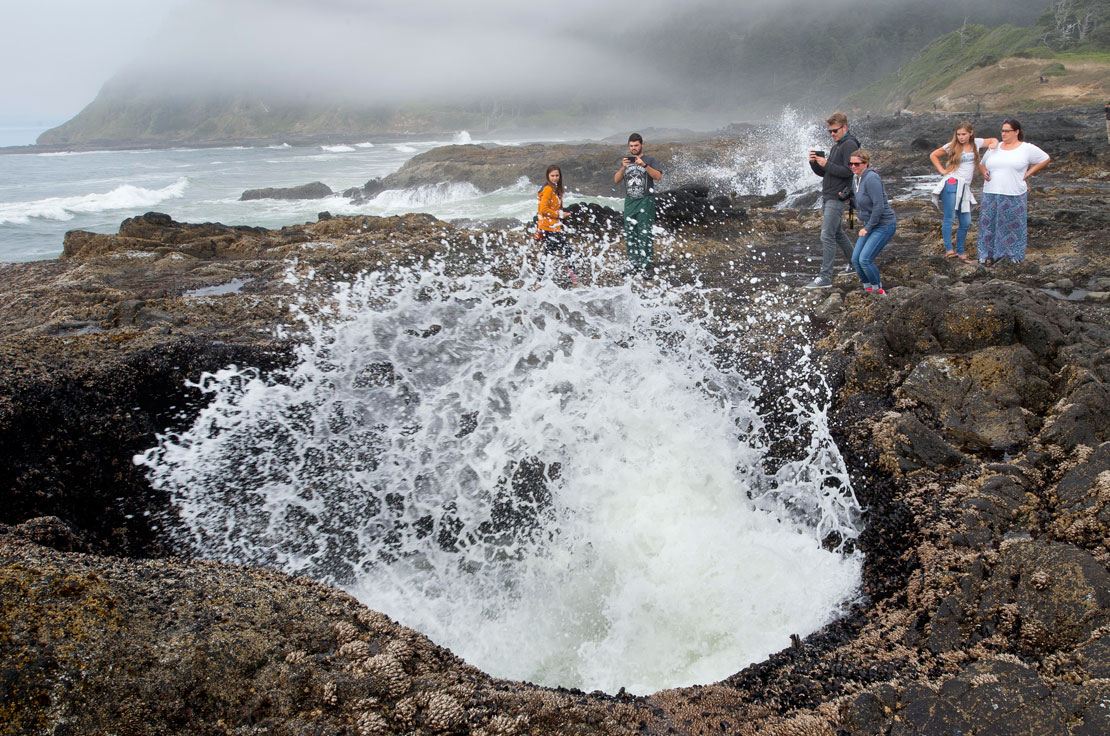
I’m heading for the coast tomorrow, September 24, as a participant in the popular Florence Festival of Books to sell and sign my books, The Shifting Winds and A Place of Her Own. This annual book fair is held at the Florence Event Center in Florence, Oregon, just minutes down Highway 101 from scenes like this, which I visited with my family last month before my grandson Alex went back to college.

web-thors-well-touristsPhoto by Robin Loznak

That’s Thor’s Well at Cape Perpetua, where the big waves slip through holes in the nubbly lava rock and explode with a huge whump at the well’s opening, occasionally giving a quick shower.

So the book festival offers a great opportunity for folks to spend some time exploring the work of local authors, then taking in some of the magnificent sights along Oregon’s famed coast.

And Beyond

The “beyond” in the title of this blog post relates more to time than space. To be clear, I have no immediate plans to go out to sea beyond the rugged shore. But I am developing plans for book events a ways out in the future. I just got word today that I’ll be a presenter next June at the Historical Novel Society 2017 Conference, which will be held in nearby Portland, Oregon. I’ll be co-presenting with authors Janet Oakley and Carole Estby Dagg, in a panel entitled “Historical Fiction Through a Pacific Northwest Lens.” We’re very excited about that.

More to come, though, much sooner, when I’ll return to the coast with a presentation at the Coos Bay Public Library October 6, then down to Bloomsbury Books in Ashland October 10. I’ll be posting additional events to my sidebar and Events page as schedules firm up.

So with that news, I’ll share one more look at the coast near Florence from a family trip last winter while Alex was home. Robin caught this scene on the beach below the Heceta Head Lighthouse. As the sun sets and light fades, it must be time for a steaming bowl of clam chowder.

sunset-at-heceta-headPhoto by Robin Loznak

 COMMENT

History Lived in Old Oakland

Oakland’s first Living History Day echoed with laughter and story as folks stepped back more than a century for a little taste of the good old days. That’s the historic town of Oakland, Oregon, where the echoes never quite stop. Today as we vendors and exhibitors set up our booths the stage rolled in.

oak-15Oh-oh! Shotgun just had to check his cell phone.

oak-8He did what?

He’s checking his cell. Doesn’t he know? We’re in the 19th century now.

Snort. He’s not quite in uniform yet. Like us.

oak-10


Ah! And like Mr. Tim Mitchell who showed up in an authentic frock coat with genuine beaver hat. Quite dapper.

But wait! Something’s going on down at the Hokey Pokey Jail. There’s a distinguished-looking couple. Why, it’s Mr. and Mrs. Forbes, Lynn and Gordon.

But the sheriff looks downright nervous. Watch out, Deputy. Something might be amiss.

oak-9No. Don’t worry. Everything will be all right. The President and First Lady are here. I did promise, didn’t I? Abe and Mary. Welcome, Mr. and Mrs. Lincoln. What a handsome pair.

oak-12Don’t look now, but the can-can ladies have just sashayed over to the Hokey Pokey Jail and they might have to dance the hokey pokey and turn themselves in–around, that is.

oak-13My daughter Carisa Cegavske snapped this photo of me when she stopped by my booth while covering this rollicking event for The News-Review. I’m happily displaying my books The Shifting Winds and A Place of Her Own.

oak-11oak-18Next to me, in the Pavilion, spinners spun. That’s Chris Gorecki at left and Jana Cunningham below.

Note the old treadle sewing machine behind Jana.

My booth was in the Oakland City Park, so that narrowed my view to only those activities in the park.

Beyond the park, booths lined the streets around town with fur bedecked teepees and a feed grinder at work, a blacksmith, and much much more. The DAR rang their bells and mountain men made loud noises with their muzzleloaders, although given the fire danger they weren’t allowed to create the necessary spark to oak-19fire the rifles.

After hours of clip-clopping around the streets of Oakland, the black-and-white team grew weary. The hostlers made a quick change of horses and the new team brought the stagecoach back around for more riders to take a spin.

Shotgun has long since donned his uniform and not a cell phone in sight.

oak-14All in all, a fun day, and I sold quite a few books. Other vendors had a good day too. I think the Oaklanders may be onto something here.

COMMENT

Living in the Past

Oakland, Oregon, will take a bow to its vibrant past tomorrow, Saturday, September 17, from 9 am to 5 pm when the historic town celebrates Living History Day with a focus on the 19th century.

I’ll be there with a table selling my books The Shifting Winds and A Place of Her Own, both set in the 19th-century West. People will get into the spirit of things by donning the typical garb of the day, as shown in these pictures I use to illustrate my characters from Shifting Winds.

25-jennie-brushed-2-titleThat’s m15-ft-vanc-alan-titley protagonist Jennie at right, whose face you can imagine yourself. The young woman’s father brought the family west over the Oregon Trail in 1842, much against her wishes.

The dapper fellow in frock coat and top hat represents the British Hudson’s Bay Company clerk who asks to court her despite rumors of war between their countries.

RawScan.tif, Mon Aug 24, 2015, 9:41:36 AM, 8C, 9000x12000, (0+0), 150%, Repro 2.2 v2, 1/20 s, R60.8, G31.1, B45.6The mountain man, a painting used by permission from artist Andy Thomas, represents the American who aims to shatter Alan’s plans for Jennie and British plans for Oregon.

Their clothing would be typical for the period Oakland plans to celebrate tomorrow.

Oakland history as a town goes back to 1846 when Rev. J. A. Cornwall came west and with another family took refuge from a fierce storm. They built a cabin on Cabin Creek near where Oakland grew up, then left in the spring to continue to their destination in the Willamette Valley.

The town of Oakland was laid out in 1849, first surveyed town in the Umpqua. When the railroad bypassed the old town in 1872, Oakland moved closer to the rail line and the new town became a commercial center.

When my great-great-grandparents, Garrett and Martha Maupin, moved to Douglas County he became a hauler, carrying goods by wagon from Oakland to Scottsburg, where things could be shipped out by boat. Garrett had just left Oakland on one of these treks when a load of wool turned over on him and smothered him. The details of that fateful day are told in my book, A Place of Her Own.

Morning Dresses Sept. 1803Somehow the small town of Oakland always kept one foot in the historic past, even before the reviving of historic structures across the country became popular. So it seems fitting for Oakland to celebrate its colorful past with a Living History Day. Oakland has been living its history for as long as I can remember. I have an Oakland address, although I confess I don’t often visit the town. It’s a little out of the way to get there.

Bypassed yet again, the second time by the Interstate Freeway, Oakland was left to dream of bygone days. The old buildings were maintained, perhaps for lack of need to create bigger and plainer and infinitely uglier new ones. You can walk down the street and feel the past all around you as the charming structures of an earlier time smile back at you.

So pull out the best representation in your closet of something folks might have worn in the 19th century. Ladies might choose something from the slimmer skirts of the early years to the simple calicos of pioneer times to the wide hoops of Civil War and later days.

1800s-wide-skirtsGentlemen, you could choose anything from frock coat and tall hat to buckskins, to jeans and shirts–and yes, they did wear jeans, sometimes called “janes,” even before Mr. Levi came on stage.

Come live in the past with us. I do that often when I walk into my stories. Such an intriguing place to explore, the past. Oakland will have spinning and weaving, blacksmiths, a trapper encampment, Fort Umpqua muzzle loaders, butter making, chuckwagon cooking, children’s activities, and more.

Abe Lincoln will be there. Who’d have guessed? And what’s that? Can-can dancing? Oh my.

Minter, Harold A. Umpqua Valley Oregon and Its Pioneers. Portland, OR: Binfords & Mort, 1967.
Except for Andy Thomas’s painting of the mountain man, all photos on this post are from antique fashion plates.

COMMENT

Fort Umpqua Days Fun!

Two beautiful days brought good crowds to the Fort Umpqua Days annual celebration in Elkton, Oregon, on Labor Day weekend. People from as far away as Kansas City came by my booth to buy books. I was surprised to learn that my first customers Sunday were from Overland Park, Kansas, a Kansas City suburb about a 10-15-minute drive from my daughter’s home in Fairway.

Pioneers and mountain men roamed the grounds of ECEC, the Elkton Community Education Center where the event took place, and the occasional harrumph of black powder rifles down at the fort ripped through the air, giving us a start.

Fort-Umpqua-Days1At the evening pageant the deputized sheriff caught the suspects in the stagecoach gold robbery, and photographer Robin Loznak caught them on camera as the sheriff led them away. Justice done in the “Mystery on the Elkton Stage,” the 13th annual Echoes of the Umpqua pageant, ably directed by Cathy Byle.

As many as 100 community members work to put on these somewhat historic dramas. I have fun serving on the writing team, but did only a small part this year due to the distractions with my new book coming out. Cathy and Linda Warncke did most of the writing and the actors, kids and adults, brought it to life with their own interpretations, all good for plenty of laughs.

Fort-Umpqua-Days-2It wouldn’t be ECEC without the butterflies, this being the well-known “butterfly place,” and Robin’s gift with wildlife photography led him to the Butterfly Pavilion to capture this shot of a Monarch having a sip.

From the opening parade to the BBQ lunches and music and fishing contest and local craft booths (where I spent the days) to the pageant and activities down at the fort, folks seemed to have a great time.

I was delighted that my writer friend Lynn Ash shared my book-selling booth on Saturday. I sold and signed copies of my Shifting Winds and A Place of Her Own, and Lynn sold and signed her Route from Cultus Lake and Vagabonda. We both had good sales and many wonderful conversations.

434.fort umpqua interiorFt.Ump.Inside 76So another successful Fort Umpqua Days has come and gone. The fort turns quiet for a little while. The Hudson’s Bay Company flag still flies, but business in the storehouse waits for another day.

Memories dream on after a glimpse into the past, some truer than others.

Ft.Ump.Inside 68COMMENT

Reviving Fort Umpqua

Tomorrow the people of Elkton will bring the old Fort Umpqua back to life with a flourish in their annual Fort Umpqua Days celebration. Folks from around the state and beyond will join in the fun, whether history buffs, reenactors, the simply curious, or those just looking for a good time or a good buy. Welcome to the party.

Ft.Ump.Inside 69Activities in the palisade walls will run from 10 in the morning until 5 in the afternoon on both Saturday and Sunday, September 3 and 4. While things are happening down at the fort, a lively market behind the ECEC library will offer crafts, books, and other items for sale. I’ll be there both days with my books set in the fur trade and pioneer era, and my friend Lynn Ash will join me with her books Saturday.

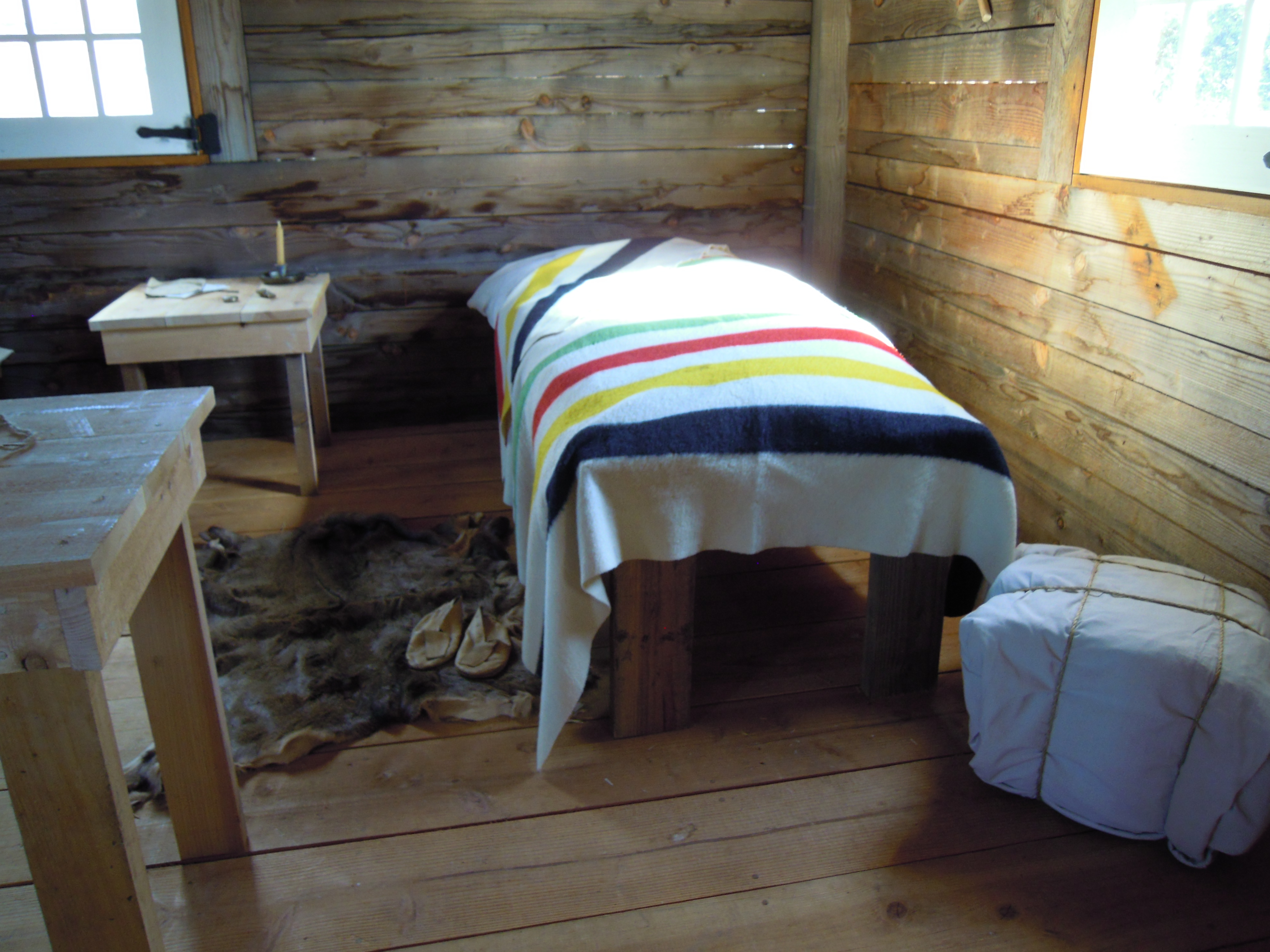
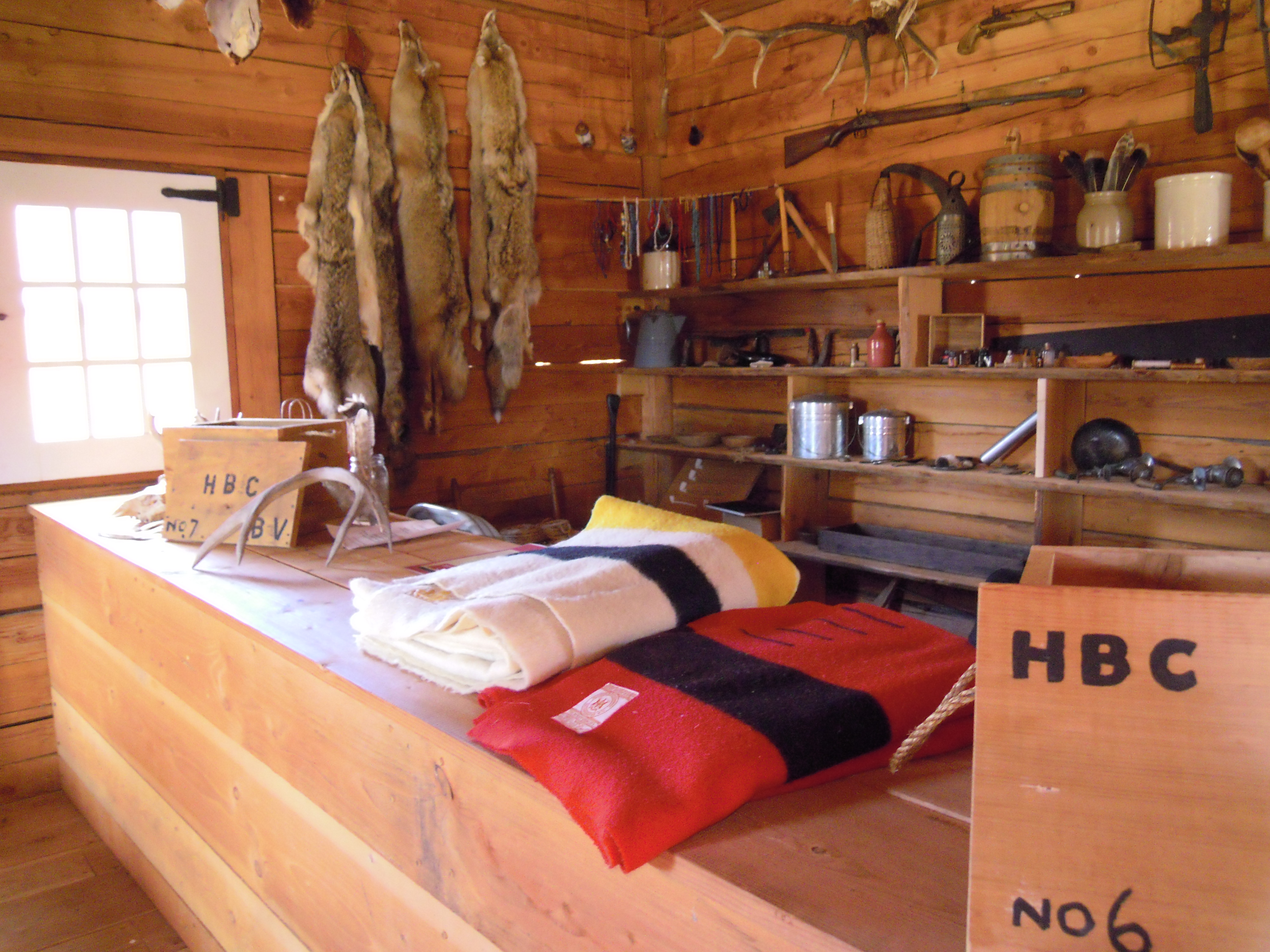
Ft.Ump.Inside 63Something new this year: The second building reconstructed at the fort, shown above, now has furnishings displaying living quarters where the Hudson’s Bay Company men lived. The rustic but comfy interior gives an idea of the kinds of gear they had–the typical Hudson’s Bay Company blanket, animal-skin rug, moccasins.

Ft.Ump.Inside 67The simple table setting illustrates the difference between the simplicity of life here in the southernmost outpost of the Company and the finery back at headquarters.

Ft.Ump.Inside 66No Spode china here, like that enjoyed by the senior officers at Fort Vancouver.

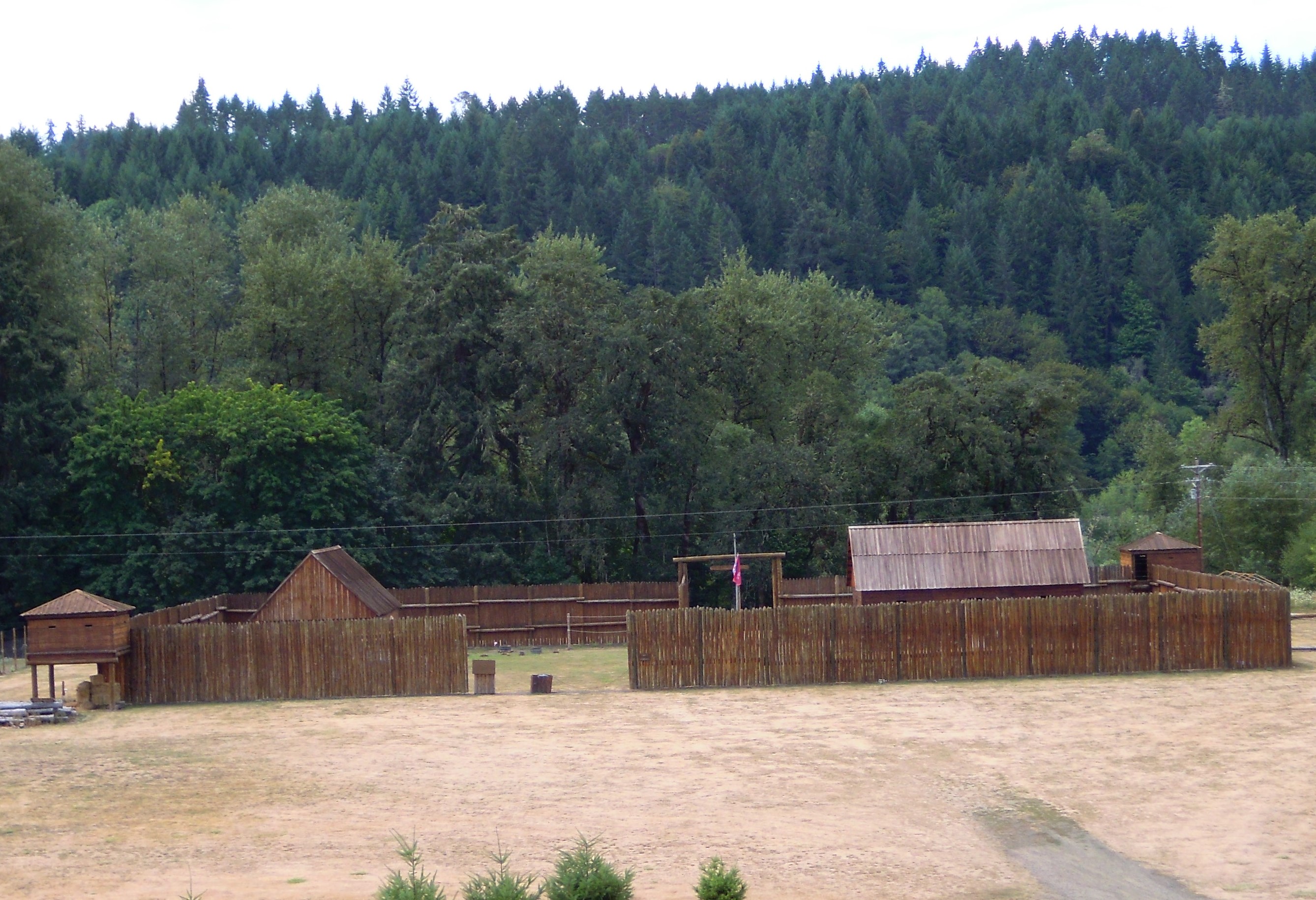
This project in Elkton has been a work in progress for several years, and as I mentioned in a previous post or two the reconstructed fort found its home a little downriver from the original.

When history buffs, modern mountain men, academics, and reenactors began contemplating the project, they discovered that the original site was not available. So this location down the hill from the Elkton Community Education Center was offered as an alternative.

If you drive south from Elkton on Highway 138 you’ll see a historical marker on your right which points out the original location of the fort across the river. The setting has many similarities, and the new site was selected.

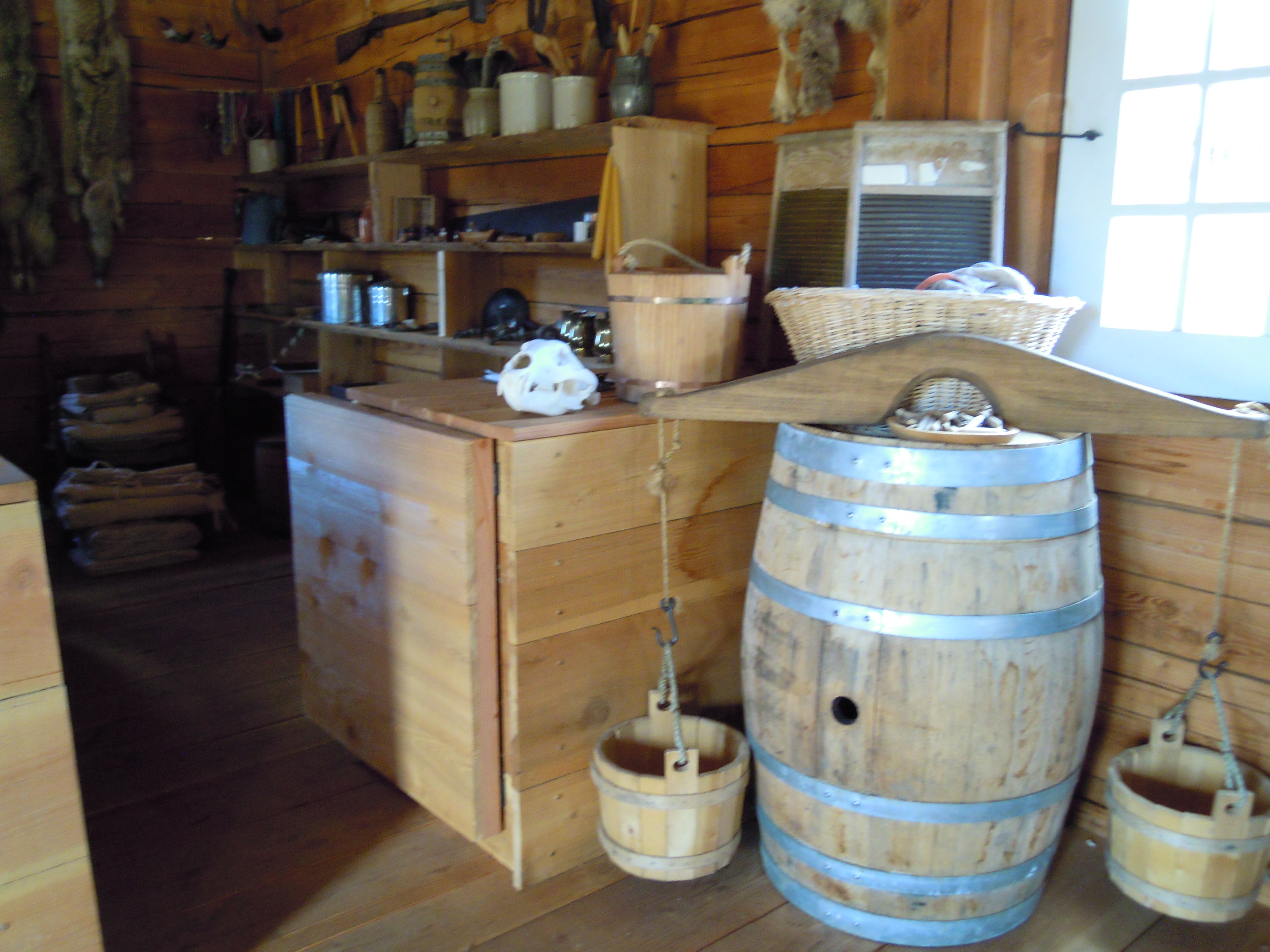
Ft.Ump.Inside 77After the palisade walls went up, volunteers constructed the first building, the Company store and storehouse. Come inside and you’ll find the treasure that brought the British Hudson’s Bay Company into the region.

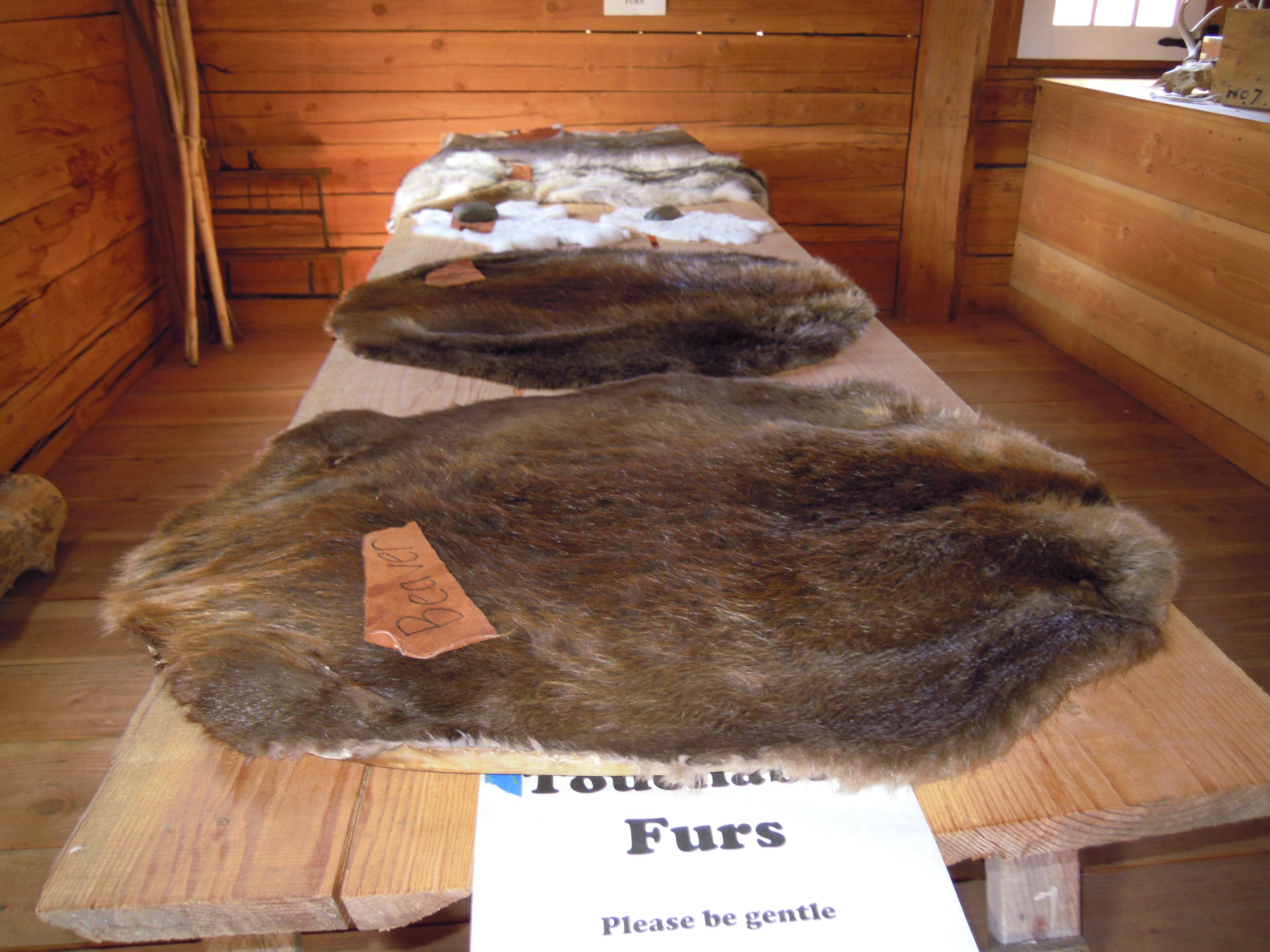
Ft.Ump.Inside 73The beaver pelt.

Ft.Ump.Inside 71There’s a touching table where you can stroke your fingers over the furs and feel how soft they are.

The sad news for the beaver was that his soft inner fur could be made into exquisite felt for the popular hats of the day.

That made the pelts extremely valuable and trappers combed the creeks of the wilderness to find them. Competition grew fierce between the British traders and the American mountain men, and rumors of war stirred as Britain and the United States shared the Oregon Country while London and Washington tried to come to terms on a boundary.

Ft.Ump.Inside 75Trappers, both white and Native American, could trade their furs for goods here in the Company store. Or today you can ask a knowledgeable young helper your questions about the history of the fort and the fur trade. Tomorrow and Sunday they’ll be dressed for the part in period costume, adding to your sense of stepping back in time.

Following the activities at the fort and market each day, the traditional historic pageant will be performed at the amphitheater, both nights. That’s always fun too as we play with history. I have the pleasure of serving on the writing team for that. Others did the lion’s share this time, but I had fun doing my little bit.

For more information on daily activities see the Fort Umpqua Days website.

COMMENT
Fort Umpqua Farming

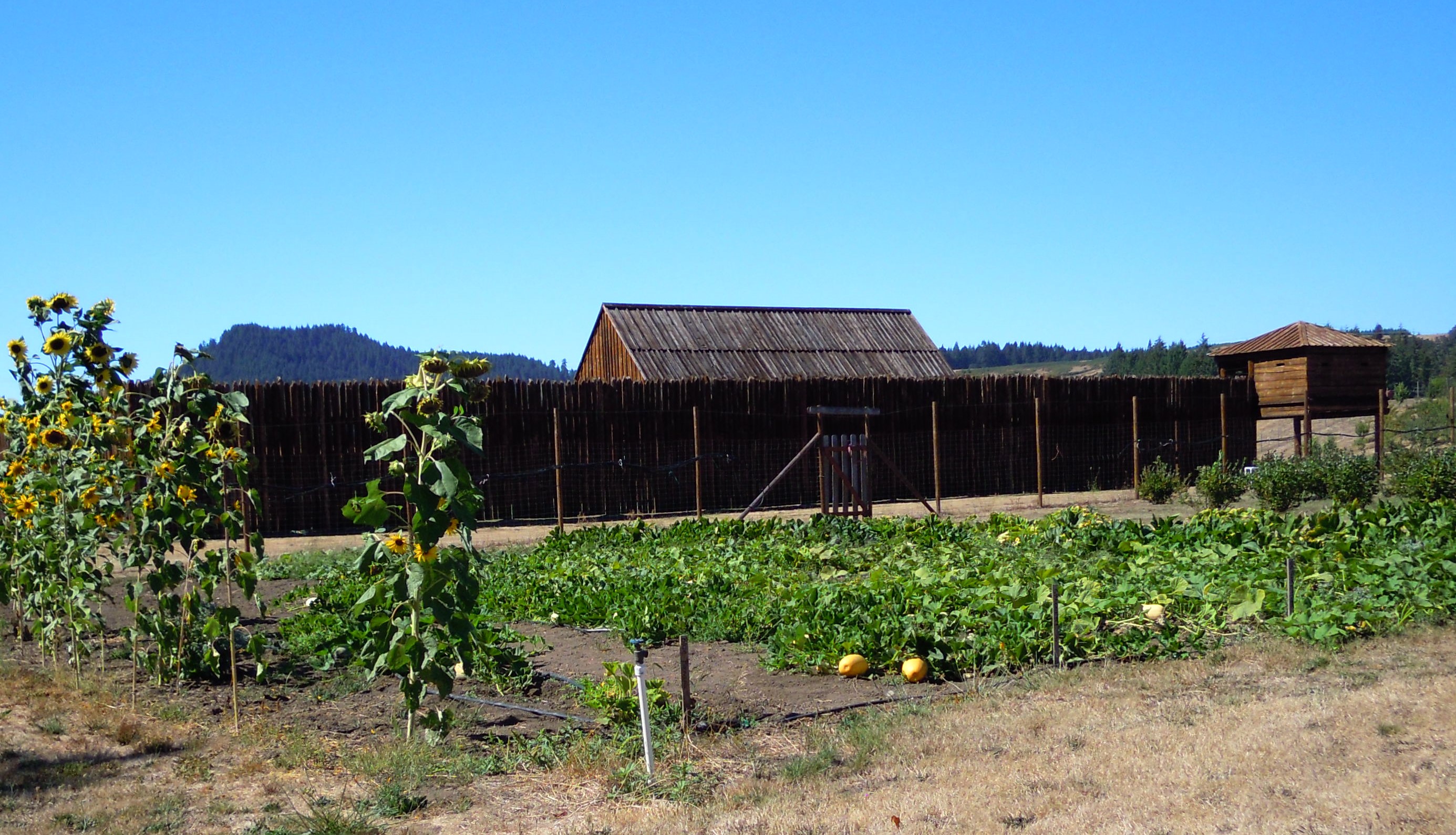
Visitors to the fort during Fort Umpqua Days this coming weekend will be drawn back in history through several activities for children that commemorate the fort’s importance as a historic agricultural site. These children will water the garden, make cornhusk dolls, grind corn, and sort beans from the fort’s gardens of heritage vegetables. And they’ll make apple cider from fruit out of the fort’s heritage orchard.

Ft.Ump.orchard signAs usual they’ll have plenty of 1800s games to play. And after they try samples of tasty food that workers at the original fort might have eaten, they can lead their parents out to take a look at the large gardens and orchards surrounding the reconstructed fort.

My books, The Shifting Winds and A Place of Her Own, tap into this same era, so the celebration has special meaning for me. I won’t get down to the fort during the day between 10 am and 5 pm because I’ll be up near the butterfly pavilion selling books in my booth, offering my own look at these intriguing times. On Saturday my writer friend Lynn Ash will join me to sell her travel memoirs, The Route from Cultus Lake and Vagabonda, describing her own pioneer spirit as she goes camping solo around the country.

Ft.Ump.gardens-1 (2)Like the Fort Vancouver headquarters for the Hudson’s Bay Company fur trade operation in the West, Fort Umpqua was a trading post, not a military fort, although both forts had tall picketed walls for protection. And the people who worked there had to sustain themselves in this wilderness.

The Oregon Country in the 1800s lay far from suppliers in eastern North America and Britain, so the Hudson’s Bay Company’s Dr. John McLoughlin, Chief Factor of this western region, placed self sufficiency high in the order of business. He chose a broad plain north of the Columbia River for the Company headquarters site of Fort Vancouver because he needed a fertile place to grow food to feed employees.

So it’s not strange that when he proposed a site for an outpost in the Umpqua region he wanted a place that could grow orchards and gardens for food.

Ft.Ump.gardens-2 (2)Company trappers in the Umpqua had been using a couple of temporary sites, and in 1832 McLoughlin assigned the French Canadian Jean Baptiste Gagnier to supply those. But McLoughlin sought a more permanent outpost. Gagnier selected a site, but McLoughlin, wanting a second opinion, sent his son-in-law William Glen Rae down to be sure the place had enough suitable land for growing vegetables.

Gagnier had in fact found a lovely open meadow with the fine treelined Umpqua River on one side and scattered oaks and swaths of fir forest crowning the hills on the other. The rich bottomland soil would grow fine vegetables and fruits from orchards and possibly vineyards.

Ft.Ump.orchardRae proceeded with the fort, dubbed Fort Umpqua, and the Company maintained this post for fifteen years, from its construction in 1836 until 1854, their southernmost outpost in the entire Oregon Country.

Once the United States acquired the area after the 1846 boundary settlement with Britain, the British cut back on business south of the new border, but they kept a trader at the site until 1854. The fort burned in 1851, but they stayed on, working out of some kind of structure for three more years. By that time the meadow thrived as an agricultural center.

Of course, all this happened a short distance upriver from the Fort Umpqua structures and plantings you see today. More on that in my next blog post. But that small factoid does nothing to dampen the enthusiasm of the annual Fort Umpqua Days at ECEC, happening this next Saturday and Sunday, September 3 and 4.

Beckham, Stephen Dow. Land of the Umpqua: A History of Douglas County, Oregon. Roseburg, OR: Douglas County Commissioners, 1986.

COMMENT
Black Powder Men

A popular event at Fort Umpqua Days in Elkton, Oregon, is the gathering of black powder men, reenactors who come out with their muzzleloaders to exhibit their prowess at shooting these early weapons and to share stories of historic Fort Umpqua times. That’s Saturday and Sunday, September 3 and 4, and I’ll be there with my own books where you’ll find old-time black powder men, especially in The Shifting Winds. Update: See also a story in the The News-Review about a brigade of reenactors of 19th century trappers who camped at Fort Umpqua last weekend on their way to California as the Hudson’s Bay Company trapping brigades might have done back in the day.

First Mountain Man jpgSome of today’s black powder folks call themselves mountain men, and there may have been a few mountain men who passed by Fort Umpqua in its prime, like this man painted by Andy Thomas, artist, who dubbed him “The First Mountain Man.”

However, the term mountain man generally refers to the American trappers who did in fact work in the mountains, over in the Rockies.

Jed Smith was an early American mountain man who passed through the Umpqua region years before the fort’s construction, when he led an exploratory expedition of fellow trappers from the Rockies west by way of California. Jed didn’t fare well in the Umpqua. The Umpqua Indians attacked him and his men, killing many of them, and stole all their furs. Jed ultimately made his way north to Fort Vancouver, where Dr. McLoughlin treated him hospitably.

Hudson’s Bay Company men recovered Jed’s furs and McLoughlin paid him a fair price for them. Jed so appreciated McLoughlin’s decency he swore he wouldn’t trap in the Oregon Country, leaving beaver there to the British. Although British and America trappers collided occasionally along the Continental Divide that marked the west edge of the undisputed U.S. territory of the Louisiana Purchase, the British for the most part were left alone in the Oregon Country, which was supposed to be jointly occupied by Britain and the United States.

Only when the trade died in the Rockies did American mountain men push on west. That’s when Joe Meek and my fictional Jake Johnston of The Shifting Winds headed to the Willamette to become settlers.

Mt. ManMountain men typically wore buckskins as many black powder reenactors do. So did British trappers who went out with the trapping brigades. Ken Putnam of Drain, Oregon, poses with me in his mountain man garb at the 2015 Fort Umpqua Days.

Frontiersmen who hunted in the wilds found the buckskin, or deerskin, to be sturdy and protective in the rugged brush where they sought game. In the Rockies it had the added advantage of availability. American trappers worked and lived with Native American tribes who wore buckskin themselves, often beautifully crafted by the Indian women who also became wives of many mountain men.

The weapons changed over time. In the early years the muzzleloader would have been a flintlock rifle, perhaps a Kentucky long rifle, but the long barrel proved awkward for the mounted trappers. They soon opted for a shorter barreled half-stock with bigger bore. About the same time this “mountain rifle” became popular the flintlock was being replaced by the percussion rifle, which was easier to load quickly–important when you had only one shot per loading.

Then gunsmiths Jacob and Samuel Hawken came up with the clean-lined plains rifle known as the Hawken rifle, and that became the mountain man’s rifle of choice. My character Jake Johnston takes great pride in his sleek Hawken rifle he brought out of the Rockies with him.

During Fort Umpqua Days you can expect to hear the deep harrumpf of muzzleloading rifles echoing across the hills as modern-day black powder men slip into a past where expertise with those weapons could be a matter of life and death.

COMMENT
HBC Outpost Ready for Celebration

the fort 2 (2)

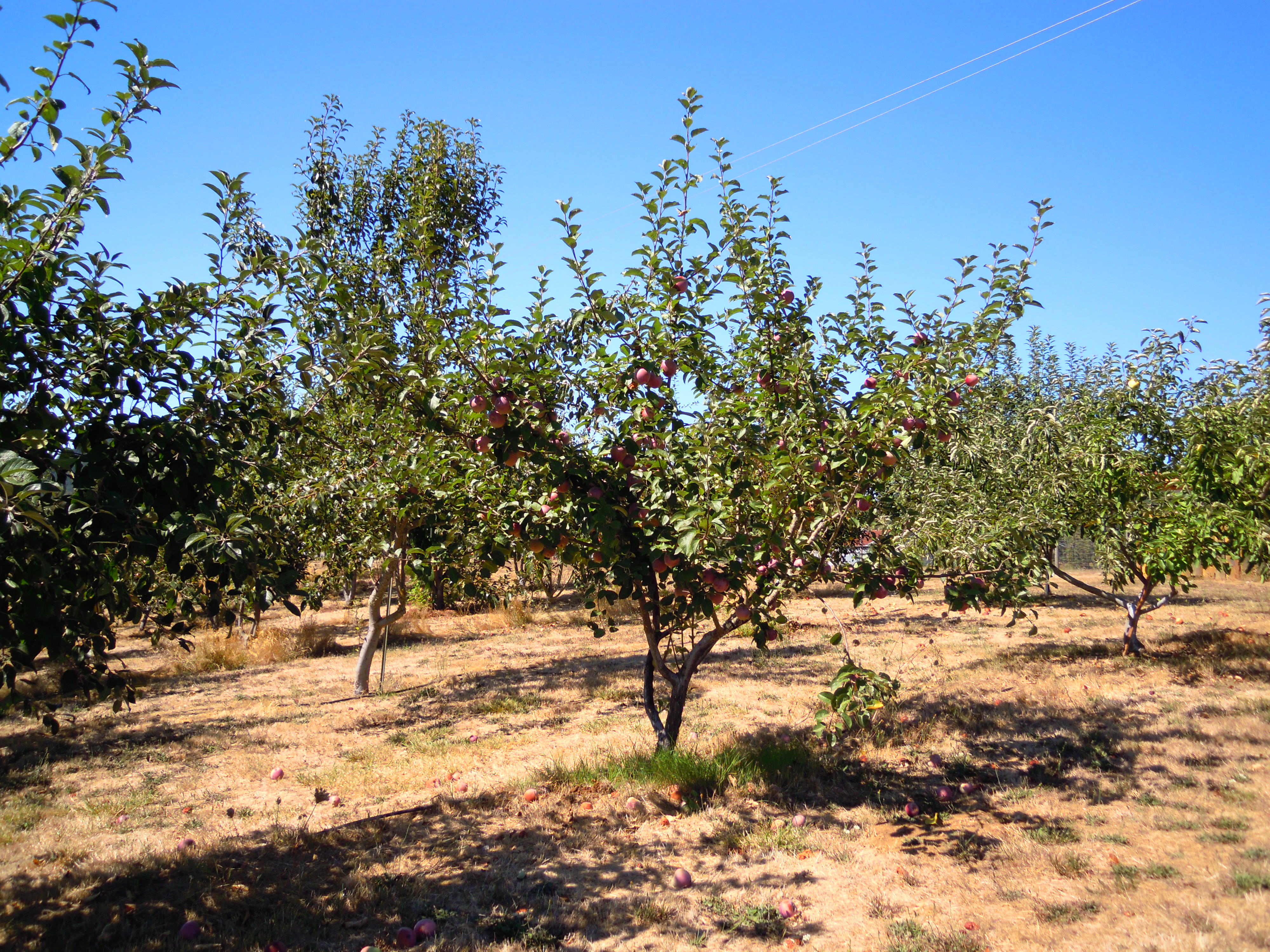
Nestled on the bank of Oregon’s Umpqua River, this replica of the British Hudson’s Bay Company’s Fort Umpqua will come to life in a couple of weeks for the annual Fort Umpqua Days celebration at Elkton. The event will run all day Saturday and Sunday, September 3 and 4, and I’ll have a booth there to sell my books.

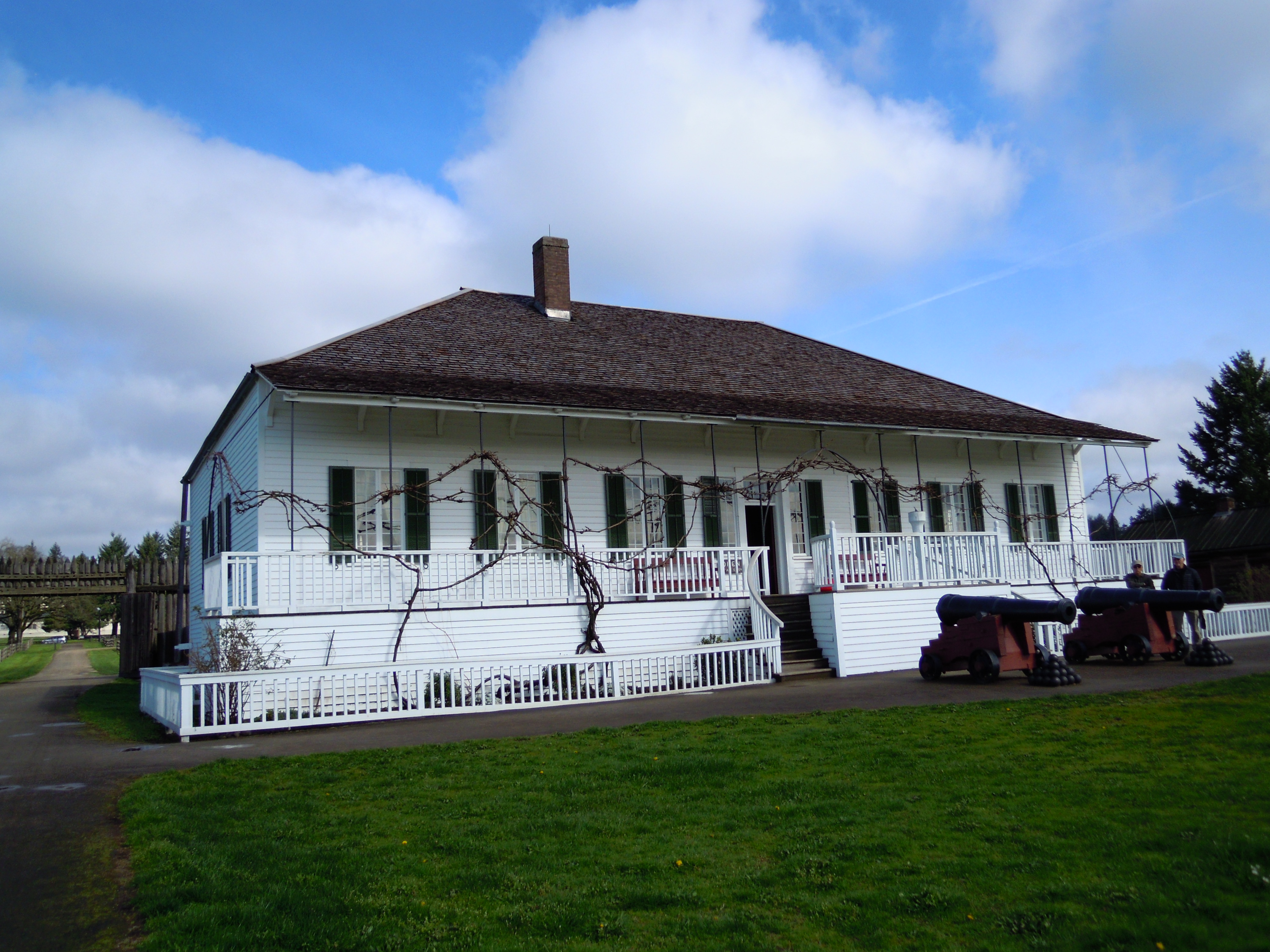
Just last month I stepped into the historic past of the Hudson’s Bay Company’s western headquarters at Fort Vancouver on the Columbia River, touring the commander’s house, among other structures there. So I see this Umpqua outpost with new perspective.

I’ve attended Fort Umpqua Days celebrations every year since I returned to the family farm near Elkton in 2009, joined the writing team for the event’s pageants, and had a booth the last two years there to sell my first book A Place of Her Own. Still, I feel a difference this year after my event at Fort Vancouver in July where I presented my new book The Shifting Winds, which has many scenes at that HBC headquarters.

Before the Fort Vancouver event I wrote a series of posts for this blog called “The TRUE Shifting Winds,” giving an overview of history leading to the days of my book and the fort’s part in it. Fort Umpqua doesn’t appear in the story, but for me the enhanced sense of Hudson’s Bay Company history wraps Fort Umpqua into the fold.

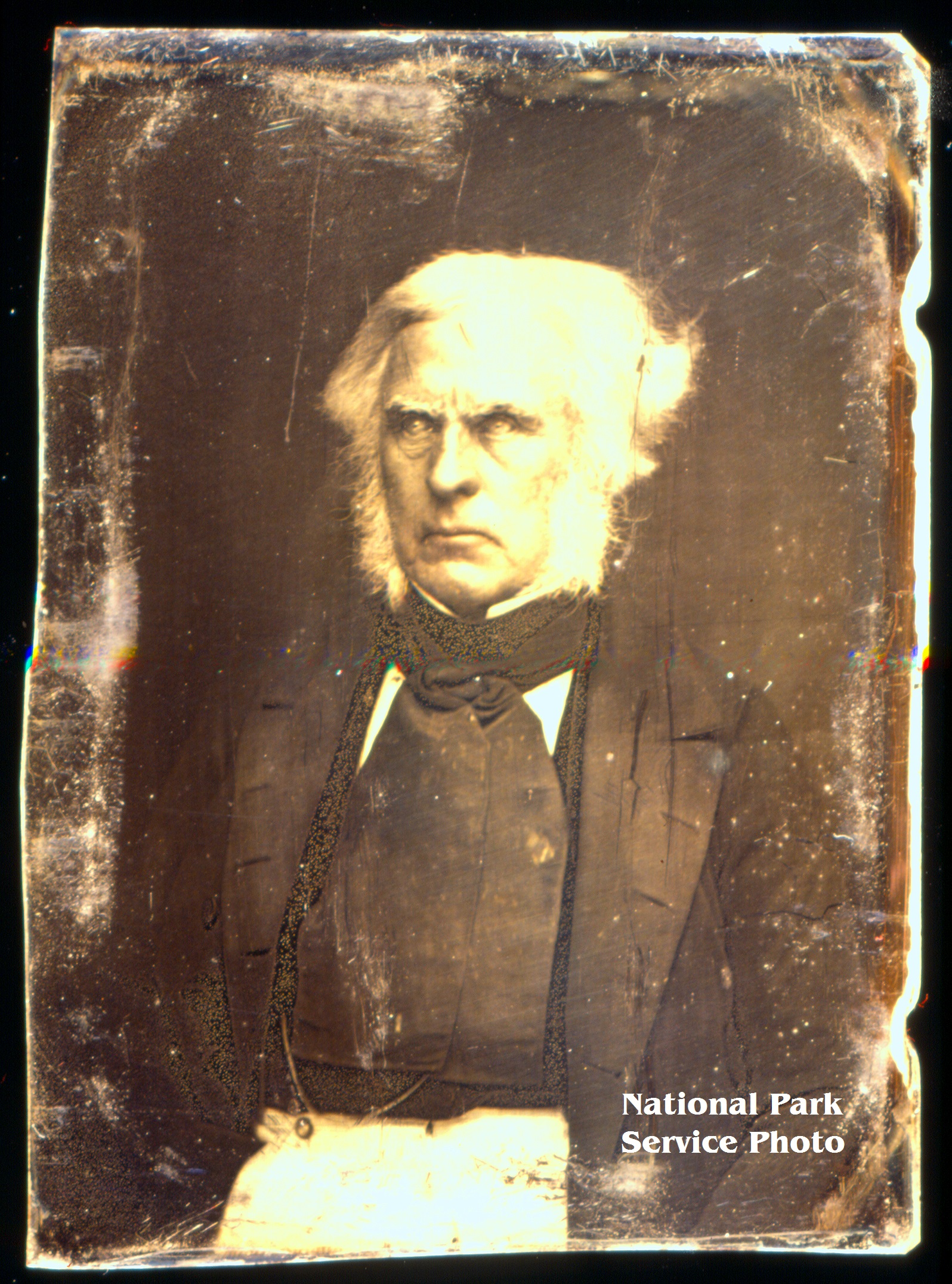
Dr. John McLoughlin, shown in this daguerreotype, commanded the efforts of the British HBC fur trading empire in the Oregon Country. Photo courtesy of National Park Service.

McLoughlin had been at Fort Vancouver only a year or so when he decided to push south through the Umpqua basin with brigades of trappers. Those expeditions into the southern region became annual events–and rather colorful.

Author John A. Hussey quotes Editor Alice Bay Maloney in describing them:

At the head of the brigade rode the leader, a chief trader [or clerk] of the Hudson’s Bay Company, astride a strong limbed Nez Perce horse and armed to the teeth with the best weapons of the day. Directly behind him rode his Indian wife gaily attired in the finest London broadcloth, with a wide-brimmed, feather-trimmed hat atop her wealth of long, shining black hair…. All the men were clad in deerskin….

Hussey adds a description of the brigade by an unnamed priest who wasn’t quite as impressed: “‘The brigade,’ he wrote, ‘is a hideous assemblage of persons of both sexes, devoid of principles and morals,’ and possessed of ‘revolting exteriors.'”

In any case it was during one of these expeditions that members of the brigade selected a site on the Umpqua River they thought would be a good outpost for trade with the local tribes. McLoughlin, concerned about competition from American trappers, wanted to clear the area of beaver and establish a strong foothold.

The Hudson’s Bay Company built Fort Umpqua in 1836, and it served the Company well for more than a decade, even after the boundary settlement between Britain and the United States gave the land to the U.S. in 1846. The photo below shows the interior of the reconstructed Fort Umpqua with the HBC flag flying again.

In the next two weeks I’ll write a few more posts about the Hudson’s Bay Company trade in the Oregon Country and about the reconstruction of their southern outpost as the Fort Umpqua Days celebration nears.

Hussey, John A. Champoeg: Place of Transition. Portland, OR: Oregon Historical Society, 1967.
Maloney, Alice Bay (ed.). Fur Brigade to the Bonaventura, John Works California Expedition, 1832-1833 … San Francisco, CA, 1945.

COMMENT