Another Fine Conference

Just back from a great writers conference in Seattle put on by the Pacific Northwest Writers Association (PNWA). Here I am on the last day with Pam Binder, PNWA President and program director of this annual event. Every year she puts together another fabulous conference with her excellent team.

Pam Binder, PNWA President, conference program director, on the left, me on the right.

When I went downstairs looking for an I-was-there photo to add to my comments on the 2025 conference I was hoping I might find Pam to get her picture, and there she was at the registration desk, happy to oblige. I also wanted to thank her one more time for coming to my rescue in the pitch session.

These conferences offer a chance for authors to meet agents and editors face to face and pitch their projects to them. It’s always upbeat at these PNWA conferences, everybody encouraging each other to do their best. I think that atmosphere starts at the top. An award-winning New York Times bestselling author, Pam knows the business, and she’s always ready to help an author reach the next level.

Bohonagh Stone Circle, West Cork, Ireland

I pitched my newest novel set in ancient Ireland featuring the People of the Stones, those mysterious stone circles and other megaliths scattered across Ireland and Britain’s west coast and on down the Atlantic seaboard.

In my story it’s 750 B.C. and the Celts wouldn’t have been in Ireland yet, but we know where they were–in Hallstatt, Austria, so my protagonist has to go there.

The goal for the author pitching an agent or editor is to get a request for material, a few chapters maybe, or 50 pages, or, best of all, the full manuscript. I’m happy to say I got a positive response from every pitch. But it wasn’t entirely simple.

Imagine the setup. All of the authors who’ve signed up for a particular block of time are led into a room where the agents and editors are sitting behind a very long table. The authors get in line for a person they want to pitch to, and each gets four minutes to describe their project and convince that person to ask for part or all of it. At the end of your four minutes a bell rings and you have to skedaddle because you don’t want to crimp the time for the person in line behind you.

So I was pitching one person and we were having an extended conversation when the bell rang. She handed me her business card and said I could stay a bit to finish the conversation because no one was behind me. But then someone did come up behind and I hurried to leave. I went out into the hall and realized I had no idea what the person I just pitched wanted from me. Maybe she told me but in the confusion I didn’t hear it. Did she want to see any of my work? I didn’t know. So in somewhat of a daze I wandered down the hall to the registration desk, where a man asked if he could help me. I saw Pam Binder looking through some papers and said, “I think I need Pam.”

I told her what had happened. She thought about it a minute, then said, “You need to go back in and get in her line again and ask her.”

Pam didn’t send me. She led me. And with her as my escort I did exactly as she said. The person greeted me and answered with enthusiasm, “I want to see the full manuscript. I want to read this.”

Yay! Now, I’m not giving away names. That’s for later, if it works out in the long run. But pitching is a challenge. Encapsulating your book into a few words that pique a desire to read it. And these positive moments are bits of gold. Thank you, Pam.

With hugs to send me off, Pam took this goodbye picture of me in my signature hat.

Happy. Optimistic. Glad for a few more bits of gold.

On my way home

Seattle Writing Conference 2024

Here I am in one of the hotel’s pleasant courtyards near the end of this whirlwind event, feeling happy about all the wonderful connections I made this time.

Great writing conference in Seattle a little over a week ago. I decided last minute to fly up and attend so I could pitch my new historical novel set in ancient Ireland. I was delighted by the responses from agents I pitched and have now sent off the queries with material they asked for. Fingers crossed. It’s all in the words of course. Hope they love it.

I so enjoy the people at these conferences. Everybody has a story. They are, after all, storytellers. When you meet someone they often ask what you write and you tell the story about that and of course you ask them and hear their story. Attendees also encourage each other. After the pitching begins you share with each other how your pitches went and maybe glean a little information on someone you hope to pitch next. A very upbeat, mutually encouraging atmosphere.

I stopped over in Portland to see family on the way home. One of my daughters just got a new job in Portland and I hadn’t seen the new place yet. Now all my kids are in Oregon for the first time in ten years. I’m so glad. A couple of photos below show views from our walks on a hill overlooking downtown Portland. That’s Mount Hood on the hazy skyline in the second photo.

Looking down to the Portland city center from the heights near Washington Park.

A city building seems to echo the sharp peak of Mount Hood behind it.

PNWA Writing Conference Seattle

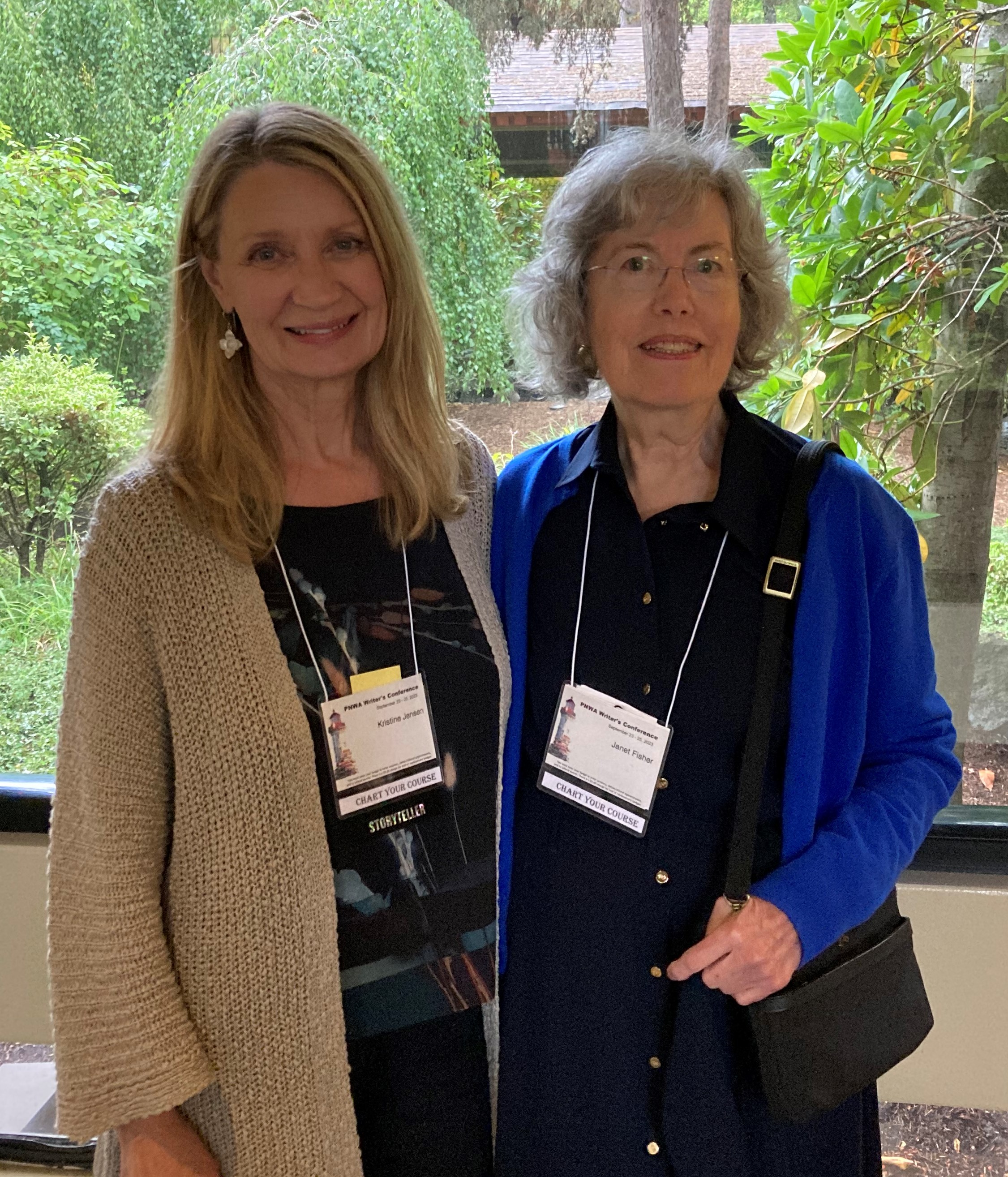
I’m just back from an excellent conference in Seattle where I went primarily for the purpose of pitching agents for my new historical novel set in ancient Ireland. I was happy that my friend from my Eugene writers group, Kristine Jensen, attended also.

Here we are in one of the many halls at the DoubleTree by Hilton hotel with a lovely interior garden behind us.

PNWA (Pacific Northwest Writers Association) always offers a good conference. People are friendly and mutually supportive, but it’s especially nice to have someone there that I know. Kris was also pitching agents for her new novel.

It’s an intense program because stakes are high. We both scheduled two pitch blocks.

These are 90-minute sessions where everyone who has reserved a certain block pours into a large room where agents and editors wait behind a long table. You get in line before an agent or editor you’ve chosen and when it’s your turn you sit across from that person and pitch your work. You have four minutes. Then the buzzer goes off and you hurry to the line of another agent or editor on your list.

I had four agents I particularly wanted to pitch, and I was glad I had reserved two blocks. The first day I only had time for two. Fortunately the second day I was able to pitch the other two. And that’s when magic happened.

This is my oh-my-goodness-she-loved-my-Ireland-setting-and-my-storyline face. I was so happy.

All four agents and one editor asked me for material. That’s the goal. Whether you get everything said or not, you want that invitation to send pages, chapters, or even a full manuscript, as requested. Whatever you forgot to say or decided not to say because of the strict time limit, you can say in a cover letter.

On one of my pitches I had taken the end of a very long line of people waiting to pitch to this particular agent. I was afraid the 90 minutes would end before I got to her. But I eventually saw that I would make it. I stepped up to the blue line where the next author to pitch had to wait. A lady who was a volunteer helping things run smoothly stepped close to me and asked what I was pitching. I said it was a historical novel set in ancient Ireland. She spoke softly because we needed to be quiet, but she let me know how much she loved Ireland and the special places there. By the time the buzzer went off and it was time for me to pitch she had me in a zone of delight over my story.

I sat down in front of the agent and with the confidence just instilled in me told her I had a historical novel set in ancient Ireland. Her eyes lit up. Her whole face. She loves Ireland. She’s part Irish. And when I relayed my story points, my protagonist’s dilemma, the conflict, the tension, she responded with such enthusiasm I was thrilled.

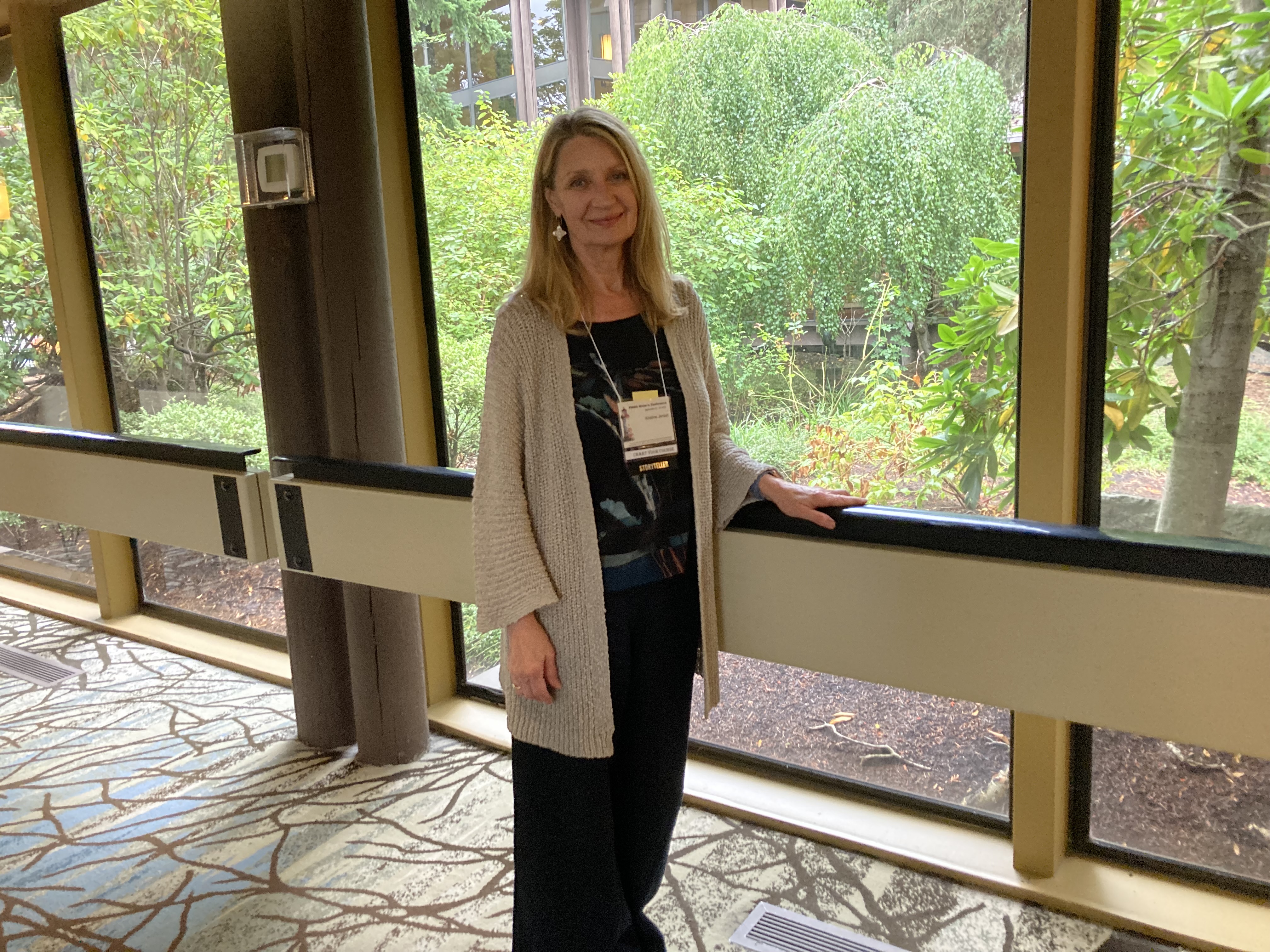
Here’s Kris after the pitching was over, serene in the knowledge that she had made some good contacts for her wonderful story set in 60s South Dakota. She got requests for all her pitches too. We went to a couple of workshops afterward, feeling good and somewhat drained. One of the things I like about this conference is that you meet many authors who are seeking that positive response, and you’re plugging for them as they’re plugging for you. So there’s a lot of “How did you do?” “How did it go?”

So it’s nice to rest up a bit. My room was about a mile from the lobby, or almost that, but it was a room with a view. The blue peeking through the trees below that building in the distance is a lake.

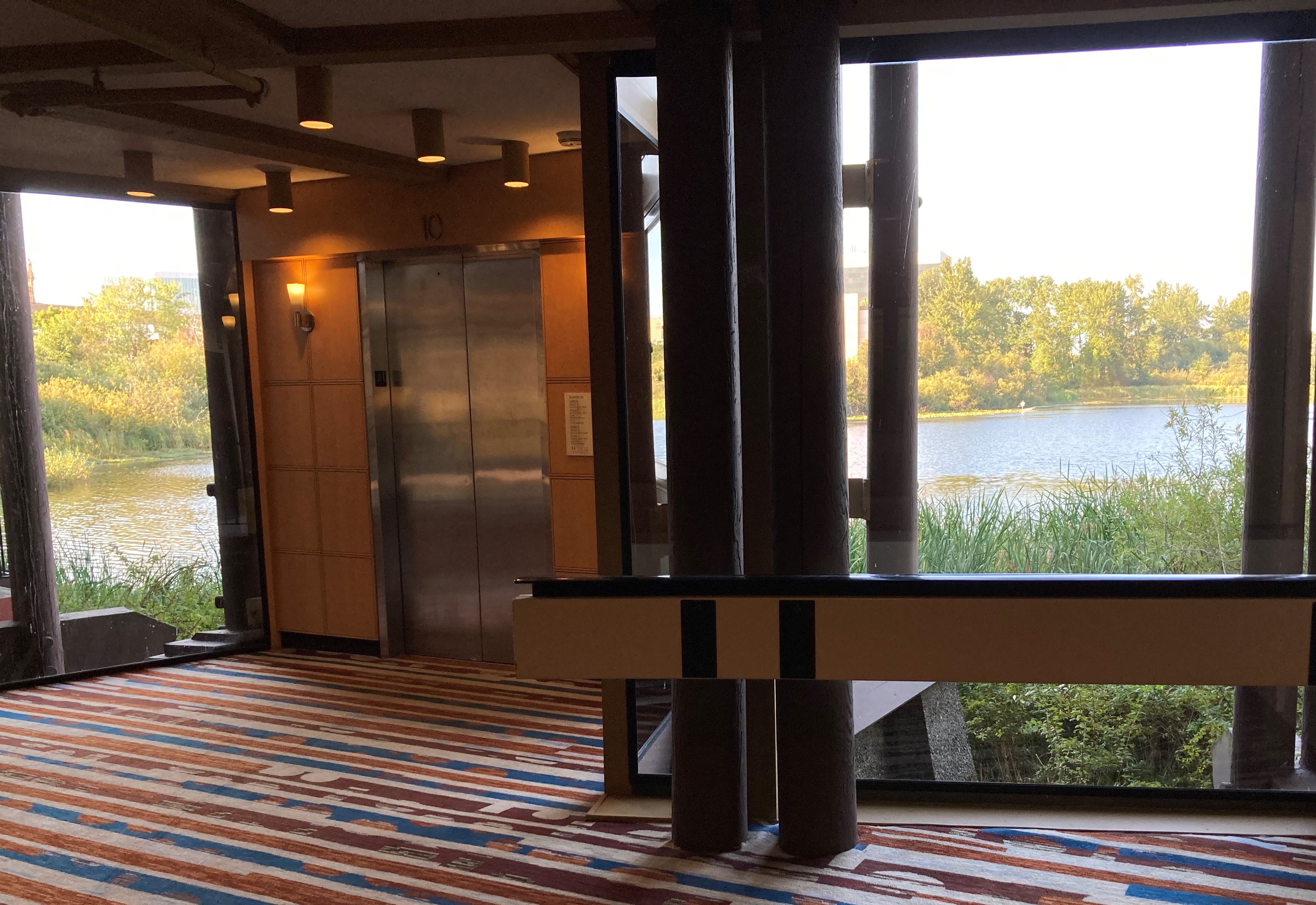
Here’s the nearest elevator on my trek to the room, which better shows the lake.

And from inside the elevator.

Later that evening I happened to see the volunteer who had encouraged me so much before that pitch. She smiled. “It went well, didn’t it?”

“Yes, it did.”

“I saw her face,” she said. “I knew.”

You never know when you’re going to meet an angel, just when you need one.

Fine Fort Umpqua Days Despite Weather Surprise

Fog and a little smoke from nearby fires cleared early on Saturday morning, the first day of the two-day annual Fort Umpqua Days event in Elkton, Oregon. Lovely weather. Sunny. Soft fluffy clouds. Gentle breezes. And the people came out. My, they did come out! I kept busy up in the vendor area on the hill above the reconstructed fort. So busy I didn’t even get down to the fort itself on the flat below.

In midafternoon I checked my phone for the air quality report, as I’d been doing daily since fires started in the area after a lightning storm several nights before. My phone indicated something to the effect that rain would start in thirty minutes or so. I stared at my phone, glanced up at the blue sky with the white, fluffy clouds.

“That’s ridiculous! It’s a perfect day.”

About twenty minutes or so later a cloud shadowed the ground. Lots of clouds. Gray ones. Enough to cover the sun.

I’m in my booth, with a canopy overhead, but I’m selling books. Rain and books don’t go together. And I had pictures, photographs, on display. Winds picked up. No overhead canopy would protect from blowing raindrops. My son-in-law checked his phone. It’s not just warning about rain. It’s warning about lightning.

All right. That convinced me.

The sprinkles came. About 3 o’clock we started packing up.

That said, even with a short day (vendors usually close at 4), it was an enjoyable time. So many people. So many stories shared. And a little weather excitement to boot. Didn’t see lightning but heard thunder by the time I got home.

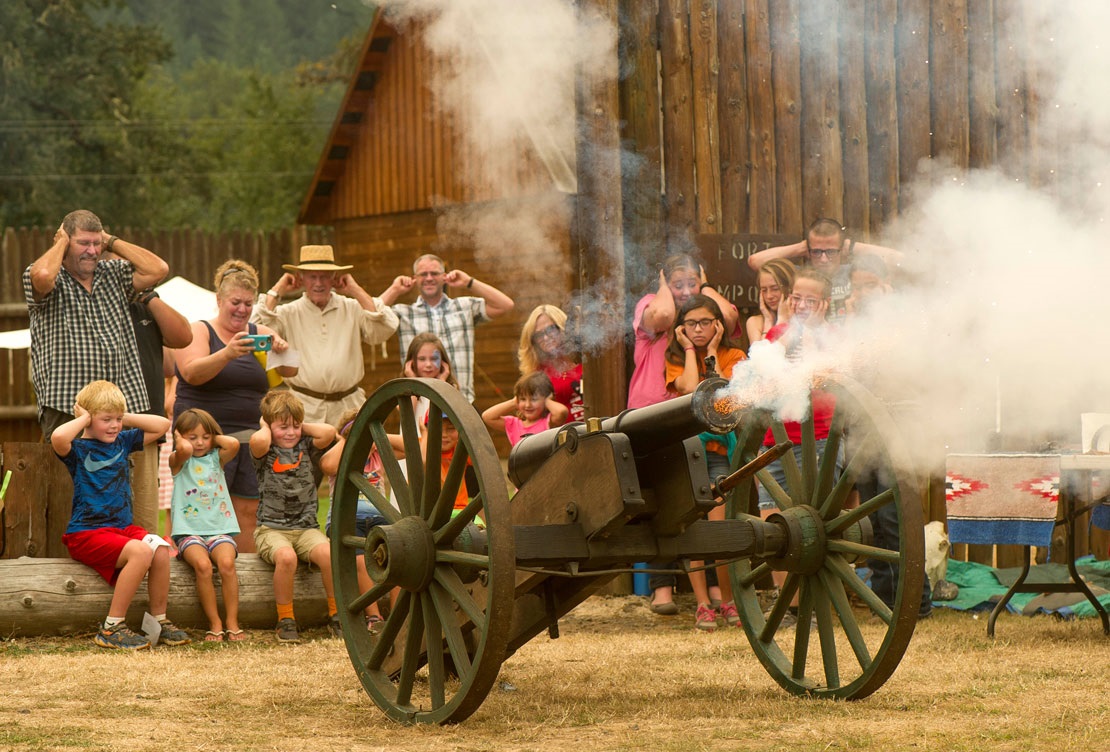
Sunday remained clear all day, but quieter–well, except for those booms down at the fort. All in all, a delightful weekend.

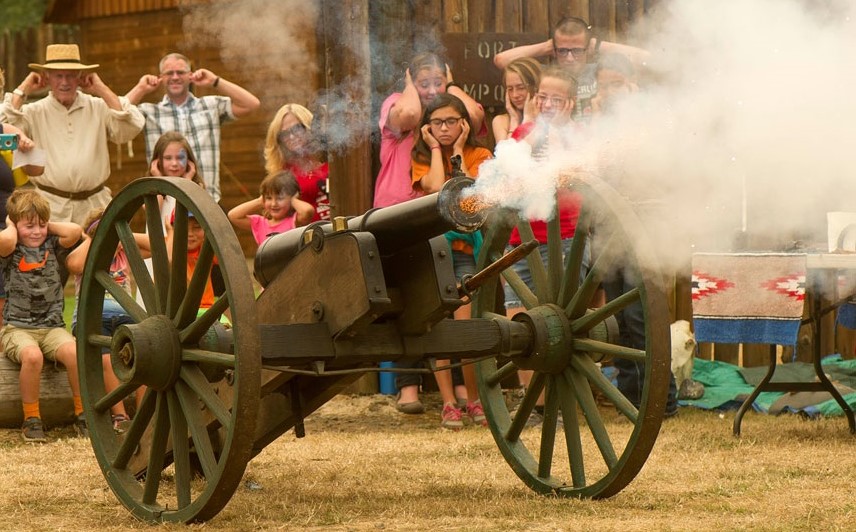
Robin Loznak’s photo again from a former Fort Umpqua Days event

Back to Fort Umpqua Days

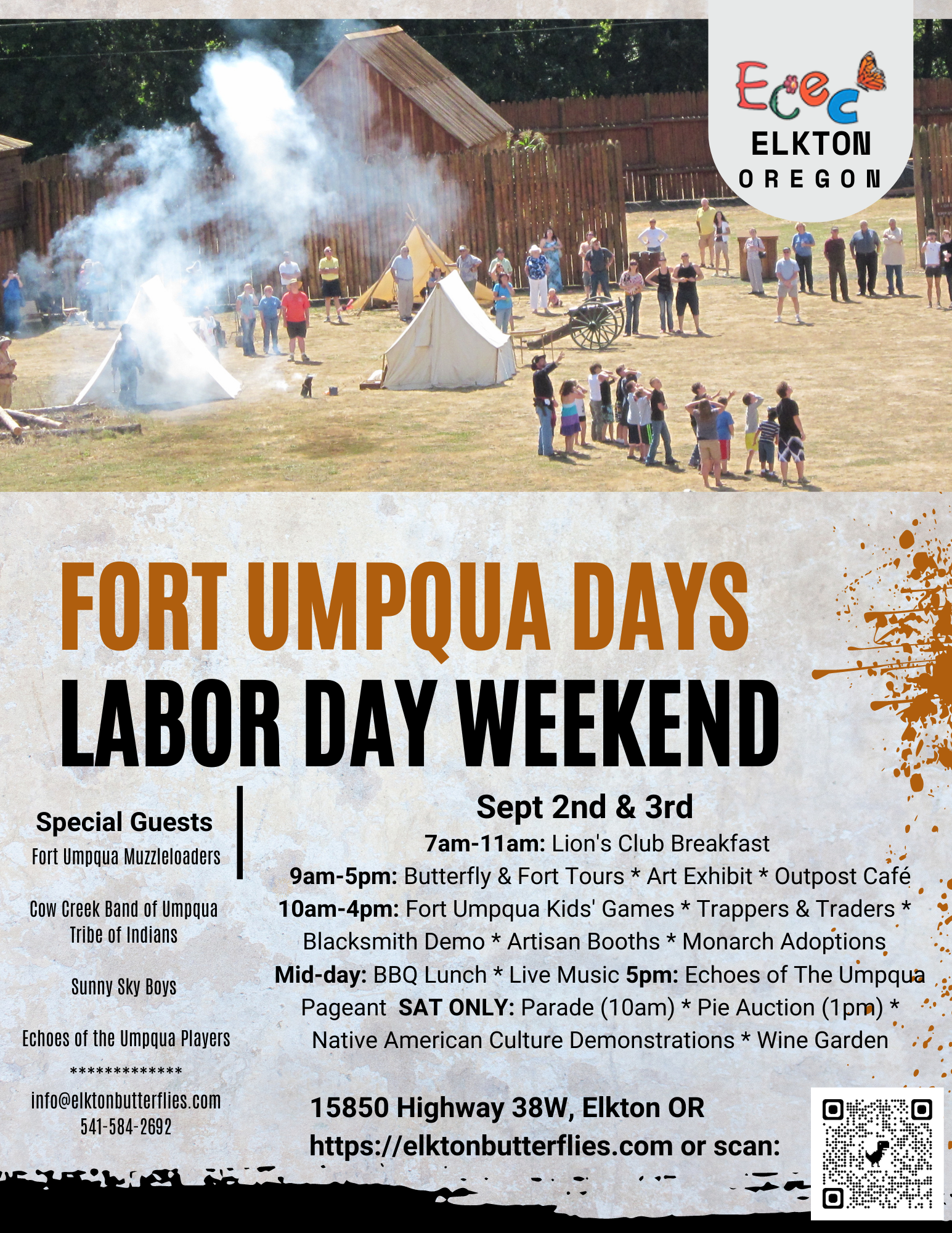
Here’s the poster shared by the Elkton Community Education Center (also known as the butterfly place), whose staff puts on this excellent annual event in Elkton, Oregon, the small town where I went to school in the somewhat distant past. Just a few miles up the road from my great-great-grandmother Martha’s farm.

I’ll be at the event as usual with a booth, selling my two books, A Place of Her Own, a creative nonfiction account of Martha’s story, coming west over the Oregon Trail in 1850 and eventually purchasing that farm on her own, and The Shifting Winds, a novel about a young woman whose father brings their family west to Oregon in the 1840s, much to her displeasure. Both women face huge challenges on this formidable frontier.

The Fort Umpqua Days gathering offers folks a glimpse of what life was like for these pioneers and the American mountain men and British fur traders who came before them. Today’s fort was built as a replica of the original with considerable research for accuracy. Volunteers will be on hand to answer questions, and there will be plenty of fun activities for the kids, closing off each evening with a pageant that adds a bit of historical accuracy with a strong touch of humor.

Cannon at Fort Umpqua. Photo by Robin Loznak.

Back to Authors & Artists Fair

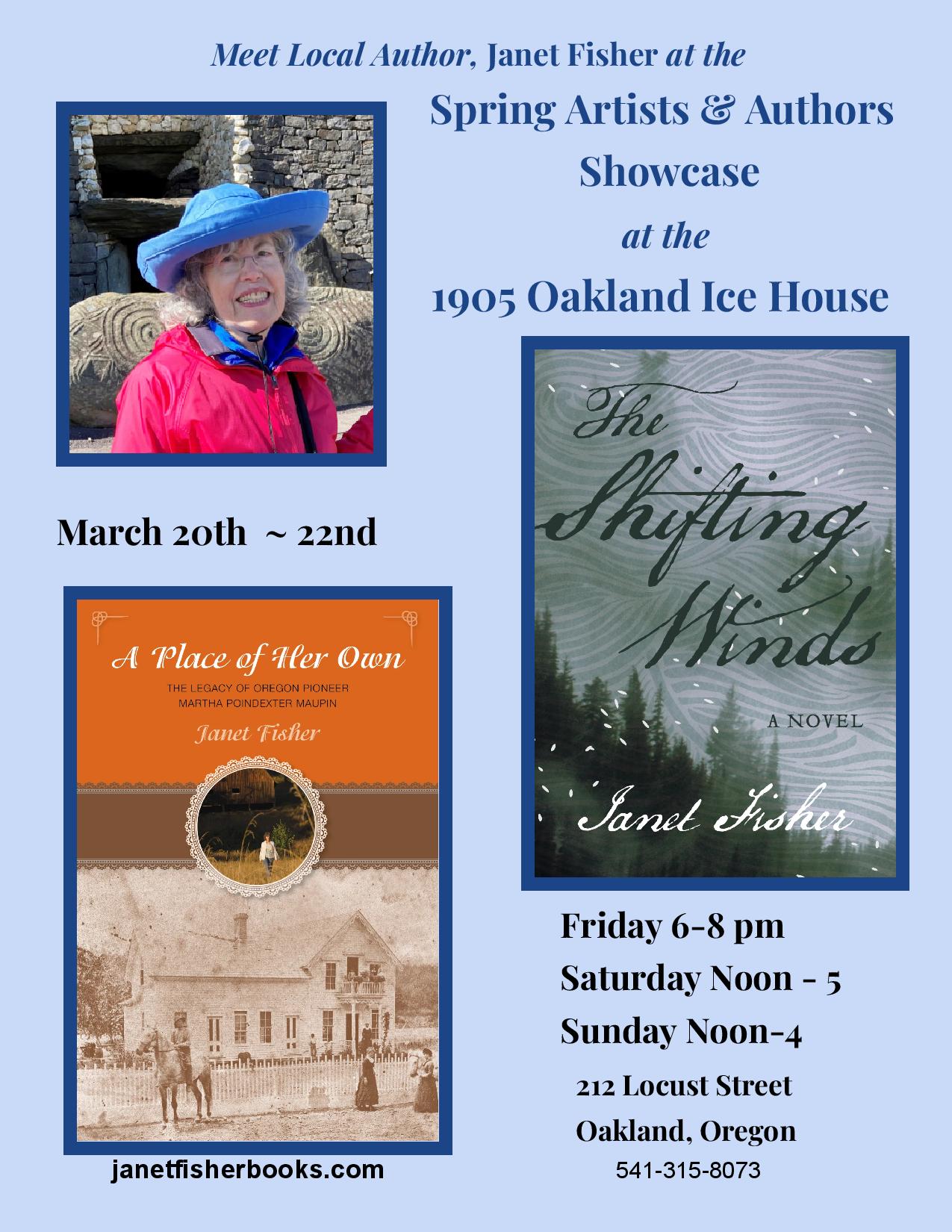
The popular Authors & Artists Fair in Eugene, Oregon, is coming up soon, next Saturday, December 10, and I’ll be there again this year selling my Oregon Trail stories–A Place of Her Own and Nancy Pearl Book Award finalist The Shifting Winds. Both books follow my theme, weaving stories of strong women through history. A Place of Her Own portrays my own brave great-great-grandmother who took that formidable trail to a raw frontier. It’s a true story but reads like a novel. The Shifting Winds follows fictional characters into a lot of real history during a critical conflict between the US and Britain over who should win the rich land of Oregon.

I’ll be at the fair in the afternoon only, from 1:30 to 5 pm. It’s a great day for shopping! Check out the poster below for more details.

A Fine Fort Umpqua Welcome

Folks showed up with happy faces for the return of Fort Umpqua Days after two years off. One of my favorite things about presenting my books at these events is all the stories I hear. People are curious about my books, of course, which delve into the area’s fascinating history. But so many people have stories of their own that they’re eager to tell. I love hearing these. I came away from this two-day event, head full of so many individual histories. My thanks to all who shared a bit of their worlds.

Here I am at my booth on this lovely afternoon. ~ Photo by Robin Loznak.

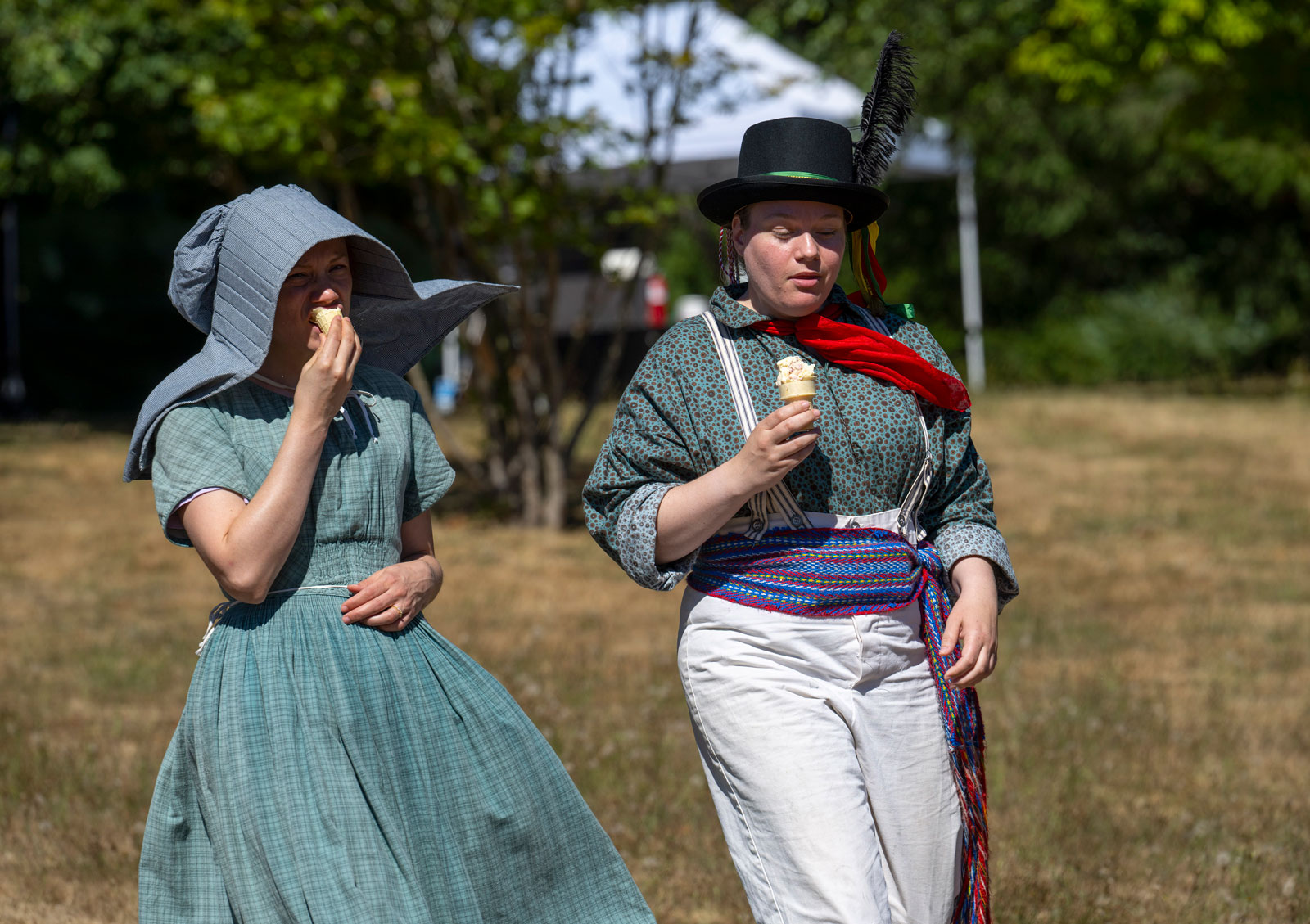
I also love the costumes many people wear for the occasion–the reenactors as well as the actors who perform in the nightly pageant, portraying stories of the era. I was happy to see reenactors Karen “Many Voices” Haas and her husband, Patrick, back again. I met Karen at the last Fort Umpqua Days in 2019 and featured her in a post back then. The two are shown in the previous post. We had a good visit yesterday. They stopped by my booth, looking quite fine, as if they had walked right out of the past.

Robin took a few more photos at the event (shown below). I’ll let his pictures speak for themselves.

And one more favorite Robin Loznak photo from a past Fort Umpqua Days moment:

BOOM!!!

Fort Umpqua Days are Back

Fort Umpqua front gate

Fort Umpqua Days will be back this year after two years off, and that seems worth a celebration.

It all begins on Saturday morning, September 3 at 10 o’clock at the Elkton Community Education Center, 15850 OR-38 W, Elkton, Oregon, west of town.

That’s by the popular Butterfly Pavilion. The fort lies just down the hill. It’s a two-day event from 10 to 4 on both Saturday and Sunday, plus evening performances of the annual “Echoes of The Umpqua Pageant.”

Monarch butterfly – Robin Loznak photo

This Labor Day celebration has become a tradition in small-town Elkton, Oregon, home of the reconstructed Fort Umpqua, the southernmost outpost of the British Hudson’s Bay Company in the 1800s. It will be good to return to that tradition.

Locals and visitors gather on the weekend to enjoy a parade through downtown, a pie auction, BBQ, live music, tours of the wonderful Butterfly Pavilion, and more. I’ll be among the vendors up near the pavilion, where I’ll be selling my books, stories about Oregon’s dramatic history of those days–A Place of Her Own and The Shifting Winds.

From “The First Mountain Man” by Andy Thomas – with permission of the artist

Kids will find plenty of fun, including a voyageur expedition, to see what these fur traders did in the heyday of this fort.

My second book, The Shifting Winds, delves into this era with fictional mountain man Jake Johnston as a good friend of historical mountain man Joe Meek. Both came west to Oregon in the early 1840s after the beaver played out in the Rockies. Once in Oregon they wanted to help their fellow Americans claim the rich Oregon Territory, which was then jointly occupied by the US and Britain.

Folks who reconstructed Fort Umpqua worked diligently to maintain an authentic representation of the original, and people will be on site during the Labor Day event to answer questions.

Reenactors and blacksmiths often attend, showing their work to add more color, and they’re happy to offer information as well.

You might even find a mountain man or two.

Inside Hudson’s Bay Company Store, Fort Umpqua

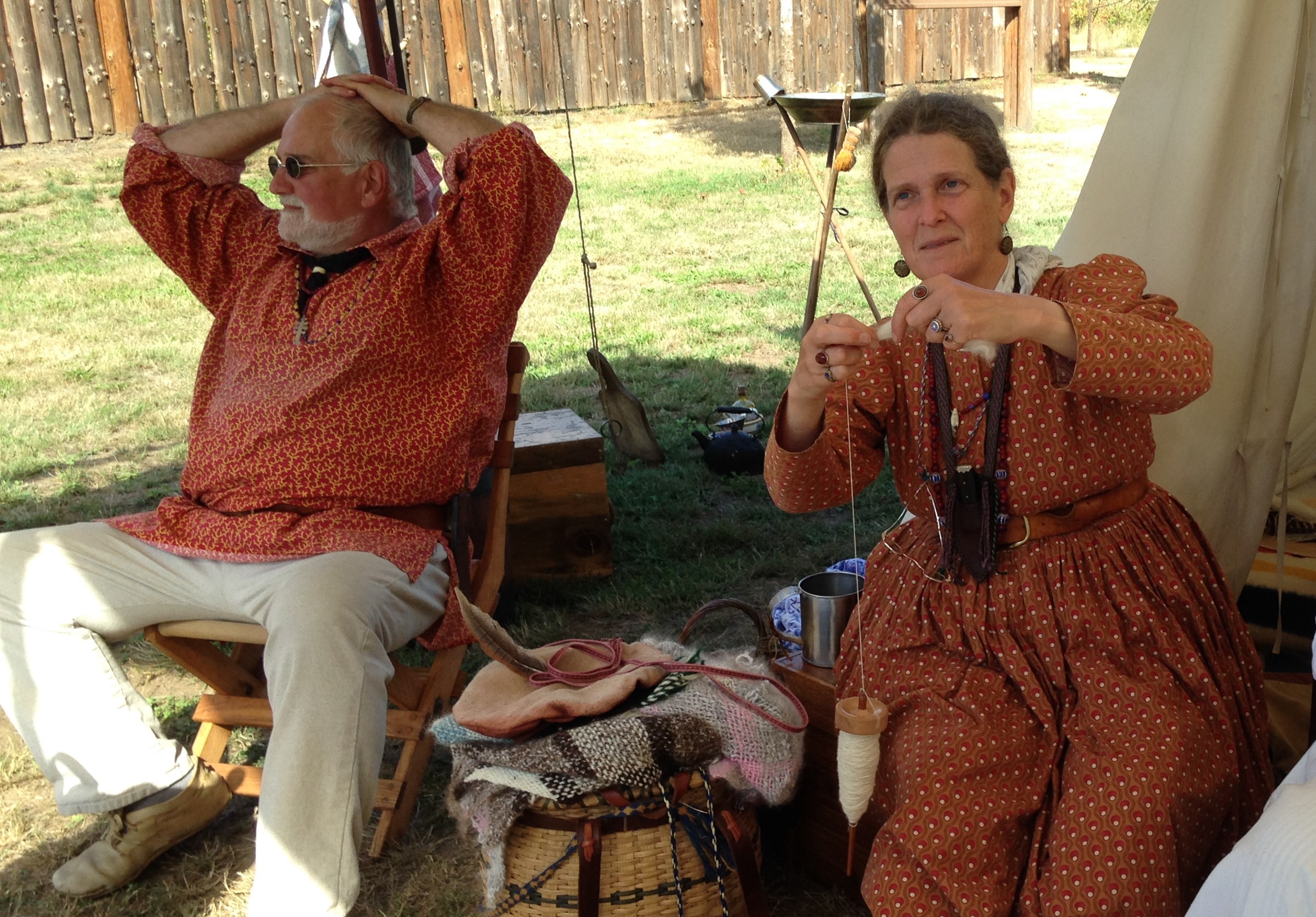
Remember Karen “Many Voices” Haas who was there for Fort Umpqua Days last time? I was so glad she showed me how she uses a drop spindle. It’s a device that was used for many centuries, millennia even. I have a character in my upcoming historical series spinning thread with a drop spindle some 3,500 years ago. After watching Karen I was better able to describe the process.

Karen using a drop spindle to spin thread, shown here at the fort with her husband Patrick, both in period dress.
Outside Hudson’s Bay Company store, Fort Umpqua
Back gate of Fort Umpqua from the hill above

Stepping Out Again

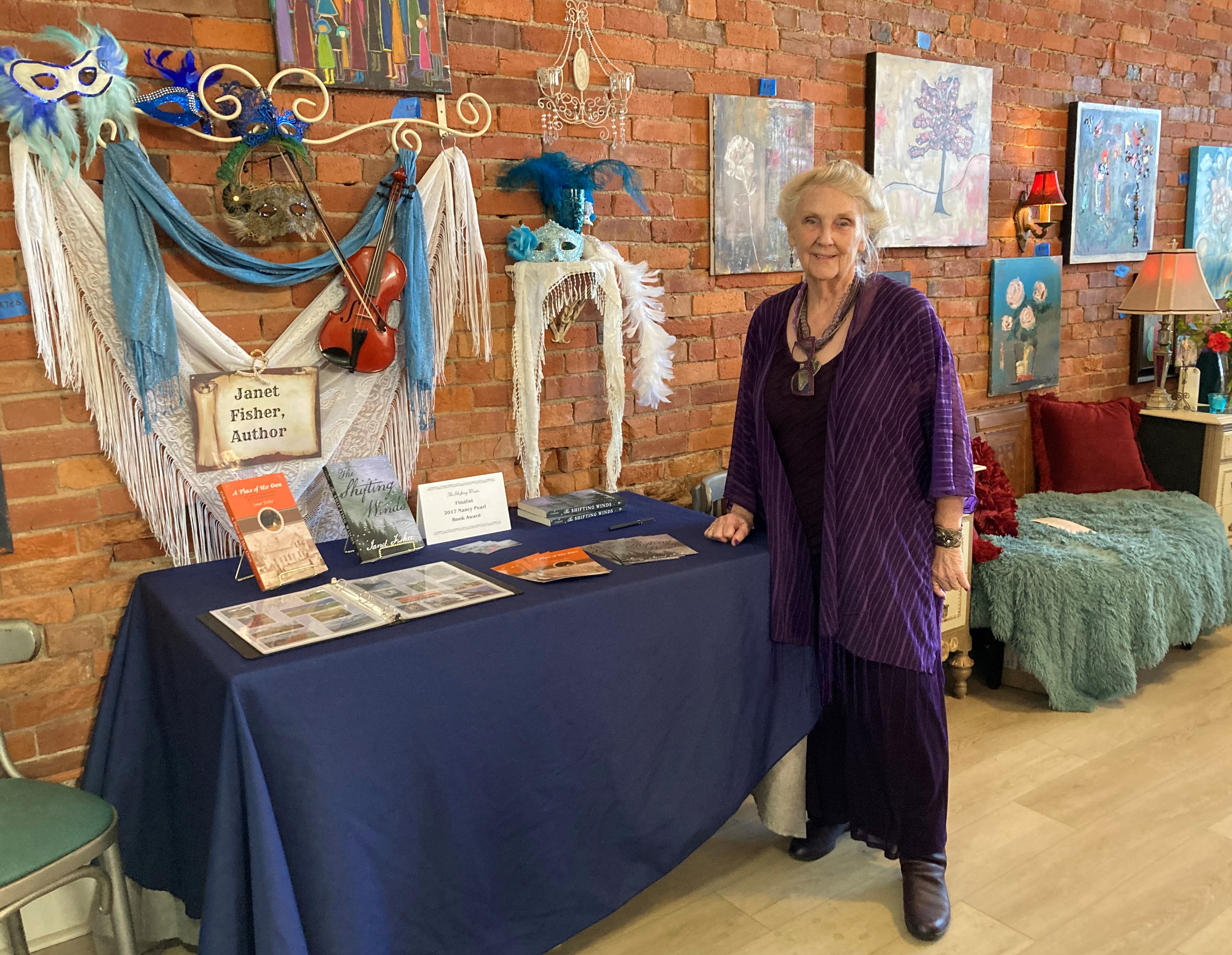
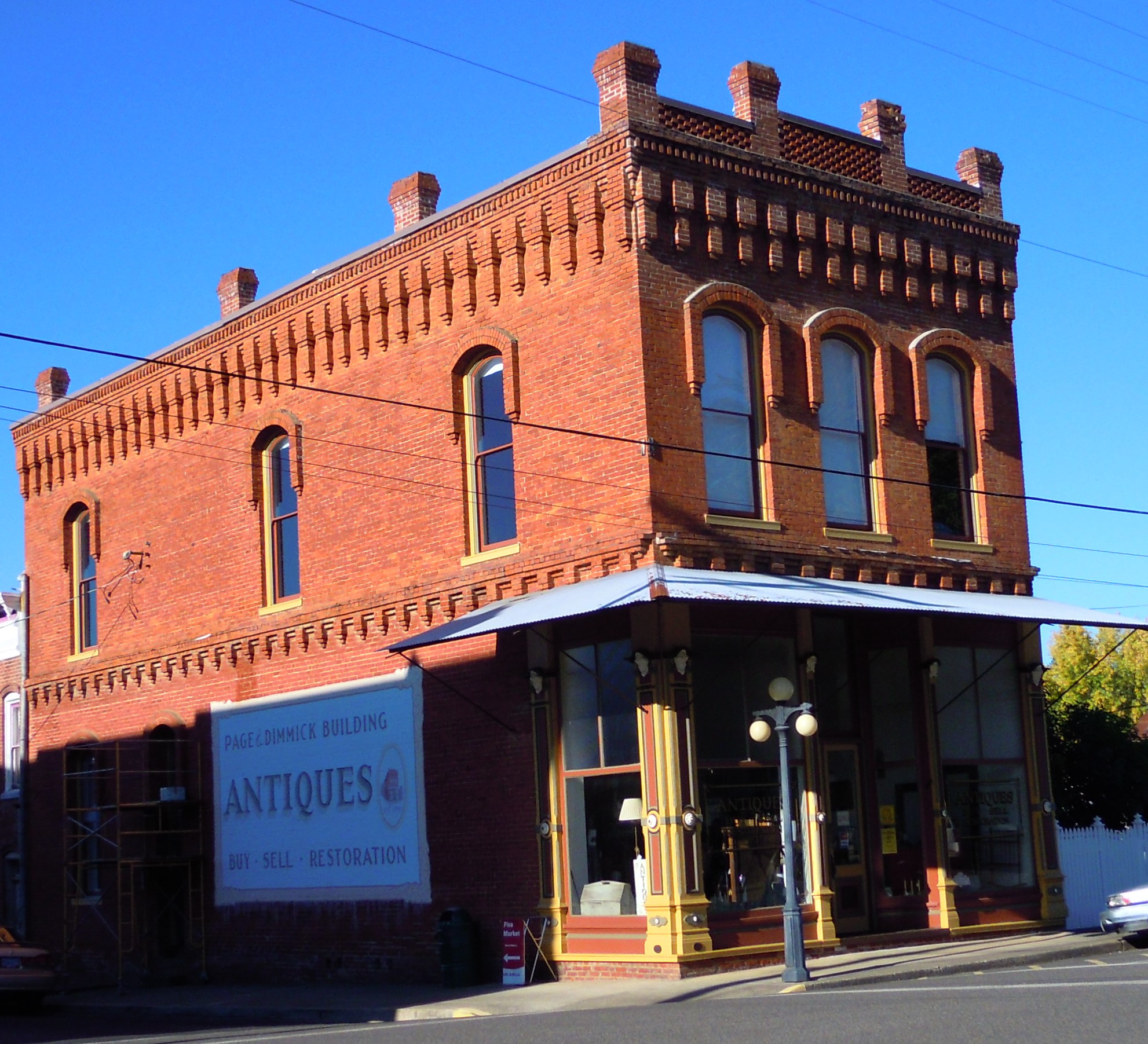
With hopes of better days as summer approaches, I’ve begun scheduling book events again. First up will be a book signing event hosted by Gail Hoelzle at The Bookmine on Main Street in historic downtown Cottage Grove, a friendly place full of books and flowers and other gift items. It’s the regular Cottage Grove Art Walk held from 6 to 8 pm on each last Friday of the month from April through November.

I’m delighted to be returning to The Bookmine with my books, A Place of Her Own, the story of my great-great-grandmother Martha Maupin who trekked across the Oregon Trail in 1850, and my other Oregon Trail story, The Shifting Winds, a Nancy Pearl Book Award finalist.

Weather permitting we’ll set up a table under cover at the front door of 702 E Main Street pictured above. Whether outdoors or in, the art walk is always a fun event.

A Place of Her Own describes Martha’s incredible journey. She walked the whole 2,000 miles in 1850 from Missouri to Oregon–while pregnant–and that wasn’t the toughest part. They settled first near Eugene City in Lane County, then a hotbed of North-South rivalry. Things got especially hot for my great-great-grandfather, a staunch southern sympathizer, and they fled south to Douglas County–just ahead of the law. He was killed in a wagon accident leaving her with a passel of kids and no means to support them. Determined not to give up she purchased a farm by herself, although her 13-year-old son had to negotiate for a loan because the lender wouldn’t negotiate with a woman. I now own that farm, still in the family for more than 150 years.

The Shifting Winds describes the challenges faced by American pioneer Jennie Haviland, whose family travels the Oregon Trail to Oregon in 1842 during a time when the United States and British both vie for that fertile land. Meanwhile a gentleman working for the British Hudson’s Bay Company vies for Jennie’s hand, while an American mountain man does all he can to disrupt the British guy’s plans. Their story follows the actual history of the American-British conflict leading to the historic meeting at Champoeg that could change everything. Which way will the winds blow?

Martha’s story is true with fictionalized scenes. Jennie’s story is fiction set in a lot of real history.

Historic Words and Fibers

History resonates in every Fort Umpqua Days celebration as people come from many places to share a glance back to the early days of Elkton, Oregon. The reconstructed British Hudson’s Bay Company fort provides a centerpiece for the gathering. This year a number of reenactors came to give the fort even more authenticity.

Reenactor Karen “Many Voices” Haas spinning

In the above photo reenactor Karen Haas, who describes herself as a weaver of words and fibers, spins yarn on a drop spindle while wearing period dress, such as you might have seen in the days of the original Fort Umpqua.

This is the period of my two published books, A Place of Her Own and The Shifting Winds. But the drop spindle is a device so ancient that I describe a character using one in an upcoming book that goes back roughly 3,500 years. I was glad to watch Karen spin with a drop spindle so I could see how she made it spin. This will help me describe how my ancient character spins with hers. More than one of my characters can be called weavers of story and thread. I think they share an affinity with Karen “Many Voices” Haas.

I had a chance to visit with Karen Sunday afternoon when she stopped at my booth where I was selling my books. After I closed up shop I went down to the fort with my daughter Carisa to see some of the reenactors, and there was Karen outside a Hudson’s Bay Company tent (it must have been an HBC tent because they were waving an HBC flag). And she was spinning. We recognized each other and it took me a moment to realize what exactly she was doing. But there it was. She was working a drop spindle. Every once in a while she would put the spindle against her billowy skirt and stroke her hand across it to keep it turning. Then she would reach up again and make sure the yarn was coming out in an even thread. An amazing process. So ancient. So elegant in its simplicity, yet no doubt requiring considerable skill and practice.

With that we wrapped up another Fort Umpqua Days enjoying a delightful glimpse into our past. Thanks to Karen for showing us one significant thread of that story.