Rainbows of Promise

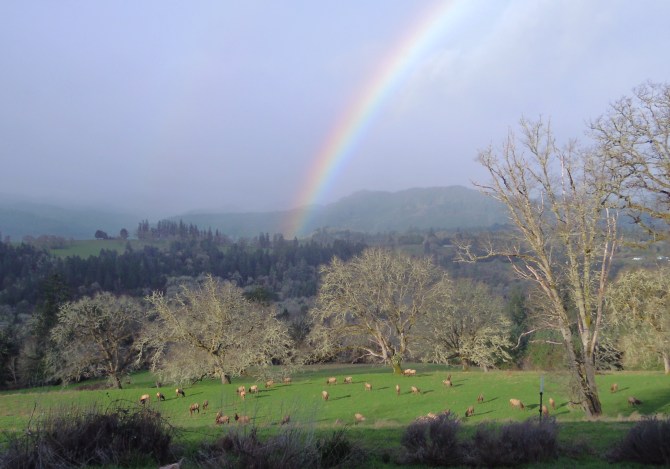
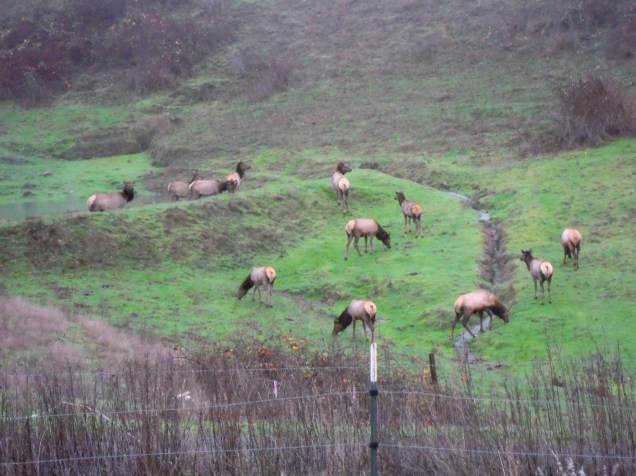
I completed a writing landmark last night and woke on this blustery morning ready to celebrate. Look who came to the party, bringing a rainbow of promise.

1321-elk-rainbow-2If I have seemed absent these last few weeks, it’s because I have been immersed in creating a comprehensive outline for my next book. This will be the third in my second trilogy set in the ancient world over 3,000 years ago. The story brings together many threads from the first five, so it hasn’t been a simple project. But rewarding.

There seem to be two camps of writers, those who work from outlines and those who shun them. I’m an outline author because I can’t imagine pulling all that information together and holding it in my mind throughout such a complex story. It’s a guide, not set in stone. But when I do venture off track, letting my imagination veer, I often find myself lost in useless dead ends.

I actually enjoy the outline because that’s where I tell the story from beginning to end in simple language. Once I start the actual writing of the rough draft I will show the story. The draft is the most thrilling part because I live the story then. That said, I have been known to shed a tear even when writing or reading the outline. Many scenes have already come to me by that time, especially when my muse has been generous–and she has been on this one. So I have experienced those scenes as they’ve come to me, and they touch me again when I copy them from the notes.

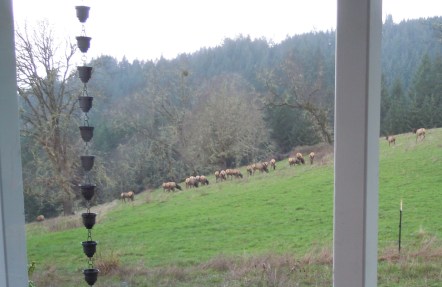
1295-elk-morning-2The elk arrived early for my celebration, seen here just off my front porch. And they stayed late.

Along with the work on the new project I’ve also been promoting my Oregon pioneer stories that are already in print–A Place of Her Own and The Shifting Winds. I’m continuing to do speaking appearances around the area, the next in Newport, Oregon, on the coast. A lovely setting. That’s next Sunday, the 26th (details on the sidebar at right).

It’s even rumored that I’ll have a short appearance on local TV. More on that later. Now to a short break, if I can quiet my mind.

The rainbow formed a complete arc and lasted more than an hour. I don’t remember ever seeing one last so long. I want to embrace its promise and the power resonating from the magnificent creatures who share my world.

1323-rainbow-2COMMENT

Fort Umpqua Post Script

So, what if history got it wrong?

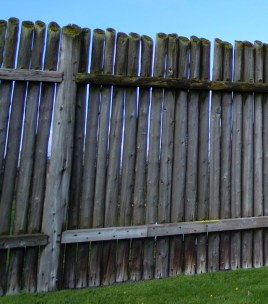
After last week’s rollicking Fort Umpqua Days celebration, I take a long look at our sturdy reconstructed fort on the Umpqua River in Elkton, Oregon, and I recall a question from one of the customers who came by my book-selling booth during the event.

“Is Fort Umpqua in your books?”

I had to say no, but it might have been–if I could have reconciled sources.
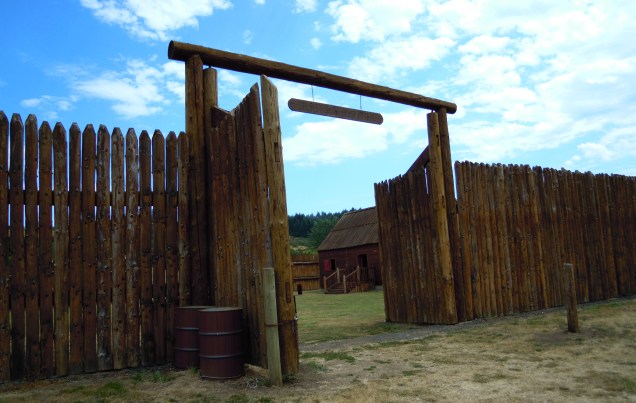
Fort Umpqua Gate

Muddied waters

My issue arose from the date Fort Umpqua fell. History has an answer, but it seems a little murky to me.

For starters I’d like to quote Stephen Dow Beckham in his Land of the Umpqua, a fine presentation of local history published in 1986. On this subject of Fort Umpqua’s demise he writes on page 58:

The fort burned on November 15, 1851, while the commander or chief trader, Johnson E. King was at Fort Vancouver. King had just brought in his annual load of furs and was ready to leave with fresh supplies for the Umpqua when word of the disaster came by letter. The company kept up three more years of trade in southwestern Oregon, presumably working out of an outbuilding at the site; then it terminated operations. [My bold.]

Beckham sources his statement with a letter in the HBC archives written December 20, 1851, by a John Ballenden to Archibald Barclay. Ballenden was an HBC officer briefly posted at Fort Vancouver to help wrap up Company affairs there after the boundary settlement that gave the United States the land. Barclay was an HBC Secretary in London.

But what if history got this wrong?

Ft.Ump.gardens-2 (2)My experience in researching these early periods has shown me that history can be difficult to pin down. Even contemporary accounts don’t always agree.

That word presumably in the above quote gives me pause. Did assumptions lead to wrong conclusions?

A couple of things have come together to make me question this.

What did Martha know?

I have access to an account that disagrees with accepted history. It comes from Florence McNabb, the granddaughter of Martha Maupin, whose story I tell in A Place of Her Own. Florence wrote a 75-page manuscript of Maupin family history which I used extensively in writing Martha’s story. But I didn’t use one of Florence’s vignettes because it disagreed with history. To give a timeframe for this, Martha and Garrett moved from Lane County to Douglas County in December 1864 and rented a cabin on the Henderer place near Elkton until sometime after Garrett’s death in 1866, well after the supposed demise of Fort Umpqua.

Yet Florence writes:

It was while they were still on the Henderer place that there was an Indian scare and all of the families were told to come to the Umpqua Fort. The fort was built on the banks of the river in the summer of 1836 and was the early trading post of the Hudson Bay Co. It was well built with logs standing on end to form a stockade with several log cabins inside. 434-fort-umpqua-interiorOriginally the land owned by the Hudson Bay Co. comprised 640 acres and several dozens of stock. . . .

On this occasion the families remained in the stockade and the well-armed men went to their respective homes to tend to their livestock. The Indians never did attack but they could be seen early in the mornings and again in the evenings. . . .

After about a week, shut up with children and short tempered mothers, they decided to return to their own homes, coming back to the fort to spend the night. . . . One lady remarked that she would rather fight Indians than to spend another night with that bunch.

“This was told to me by my mother,” Florence wrote, “who had heard it from Martha Maupin.” Yes, Martha.

Now, that could have made an interesting scene in my book, but I didn’t want to go against history.

British habits
ShiftingWinds_EcoverA new thought began to stir, arising out of my own recent research into the history of Fort Vancouver, the British Hudson’s Bay Company headquarters of the Fort Umpqua outpost. Prior to my presentation at Fort Vancouver this summer of my new book The Shifting Winds I went back into the two huge volumes that describe research the preservation team did in order to reconstruct an authentic replica of this British headquarters.
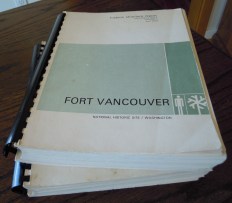
Ft.Vanc.Report (2)I was amazed at the continual construction going on during the years the British maintained Fort Vancouver. The first Fort Vancouver was built in 1824-1825 on the hill above the Columbia river bottom. When the British changed their minds about that location in 1829, they just picked it up and moved it a few miles closer to the river. When that new fortress proved to be too small they just moved the walls over, added to them, and doubled the size.

When the first home of the commander began to crumble due to decaying roof and walls, they tore it down and built a new one in a better spot within the walls.
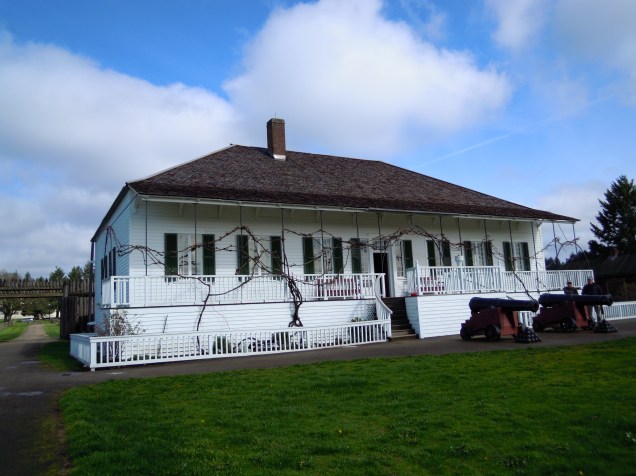
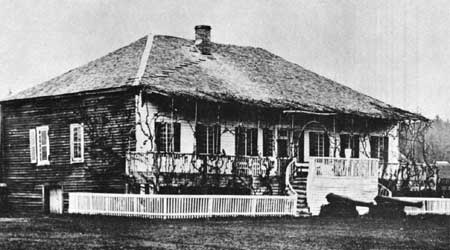
Fort Vancouver Big HouseThis is the commander’s house, the Big House—no small cabin to be thrown up in a few afternoons.

613.Ft.Vanc.McLoughlin Sitting RoomAnd the interior was exquisite.

Ft.Vanc.stockadeOther buildings were routinely torn down and replaced. And those picket walls kept moving—a little bit here, a little bit there.

alan-cropIt seems the British Hudson’s Bay Company men would rebuild at the drop of a tall beaver hat.

Why not Fort Umpqua?

So if tiny Fort Umpqua burned down and the Hudson’s Bay Company still had business to conduct on the site, why wouldn’t they follow custom and rebuild that? Ballenden’s letter to Barclay, the author Beckham’s source above, was written a month after the fire and would not reflect Company decisions afterward. My family’s story (told by Martha herself, no less, although received secondhand) suggests a fort still stood when they sought refuge sometime between 1864 and 1866.

Accepted history also tells us that the historic 1861 flood took away the burnt remains of Fort Umpqua, leaving nothing. Is this fact or conjecture? Is it possible that a more substantial fort stood against those flood waters, one that the Hudson’s Bay Company had rebuilt and maintained after the 1851 fire? Up north, when the British finally left their Fort Vancouver headquarters to the Americans, the walls and buildings disintegrated in this wet, rainy land without continual maintenance. We have photos and reports to substantiate that. Was this the more likely end to Fort Umpqua also, as new American owners no longer needed this former British outpost?

Unraveling the story threads

Book cover - A Place of Her OwnSmall tidbits of information—notes in letters and journals—often guided the team that reconstructed the elaborate Fort Vancouver headquarters. If I had believed in Florence’s tidbit, I could have brought the Fort Umpqua outpost into my story and had one more tense scene for Martha. And I could have smiled and told my customer, “Yes, yes, it’s in this one.”

Just saying.

Beckham, Stephen Dow. Land of the Umpqua: A History of Douglas County, Oregon. Roseburg, OR: Douglas County Commissioners, 1986.
McNabb, Florence Maupin. The Maupin Family. Undated, unpublished manuscript.

COMMENT

Turning the Page

Today marks a transition for me when I turn the page from writing to marketing. The photo below shows the rough draft of my latest writing venture, Book Five in my Golden Isles Series, Webs of Stone, and a draft of a poster for the launch of my upcoming release, The Shifting Winds. Release date is one month from today, March 1, so I must really get onto the marketing side of things.

906.turning.pageI finished the rough draft of Webs of Stone on January 19, then had to read it, once on the computer and once on paper, to get it ready for readers. I delivered it to my first reader yesterday, my daughter Carisa. So today I can focus on The Shifting Winds.

Of course it isn’t quite that tidy. I’ve had to do a few things for the upcoming release before today. I’ve scheduled some events and worked on my contact list. My daughter Christiane put together the poster for me and we worked on it a few days ago. But I feel the transition today, now that I can set the writing aside for a bit.

Friends often ask if I get confused going from one of my book projects to another, and I have to admit sometimes I feel conflicted. There’s such a long lag time between the writing of a book and the release of an actual book you can hold onto, you might write several in between. I have an added shift because I’m writing in two distinct time periods. It’s the same genre, historical fiction, in which I follow my theme, “following strong women through history,” but some of my books are set in nineteenth century America, and some are set in ancient Ireland and Crete roughly 3,000 years ago. Both are periods when women faced great challenges.

When I’m in the middle of writing one, as I just was, I’m really in that world. I have been immersed in the ancient world of Ireland and the surrounding scenes in Britain and Brittany and the Iberian peninsula, absorbed in the lives of my characters. I get a little otherworldly, a fine Irish concept with its myths of the Otherworld. For me it’s like getting caught up in reading a good book and not wanting to put it down. But when you write one it takes a lot longer.

So when I’m in that world it can be difficult to focus on another world, including the one around me. But now the new one feels done enough to let it rest while I turn to marketing of the one about to be released. And I move from the fourteenth century BC to the nineteenth century AD, with occasional glimpses of the twenty-first.

I love to write. I am more a writer than I am a marketer, but I do enjoy the readings and signings, the book talks, the book clubs–especially the book clubs where I can sit down with a group of readers and talk about the nuances of the book because they’ve already read it. I love hearing from readers. Their responses enhance my joy in the work and make it feel worthwhile.

Now I look forward to sharing this new book because it’s a favorite of mine. I’m so glad it’s going to be out there for others to read, and I hope readers enjoy the characters and the predicaments I had fun getting them into.

COMMENT

Visitors and Procrastination

I woke up today ready to start the rough draft of Book Five in the Golden Isles Series, having completed the comprehensive outline at about 10 pm Sunday night and taken a day off to do the mundane so I could charge ahead without too much interruption. Now, I can dilly dally as well as anyone when it comes to starting a project of that magnitude, Procrastination being the flip side of my old friend Perseverance. Nothing harder in writing a book than that first blank page. So, there’s no end of things you can think of that need doing. Cleaning the office. Checking a few scenes from the last book and getting caught up in the story. An extra scrub on the kitchen counters.

But nothing serves Procrastination like unexpected visitors. Like these.

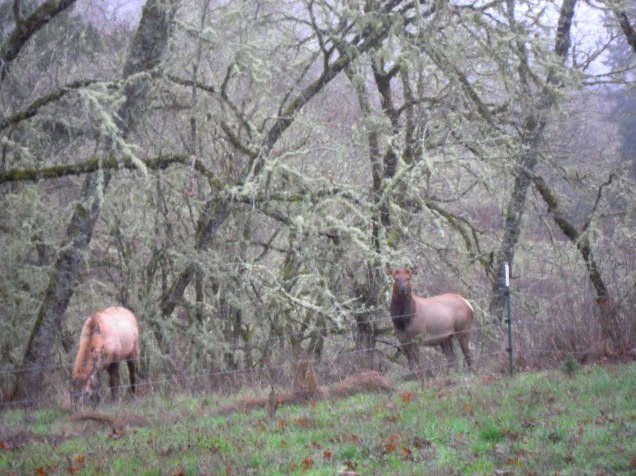
828.elk visitNow, I’m not Robin Loznak when it comes to taking a photo, and my camera won’t do what his will, but I hope you’ll forgive the less-than-crystal-clear shots when you consider my excitement. The above photo is taken through glass, my kitchen window, no less. They’re right outside my fence. That’s a bull on the left. You can just make out the antlers. The cow caught sight of me even through the window, and they don’t stay long if you spook them.

So when these wandered on I kept behind glass awhile, just for the joy of seeing them. And doing my best to record what I saw.

837.elk pondThe photo above is still through glass. And I might add in my defense, the fog was drifting. They’re enjoying the pond and the green grass nearby.

843.elk kickThe center cow above is getting a kick out of it. See her right back leg kicking up the water? They romped around in the pond for a while, but the real action shots are too fuzzy to make out. The antics were fun to watch. Elk seem to have a sense of play, even the old ones. Once last year I saw three big bulls in this pond. I wasn’t sure if they were fighting or playing. But they would dip in the water, shake their antlers hard, and then rush each other. Great entertainment!

848.elk upperAfter enjoying the show and procrastinating for a considerable length of time I finally dared venture outside, knowing that even if I scared them away I had gotten my money’s worth. I took the above shot from just outside my front door. And I was reminded of another wild critter I saw last summer. I had just glanced up the road from inside when a golden-brown critter waltzed down that road above the turn where tall grass blocked my view of all but its back. My first thought was deer, commonplace visitors. But it occurred to me that the animal seemed low to the ground. Was the grass that tall? It meandered around the turn and I saw its legs. Short legs. It turned and went off the road so I could see its tail. Long tail. Oh my! A cougar, about 100 yards outside my front door. I had been planning a walk up that road. I changed my mind and didn’t go just then.

But I don’t worry about elk–usually. There was a time I wondered if I was being challenged, but that’s a story for another day. These didn’t challenge, and they didn’t run. I went back inside and watched until they strolled on.

I did get started on the book. Nine pages, about 2,700 words. Not a shabby start. Not the best either. But with such great visitors, how can you not procrastinate a little?

COMMENT

My Muse’s First Draft

Rough Draft - 4.5.15My muse just took me on a wild ride, and here’s the first draft. Done.

I’ve been writing books for many years. None ever caught me quite like this. And I must apologize to my followers for being absent awhile from this blog. I know. I know. You’re supposed to balance things out. Divide your time between writing and blogging and Facebook and marketing and all the rest. People sometimes remark about my discipline as a writer that helps me put out a lot of pages in a short amount of time. It’s not discipline, folks. It’s obsession. And this time, maybe more.

I blogged earlier about the visit of my muse, who began flooding me with ideas for this one in mid-December. I never really got away from it. I piled up notes and finally got them organized, ready to start the first draft in mid-February. I finished this draft March 22. In the last few days I gave it the first readings, one on the computer, one on paper. The photo above shows the first cleaned-up version on paper–not the final draft by any means. But it’s finally something I can hold in my hands.

Did I tell you the story of her name? My muse? I believe I alluded to it. In one post I had talked about changing the name of my character and how that ignited the inspiration for this historical novel of the Greek isle of Crete. I call the character Talia, and when I looked online for the meaning of that name I came up with several meanings like to blossom or bloom. Ah! Did she bloom! But, as I mentioned in my most recent post, one day I checked again for the name’s meaning, a different website. On this new website I learned that Thalia (an alternate spelling) is one of the nine Greek muses. Okay! That did set me back in my chair.

Is she sending me all this? It feels as if the story has come from a source outside myself. And the experience has been intense. I’ve been in this world, caught up in the joys and traumas and fiery conflicts and triumphs and pains, since the middle of December. A fantastic ride.

This is a book in my series from the Minoan world. One reason I could write an epic historical novel so quickly is that most of the research was already done for the earlier books, my scenario already developed. I just had to keep track of the generations and remain consistent–not always easy, but easier than the years of research that went into the first.

And Thalia isn’t done. Even before I finished this book, she started sending scenes for a new one. I’ll get the notes down, but I’m asking her for a brief rest.

COMMENT

First Daffodil ~ First Scenes

DSCN0731It appears to be a time for beginnings. My first daffodil of the season opened up. And I began writing my first scenes for the new novel. I love daffodils because they give me hope of life emerging again in the spring. Now my new book is taking life.

After receiving input from my muse for many weeks, I finally put it all into some semblance of order with an outline. From that I write.

By the way, I found an interesting tidbit of information a short time ago. As mentioned in my last post, all this recent input from my muse started when I changed the name of the protagonist for this new book, which is set in ancient times on the Greek isle of Crete. I usually like to know what the names of my characters mean. It affects my feelings about them. There are many sites you can google for your baby names and some of those offer meanings. I had clicked a few sites already on the new name for the protagonist, but went back to check again and came up with a new site.

This new site told me the name I had chosen, with a slight spelling variation, was the name of one of the nine Greek muses. I did sit back in my seat suddenly, reading that. Who knew? No wonder she’s been sending me material. 🙂

Anyway, I’ve enjoyed the whole process, except for some short nights of sleep. Now I’m thrilled to be writing.

I know some writers claim you have to write every day. It doesn’t really work that way for me. I see each book as a project with different phases, several of which involve writing in some sense–from note taking to revisions. But the most intense phase, the part where I step into the world of my characters and live it through them, is the first rough draft. That’s the real writing part to me. It’s where I am now. And loving it.

Cheers!

COMMENT

A Muse and the Power of Names

721.fog on mountain

My muse has been visiting me for the past three weeks, breathing words and ideas into my mind like fog drifting into the timbered mountains with refreshing beads of vapor. I have experienced creative fever before, but never for this length of time or with this power.

I had the premise for a story in my series set in the days of ancient Minoan Crete. I had written three already and I wondered what I would do this winter—with time to write and no story compelling me. For this one I had a few names brought over from the earlier books, but I didn’t really know most of the characters. The two I knew best had carried another story in the series, and while I’d become so attached to these two that I had trouble leaving them, I knew the next book had to be focused on the new people.

The trigger for my muse came when I was doing a final reading of Book One in the series and came across a family name connected with my new protagonist. It would have been the name of her great-grandmother, and was only mentioned once in the first book. That name touched me, as the name I’d previously given the new character did not.

I decided to rename my protagonist. Logical, I thought, for her mother to name her after an ancestress. And with that change, she went from being a sweet girl, the delight of her mother and her people, to being a young woman who could break men’s hearts—and her own in the process—never intending harm but rushing headlong into life with all its joys and perils. Then, while I was still caught in the excitement of getting acquainted with this intriguing person, I considered another character. I had a minor role for him, although a key role. When I named him he moved into the story with stunning force that changed their world. My muse put the rest together—I think with sheer pleasure.

I’m not ready to reveal those names, but in three weeks’ time I have drawn up an entire storyline. I have over 80 single-spaced pages of notes, a preliminary outline of scenes, and am ready to put together my working outline from which I’ll write the first draft. I expect my muse to continue whispering small thoughts, and the story may shift here and there. They always do.

But I will never doubt the power of names to inspire a story.

COMMENT