Stonehenge on My Mind

I’ve been thinking quite a lot about the People of the Stones who walk through my stories of ancient Ireland and its neighboring lands. I’m working on a new novel, a sequel to the one I hope to have published next. Always a time for the stirring of the mind.

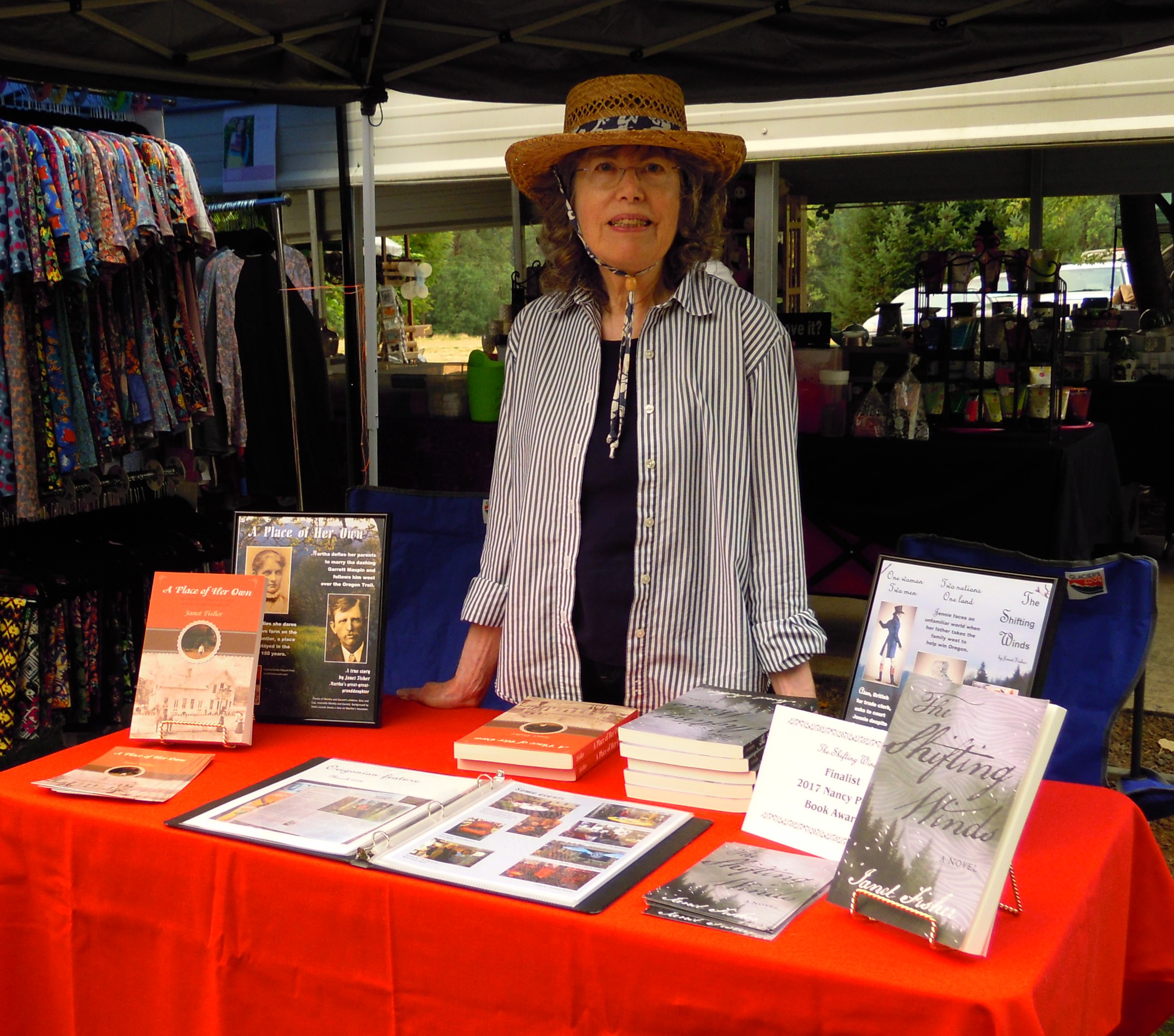
This past weekend was the annual Fort Umpqua Days celebration in nearby Elkton, Oregon, so I was there with my booth selling my pioneer stories. I had a notebook on display with photos of pioneers as well as ancient settings and my new business cards illustrating my work “From Pioneers to People of the Stones.”

A boy stopped by and saw a picture of the stone circle at the center of my ancient stories, the Bohonagh Stone Circle in Ireland.

“Stonehenge,” he said, then shook his head when he realized it didn’t look quite like Stonehenge.

I turned the page to show him I did have this picture of the circle he knew. We had quite a conversation, maybe a half hour or so.

He had some imaginative ideas about how the ancient people stood those big stones up there. He knew quite a bit about the site.

He’s ten. I told him he should think about being a writer someday. He smiled. “I write comic strips already.” A budding author. And a delight.

So that night when I was looking for an hour’s entertainment before going to bed I searched my recordings on the DVR and saw OPB’s NOVA presentation on Stonehenge. I’d seen it, but I watched again with keen interest. They showed how the first stones of Stonehenge were the smaller bluestones, not the giant Sarsens. A single ring. Dated at about 3000 B.C. Then the giants went up in 2500 B.C., with their lintels on the top, and the bluestones were moved into the interior. I wanted to argue against those bluestones coming all the way from Wales, some 150 miles away, but the guide I talked to at the site convinced me. Archaeologists had found quarries in the Preseli Hills of Wales with the same kind of stone, and there were no such stones around Stonehenge. They had to have come from Wales.

The smaller bluestones show clearly in this photo, lined up inside the taller sarsens.

Then last night I again wanted an hour’s entertainment. And what should I find but another, newer show about Stonehenge. This one showed the same archaeologist who finally found the exact quarry in Wales these bluestones came out of. Problem was, dating on the site indicated that the quarrying for the bluestones happened in 3300 B.C. The stones went up on the Salisbury plain in 3000 B.C. There was a 300-year gap. Where were these stones during those 300 years?

It wasn’t an easy question to answer, but the archaeologist came to believe the stones had been used for a circle near the quarry, then removed to the location on the Salisbury plain where Stonehenge stands today. Many megaliths stand yet today in the vicinity of the quarry. But how to find where this circle of bluestones stood in that interim? This was a needle-in-a-haystack effort for sure. How do you find something that isn’t there anymore? They had to look for the holes left behind, long since covered over by new soil. With many disappointing tries and the use of overhead imagery they finally found where the stones once stood. They could even see the odd shape of one impression that matched a bluestone now at Stonehenge.

For confirmation they used a dating method I’d never heard of where they dig down to see when the sediment last saw the sun, keeping carefully under cover to avoid any current light. The test showed a date of 3300 B.C. as the construction date on the abandoned site. So the stones went directly from the quarry to this site in Wales and 300 years later were moved to the current site.

Why would they move them? And how? Each stone weighs more than a ton. To show how it was possible they built sledges and had 30 children, 13 years old, try to pull the loaded sledge with ropes. The children managed with apparent ease, drawing the heavy stone uphill. Surely ancient adults could do it. As for the why, we can’t really know. There was no sign of battle to suggest they were escaping attack.

Stonehenge looking southward.

One thought was that the site on the Salisbury plain at that time lay on a swath of glacial channels that aligned with the sun on winter solstice. To these ancient People of the Stones this may have appeared to be an auspicious site.

Moving into the minds of ancients who left no writing behind? Well, that’s the kind of thing we fiction writers do.

Fine Fort Umpqua Days Despite Weather Surprise

Fog and a little smoke from nearby fires cleared early on Saturday morning, the first day of the two-day annual Fort Umpqua Days event in Elkton, Oregon. Lovely weather. Sunny. Soft fluffy clouds. Gentle breezes. And the people came out. My, they did come out! I kept busy up in the vendor area on the hill above the reconstructed fort. So busy I didn’t even get down to the fort itself on the flat below.

In midafternoon I checked my phone for the air quality report, as I’d been doing daily since fires started in the area after a lightning storm several nights before. My phone indicated something to the effect that rain would start in thirty minutes or so. I stared at my phone, glanced up at the blue sky with the white, fluffy clouds.
“That’s ridiculous! It’s a perfect day.”

About twenty minutes or so later a cloud shadowed the ground. Lots of clouds. Gray ones. Enough to cover the sun.

I’m in my booth, with a canopy overhead, but I’m selling books. Rain and books don’t go together. And I had pictures, photographs, on display. Winds picked up. No overhead canopy would protect from blowing raindrops. My son-in-law checked his phone. It’s not just warning about rain. It’s warning about lightning.

All right. That convinced me.

The sprinkles came. About 3 o’clock we started packing up.

That said, even with a short day (vendors usually close at 4), it was an enjoyable time. So many people. So many stories shared. And a little weather excitement to boot. Didn’t see lightning but heard thunder by the time I got home.

Sunday remained clear all day, but quieter–well, except for those booms down at the fort. All in all, a delightful weekend.

Robin Loznak’s photo again from a former Fort Umpqua Days event

A Fine Fort Umpqua Welcome

Folks showed up with happy faces for the return of Fort Umpqua Days after two years off. One of my favorite things about presenting my books at these events is all the stories I hear. People are curious about my books, of course, which delve into the area’s fascinating history. But so many people have stories of their own that they’re eager to tell. I love hearing these. I came away from this two-day event, head full of so many individual histories. My thanks to all who shared a bit of their worlds.

Here I am at my booth on this lovely afternoon. ~ Photo by Robin Loznak.

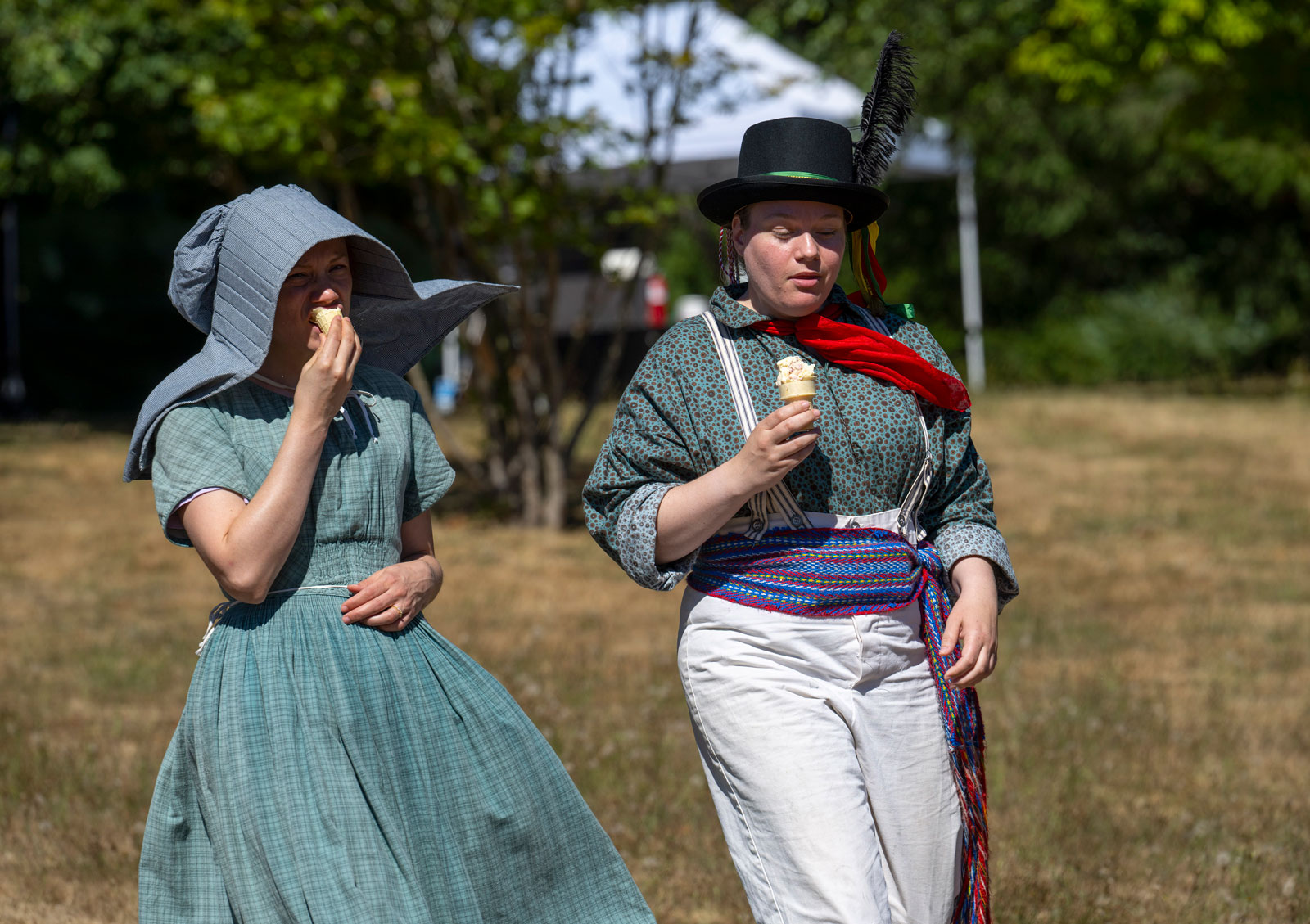
I also love the costumes many people wear for the occasion–the reenactors as well as the actors who perform in the nightly pageant, portraying stories of the era. I was happy to see reenactors Karen “Many Voices” Haas and her husband, Patrick, back again. I met Karen at the last Fort Umpqua Days in 2019 and featured her in a post back then. The two are shown in the previous post. We had a good visit yesterday. They stopped by my booth, looking quite fine, as if they had walked right out of the past.

Robin took a few more photos at the event (shown below). I’ll let his pictures speak for themselves.

And one more favorite Robin Loznak photo from a past Fort Umpqua Days moment:

BOOM!!!

Fort Umpqua Days are Back

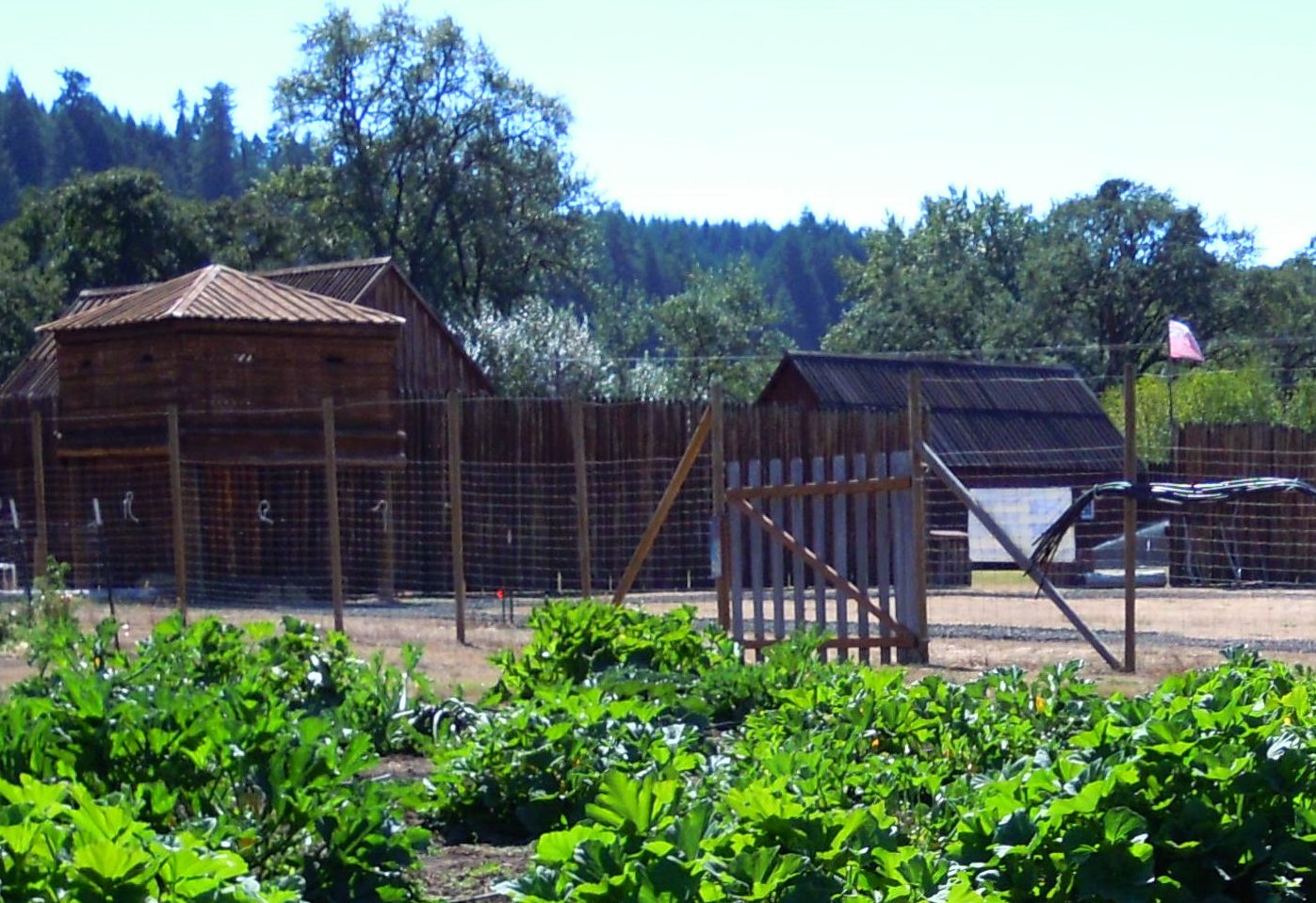
Fort Umpqua front gate

Fort Umpqua Days will be back this year after two years off, and that seems worth a celebration.

It all begins on Saturday morning, September 3 at 10 o’clock at the Elkton Community Education Center, 15850 OR-38 W, Elkton, Oregon, west of town.

That’s by the popular Butterfly Pavilion. The fort lies just down the hill. It’s a two-day event from 10 to 4 on both Saturday and Sunday, plus evening performances of the annual “Echoes of The Umpqua Pageant.”

Monarch butterfly – Robin Loznak photo

This Labor Day celebration has become a tradition in small-town Elkton, Oregon, home of the reconstructed Fort Umpqua, the southernmost outpost of the British Hudson’s Bay Company in the 1800s. It will be good to return to that tradition.

Locals and visitors gather on the weekend to enjoy a parade through downtown, a pie auction, BBQ, live music, tours of the wonderful Butterfly Pavilion, and more. I’ll be among the vendors up near the pavilion, where I’ll be selling my books, stories about Oregon’s dramatic history of those days–A Place of Her Own and The Shifting Winds.

From “The First Mountain Man” by Andy Thomas – with permission of the artist

Kids will find plenty of fun, including a voyageur expedition, to see what these fur traders did in the heyday of this fort.

My second book, The Shifting Winds, delves into this era with fictional mountain man Jake Johnston as a good friend of historical mountain man Joe Meek. Both came west to Oregon in the early 1840s after the beaver played out in the Rockies. Once in Oregon they wanted to help their fellow Americans claim the rich Oregon Territory, which was then jointly occupied by the US and Britain.

Folks who reconstructed Fort Umpqua worked diligently to maintain an authentic representation of the original, and people will be on site during the Labor Day event to answer questions.

Reenactors and blacksmiths often attend, showing their work to add more color, and they’re happy to offer information as well.

You might even find a mountain man or two.

Inside Hudson’s Bay Company Store, Fort Umpqua

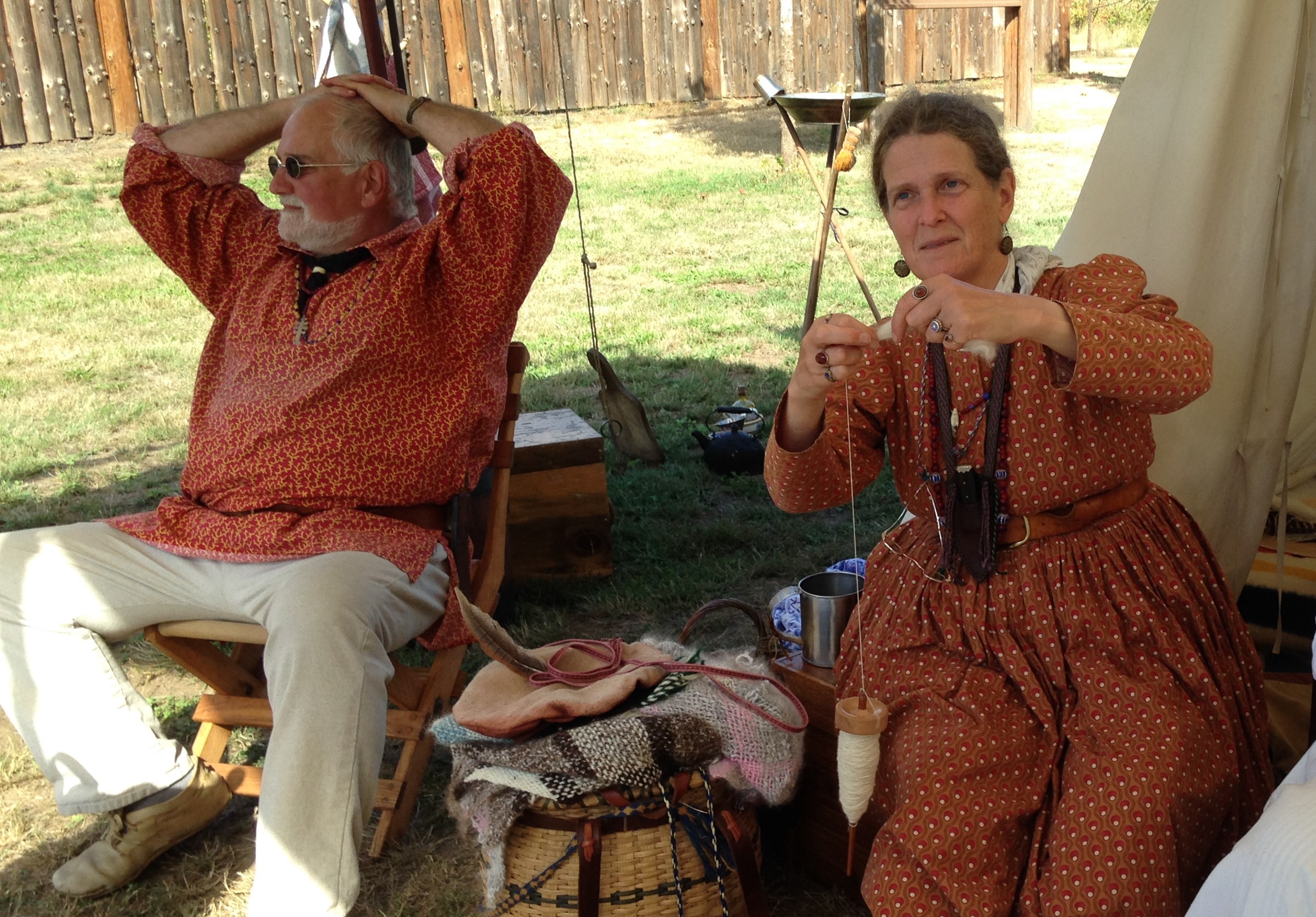
Remember Karen “Many Voices” Haas who was there for Fort Umpqua Days last time? I was so glad she showed me how she uses a drop spindle. It’s a device that was used for many centuries, millennia even. I have a character in my upcoming historical series spinning thread with a drop spindle some 3,500 years ago. After watching Karen I was better able to describe the process.

Karen using a drop spindle to spin thread, shown here at the fort with her husband Patrick, both in period dress.
Outside Hudson’s Bay Company store, Fort Umpqua
Back gate of Fort Umpqua from the hill above

Historic Words and Fibers

History resonates in every Fort Umpqua Days celebration as people come from many places to share a glance back to the early days of Elkton, Oregon. The reconstructed British Hudson’s Bay Company fort provides a centerpiece for the gathering. This year a number of reenactors came to give the fort even more authenticity.

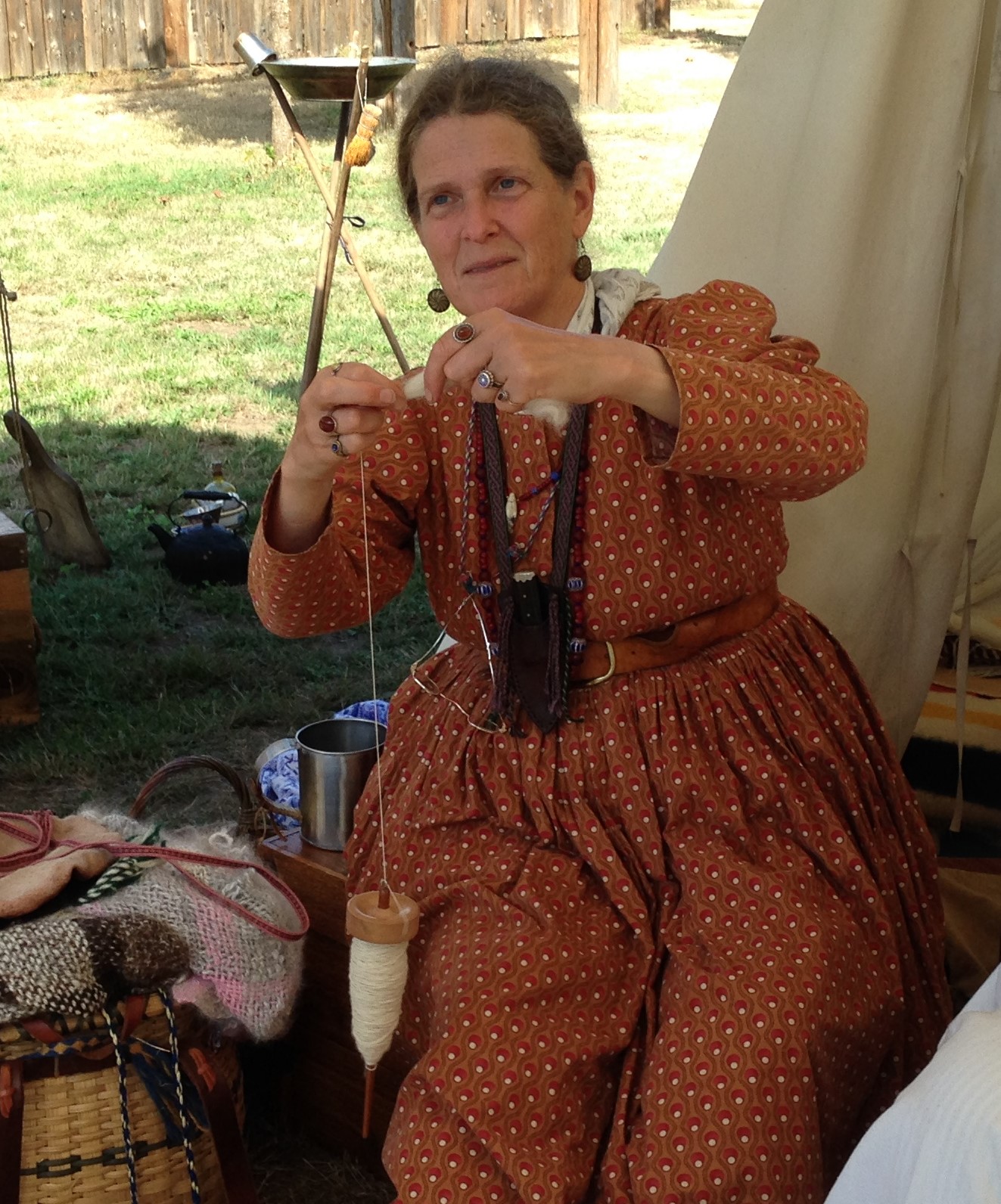
Reenactor Karen “Many Voices” Haas spinning

In the above photo reenactor Karen Haas, who describes herself as a weaver of words and fibers, spins yarn on a drop spindle while wearing period dress, such as you might have seen in the days of the original Fort Umpqua.

This is the period of my two published books, A Place of Her Own and The Shifting Winds. But the drop spindle is a device so ancient that I describe a character using one in an upcoming book that goes back roughly 3,500 years. I was glad to watch Karen spin with a drop spindle so I could see how she made it spin. This will help me describe how my ancient character spins with hers. More than one of my characters can be called weavers of story and thread. I think they share an affinity with Karen “Many Voices” Haas.

I had a chance to visit with Karen Sunday afternoon when she stopped at my booth where I was selling my books. After I closed up shop I went down to the fort with my daughter Carisa to see some of the reenactors, and there was Karen outside a Hudson’s Bay Company tent (it must have been an HBC tent because they were waving an HBC flag). And she was spinning. We recognized each other and it took me a moment to realize what exactly she was doing. But there it was. She was working a drop spindle. Every once in a while she would put the spindle against her billowy skirt and stroke her hand across it to keep it turning. Then she would reach up again and make sure the yarn was coming out in an even thread. An amazing process. So ancient. So elegant in its simplicity, yet no doubt requiring considerable skill and practice.

With that we wrapped up another Fort Umpqua Days enjoying a delightful glimpse into our past. Thanks to Karen for showing us one significant thread of that story.

Back to the Fort

It’s time for Fort Umpqua Days again. It happens every Labor Day weekend in Elkton, Oregon. So step into the past there on Saturday and Sunday, August 31 and September 1, and have some fun. There will be music, food, crafts, books (I’ll be there with mine), and of course the reconstructed fort.

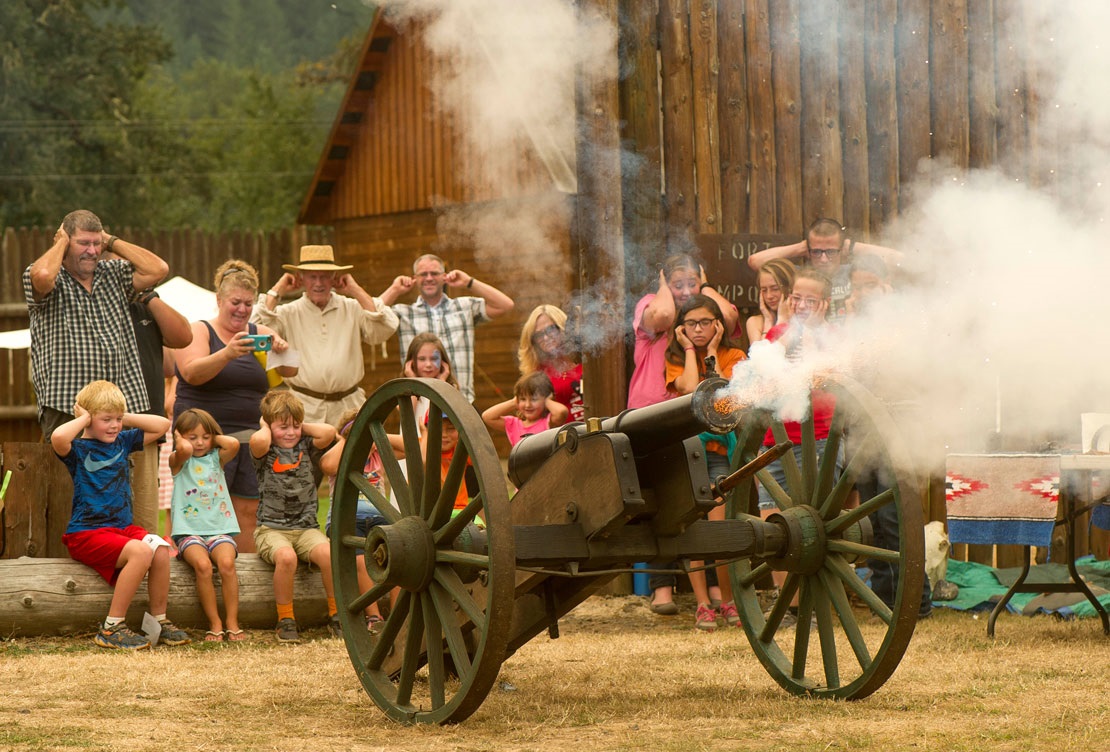
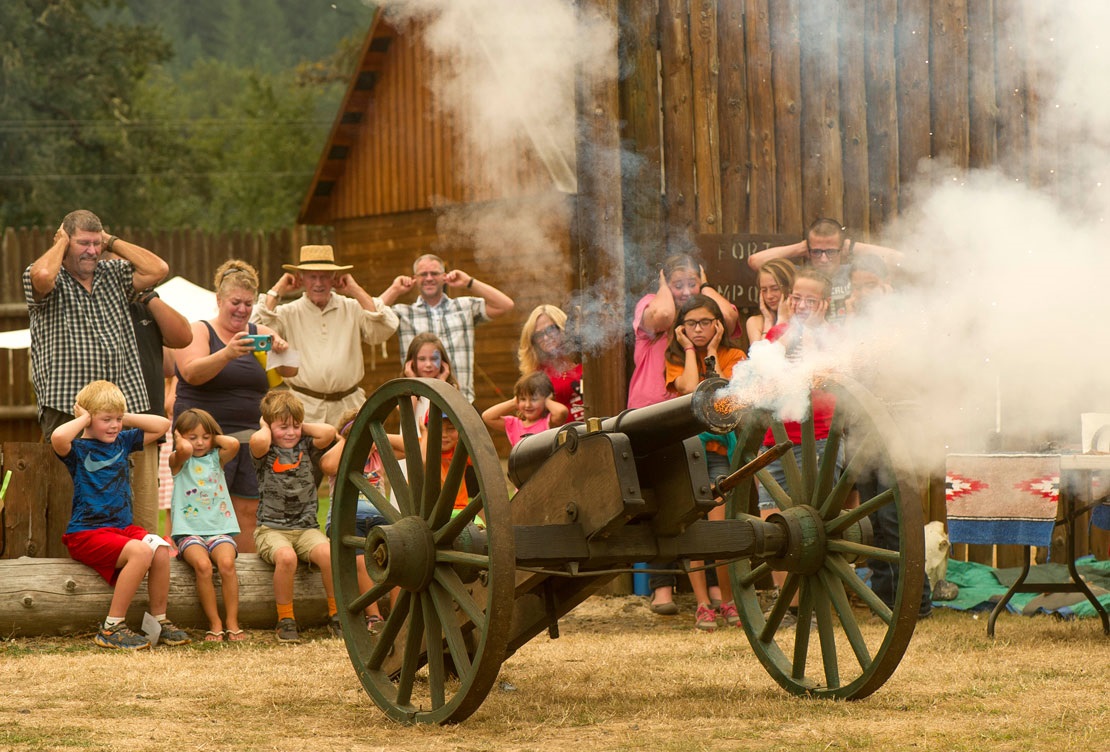
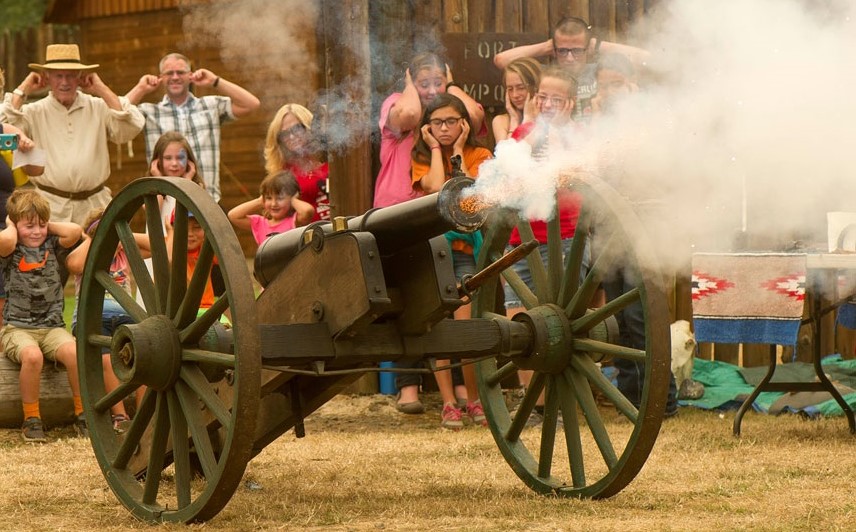
Cannon at Fort Umpqua. Photo by Robin Loznak.

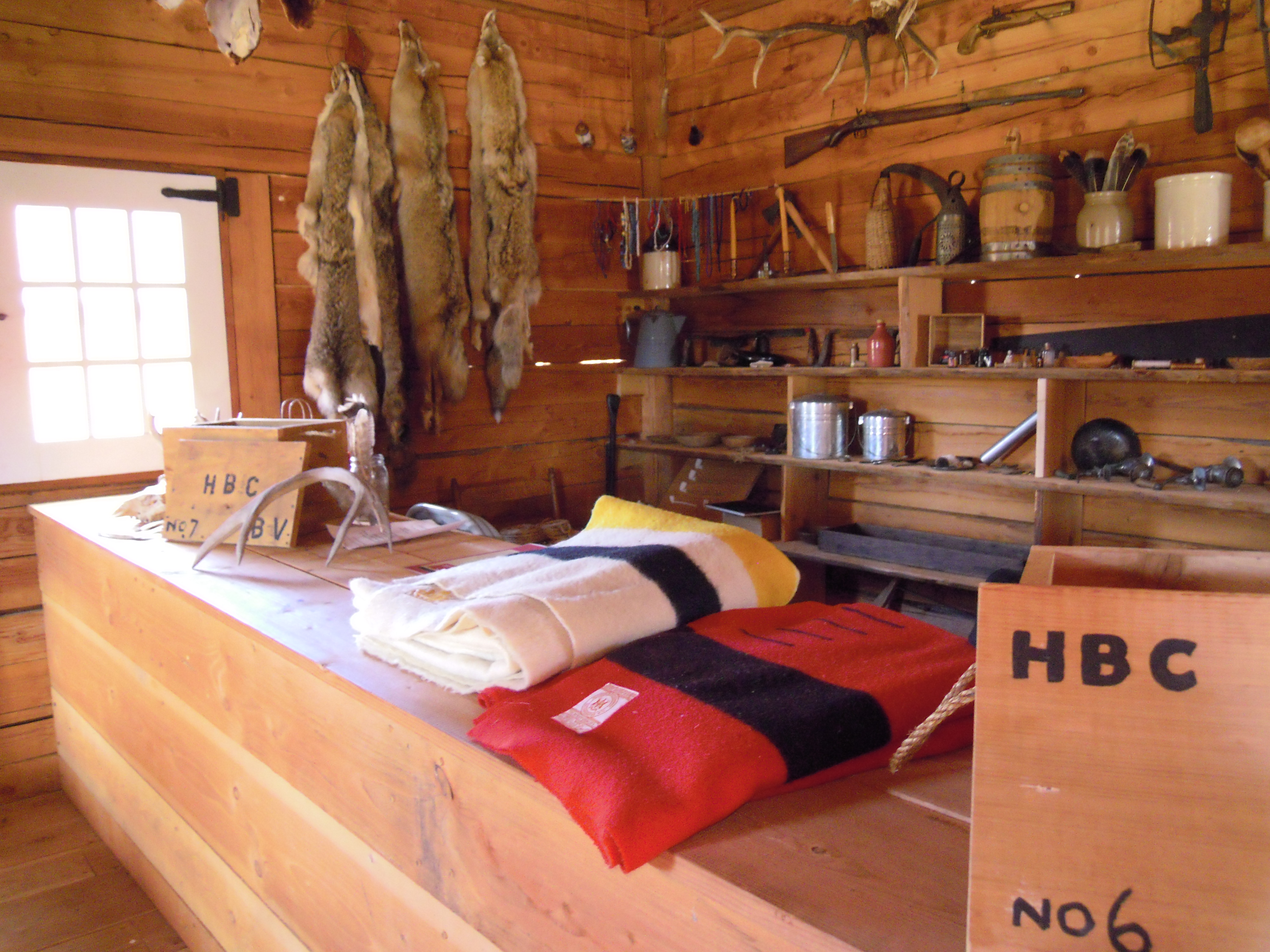
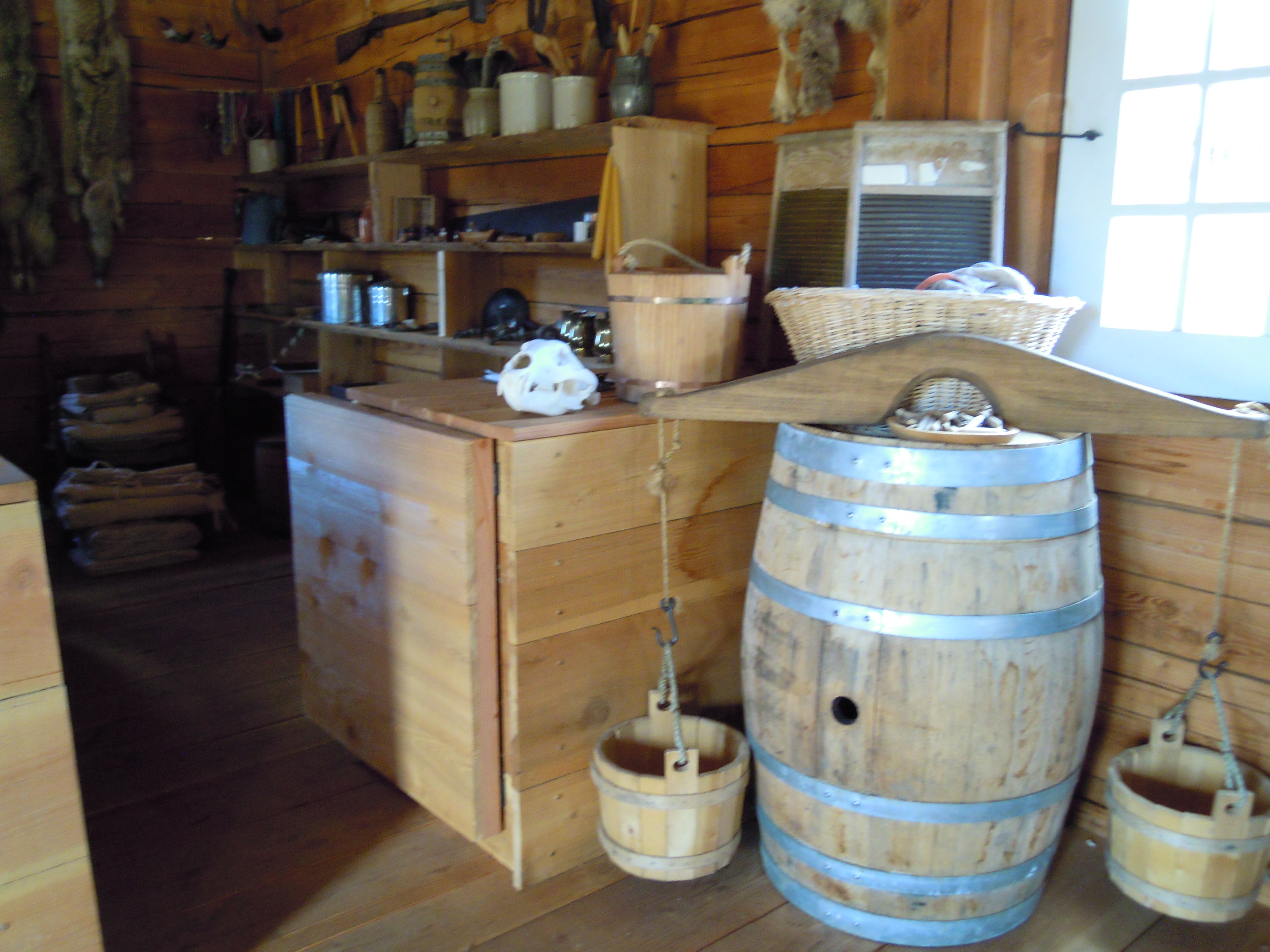
Hold your ears. Mountain men will be there with their black powder rifles. And others from bygone days. Even cannons maybe. Folks at the reconstructed fort will offer some rich history of the area with the realism of places restored to their former charm. If you check out this restoration of the fort’s store (below) you may find someone with a story about the Hudson’s Bay Company that built the original fort during the heyday of the fur trade in Oregon back in the 19th century. They might tell you that this was the company’s southernmost outpost. And they might explain how the trade worked and what some of those items on the shelves are, and the pelts on the wall.

Store in the Fort

It all happens just west of Elkton at ECEC at 15850 Hwy 38 and down the hill at the fort. I’ll be in one of the vendor booths near the butterfly pavilion with my books that fit right into that past, stories of pioneers and the fur trade in the mid-19th century, A Place of Her Own and The Shifting Winds. I hope you’ll stop by.

COMMENT

Sounds and Scents of History

Photo by Robin Loznak

Big booms ricocheted across the smoky air this weekend as Elkton, Oregon, celebrated the annual Fort Umpqua Days event near the reconstructed Hudson’s Bay Company fort along the Umpqua River, and Robin caught one of the cannon blasts with his camera. Historians tell us the Native Americans used to keep the brush down with fires every fall, so maybe that smoky air is historic too.

Folks enjoyed another successful event despite some heat and smoke. Locals and visitors gathered over the Labor Day weekend to explore the area’s historic past and have a good time, while vendors offered food and wine, crafts and books and more for sale. In the evening Cathy Byle directed the pageant of historic vignettes–a little longer on fun than fact.

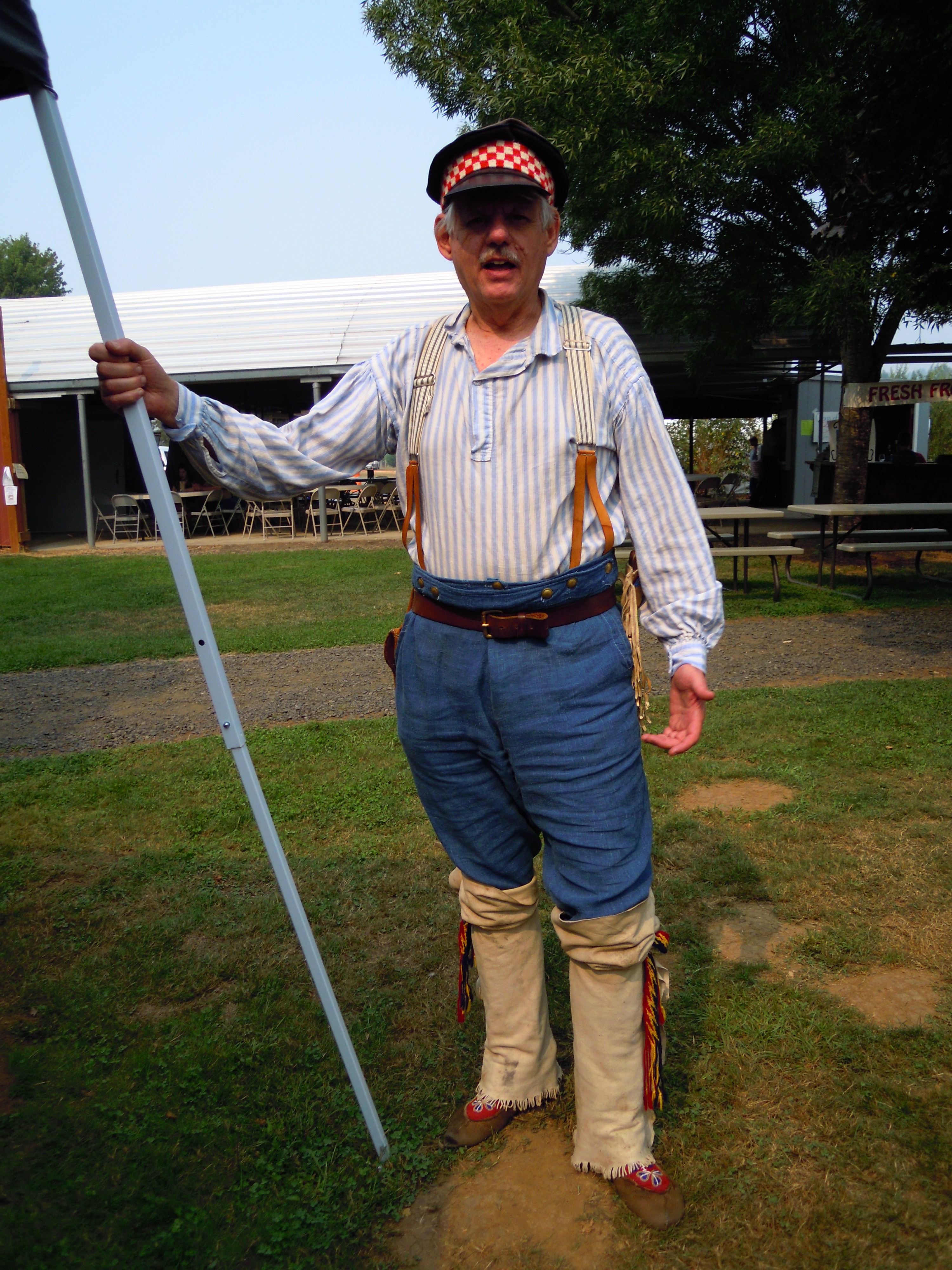
A Hudson’s Bay Company man by the name of Mark stopped by my booth Sunday where I was selling my books that focus on this period of history.

He bought a copy of The Shifting Winds, which has scenes set at Fort Vancouver, the HBC headquarters north of the Columbia River–where Vancouver, Washington, stands today.

Fort Umpqua was the southernmost HBC outpost in those days. Both forts were reconstructed with great attention to accuracy of detail.

So you can visit and get a real sense of the history, stepping right back in time. Folks like Mark enjoy dressing the part, and it’s not unusual to see a few mountain men wandering through.

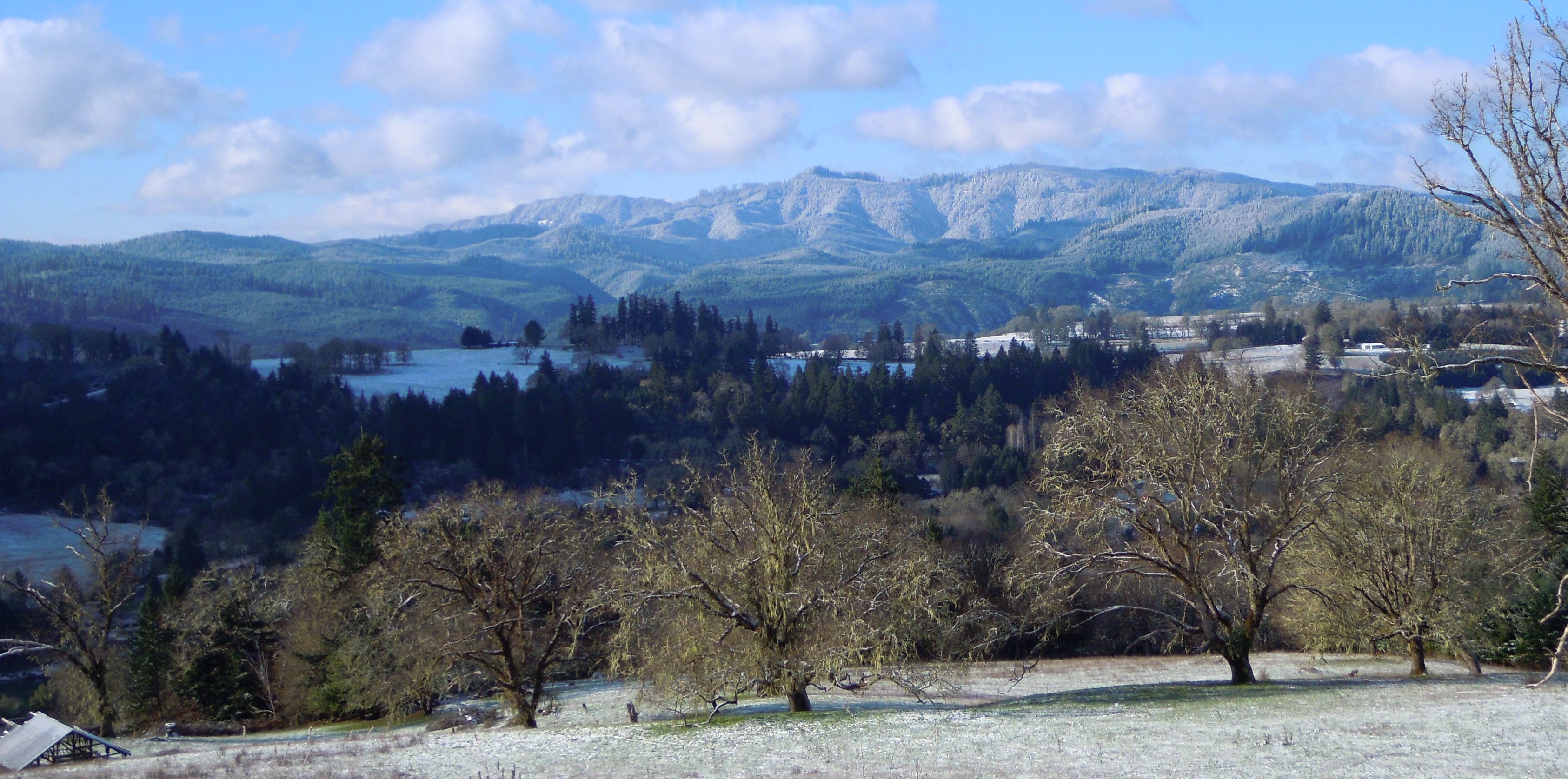
Smoke from surrounding fires clouded the skies the first day and actually kept us a little cooler than expected. But Sunday afternoon a much thicker haze moved in, along with a sweltering heat. By the time I got home it was in the upper 90s and I couldn’t even see the higher mountains across the river.

The smoky fall days may be historic, but I’ll be glad when a good rain comes to clear the air.

I snapped the above photo off my back deck when I got home Sunday. The photo below shows the missing mountains on a clear day–just so you know they’re there.

COMMENT

Save

Save

Busy Fort Umpqua Days

Photo by Robin Loznak

Here I am in my Fort Umpqua Days booth this Labor Day weekend to sell my books, A Place of Her Own and Nancy Pearl Book Award Finalist The Shifting Winds.

Despite warnings of record heat during the annual Elkton, Oregon, celebration this year, the morning started out cool and comfortable. The crowds came after a slow start. Maybe folks noticed the overcast skies and dared venture forth. It soon looked like a normal gathering for this event. Many people stopped by to talk about books and history, and sales were brisk.

This is the weekend we celebrate local history with our own Hudson’s Bay Company fort that’s been reconstructed with attention to historic accuracy. There’s food and pie raffles and reenactments and a bass tournament–and vendors like me, but mostly crafts.

I’m not sure whether the skies today were a bit cloudy or just smoky, but the sun didn’t break through, holding back the heat. Not until well into the afternoon did we experience some mugginess. Smoke got worse–enough to feel it in the eyes and throat. No doubt the air was moving up from the south where several fires rage south of Roseburg.

Forecasts for Sunday appear to be lower than before. As for the smoke, I guess that depends on which way the wind blows.

The celebration continues Sunday, so if you’re in the neighborhood you might want to check it out. It’s at the ECEC (the butterfly place) just west of Elkton.

COMMENT

Save

Save

Save

Save

Save

Fort Umpqua Post Script

So, what if history got it wrong?

After last week’s rollicking Fort Umpqua Days celebration, I take a long look at our sturdy reconstructed fort on the Umpqua River in Elkton, Oregon, and I recall a question from one of the customers who came by my book-selling booth during the event.

“Is Fort Umpqua in your books?”

I had to say no, but it might have been–if I could have reconciled sources.

Fort Umpqua Gate

Muddied waters

My issue arose from the date Fort Umpqua fell. History has an answer, but it seems a little murky to me.

For starters I’d like to quote Stephen Dow Beckham in his Land of the Umpqua, a fine presentation of local history published in 1986. On this subject of Fort Umpqua’s demise he writes on page 58:

The fort burned on November 15, 1851, while the commander or chief trader, Johnson E. King was at Fort Vancouver. King had just brought in his annual load of furs and was ready to leave with fresh supplies for the Umpqua when word of the disaster came by letter. The company kept up three more years of trade in southwestern Oregon, presumably working out of an outbuilding at the site; then it terminated operations. [My bold.]

Beckham sources his statement with a letter in the HBC archives written December 20, 1851, by a John Ballenden to Archibald Barclay. Ballenden was an HBC officer briefly posted at Fort Vancouver to help wrap up Company affairs there after the boundary settlement that gave the United States the land. Barclay was an HBC Secretary in London.

But what if history got this wrong?

Ft.Ump.gardens-2 (2)My experience in researching these early periods has shown me that history can be difficult to pin down. Even contemporary accounts don’t always agree.

That word presumably in the above quote gives me pause. Did assumptions lead to wrong conclusions?

A couple of things have come together to make me question this.

What did Martha know?

I have access to an account that disagrees with accepted history. It comes from Florence McNabb, the granddaughter of Martha Maupin, whose story I tell in A Place of Her Own. Florence wrote a 75-page manuscript of Maupin family history which I used extensively in writing Martha’s story. But I didn’t use one of Florence’s vignettes because it disagreed with history. To give a timeframe for this, Martha and Garrett moved from Lane County to Douglas County in December 1864 and rented a cabin on the Henderer place near Elkton until sometime after Garrett’s death in 1866, well after the supposed demise of Fort Umpqua.

Yet Florence writes:

It was while they were still on the Henderer place that there was an Indian scare and all of the families were told to come to the Umpqua Fort. The fort was built on the banks of the river in the summer of 1836 and was the early trading post of the Hudson Bay Co. It was well built with logs standing on end to form a stockade with several log cabins inside. 434-fort-umpqua-interiorOriginally the land owned by the Hudson Bay Co. comprised 640 acres and several dozens of stock. . . .

On this occasion the families remained in the stockade and the well-armed men went to their respective homes to tend to their livestock. The Indians never did attack but they could be seen early in the mornings and again in the evenings. . . .

After about a week, shut up with children and short tempered mothers, they decided to return to their own homes, coming back to the fort to spend the night. . . . One lady remarked that she would rather fight Indians than to spend another night with that bunch.

“This was told to me by my mother,” Florence wrote, “who had heard it from Martha Maupin.” Yes, Martha.

Now, that could have made an interesting scene in my book, but I didn’t want to go against history.

British habits

ShiftingWinds_EcoverA new thought began to stir, arising out of my own recent research into the history of Fort Vancouver, the British Hudson’s Bay Company headquarters of the Fort Umpqua outpost. Prior to my presentation at Fort Vancouver this summer of my new book The Shifting Winds I went back into the two huge volumes that describe research the preservation team did in order to reconstruct an authentic replica of this British headquarters.

Ft.Vanc.Report (2)I was amazed at the continual construction going on during the years the British maintained Fort Vancouver. The first Fort Vancouver was built in 1824-1825 on the hill above the Columbia river bottom. When the British changed their minds about that location in 1829, they just picked it up and moved it a few miles closer to the river. When that new fortress proved to be too small they just moved the walls over, added to them, and doubled the size.

When the first home of the commander began to crumble due to decaying roof and walls, they tore it down and built a new one in a better spot within the walls.

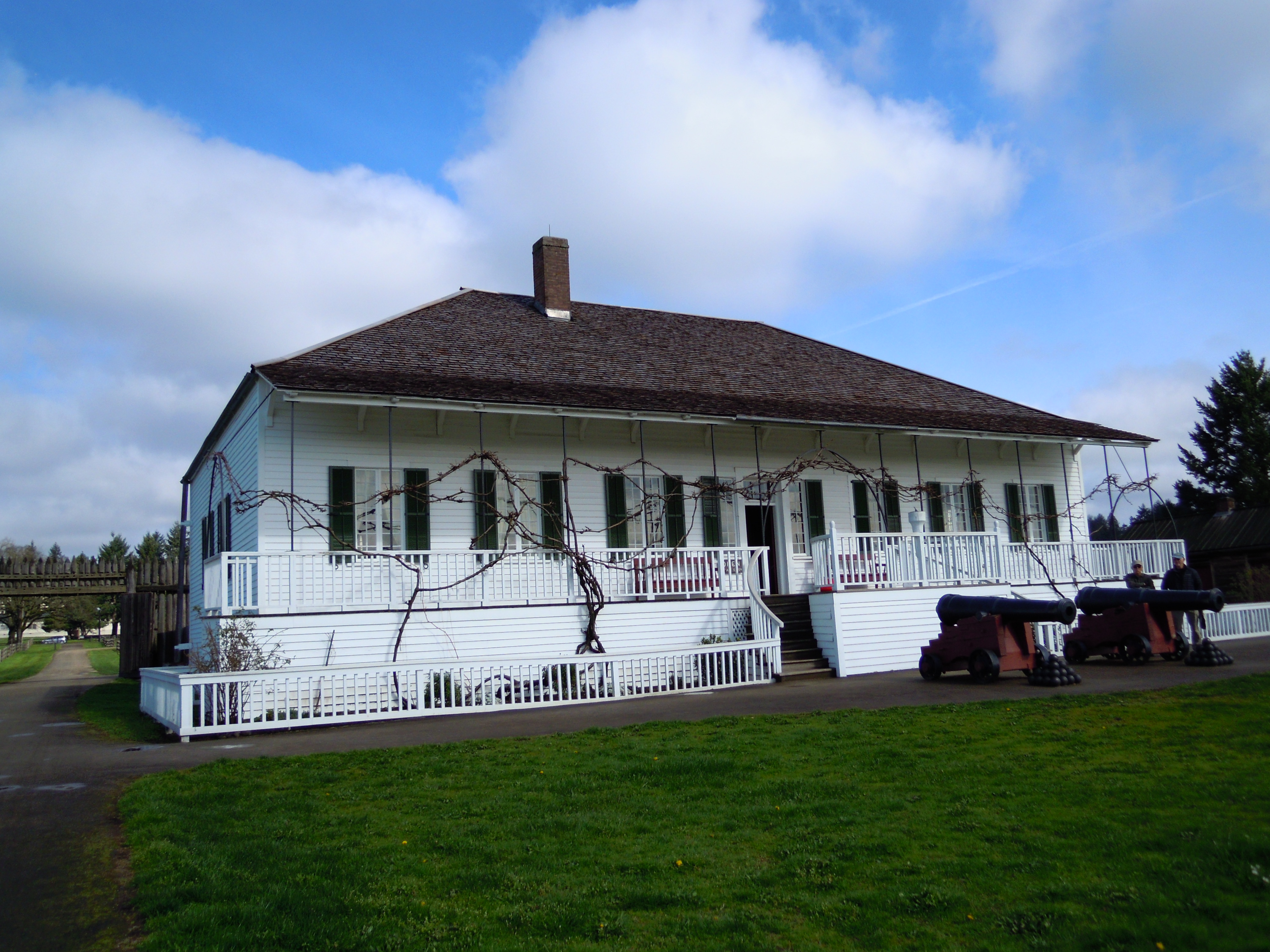
Fort Vancouver Big HouseThis is the commander’s house, the Big House—no small cabin to be thrown up in a few afternoons.

613.Ft.Vanc.McLoughlin Sitting RoomAnd the interior was exquisite.

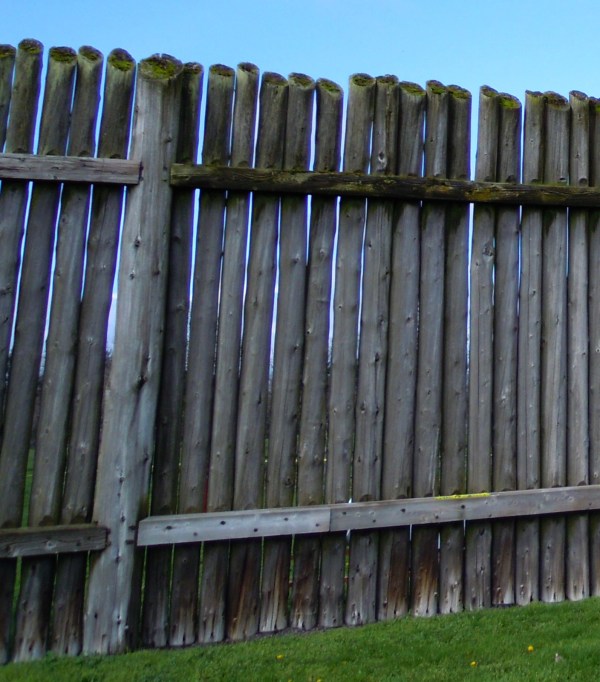
Ft.Vanc.stockadeOther buildings were routinely torn down and replaced. And those picket walls kept moving—a little bit here, a little bit there.

alan-cropIt seems the British Hudson’s Bay Company men would rebuild at the drop of a tall beaver hat.

Why not Fort Umpqua?

So if tiny Fort Umpqua burned down and the Hudson’s Bay Company still had business to conduct on the site, why wouldn’t they follow custom and rebuild that? Ballenden’s letter to Barclay, the author Beckham’s source above, was written a month after the fire and would not reflect Company decisions afterward. My family’s story (told by Martha herself, no less, although received secondhand) suggests a fort still stood when they sought refuge sometime between 1864 and 1866.

Accepted history also tells us that the historic 1861 flood took away the burnt remains of Fort Umpqua, leaving nothing. Is this fact or conjecture? Is it possible that a more substantial fort stood against those flood waters, one that the Hudson’s Bay Company had rebuilt and maintained after the 1851 fire? Up north, when the British finally left their Fort Vancouver headquarters to the Americans, the walls and buildings disintegrated in this wet, rainy land without continual maintenance. We have photos and reports to substantiate that. Was this the more likely end to Fort Umpqua also, as new American owners no longer needed this former British outpost?

Unraveling the story threads

Book cover - A Place of Her OwnSmall tidbits of information—notes in letters and journals—often guided the team that reconstructed the elaborate Fort Vancouver headquarters. If I had believed in Florence’s tidbit, I could have brought the Fort Umpqua outpost into my story and had one more tense scene for Martha. And I could have smiled and told my customer, “Yes, yes, it’s in this one.”

Just saying.

Beckham, Stephen Dow. Land of the Umpqua: A History of Douglas County, Oregon. Roseburg, OR: Douglas County Commissioners, 1986.
McNabb, Florence Maupin. The Maupin Family. Undated, unpublished manuscript.

COMMENT

Fort Umpqua Days Fun!

Two beautiful days brought good crowds to the Fort Umpqua Days annual celebration in Elkton, Oregon, on Labor Day weekend. People from as far away as Kansas City came by my booth to buy books. I was surprised to learn that my first customers Sunday were from Overland Park, Kansas, a Kansas City suburb about a 10-15-minute drive from my daughter’s home in Fairway.

Pioneers and mountain men roamed the grounds of ECEC, the Elkton Community Education Center where the event took place, and the occasional harrumph of black powder rifles down at the fort ripped through the air, giving us a start.

Fort-Umpqua-Days1At the evening pageant the deputized sheriff caught the suspects in the stagecoach gold robbery, and photographer Robin Loznak caught them on camera as the sheriff led them away. Justice done in the “Mystery on the Elkton Stage,” the 13th annual Echoes of the Umpqua pageant, ably directed by Cathy Byle.

As many as 100 community members work to put on these somewhat historic dramas. I have fun serving on the writing team, but did only a small part this year due to the distractions with my new book coming out. Cathy and Linda Warncke did most of the writing and the actors, kids and adults, brought it to life with their own interpretations, all good for plenty of laughs.

Fort-Umpqua-Days-2It wouldn’t be ECEC without the butterflies, this being the well-known “butterfly place,” and Robin’s gift with wildlife photography led him to the Butterfly Pavilion to capture this shot of a Monarch having a sip.

From the opening parade to the BBQ lunches and music and fishing contest and local craft booths (where I spent the days) to the pageant and activities down at the fort, folks seemed to have a great time.

I was delighted that my writer friend Lynn Ash shared my book-selling booth on Saturday. I sold and signed copies of my Shifting Winds and A Place of Her Own, and Lynn sold and signed her Route from Cultus Lake and Vagabonda. We both had good sales and many wonderful conversations.

434.fort umpqua interiorFt.Ump.Inside 76So another successful Fort Umpqua Days has come and gone. The fort turns quiet for a little while. The Hudson’s Bay Company flag still flies, but business in the storehouse waits for another day.

Memories dream on after a glimpse into the past, some truer than others.

Ft.Ump.Inside 68COMMENT