The TRUE Shifting Winds ~ 4: British Stronghold

So enters the venerable Dr. John McLoughlin onto our Oregon stage, just six years after the 1818 treaty which declared that the United States and Britain should jointly occupy the Oregon territory until they could stop bickering and agree on a line between them in that disputed land.

In this overview of history behind my story in the historical novel The Shifting Winds, we nudge ever closer to the volatile contention between these two nations that resonates through the book’s pages.

Dr. McLoughlin’s Oregon Reign

As mentioned in the second post in this series, the Canadian North West Company, which had bought the US Fort Astoria, stayed on at the post despite terms of the 1814 Treaty of Ghent that ended the War of 1812. Due to the remoteness of this fort at the mouth of the Columbia River, negotiators didn’t know about the sale, and the fort came under terms that all property taken during the war be restored to the original possessor. The restoration became a murky point of history.

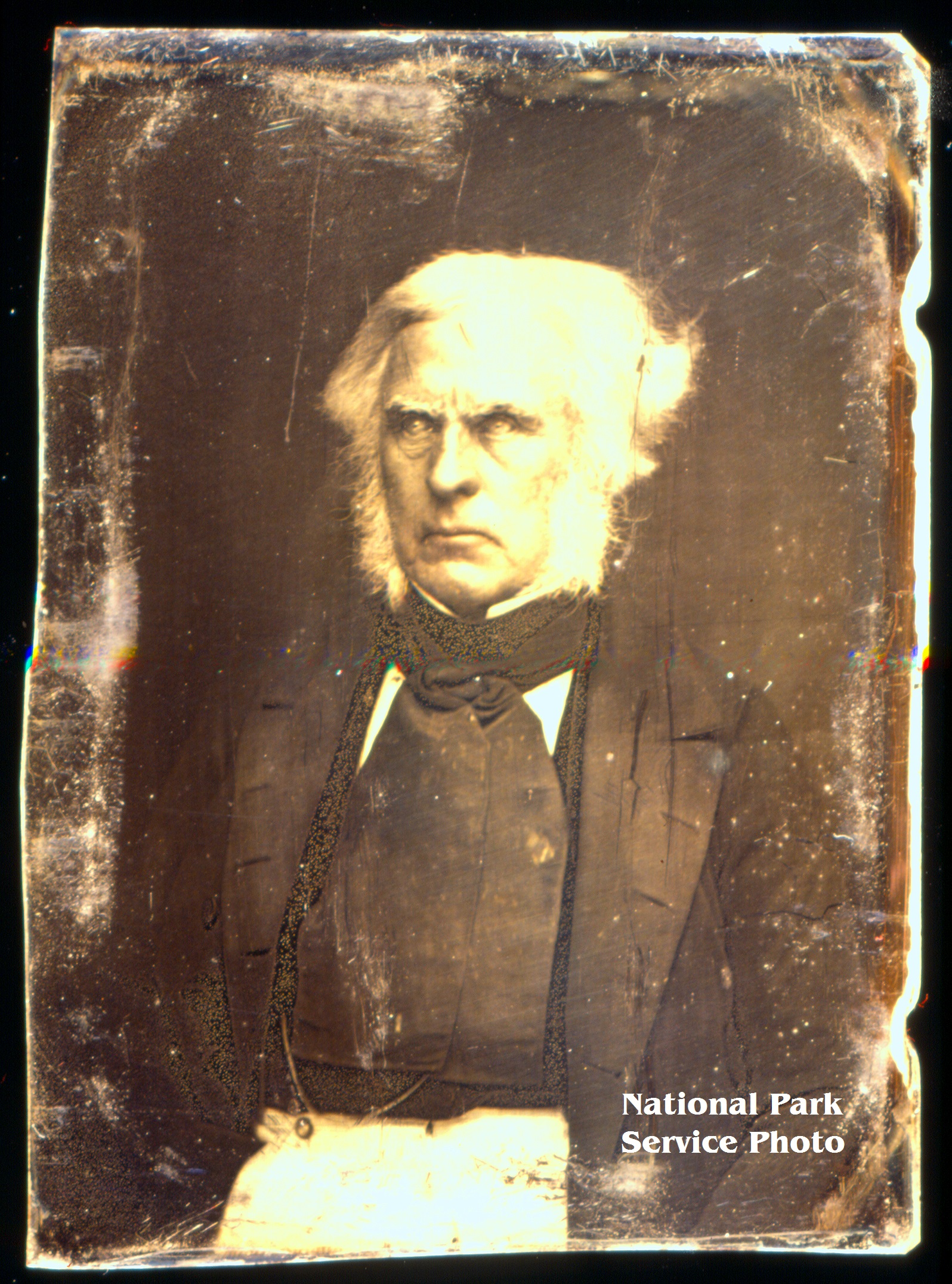
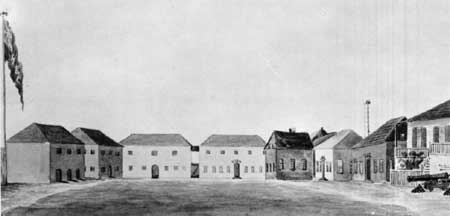
John McLoughlin DaguerreotypeWhatever the case, when Dr. McLoughlin of the British Hudson’s Bay Company comes onstage, his company has assumed possession by default of Fort Astoria, now called Fort George by the British in honor of their king.

The British knew how to make an entry.

The daguerreotype shows McLoughlin when he’s a little older than the day he first arrived at Fort George, but he carried himself with this powerful presence throughout his career. Photo courtesy of the National Park Service.

McLoughlin arrived at Fort George in full color display in a line of brightly decorated canoes along with his boss, Deputy Governor of the HBC, George Simpson.

Author Johnson describes the scene in his book John McLoughlin. As the flotilla of canoes approached, a sentry at the fort fired a signal gun. From the flotilla a bugle answered, followed by a piper in full Highland dress playing a march of the clans, “‘Si Coma Leum Cradh Na Shee,’ (Peace if you will it, otherwise war).”

The fort responded with a seven-gun salute.

The piper played until the paddlers brought Simpson’s lead canoe to a stop. Then the bugler in McLoughlin’s canoe played a lively chanson. The canoes formed a line offshore, made a smart turn toward the receiving party, then moved as one toward the landing, where the men embarked and joined a procession with McLoughlin and Simpson in the lead.

Many old friends in the fur trade welcomed McLoughlin, a formidable figure in stark contrast to his superior officer, Simpson. McLoughlin was six foot four, well built, his hair almost white even then at the age of 40. His piercing gray-blue eyes could rivet on a person, his clean-shaven face readily turning florid with anger or excitement. Simpson was just over five feet and plump.

Back in 1803 at age 14 McLoughlin had become a medical student in Quebec and obtained a license to practice medicine and surgery when he was all of 19.

Author Johnson relays a story of uncertain merit about McLoughlin that may have changed the direction of his life. While working as a doctor in Quebec, McLoughlin is said to have been walking with a young lady through the muddy streets of that city on a fine spring day. They stepped onto a plank at an intersection to avoid the mud, and a drunken British officer forced the young lady off the plank into the muck. McLoughlin picked up the officer and tossed him into the street.

This insult on “his majesty’s uniform” could have subjected McLoughlin to prosecution, and he supposedly fled into upper Canada.

Whether this incident or something else drew McLoughlin away from Quebec, he found employment as a physician at Fort Williams, a North West Company trading post. McLoughlin soon discovered he had an aptitude for business, and by 1814 he became a partner in the company. Still, he would find his medical skills valuable more than once when he worked at posts with no other doctor.

Somewhere in there, he had a son through a liaison with a Native American woman, “observing the custom of the country,” Johnson writes, meaning the relationship like so many others in that time and place lacked the benefit of clergy, also called a “country marriage” or “fur trade marriage.” Evidently the mother died and McLoughlin took another wife in the custom of the country, Marguerite Wadin McKay, a woman who would follow him to Oregon and happily grow old with him.

Marguerite’s father was one of the original North West Company partners, her mother of Cree heritage. She had previously married Alexander McKay, a Canadian member of Astor’s team who was killed in an incident on Astor’s ship, the Tonquin. Given the dates of events, McKay had probably abandoned her by the time she married McLoughlin, but she had three children by McKay, including Tom McKay who would come to play a significant role in the history of the Oregon country. By the time McLoughlin left for Oregon he and Marguerite had four children together.

Fort George didn’t impress McLoughlin or Simpson as an adequate western headquarters for the Hudson’s Bay Company, a major problem being its location on the south side of the river. From word of London’s offers in boundary negotiations, they feared that everything south of the Columbia River would ultimately go to the Americans. McLoughlin also wanted to make his headquarters as self-sufficient as possible, so he needed fertile land to grow food.

Nancy Funk, wearing period clothing, takes care of a garden at the Fort Vancouver National Historic Site in Vancouver, Washington. (Troy Wayrynen/picturesbytroy)
Nancy Funk, wearing period clothing, takes care of a garden at the Fort Vancouver National Historic Site in Vancouver, Washington. (Troy Wayrynen/picturesbytroy). Photo courtesy of the National Park Service.

Going upstream, McLoughlin found a site on the north bank that offered all he had hoped for. A rich wide plain spread inland from the river. Here he could grow wheat and vegetables, fruit orchards and vineyards, and improve pasture for cattle. He ordered his men to start building a fort and dubbed it Fort Vancouver for the British navigator Captain George Vancouver who’d sent one of his ships up the Columbia shortly after the American Captain Robert Gray dipped into the estuary and named the river. McLoughlin was happy to note that the site of his new fort lay downriver from the highest ascent of the British ship. McLoughlin would soon have the original stockade moved closer to the river for convenience. And from that fort, which has been replicated on the same spot today, he ran the western fur trade empire for his Company, becoming de facto ruler of Oregon.

It might have seemed his land to hold, but not quite so. By treaty the United States held equal interest through joint occupancy. Their citizens just weren’t around much at the beginning.

Joint occupancy of the Oregon country formed a tenuous marriage of Britain and the United States. Both had sought to claim the land. By sea, their navigators explored the coast, with the American guy discovering and naming the Columbia, the British guy sailing farther upstream. By land, Lewis and Clark showed the way through the new US territory of Louisiana, while the Canadian Mackenzie marked a trail farther to the north. And when Astor ventured into the Columbia to start his fur enterprise, the Canadian Thompson trekked out to Fort Astoria to say hello and set up posts along his route, eventually acquiring Astor’s fort for his own North West Company.

Fighting fury between the two nations rose in the War of 1812 for a host of reasons, but Oregon was a prize both still sought. Negotiators for peace finally threw up their hands. It took a second treaty in 1818 to come up with a halfway measure, at which time negotiators told the squabbling nations they could both use the land until they made up and set a line between them. They were given ten years for that, but in the end it would take them almost thirty, and rumors of another war over the matter continued to stir.

OregonTerritoryMap1818This 1833 map roughly shows the extent of the Oregon territory in 1818. It includes all of today’s Oregon, Washington, and Idaho, with parts of Montana and Wyoming, and runs north into British Columbia.

For twenty years or so while the United States became attracted to other shiny objects closer to home, the powerful British Hudson’s Bay Company seemed bent on making Oregon their own private fur reserve under McLoughlin’s adept leadership.

By 1842 when my story opens, the Americans seemed finally to awaken to the desirability of adding the Oregon country to their own. American trappers began to settle in Oregon’s broad valleys around 1840 when the Rocky Mountain fur trade petered out. Missionaries had gone out to save the Indians in the 30s and reported on the richness of the land. Promoters called on the adventurous to strike out across the plains and take up some of that land virtually flowing with milk and honey. They played down the difficulty of the trail–most hadn’t a clue–as they extolled the wonders of the Promised Land at trail’s end.

Native Americans received little consideration. Disease had dramatically reduced their numbers, and the British under McLoughlin’s firm hand kept the peace. Trade with the local tribes was key to the business operation of the HBC.

As more Americans trickled into the area, tensions rose. American farmers and lawyers and storekeepers came with their families, intending to settle and stay. Settlement hadn’t been encouraged by the British during the early days of joint occupancy, but they did eventually encourage settlement north of the Columbia as a counterbalance. Up until that time few white women came to Fort Vancouver. British and French-Canadian men found their wives among the surrounding tribes, or brought their Native American or Métis wives from Canada. Most expected to return to the place they had enlisted with the Company, though a few had chosen to settle in the Willamette Valley, McLoughlin keeping them on the Company books so they didn’t have to go.

The encroachment of permanent US settlers into Oregon brought troubling headaches for the good doctor, McLoughlin.

Carey, Charles H., LLD. General History of Oregon: Through Early Statehood. Portland, OR: Binfords & Mort, 1971.
Johnson, Robert C. John McLoughlin: “Father of Oregon.” Portland, OR: Binfords & Mort, 1958.
Various websites.

Next: Digging Up the Past

COMMENT

The TRUE Shifting Winds ~ 3: Mountain Men

This is the third in a series of posts about true events behind my historical novel The Shifting Winds. Here we look at the American side of the fur trade led by the venerable mountain men. These rugged men led the American effort at about the time Dr. John McLoughlin was sent to take charge of the Columbia District for his employer, the honorable British Hudson’s Bay Company. The Astor venture, having failed for the Americans, left the United States without much footing in the Columbia, but fur trade prospects had already begun brewing for the Americans in another arena, the Rocky Mountains on the edge of their now undisputed Louisiana Territory.

Before I focus on that American trade directed by St. Louis companies, I want to present a painting and go back to that young man I mentioned in post number 2, John Colter, a member of the historic Lewis and Clark expedition.

The American Scheme

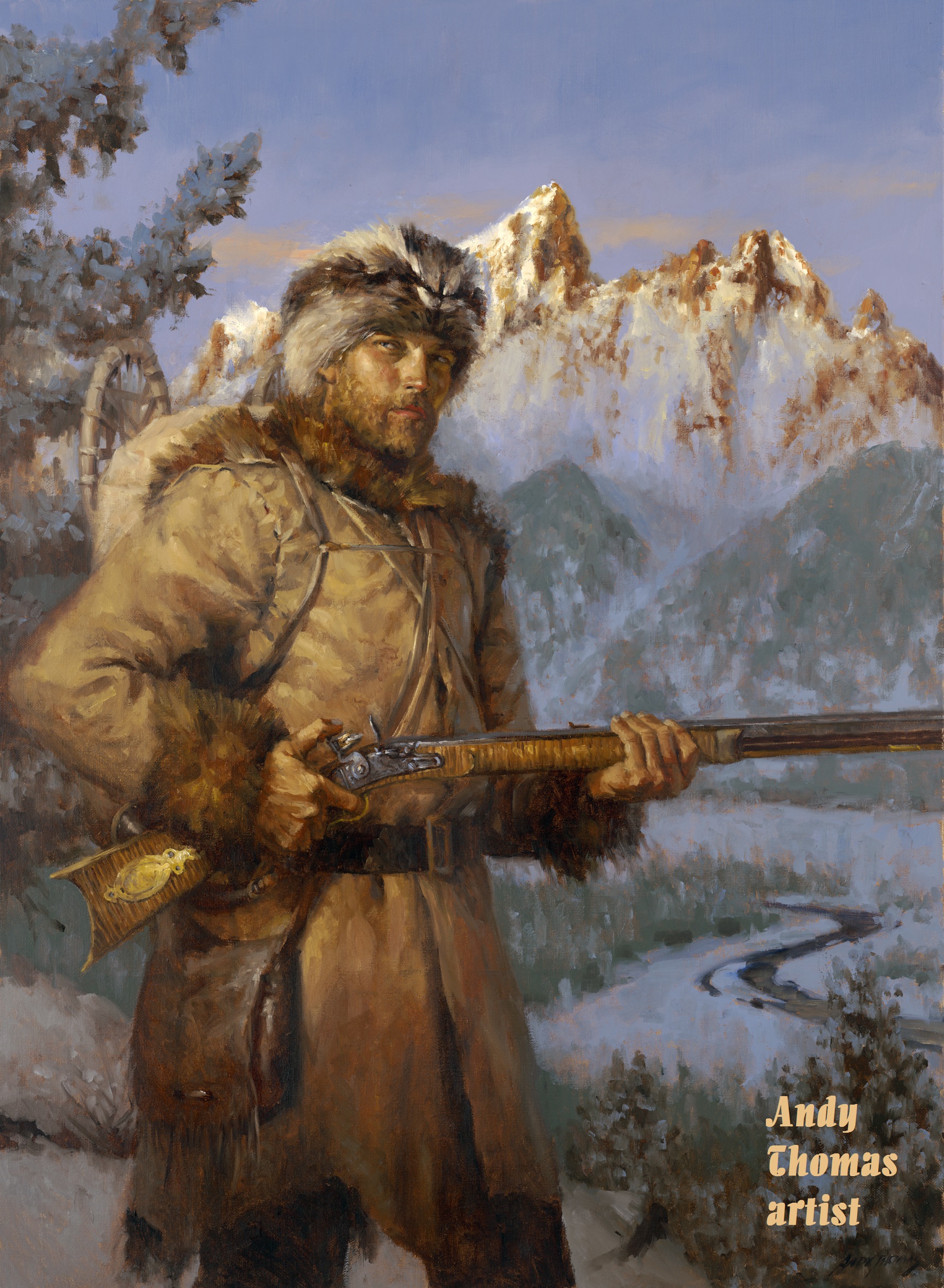
The painting below by modern-day artist Andy Thomas of Carthage, Missouri, represents John Colter. Thomas calls the image “The First Mountain Man.” This artist offers many paintings of historic people and events, and his mountain man appealed to me.

I was looking online for photos to represent my characters when I came across it.

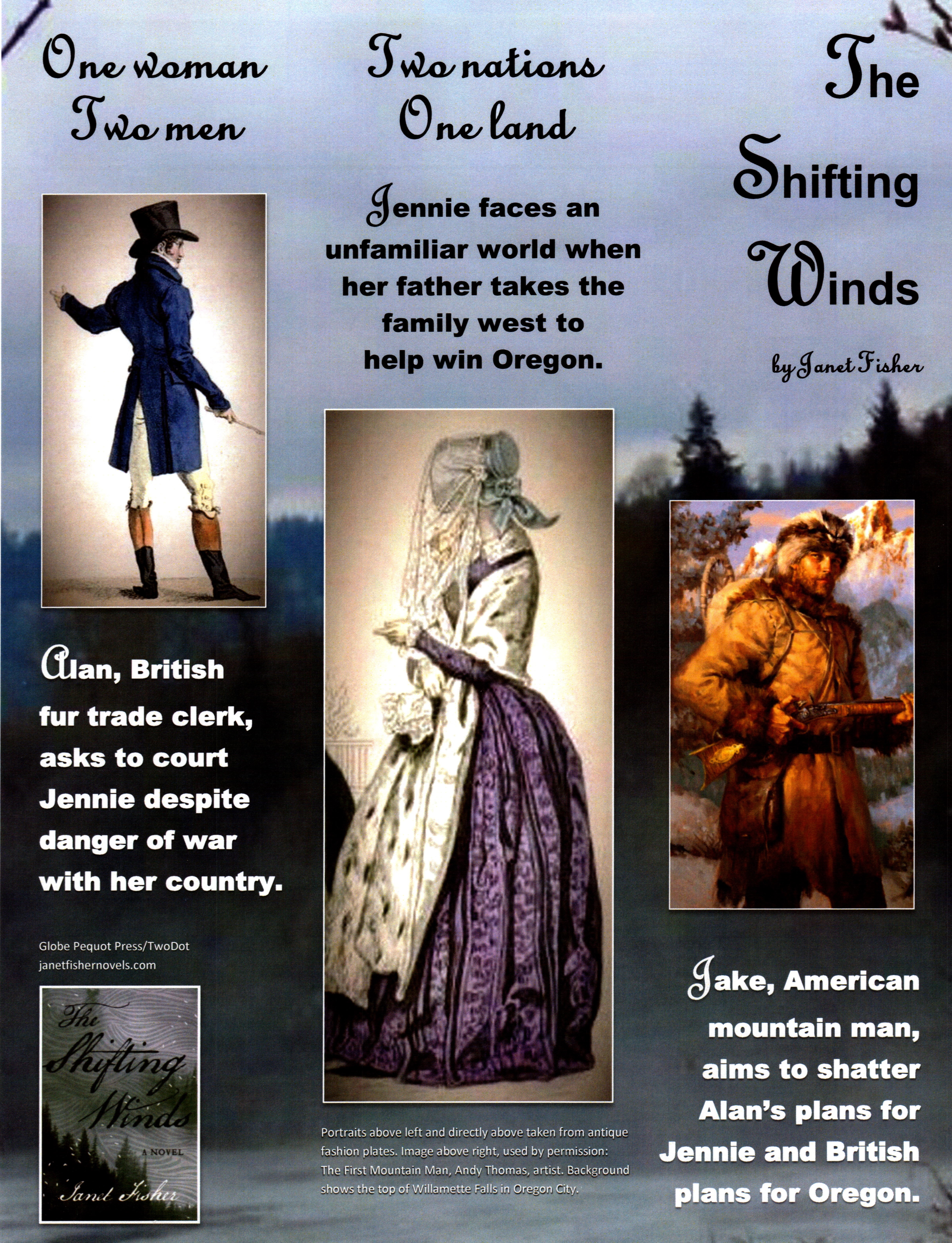
I wanted to put together a poster and banner with images portraying my protagonist, American pioneer Jennie Haviland, and the two men in Oregon who were vying for her affections, British Hudson’s Bay Company clerk Alan Radford, and American mountain man Jake Johnston.

Alan was a well-dressed gentleman of the times and I had no trouble finding an 1800s fashion plate that had the right look for him.

I found one complete with frock coat and tall beaver hat, even if the face wasn’t quite as gorgeous as I imagined him. And I found a young woman in a fashion plate with period dress, her face hidden by a bonnet so folks can imagine her appearance as they choose.

But there were no fashion plates for mountain men. Most of the mountain man pictures I found were of crusty old fellows with long, scraggly beards. Now, there may have been some mountaineers like them, but trapping in the Rockies was not a business for old men. These guys had to be tough and in their prime, and most were clean shaven.

Part of the reason for shaving was that the Native American men they associated with had little face hair and plucked what grew, so the women seeing a bearded white man might laugh disparagingly and call him a dog face. If these trappers wanted to win the hearts of these women, shaving was a good idea–not to mention the greater ease of keeping small critters out of their soup.

Anyway, I came across this image of a mountain man and it spoke to me. The guy in the painting had the gravitas I was looking for, and with the artist’s permission, John Colter now plays the role of Jake for me on my marketing materials for the book.

He doesn’t look exactly the way I see Jake either, but he has keen eyes that might be about to twinkle and a bit of don’t-mess-with-me attitude I can’t help but like. He’ll probably shave when he gets back to camp.

And that brings us to the real John Colter. He was born in Virginia sometime around 1775, his father evidently having come from Ireland. The family moved to the Kentucky frontier around 1780 when John was a young boy. At about 30 years of age he impressed Meriwether Lewis with his frontier skills, and Lewis recruited him for the Lewis and Clark Expedition as a private.

Colter may have been a little hotheaded because he got into a fracas with his sergeant even before they left and threatened to shoot the man, but somehow it got smoothed over and he became a valued member of the team and one of the best hunters. Lewis learned he could trust Colter to handle many difficult situations. The man showed skill in bartering with the tribes they met, and he would strike out alone wherever Lewis or Clark asked him to go and always find his way.

Two months before the end of the journey home, the expedition met some trappers headed west, and Colter joined them as a worthy addition, given his fresh knowledge of much of the territory. He went out alone for them during the winter, traveling some 500 miles through the wilderness to establish trade with the Crow nation, and was probably the first white man to see such sights as the spewing Yellowstone wonders, which came to be known as Colter’s Hell. Many stories of his skills and scrapes have been the stuff of books and movies, but probably none so dramatic as his run from the Blackfeet.

Colter was canoeing up the Jefferson River with another trapper, Potts, when several hundred Blackfeet showed up and demanded the two go ashore. The Blackfeet killed Potts in the incident, hacking him to death, then stripped Colter naked and told him to run. He soon realized they expected him to run for his life. His nose began to bleed, but he kept going as blood streamed and was well ahead of all but one of his pursuers.

With a suddenness that startled the man on his tail, Colter came to an abrupt stop and swung around to face him, arms wide. Caught by surprise at Colter’s actions, and perhaps the blood streaming over Colter’s naked body, the man also tried to stop but fell forward as he threw a spear and plunged it into the ground. Colter snatched up the broken weapon and killed him, then grabbed a blanket from him and fled the others. After a five-mile run he reached the Madison River and jumped in, taking refuge in a beaver lodge until nightfall when he escaped.

Thus he became something of a legend. When he did return to civilization a few years later he visited William Clark of the Lewis and Clark expedition and reported on his travels, adding considerable detail for Clark’s maps. He got married and farmed in Missouri awhile before fighting in the War of 1812. He never returned to the mountains.

About ten years after the war, just before Dr. John McLoughlin went out to the Columbia, some men of St. Louis, William Ashley and Andrew Henry, put together a fur company that significantly impacted the American fur trade. Prior to that time, most furs were acquired through trade with the Indians. But Ashley and Henry led their own trappers into the west, where they built a couple of forts and wintered with the Crow tribe. In the spring of 1824 the trappers went into the Green River country and found it rich in beaver. Ashley came up with a working scheme when he put together the first supply train and took the caravan to the Rockies the next summer so the trappers didn’t have to haul their furs to market in St. Louis. The annual rendezvous had begun.

amfurcaravan

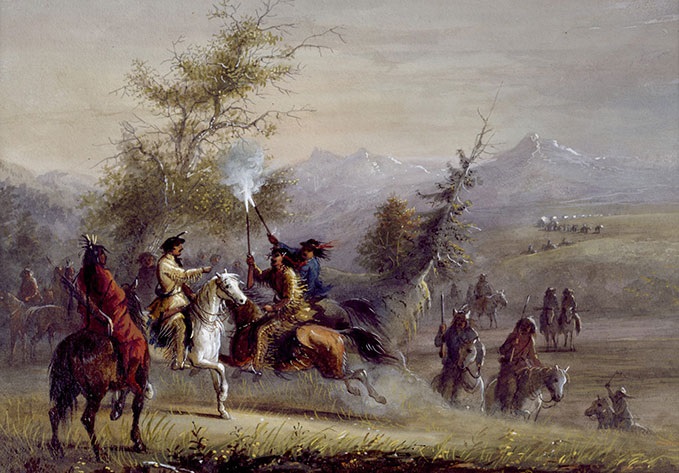
The above painting by Alfred Jacob Miller shows the supply caravan bringing supplies to the Rocky Mountains for the annual rendezvous of the mountain men. Miller went out with the supply train in 1837 and created many portraits of the landscapes and mountaineers and Native Americans he saw there. The man on the white horse is the Scottish adventurer William Drummond Stewart who hired Miller to take the journey with him to record the event.

The Rocky Mountain Rendezvous lasted from 1825 until 1840 when beaver began to play out and prices dropped because men discovered silk hats to replace their beavers. It was a great run and the rendezvous an uproarious party when men let loose after they’d spent a year working hard in dangerous conditions. The supply trains brought out pure alcohol to mix with the clear water of the mountain streams, adding to the craziness. Friendly tribes gathered with the mountaineers, and many of the Americans took wives from these tribes or enjoyed temporary liaisons.

Miller greeting

This Miller portrait shows the rip roaring greeting trappers typically gave to the arriving caravan. Again the Scot Stewart is on the white horse.

During these years the Americans pretty well kept to the Rockies, while the British reaped the Oregon Territory of beaver there. Sometimes they bumped up against each other, and competition was fierce. The British ultimately pursued a scorched earth policy to make sure there weren’t enough beaver left on the west side to lure the Americans to Oregon.

Because of the supply train system many of the American trappers never went back home, and after years of living in the wilderness, often with wives and children they knew wouldn’t be accepted in the States, they felt adrift when the mountain life ended. So after the last rendezvous of 1840 quite a few went to Oregon anyway and decided to become settlers, a situation that didn’t always set well with the British. Thus legendary mountain man Joe Meek, a major player in my book, enters the stage, along with others who are named in the pages, accompanied by the fictional Jake Johnston. This was just two years before the book’s 1842 opening.

Dr. McLoughlin, another major historic player in my book, found himself caught in a dilemma between honoring the interests of his nation and following his own humanitarian instincts.

But when the good doctor first went to the Oregon Country in 1824 the British had a near monopoly there and prospects all looked rosy.

Gowans, Fred R. Rocky Mountain Rendezvous: A History of the Fur Trade Rendezvous 1825-1840. Provo, UT: Brigham Young University Press, 1976.
Various websites.

Next: British Stronghold

COMMENT

Save

Fort Vancouver Event Coming Soon

My reading and signing event at the fantastic Fort Vancouver site in Vancouver, Washington, is just three weeks away, Saturday, July 16, starting at 2 o’clock in the afternoon. As mentioned in my March post “Upcoming Book Event at Fort Vancouver,” it was a dream of mine to hold an event at this historic fort for my new historical novel, The Shifting Winds, because the fort plays a significant part in the story. Now that dream is about to happen.

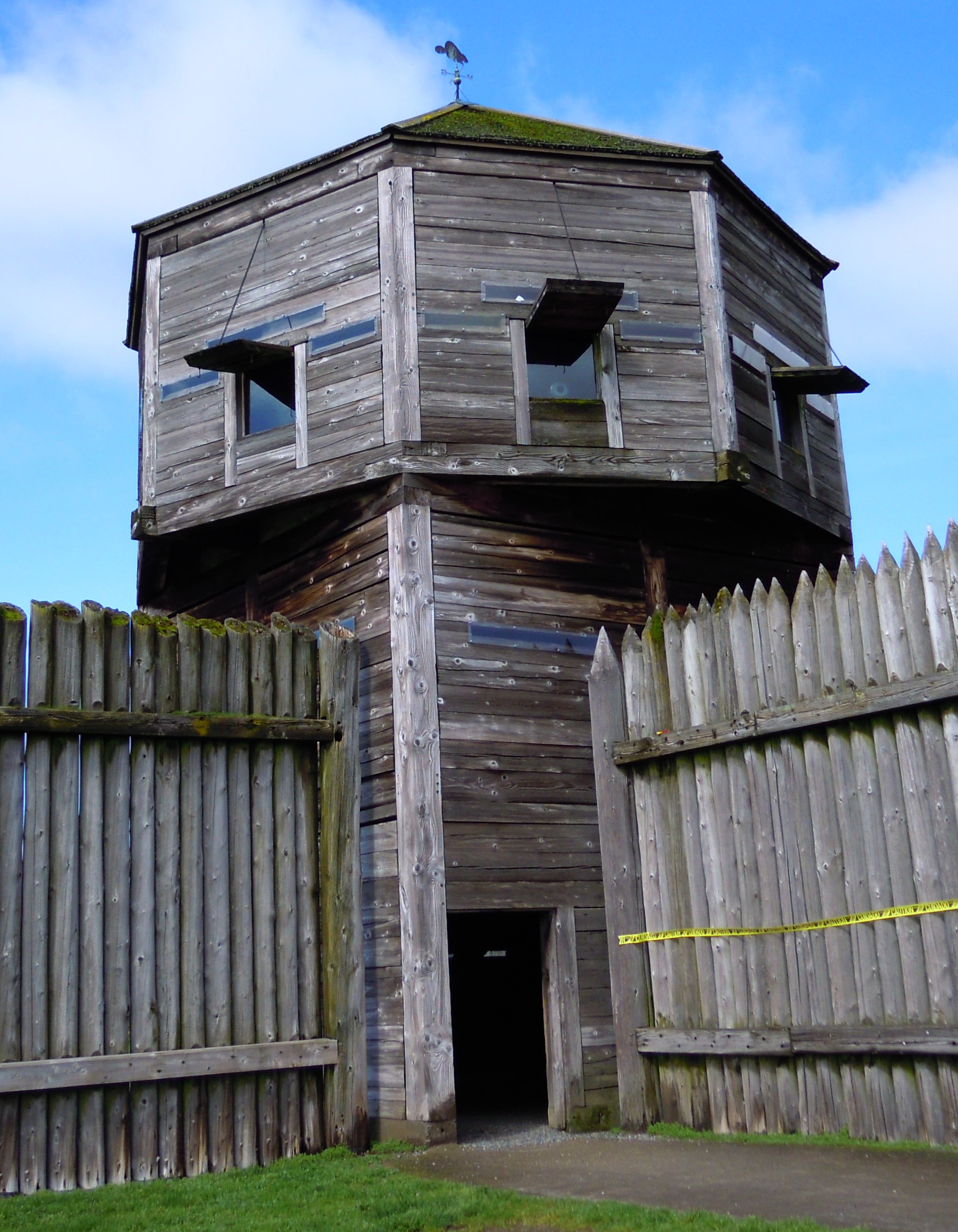
599.Ft.Vanc.Bastion -titleThrough my presentation at the fort Visitor Center–a lecture, a slideshow of related photos, and a tour of the fort–I hope to draw people back to the days of my story. The lecture and book signing will be from 2 to 3:30. Afterward, from 4 to 5 I’ll lead attendees on a tour through the fort and highlight some of the places that appear in my book. The bastion in the fort palisade is shown above.

Several scenes in the story take the reader to this amazing spot of British civilization in a wilderness isolated from all that’s familiar to the young American protagonist, reluctant pioneer Jennie Haviland. And one of the major players, Hudson’s Bay Company clerk Alan Radford, works at the fort.

In the early 1840a when the story takes place, Fort Vancouver stands as the center of the British fur trade in the Pacific Northwest, and American settlers have just begun trickling into the area, hoping to gain the land for the United States. For more than 20 years Britain and the United States have jointly occupied the Oregon Country, unable to come to terms on a boundary between them.

Ft.Vanc.Big House FrontGiven Fort Vancouver’s significance in Western American history, the fort has been faithfully reconstructed as a living representation of the times, including the home of the commanding officer and his second in command, above, which is furnished much as it would have been when Chief Factor Dr. John McLoughlin lived there and essentially ruled the Oregon Territory. The McLoughlin sitting room is shown below.

613.Ft.Vanc.McLoughlin Sitting RoomNow a National Historic Site maintained by the National Park Service, the fort offers visitors a chance to step back in history and see what life was like in the fort’s heyday.

622.John McLoughlin Daguerreotype - creditChief Factor McLoughlin, shown in the daguerreotype, is one of the real characters portrayed in the book (photo courtesy of National Park Service).

My story takes place during the historic time of rising tension between the two nations over this one land. Within that true story of conflict, a fictional clash develops between two men–the British HBC clerk Alan Radford, and American mountain man Jake Johnston–who vie for protagonist Jennie as their nations vie for Oregon.

To find the fort and center, their website offers maps and directions. The Visitor Center, where my event will be held, is at 1501 East Evergreen Boulevard.

The Visitor Center Bookstore will have copies of The Shifting Winds for sale, as well as copies of my previous book, A Place of Her Own.

My thanks to the National Park Service and the Friends of Fort Vancouver for co-hosting the event. And a special thanks to Mary Rose, Executive Director of the Friends of Fort Vancouver National Historic Site, for making the arrangements.

In these next three weeks I plan to offer a series of posts here on my blog to help set the stage for my story and for this event. Because the posts will delve into the historical setting, I’ll call the new series “The True Shifting Winds.”

COMMENT

Pleasant Evening at Bookmine

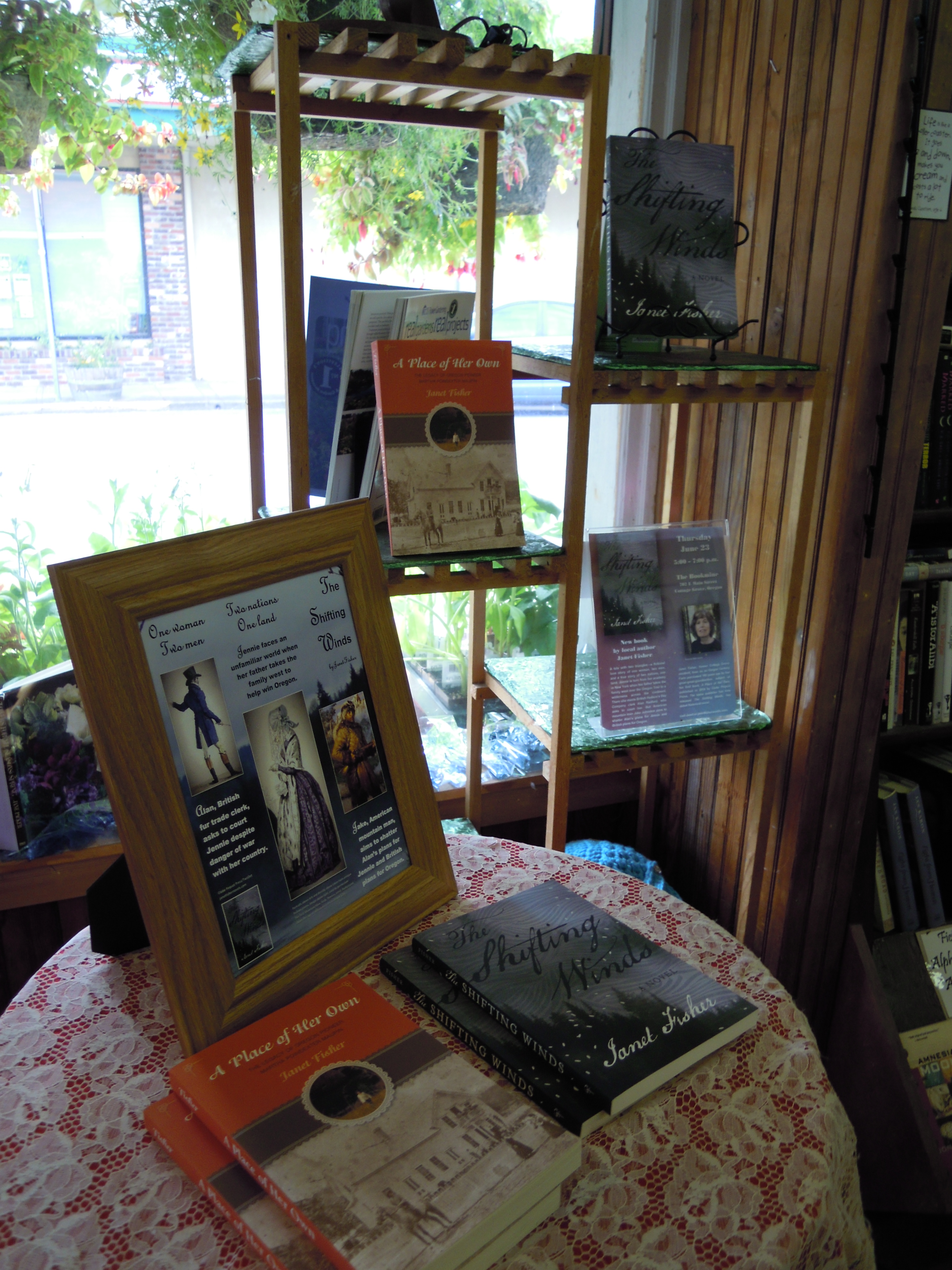
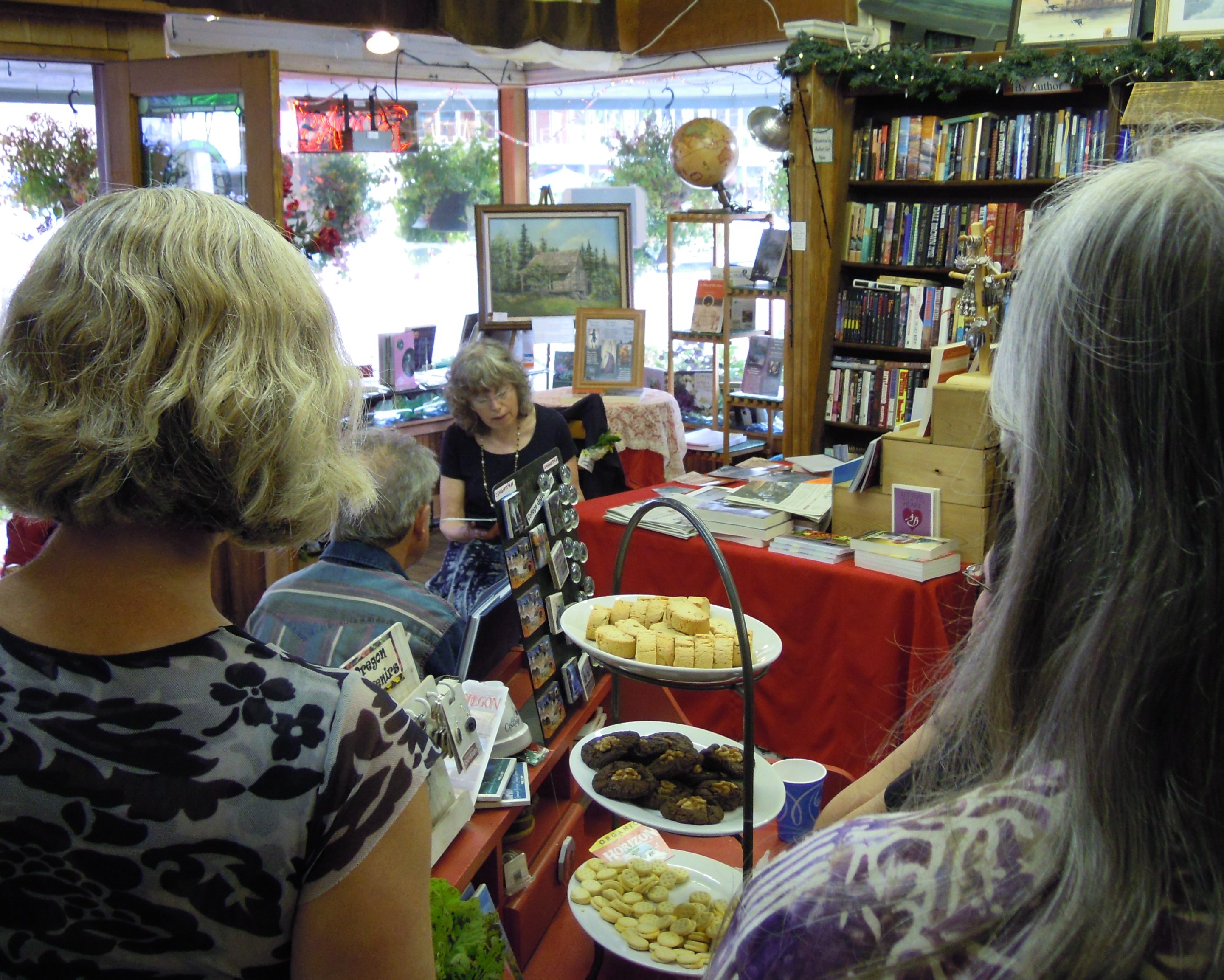
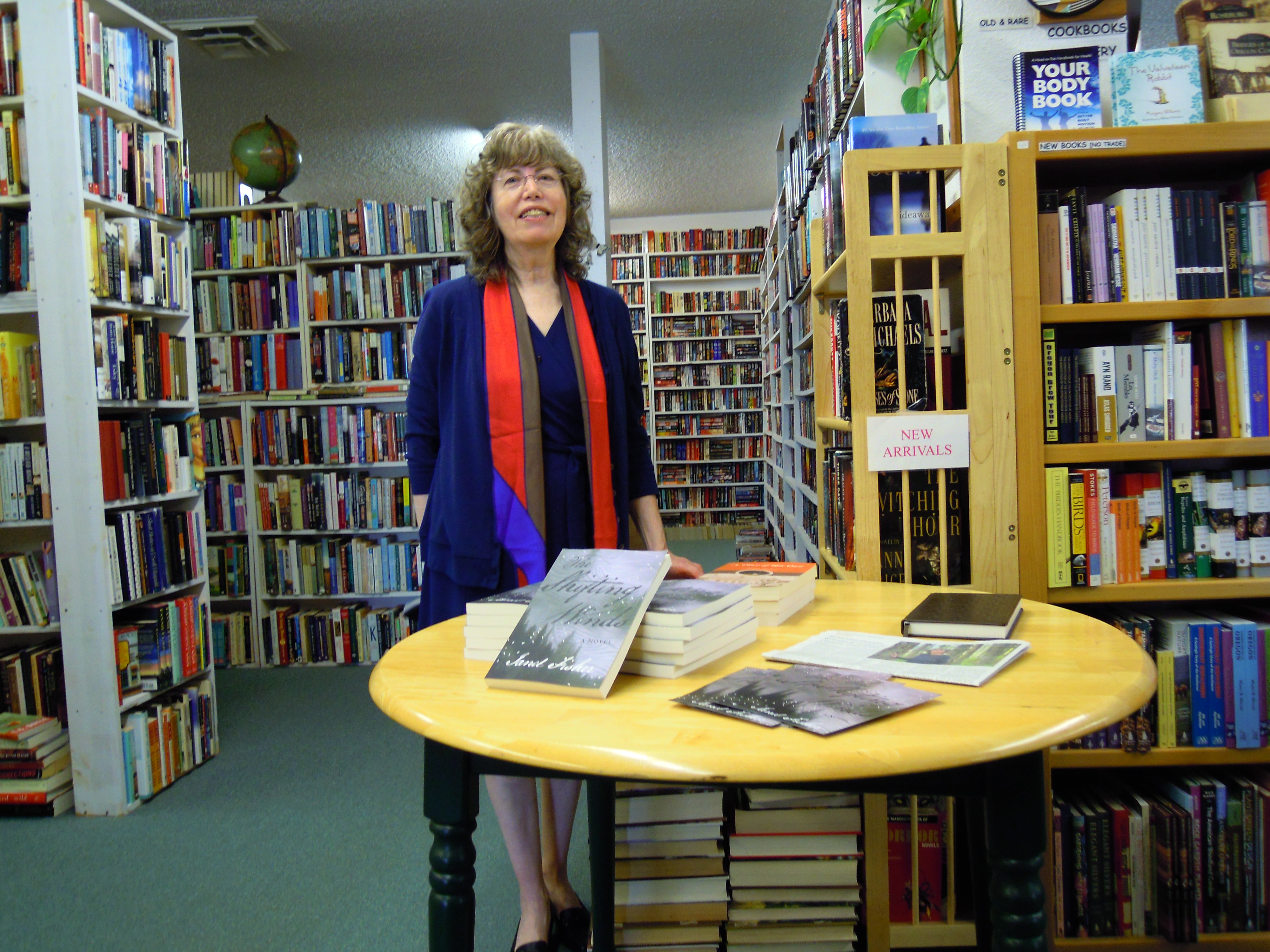
Bookmine encore.1029Gail at The Bookmine in Cottage Grove set up a lovely display for my encore signing and reading party for The Shifting Winds Thursday evening, to which I added my new poster for the book (at left).

We also had copies of my first book, A Place of Her Own, available and actually sold quite a few of them as well. It continues to gain interest.

It was a busy evening with the Farmer’s Market just outside, and several people drifted in to join those who’d come for the event.

Bookmine encore.1040.2

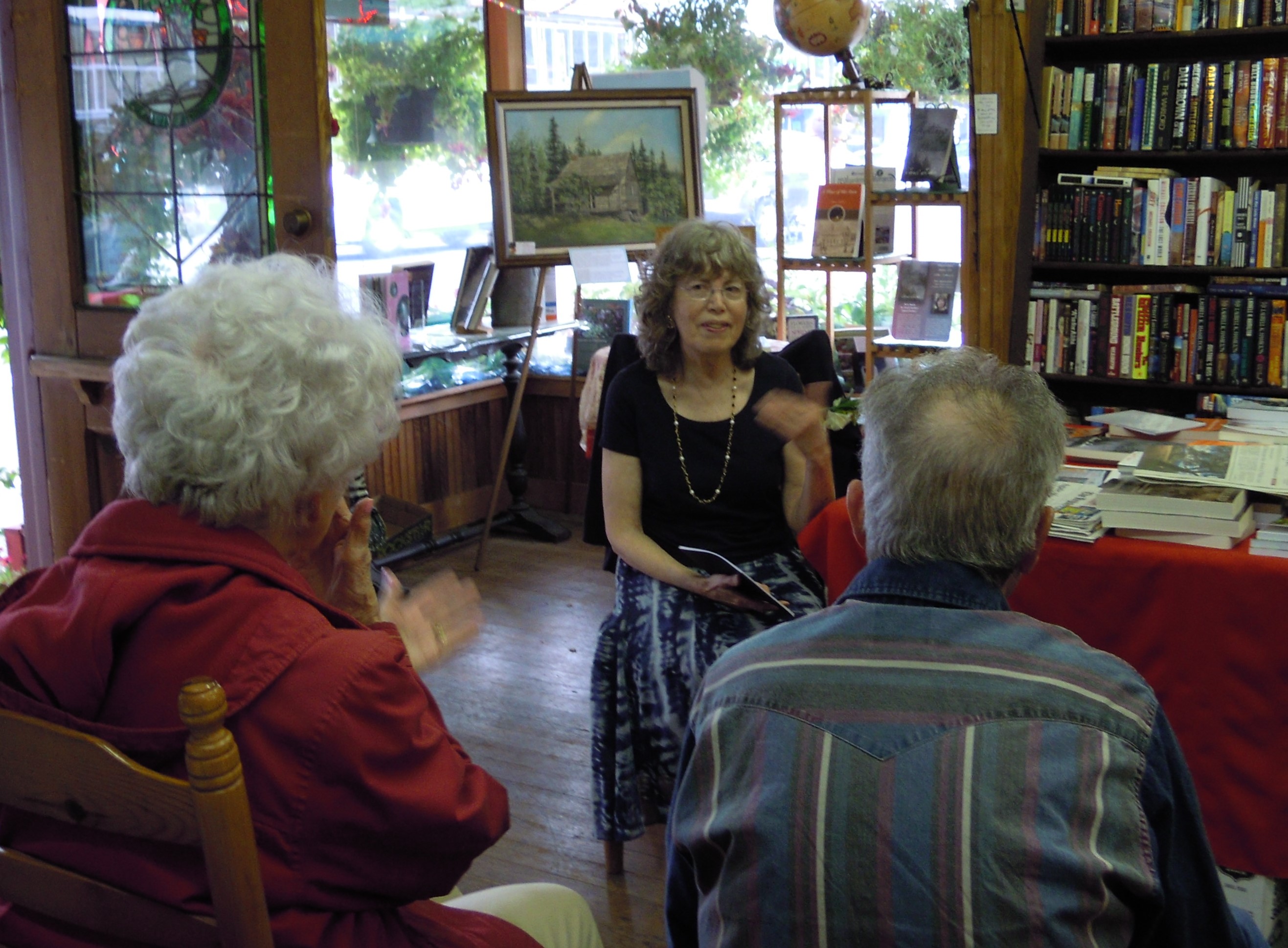
An attentive group stayed for the readings. I chose three short segments, a couple of tense cliff hangers and, for a change of pace, one of Joe Meek’s stories. Joe, a mountain man, is one of the real characters in the book. Gail also offered refreshments, shown in the photo above, so folks nibbled and listened.

Bookmine encore.1045.2Bookmine encore.1039.2

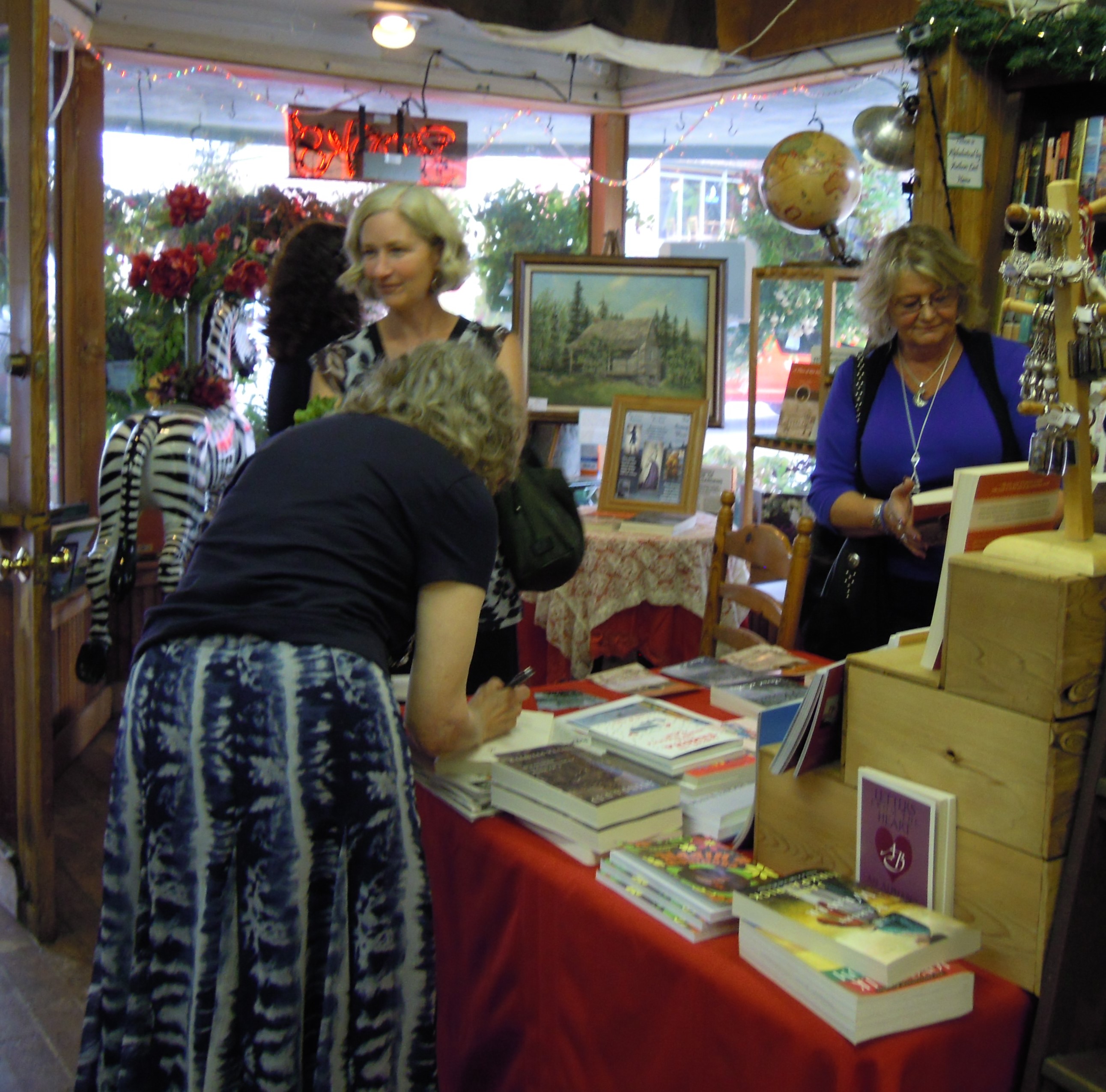
After the reading we had a few questions. And I signed a few books.

Altogether a pleasant evening. It was nice to have both of my daughters, Carisa and Christiane, and my granddaughter, Calliope, with me.

Thanks to Christiane for taking the pictures.

COMMENT

Author Gala Reading

The annual Mid-Valley Willamette Writers Author Celebration happens next week when several members are selected to read from their published works. I’m excited to be one of the readers again. At this year’s event I’ll be reading from my new historical novel, The Shifting Winds.

Pulling up some pleasant memories, here’s the group that read in 2014 at the first of these gala events. That time I read from A Place of Her Own, which had just been released.

WW ReadersWhat a fun evening! It was so exciting to be sharing my very first published book. A great time for us all. I developed some lasting friendships from that gathering. We were at Tsunami Books in Eugene, the regular meeting place for the Mid-Valley Willamette Writers, and the gala will be at the same place this year.

Author Gala Poster 2016Here’s the poster for the event. It’s the first Thursday of the month, the usual meeting night for the group, June 2, from 7 to 9 pm.

We’ll have fewer readers this time, including Valerie Brooks, Bill Cameron, Julie Dawn, Sarina Dorie, and me.

As noted on the poster it’s open to the public. The suggested donation is one new or gently used children’s book or a small cash donation in support of the group’s Books for Kids program. Tsunami Books is at 2585 Willamette Street in Eugene.

I’ll be reading the opening scene from The Shifting Winds and introducing one of the real historic characters from my book, Joe Meek, mountain man extraordinaire.

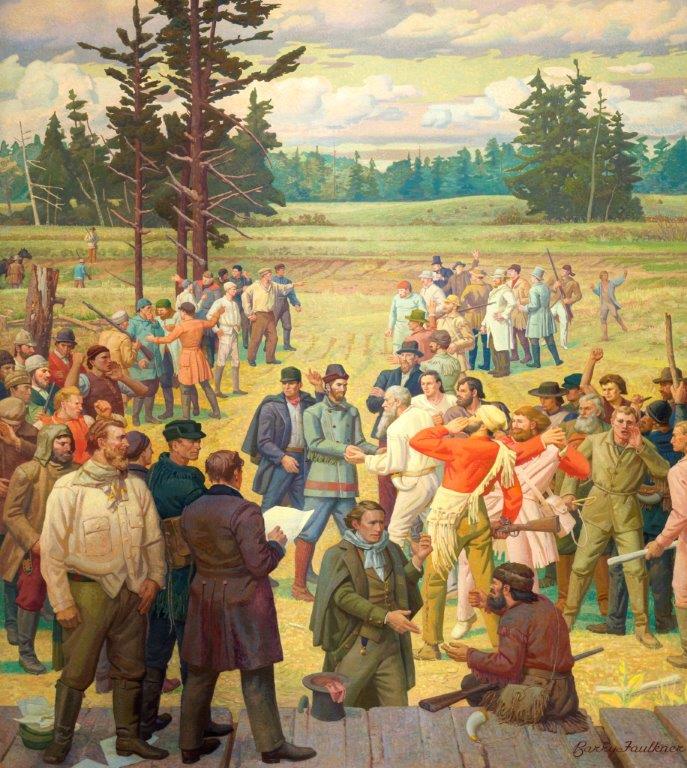
joe mural smallerHere he is portrayed in his immortal role at the gathering of settlers at Champoeg in May 1843, just 173 years ago.

American settlers were hoping for an agreement that would give them the protection of law in this isolated frontier.

When the vote seemed uncertain, the bold mountaineer called out in his booming voice, “Who’s fer a divide?” And the voters lined up to be counted.

This large mural is displayed in the Oregon State Capitol building. That’s Joe in the red shirt toward the front, rifle in hand, calling for the divide.

He was a storyteller at heart, which I guess all of us authors must be too. I look forward to hearing readings from the stories of my fellow Mid-Valley Willamette Writers authors and look forward to sharing my own.

COMMENT

Prose at Poetry Night

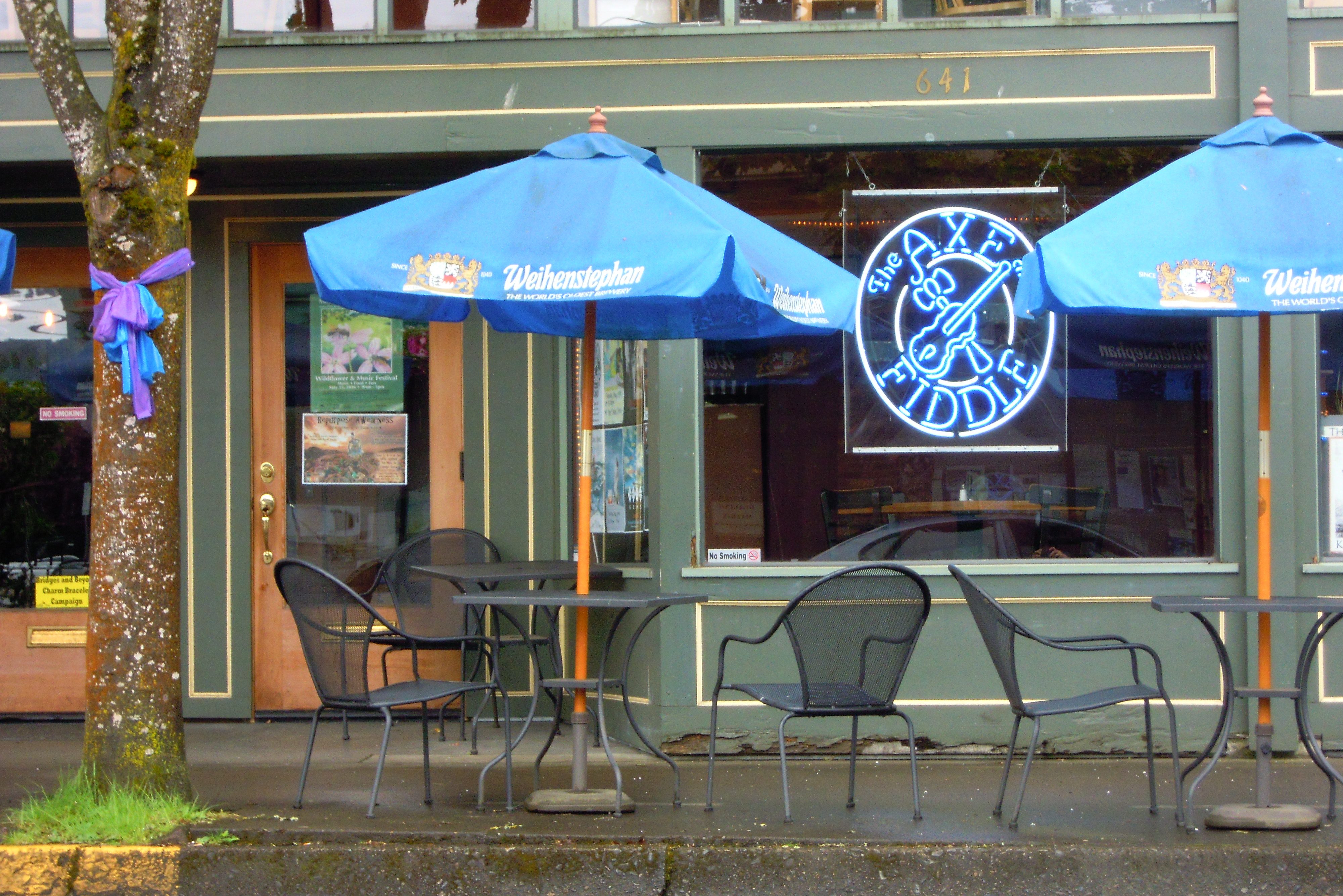
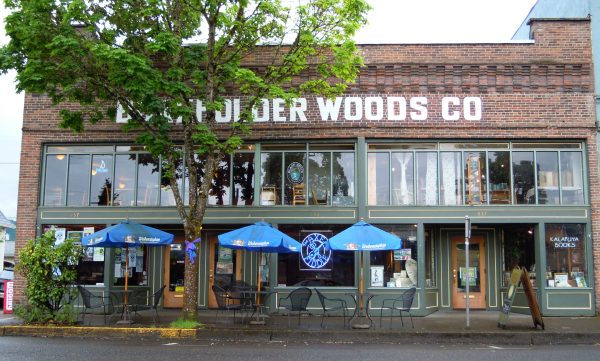
The Axe & Fiddle, a pub in historic downtown Cottage Grove, offers a change of pace this coming Tuesday night, May 17, when the entertainment turns to words. Poetry Night happens just once a month at this restaurant and public house known for its live music and craft brews, full bar, and locally sourced food, and I’m delighted to be their featured guest. But I won’t be reading poetry–or singing it.

1008.Axe&Fid - closeInstead they have asked me to read from my new historical novel about Oregon’s early days, The Shifting Winds. So in keeping with the night’s theme, I’ll select a couple of short excerpts that present a bit of what might be called poetic prose.

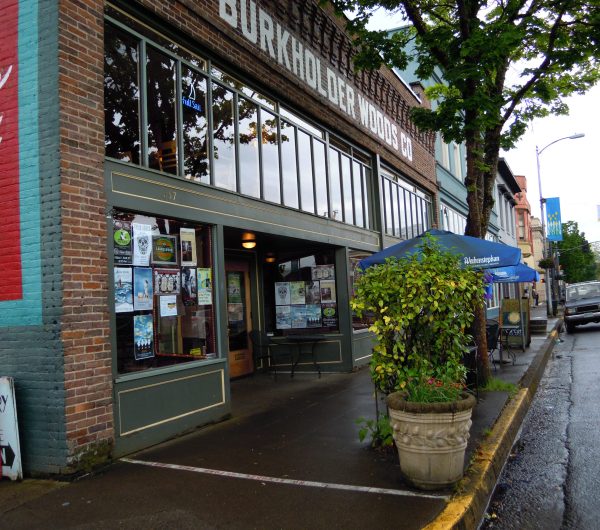
1007.Axe&Fid - longYou’ll find the Axe & Fiddle on Cottage Grove’s historic Main Street on the corner of 7th and Main, next door to Kalapuya Books, the bookstore that presents Poetry Night. The building is shown at right.

The show starts at 7:30 pm and is expected to run until 9:30. They open at 4 pm, so there’s plenty of time to stop in beforehand for dinner or a drink, or both, and the doors are open Tuesdays until midnight.

So what’s poetic prose? To me, it seems to show up in description that paints a scene with a touch of velvet in the words. I’ll read one of those at the event. Then it may be a stretch of the word poetic, but I’d also like to read a segment I’ve never tried for any of my other readings.

1005.Axe&Fid - sideIn this book, although my lead characters are fictional, I also have some real people meandering through the pages. It’s a story with a lot of real history and those people sometimes play their factual parts in the historic scenes.

One of my more colorful real characters is mountain man Joe Meek, and the book includes half a dozen or so stories that Joe actually told to 19th century author Frances Fuller Victor for her 1870 book River of the West about Joe’s life as a fur trapper in the Rockies and his life in western Oregon as a settler. Joe’s speech is a mix of Kentucky, the vernacular of a mountain man, and traces that come from a boy who preferred to play with his father’s slaves rather than go to school. Poetic? Well, he was an inveterate storyteller whose words carry a certain ring.

I’m looking forward to a fun evening at the Axe & Fiddle, a very different venue than I’ve tried before. I’ll have books there for sale, copies of The Shifting Winds and also my previous book, A Place of Her Own. A big thanks to Betsy at Kalapuya Books for the invite.

COMMENT

Spring Art Walk Event

It must be spring! The first Art Walk of the season comes this Friday, April 29, to the charming historic downtown of Cottage Grove. And I’ll be there with my books at The Bookmine from 6 to 8 pm or later. It’s such a great store–a pleasant place to hang out during the Art Walk, or anytime for that matter.

bookmine & bikesThis small Oregon town enjoys the good fortune of having three bookstores within five blocks on Main Street, from The Bookmine at 702 to Kalapuya Books at 637 to Books on Main at 319, and I’m happy to say they all stock my books. They also have a wonderful library a few blocks away (and, yes, my books are there too). A very literary place.

I lived in Cottage Grove for several years before moving to the family farm in Douglas County, and the people of Cottage Grove continue to be supportive. I am most grateful.

The town’s Art Walk happens on the last Friday of the month from April to October. You’ll find food, art, music, a variety of shopping at the local shops, and of course books.

I’ll read a time or two from my new historical novel, The Shifting Winds, and will have that one as well as my first, A Place of Her Own, available for signing. The Shifting Winds is a fictional tale set in a lot of true history. A Place of Her Own is a true story with some creative conjecture. They’re both Oregon Trail stories about strong pioneer women. I’ll be open to informal Q & A as people stop by and to just chatting about the new story and my other work and your own stories.

If you’re in the neighborhood I hope you’ll visit me at The Bookmine.

COMMENT

Lovely Afternoon at Tsunami

I was delighted to greet a lovely bunch of friends at Tsunami Books in Eugene on Sunday afternoon for the book signing and reading there for my new historical novel, The Shifting Winds. Most of my special Willamette Writers group came, as well as neighbors and newfound cousins and other wonderful friends.

Tsunami 2016This bookstore is a pleasant venue with the warmth of lots of natural wood and funky chairs and books enough to delight any book lover. The reading was well received with a spirited Q & A afterward. It’s exciting for me to see such keen interest in the history surrounding this story of Oregon’s early pioneers and the fur traders wTsunami with Krisho played such a major role in those days.

Along with friendly book talk, we had Elkton wines from the Brandborg Winery with cheese and crackers.

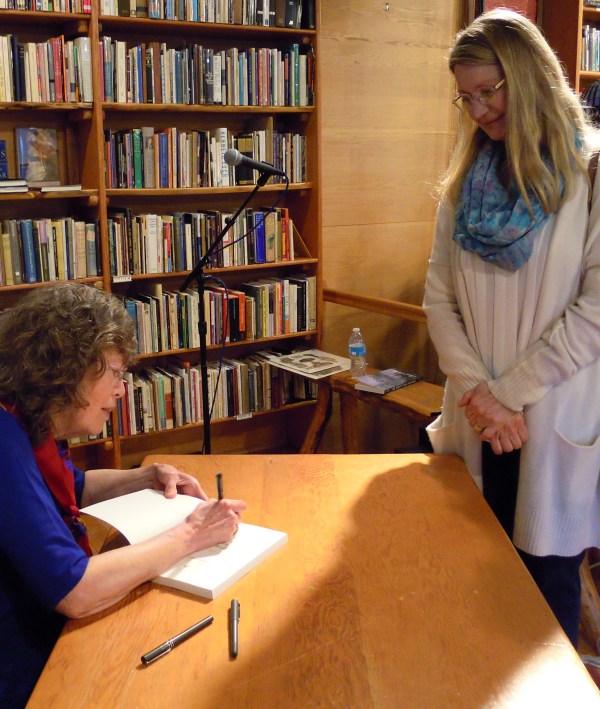
That’s Kris Jensen from my writers group on the right, getting her book signed.

My thanks to Scott Landfield, proprietor, for the space. Thanks to my daughter Carisa Cegavske and another friend from the writers group, Elizabeth King, for helping with refreshments. Thanks to my son-in-law Robin Loznak for taking pictures. And thanks to everyone for coming out on a fine spring afternoon. It was great seeing you all.

COMMENT


The Delightful Books Gallery

The Books Gallery in Sutherlin offers the most delightful atmosphere for book lovers, and I enjoyed my Saturday afternoon event there surrounded by books with the enticing fragrance of coffee and tea wafting through.

Books Gallery event 2016There are of course more temptations from the Lighthouse Center Bakery to go along with your brew of choice.

As mentioned before, they usually have a puzzle in progress. Somebody finished one today while I was chatting with people who came by for a signed book. For the reading we went into the inner room where several ladies had gotten together for painting in watercolors, and they seemed to enjoy a little storytime too.

Altogether, a most pleasant afternoon.

If you’re ever in Sutherlin and want to while away a little time in a friendly bookstore and relish a good snack or work on a puzzle or check out the other activities offered, the Books Gallery is an excellent choice.

Thanks to my daughter Carisa for taking the picture.

COMMENT

Event Saturday in Sutherlin

I’m having another book signing event in Douglas County for my new novel, The Shifting Winds, at the lovely Books Gallery in Sutherlin this coming Saturday, April 2, from 2 to 4.

Books GalleryThis is the kind of friendly place where people hang out, do puzzles, have delicious snacks straight from the Lighthouse Center Bakery in Umpqua, along with coffee, tea, or espresso, and explore the latest book selections.

I’ll join that relaxed atmosphere on Saturday afternoon, do a reading at about 2:30, share in a little Q&A, sign books, and chat. I hope some folks in the neighborhood will stop by. I’ll bring a few copies of A Place of Her Own too.

COMMENT