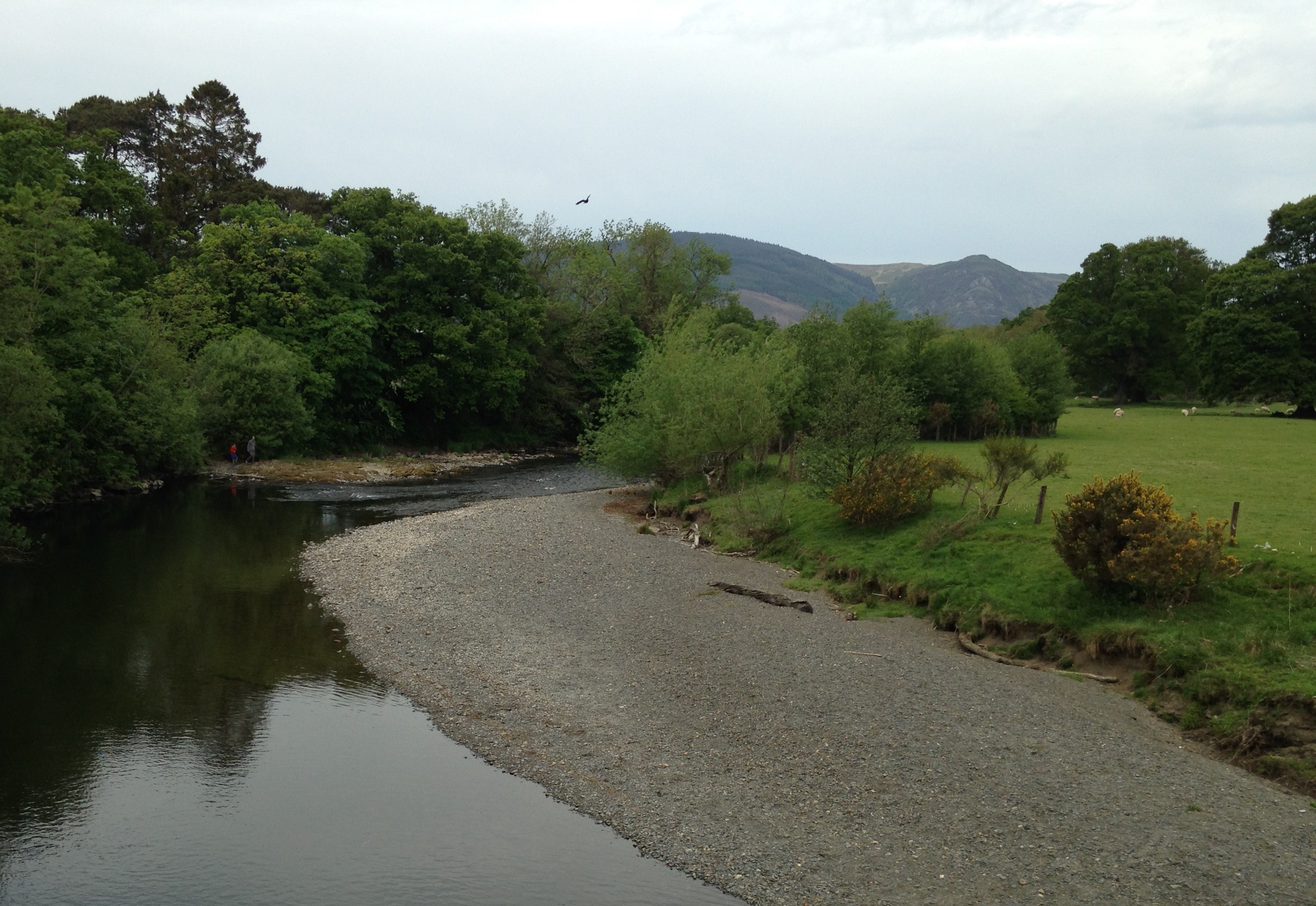
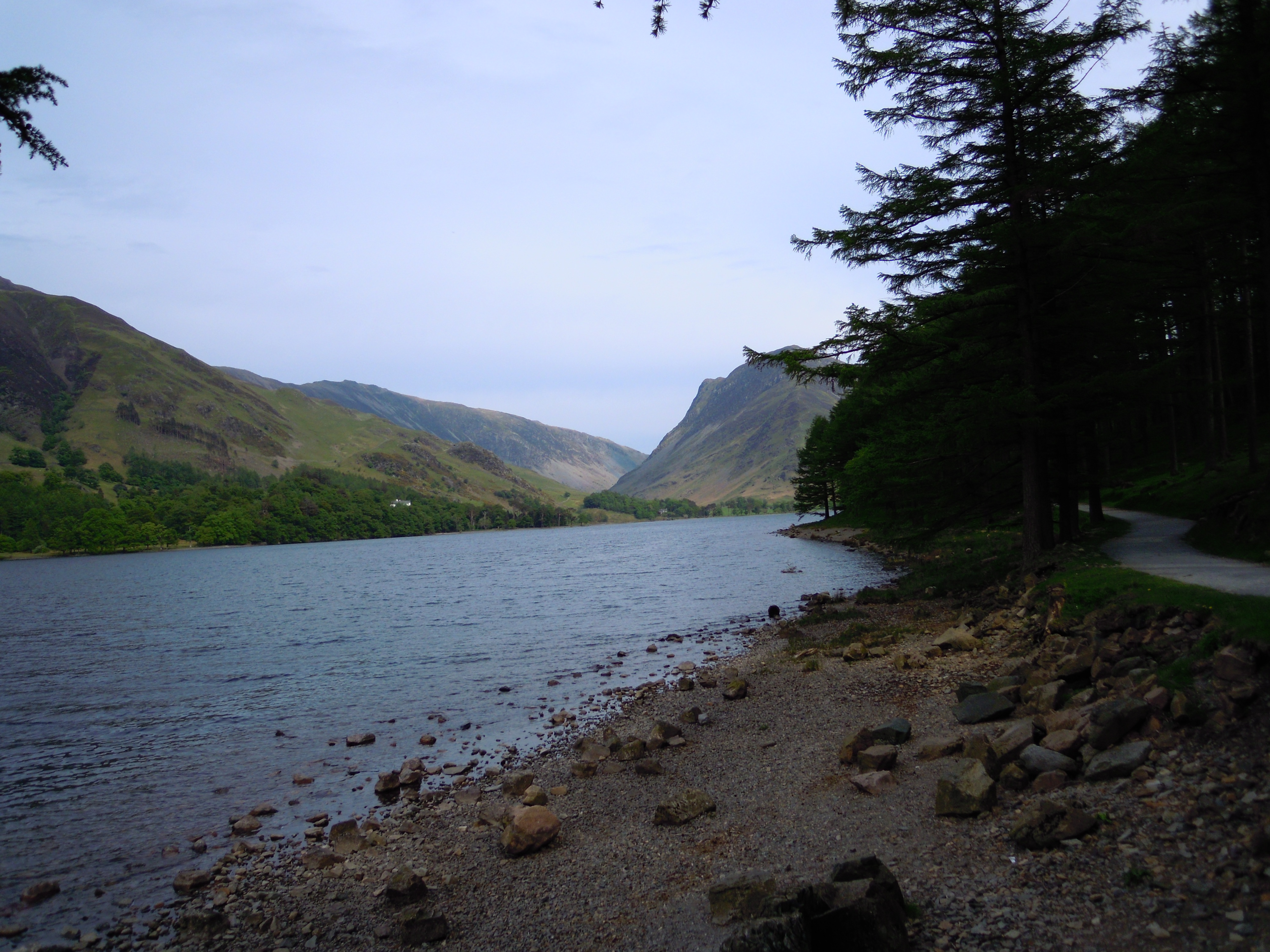
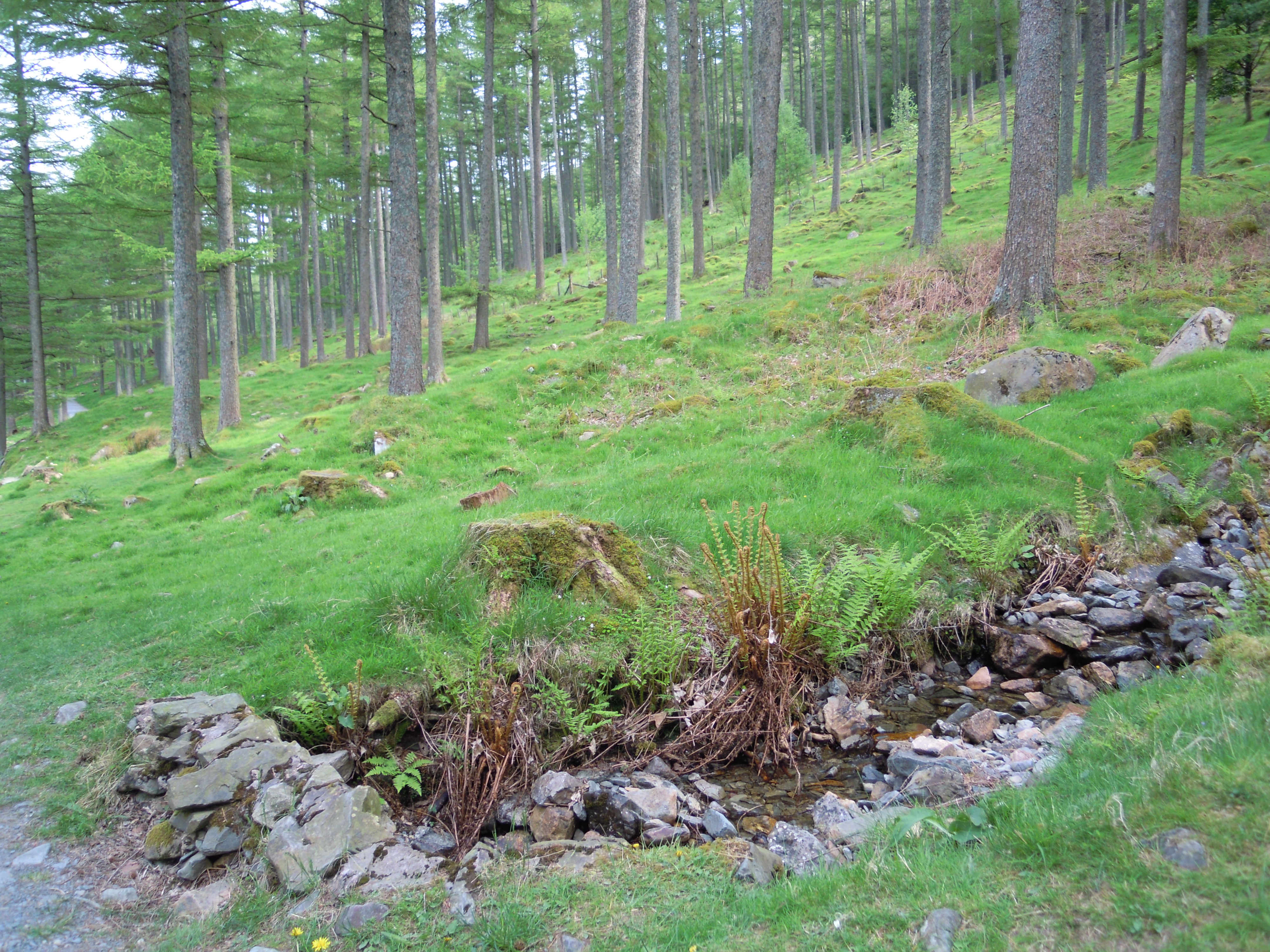
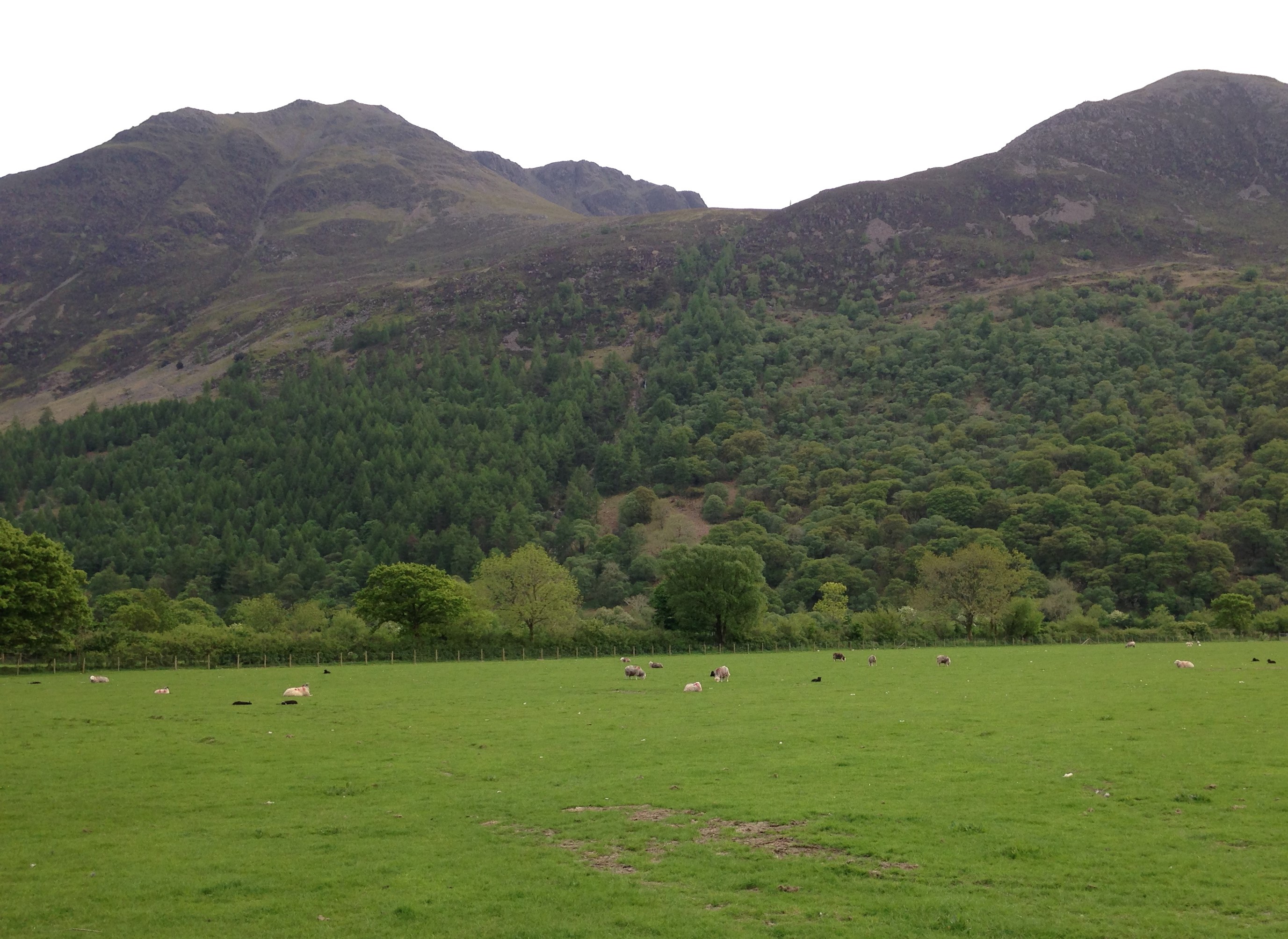
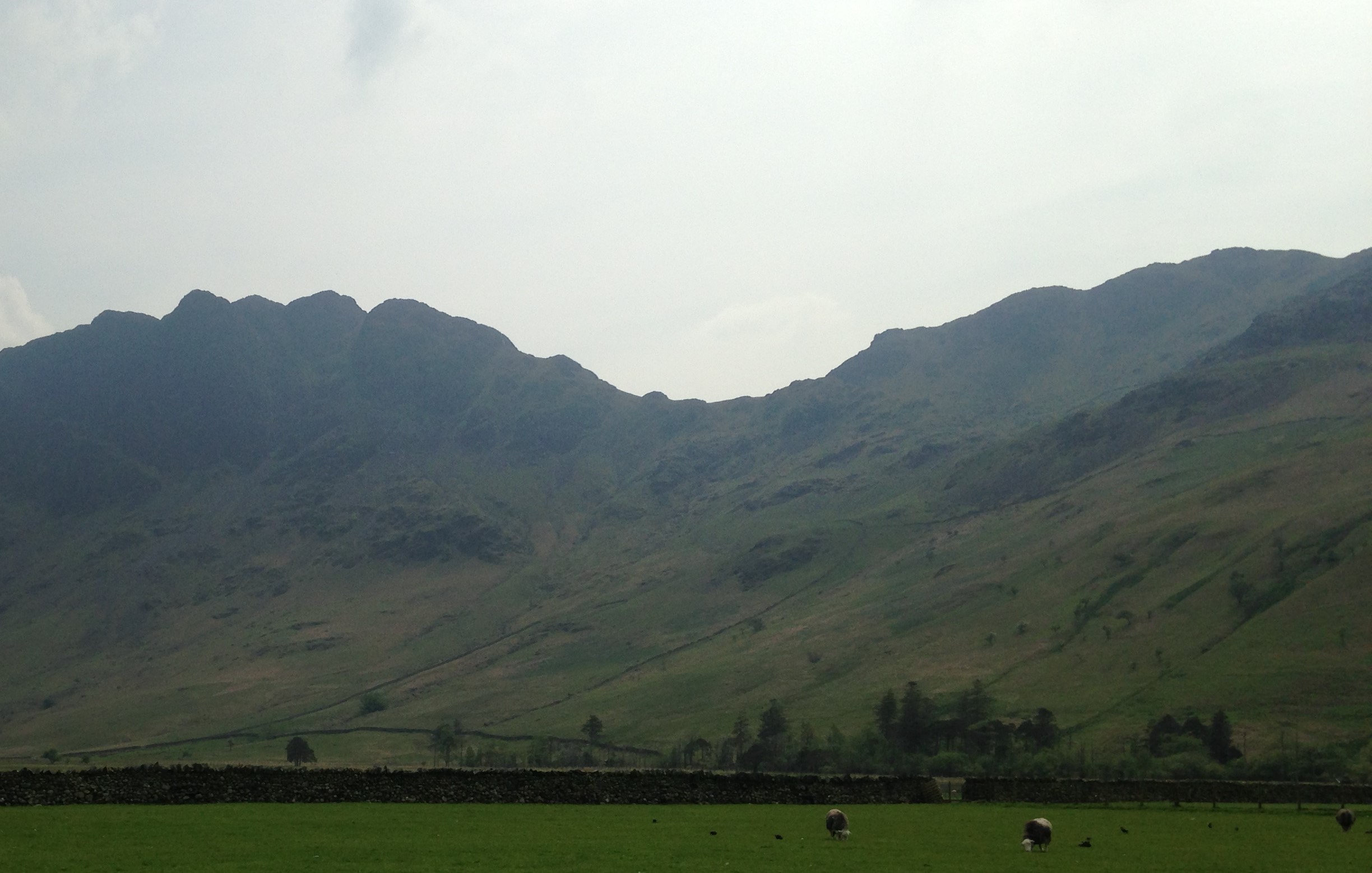
Going There #2: The Crossing

I picked the place on a map where my book’s desperate character would make the Crossing to the next island, but I didn’t know the significance of the town called Bray when I chose the site.

Young Irish goldsmith Levaen faces betrayal by her clan mother and her own father when they insist she save the island’s sacred peace by taking as her mate a man who threatens war unless she submits. She has fled her home, desperate to escape her plight. There’s a narrower Crossing to the north, but that’s a longer walk and her father may pursue her–with their dog to track her. She opts for the longer passage despite her fears of the long journey across the water. She has gone this way once before with her father. She must do it now on her own.

My journey to Bray was my second excursion on this trip to Ireland and unlike the tour to Newgrange described in “Going There: #1” here, I would do this one on my own.

I had researched the site on Google Maps and ways to get there, but I wanted to check with local sources for the best way to go. I had planned to explore Dublin over the weekend and go to Bray on Monday. But the forecast was for great weather on the weekend, so I decided to bump that plan up, given the iffy weather I’d experienced on the Friday tour to Newgrange.

On Saturday morning I stopped at the front desk in the hotel to ask one of the friendly people there what was the best way to get to Bray on Sunday. His face lit up. “Oh! It’ll be a perfect day in Bray tomorrow!”

I want to say here how much I loved my hotel in Dublin, the Castle Hotel where I stayed for eight nights. I didn’t think to take a photo of it, but their website is here with many photos. It’s an old Georgian building “set within nine elegantly restored Georgian townhouses.” The restoration has spiffed everything up while leaving the charm of finely molded woodwork, gracious windows and staircases (but with a modern lift).

Even more than the beauty of the building, though, I loved the friendliness of the staff–from the front desk to the two restaurants, and everyone else. The upstairs restaurant offered an amazing array of pastries, cereals, fruits, and more for breakfast. In the main downstairs restaurant, the Vault, Irish balladeers entertained us every night of the week. I dined there each night and enjoyed their music nearly every time so the wait staff soon began to treat me like a regular. One delightful young woman on the staff even gave me a hug when we happened to meet on busy O’Connell Street the morning I left.

So! Back to my visit to Bray! The man at the front desk of the hotel drew out a map and recommended that I take the train. He showed me the way to the train station and told me, “Watch for the spire.You won’t get lost on the main streets of Dublin if you watch for the spire.”

See that tall Spire rising into the sky behind the tree? This is O’Connell Street, the main thoroughfare of Dublin and that Spire can be seen from all around. It’s 390 feet high, made of bright, shiny stainless steel, and in a city where street signs are often obscure and street names may change from one block to the next, it can orient you when you might otherwise be unsure of your location.

I easily found the train station on Saturday and bought a ticket. The woman who sold it to me smiled and said Sunday would be a lovely day to visit Bray with the weather being so nice. What was it about Bray?

The train had the advantage over the bus because of the train route along the seashore. A lovely ride.

I caught the above shot from the train window. When the train finally pulled into Bray, last stop on the line, we still had a walk to get into the center of Bray and my Crossing on the far side. My hope was to climb up to the peak of Bray Head where a cross stood looking over the broad sea. If you look closely you can see it in the next two photos.

A seafront promenade followed the pebbly beach. That peak with the cross looked far.

No question how to find the way. The promenade moved right up the hill at the curve in the coastline. The cross still looked far.

Higher up, people were picnicking, and I got the full impression of what my character Levaen must have felt looking out on that wide sea she had decided to cross. Not in a ship. Not even a big boat. Just a simple currach. The currach in Levaen’s day was a narrow Irish boat with a frame of wood, like hazel rods and brush twigs, covered by animal skins, the raised pointed bow designed to take on the swells of the sea. Sometimes they carried a small sail to use if the wind was fair. Such boats were probably used by Neolithic settlers who crossed to the island long before. These hardy craft are still used today, but usually with wooden frames covered in canvas.

Just beside the green area shown in the previous photo I found this cove that fit my description, with a little rewording. Modern influences had no doubt changed it but this offered the impression of what might have been.

There was still the high point where that cross stood. Did I really need to go up there when I already had the feel of the place? I had worn my new running/walking shoes for this, and I found a staircase leading up in the right direction. Stairs and more stairs, and steep paths. I wasn’t even sure they led to that peak, but I supposed they must. I kept climbing.

I met a couple coming down and asked them, “Where do these steps go?”

“To the cross.”

Ah! “Is it far?”

He smiled. “Yes, it’s long.”

I kept going and found the wooded area above the Crossing where my protagonist Levaen might have camped out the night before she went down to the shore to meet the men who took passengers across. I stepped in among the gnarly trees, glad I had come this far. Yes, such a lovely woodland could have been here then. I could almost sense her there–afraid, determined.

Then I continued up the slope until I came to this.

That trail looked like an ankle turner. Maybe if I’d worn my high-top hiking boots I left at home because they’re too heavy. But not the low tops. I turned back. Would Levaen have had the good sense to skirt the peak and avoid such a landscape? Or was the landscape significantly altered in the 2800 years since the story’s timeline? It didn’t matter. The story doesn’t show that part. Her scene at this coast opens the morning she leaves her campsite in the woods to go to the sharp-edged dropoff and down a narrow trail to the cove.

I had found what I needed at Bray. It was time to work my way back to the train. The afternoon had warmed and I took off layers. An absolutely gorgeous day. It was after 2 o’clock by this time and I was getting hungry and thirsty. I’d seen ice cream and snacks along the beach. But I had reached the train station before I saw anything that appealed to me. There at the station a small shop had one raspberry scone left. I bought it and a drink to go with it. Scones were beginning to look like my Irish special lunch.

Back at the hotel I was so glad to find the man at the desk who had given me advice on getting to Bray and could tell him what a wonderful excursion it was and thank him for his advice. He was delighted and his eyes lit up as he commented, a bit wistfully, on what a fine day it was to go there.

That night at dinner I didn’t stay to the end of the music. I apologized to the head waiter and told him I had been to Bray so it was a long day for me. Then his eyes lit up and he asked if it was nice at Bray and when I told him how lovely the day was his whole expression warmed as if he could feel that sun shining on his own face. I was beginning to see that Bray was far more special to the Irish than I had supposed.

I’d just picked Bray to provide a coastal setting for the Crossing in my story, not knowing I had chosen a favorite getaway for Dubliners, if not the Irish from far about. I would later learn that Bray was one of the first seaside resorts in the country, going back to the Victorian era.

These pretty houses at Bray overlook that fine coast and give a glimpse of the historic nature of the place, if not as far back in history as I was imagining for my story. So it turned out to be kind of a twofer. I found what I needed for my story, and enjoyed a historic Irish resort as well.

NEXT: Gold! Gold! Irish Gold!

Going There #1: Into Ireland’s Ancient Heart

It’s older than Stonehenge. Older than the pyramids of Egypt. Newgrange. More than 5,000 years ago Neolithic people with only stone tools built this mound with such precision that the rising sun on the morning of the winter solstice would stream down a long, narrow passage to the vaulted chamber of the interior and fill it with light. There beneath a meticulously corbelled roof the bones and ashes of their dead waited.

Two doors enter the passage. The one above receives the sunlight. The one below, partially hidden behind the carved kerbstone, receives the people. I was here with a tour group. I would soon go in.

No one knows what those carved symbols mean, and the guide told us the triple spirals have never been seen anywhere else. We offered our thoughts. I suggested life, death, and rebirth. The people in my stories of ancient Ireland would believe this.

The photo of the upper door was taken for me by a nice, very tall man in my group. I took the lower one. That’s as far in as we were allowed to take pictures. The way is narrow. Sometimes you have to scrunch your elbows in. Sometimes you have to duck under low stone before you enter the inner chamber once visited by the ancients.

I was like a child before Christmas. I barely slept the night before my tour to this amazing site. The tour would also take me to another passage tomb in the same area, Knowth, and to the Hill of Tara. A worrisome drizzle followed our bus as we rolled out of Dublin, first stay on my overseas trip this spring. When I planned the trip I knew I would not rent a car this time, so I chose bases from which I could take tours or just excursions on my own by local bus or train.

I gave myself a day for jet lag and to explore Dublin enough to find my way to the place the tour bus would pick us up the following morning. This was my first tour of the trip. And one of the more important. When I read online about the Newgrange Tours by Mary Gibbons, I knew I wanted to take her tour. It was the right one. No question. But who knew on the 22nd of December when I reserved it what the weather would be on the 19th of April. I just had to hope.

The drizzle let up when we reached the Hill of Tara, the first stop on our tour. But it was blustery out. I had to forego the hat and pull up my hood. I was glad for every layer I wore. I had chosen Tara as an important site in my new book, this place of myths and legends and making of kings. I’d visited Tara once before, some years ago, but I hadn’t retained a good sense of it. Pictures don’t do it justice. They don’t quite show how high it rests over the surrounding plains. I did remember the mound. It’s a passage tomb also, not as large or elaborate as Newgrange, but from the same era. The name “Tara” is apparently later than my story’s time but I use it, as I sometimes do when a place would be difficult to identify for readers without the familiar. I call it Tara Mound for the tomb there, not the Hill of Tara.

Our group trekked across the rich green grass, and over the henges, the circular ditches and rims on the ground where ancient deeds occurred. It was evidently a gathering place for many years, and I used it so in my story. I imagined my character trekking across it with me and heard our excellent guide, Mia Craig, mention to someone that scholars believe Newgrange was only in use for 600 years. That concerned me. I had my people using it much later. When our group began to meet up at the gift shop before moving on to our next stop I saw her standing alone and walked over to ask her about that. She reassured me. “They don’t really know,” she said, “and there’s an old Irish saying, ‘You don’t want to let facts get in the way of a good story.'”

We laughed together. I told her I tried to get things as right as I could, which was why I was back in Ireland. She didn’t think I should worry about using the site for my characters. Of course scholars can interpret the presence of objects. Not so easy to interpret the absence. That’s where I can fill in the gaps with my world-building.

The drizzle came back, windshield wipers on the bus working hard as our tour headed toward Knowth, another intriguing site along the River Boyne, this one with multiple passage tombs like chicks around a mother. But they can tell from its shape that the large mound in the center came after the others because its irregular shape accommodates them.

By the time we got to Knowth, again the rain stopped and we gathered around the local guide, a good-looking man with silver hair and bright blue eyes. He started by asking if anybody had been there before. I raised my hand and said I had been to Newgrange. Twice. He asked when, and I told him. With a twinkle in those blue eyes he suggested I could probably give this talk as well as he. I said only if I could follow an old Irish saying our tour guide just told me about, that you don’t want to let facts get in the way of a good story.

He chuckled and said, “Well, we try to keep to the facts here.”

One of his comments startled me when he told about recent DNA studies which showed that the early Neolithic people who built these tombs came out of Anatolia, people with tawny skin and dark-brown eyes, whereas those who followed came from the steppes of Russia with their pale skin and blue eyes, like his. From my own studies I understood that the early Anatolians were likely worshipers of a Mother Goddess and may have been matriarchal, while those from the northern steppes worshiped sky gods and were patriarchal. My ancient series draws together the worlds of Minoan Crete and Ireland, so when he mentioned Anatolia I recalled reading that DNA evidence shows that the Minoans also came out of Anatolia.

Whoa! Were these people kin? Would their oral histories reflect similarities? It was mythologist Joseph Campbell who inspired me to bring the two islands together when he wrote of a second hearth west of Crete where at the same time as the Minoans the early Irish showed through their myths a similar culture with strong women and the worship of a Mother Goddess. Now the DNA evidence in Ireland appeared to confirm that connection. A thrilling discovery for me.
Next stop on the tour was the Newgrange visitor center. We were getting close to the main show. Drizzle picked up again. The visitor center was wonderful, more elaborate than my last visit. I don’t think there was a center the first time. We just drove up to the site. Now they would take us from the center on special buses on a predetermined schedule. We wore pink bands on our wrists to indicate our time slot. The schedule gave us time for lunch in their pleasant lunch room and to visit the displays. I didn’t want a big meal so I opted for a scrumptious raspberry scone with raspberry jam. They even heated it for me. Wonderfully decadent.

After lunch I especially enjoyed a walk-through at the visitor center where shadowy deer and birds moved among silhouettes of forests. Nice illusion. Among the trees several screens showed films of the three significant passage tombs along the River Boyne–Newgrange, Knowth, and a third that isn’t open to the public, Dowth. The High Tombs of my ancient Irish stories. A drawing portrayed a dog, its appearance based on bones found there. He looked just like the dog in my new story that I imagine resembling an Irish Wolfhound, though the breed is much newer. There he was! My dog Tormey!

We crossed the River Boyne on our walk to the Newgrange buses that would carry us to the site, a skiff of mist in our faces, heavy skies overhead. I had scoured Google maps and online photos, trying to see how big a river this was. Could a person ford it on foot? Or would they need boats or rafts? On that bridge I got my answer. I would keep my character on a boat.

When our bus pulled in to Newgrange the clouds parted like an opening curtain and a bright sun came through. I climbed out of the bus, looked up and saw it, white quartz face aglitter. The marvel that is Newgrange.

This is the place where my Clan of the Grey Wolf lives, their clan mother a dear friend who’s like a second mother to my protagonist Levaen.

The local guide split our group to take half at a time in the passage into the interior of the mound, while the other half were free to wander the site. Just what I had hoped. I wanted to wander around and get the lay of the land. What about my description from a ridge above? Well! There isn’t a ridge above. The mound lies on the ridge itself and the encircling pillar stones are much lower in the back, the kerbstones at the mound’s edge following the downward slope until they are completely covered with turf. The river is visible, but distant. Revisions I’ll need to make.

The mound had long since collapsed when excavations in the 1960s and 70s brought it back to its original state as nearly as could be determined through meticulous study of what they discovered. From my reading it appears that the passage and vault with its corbelled roof were basically intact, although some of the uprights in the passage were leaning and had to be straightened. It’s a bit more complicated, but that seems to be the gist of it. Scholars still argue over the white quartz facing, but they found a pile of the quartz in front that must have been used somehow, and quartz facings from the period have been found on other sites. It certainly offers a dramatic impression.

Finally it was my turn to go in. My heart raced when I stepped inside the narrow passage, scrunched my shoulders, dipped my head. I’m a little claustrophobic, and we were warned about that. But I knew I could do it. I had done it before. Somehow memory slips away and the moment becomes new. I drew a full deep breath when I got through the passage and entered the spacious vault. I looked up at the intricate layers of perfect corbelled stones, each course of slabs partly resting on the one below, up to the capstone high above me. The interior is shaped like a cross with the elongated passage as the shaft, three extensions inside, one to the left, one to the right, one straight ahead, where stone basins held the bones or ashes.

For the tour they turned out the lights and shone a single light down the passageway to represent the rising sun on winter solstice that would fill the chamber with light. In my story that light embraces the spirits in the bones or ashes and carries them out the passage to lift them to the stars where they will await rebirth. Now I felt the wonder of it.

When the tour was over I exclaimed to Mia, our tour guide, “That was the best!”

Photo by tour guide Mia Craig

NEXT: The Crossing

Going There 2024 – Overview

Every place seems to have a certain personality, a character you can only know in its presence, so when I write a story and spend any amount of time in a particular place I want to reflect the sense of it. That’s why I want to go there, to know it, and thus better knowing it, let my reader know and feel what I felt there.

As my followers may remember I recently completed a historical novel set in ancient Ireland and surrounding lands. I had already visited many of these places when researching the series that’s related to this story, but happenings differ and characters may look at their world from different perspectives. Can she, for instance, see the river from there?

This is Newgrange, the ancient passage tomb built some 5,000 years ago by Neolithic people who walked there long before my characters. It’s older than Stonehenge, older than the pyramids of Egypt. My story opens in 750 BC. And yes, she can see the river from this spot outside the tomb. She won’t try to ford it, though. It’s much too deep and swift. I’ve seen that now. She’ll take a boat across, as I’d written it.

I have visited Newgrange twice before, in 1993 and in 2004, but not only was I working on different stories then, I did not have a digital camera that would allow me to share such a photo here on my website or on other social media. I carried my small Nikon digital camera I took on my 2018 trip and a newer iPhone than I had then. And I sought out better pictures as well as research photos to help me hone my descriptions.

Late last year I began contemplating this trip. I decided I would limit it to Ireland, home of my protagonist, and Hallstatt, Austria, homeland of the proto-Celts, where she spends a considerable amount of time. For quick stops I can take trips by Google Map, but for long stays I want to soak a place in. I had visited the charming village of Hallstatt once before in 2006 when I traveled there with my Austrian friend Tilly. But I was researching a different book then, one that fell by the wayside. Now I wanted to see Hallstatt with the new book in mind.

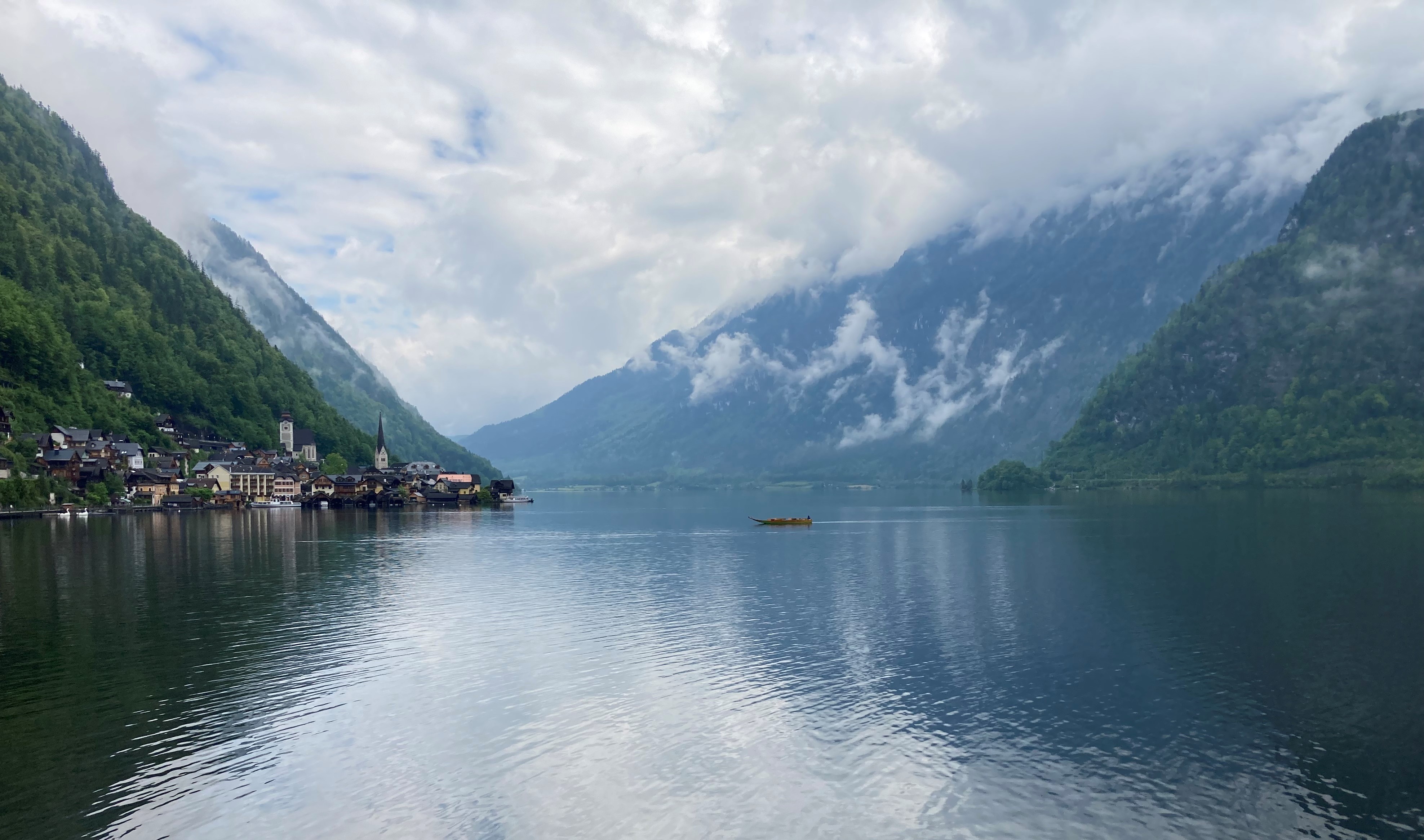
I had forgotten how steep the mountains, how stark the limestone cliffs, how sparkling the lake. Yes, the quaint houses will ever climb that bluff, the iconic church steeple pierce the sky. But as I wandered the single street, climbed the many steps, found the waterfall I knew was there and included in my story, I enjoyed a sense of it I did not have before.

I didn’t rent a car so in Ireland I picked bases from where I could take tours or just go on my own by bus or train. I started with eight nights in Dublin. Then to Limerick for five nights. And a five-night return to the heart of my story, Rosscarbery, staying at the Rosalithir B&B with my wonderful hosts Catherine and Finbarr O’Sullivan. My third visit with them. The last visit in 2018 had been much too short and left me with critical questions on the setting. The new visit would answer questions I didn’t even know I had. A vital visit for understanding the lay of the land. And the water. The beach.

This was the rugged eastern headland I needed for one of my stories. Golden Eagle Bay in the world of my characters was broader than I thought on my brief stop in 2018. It took me several walks, especially over the newly improved Cliff Walk on the western headland to figure it out. From there I looked back and the setting became quite clear, the revisions I would have to make.

It was moments like this that I confirmed my need for this trip. Yes, it was time to travel again. Yes, I wanted to revisit these special places, but with that discovery and more I found answers to questions I hadn’t thought to ask.

In the next several blog posts I’ll share the journey–from Dublin to Salzburg, Austria, where I stayed a couple of nights on either side of my Hallstatt excursion because of its access to an airport. A lovely spot itself where I stayed in an amazing 17th century seminary converted into a hotel. The adjoining church even had a domed roof.

I’ll add the posts to the new “Going There” list on the sidebar as I publish each one.

Thinking of Ireland

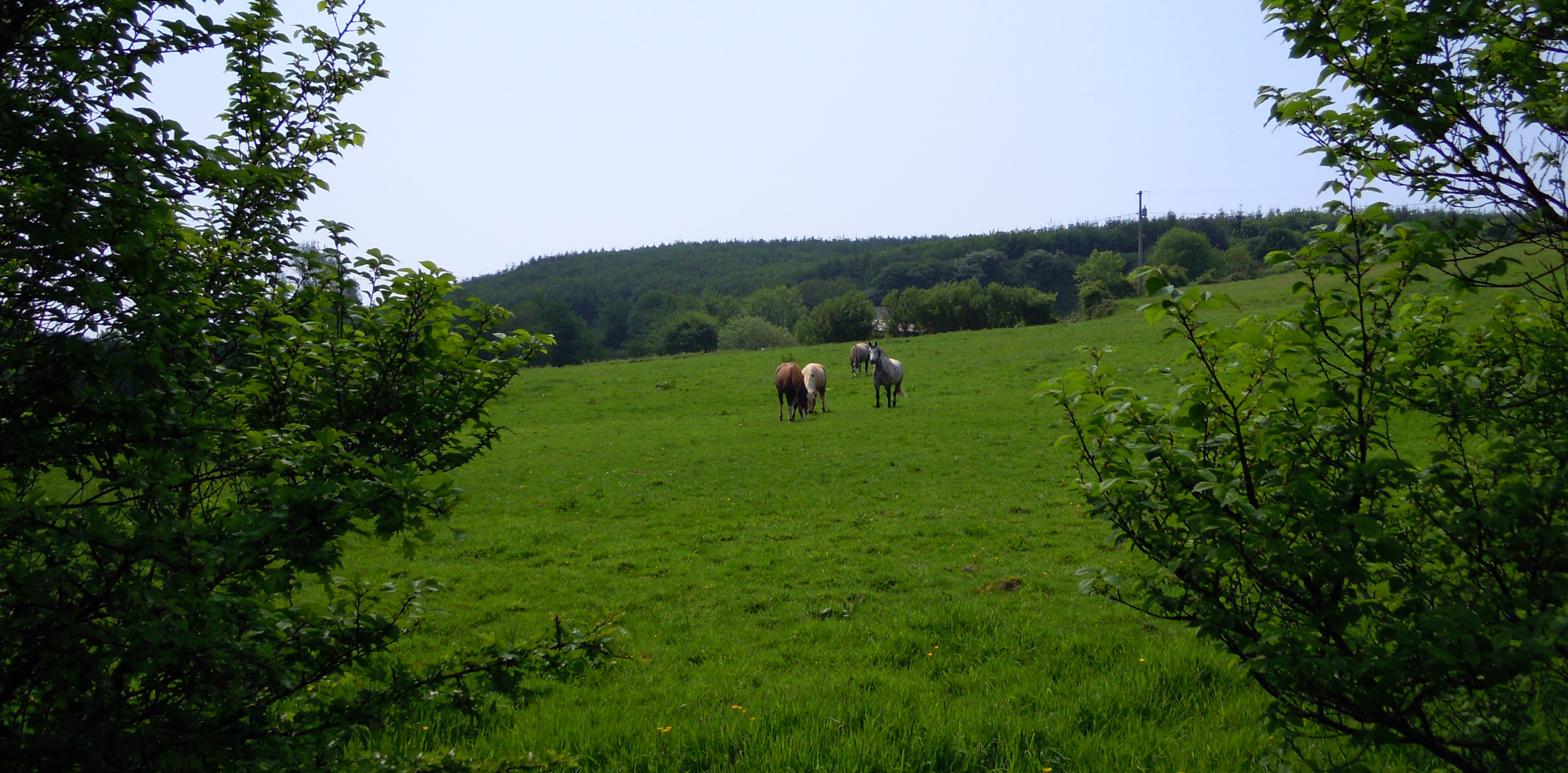
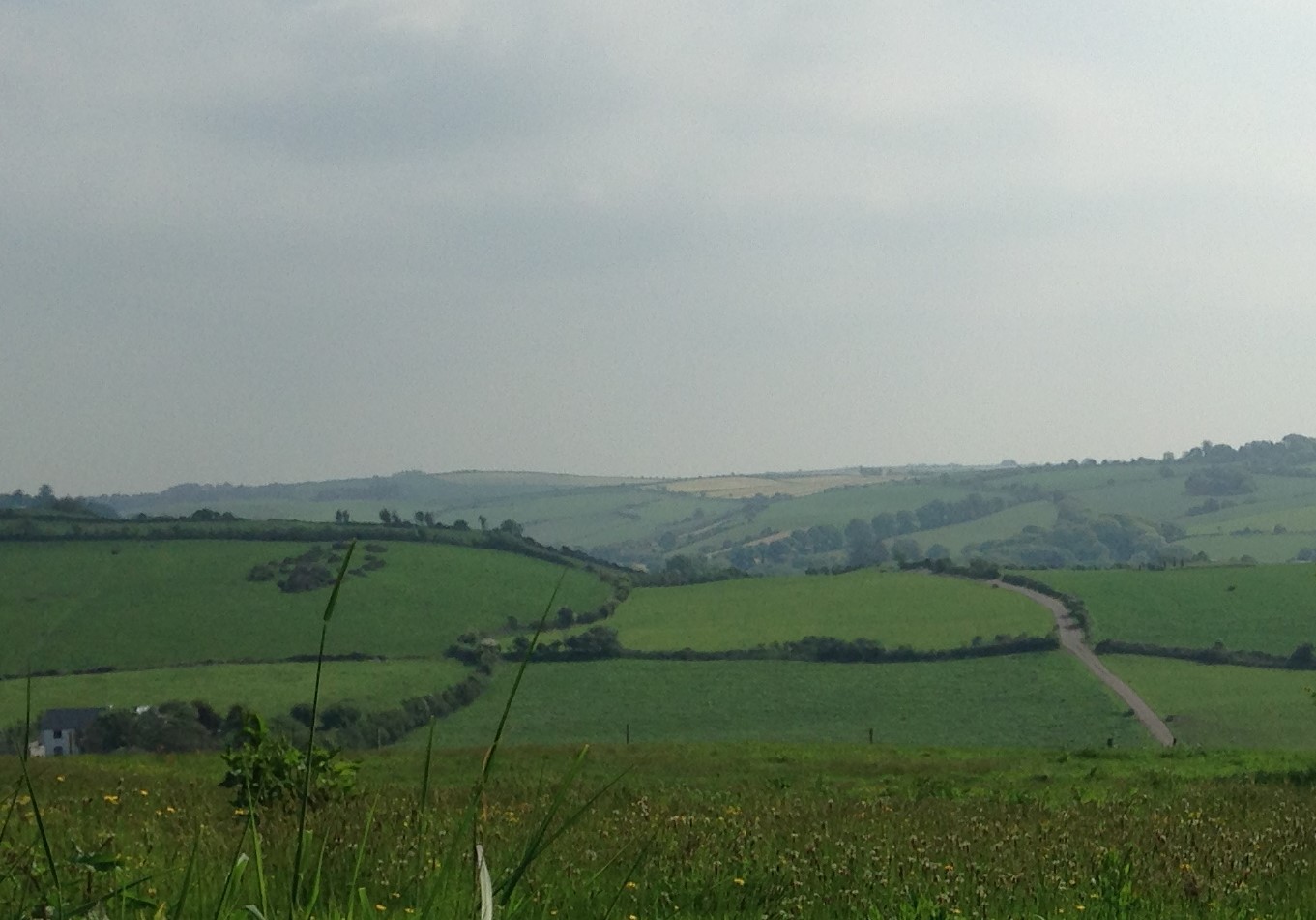
As drought dries the landscape of my Oregon home, turning the green to gold, I dream of the green fields of Ireland.

Horses in Ireland’s green fields

One day soon I hope to revisit the magic of Ireland. Meanwhile my books take me there.

My upcoming book series features two island settings–Ireland and Crete. For some time I have started this ancient historical saga in Crete, but I’m bringing Ireland forward now with Whisper of Wings as the opening book, where they call the place by its old name Éire.

Irish clan leader Bria knew only peace before the slave traders came, but she must now learn the grief of bearing weapons of war to save her People of the Stones. The Éireanns play a role in most of the other stories.

I first visited Ireland because of my Irish roots. My DNA shows at least a trickle of Irish blood. I know my maternal grandparents were both part Irish. That was enough for me to adopt the place.

By the next trip I had learned more about the stone circles scattered over Ireland and had drafted Whisper of Wings. One more trip helped answer new questions that came up as the series grew. I see another Irish book in the future, beyond the series–or loosely tied to it. The island shall always hold a special place in my heart. The green and the friendliness of its people and the magic of its ancient monuments refresh my soul.

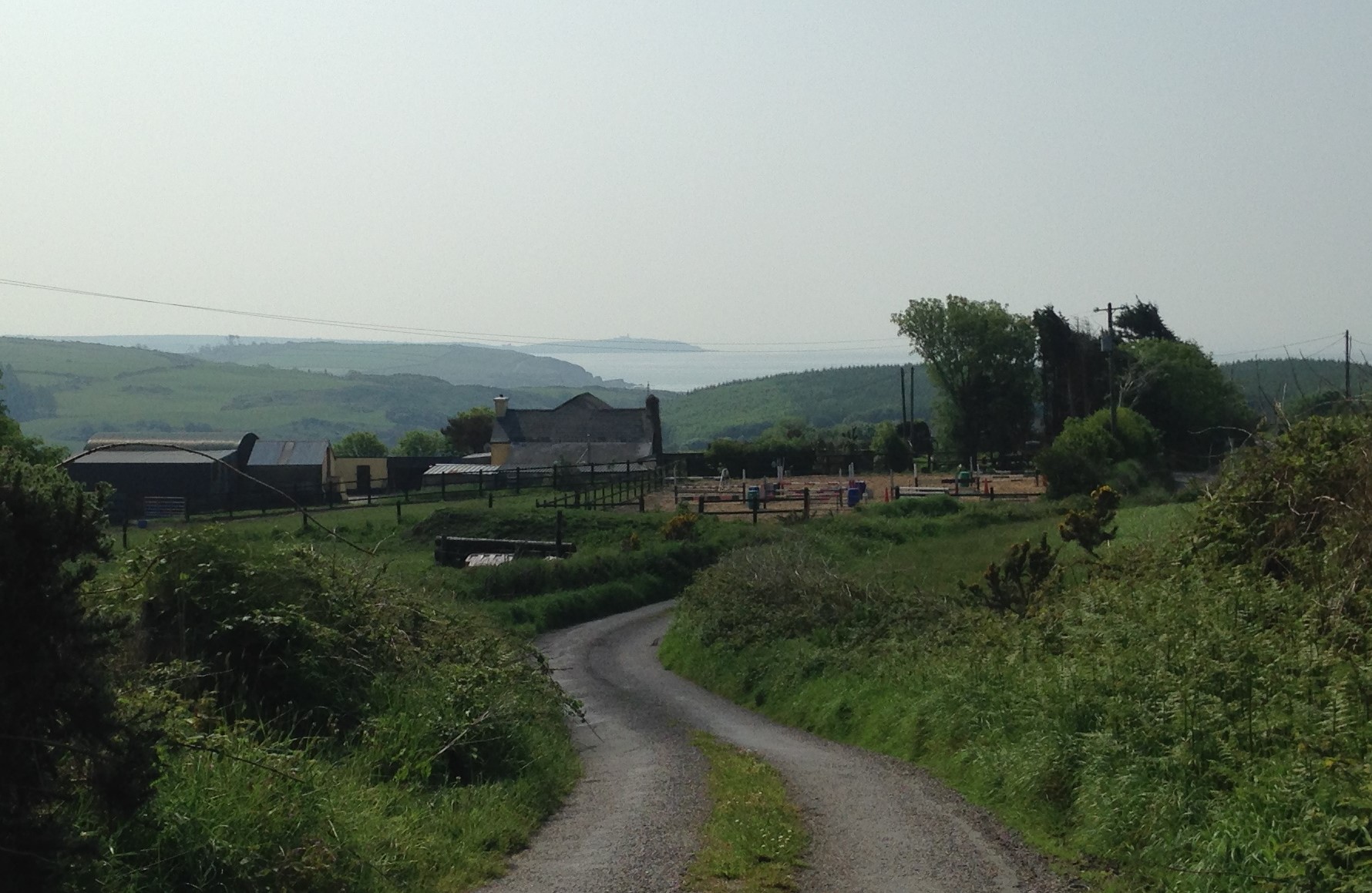
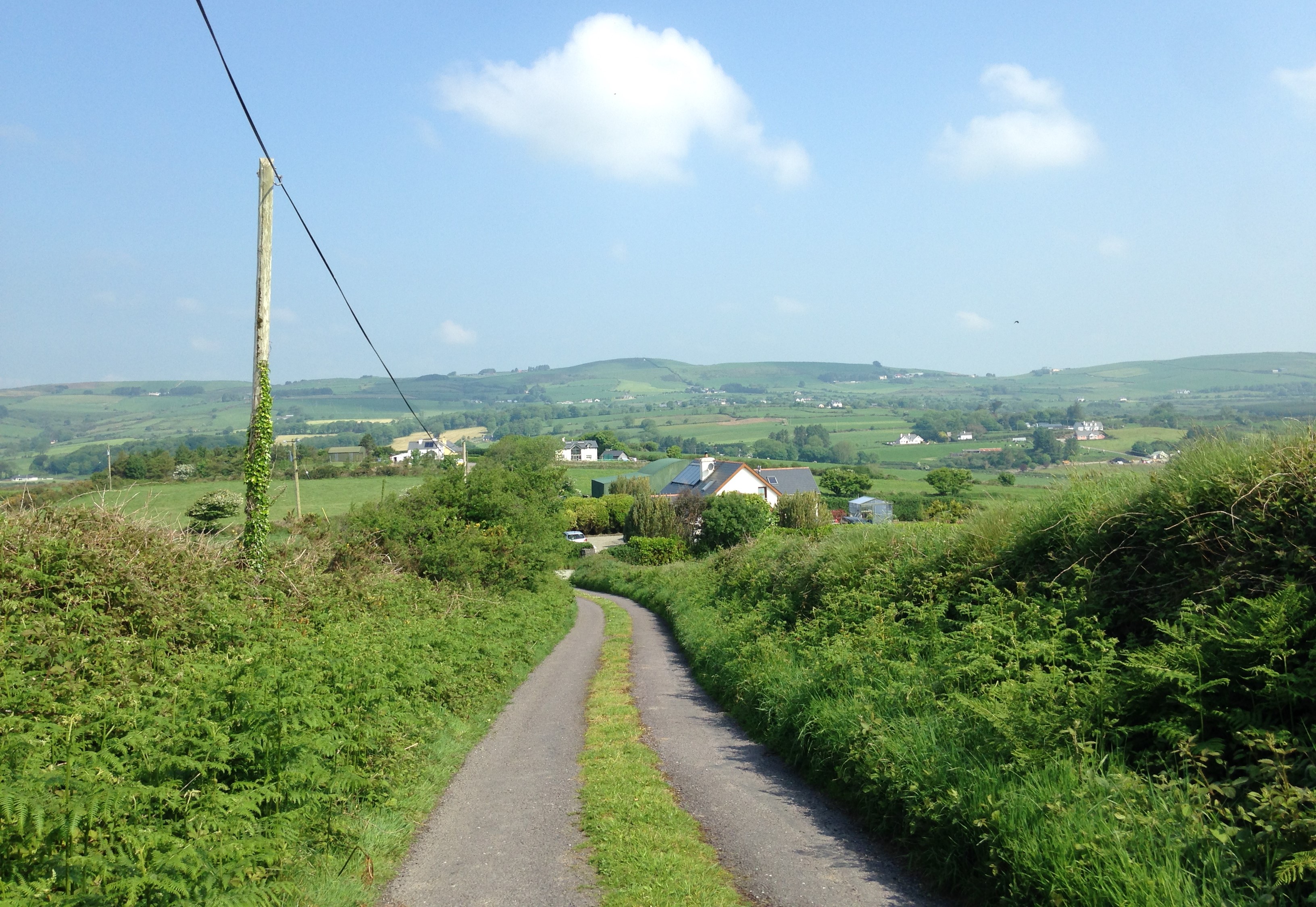
Irish back roads on the way to Bohonagh Stone Circle near Rosscarbery
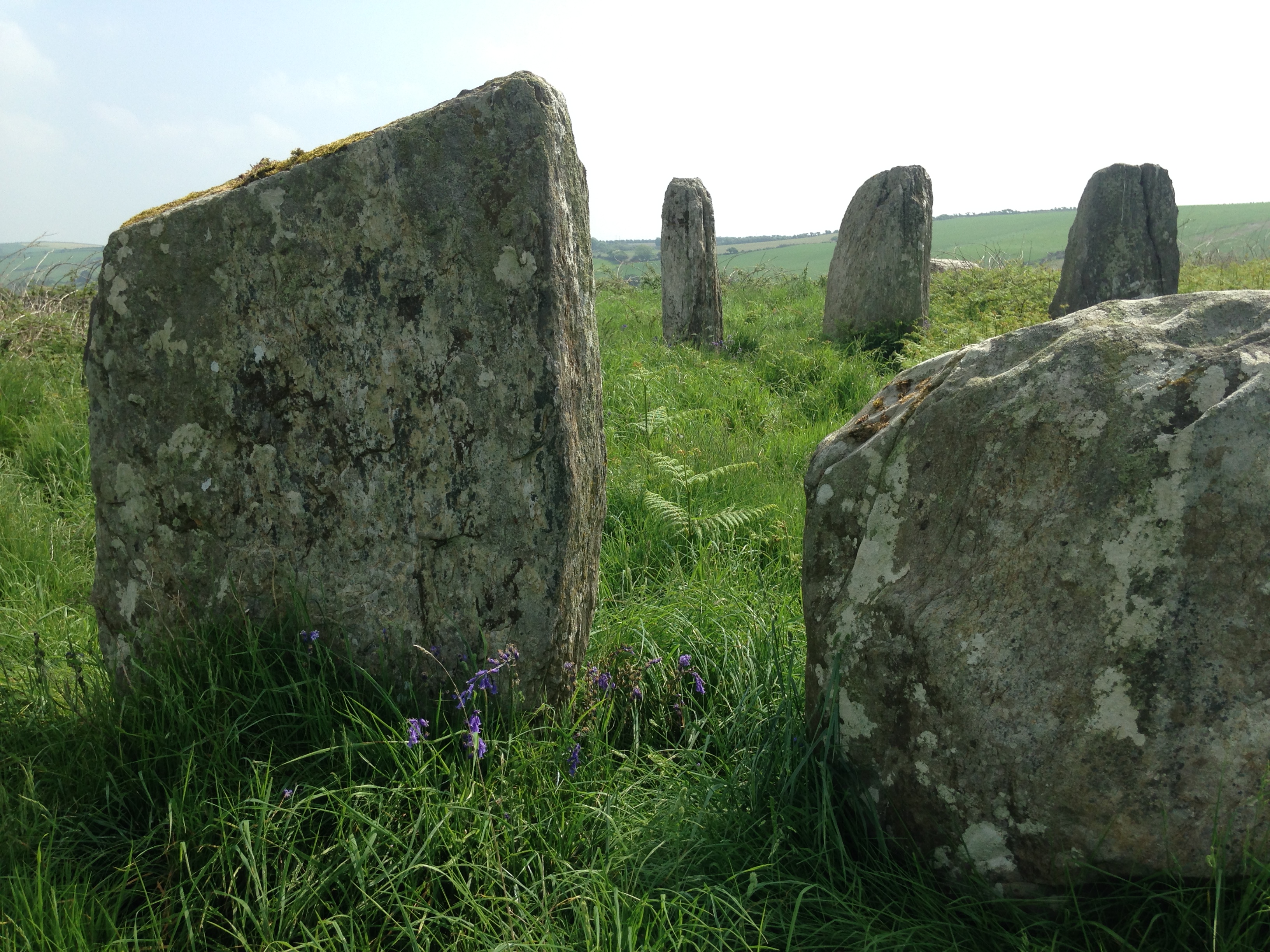
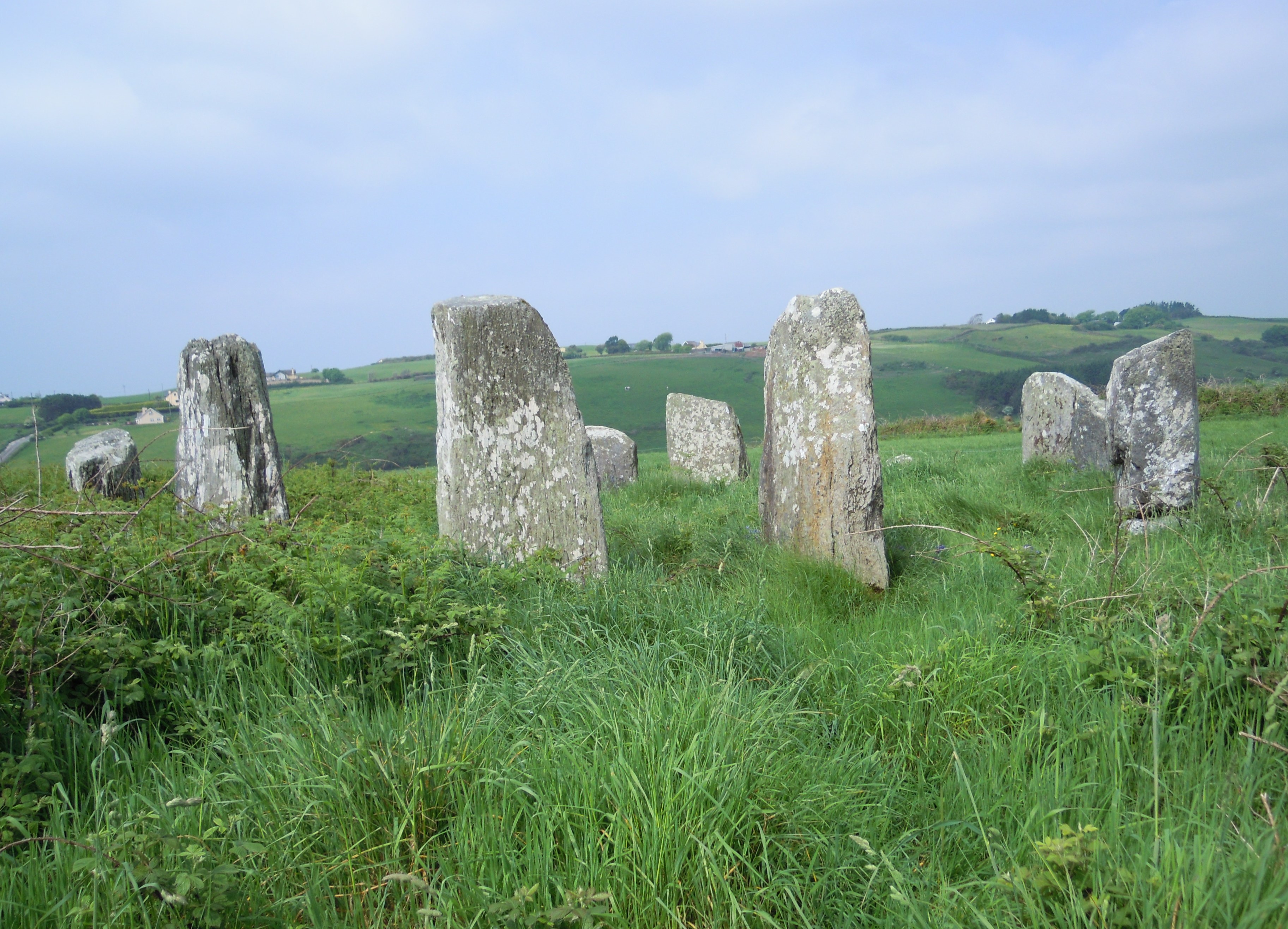
The magic of ancient stones and new spring bluebells at Bohonagh Stone Circle, Ireland

Zambujal Update

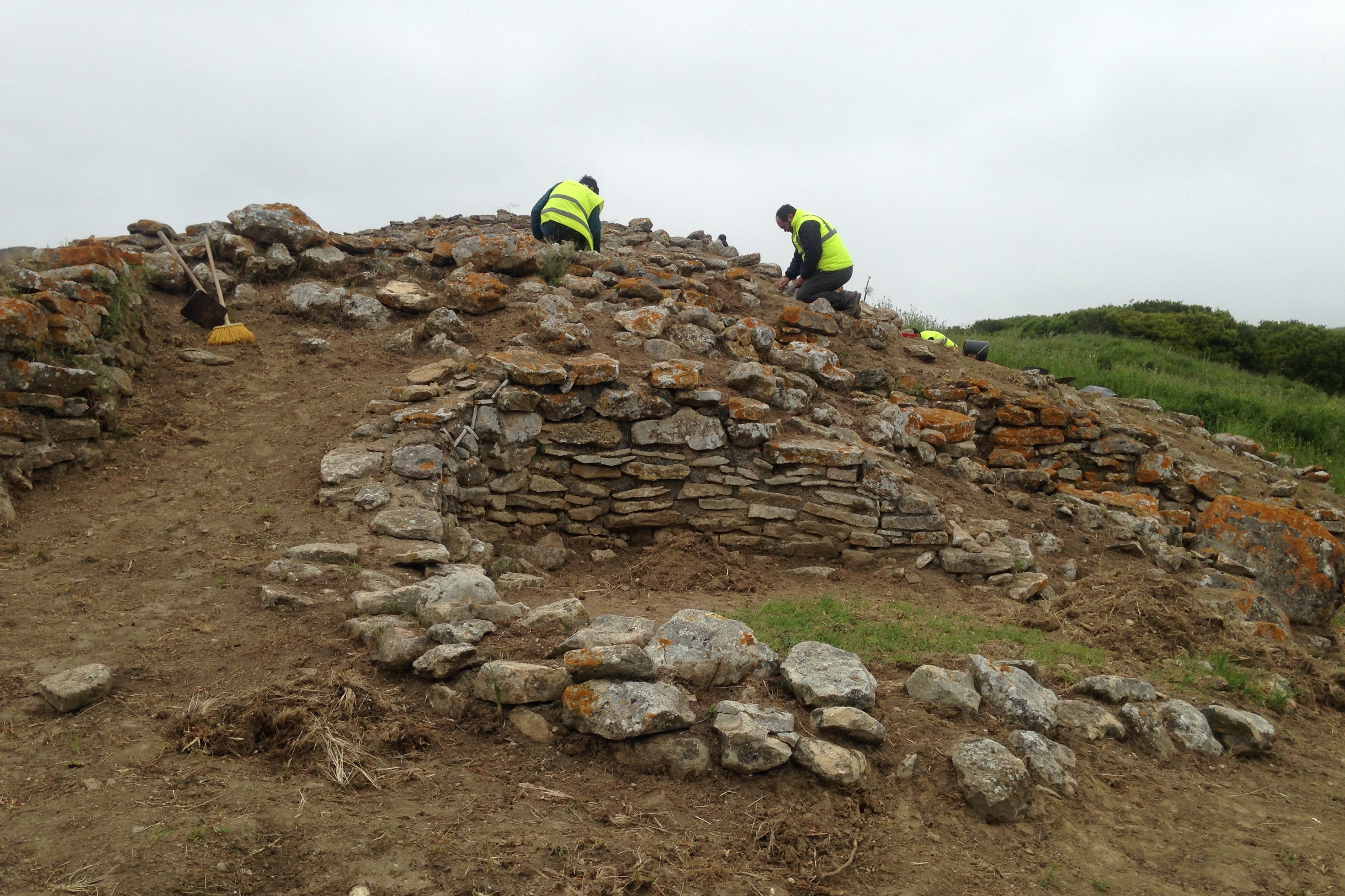
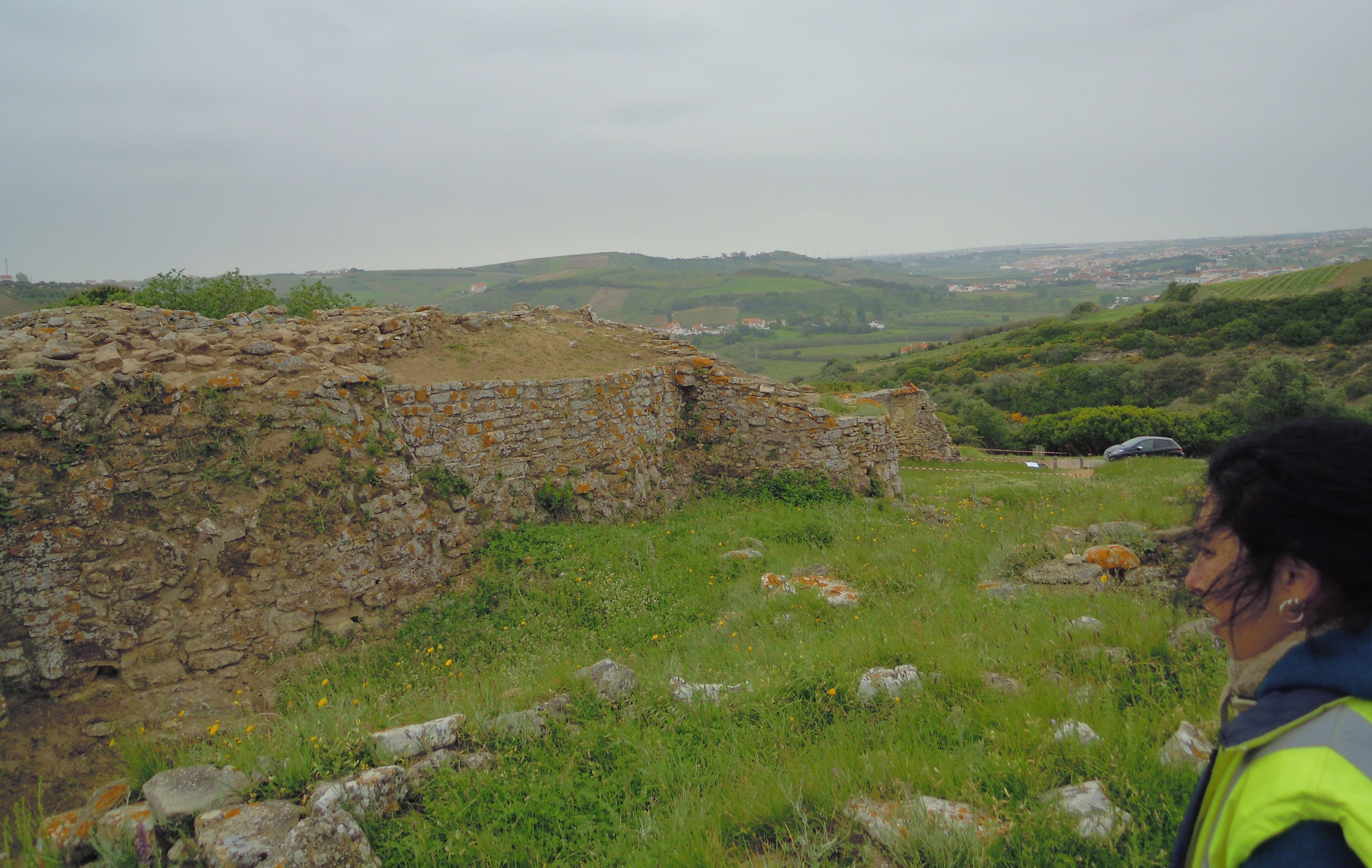
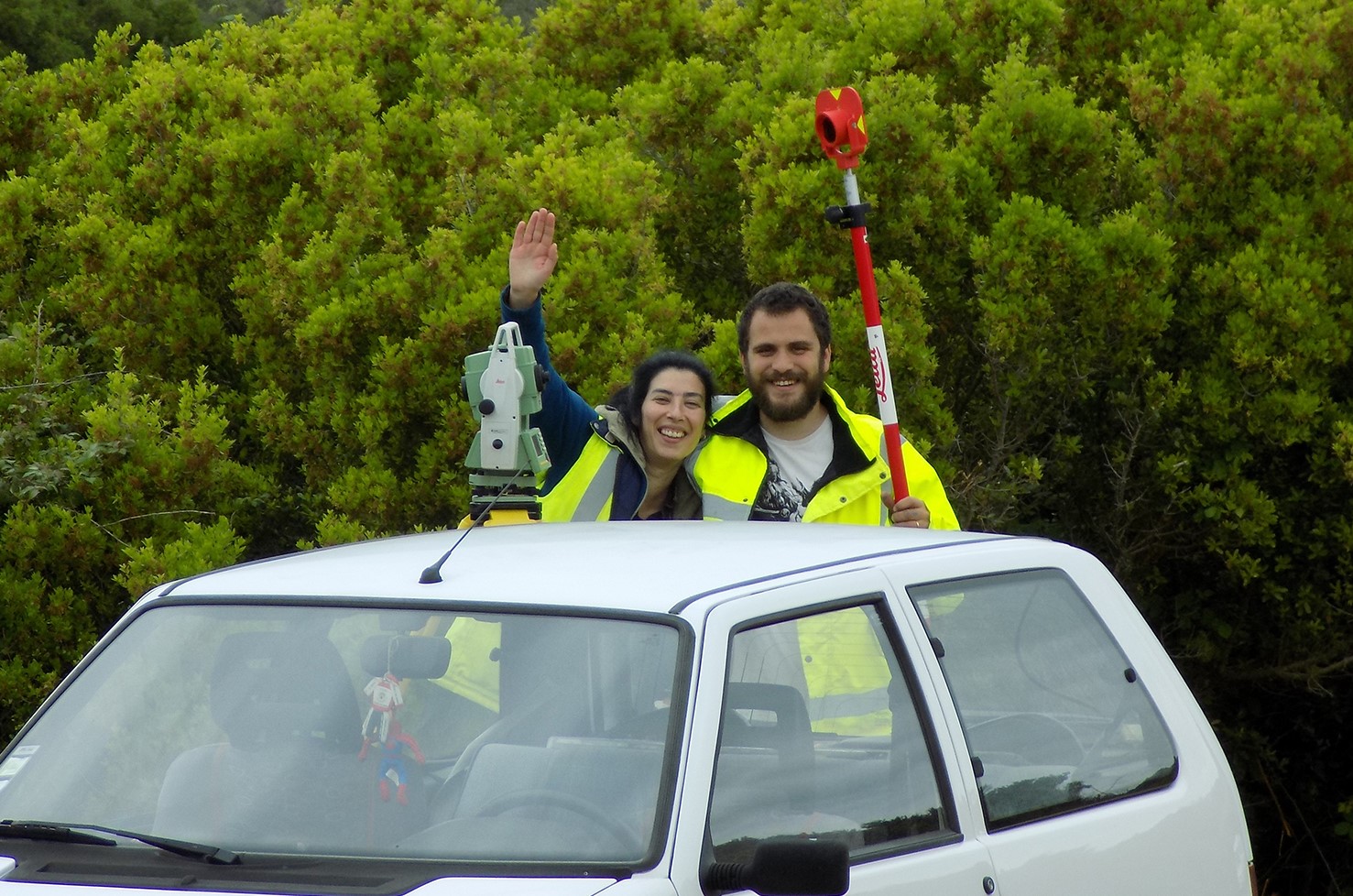
Remember these archaeologists in Portugal digging all that dirt last spring when I visited the ancient Castro do Zambujal, and Sónia Cravo and Fábio Rocha gave me that wonderful tour?

Archaeologists at Zambujal in May 2018

Remember Sónia, head of the project, looking over the site on the day of my May visit, seeing the tremendous amount of work yet to do?

Sónia in May 2018 Overlooks Work Ahead

So that was then.

This is now.

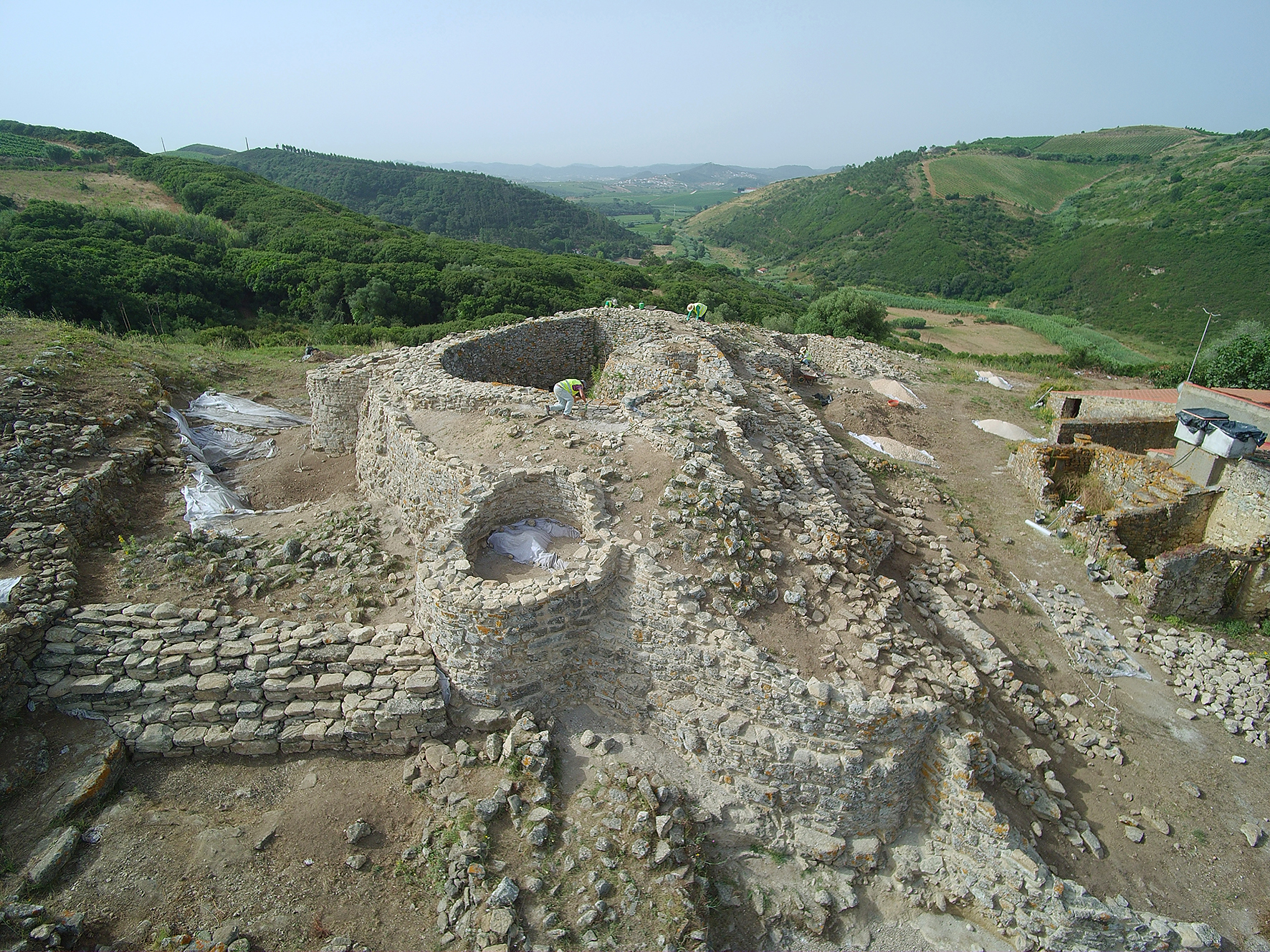
Castro do Zambujal in August 2018. Drone Photo by Fábio.

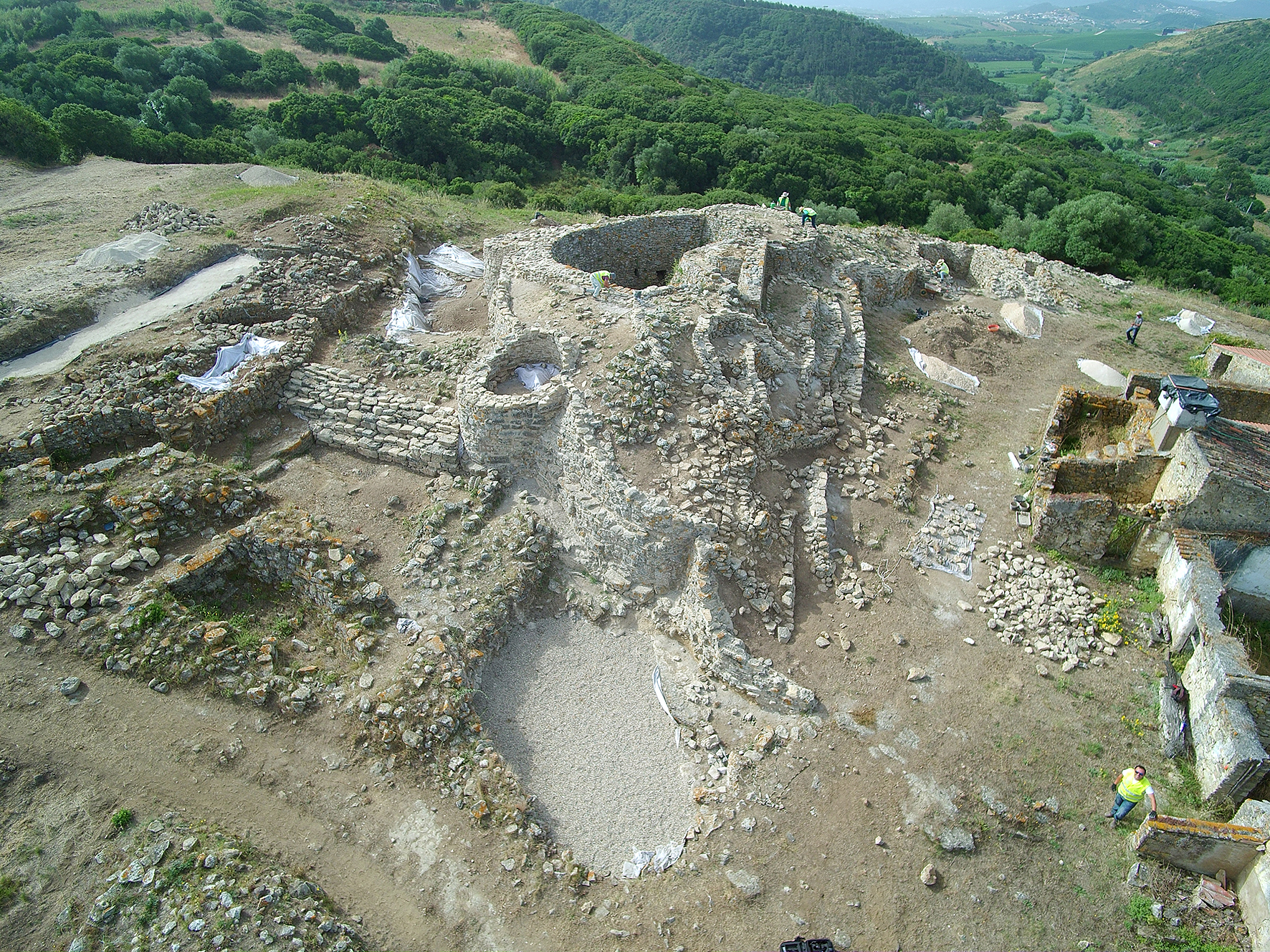
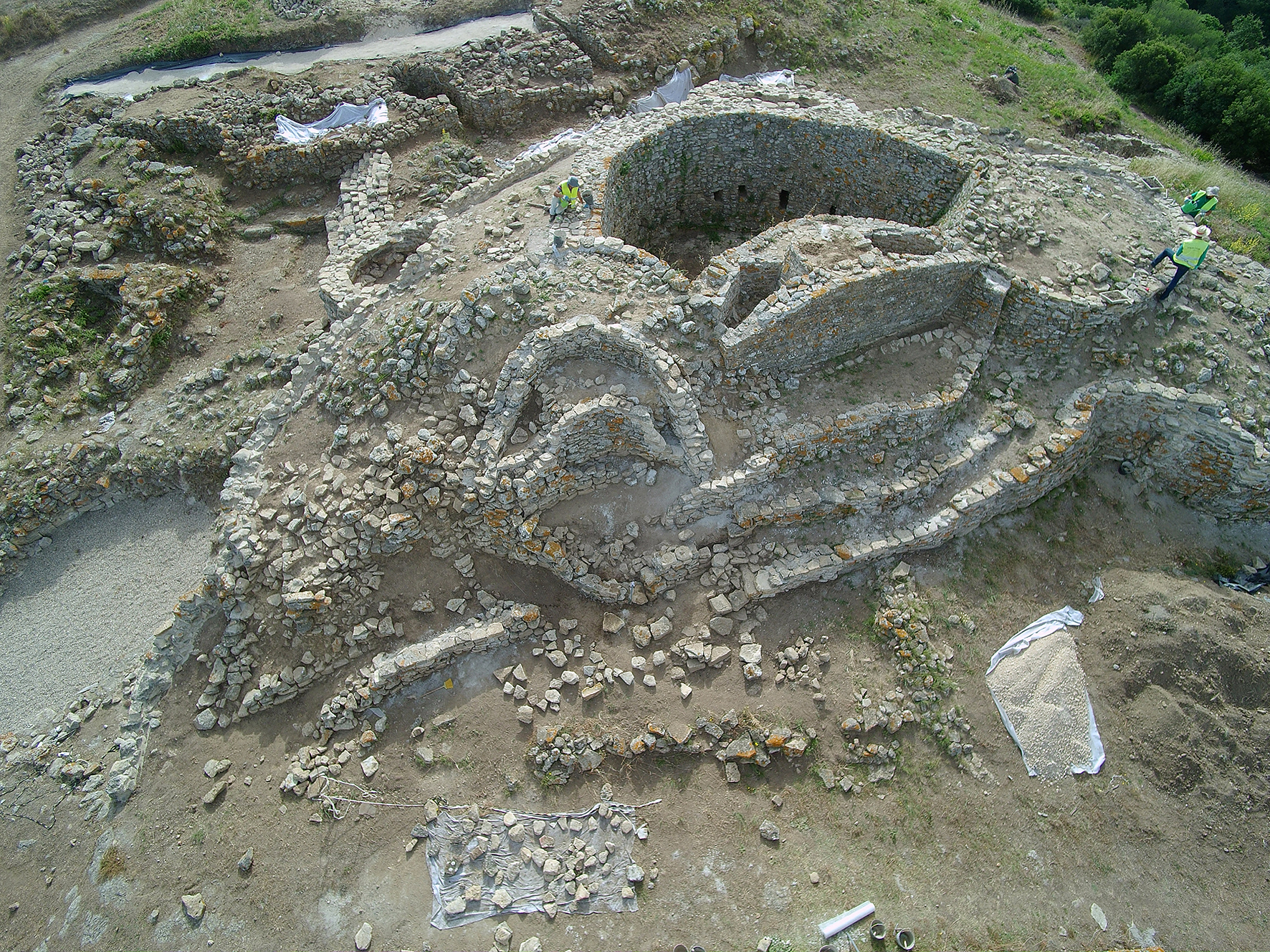
After three months of digging the archaeologists have cleared many loads of dirt to reveal what once lay buried. The citadel seems to rise into a greater semblance of its once-powerful position above the rolling hills near the western coast of the Iberian peninsula. Sónia sent me three photos taken this month by Fábio, for which he used a drone to get some perspective above the site, the photo above and two more below.

Castro do Zambujal in August 2018. Drone Photo by Fábio.

Castro do Zambujal in August 2018. Drone Photo by Fábio.

In these new photos I can see places I walked and more walls I wasn’t aware of. This helps me get a better idea of the configuration of this citadel that plays a significant role in part of my upcoming series. And look how clean the rocks are compared to the May photos. It’s a painstaking process, digging carefully, always alert to what might be found in the next scoop of dirt. They’re still working on it. But they have made impressive progress. What a change!

Sónia also sent a photo of the two of them happily waving. When I visited in May I couldn’t help noticing the camaraderie among the people working on the project. The story of my thrilling May visit is here.

Zambujal Archaeologists Sónia Cravo and Fábio Rocha

I so appreciate Sónia and Fábio sharing these new photos with me and their readiness to answer questions that come up. As I work through my revisions I’m sure questions will arise and it’s good to know I have such friendly sources ready to help me.

Going There: Postscript

We flew out of Shannon airport on our homeward-bound journey. Lynn and I had bought our tickets separately so we weren’t seated together. For the Shannon-Philadelphia leg of the trip I took my seat by the window and a couple of young Irishmen sat beside me. They were on their way to San Francisco, a place where I had lived for eight years. So as the plane lifted off I left their world as they looked forward to visiting mine. They had both just turned 21. Their boisterous excitement was infectious and I laughed with them, caught in their delight.

Me with Irish Travelers Stephen Kelliher (center) and David Harnett (right)

My trip wasn’t quite over. Setbacks awaited me in Los Angeles when our Philadelphia-LA plane landed late in LAX, where we had a short connection. Seated in the very last row, I had trouble getting past the other passengers, and we had long lines and two slow buses across the tarmac to reach my gate. Lynn was well ahead of me.

By the time I found my gate, panting from my run, there were no passengers left, just an attendant standing alone at the gate. She asked me if I was Janet Fisher. Hopeful they were waiting for me, I answered yes in a gasping voice. She phoned the plane and shook her head at me. “They’ve already left. You’re too late.”  No! That couldn’t be. “My friend is already on the plane,” I told her. “I have to be on that plane.”

The phone rang. The pilot had agreed to open the door for me. The plane hadn’t actually pulled away. I broke into tears. The attendant led me to the plane’s door. Once inside, I stumbled down the aisle as passengers applauded with smiling faces. Lynn was beaming and gave me a big hug when I sat down, still crying softly. She had begged them to wait, certain I was coming.

Exhausted, I settled back in the seat for the last leg of our journey, slowly recovering from that arduous finale to a long and wonderful trip—37 days of exploring the world of my ancient series.

Port of Tiryns (Nafplio, Greece)

Outlaw Hideout (Buttermere, Lake District, England)

During those 37 days I became steeped in the past, as I sought the places that define these stories.

Alabaster Chair, Knossos (Crete)

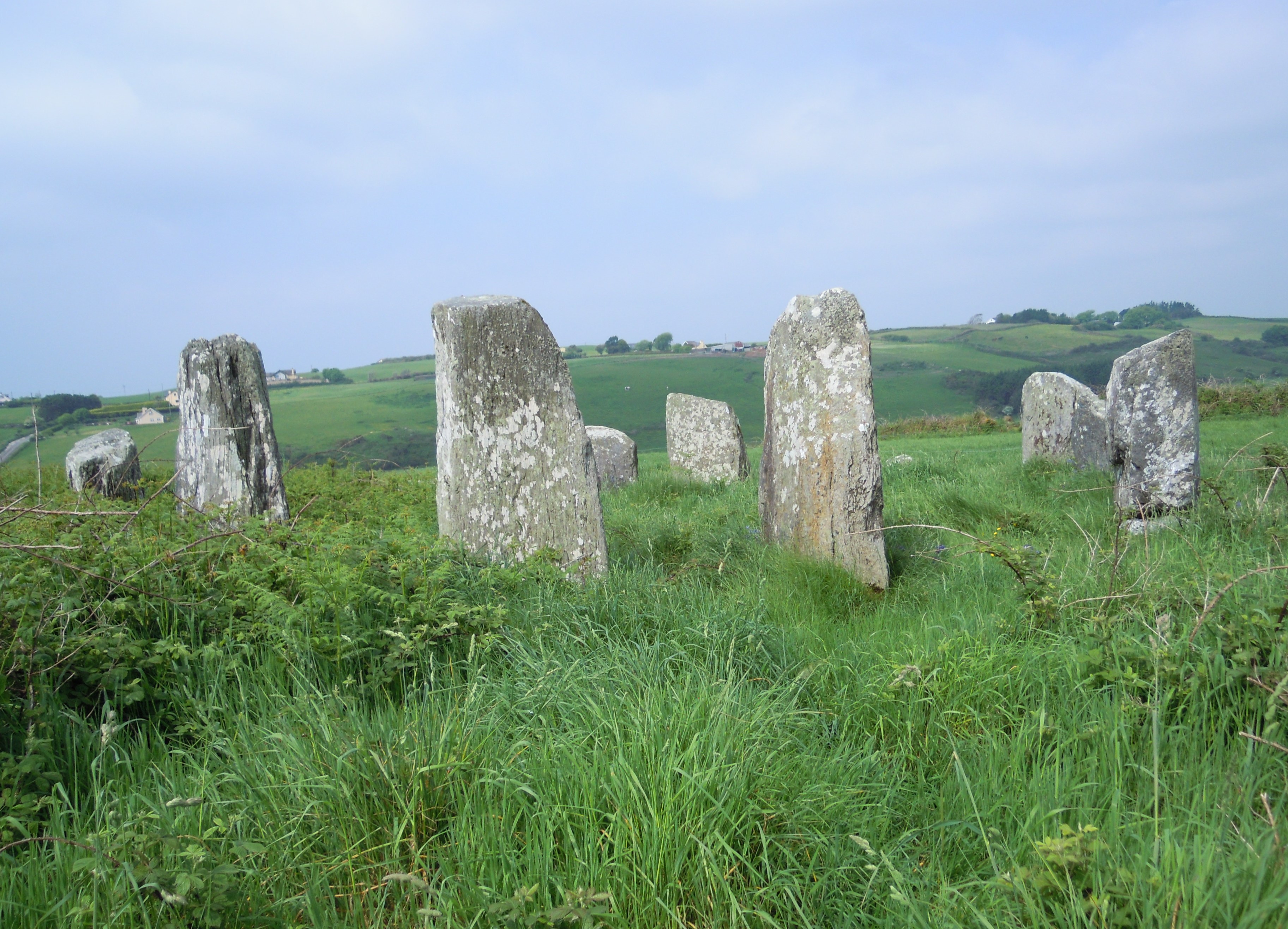
Golden Eagle Circle (Bohonagh, near Rosscarbery, Ireland)

I had the good fortune of meeting several archeologists whose work takes them into the ancient times. And others who simply love their history.

Fábio and Sónia, Archeologists at Zambujal, Unexpected Guides (Portugal)

Mário, Archeologist, Guide on Megalithic Tour at Almendres Cromlech (Portugal)

I felt the raw edge of cultures different from my own and the universal embrace of friendly people.

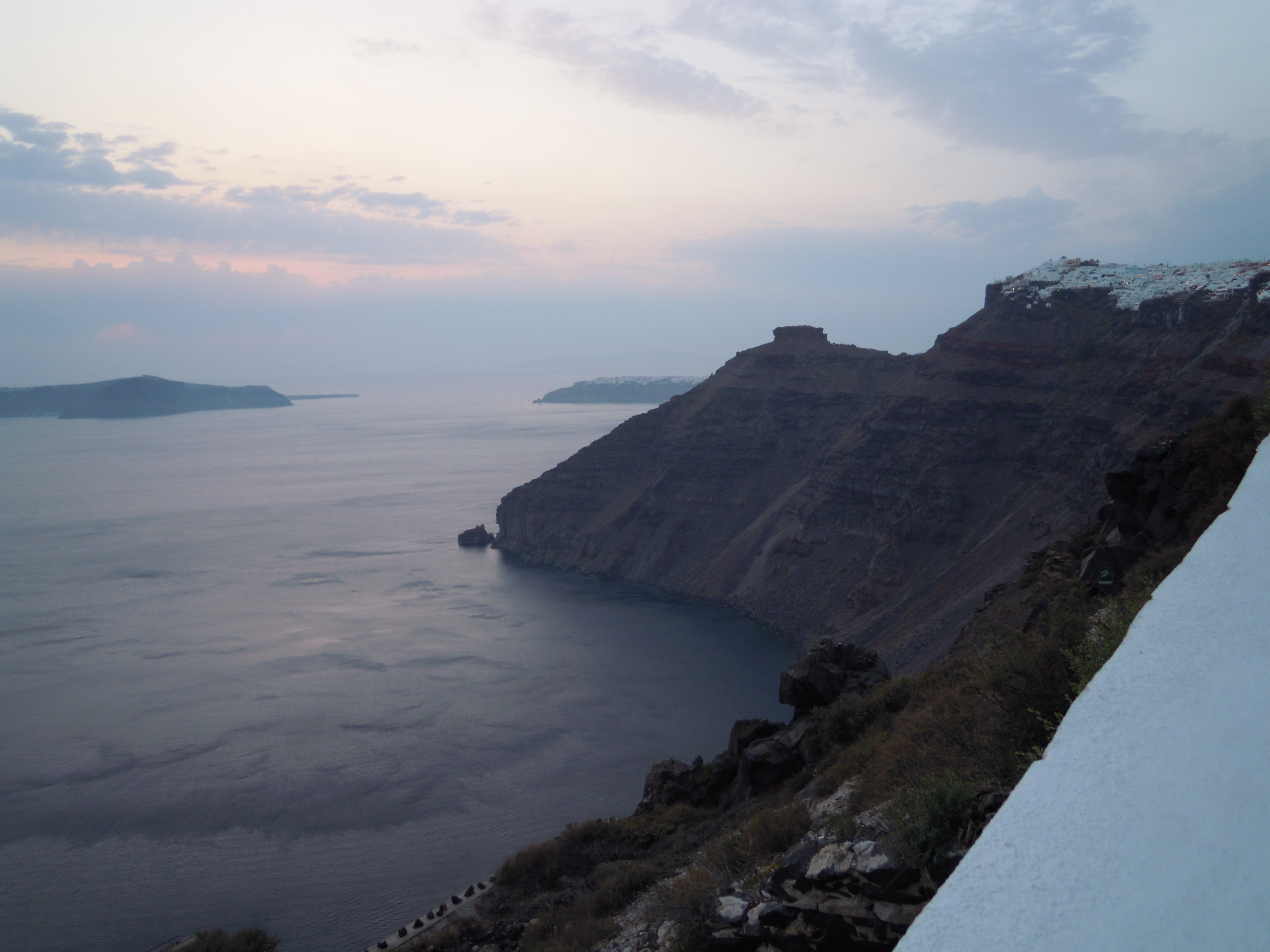
Streets of Fira, Santorini (Greece)

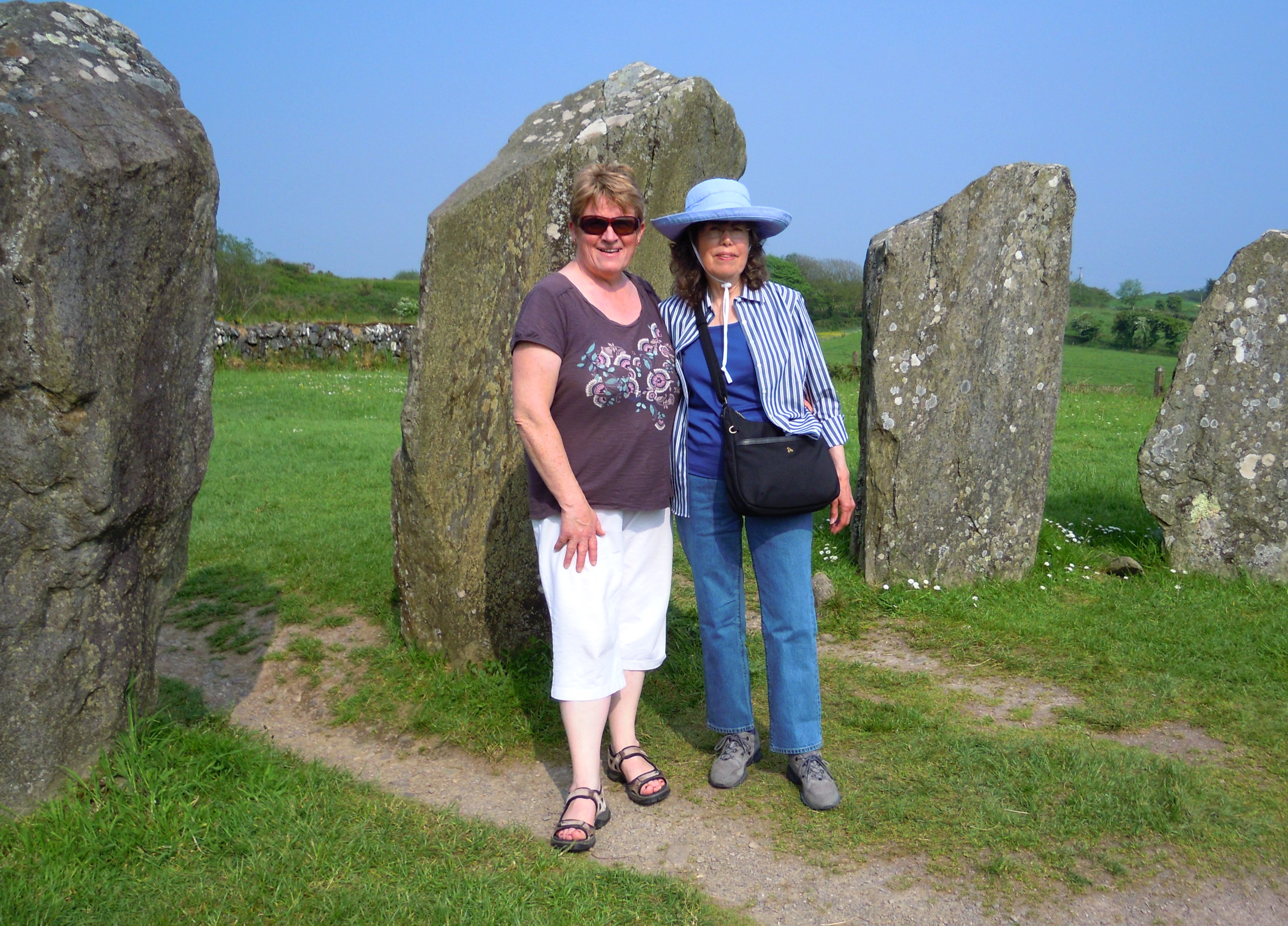
Catherine and Me at Drombeg Circle (near Rosscarbery, Ireland), photo by Lynn

I immersed myself in the book settings and felt my characters walking along these places. As I walked with them I remembered their tears and joys. My own tears came, and my joy.

Headland at Fodhele Beach (Crete, Greece)

Santorini Evening (Greece)

The novels will be richer for the experience.

Going There #12: Heart of an Irish Story

If my visit to Knossos in Crete felt like being home because of all the days I lived there in my mind while working on my first story in the ancient series, my return to Ireland felt like returning to another home of the mind. Ireland becomes significant to the Cretans as they seek another place of peace in the world.

Land of my Story’s Clan

The last time I traveled to Ireland I stayed a month there with my late friend Tilly Engholm. She and I spent six days on the island’s south coast at the small town of Rosscarbery, the central location for the Irish/Éireann characters in the series. The fictional village of my Golden Eagle Clan sets just below the stone circle now called Bohonagh Circle, an easy walk from the Rosalithir B&B where we stayed. This wonderful B&B hosted by Catherine and Finbarr O’Sullivan is one of the friendliest places I’ve visited in all my many travels.

Of course I had to return and wanted to introduce my writer friend Lynn Ash who was traveling with me on this part of my current trip.

Since the last visit to Ireland I had drafted more books which took my characters to places I’d never seen. The treks through Portugal and the UK gave me a good look at many of those, but I also had a few new scenes in Ireland in places I hadn’t been.

Before traveling to Rosscarbery I wanted to spend a little time at a location closer to the new settings and chose the historic village of Adare near Limerick.

Shop in Adare, Ireland

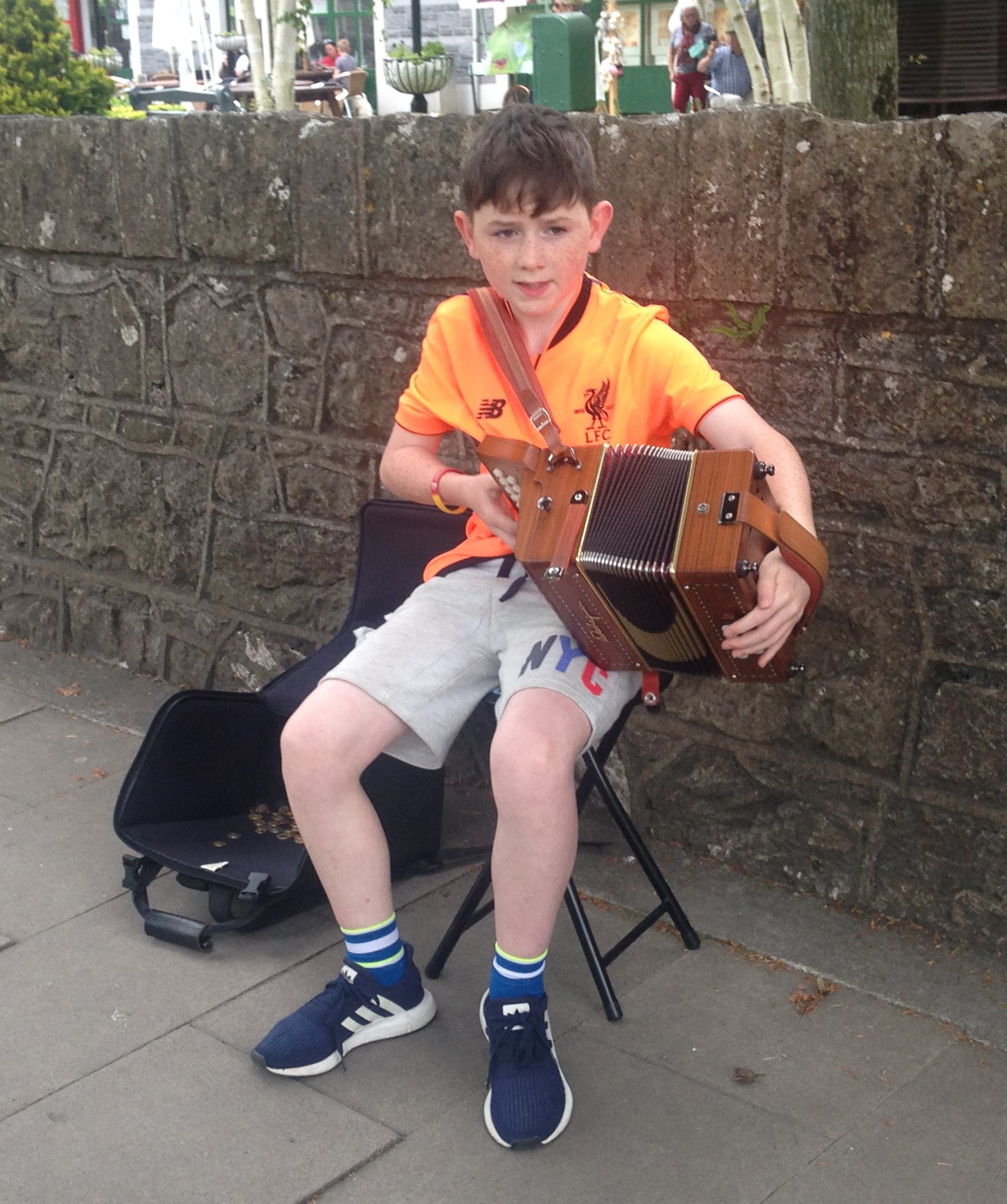
It’s a charming place with thatch-roofed cottages and a crumbling castle, a lovely river walk, and entertainment by a terrific young Irish musician.

Musician at Adare, Ireland

The tourists have found it, but we got a quiet B&B on the outer edge, with a country setting and lovely breakfasts, the Carrigane House.

We stayed three nights to explore the area. I found my beautiful green fields for a big battle scene and the treacherous ford across the River Shannon at Limerick.

(I later found reference in a blog post by Irish waterway historian Brian Goggin that there was likely a more passable ford across the River Shannon about ten miles north of Limerick near O’Briensbridge. He kindly responded to my email to confirm there was probably an ancient ford just below the bridge. Brian had helped me before with information on the River Barrow which figured in scenes for a previous book in the series.)

On one of the three days at Adare I used my bus pass to ramble down to Kilrush on the Shannon and check out another scene, enjoying a stroll to the marina and a tasty salmon lunch at Crotty’s Pub.

We found pub food to be reasonable and delicious. In Adare we had to have at least one meal at the famous Blue Door with its fine thatched roof.

The Blue Door, Adare, Ireland

From Adare we took the bus to Rosscarbery with a bus stop at Cork City where we watched the beautiful island clouds rise over this intriguing city.

Waiting at the Cork City Bus Station

Catherine at the Rosalithir B&B welcomed us with open arms as I knew she would. The B&B is on a working farm just outside Rosscarbery. They raise fine purebred beef cattle now, having switched from the dairy cattle they had on my last visit. Lynn and I booked only two nights with them, one full day. It wasn’t nearly enough, but we would do what we could.

From the upstairs deck of the house we looked out over the yard to the surrounding farms. Haze screened our view of the sea in the gap. Note the old stone fence on the far side of the road.

Country View from Rosalithir B&B

Anxious to see the stone circle so central to my stories, I headed out with Lynn in the morning. Catherine told us about a walk to the circle I hadn’t taken before–a lovely hill walk over green patchwork fields with views back to the B&B and forward to the ocean. If you can zoom the first photo below you may see the B&B. It’s a pale-pink building with two facing gables in the middle of a wide field in the upper right.

Looking Back
Looking Ahead to the Ocean

My heart pounded as I climbed straight up the slope to Bohonagh Circle–called Golden Eagle Circle by the Éireann characters in the series.

My circle.

The Climb to Golden Eagle Circle

After the huge rings of Almendres Cromlech in Portugal and Castlerigg in England this circle looked small. Bracken and brambles had filled the interior since I last strolled through.

The Home Circle

Bluebells lifted their heads above the competition. I remembered those exquisite flowers blooming among the stones from my visit before.

Bluebells Among the Standing Stones

I made my way into the ring despite the tall growth and took my time, circling the ring to consider each stone. I remembered the rough faces, the cool edges, the warm, the tall pillars with tops beyond my reach, the low, the wide entrance between portal stones I could barely touch at once with my outstretched arms, the slanted tops, the rounded, fat, slim, one slant that matched the slant of the sea gap beyond. Echoes shimmered. Dancing feet pummeling the ground. Voices of pleasure, pain, supplication. Though left to the wildness of winds and other natural forces the circle still seemed to resonate with a subtle power–maybe more so because of the untamed elements.

Here lay the heart of my Irish stories.

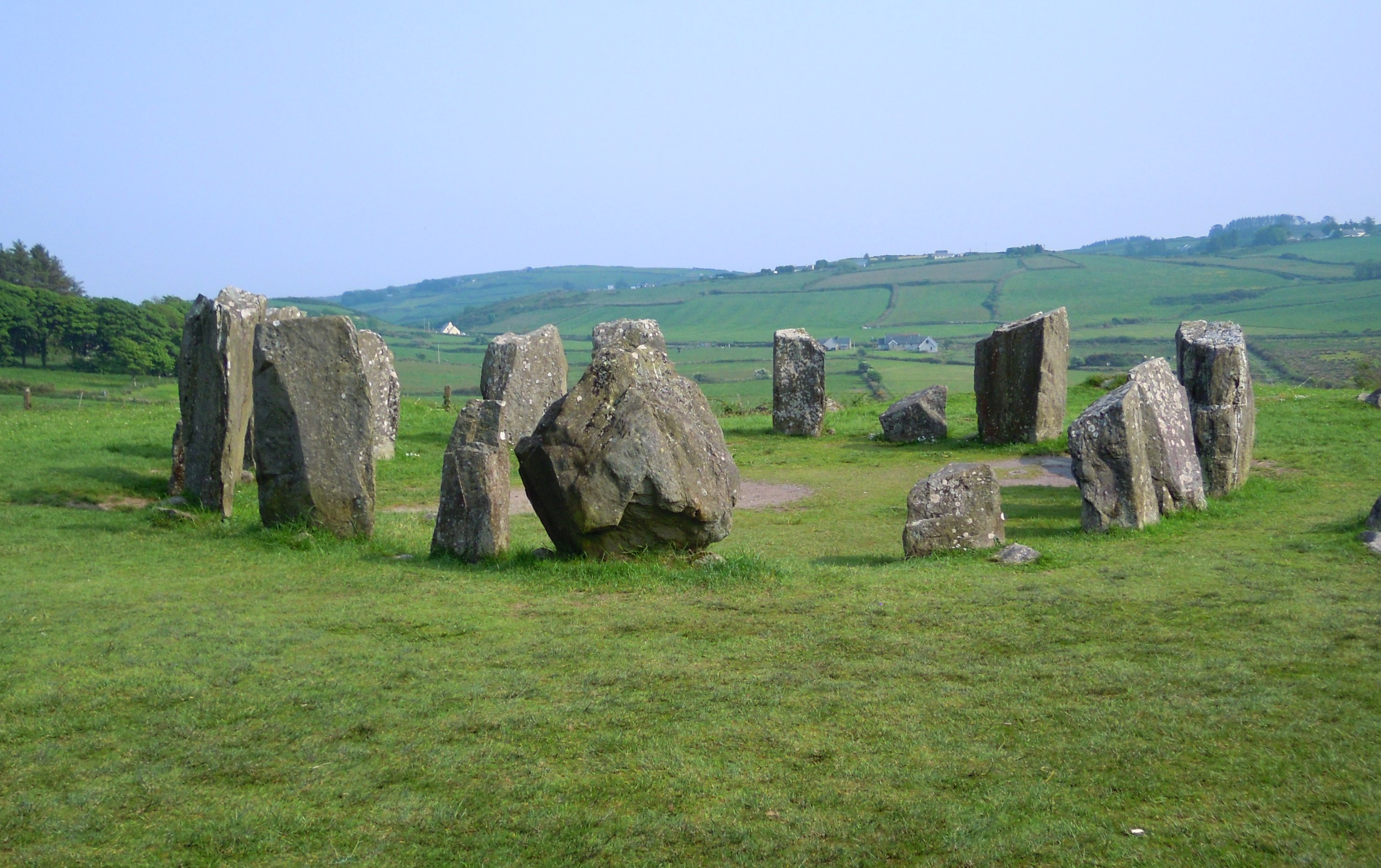
We would visit the better known Drombeg Circle with Catherine. Close to the highway, that one is a National Monument, well maintained by the Commissioners of Public Works for the state.

Catherine and Lynn
Catherine and Me, Photo by Lynn

A sign at the site notes that on the winter solstice the sun sets at a point aligned with the center between the portal stones and the middle of the recumbent stone opposite. In my story this is the village circle of my neighboring Red Deer Village. The circle rests on a bench of land overlooking the broad fields below, the sea lost again in the distant haze. In one of my books the clanspeople of southern Éire face the warriors of Zambujal on those broad fields, and in another a young Red Deer woman faces the wrath of her father. Many scenes there.

Drombeg Circle, My Circle of the Red Deer Clan

We closed our day with a visit to the sea in the softening light. I wanted to revisit Golden Eagle Bay. We drove to the wrong bay first, then found the right one. I hadn’t remembered the shoreline quite right, so the stop helped me form a better sense of place in this important setting. Anguished partings happen here. And poignant reunions.

The wash of the sea brought many memories, like recurring waves.

Golden Eagle Bay

With one last look at this bay below the site of my Golden Eagle Clan village I embraced the scene, feeling enriched by this and so many experiences over the course of my journey. I would hold these places in my mind and heart, hoping to share and let others see and feel the wonder of it all.

NEXT: Postscript

Going There #11: Crossings

The village of Cairnryan sits like a hidden jewel on the southwest coast of Scotland. I had never heard of it before I began searching for a crossing to and from Ireland for the traders in my stories. It became a gem discovered.

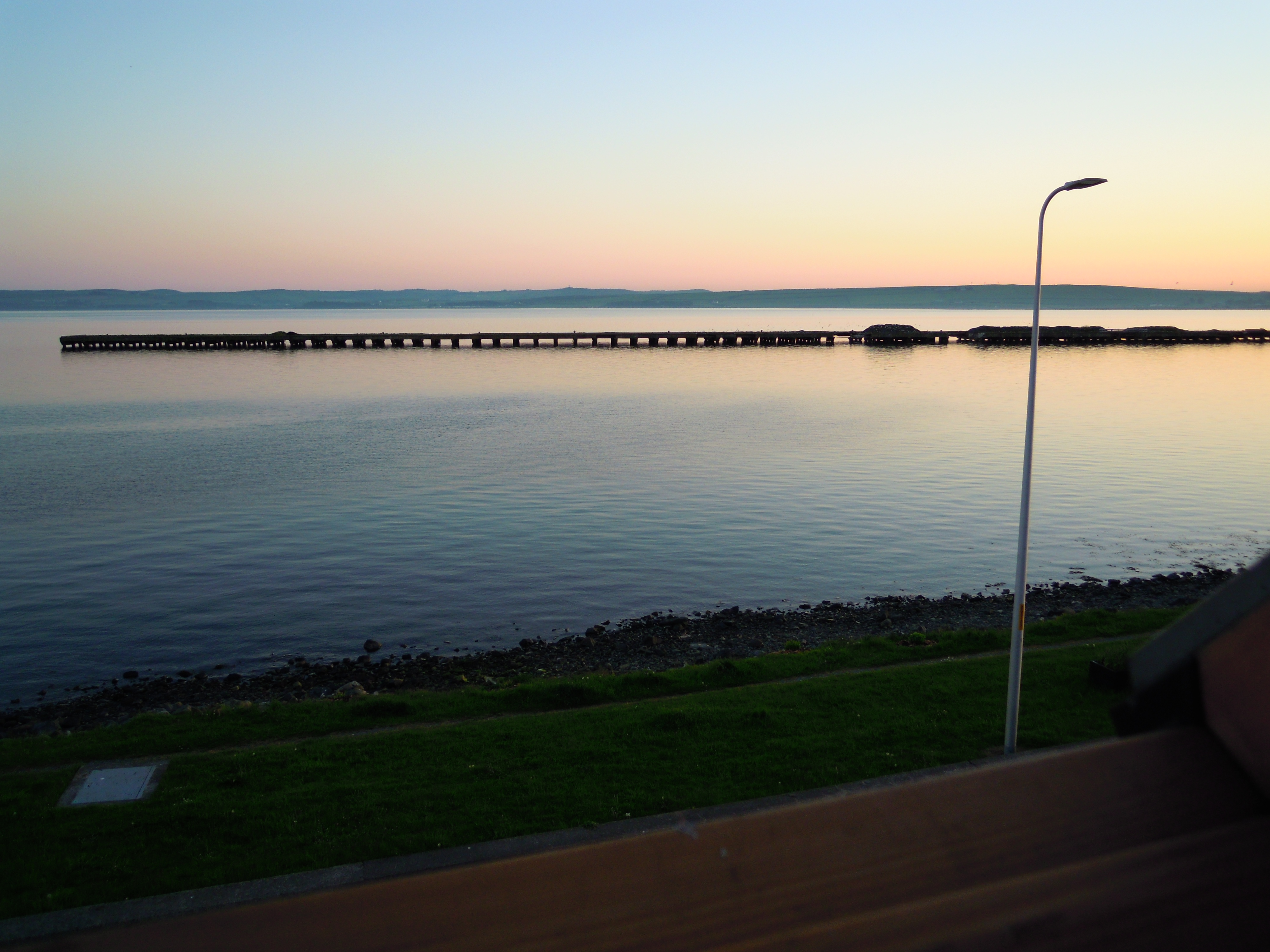
From the Guest House Window at Cairnryan, Scotland

We spent a long time at the window of our guest house that evening, enraptured by the beauty in the fading light at this quiet place.

We hadn’t taken the roads most traveled on this journey. Months earlier when I invited my writer friend Lynn Ash to join me in Amesbury for the last two weeks of my trip, I showed her my itinerary. She found some unfamiliar names on the list, and with a touch of embarrassment I explained that the characters of my books traveled to these places and I needed to see them. Being a fellow writer, she expressed her delight at the unusual destinations. I was glad.

These weren’t tourist spots for me. This was my work.

Stonehenge was familiar of course, and I had chosen it for scenes because of its magnificence and because readers sometimes like to read about popular sites too. I had never heard of the Lake District, although we found it to be a popular retreat for the British.

Once we left the Lake District we ventured into Scotland’s quiet edges, where my protagonist follows a handsome trader into harrowing adventures. The train from Penrith offered a route that got us to the port of Cairnryan where my traders cross–not the straight route my people would take, but the best I found, which brought us to Stranraer, just six miles from The Auld Cairn Guest House we’d booked in Cairnryan. Before we taxied to our guest house we stopped at a pub in Stranraer where I had one of my best fish and chips meals ever, with haddock. Fantastic!

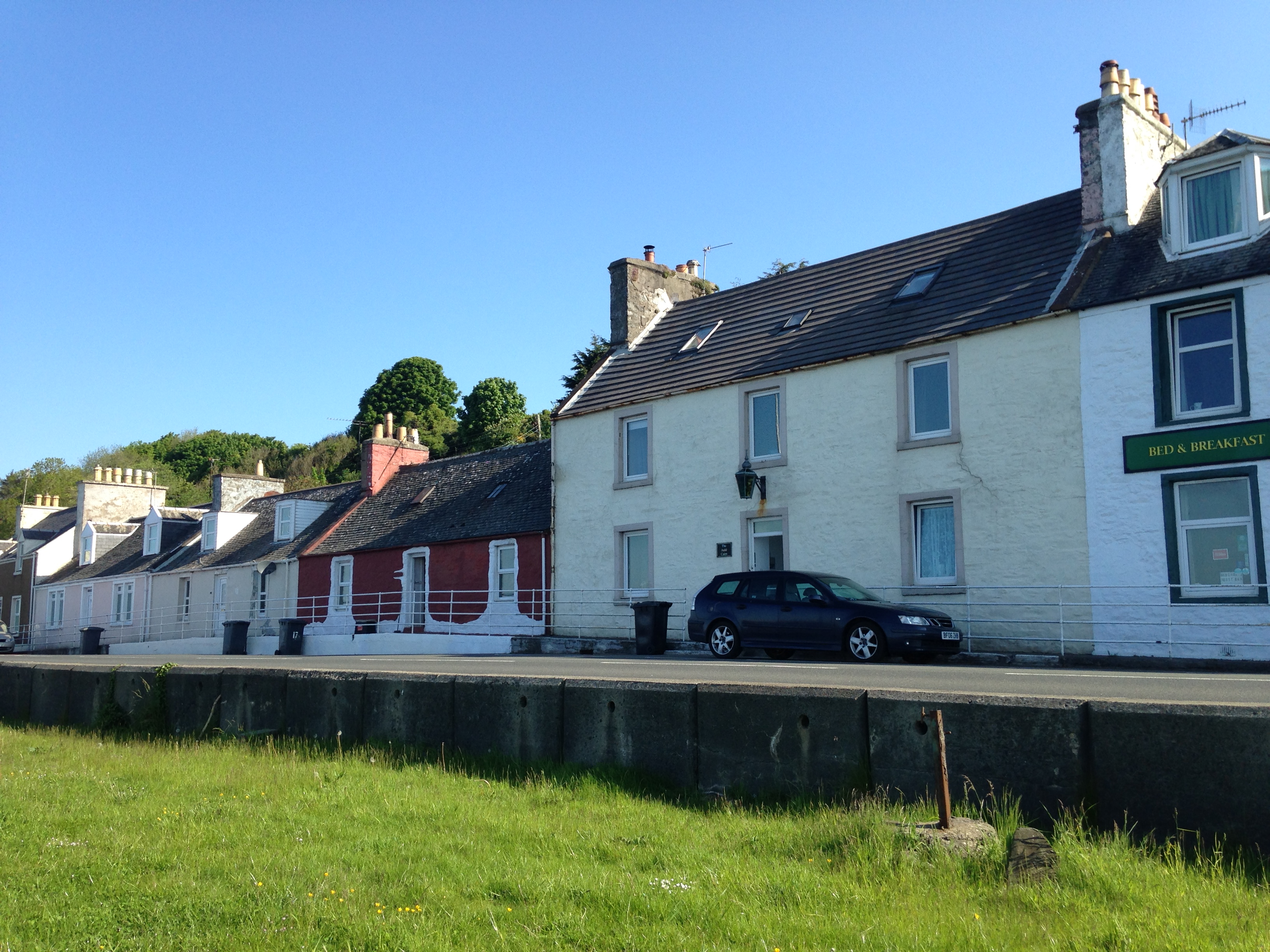
The Auld Cairn, Cairnryan, Scotland

The Auld Cairn was a delightful place. It’s the building in the picture above with the car in front, one of a line of houses that rims the coast. Our host Maggie had lots of stories to tell. We woke to a bright morning.

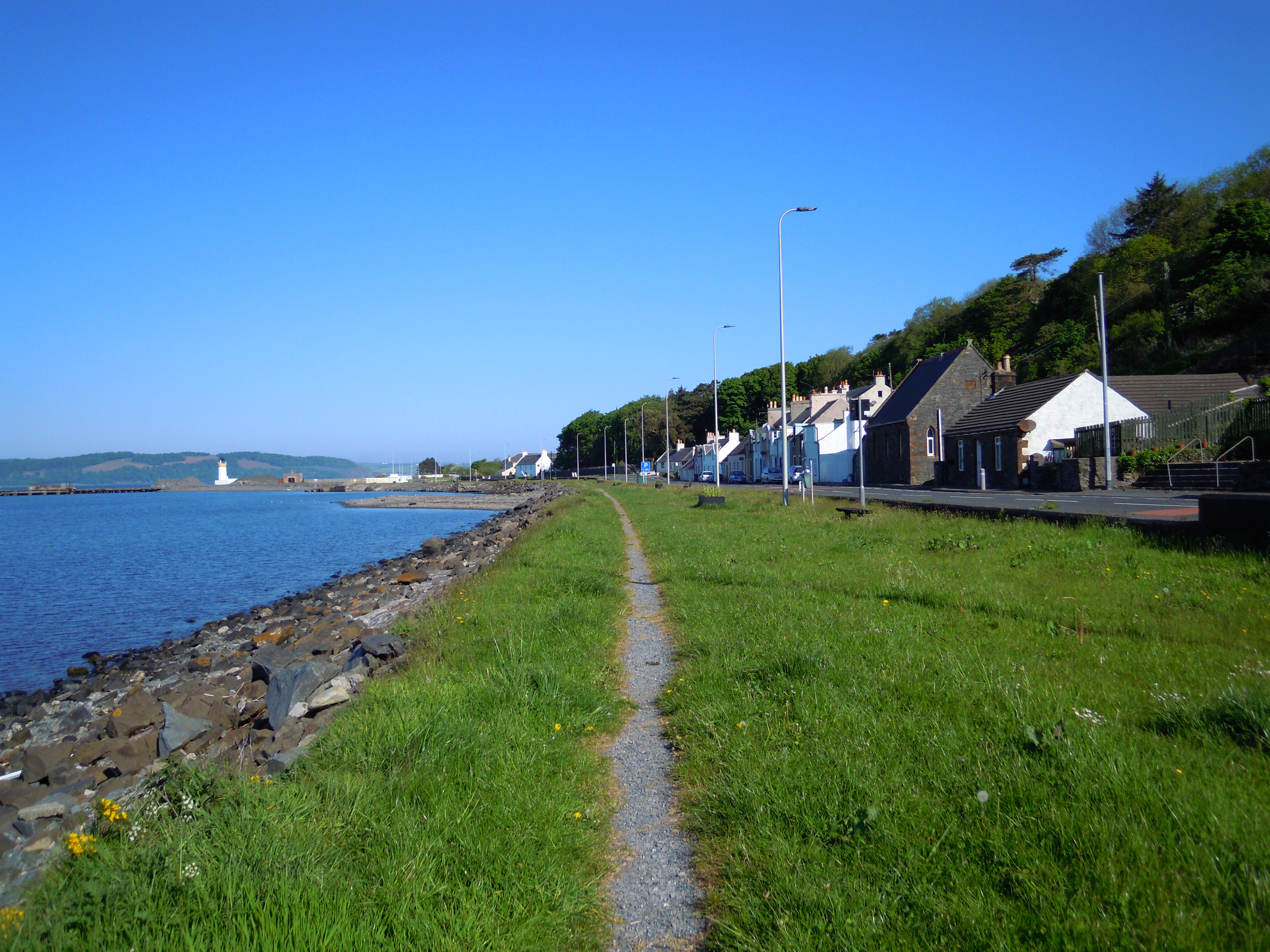
Village of Cairnryan, Scotland

A short walk to the ferry landing and we were on our way to Larne in Northern Ireland.

On the P&O Ferry Leaving Cairnryan for Larne

I wandered around the ferry and finally found a nice spot out of the wind where I could sit on a bench and watch the water go by. Lots of water. I couldn’t help thinking about the ancient travelers plying this water in their little currachs. The currach is a seagoing Irish boat made with a wooden or wickerwork frame covered in animal hides, long and narrow with a high bow to handle the waves (not to be confused with the smaller round coracles used in quiet water). Currachs have been plying the seas in this area for a few thousand years, propelled by oars, sometimes a sail. Some folks still swear by them. I read somewhere that they could travel at about seven knots.

As our ferry sailed smoothly across the water at a good clip, an official-looking fellow came out to the deck where I was sitting. Curious, I asked him how many knots we were going. He shrugged. “I don’t know. I just drive this thing.” He beckoned a young man dressed in orange and asked how fast we were sailing. The guy guessed about 18 knots. Comparing that to the currach’s speed I figured it would take our ancient travelers a good part of a day to make the crossing.

I watched the land fall away on the Scotland side. As soon as it was about to disappear I saw land on the Irish side. So even without instruments our ancient travelers would be able to keep land in sight for the distance, provided the air stayed clear. It had become pretty hazy on our journey and I could still see land. Days were long during the summer when traders made their rounds. According to my iPhone, sunrise that morning was at 4:51 am back in Keswick. Cairnryan is even farther north. With such early sunrises, a start at dawn and strong rowing might even get my traders across the water by the time the sun reached its zenith. Surely they could make it well before dark.

I watched the gently churning sea and shook my head in amazement, glad for the solid ferry. What if a storm rolled in? Even in calm water I had trouble imagining such a ride in a small currach and my appreciation for the fortitude of these early people rose considerably.

Given our long train ride of the day before, Lynn and I planned a shorter journey for this day. After disembarking from the ferry at Larne we took the train–a beautiful ride–from Larne to Carrickfergus in Northern Ireland where we had booked the night’s lodging. We wanted to see the historic Carrickfergus Castle. Even our hotel, The Dobbin’s Inn, has a long history. These places didn’t exist yet at the time of my series but I could still follow the tracks of my characters over the land surrounding them. We toured the castle, just for fun.

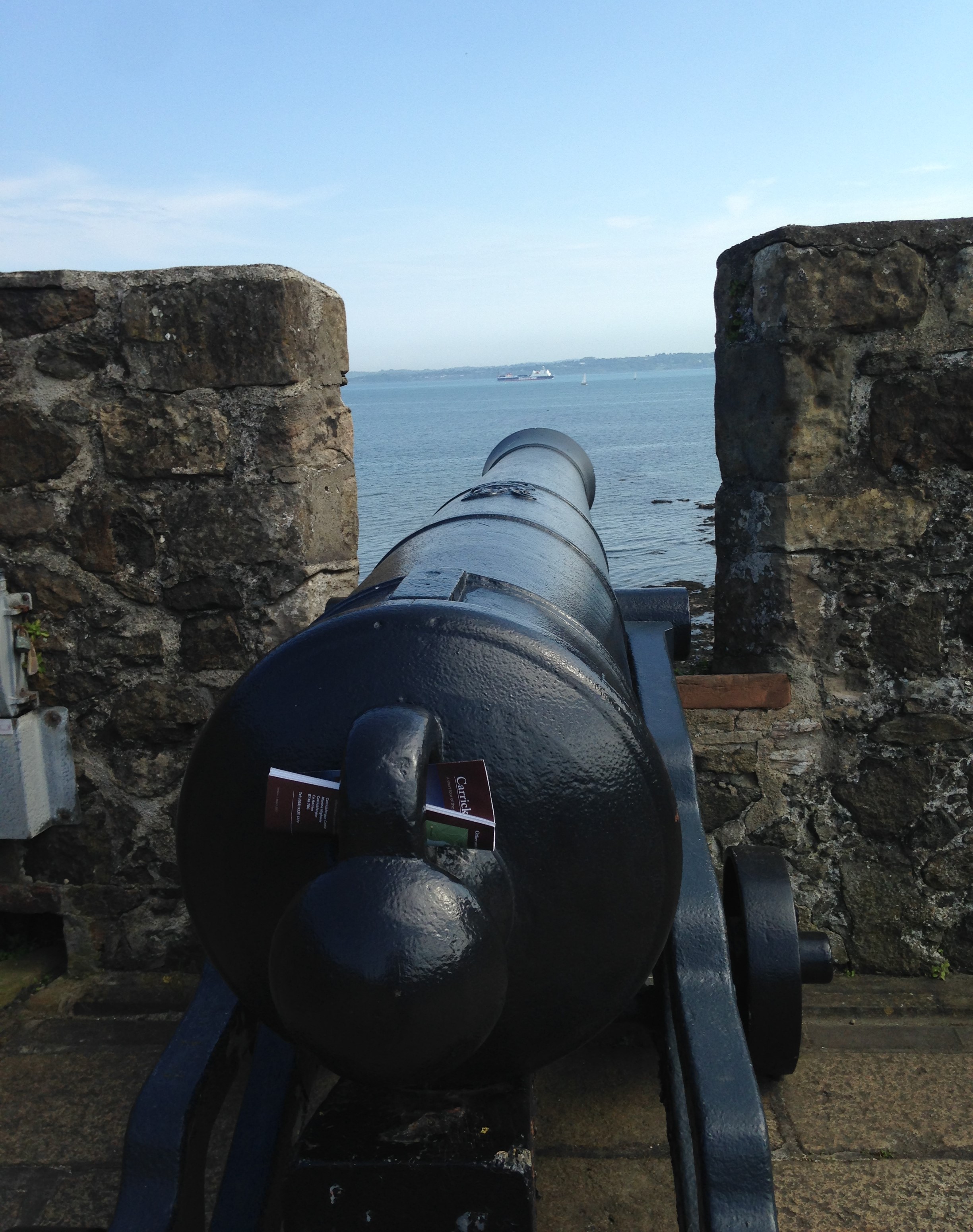
Carrickfergus Castle

This Norman castle was built in 1177 (that’s AD) by John de Courcy and it got besieged many times by a lot of other warriors who wanted it. Lynn and I bought tickets and explored inside.

Carrickfergus Cannon

Although these structures are modern compared to the stone monuments of my books, when we checked into our hotel I wasn’t prepared for the answers our desk clerk gave when Lynn asked him how old the hotel was.

With complete nonchalance he told us there had been a hotel there for 800, maybe 900 years. They were at that moment digging into the walls to learn how much of the early building still existed. Once we had absorbed that surprising answer, he casually pointed to the large old fireplace in the lobby and said, “That’s Elizabethan.”

Dobbins Inn Elizabethan Fireplace, Carrickfergus

My jaw dropped.

He didn’t mention the inn’s rumored ghost and I didn’t bring it up.

That night after an exquisite dinner of salmon with hollandaise sauce in the inn’s restaurant we went upstairs and settled in for a good night’s rest.

I woke out of a deep sleep. I heard a rhythmic squeak, squeak, squeak, like squeaking floor joists, over by the bathroom. Squinting my eyes, I saw that the bathroom door stood ajar, letting light from the frosted outdoor window cast a glow into our darkened room. I frowned and climbed out of bed to shut the bathroom door. When I approached the door my footsteps made a sound. Squeak, squeak, squeak. I stopped dead still. No sound. I crept forward again. Squeak, squeak.

Reaching out, I shut the bathroom door and walked back to my bed without a sound. I didn’t hear the slightest squeak. Back in bed I pulled the covers up to my chin. I never heard another squeak all night.

Now, I’m not saying I believe in ghosts. I’m just saying what happened. On that night. In the old inn some folks think is haunted. Just saying what happened. And that’s all.

NEXT: Heart of an Irish Story

Going There #10: Outlaw Hideaway

If you were an outlaw on the run in ancient England, where would you hide?

A mountain stronghold? I considered the Highlands of Scotland, but that’s a long run from Stonehenge where my guy gets into trouble. Where would l find mountains in England?

I used the Google Maps terrain feature and found some heights to the north. Pulling up the pictorial view, I found myself on rugged, rocky slopes. Perfect! I told an English friend I had found a hideout for my character in England and she wanted to know where. “The Lake District,” I said.

Her eyes sparkled. “Oh, that’s where Merlin the Magician went.” Merlin’s haunts! Even more perfect! Merlin was from a later period than my character. Or not. Do we really know how old the magician was by the time Arthur came around?

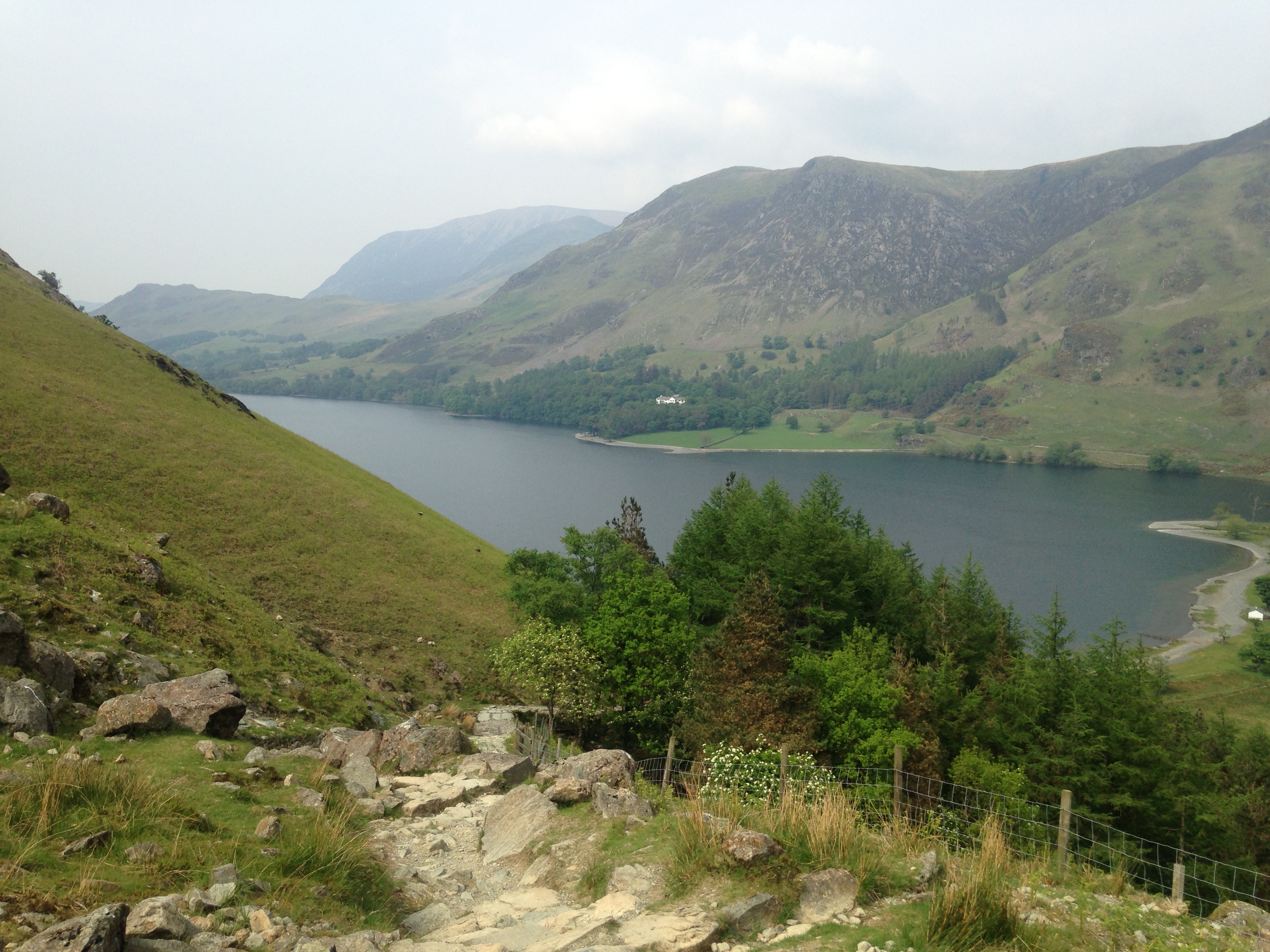
Now I needed to visit the Lake District to see if my chosen site worked and to enhance my descriptions. In my story I call it the High Lakes. The raw mountains rise dramatically above the valley floors. And many lakes nestle among precipitous slopes, with treacherous rocky trails.

Trail Above Buttermere

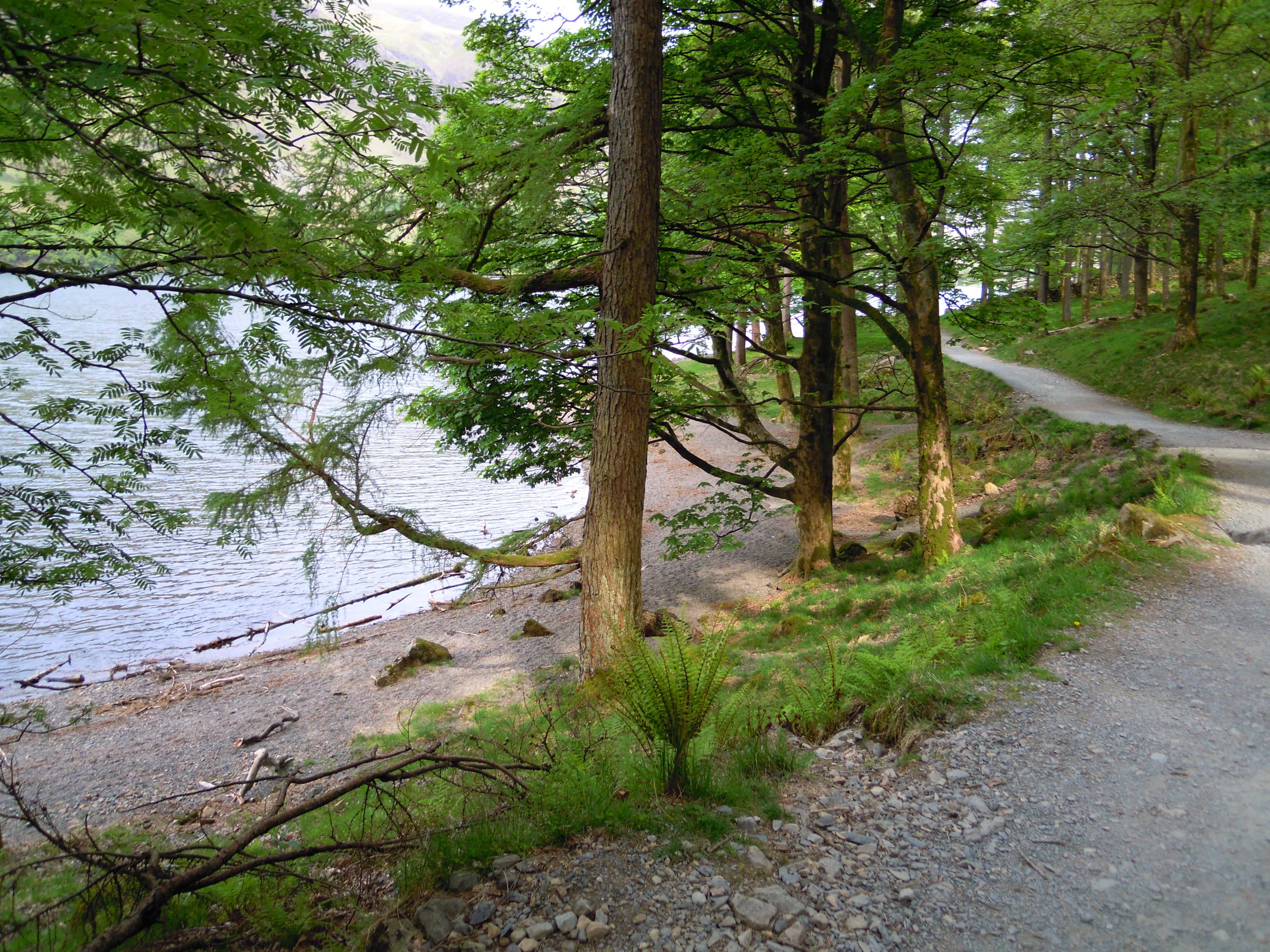
Wooded beaches add concealment.

Woods Along Buttermere

My outlaw had a long horseback ride from Stonehenge to his High Lakes hideout, taking several days. My friend Lynn Ash and I had a long train ride, but we would do it in one day. Lynn was traveling with me now, having joined me just before visiting Stonehenge. From Amesbury near Stonehenge we took a bus to Andover and caught the train to Penrith. It’s a pleasant ride through the green fields of England with hedgerow borders giving it a patchwork quilt look.

British trains are noted for their punctuality, but when there’s an accident on the track ahead, what can they do? At our second change our train was late. When we arrived in Penrith we had only minutes to catch our bus to Keswick, the town nearest the village of Portinscale where we had booked our B&B, the Lake View.

Coming off the platform we found steps–no elevator, no escalator to make it easy to tug our large bags. I asked a young woman how far to the bus stop. She assured me it was close and started to give directions. Then she said she would show me and offered to carry my big bag. A young man took Lynn’s bag and together they led us. More angels. If they hadn’t rushed us out we’d have missed the bus and gotten into Keswick after 9 o’clock, a late arrival.

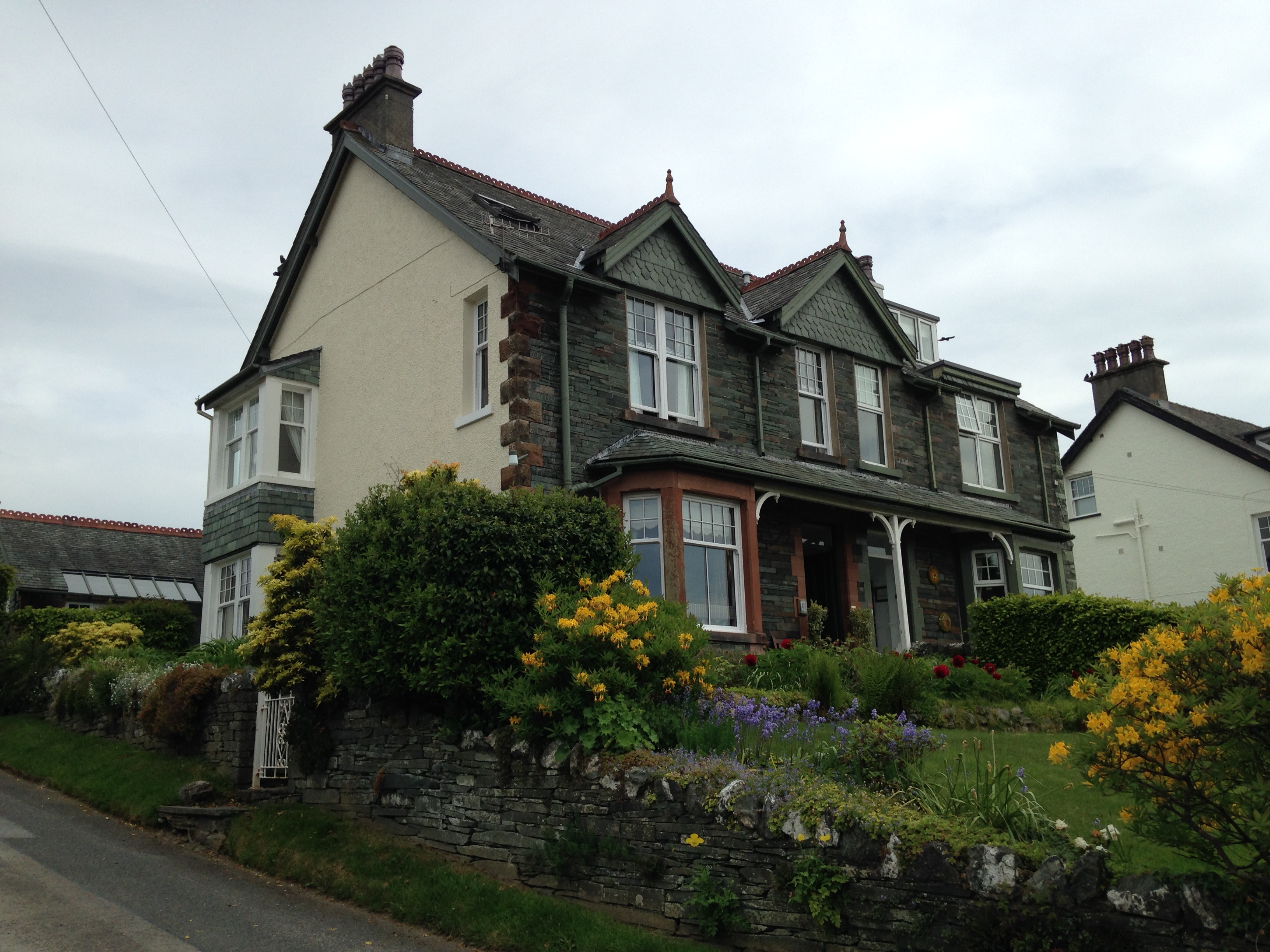
Lake View B&B, Portinscale, Lake District

The Lake View was wonderful. Our host Stuart Muir met us at the door and showed us around. We would soon meet his wife, Catherine, who cooked our fantastic breakfasts for us. They had only three double rooms, so every morning the six guests sat around a long table for breakfast. We had delightful conversations while we feasted on full English breakfasts of eggs, mushrooms, tomatoes, and more, along with a sumptuous buffet.

We had four nights there, three days to see my outlaw’s haunts. The first day I wanted to spend some leisurely hours on the shore of Buttermere, the lake where I planned to set the camp for him and his fellow fugitives. The next day I wanted to hike into the mountains, and the third day, walk to Castlerigg Stone Circle, the home circle of his cherished grandfather.

Once again, the best laid plans and all that.

After 25 days on the road I had to do laundry. So I thought I would get that done the first morning, stuffing the clothes into my tote and walking the pleasant path from Portinscale to the laundry in Keswick. Lynn, still feeling the effects of her long flight from the US, needed a nap. But she thought she might take a walk around Portinscale after her nap so she kept our only key and promised to tuck it into a secret place so I’d be able to get in when I returned.

River on Portinscale-Keswick Path

Bluebells Along Path

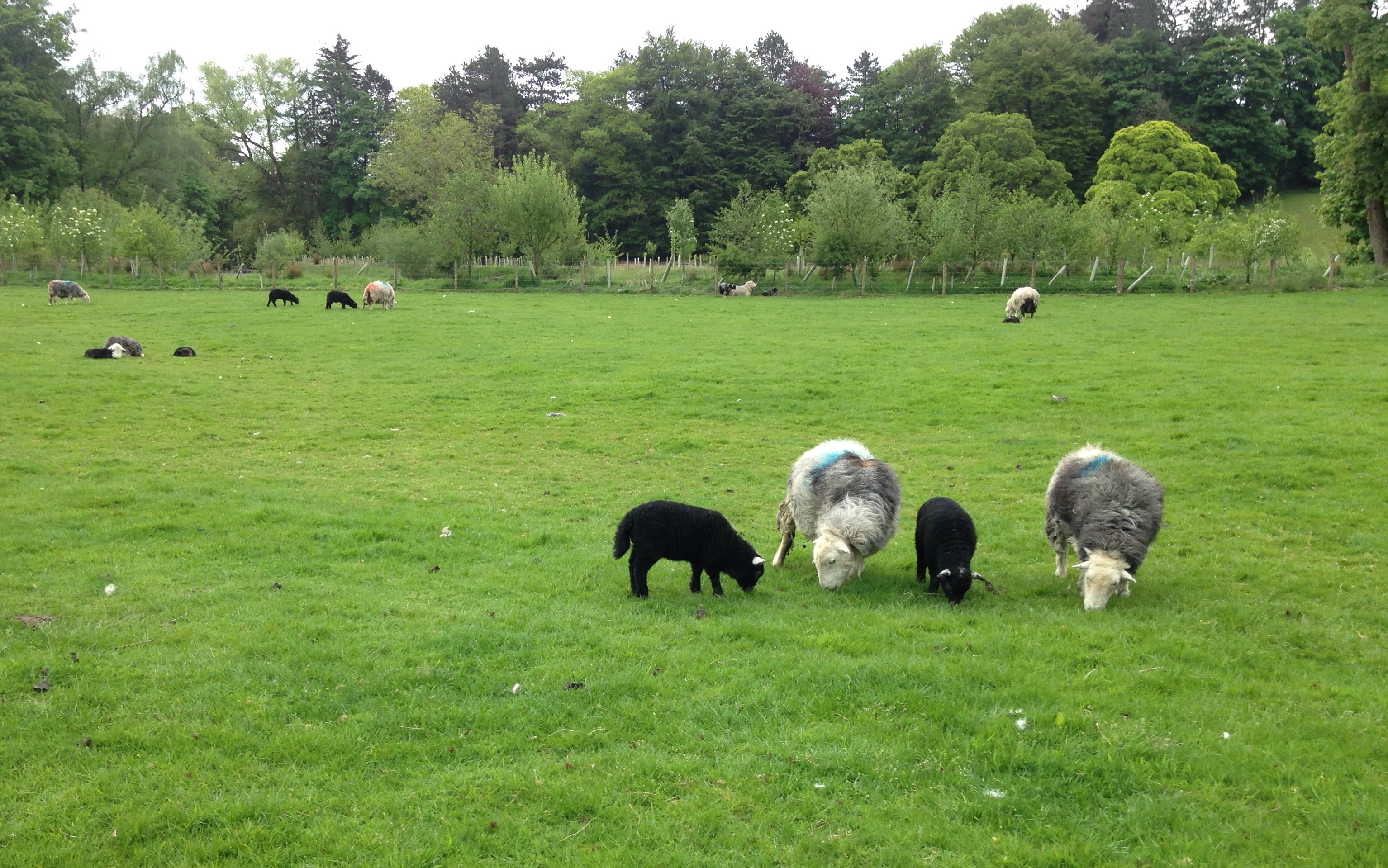
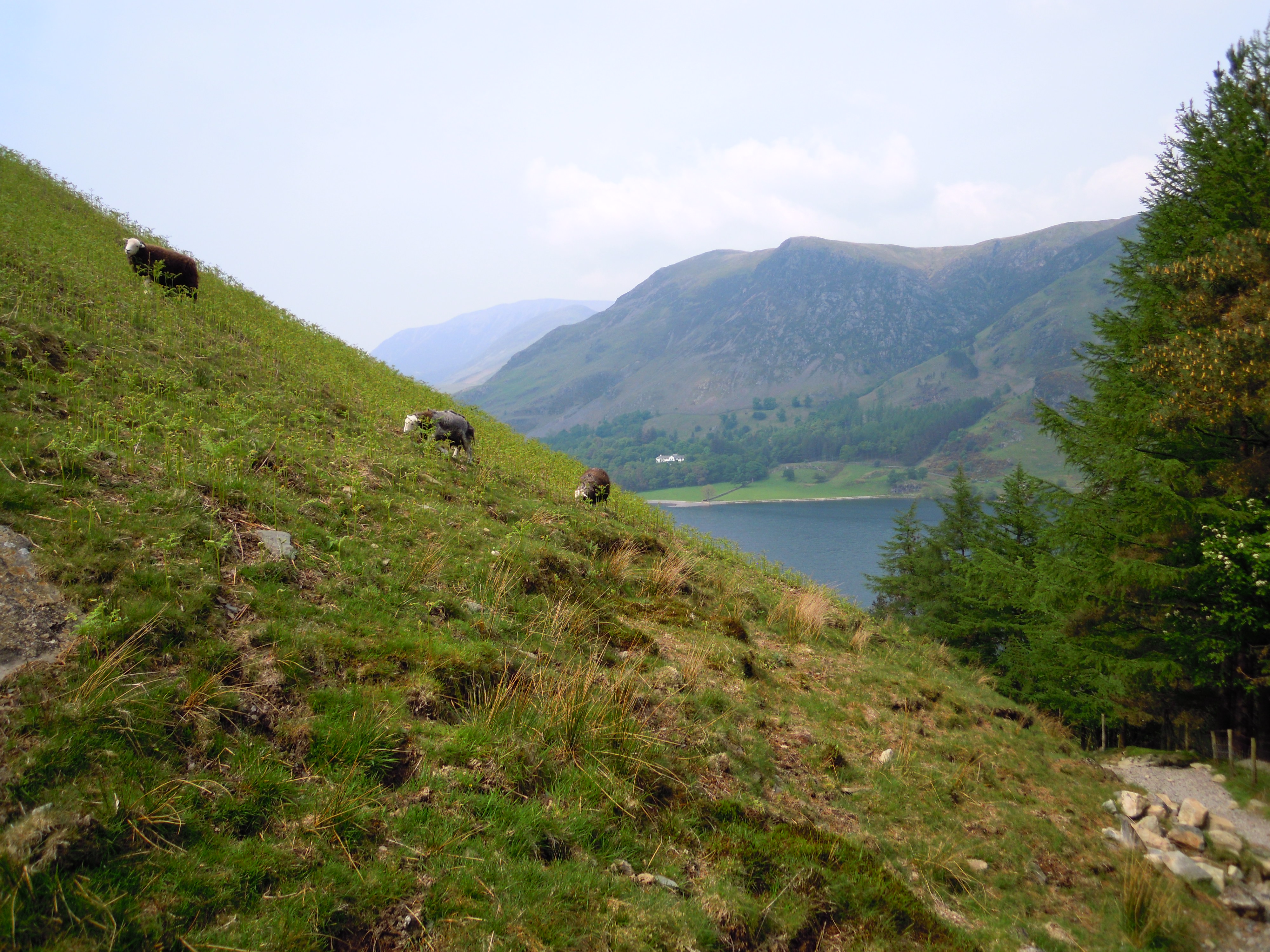
On the way out I saw Stuart, who told me he and Catherine were going into Keswick for supplies soon. He wished me well and I went on my way, giving no thought to what his remark could mean to me. I enjoyed the Portinscale-Keswick path over the river, past lovely bluebells, and through the pasture. My father raised sheep on the farm where I grew up but I had never seen black lambs with white ears. They were frisky and adorable.

Sheep With White-eared Black Lambs

After leaving my clothes at the laundry I returned to the B&B. The door was locked as usual. I rang. No answer. I checked for the key. No key. I rang and rang. Of course our hosts were in Keswick and Lynn must still be asleep. I should have known better. I knew what jet lag could do.

Finally giving up, I went to the nearby cafe to grab something quick for lunch. I was eating my scone when a man sat across from me. I looked up, surprised to see Stuart. “You’re locked out,” he said.

“Yes, I am.”

It was a bit of a kerfuffle, but the upshot was that I missed the last morning bus to Buttermere. The next bus wouldn’t come for two hours. I would lose two precious hours in Buttermere. I wouldn’t arrive there until 2:24 and the last return bus to Portinscale left Buttermere at 5:18. I would barely get out to the intended site before I had to turn around and walk back. I was frustrated, angry, not at anybody, just at the situation–and at myself for not seeing the clues. Lynn felt terrible but it wasn’t her fault. She opted not to take the hurried trip to Buttermere. But I wasn’t willing to give up even that small amount of time. I would go alone.

I waited at the nearest bus stop. The bus rolled right past me. I ran to the next stop down the street and caught it before it left. The driver seemed grumpy when I asked for a return ticket to Buttermere.

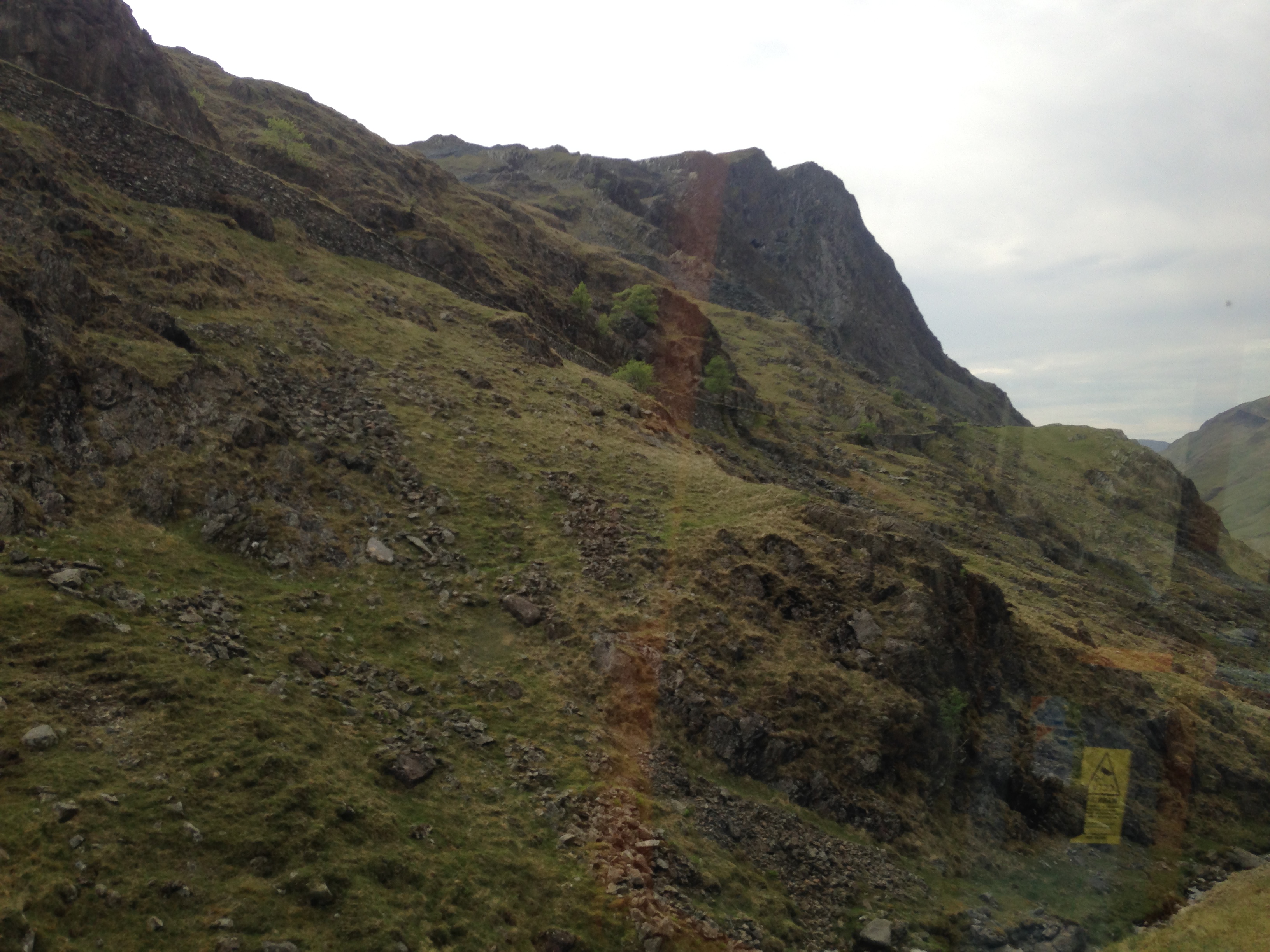
Above Honister Pass from Bus

The bus circled the district on narrow roads that wound through trees and lakes, up into spectacular mountains, and through the raw crags of Honister Pass. The picture above, taken through the bus window, may not be the best photo, but it shows the rugged slopes. Roads were barely wide enough for the bus to pass a car, so vehicles often came to a full stop before proceeding. Wide eyes peered from passing cars. Sometimes it was just a matter of avoiding a scrape. Other times, precipitous drops.

When we reached the village of Buttermere the driver kindly told me I could catch a later return bus, a 6:20 back to Keswick. I happily told him that would work. I had to go into Keswick for dinner anyway, Portinscale having few restaurants. That gave me an extra hour. I thanked him, much relieved. He seemed quite friendly now. I think he was annoyed with me before because I was standing on the wrong side of the street (the British all drive on the wrong side of the road) and when I spoke to buy my ticket he realized from my accent that I wasn’t from there and he gave me some slack.

I set out to explore the lake. I strolled past another sheep pasture at the west end of the lake, across a bridge, and out along the walkway bordering the southern shore.

Bridge West of Buttermere

Shore Near Outlaw Camp

At first the woods were too steep, but I eventually found a flatter site alongside a bubbling creek, which looked like a good option.

Outlaw Campsite

The trees in these woods are mostly conifers, which aren’t native to the area. So plans are to cut those out and replace them with native deciduous trees, mostly a small variety of oaks. When I envision my outlaws in the camp I have to screen out all the straight conifers and imagine gnarly oaks. If you look closely at the photo below you’ll see a vertical line through the wooded slope. On the left, above Buttermere, it’s mostly conifers. On the right the conifers have been replaced with round-topped deciduous trees.

Restoration of Native Oaks

Even with the extra time, I had to rush through the woods where I planned to place my hideout. I only walked about halfway down the lake, and instead of wandering and absorbing I hurried along the path taking quick pictures, doing my best to capture the essence of the place in the time I had.

The next day I wanted to get a much earlier bus for my hike into the mountains. I had already scaled back my plans. Google Maps showed a walk to what they call the Pillar that didn’t look bad. When I told Stuart I wanted to walk there he glanced at my low walking shoes and shook his head. I had left my serious hiking boots home, not wanting to carry them. He assured me it was a long day’s hike to the Pillar but I could do a shorter walk to the first ridge that would give me a nice overlook. Lynn wasn’t keen on the hike, so again I would go alone. She opted to take the circle bus ride I’d raved about.

We waited at the bus stop. And waited. The scheduled time slipped past. We eventually learned there was an accident on Honister Pass. The bus didn’t come until after lunch. The 1:36. It wouldn’t get me over there until almost 2:30. How would I ever do the hike in the time left?

My favorite driver was at the wheel. I told him I wanted to get off at Gatesgarth, the nearest stop to the trailhead, at the east end of Buttermere. Shortly after the passage through the raw slopes of Honister Pass he stopped the bus and called out something I didn’t understand. I looked at the mountains beside us and hoped he hadn’t said what I thought. He turned to face me and said quite clearly, “This is Gatesgarth.”

I faced the mountain again. Holy shmoly!

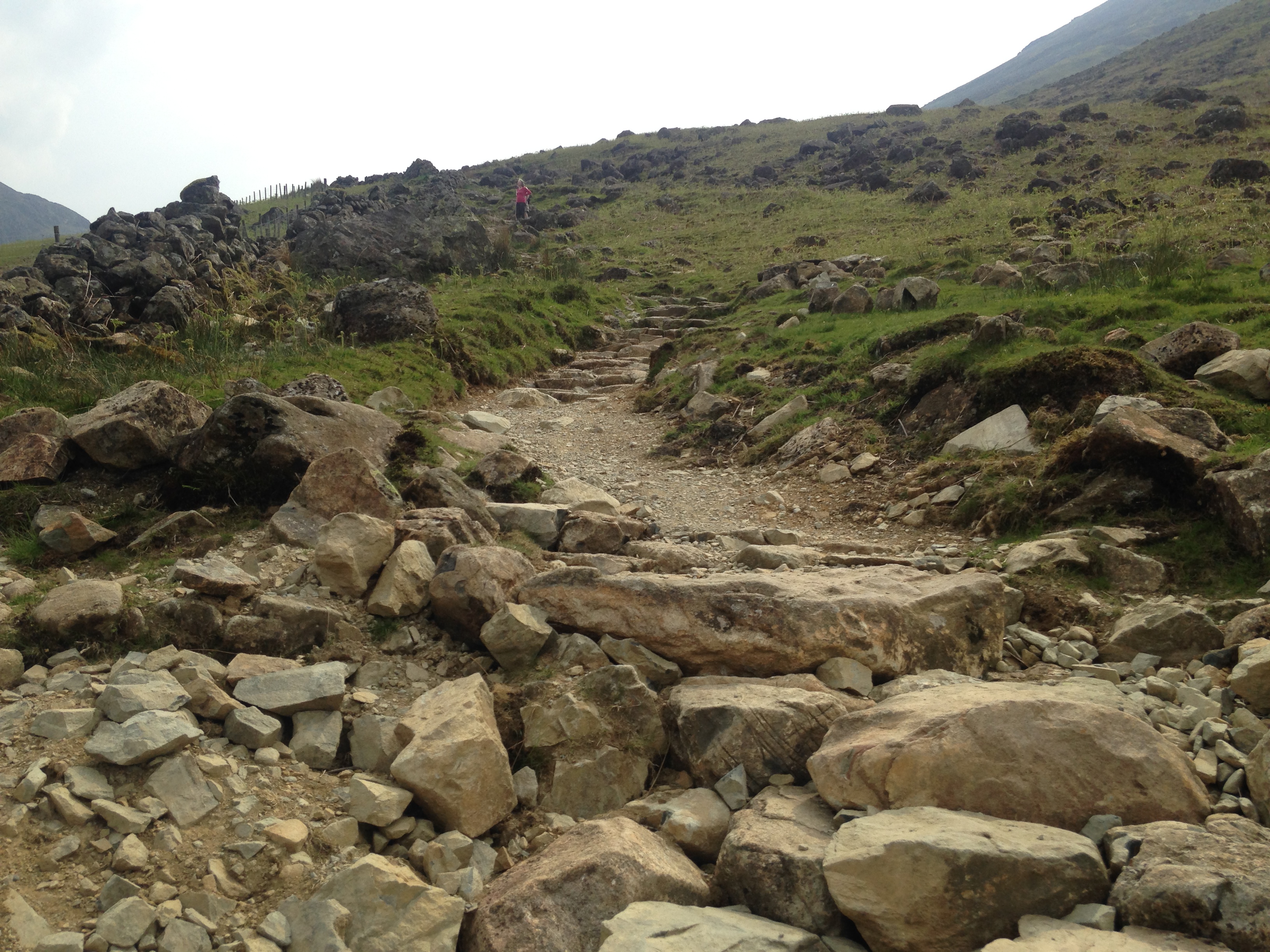
Mountains to Climb

I have hiked in the Cascades and the Rockies. I walk up the mountain outside my door nearly every day. I was not prepared for this trail.

After crossing the flat field I began to climb. The first tenth of a mile or so was a steep incline of stones that formed a ragged staircase. I checked each step to be sure of safe footing. Not every stone in those steps was secure. Some were pretty wobbly. Realizing I had better eat my simple lunch, I stopped in the shade halfway up that first incline. I was going to need my strength. I’d brought a banana and three of Catherine’s nourishing cookies chock-full of seeds and nuts and enough sugar to give me a boost. And water.

Beyond a dogleg turn the trail had a few gravelly stretches between more staircases of uneven stones. No more shade. The sun beat down. My pack grew heavy. My shoes weren’t adequate for the conditions. Time kept creeping by. Was it even possible to make the ridge and get back to the bus stop for the last bus out? I sat on one of the stone steps to consider.

The Rock Trail

A couple came down the hill. I asked if the trail got any better farther up. They said no. We chatted awhile. They thought I probably shouldn’t be doing the trail alone, given the treacherous rock. Every step up, I would have to go down, even more hazardous. If I turned back now I could walk the length of Buttermere. Take more time. Absorb the site. And I had hiked far enough to get a feel for the mountain. Maybe halfway to the ridge. Maybe a third. I’m not a person who gives up easily, but I turned back.

Down the Mountain

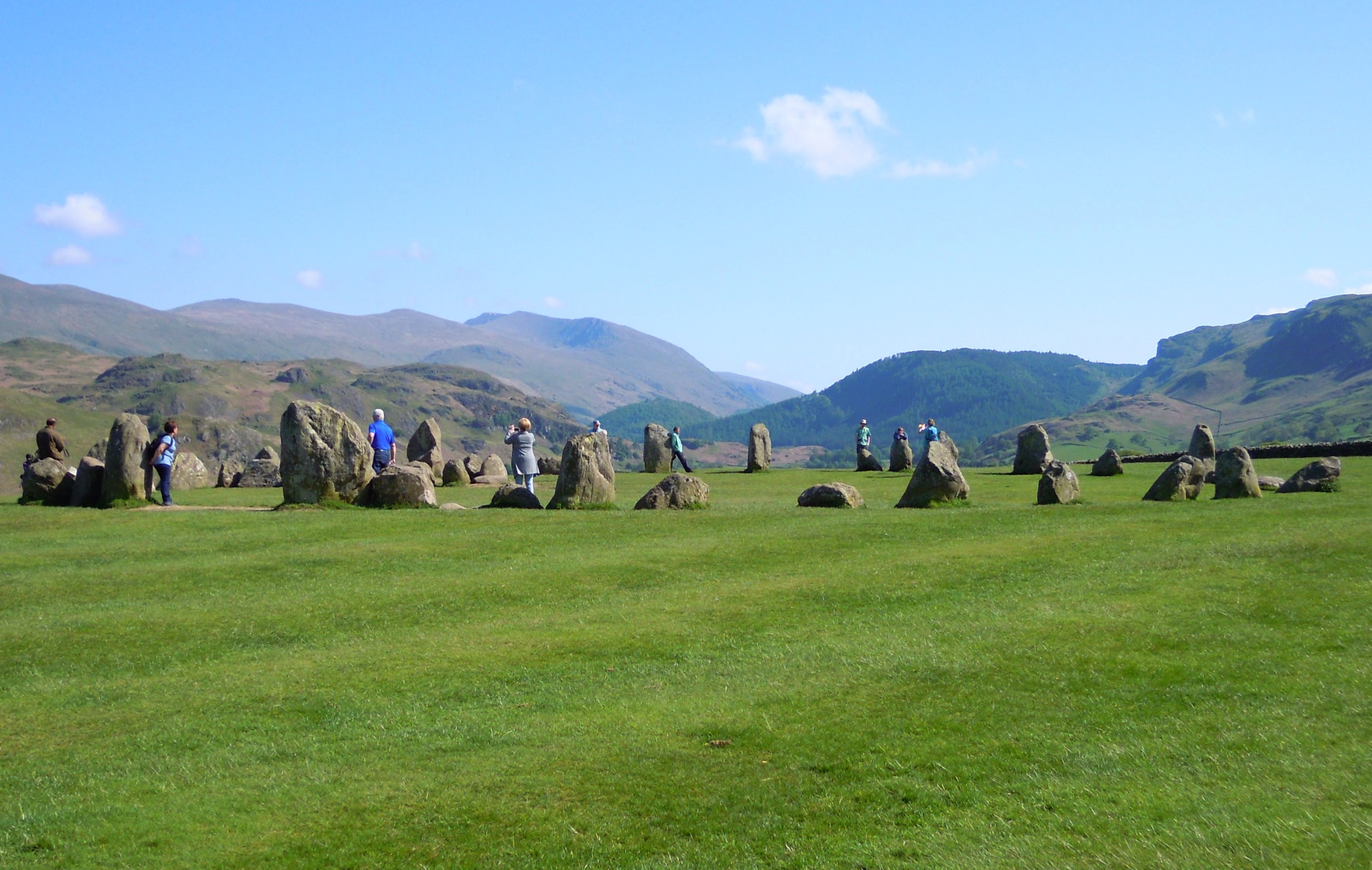
The next day’s walk to Castlerigg Circle seemed like a breeze in comparison. One of the oldest circles in Europe–older than Stonehenge but younger than Portugal’s Almendres Cromlech–Castlerigg lies within a wider ring of mountains that enhance the wonder.

Castlerigg Circle

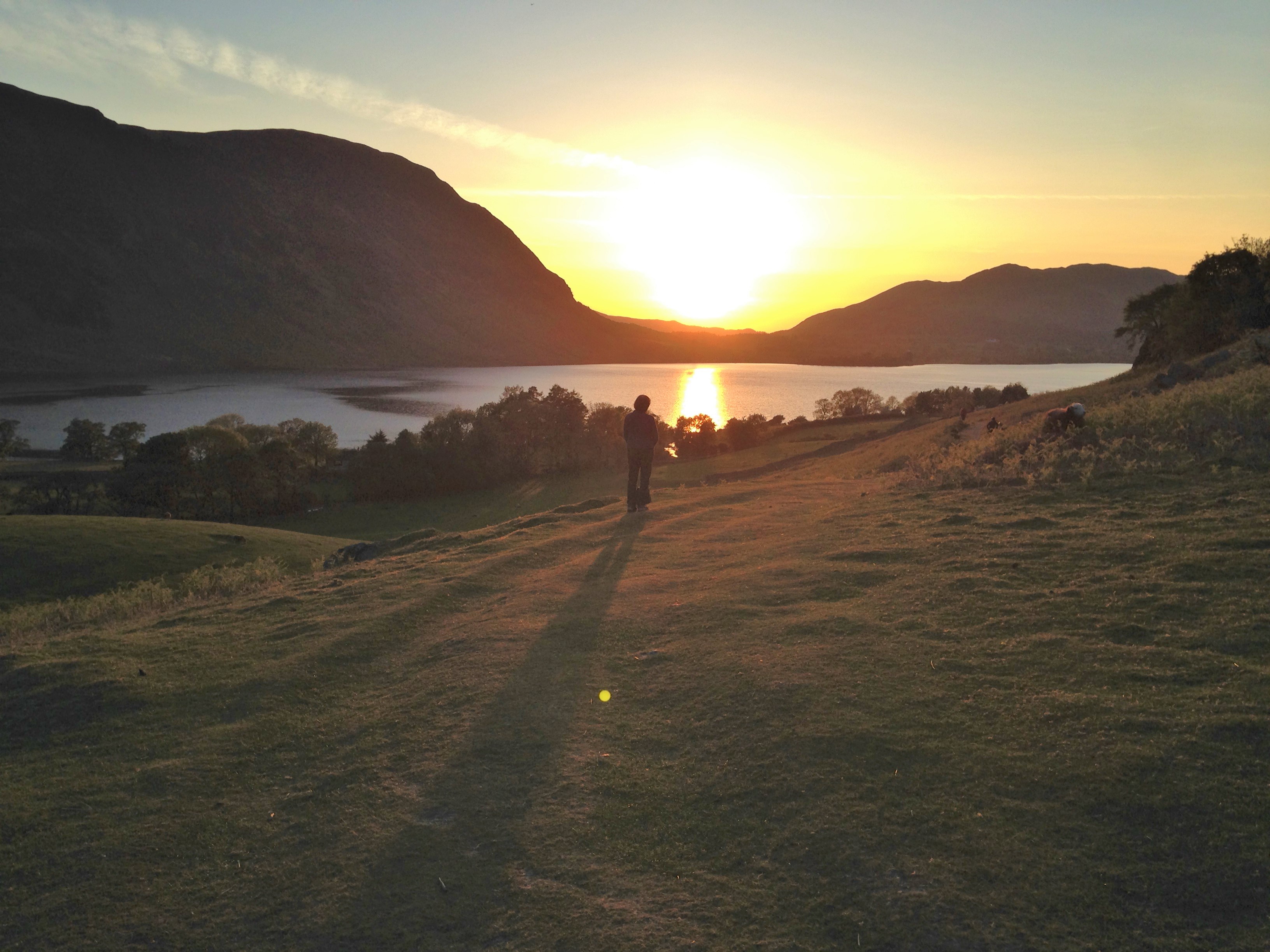
We enjoyed a last look at the beauties of the Lake District and saw the sun set on Crummock Water, the lake northwest of Buttermere. Lynn walked ahead toward the setting sun as I took a picture. I’d gained a vivid sense of the place even if things didn’t go as planned, and I would keep a warm spot in my heart for this beautiful stronghold and for our wonderful hosts.

Lynn at Sunset

NEXT: Crossings

Going There #9: Shadows in the Stones

Stonehenge impacts. It just does. Despite detractors who want to say this is better, that’s better, you can’t get inside, whatever, there is no other stone circle in the world quite like it. The dressed sarsens with their phenomenal bulk. The horizontal lintels that look as if giants had placed them. The bold position on Britain’s wide Salisbury plain. Power resonates.

Stonehenge

I felt that power as we walked toward the great stones, just as my characters feel it in my stories. Stone circles play a significant role in my series when we visit Ireland, and my Éireann characters of the Irish clans have a fascination with this grand megalith so different from their own village circles. Some of the characters have the opportunity to visit. Others envision it.

The site was carved out about 5,000 years ago when people dug a circular ditch. About 500 years later others erected the first stones. Those were the smaller bluestones, a type of stone not found in this area, but which scholars believe were brought all the way from Wales, a herculean task. The quarry has been located and stone cuts matched, pretty strong evidence. But why? No one knows. The giant sarsens came later, and over time the arrangement of the stones saw several changes.

My writer friend Lynn Ash had joined me on my trip the day before our visit to Stonehenge, and we took the obligatory photos.

Lynn at Stonehenge

Me at Stonehenge, Photo by Lynn

I first saw Stonehenge in 1993 when I was researching another long-abandoned book. That was before the new Visitor Center. You don’t have to pay to see Stonehenge. It’s right out there on the Salisbury plain, visible from the road and from trails that cross the fields. A fence holds you back a ways. But if you want to get as close as Lynn and I are in these photos and experience the Visitor Center (and it is an experience), you pay. Not a small fee. We each paid about $23 for a set time slot to enter, although you can take as long as you want, once inside the compound.

Compared with the wonderful Almendres Cromlech in Portugal (see “Going There #8”), a site that’s free and wide open to whatever the public and weather may do to it, Stonehenge has become a local industry. Yet somehow that doesn’t diminish the experience–when you give yourself to the wonder.

Stonehenge Looking Southward

Ravens Among the Rocks

The Visitor Center is remarkably well done. Most intriguing is the 360-degree theater in the round where you stand in the center of the stones while seasons and centuries pass. That makes up a little for the fact that a rope around the real stones keeps you out of the center (except for special occasions, like the summer solstice, when people are allowed in, which you no doubt have to reserve far in advance).

The theater’s effect offers a dramatic experience. Many other fine exhibits explain the site and display archeological finds. Outdoors, typical houses of the early period have been erected, and you can step inside to see where people slept.

Typical Ancient House

Bed in Ancient House

I’m not sure about that pillow. I’m of the flatter pillow school.

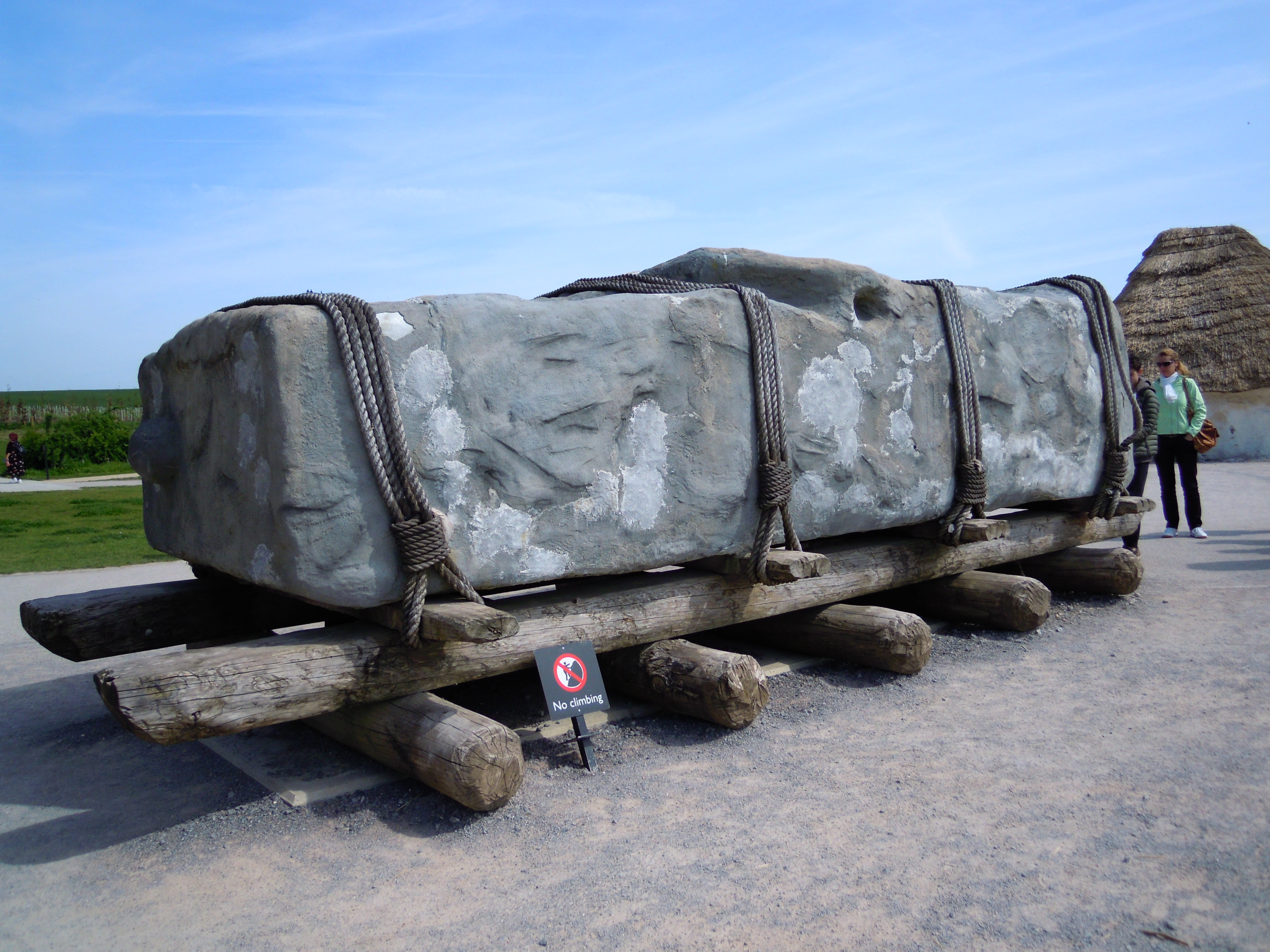
A sample stone below shows how the giant sarsens might have been moved to the site in those long-ago days. I had to tap the stone. It’s plastic but illustrates nonetheless.

Sample Sarsen

Lynn and I opted to walk to and from the circle. The Visitor Center is a little over a mile away, leaving the circle to stand free and open in its grand position. The day was gorgeous, and the easy stroll allowed us a long view of the stones and the effect of the approach–as my characters would have experienced it. We took the road going to the circle and went back to the center on a trail through the field. A lovely walk.

We had contemplated going to Avebury afterward, another wonderful site where the village is set among giant stones and you can touch them. I had been there before and enjoyed not only the stones, but a lovely high tea in the tearoom of an elegant manor, and I had lured Lynn into this trip promising her “scones among the stones.”

Well, we didn’t have a car, and bus connections would have given us more bus time than tea time. Taxis were expensive there, and we were exhausted. Lynn had taken the grueling trip across the pond just the day before our Stonehenge excursion and hadn’t slept on the flight or very much the night before her departure. I had only flown from Lisbon, but our meeting at London’s Heathrow airport hadn’t exactly been a snap.

Lynn had seemed worried about navigating that huge airport, but I had reassured her that my flight would land about an hour before hers and I could be waiting for her when she came off the plane. We had our iPhones in case it took a moment for us to find each other. The best laid plans and all that. My flight was late, very late. Hers was early. When I rushed into the airport, trying to connect with her, I got no answer. I got delayed in a huge line at border control. While moving slowly through that line I tried email, texts, phone. No response.

Friendly airport personnel helped us–more angels. As soon I got free of border control and found my bag I headed for her terminal–just as she headed for mine. We were striding across moving walkways when we looked up and saw each other. What a relief! We had bus tickets to Amesbury, the small town near Stonehenge, and the bus station was right between the terminals. We made it in plenty of time. But the distress took a toll.

Now we’d spent so long at Stonehenge we gave up on Avebury, but as we sat resting in our room at the delightful Fairlawn Hotel in Amesbury we decided to take an evening stroll to Woodhenge, a satellite site within easy walking distance. We were surely up to a pleasant walk out through the edge of the lovely town. We didn’t account for traffic that buzzed along beside us like freeway traffic on a narrow road, so close to the sidewalk I felt as if a wobble would put me right in a car’s path. But we survived to see this unusual site. A quiet, peaceful place.

Me at Woodhenge, Photo by Lynn

Lynn snapped my picture sitting on the concrete stumps where wooden poles once rose.

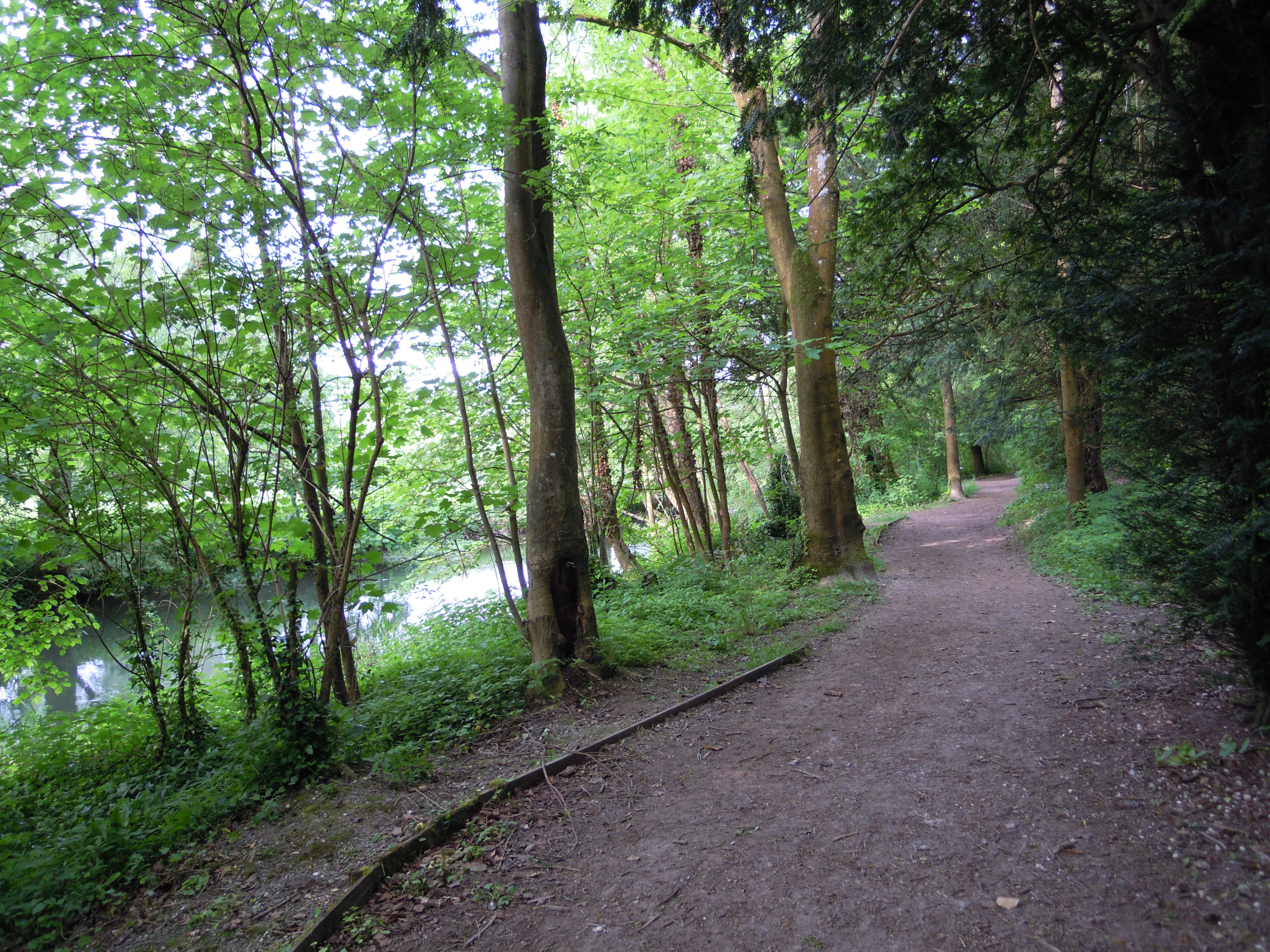
On the way back we took a side path to walk a short way along the famous River Avon. That offered another respite of quiet and peace with a generous touch of beauty.

Path Along the River Avon at Amesbury

Shadow in the Stones

As I put this post together, selecting photos from the many I took, I noticed something in the photo at the top of the post that I hadn’t noticed before–the picture labeled “Stonehenge.” An odd shadow. I give a closer look here. Do you see it? Probably a strange slant of the light against the stones.

But it put me in mind of the shadows that linger across this old world. Sometimes the shadows seem to come alive where the past remains so visible, as in these ancient works in stone. Or the crumbling citadels of Greece and Portugal, where archeologists work to ferret out the hidden secrets.

Bringing the past to life is what I try to do in my stories–whether from our own country’s pioneer past in A Place of Her Own and The Shifting Winds, or in these ancient times of my new series. I would keep searching, keep reaching, trying to see into the shadows to bring out the light of a people who did walk in these places, portrayed as truly as I can through the fictional characters in their imagined lives.

NEXT: Outlaw Hideaway