Going There 2024 – Reflections

Where the story comes to life . . .

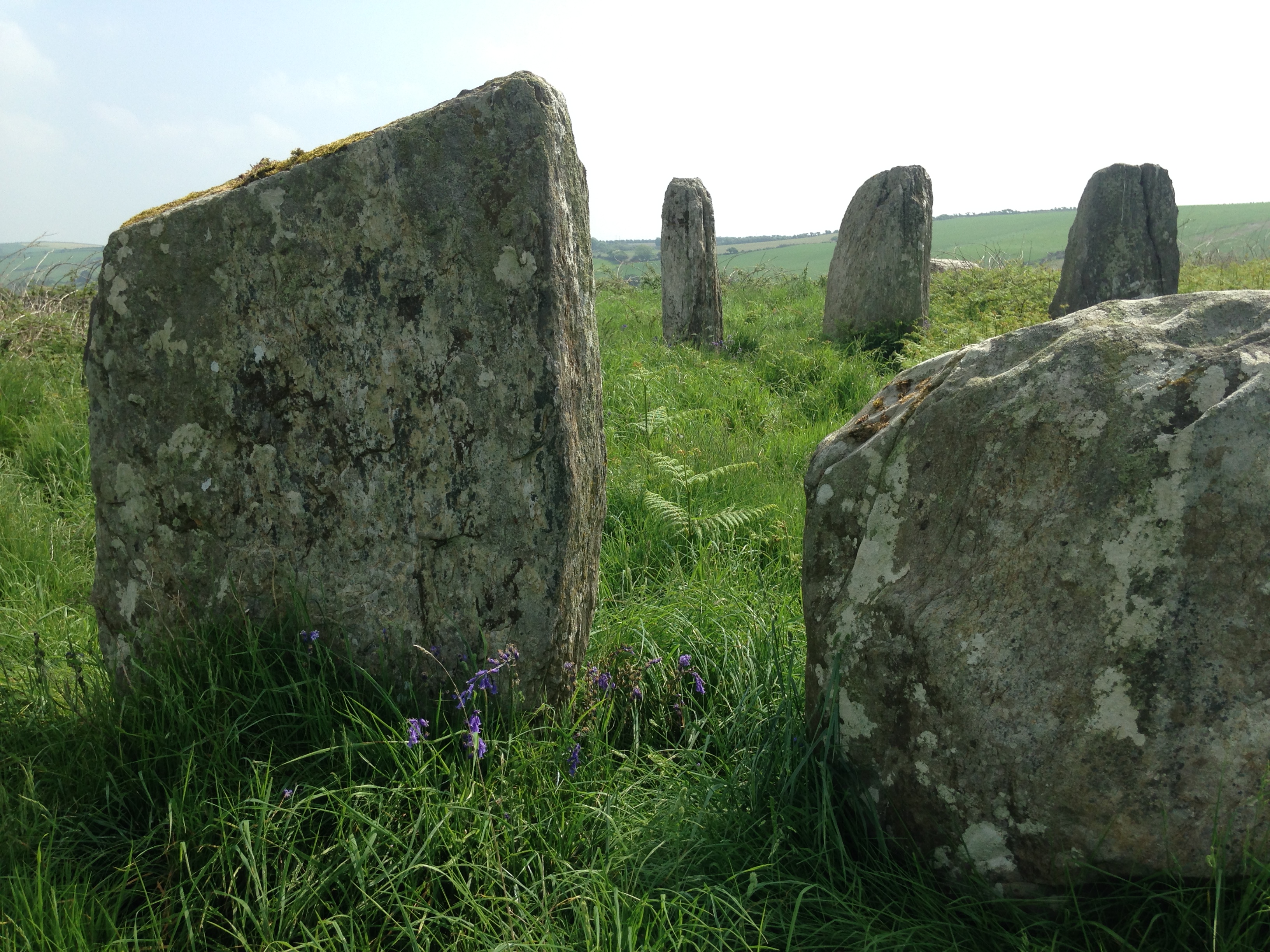
The photo above brings stone and sea together, the upper line of the stone echoing that notch where the sea gleams bright blue when the air is right. This is one of the pillars in the Bohonagh circle near Rosscarbery, Ireland, sacred circle of the protagonist’s clan in my story.

With this last post in my “Going There 2024” series I’d like to reflect on the highlights of my recent trip to immerse myself in the main settings of my upcoming historical novel. More than anywhere I went it was Rosscarbery on the southern coast of Ireland where my story lived. I had time to wander by myself there and let it all soak in.

I passed a few people when I went down to the beach below but for the most part it was a solitary stroll. There I learned about beach grass on that Irish coast–unlike Oregon’s tall beach grass that found its way into my Irish story and has to be replaced with the low grasses I noticed here.

This is why I “go there.” It’s part of my work as an author. To see the places, and feel them, and try to get it right, so I can bring the reader into these worlds with me when they read the words of my books.

My explorations showed me the lay of the land along the bayshore, which will help with my descriptions. The stunning beauty of an afternoon sunlight on the water might come into a scene.

And the circle? There wasn’t another soul where I climbed to the circle and stepped inside to experience it and imagine how it must have been when musicians played and people danced. Or when they came alone to pray, stepping inside through the portal stones, honoring their Great Ancestress, Grand Mother of them all.

The next most critical site where I could feel my story come alive was at Newgrange. The lofty passage tomb with its own partial circle of stones. The incredible passageway where the light of the winter solstice sunrise shines all the way down to the inner chamber with its meticulous corbelled roof, filling the chamber with light.

I learned that the tomb did not lie in front of the ridge as I had described it, but actually crowned the ridge, the back side having sloughed down the hill behind so it covered some of the surrounding kerbstones and standing stones. The archaeologist who restored the monument brought it back as near as possible to what it was when my characters walked down the long, narrow passage into the vault, and I of course thought of them when I walked inside myself.

Back in Dublin I marveled at the goldwork produced during the time of my protagonist, a young woman goldsmith, as I walked through the remarkable array of gold displayed in the National Museum of Ireland – Archaeology. Here’s just one example of a collection there from about 800 to 700 B.C.

On another excursion I saw more clearly the rugged stones of the great rock, the outcrop of the Rock of Cashel that stands bold upon a broad green plain. I could better describe it now after climbing up those knobby limestone walls myself–not the walls built by men on top of the rock but those left by nature long before, the only walls my characters would have seen.

And when I left Ireland for Hallstatt I would see and learn more. Why Hallstatt when my story is about ancient Ireland? Because of the Celts. Yes, when we think of the Celts we may well think of Ireland. But at the time of my story there wouldn’t have been any Celts in Ireland yet. Not in any numbers anyway. Their homeland in 750 B.C. would have been in Hallstatt, Austria. So to bring the Celts into my story we go there. And I followed.

I had visited this remarkable place once before. But with this visit I would refresh my mind’s image of the brilliant water of that lake between steeper slopes and more massive cliffs than I remembered. I thrilled to the play of light on the water. Was it something different in the skies this time? Or the brush of wind that came with unsettled weather? Or was it always so and I forgot?

It took me awhile to find the waterfall I describe in my story. But there it was above the museum, fog hiding the higher slopes.

I reached the falls at last and will show it more clearly now in the description. Back down on the lake’s edge, I got a better sense of the sheer drops on those bold mountains where my characters walk.

In the Hallstatt Museum I saw a Hallstatt sword, like those I describe in my story. Here’s the real thing, which had been found just up those mountains. I could almost hear the swish of bronze slicing the air.

So much. I left these amazing places, my head full of images, words. How to describe? How to take the images from my head and put them into the words that will let the reader see and feel. Ah! The challenge, the joy, for every writer.

Out of the many experiences I had on my trip this spring of 2024, these are the ones that stand out to me, highlights that will surely affect the work. The journey gave me so much. People along the way offered so much. I am ever grateful.

As I continue to absorb the wonder, may these memories reflect in the pages. Story came to life here.

NOTE: This concludes the “2024 Going There” series. I’ll keep the list of titles on the sidebar so you can navigate the stories whenever you might like. I’ve had fun reliving the moments and hope you’ve enjoyed sharing some of them with me. I’ll continue to post snapshots from the trip on social media now and then. I love hearing your thoughts. Thanks so much.

Going There #9: Rooms with a View

Yes, of course, there are views, and then there are views. But I have stayed in many a hotel where you’re lucky to have a street to look at. On this trip to Ireland and Austria I stayed in six hotels and five had something interesting out the window. I did not request a view. None of these offered the option.

So, welcome to my tour with a view in mind.

At the Castle Hotel in Dublin my room was on the fourth floor–which meant the fifth, because they start counting one up from the ground floor. A small room, it had all I needed and was fresh and clean. When I peered out the window I smiled.

As buildings go, that was pretty spectacular. It’s the Abbey Presbyterian Church, a stone Gothic Revival structure built in 1862 to 1864. A bird perched on the top right peak as I took the picture, and I later noticed the green nest hunkered below, where birds fluttered in and out from time to time. During my stay when I retreated to the room to put my feet up I took pleasure in the strength of those fine walls and the artistic design. And the birds.

Next stop in Limerick my room at the Old Quarter Townhouse was big enough for a party. It was new and modern–or at least modernized. I looked out the window there and spread my arms, hands uplifted.

There seemed to be a theme here. This one is Saint Michael’s Catholic Church, a limestone structure originally constructed in 1779 to 1781, remodeled in 1805, then rebuilt again in the Italianate style in 1881. This too became a pleasant outlook in the changing lights during my time in Limerick.

On my return to Rosscarbery Catherine O’Sullivan at the familiar Rosalithir B&B happily welcomed me to my newly remodeled room. Everything crisp and bright. And I was so happy to get a front room. The house is on a farm in the middle of green pastures, so all the rooms look out on lovely scenes, framed by the graceful windows and drapes, but the front room looks toward that special notch where the sea glistens blue when the sun is right.

Open the windows and lean out and you see even more.

I peered across the attractive yard wall, past the ancient wall of stone, and out over the wide green pasture to the gap in the bluff that opens to the glimmering sea in the notch. A lovely outlook, much the same as my story characters of the Golden Eagle Clan see from their sacred stone circle, shown below. And from their village one ridge over from the other outlook below, where you can see the gap in the bluff beyond the horse pen.

I felt at home.

In Salzburg I stayed in the guest house in a seminary, Gästehaus im Priesterseminar, which has a historic connection with the adjoining church. Through large windows along the hallway to my room I could see the grand rooftop of that church.

These are domes of the Holy Trinity Church, which borders the seminary on one side, built between 1694 and 1702 to connect with the seminary. So not the view from the room, but from the hall on the way to the room.

From the window in my room I could see this.

It’s the former Palais Überacker built in 1732 by the Counts of Überacker because they wanted a residence close to court, the Mirabell Palace being a very short walk away. It’s just a bank now, but the renovation kept most of the Baroque facade, offering a pleasant outlook from my lovely pristine room.

Last but surely not least was Hallstatt. I knew my hotel there was right on the lake. But not every room could look toward the water. And I didn’t know whether mine would. As noted above there was no option to select a view. So when I stepped into the room my jaw dropped. This was my first sight of the outlook I would have.

The lake! The private deck! I rushed to the door onto the deck and went out.

I could see it all. The shimmering water. The fairytale village. The sheer mountains framing the scene. I could see it from my private deck. From my bed. In daylight and dark.

A room with a view. Ah yes. I loved every view. From Dublin to Limerick to Rosscarbery to Salzburg to this of Hallstatt. And I will treasure the memories like a string of cherished jewels.

NEXT: Reflections

Going There #6: Heart of the Heart

Here on a lonely hill, where silence echoes and all is near forgotten, a memory whispers.
Here the center of my Éireann world lives.

~ ~ ~

If Ireland holds the place as the heart of my stories, and it does, then Rosscarbery on Ireland’s south coast must be the heart of the heart. Just up the hill above that charming town lies this ancient circle of stones, sacred center of the clan of my protagonist. I have named her people the Clan of the Golden Eagle, and this land has been their ancestral home for generations.

These mysterious circles of stone dating back thousands of years can be found up and down the Atlantic seaboard–across Ireland, Britain, France, Portugal, and Africa. The most famous would be Stonehenge in England. To my knowledge no others bear the horizontal lintels like Stonehenge. The circles range in size. I visited one in Portugal, the Cromlech of Almendres, with almost 100 stones, dating from about 4000 to 6000 B.C. Another, the Castlerigg Circle in northern England set among a ring of mountains, dates from about 3000 B.C.

But this circle of stone caught my heart in ways I can’t explain. It has stood on this hill overlooking the south coast of Ireland since about 1500 B.C., now called Bohonagh Circle. Why these rings of raw stone stand where they do no one today really knows. Scholars believe they marked the passing seasons of the sun. Others suggest they were places of celebration, for dancing and connecting with the gods and goddesses the people revered, perhaps places that drew together the powers of earth and sky.

Catherine and Finbarr O’Sullivan, my wonderful hosts at the Rosalithir B&B in Rosscarbery, wished me well when I set off to see the circle on my first day this trip. A bright sunny morning. Catherine made sure I took a snack of her delicious soda bread and some fruit, which would tide me over until dinner. This was my third visit with Catherine and Finbarr. They weren’t just hosts. They were friends now.

It’s a fair walk over pleasant back roads. Then the familiar track up the hill, the stones beyond my sight until at last I began to see the tops like fingers lifted to the sky. Remembrance flooded me. Not only my own former visits. But the many scenes in my stories as my characters approached this sacred place. I left the track for the green field as the stones came into full view. They seemed to draw me. I barely felt the grass beneath my feet. Once there, I honored the tall portals, both higher than my reach, and stepped inside.

Turning, I looked out through the portal stones and felt a sense that I had come home again. A little breathless still, I was looking for better pictures than I’d taken on earlier visits and nature gave me that. The clouds on this day! Oh my! The clouds!

I stayed and wandered in and out, soaking in the feel of the circle, the surroundings. I especially like the way one stone sits in line with a slope of the vee that opens to the blue sea in the distance. I don’t think that was by accident. Clouds kept boiling in, adding to a sense of awe. After touching each stone with the reverence such a place evokes, I finally walked away, my heart full. On the way downhill I stopped to look back, wondering if I would ever see them again.

The sight of them beneath the towering clouds nearly took my breath.

~ ~ ~

Another day I went down to the bay below the circle, called by my protagonist’s clan their Golden Eagle Bay. Today’s Rosscarbery Bay. I still had questions about the beach. And what’s more, this visit revealed answers to questions I didn’t even know to ask. That made my return particularly important. On my first trip I had traipsed around the shoreline but memory and tiny photos didn’t offer a good sense of the lay of the land there. The few minutes I had on that beach last visit only confused me further. This time I spent a full day exploring the shore.

I had a fairly good sense of the western headland, but I was unsure of the east side of the bay. When I stepped out on a rocky point at the east side of a strand where I thought the bay ended, the point felt way too small for some of the scenes I had written.

There were some good rocky outlying islands to crack up a ship, but there was no room for a battle scene. It wasn’t until I climbed partway up the newly improved Cliff Walk over the western headland that I could look back and see it clearly.

The photo above shows it. That little rocky point jutting into the bay wasn’t big enough to call a headland at all. It did break up two strands, which have separate names today, Owenahincha Strand on the near side from where I took the picture and Little Island Strand on the other. But the photo also shows the only point that could reasonably be called a headland on the east side, a long and bold promontory reaching deep into the bay–beyond the second strand. It’s called today Cloghna Head. Together with the headland where I stood, these are the arms that embrace the full bay.

I continued my stroll over the Cliff Walk to the next beach, mulling all this over. It’s a beautiful walk, with nice new wooden railing and some paving, overlooking broad stretches of water and a small woodland full of bluebells.

I had planned to call Finbarr to pick me up on that next beach when I was done with the Cliff Walk, as he’d suggested. He and Catherine insisted they drive me to and from the beach because they didn’t want me to walk across the dangerous highway that separated it from the B&B. But now I knew I had to go back to where I started and check out the bold promontory of Cloghna Head, which I now saw was the eastern headland of the full bay.

As I trekked over the grass above the bayshore toward that eastern headland I became aware of something quite unfamiliar. I had walked along sandy trails cut through the grass but I happened to step onto the grass itself. My foot didn’t sink deep into the thick grass as expected but teetered on a thick spongy mass of interlaced grasses. I had never experienced anything quite like it. Because I couldn’t maintain a solid stride I quickly moved back onto one of the sand trails people had cut into that thick mass.

I later mentioned this to Finbarr and he said that’s the way beach grass grows there. It helps prevent erosion along the beaches. I told him on the Oregon coast we had tall grasses along the sandy shore. He said that those tall grasses perform the same function. And I, knowing tall grasses, had written such shores into my Irish beaches. I would need to take out that tall grass in my stories in many places. You need to get it right for the locals. And I almost didn’t.

I walked close to Cloghna Head to get a better sense of it but didn’t walk onto the top. I was particularly interested in those sheer cliffs down to the jagged rocks below and how they might work into a dramatic scene. I didn’t think about the grass on that promontory until later. But Finbarr assured me that the broad grassy top there also has the thick spongy beach grass. Other grass, away from the shore, he called pasture grass. As a farmer, raising cattle, he knew these things. I was so glad he cleared that up for me.

~ ~ ~

I would take more walks during my visit, got lost once on a rainy walk, then came upon the B&B quite by surprise. Irish luck again. And I explored several back roads, meeting horses and dogs and friendly people, including Tara and her beautiful Irish Cob mare with the distinctive feathering above the hooves–named Sootie for her black coat, Tara said.

With each walk, each day, I got a better sense of the place that I knew would show up in my descriptions. And my memories. Helping my Éireann world live. A wondrous visit to a wonderful place.

NEXT: Angels

Thinking of Ireland

As drought dries the landscape of my Oregon home, turning the green to gold, I dream of the green fields of Ireland.

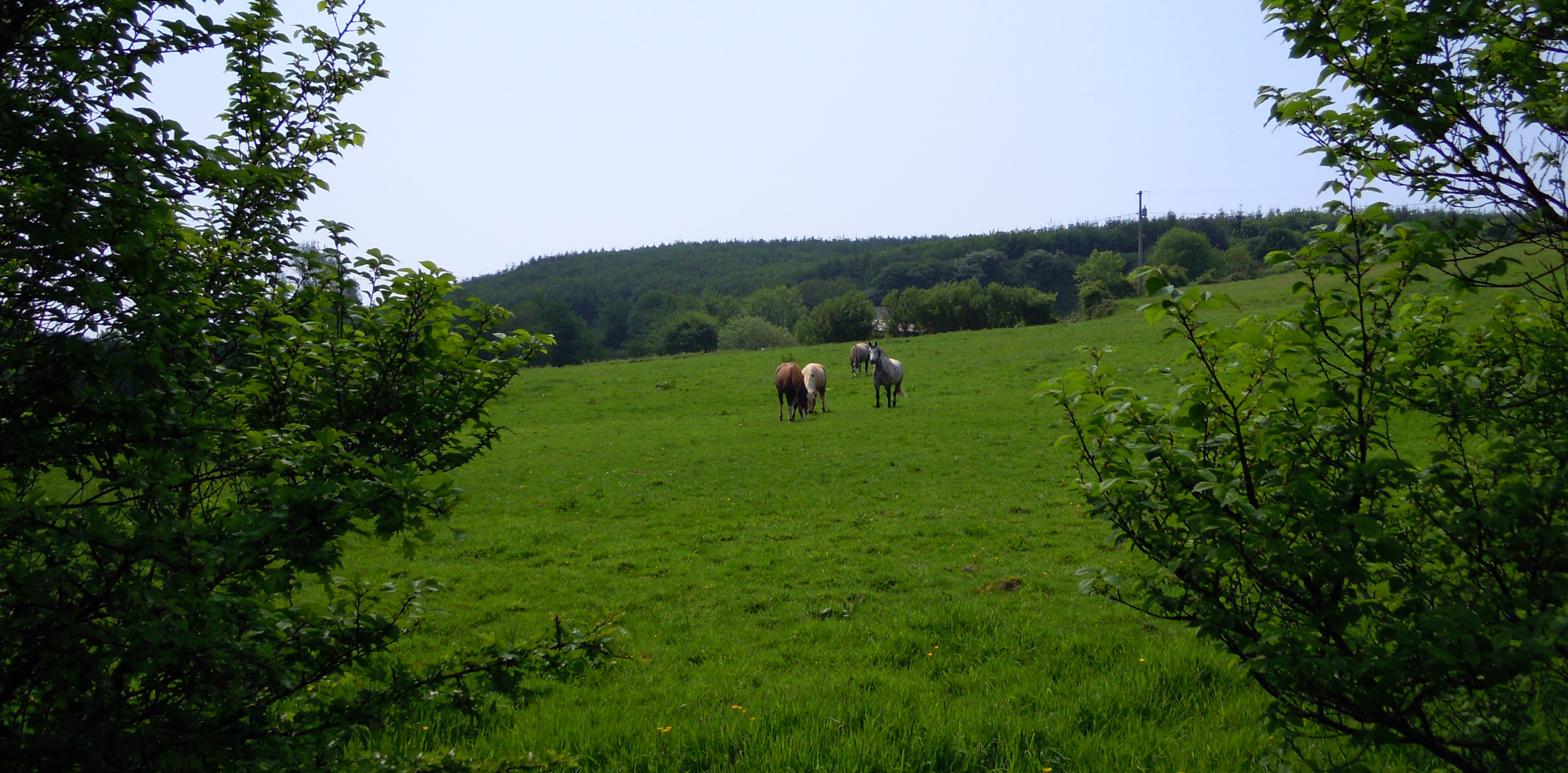
Horses in Ireland’s green fields

One day soon I hope to revisit the magic of Ireland. Meanwhile my books take me there.

My upcoming book series features two island settings–Ireland and Crete. For some time I have started this ancient historical saga in Crete, but I’m bringing Ireland forward now with Whisper of Wings as the opening book, where they call the place by its old name Éire.

Irish clan leader Bria knew only peace before the slave traders came, but she must now learn the grief of bearing weapons of war to save her People of the Stones. The Éireanns play a role in most of the other stories.

I first visited Ireland because of my Irish roots. My DNA shows at least a trickle of Irish blood. I know my maternal grandparents were both part Irish. That was enough for me to adopt the place.

By the next trip I had learned more about the stone circles scattered over Ireland and had drafted Whisper of Wings. One more trip helped answer new questions that came up as the series grew. I see another Irish book in the future, beyond the series–or loosely tied to it. The island shall always hold a special place in my heart. The green and the friendliness of its people and the magic of its ancient monuments refresh my soul.

Irish back roads on the way to Bohonagh Stone Circle near Rosscarbery
The magic of ancient stones and new spring bluebells at Bohonagh Stone Circle, Ireland

My Website’s New Look

Styles change. Systems change. The Home page has taken on a whole new look, thanks to my daughter Christiane. She handles this portal to my website–which takes more technological know-how than I have.

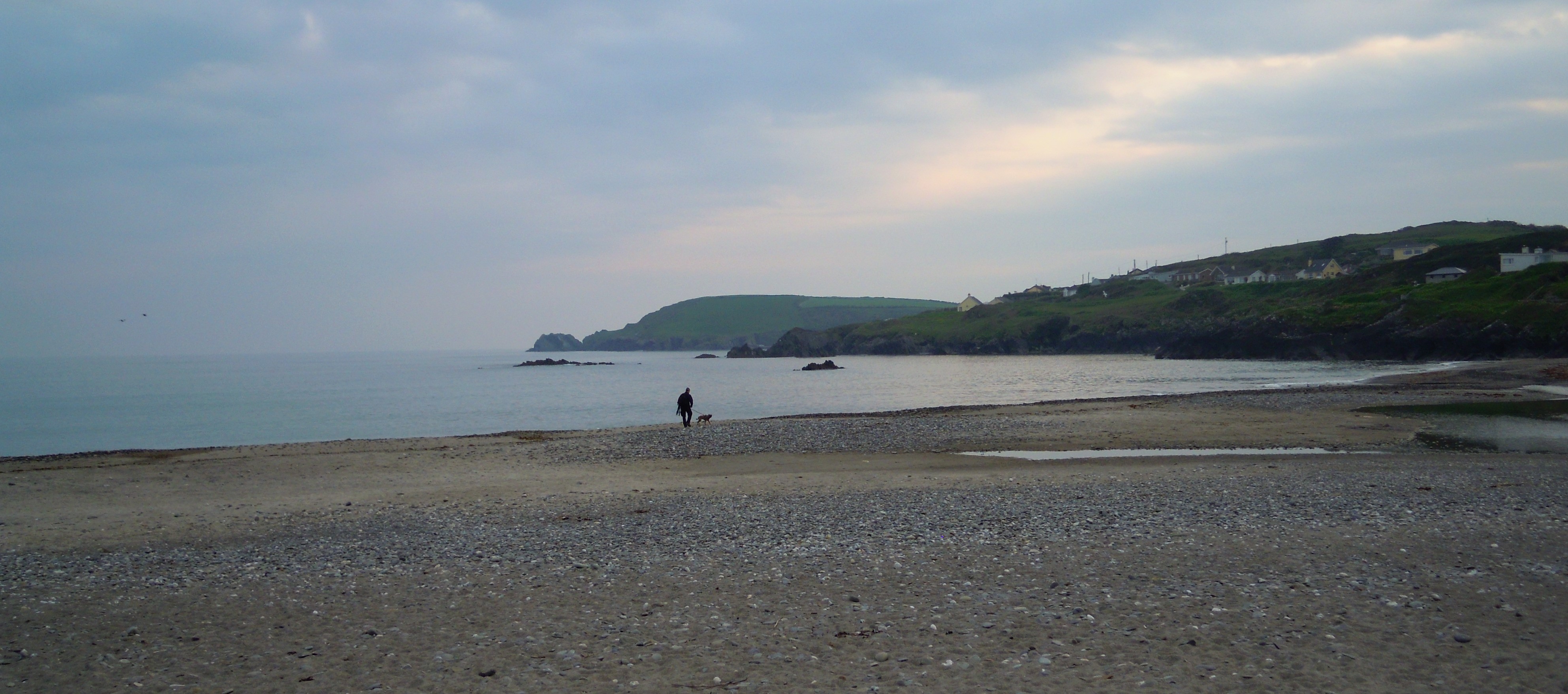
The banner photo for Home page, a bay in southern Ireland

The Home page banner photo shown above is one I took on my last evening at Rosscarbery, Ireland, on a recent site research trip to Europe. This bay provides a setting for many scenes in my upcoming ancient historical saga, the Distant Glimmer series. In the stories it’s called Golden Eagle Bay for the nearby Golden Eagle Clan. Today’s locals call this Owenahincha Beach on Rosscarbery Bay.

The new website design better showcases my available books too–A Place of Her Own, about my great-great grandmother Martha’s trek across the Oregon Trail, and Nancy Pearl Book Award finalist The Shifting Winds, about a young pioneer woman who finds herself in the midst of a clash between the US and Britain over who gets the rich territory of Oregon.

I have always used WordPress for my blog and a few other pages, while Christiane maintained Home, Bio, Books, and more. Now everything but the Home portal is WordPress, and I can maintain those on my own. With my former theme retired from WordPress I decided to pick a new theme so the entire site presents a new, more open face.

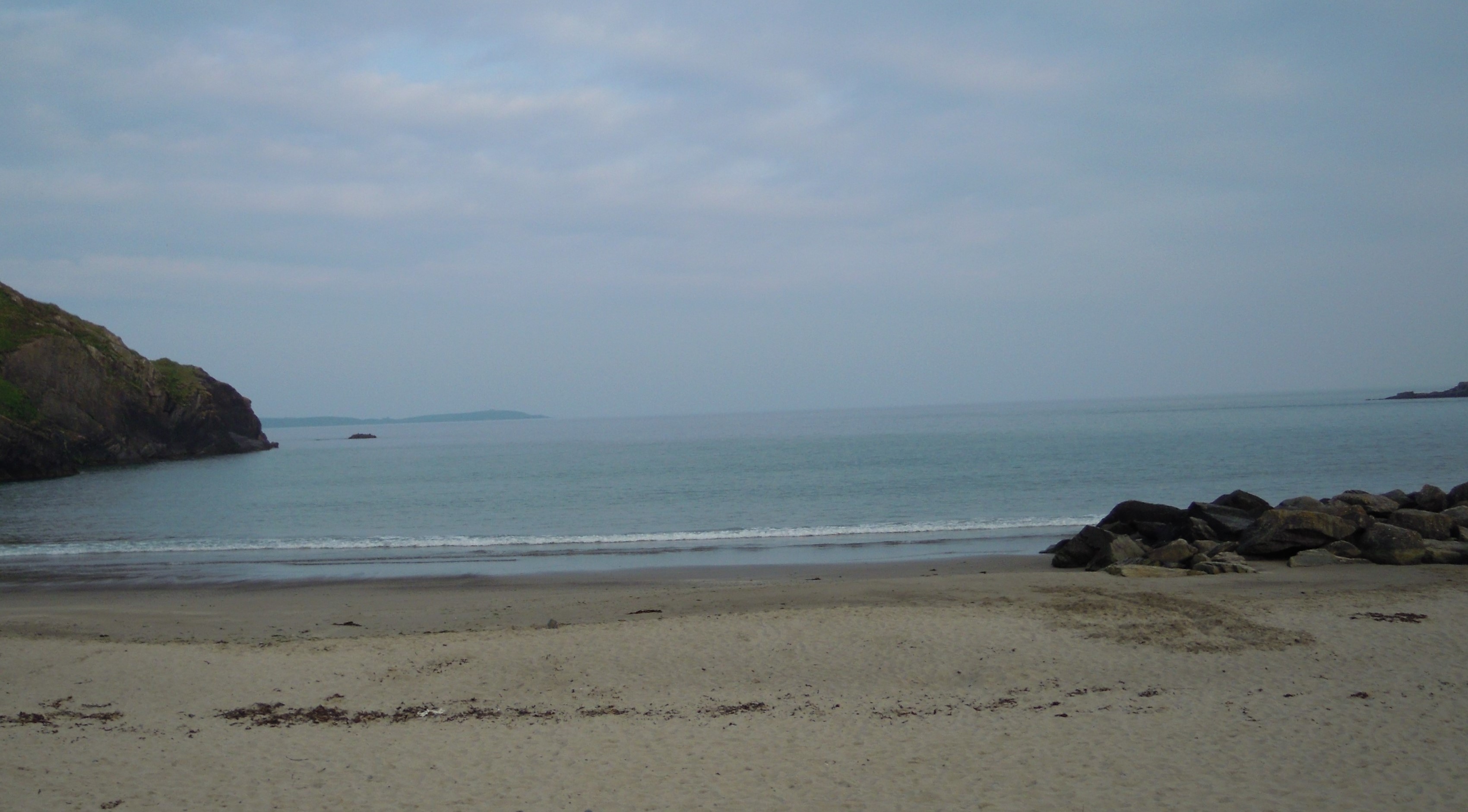
Same bay as first photo in post, shot at a different angle–this one the banner photo for WordPress pages

You’ll see the Home banner echoed in this banner for the other website pages, a photo taken earlier on the same beach that evening. This one shows the point of the eastern headland on the left. The Home banner shows the western headlands reaching out on the right, the headlands on either side seeming to embrace the bay.

During a fierce storm a lost ship crashes on that eastern point. From the now book one of the series, Whisper of Wings: “The ship had not found that gentle center, but the jutting crags of a promontory with its sharp outlying rocks.”

You can find more about my currently available pioneer stories and the upcoming saga on the Books page.