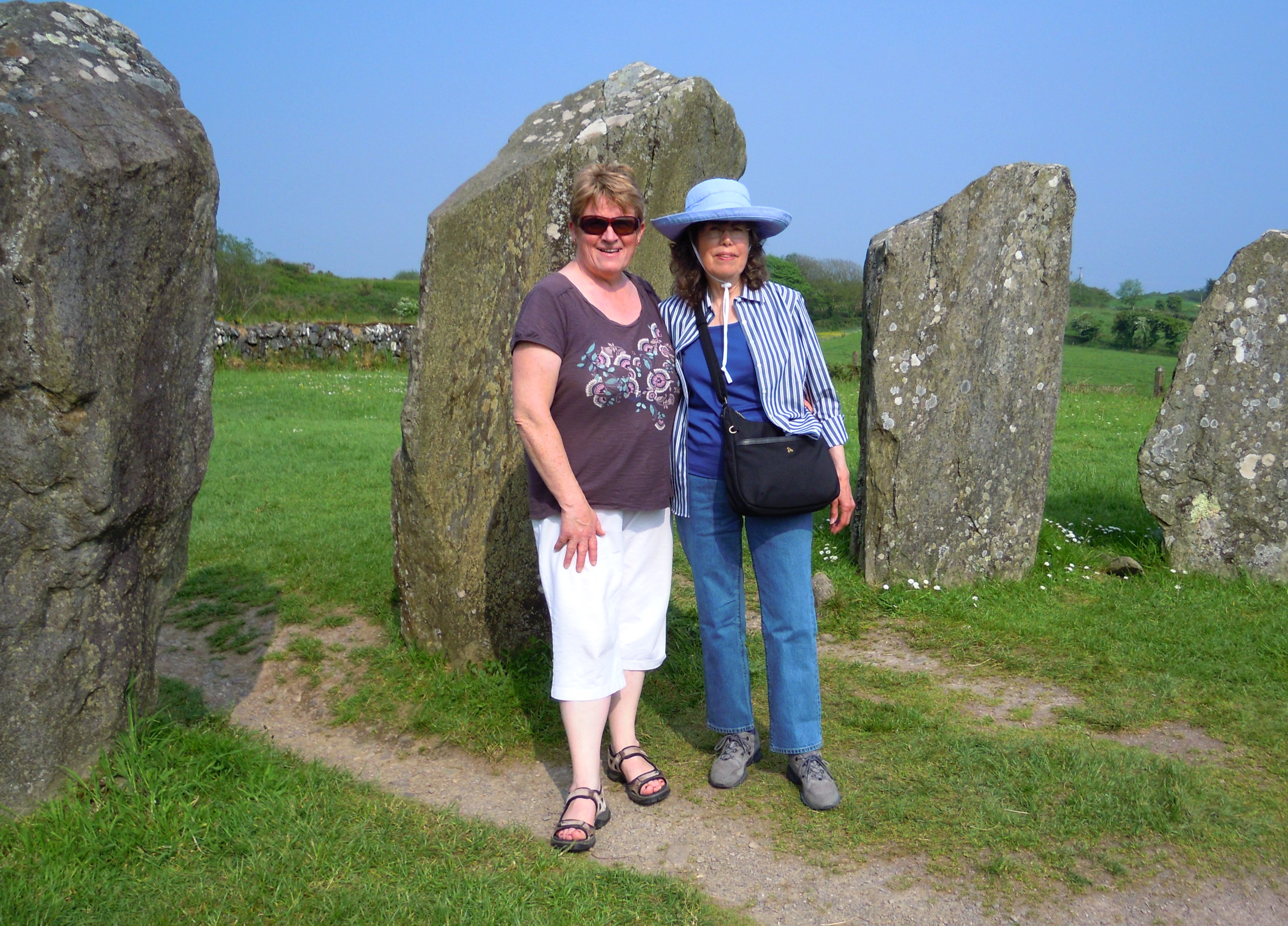
Just back from a great writers conference in Seattle put on by the Pacific Northwest Writers Association (PNWA). Here I am on the last day with Pam Binder, PNWA President and program director of this annual event. Every year she puts together another fabulous conference with her excellent team.
Pam Binder, PNWA President, conference program director, on the left, me on the right.
When I went downstairs looking for an I-was-there photo to add to my comments on the 2025 conference I was hoping I might find Pam to get her picture, and there she was at the registration desk, happy to oblige. I also wanted to thank her one more time for coming to my rescue in the pitch session.
These conferences offer a chance for authors to meet agents and editors face to face and pitch their projects to them. It’s always upbeat at these PNWA conferences, everybody encouraging each other to do their best. I think that atmosphere starts at the top. An award-winning New York Times bestselling author, Pam knows the business, and she’s always ready to help an author reach the next level.
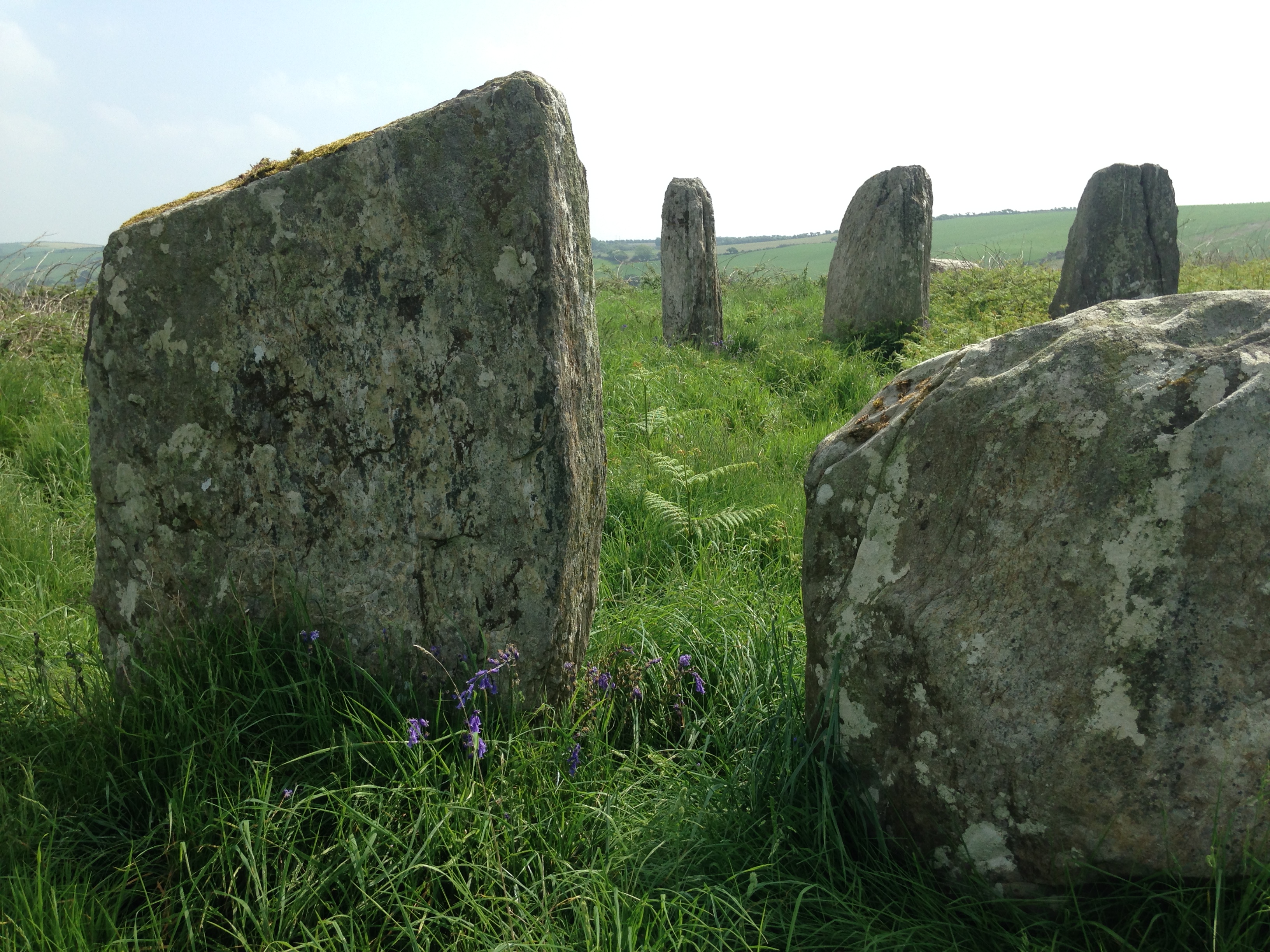
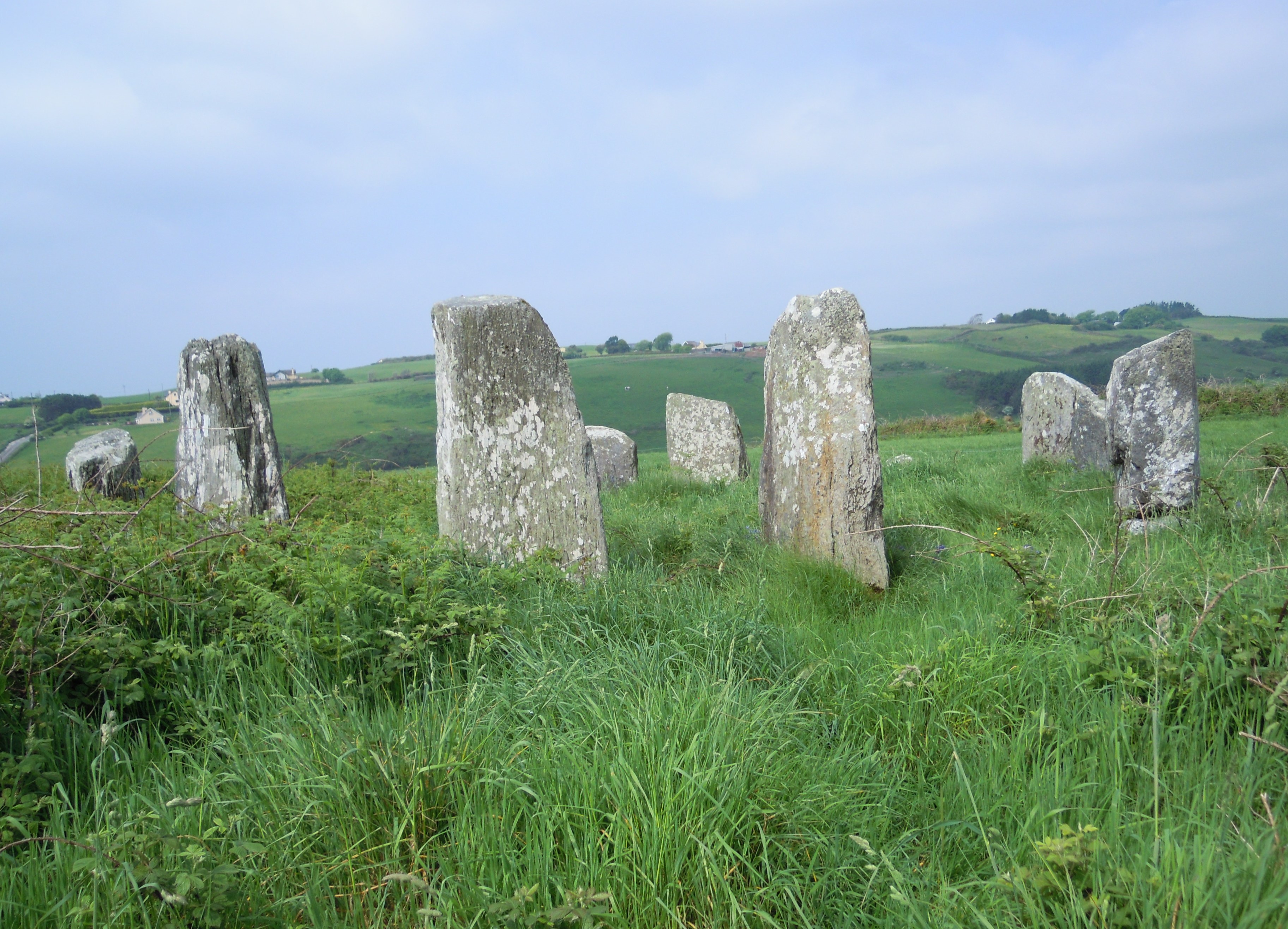
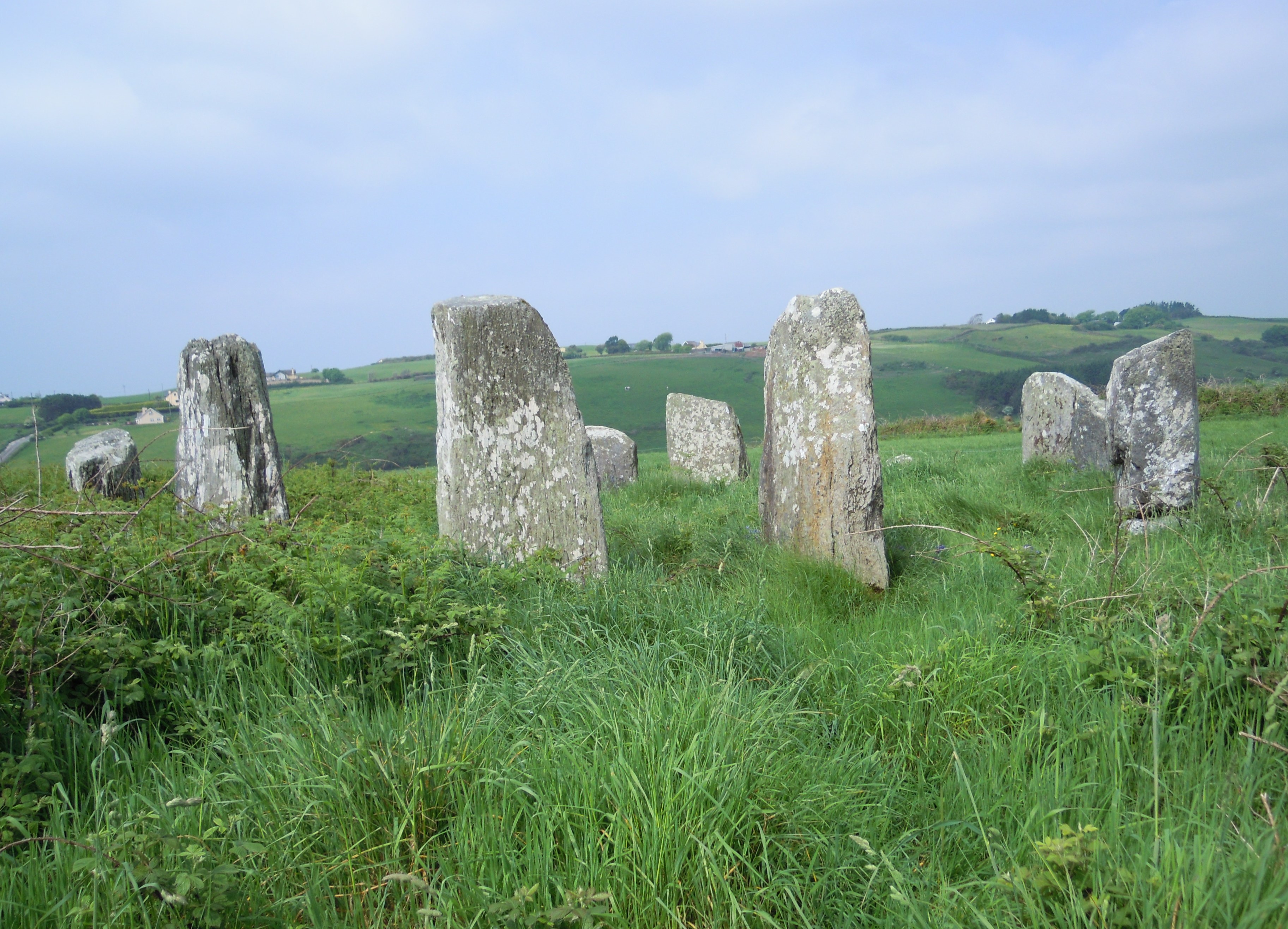
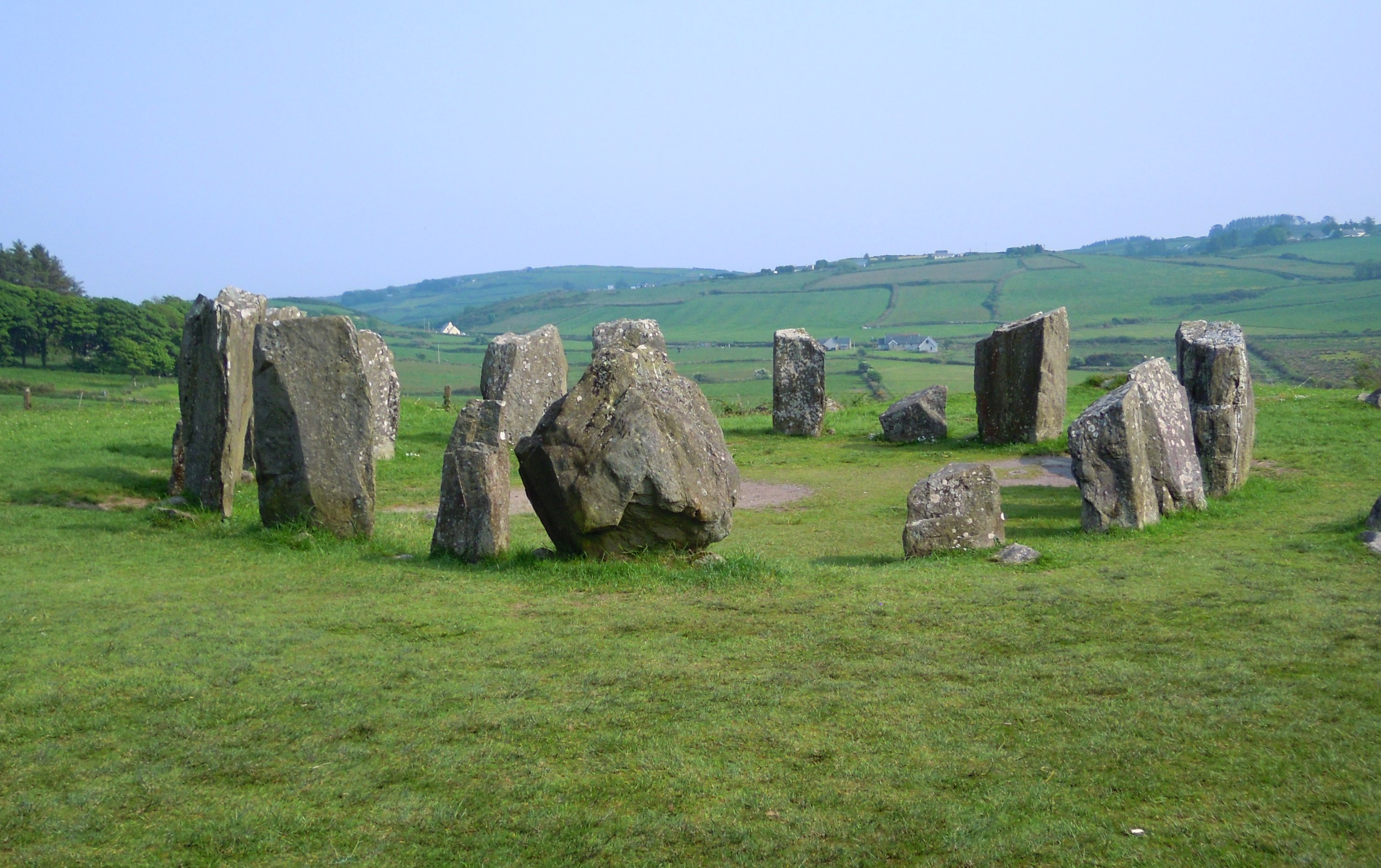
Bohonagh Stone Circle, West Cork, Ireland
I pitched my newest novel set in ancient Ireland featuring the People of the Stones, those mysterious stone circles and other megaliths scattered across Ireland and Britain’s west coast and on down the Atlantic seaboard.
In my story it’s 750 B.C. and the Celts wouldn’t have been in Ireland yet, but we know where they were–in Hallstatt, Austria, so my protagonist has to go there.
The goal for the author pitching an agent or editor is to get a request for material, a few chapters maybe, or 50 pages, or, best of all, the full manuscript. I’m happy to say I got a positive response from every pitch. But it wasn’t entirely simple.
Imagine the setup. All of the authors who’ve signed up for a particular block of time are led into a room where the agents and editors are sitting behind a very long table. The authors get in line for a person they want to pitch to, and each gets four minutes to describe their project and convince that person to ask for part or all of it. At the end of your four minutes a bell rings and you have to skedaddle because you don’t want to crimp the time for the person in line behind you.
So I was pitching one person and we were having an extended conversation when the bell rang. She handed me her business card and said I could stay a bit to finish the conversation because no one was behind me. But then someone did come up behind and I hurried to leave. I went out into the hall and realized I had no idea what the person I just pitched wanted from me. Maybe she told me but in the confusion I didn’t hear it. Did she want to see any of my work? I didn’t know. So in somewhat of a daze I wandered down the hall to the registration desk, where a man asked if he could help me. I saw Pam Binder looking through some papers and said, “I think I need Pam.”
I told her what had happened. She thought about it a minute, then said, “You need to go back in and get in her line again and ask her.”
Pam didn’t send me. She led me. And with her as my escort I did exactly as she said. The person greeted me and answered with enthusiasm, “I want to see the full manuscript. I want to read this.”
Yay! Now, I’m not giving away names. That’s for later, if it works out in the long run. But pitching is a challenge. Encapsulating your book into a few words that pique a desire to read it. And these positive moments are bits of gold. Thank you, Pam.
With hugs to send me off, Pam took this goodbye picture of me in my signature hat.
Happy. Optimistic. Glad for a few more bits of gold.
I’ve been thinking quite a lot about the People of the Stones who walk through my stories of ancient Ireland and its neighboring lands. I’m working on a new novel, a sequel to the one I hope to have published next. Always a time for the stirring of the mind.
This past weekend was the annual Fort Umpqua Days celebration in nearby Elkton, Oregon, so I was there with my booth selling my pioneer stories. I had a notebook on display with photos of pioneers as well as ancient settings and my new business cards illustrating my work “From Pioneers to People of the Stones.”
A boy stopped by and saw a picture of the stone circle at the center of my ancient stories, the Bohonagh Stone Circle in Ireland.
“Stonehenge,” he said, then shook his head when he realized it didn’t look quite like Stonehenge.
I turned the page to show him I did have this picture of the circle he knew. We had quite a conversation, maybe a half hour or so.
He had some imaginative ideas about how the ancient people stood those big stones up there. He knew quite a bit about the site.
He’s ten. I told him he should think about being a writer someday. He smiled. “I write comic strips already.” A budding author. And a delight.
So that night when I was looking for an hour’s entertainment before going to bed I searched my recordings on the DVR and saw OPB’s NOVA presentation on Stonehenge. I’d seen it, but I watched again with keen interest. They showed how the first stones of Stonehenge were the smaller bluestones, not the giant Sarsens. A single ring. Dated at about 3000 B.C. Then the giants went up in 2500 B.C., with their lintels on the top, and the bluestones were moved into the interior. I wanted to argue against those bluestones coming all the way from Wales, some 150 miles away, but the guide I talked to at the site convinced me. Archaeologists had found quarries in the Preseli Hills of Wales with the same kind of stone, and there were no such stones around Stonehenge. They had to have come from Wales.
The smaller bluestones show clearly in this photo, lined up inside the taller sarsens.
Then last night I again wanted an hour’s entertainment. And what should I find but another, newer show about Stonehenge. This one showed the same archaeologist who finally found the exact quarry in Wales these bluestones came out of. Problem was, dating on the site indicated that the quarrying for the bluestones happened in 3300 B.C. The stones went up on the Salisbury plain in 3000 B.C. There was a 300-year gap. Where were these stones during those 300 years?
It wasn’t an easy question to answer, but the archaeologist came to believe the stones had been used for a circle near the quarry, then removed to the location on the Salisbury plain where Stonehenge stands today. Many megaliths stand yet today in the vicinity of the quarry. But how to find where this circle of bluestones stood in that interim? This was a needle-in-a-haystack effort for sure. How do you find something that isn’t there anymore? They had to look for the holes left behind, long since covered over by new soil. With many disappointing tries and the use of overhead imagery they finally found where the stones once stood. They could even see the odd shape of one impression that matched a bluestone now at Stonehenge.
For confirmation they used a dating method I’d never heard of where they dig down to see when the sediment last saw the sun, keeping carefully under cover to avoid any current light. The test showed a date of 3300 B.C. as the construction date on the abandoned site. So the stones went directly from the quarry to this site in Wales and 300 years later were moved to the current site.
Why would they move them? And how? Each stone weighs more than a ton. To show how it was possible they built sledges and had 30 children, 13 years old, try to pull the loaded sledge with ropes. The children managed with apparent ease, drawing the heavy stone uphill. Surely ancient adults could do it. As for the why, we can’t really know. There was no sign of battle to suggest they were escaping attack.
Stonehenge looking southward.
One thought was that the site on the Salisbury plain at that time lay on a swath of glacial channels that aligned with the sun on winter solstice. To these ancient People of the Stones this may have appeared to be an auspicious site.
Moving into the minds of ancients who left no writing behind? Well, that’s the kind of thing we fiction writers do.
The photo above brings stone and sea together, the upper line of the stone echoing that notch where the sea gleams bright blue when the air is right. This is one of the pillars in the Bohonagh circle near Rosscarbery, Ireland, sacred circle of the protagonist’s clan in my story.
With this last post in my “Going There 2024” series I’d like to reflect on the highlights of my recent trip to immerse myself in the main settings of my upcoming historical novel. More than anywhere I went it was Rosscarbery on the southern coast of Ireland where my story lived. I had time to wander by myself there and let it all soak in.
I passed a few people when I went down to the beach below but for the most part it was a solitary stroll. There I learned about beach grass on that Irish coast–unlike Oregon’s tall beach grass that found its way into my Irish story and has to be replaced with the low grasses I noticed here.
This is why I “go there.” It’s part of my work as an author. To see the places, and feel them, and try to get it right, so I can bring the reader into these worlds with me when they read the words of my books.
My explorations showed me the lay of the land along the bayshore, which will help with my descriptions. The stunning beauty of an afternoon sunlight on the water might come into a scene.
And the circle? There wasn’t another soul where I climbed to the circle and stepped inside to experience it and imagine how it must have been when musicians played and people danced. Or when they came alone to pray, stepping inside through the portal stones, honoring their Great Ancestress, Grand Mother of them all.
The next most critical site where I could feel my story come alive was at Newgrange. The lofty passage tomb with its own partial circle of stones. The incredible passageway where the light of the winter solstice sunrise shines all the way down to the inner chamber with its meticulous corbelled roof, filling the chamber with light.
I learned that the tomb did not lie in front of the ridge as I had described it, but actually crowned the ridge, the back side having sloughed down the hill behind so it covered some of the surrounding kerbstones and standing stones. The archaeologist who restored the monument brought it back as near as possible to what it was when my characters walked down the long, narrow passage into the vault, and I of course thought of them when I walked inside myself.
Back in Dublin I marveled at the goldwork produced during the time of my protagonist, a young woman goldsmith, as I walked through the remarkable array of gold displayed in the National Museum of Ireland – Archaeology. Here’s just one example of a collection there from about 800 to 700 B.C.
On another excursion I saw more clearly the rugged stones of the great rock, the outcrop of the Rock of Cashel that stands bold upon a broad green plain. I could better describe it now after climbing up those knobby limestone walls myself–not the walls built by men on top of the rock but those left by nature long before, the only walls my characters would have seen.
And when I left Ireland for Hallstatt I would see and learn more. Why Hallstatt when my story is about ancient Ireland? Because of the Celts. Yes, when we think of the Celts we may well think of Ireland. But at the time of my story there wouldn’t have been any Celts in Ireland yet. Not in any numbers anyway. Their homeland in 750 B.C. would have been in Hallstatt, Austria. So to bring the Celts into my story we go there. And I followed.
I had visited this remarkable place once before. But with this visit I would refresh my mind’s image of the brilliant water of that lake between steeper slopes and more massive cliffs than I remembered. I thrilled to the play of light on the water. Was it something different in the skies this time? Or the brush of wind that came with unsettled weather? Or was it always so and I forgot?
It took me awhile to find the waterfall I describe in my story. But there it was above the museum, fog hiding the higher slopes.
I reached the falls at last and will show it more clearly now in the description. Back down on the lake’s edge, I got a better sense of the sheer drops on those bold mountains where my characters walk.
In the Hallstatt Museum I saw a Hallstatt sword, like those I describe in my story. Here’s the real thing, which had been found just up those mountains. I could almost hear the swish of bronze slicing the air.
So much. I left these amazing places, my head full of images, words. How to describe? How to take the images from my head and put them into the words that will let the reader see and feel. Ah! The challenge, the joy, for every writer.
Out of the many experiences I had on my trip this spring of 2024, these are the ones that stand out to me, highlights that will surely affect the work. The journey gave me so much. People along the way offered so much. I am ever grateful.
As I continue to absorb the wonder, may these memories reflect in the pages. Story came to life here.
NOTE: This concludes the “2024 Going There” series. I’ll keep the list of titles on the sidebar so you can navigate the stories whenever you might like. I’ve had fun reliving the moments and hope you’ve enjoyed sharing some of them with me. I’ll continue to post snapshots from the trip on social media now and then. I love hearing your thoughts. Thanks so much.
Here on a lonely hill, where silence echoes and all is near forgotten, a memory whispers. Here the center of my Éireann world lives.
~ ~ ~
If Ireland holds the place as the heart of my stories, and it does, then Rosscarbery on Ireland’s south coast must be the heart of the heart. Just up the hill above that charming town lies this ancient circle of stones, sacred center of the clan of my protagonist. I have named her people the Clan of the Golden Eagle, and this land has been their ancestral home for generations.
These mysterious circles of stone dating back thousands of years can be found up and down the Atlantic seaboard–across Ireland, Britain, France, Portugal, and Africa. The most famous would be Stonehenge in England. To my knowledge no others bear the horizontal lintels like Stonehenge. The circles range in size. I visited one in Portugal, the Cromlech of Almendres, with almost 100 stones, dating from about 4000 to 6000 B.C. Another, the Castlerigg Circle in northern England set among a ring of mountains, dates from about 3000 B.C.
But this circle of stone caught my heart in ways I can’t explain. It has stood on this hill overlooking the south coast of Ireland since about 1500 B.C., now called Bohonagh Circle. Why these rings of raw stone stand where they do no one today really knows. Scholars believe they marked the passing seasons of the sun. Others suggest they were places of celebration, for dancing and connecting with the gods and goddesses the people revered, perhaps places that drew together the powers of earth and sky.
Catherine and Finbarr O’Sullivan, my wonderful hosts at the Rosalithir B&B in Rosscarbery, wished me well when I set off to see the circle on my first day this trip. A bright sunny morning. Catherine made sure I took a snack of her delicious soda bread and some fruit, which would tide me over until dinner. This was my third visit with Catherine and Finbarr. They weren’t just hosts. They were friends now.
It’s a fair walk over pleasant back roads. Then the familiar track up the hill, the stones beyond my sight until at last I began to see the tops like fingers lifted to the sky. Remembrance flooded me. Not only my own former visits. But the many scenes in my stories as my characters approached this sacred place. I left the track for the green field as the stones came into full view. They seemed to draw me. I barely felt the grass beneath my feet. Once there, I honored the tall portals, both higher than my reach, and stepped inside.
Turning, I looked out through the portal stones and felt a sense that I had come home again. A little breathless still, I was looking for better pictures than I’d taken on earlier visits and nature gave me that. The clouds on this day! Oh my! The clouds!
I stayed and wandered in and out, soaking in the feel of the circle, the surroundings. I especially like the way one stone sits in line with a slope of the vee that opens to the blue sea in the distance. I don’t think that was by accident. Clouds kept boiling in, adding to a sense of awe. After touching each stone with the reverence such a place evokes, I finally walked away, my heart full. On the way downhill I stopped to look back, wondering if I would ever see them again.
The sight of them beneath the towering clouds nearly took my breath.
~ ~ ~
Another day I went down to the bay below the circle, called by my protagonist’s clan their Golden Eagle Bay. Today’s Rosscarbery Bay. I still had questions about the beach. And what’s more, this visit revealed answers to questions I didn’t even know to ask. That made my return particularly important. On my first trip I had traipsed around the shoreline but memory and tiny photos didn’t offer a good sense of the lay of the land there. The few minutes I had on that beach last visit only confused me further. This time I spent a full day exploring the shore.
I had a fairly good sense of the western headland, but I was unsure of the east side of the bay. When I stepped out on a rocky point at the east side of a strand where I thought the bay ended, the point felt way too small for some of the scenes I had written.
There were some good rocky outlying islands to crack up a ship, but there was no room for a battle scene. It wasn’t until I climbed partway up the newly improved Cliff Walk over the western headland that I could look back and see it clearly.
The photo above shows it. That little rocky point jutting into the bay wasn’t big enough to call a headland at all. It did break up two strands, which have separate names today, Owenahincha Strand on the near side from where I took the picture and Little Island Strand on the other. But the photo also shows the only point that could reasonably be called a headland on the east side, a long and bold promontory reaching deep into the bay–beyond the second strand. It’s called today Cloghna Head. Together with the headland where I stood, these are the arms that embrace the full bay.
I continued my stroll over the Cliff Walk to the next beach, mulling all this over. It’s a beautiful walk, with nice new wooden railing and some paving, overlooking broad stretches of water and a small woodland full of bluebells.
I had planned to call Finbarr to pick me up on that next beach when I was done with the Cliff Walk, as he’d suggested. He and Catherine insisted they drive me to and from the beach because they didn’t want me to walk across the dangerous highway that separated it from the B&B. But now I knew I had to go back to where I started and check out the bold promontory of Cloghna Head, which I now saw was the eastern headland of the full bay.
As I trekked over the grass above the bayshore toward that eastern headland I became aware of something quite unfamiliar. I had walked along sandy trails cut through the grass but I happened to step onto the grass itself. My foot didn’t sink deep into the thick grass as expected but teetered on a thick spongy mass of interlaced grasses. I had never experienced anything quite like it. Because I couldn’t maintain a solid stride I quickly moved back onto one of the sand trails people had cut into that thick mass.
I later mentioned this to Finbarr and he said that’s the way beach grass grows there. It helps prevent erosion along the beaches. I told him on the Oregon coast we had tall grasses along the sandy shore. He said that those tall grasses perform the same function. And I, knowing tall grasses, had written such shores into my Irish beaches. I would need to take out that tall grass in my stories in many places. You need to get it right for the locals. And I almost didn’t.
I walked close to Cloghna Head to get a better sense of it but didn’t walk onto the top. I was particularly interested in those sheer cliffs down to the jagged rocks below and how they might work into a dramatic scene. I didn’t think about the grass on that promontory until later. But Finbarr assured me that the broad grassy top there also has the thick spongy beach grass. Other grass, away from the shore, he called pasture grass. As a farmer, raising cattle, he knew these things. I was so glad he cleared that up for me.
~ ~ ~
I would take more walks during my visit, got lost once on a rainy walk, then came upon the B&B quite by surprise. Irish luck again. And I explored several back roads, meeting horses and dogs and friendly people, including Tara and her beautiful Irish Cob mare with the distinctive feathering above the hooves–named Sootie for her black coat, Tara said.
With each walk, each day, I got a better sense of the place that I knew would show up in my descriptions. And my memories. Helping my Éireann world live. A wondrous visit to a wonderful place.
As drought dries the landscape of my Oregon home, turning the green to gold, I dream of the green fields of Ireland.
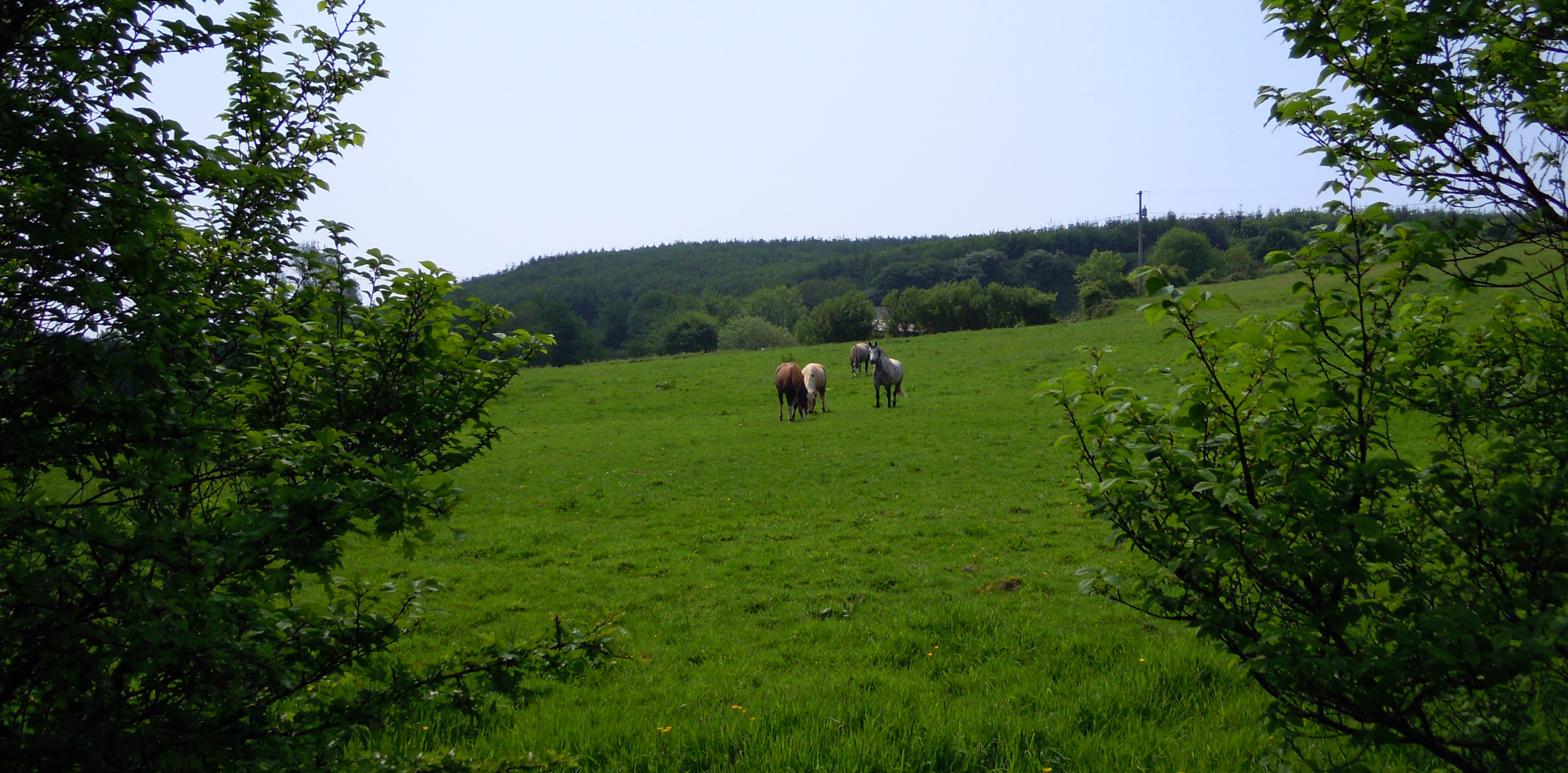
Horses in Ireland’s green fields
One day soon I hope to revisit the magic of Ireland. Meanwhile my books take me there.
My upcoming book series features two island settings–Ireland and Crete. For some time I have started this ancient historical saga in Crete, but I’m bringing Ireland forward now with Whisper of Wings as the opening book, where they call the place by its old name Éire.
Irish clan leader Bria knew only peace before the slave traders came, but she must now learn the grief of bearing weapons of war to save her People of the Stones. The Éireanns play a role in most of the other stories.
I first visited Ireland because of my Irish roots. My DNA shows at least a trickle of Irish blood. I know my maternal grandparents were both part Irish. That was enough for me to adopt the place.
By the next trip I had learned more about the stone circles scattered over Ireland and had drafted Whisper of Wings. One more trip helped answer new questions that came up as the series grew. I see another Irish book in the future, beyond the series–or loosely tied to it. The island shall always hold a special place in my heart. The green and the friendliness of its people and the magic of its ancient monuments refresh my soul.
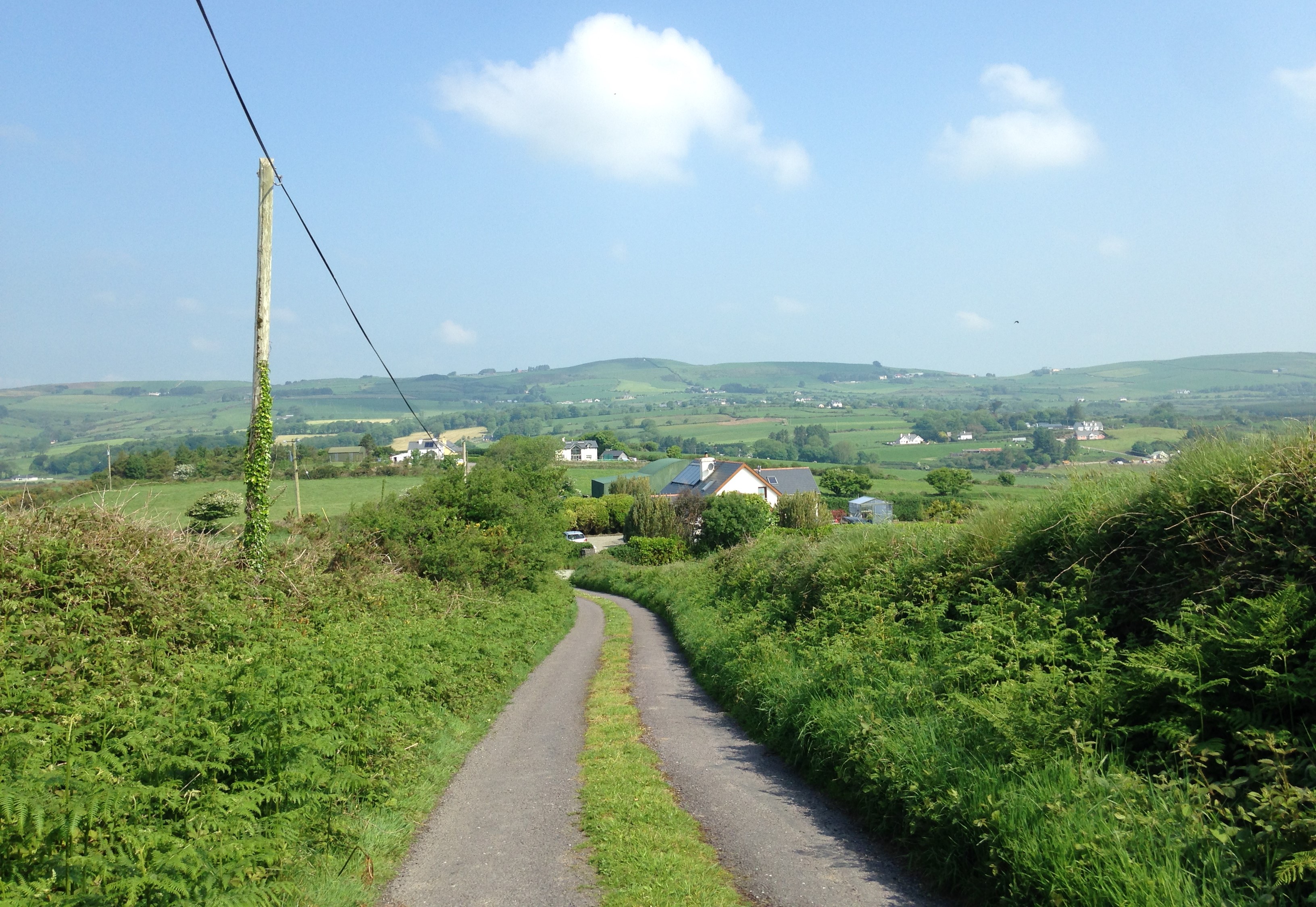
Irish back roads on the way to Bohonagh Stone Circle near RosscarberyThe magic of ancient stones and new spring bluebells at Bohonagh Stone Circle, Ireland
We flew out of Shannon airport on our homeward-bound journey. Lynn and I had bought our tickets separately so we weren’t seated together. For the Shannon-Philadelphia leg of the trip I took my seat by the window and a couple of young Irishmen sat beside me. They were on their way to San Francisco, a place where I had lived for eight years. So as the plane lifted off I left their world as they looked forward to visiting mine. They had both just turned 21. Their boisterous excitement was infectious and I laughed with them, caught in their delight.
Me with Irish Travelers Stephen Kelliher (center) and David Harnett (right)
My trip wasn’t quite over. Setbacks awaited me in Los Angeles when our Philadelphia-LA plane landed late in LAX, where we had a short connection. Seated in the very last row, I had trouble getting past the other passengers, and we had long lines and two slow buses across the tarmac to reach my gate. Lynn was well ahead of me.
By the time I found my gate, panting from my run, there were no passengers left, just an attendant standing alone at the gate. She asked me if I was Janet Fisher. Hopeful they were waiting for me, I answered yes in a gasping voice. She phoned the plane and shook her head at me. “They’ve already left. You’re too late.” No! That couldn’t be. “My friend is already on the plane,” I told her. “I have to be on that plane.”
The phone rang. The pilot had agreed to open the door for me. The plane hadn’t actually pulled away. I broke into tears. The attendant led me to the plane’s door. Once inside, I stumbled down the aisle as passengers applauded with smiling faces. Lynn was beaming and gave me a big hug when I sat down, still crying softly. She had begged them to wait, certain I was coming.
Exhausted, I settled back in the seat for the last leg of our journey, slowly recovering from that arduous finale to a long and wonderful trip—37 days of exploring the world of my ancient series.
Port of Tiryns (Nafplio, Greece)
Outlaw Hideout (Buttermere, Lake District, England)
During those 37 days I became steeped in the past, as I sought the places that define these stories.
Alabaster Chair, Knossos (Crete)
Golden Eagle Circle (Bohonagh, near Rosscarbery, Ireland)
I had the good fortune of meeting several archeologists whose work takes them into the ancient times. And others who simply love their history.
Fábio and Sónia, Archeologists at Zambujal, Unexpected Guides (Portugal)
Mário, Archeologist, Guide on Megalithic Tour at Almendres Cromlech (Portugal)
I felt the raw edge of cultures different from my own and the universal embrace of friendly people.
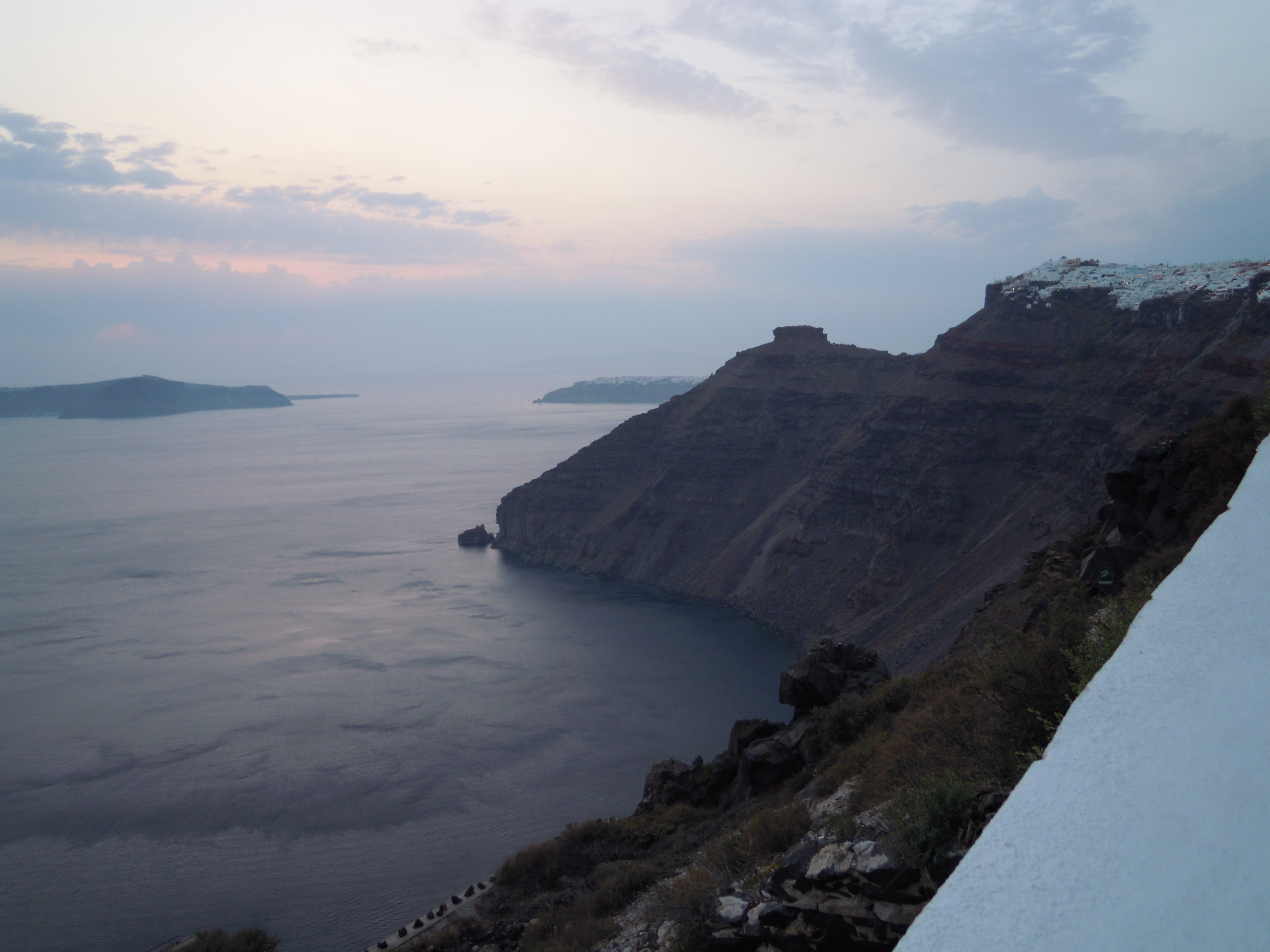
Streets of Fira, Santorini (Greece)
Catherine and Me at Drombeg Circle (near Rosscarbery, Ireland), photo by Lynn
I immersed myself in the book settings and felt my characters walking along these places. As I walked with them I remembered their tears and joys. My own tears came, and my joy.
If my visit to Knossos in Crete felt like being home because of all the days I lived there in my mind while working on my first story in the ancient series, my return to Ireland felt like returning to another home of the mind. Ireland becomes significant to the Cretans as they seek another place of peace in the world.
Land of my Story’s Clan
The last time I traveled to Ireland I stayed a month there with my late friend Tilly Engholm. She and I spent six days on the island’s south coast at the small town of Rosscarbery, the central location for the Irish/Éireann characters in the series. The fictional village of my Golden Eagle Clan sets just below the stone circle now called Bohonagh Circle, an easy walk from the Rosalithir B&B where we stayed. This wonderful B&B hosted by Catherine and Finbarr O’Sullivan is one of the friendliest places I’ve visited in all my many travels.
Of course I had to return and wanted to introduce my writer friend Lynn Ash who was traveling with me on this part of my current trip.
Since the last visit to Ireland I had drafted more books which took my characters to places I’d never seen. The treks through Portugal and the UK gave me a good look at many of those, but I also had a few new scenes in Ireland in places I hadn’t been.
Before traveling to Rosscarbery I wanted to spend a little time at a location closer to the new settings and chose the historic village of Adare near Limerick.
Shop in Adare, Ireland
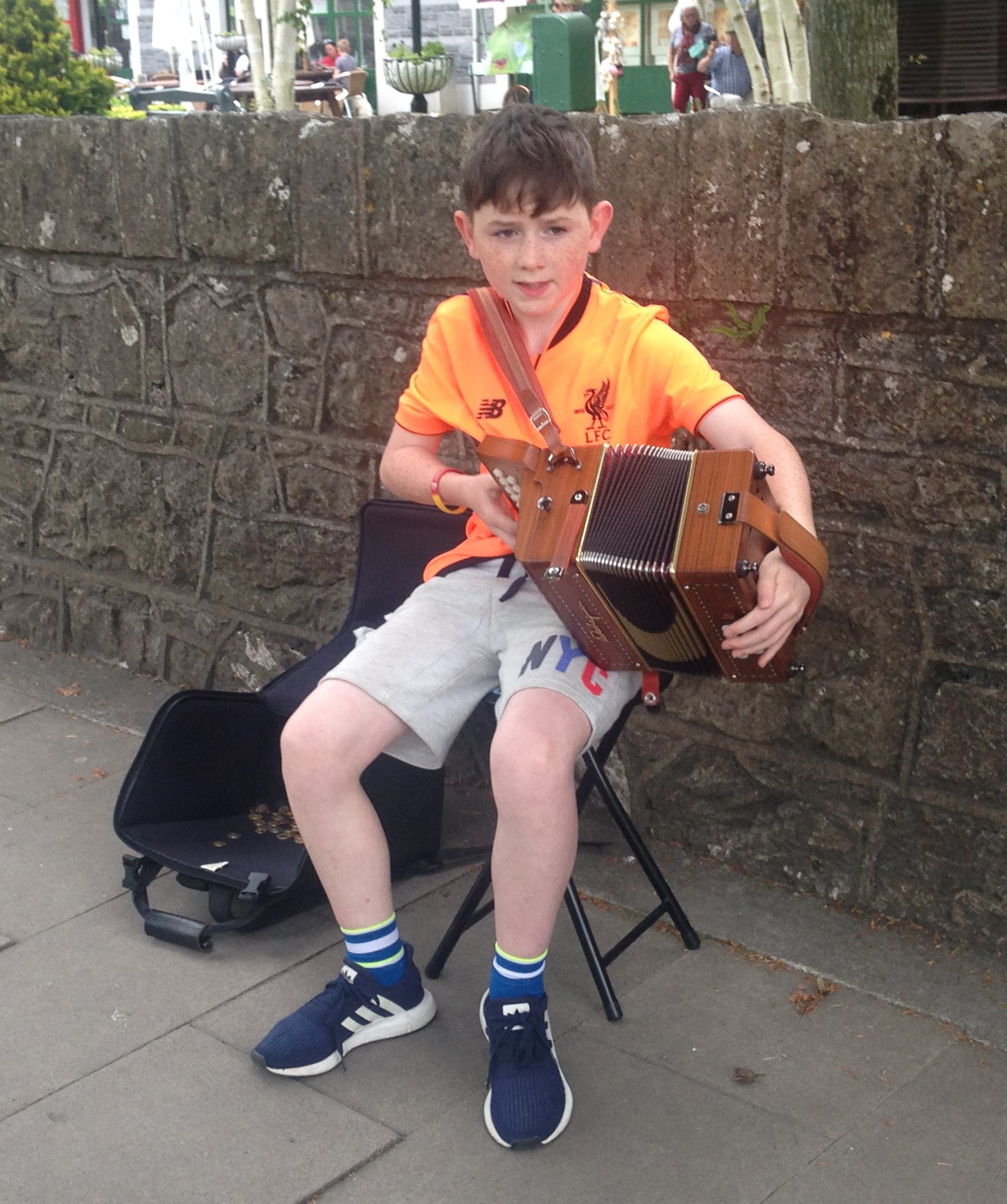
It’s a charming place with thatch-roofed cottages and a crumbling castle, a lovely river walk, and entertainment by a terrific young Irish musician.
Musician at Adare, Ireland
The tourists have found it, but we got a quiet B&B on the outer edge, with a country setting and lovely breakfasts, the Carrigane House.
We stayed three nights to explore the area. I found my beautiful green fields for a big battle scene and the treacherous ford across the River Shannon at Limerick.
(I later found reference in a blog post by Irish waterway historian Brian Goggin that there was likely a more passable ford across the River Shannon about ten miles north of Limerick near O’Briensbridge. He kindly responded to my email to confirm there was probably an ancient ford just below the bridge. Brian had helped me before with information on the River Barrow which figured in scenes for a previous book in the series.)
On one of the three days at Adare I used my bus pass to ramble down to Kilrush on the Shannon and check out another scene, enjoying a stroll to the marina and a tasty salmon lunch at Crotty’s Pub.
We found pub food to be reasonable and delicious. In Adare we had to have at least one meal at the famous Blue Door with its fine thatched roof.
The Blue Door, Adare, Ireland
From Adare we took the bus to Rosscarbery with a bus stop at Cork City where we watched the beautiful island clouds rise over this intriguing city.
Waiting at the Cork City Bus Station
Catherine at the Rosalithir B&B welcomed us with open arms as I knew she would. The B&B is on a working farm just outside Rosscarbery. They raise fine purebred beef cattle now, having switched from the dairy cattle they had on my last visit. Lynn and I booked only two nights with them, one full day. It wasn’t nearly enough, but we would do what we could.
From the upstairs deck of the house we looked out over the yard to the surrounding farms. Haze screened our view of the sea in the gap. Note the old stone fence on the far side of the road.
Country View from Rosalithir B&B
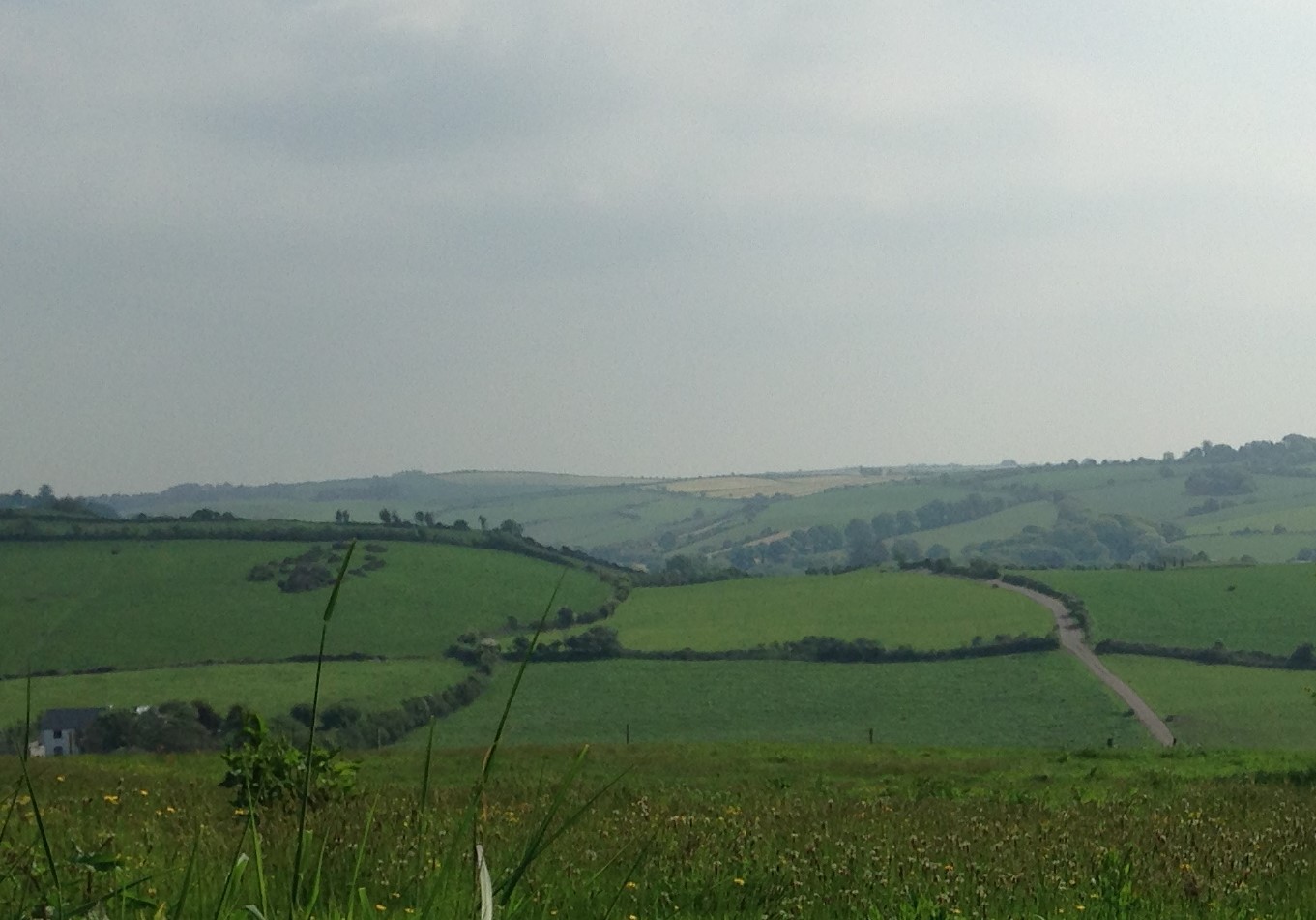
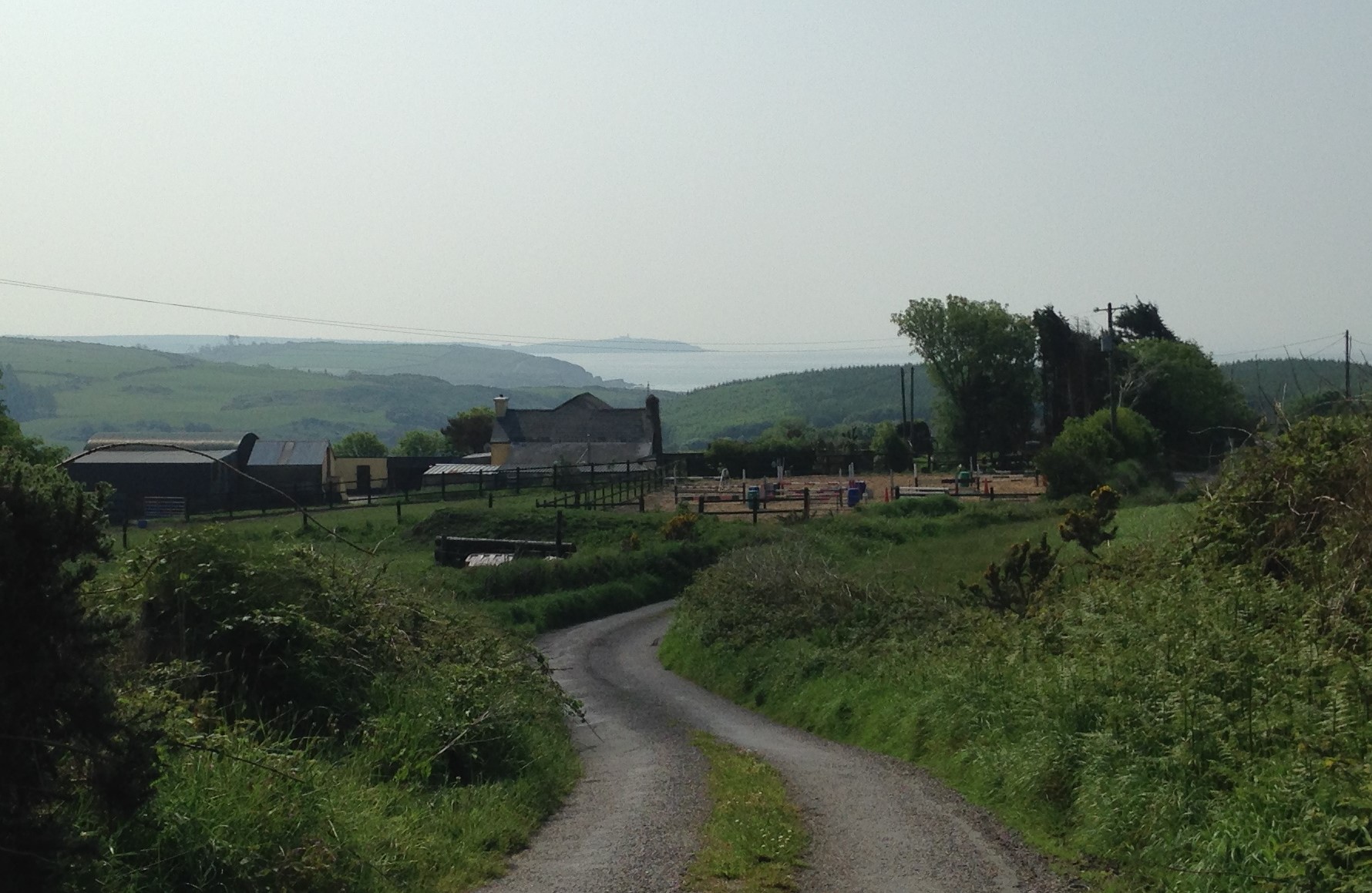
Anxious to see the stone circle so central to my stories, I headed out with Lynn in the morning. Catherine told us about a walk to the circle I hadn’t taken before–a lovely hill walk over green patchwork fields with views back to the B&B and forward to the ocean. If you can zoom the first photo below you may see the B&B. It’s a pale-pink building with two facing gables in the middle of a wide field in the upper right.
Looking Back
Looking Ahead to the Ocean
My heart pounded as I climbed straight up the slope to Bohonagh Circle–called Golden Eagle Circle by the Éireann characters in the series.
My circle.
The Climb to Golden Eagle Circle
After the huge rings of Almendres Cromlech in Portugal and Castlerigg in England this circle looked small. Bracken and brambles had filled the interior since I last strolled through.
The Home Circle
Bluebells lifted their heads above the competition. I remembered those exquisite flowers blooming among the stones from my visit before.
Bluebells Among the Standing Stones
I made my way into the ring despite the tall growth and took my time, circling the ring to consider each stone. I remembered the rough faces, the cool edges, the warm, the tall pillars with tops beyond my reach, the low, the wide entrance between portal stones I could barely touch at once with my outstretched arms, the slanted tops, the rounded, fat, slim, one slant that matched the slant of the sea gap beyond. Echoes shimmered. Dancing feet pummeling the ground. Voices of pleasure, pain, supplication. Though left to the wildness of winds and other natural forces the circle still seemed to resonate with a subtle power–maybe more so because of the untamed elements.
Here lay the heart of my Irish stories.
We would visit the better known Drombeg Circle with Catherine. Close to the highway, that one is a National Monument, well maintained by the Commissioners of Public Works for the state.
Catherine and Lynn
Catherine and Me, Photo by Lynn
A sign at the site notes that on the winter solstice the sun sets at a point aligned with the center between the portal stones and the middle of the recumbent stone opposite. In my story this is the village circle of my neighboring Red Deer Village. The circle rests on a bench of land overlooking the broad fields below, the sea lost again in the distant haze. In one of my books the clanspeople of southern Éire face the warriors of Zambujal on those broad fields, and in another a young Red Deer woman faces the wrath of her father. Many scenes there.
Drombeg Circle, My Circle of the Red Deer Clan
We closed our day with a visit to the sea in the softening light. I wanted to revisit Golden Eagle Bay. We drove to the wrong bay first, then found the right one. I hadn’t remembered the shoreline quite right, so the stop helped me form a better sense of place in this important setting. Anguished partings happen here. And poignant reunions.
The wash of the sea brought many memories, like recurring waves.
Golden Eagle Bay
With one last look at this bay below the site of my Golden Eagle Clan village I embraced the scene, feeling enriched by this and so many experiences over the course of my journey. I would hold these places in my mind and heart, hoping to share and let others see and feel the wonder of it all.